Surface landmarks
Cutaneous nerves
Posterior axio-appendicular muscles (muscles attaching scapula with vertebral column)
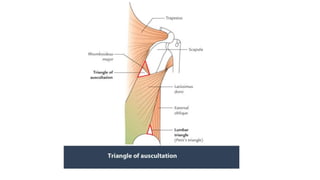
Superficial layer- Trapezius & Latissimus dorsi
Intermediate layer- Serratus posterior superior and Serratus posterior inferior
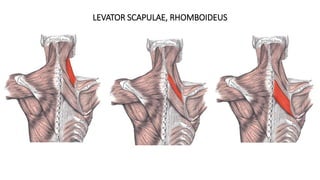
Deep layer- Levator scapulae, Rhomboideus major, Rhomboideus minor
SCAPULAR REGION
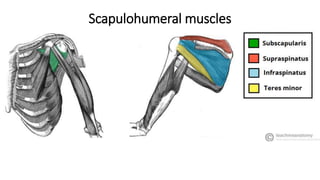
scapulohumeral (muscles attaching scapula with humerus)
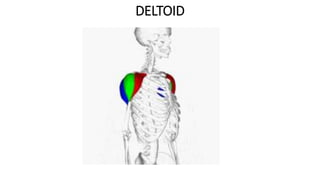
Deltoid
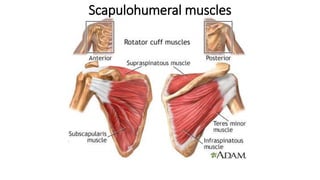
Suprespinatus
Infraspinatus
Teres minor
Teres major
Subscapularis
Rotator cuff muscles
Movements of scapula
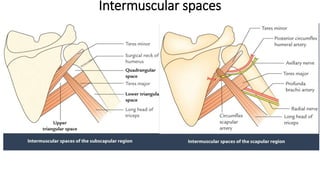
Subscapular spaces
Nerves and blood vessels
Bony landmarks
Cutaneous nerves
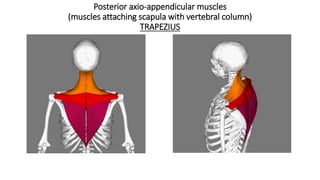
Posterior axio-appendicular muscles
(muscles attaching scapula with vertebral column)
TRAPEZIUS
PARTS ORIGIN DIRECTION INSERTION
Upper/
descen
ding
fibers-
medial third of superior
nuchal line
external occipital
protuberance
ligamentum nuchae
spinous processes of C7
downward
and laterally
posterior border of
the lateral third of
clavicle.
middle
fibers/
transv
erse
spinous process of the
seventh cervical
spinous processes of
T1–T3 vertebrae
horizontally medial margin of
acromion, and into
the superior lip of
the crest spine of the
scapula.
Lower/
ascend
ing
fibers
the spinous processes
of T4–T12 vertebra
upward and
laterally
Deltoid tubercle at
the junction of
medial and middle
third of spine of
scapula
TRAPEZIUS
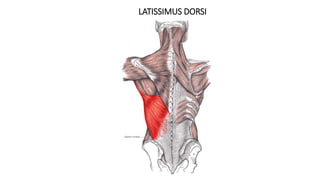
LATISSIMUS DORSI
LATISSIMUS DORSI
• Origin-lower six thoracic nerve anterior to
trapezius
• Posterior lamina of thoracolumbar fascia
• Outer lip of posterior part of iliac crest
• Lower four ribs
• Inferior angle of scapula
• Insertion- floor of bicipital groove
• Nerve supply- thoracodorsal nerve
• Action- adduction, extension, medial rotation
• Pulls trunk upward and forward during climbing in
conjuction with PM
• Helps in violentary expiratory effort
LEVATOR SCAPULAE, RHOMBOIDEUS
DELTOID
DELTOID
Scapulohumeral muscles
Intermuscular spaces
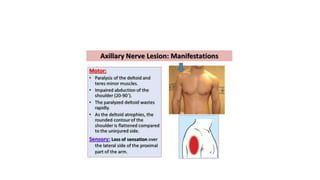
AXILLARY NERVE
Scapular Region
Scapular Region
Scapular Region
Scapular Region
Scapular Region
Scapular Region

Scapular Region

  • 1.
    Surface landmarks Cutaneous nerves Posterioraxio-appendicular muscles (muscles attaching scapula with vertebral column) Superficial layer- Trapezius & Latissimus dorsi Intermediate layer- Serratus posterior superior and Serratus posterior inferior Deep layer- Levator scapulae, Rhomboideus major, Rhomboideus minor SCAPULAR REGION scapulohumeral (muscles attaching scapula with humerus) Deltoid Suprespinatus Infraspinatus Teres minor Teres major Subscapularis Rotator cuff muscles Movements of scapula Subscapular spaces Nerves and blood vessels
  • 2.
  • 3.
  • 5.
    Posterior axio-appendicular muscles (musclesattaching scapula with vertebral column) TRAPEZIUS
  • 6.
    PARTS ORIGIN DIRECTIONINSERTION Upper/ descen ding fibers- medial third of superior nuchal line external occipital protuberance ligamentum nuchae spinous processes of C7 downward and laterally posterior border of the lateral third of clavicle. middle fibers/ transv erse spinous process of the seventh cervical spinous processes of T1–T3 vertebrae horizontally medial margin of acromion, and into the superior lip of the crest spine of the scapula. Lower/ ascend ing fibers the spinous processes of T4–T12 vertebra upward and laterally Deltoid tubercle at the junction of medial and middle third of spine of scapula TRAPEZIUS
  • 7.
  • 8.
    LATISSIMUS DORSI • Origin-lowersix thoracic nerve anterior to trapezius • Posterior lamina of thoracolumbar fascia • Outer lip of posterior part of iliac crest • Lower four ribs • Inferior angle of scapula • Insertion- floor of bicipital groove • Nerve supply- thoracodorsal nerve • Action- adduction, extension, medial rotation • Pulls trunk upward and forward during climbing in conjuction with PM • Helps in violentary expiratory effort
  • 9.
  • 12.
  • 13.
  • 14.
  • 15.
  • 19.
  • 20.