Introduction of Anatomy

              By
    Dr, Noura El Tahawy
Associate professor of Anatomy
   Batterjee Medical College
Anatomy
• Definition - anatome = up (ana) + cutting (tome)
• Disciplines of anatomy
   –   Macroscopic
   –   Microscopic
   –   Developmental
   –   Neuroanatomy
• Approach to study of gross anatomy
       Upper extremity   Back
       Head and neck     Thorax
       Abdomen           Pelvis and perineum
       Lower extremity
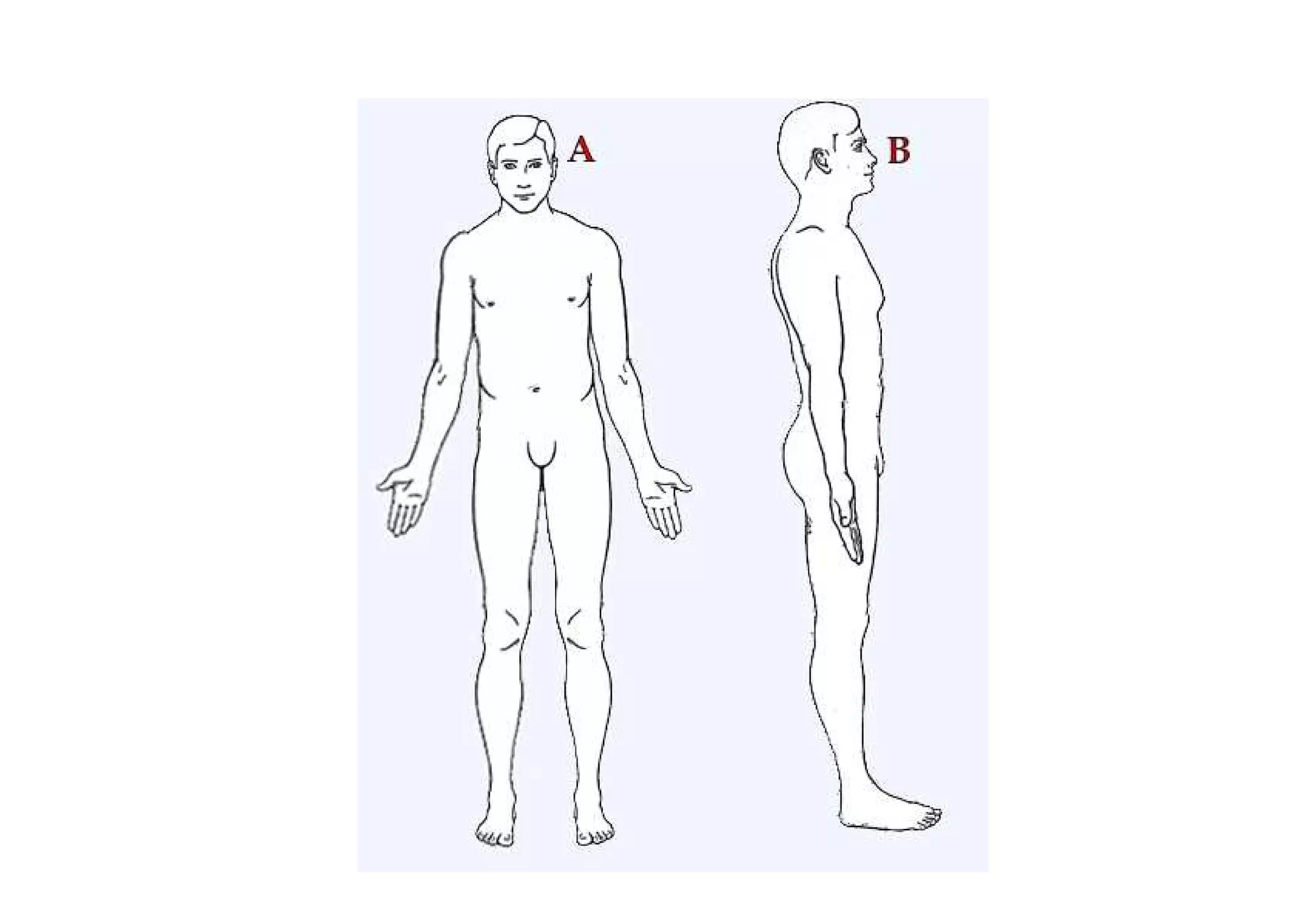
Anatomical Position
•   Body erect
•   Head, eyes, toes directed forward
•   Limbs at sides of body
•   Palms directed forward
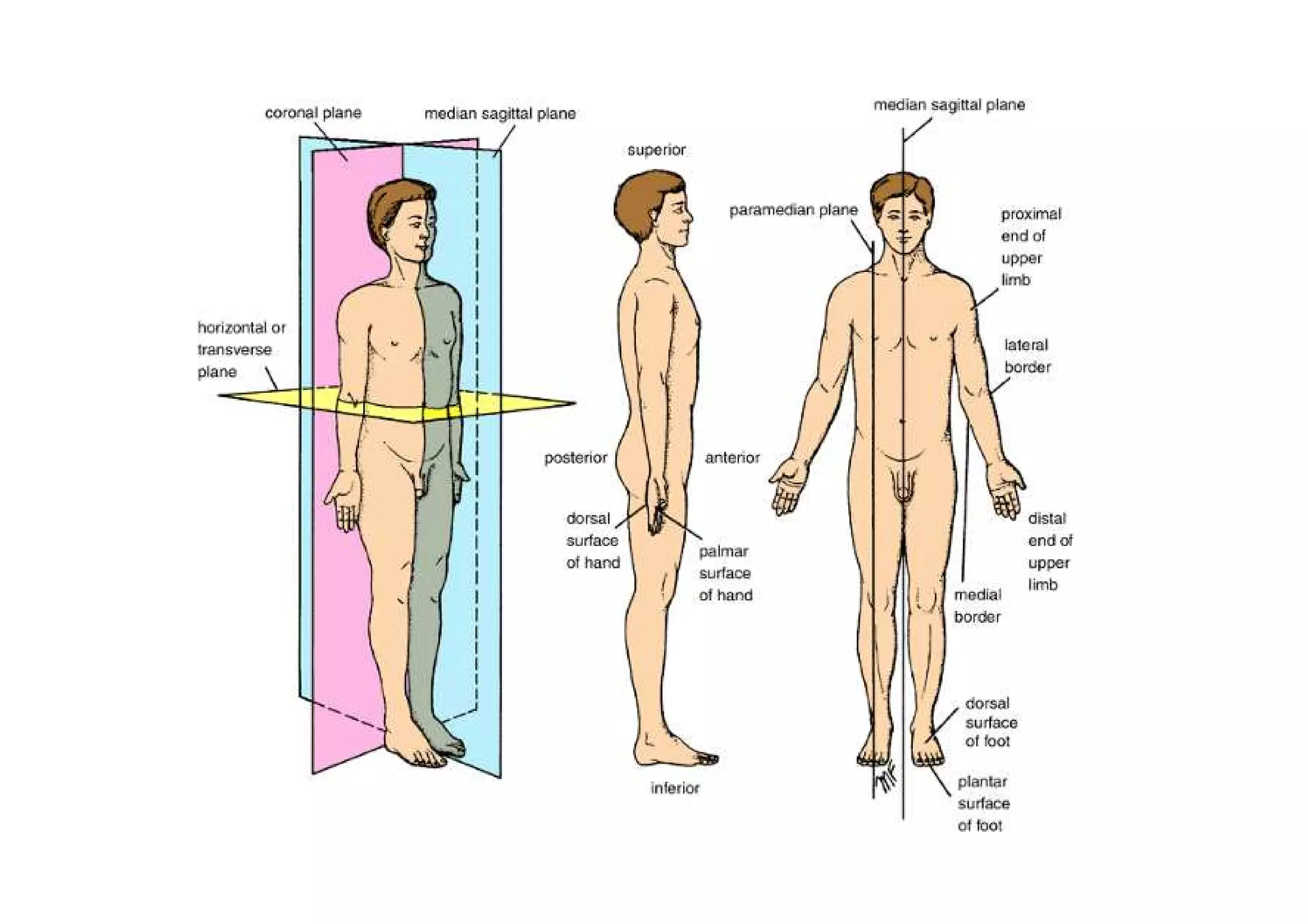
Anatomical Planes
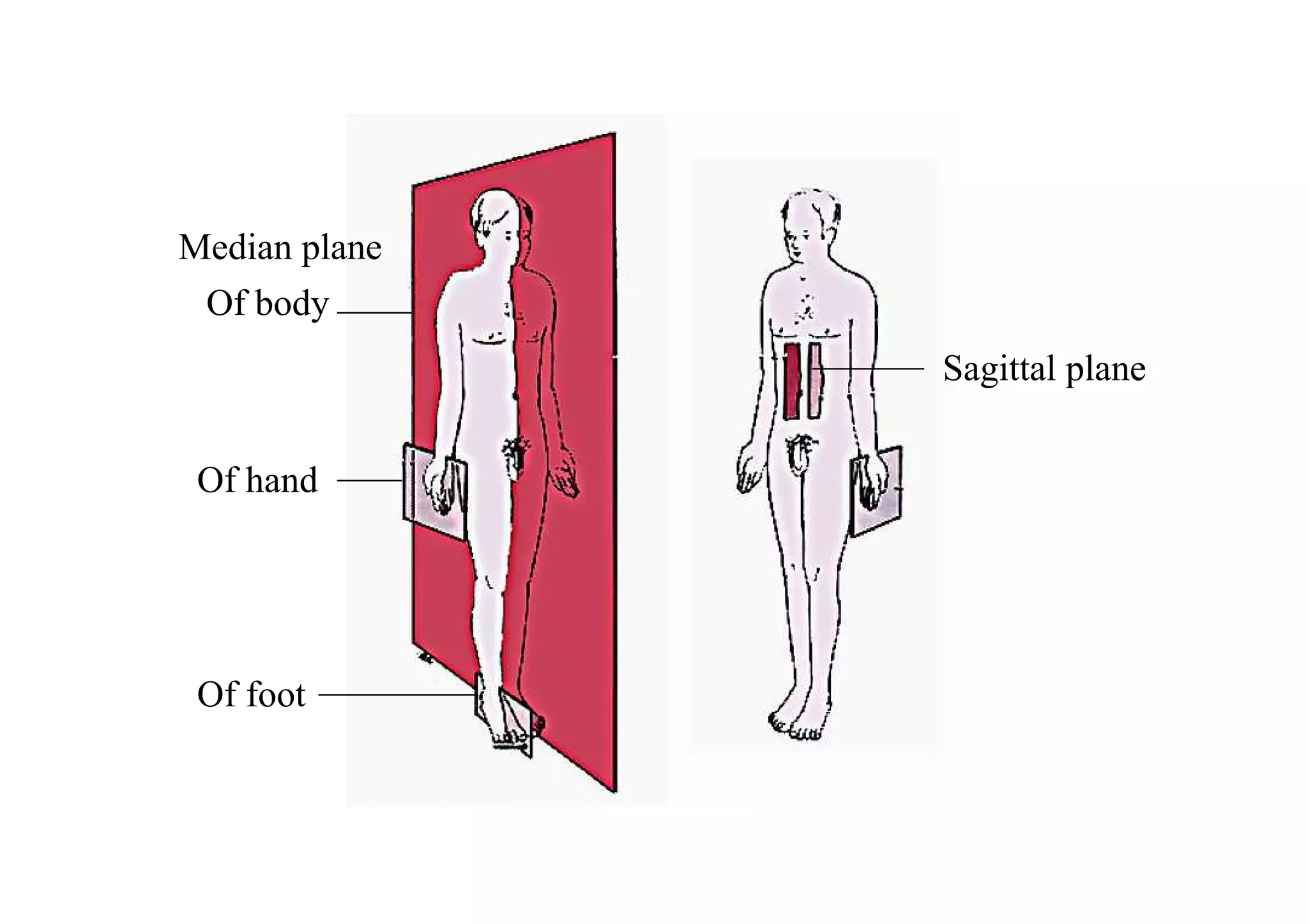
• Median = vertical, front to back in midline
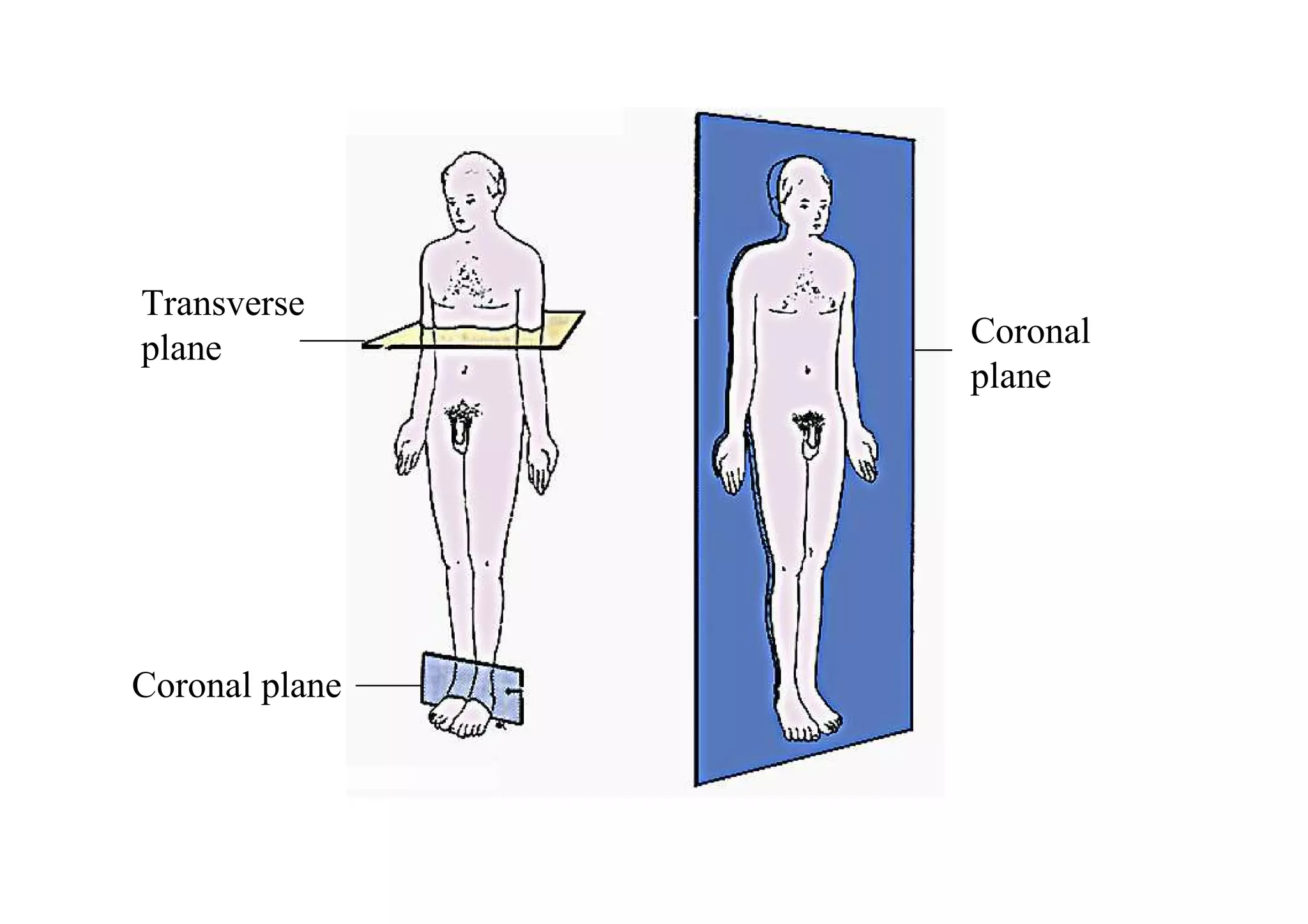
• Frontal (coronal) = vertical, perpendicular
  to median
• Horizontal (transverse) = parallel to floor,
  perpendicular to median, coronal
• Sagittal = vertical, parallel to median
Median plane
 Of body
               Sagittal plane


 Of hand


 Of foot
Transverse
plane           Coronal
                plane


Coronal plane
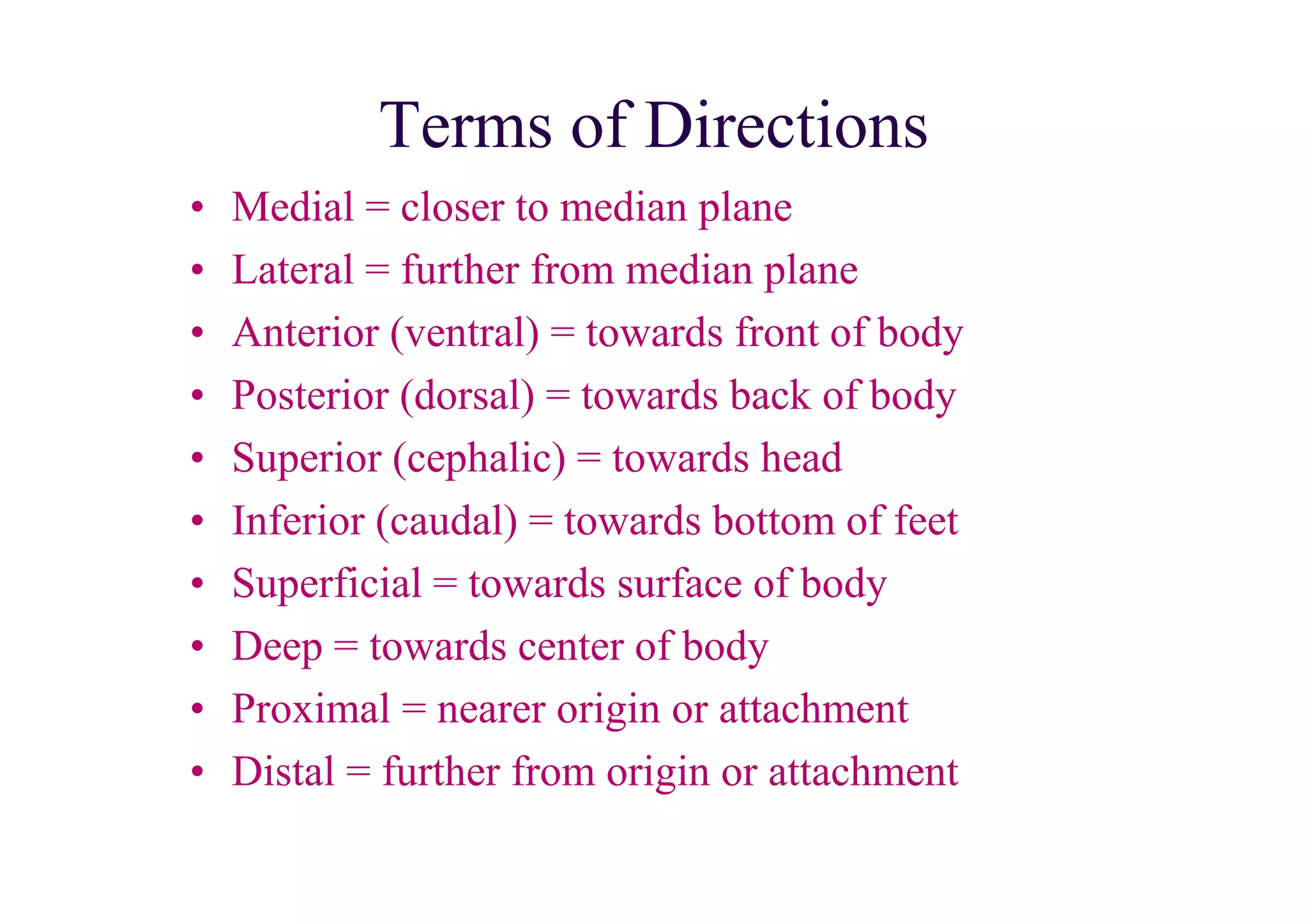
Terms of Directions
•   Medial = closer to median plane
•   Lateral = further from median plane
•   Anterior (ventral) = towards front of body
•   Posterior (dorsal) = towards back of body
•   Superior (cephalic) = towards head
•   Inferior (caudal) = towards bottom of feet
•   Superficial = towards surface of body
•   Deep = towards center of body
•   Proximal = nearer origin or attachment
•   Distal = further from origin or attachment
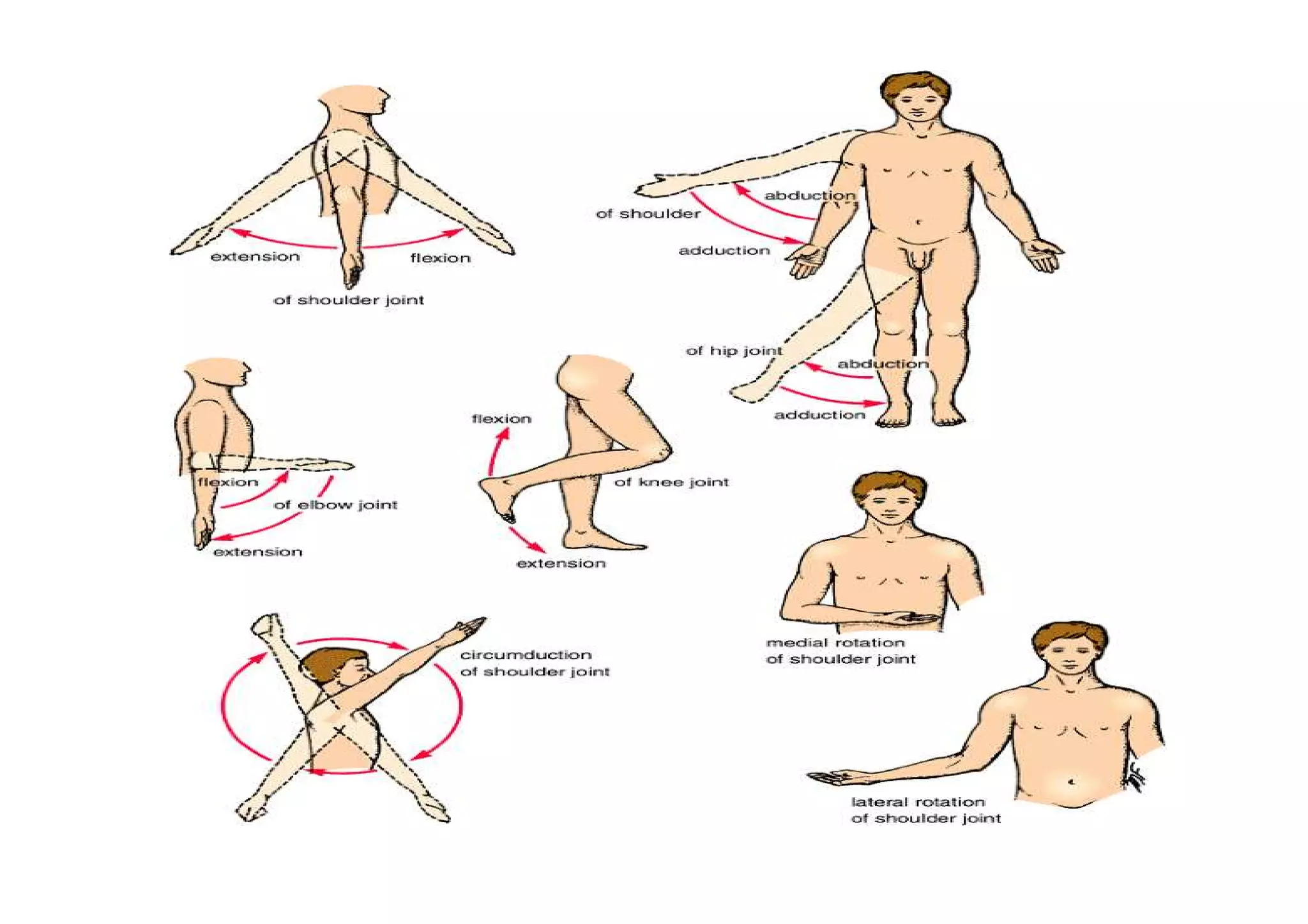
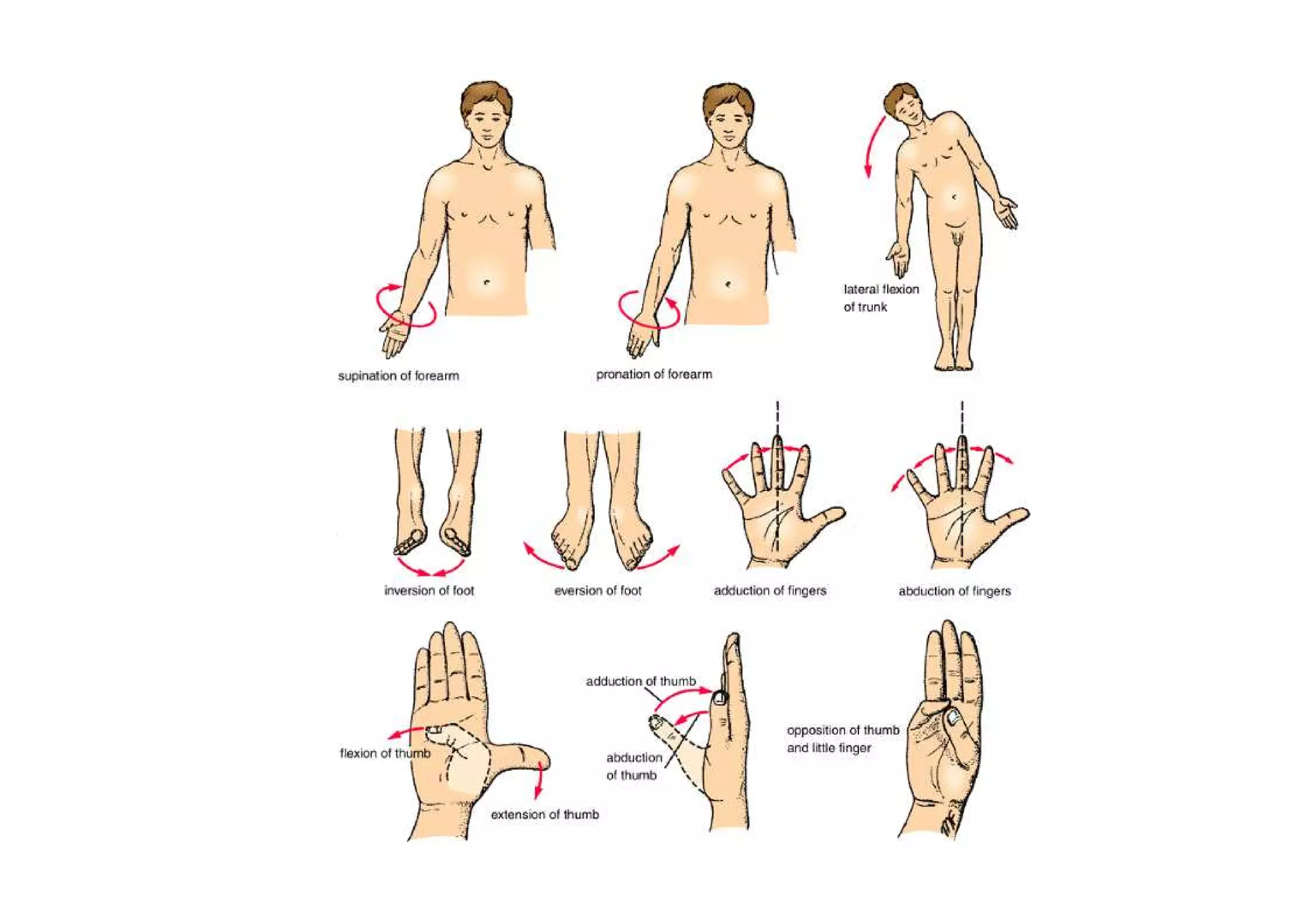
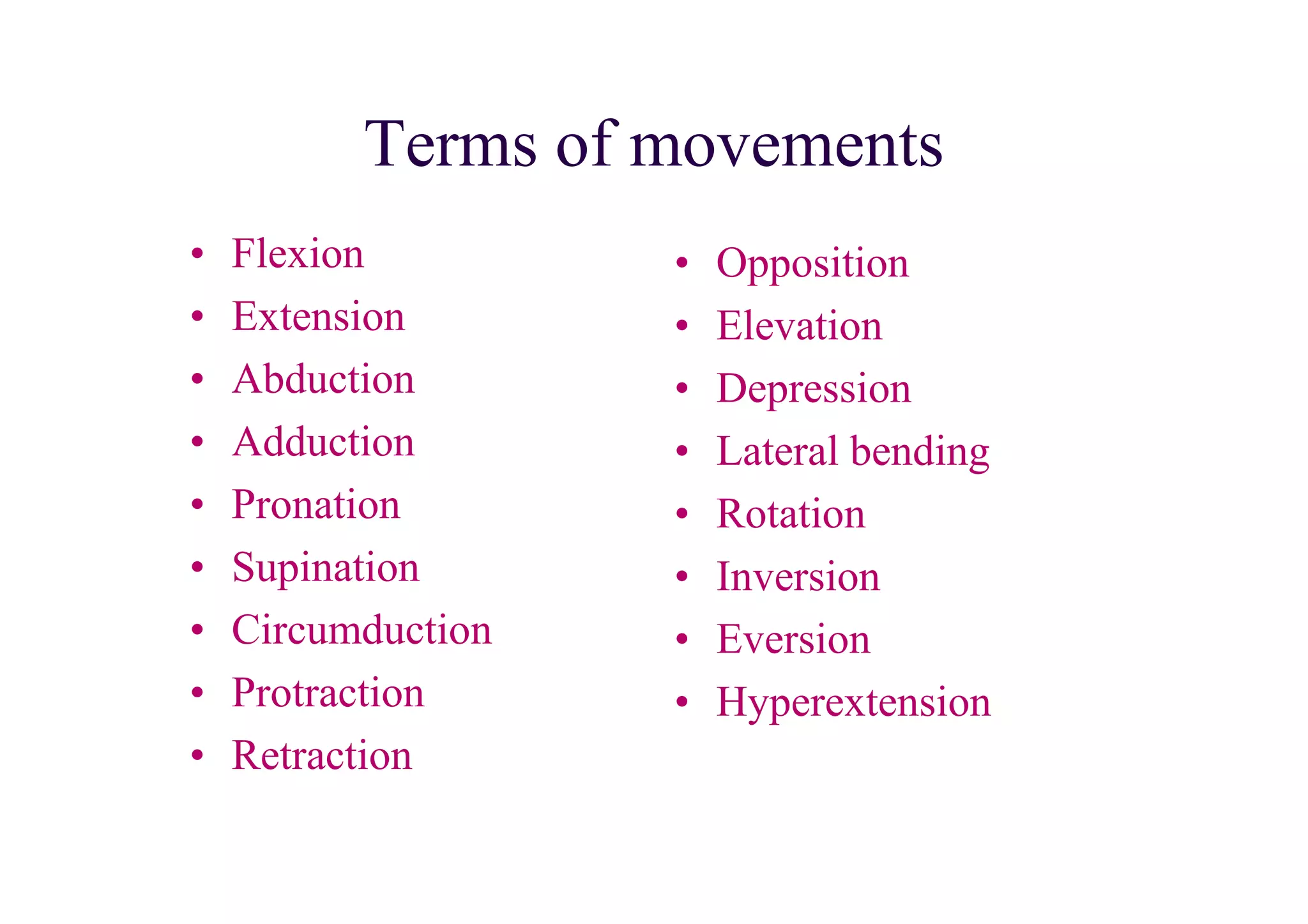
Terms of Movements
Terms of movements
•   Flexion         •   Opposition
•   Extension       •   Elevation
•   Abduction       •   Depression
•   Adduction       •   Lateral bending
•   Pronation       •   Rotation
•   Supination      •   Inversion
•   Circumduction   •   Eversion
•   Protraction     •   Hyperextension
•   Retraction
Skeleton
• Rigid support for body and its parts
• Components of skeleton:
  –   Bone
  –   Joints
  –   Structures associated with joints
  –   Cartilage
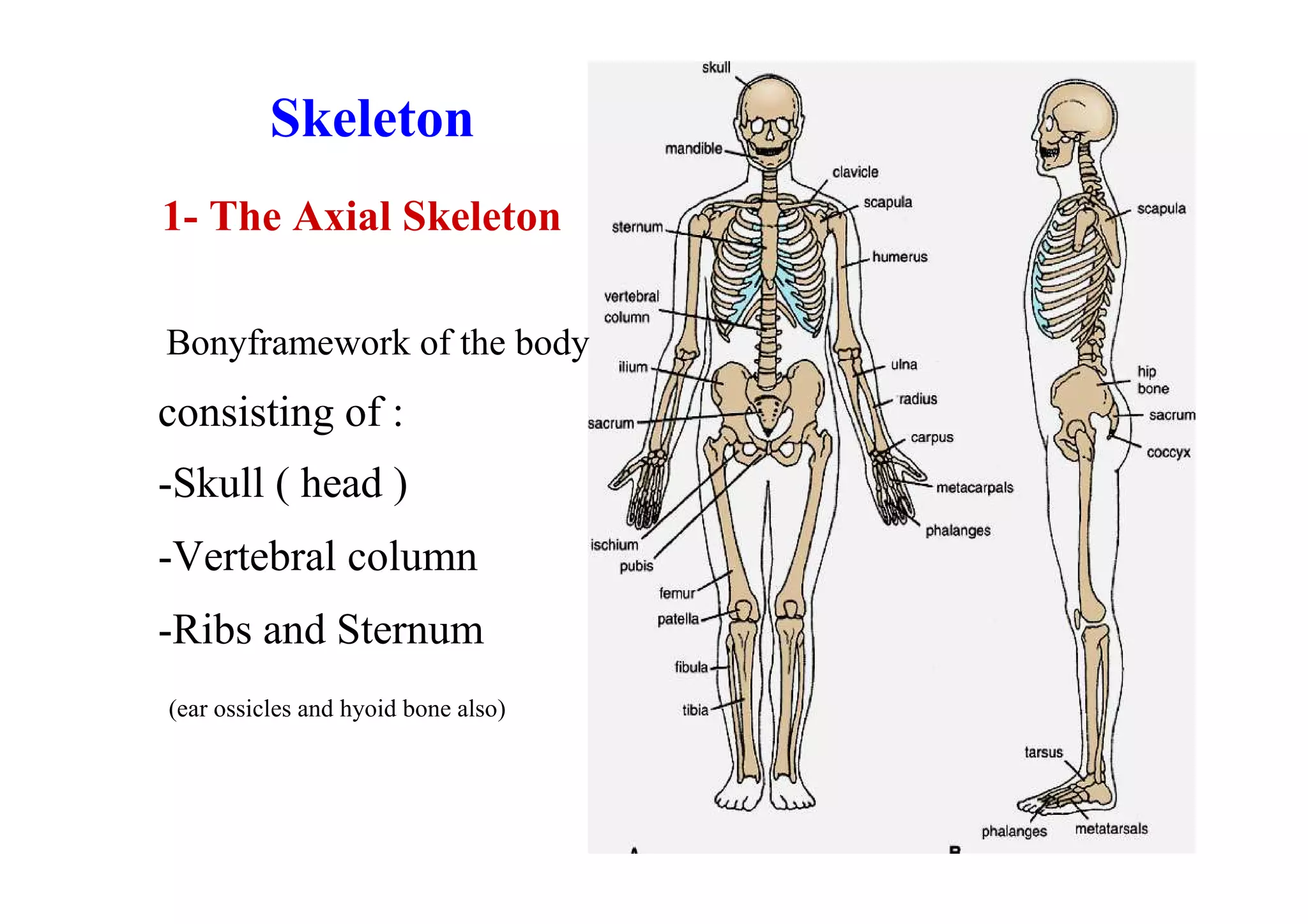
Skeleton
1- The Axial Skeleton

Bonyframework of the body
consisting of :
-Skull ( head )
-Vertebral column
-Ribs and Sternum
(ear ossicles and hyoid bone also)
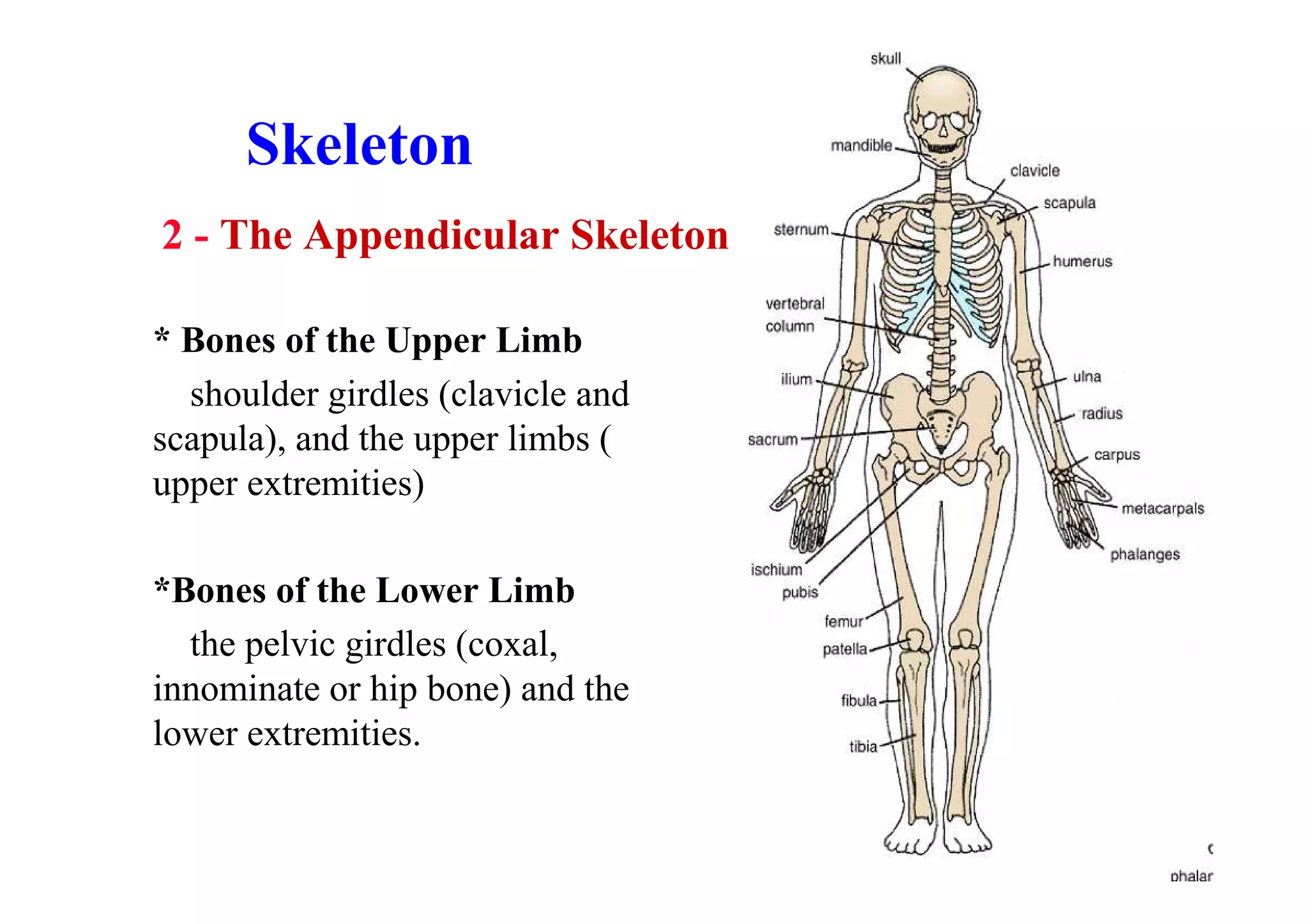
Skeleton
2 - The Appendicular Skeleton

* Bones of the Upper Limb
  shoulder girdles (clavicle and
scapula), and the upper limbs (
upper extremities)

*Bones of the Lower Limb
  the pelvic girdles (coxal,
innominate or hip bone) and the
lower extremities.
Types of Bones
• Long bones
    – Diaphysis = shaft
    – Metaphysis = shaft adjacent to epiphysis
    – Epiphysis = contain ossification center/s
•   Short bones
•   Flat bones
•   Irregular bones
•   Sesamoid bones
Types of Bones

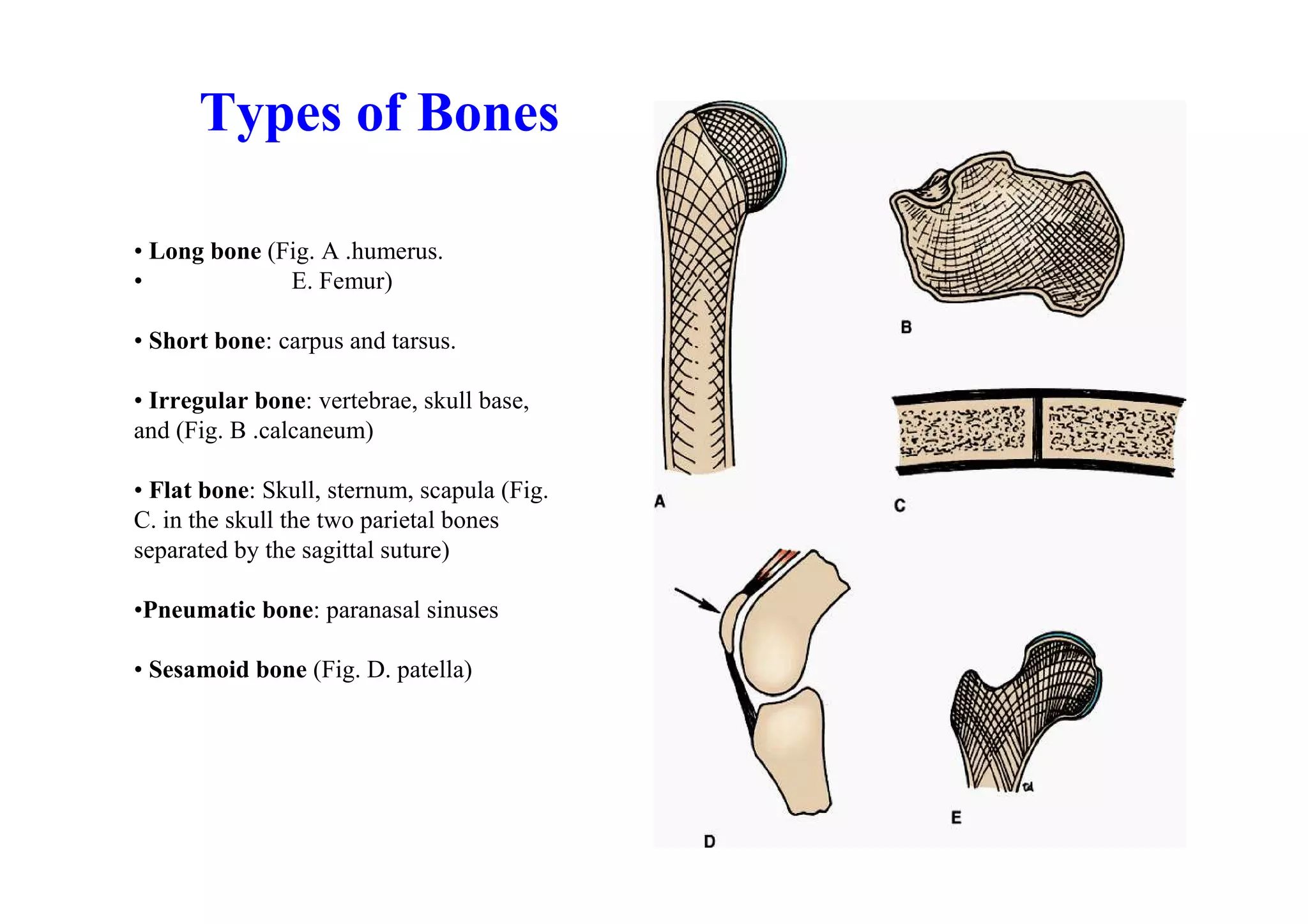
• Long bone (Fig. A .humerus.
•             E. Femur)

• Short bone: carpus and tarsus.

• Irregular bone: vertebrae, skull base,
and (Fig. B .calcaneum)

• Flat bone: Skull, sternum, scapula (Fig.
C. in the skull the two parietal bones
separated by the sagittal suture)

•Pneumatic bone: paranasal sinuses

• Sesamoid bone (Fig. D. patella)
Bone - Functions
•   Protection
•   Support
•   Movement
•   Calcium storage
•   Housing blood-forming cells
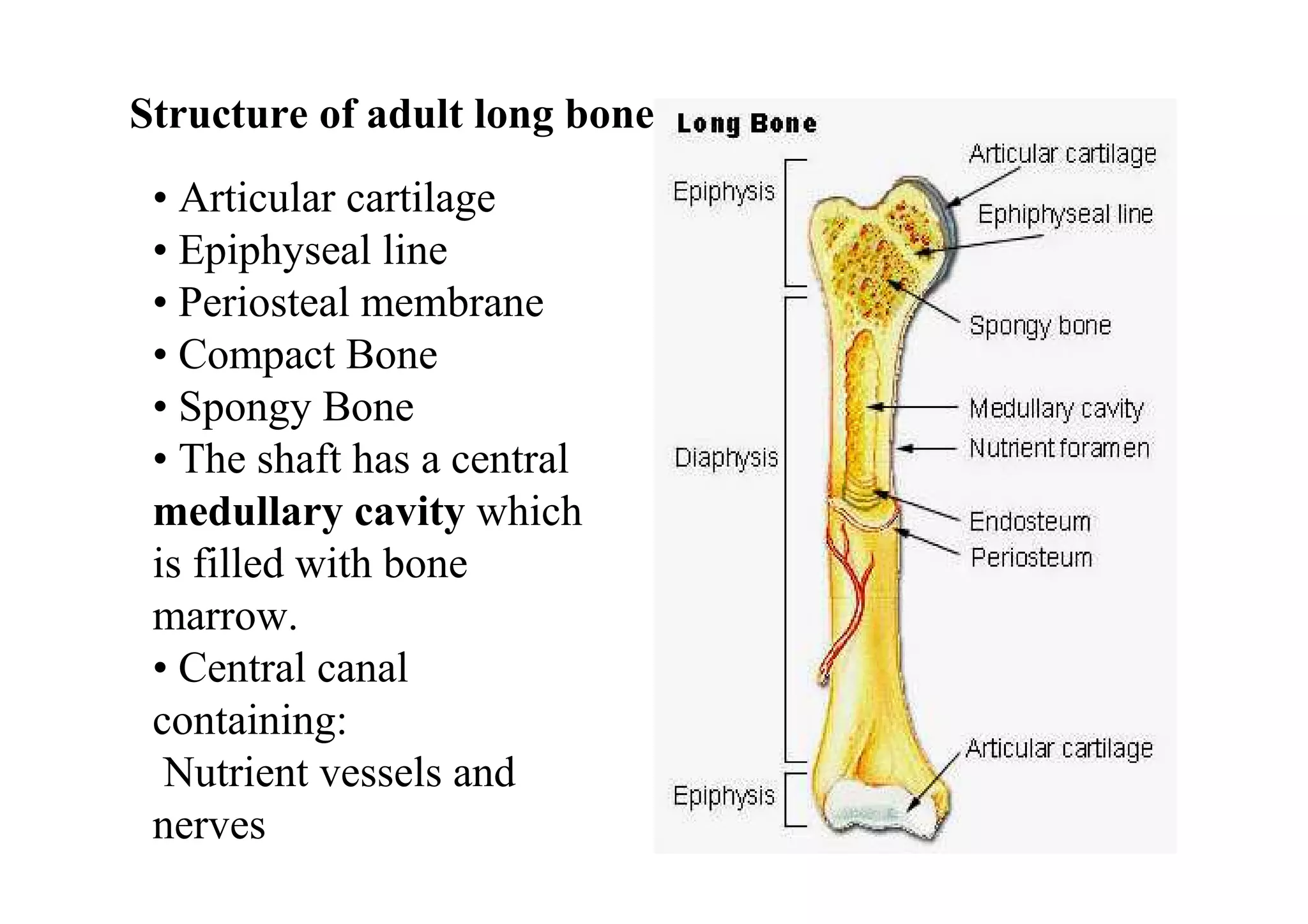
Structure of adult long bone
 • Articular cartilage
 • Epiphyseal line
 • Periosteal membrane
 • Compact Bone
 • Spongy Bone
 • The shaft has a central
 medullary cavity which
 is filled with bone
 marrow.
 • Central canal
 containing:
  Nutrient vessels and
 nerves
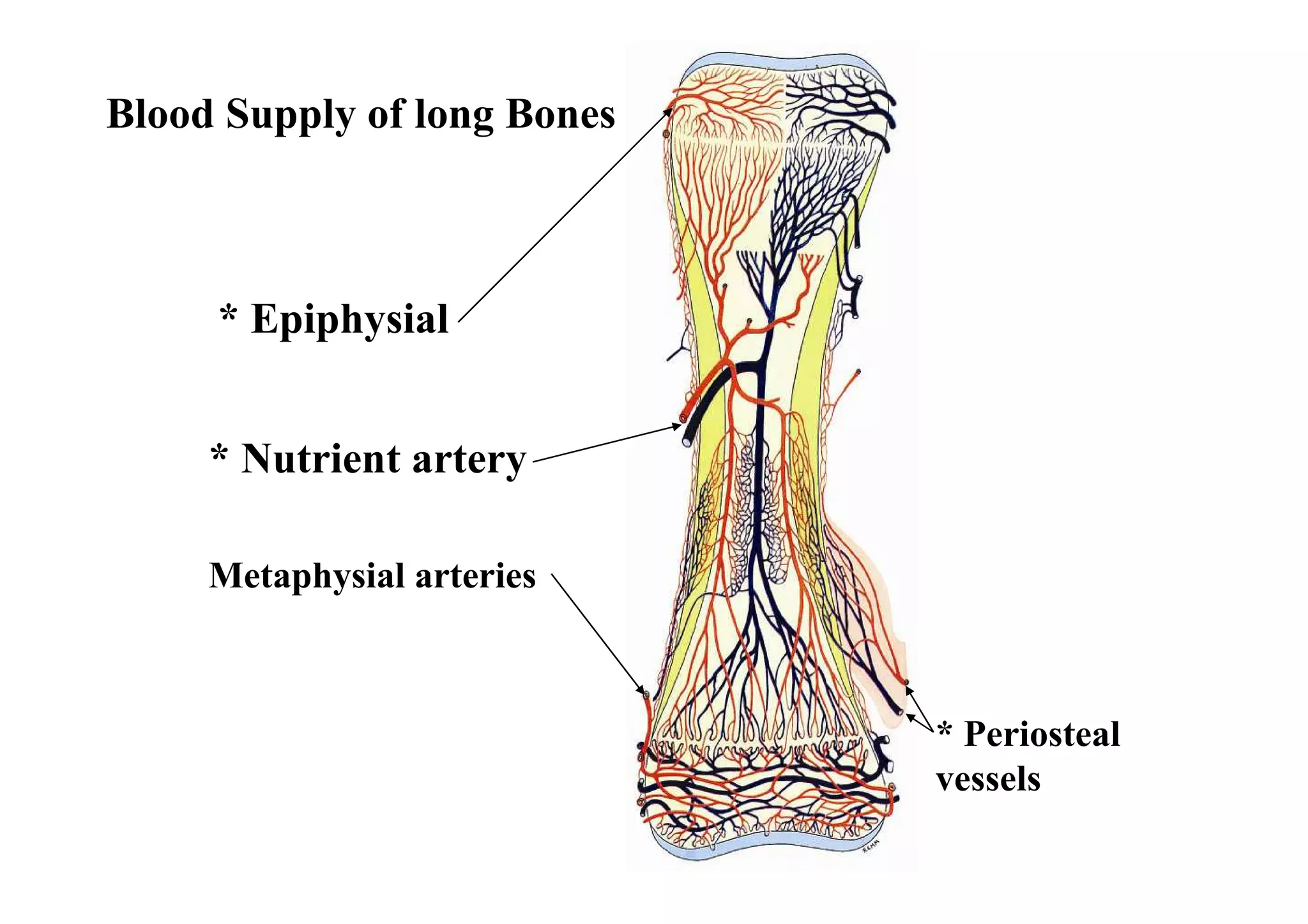
Blood Supply of long Bones


     * Epiphysial


     * Nutrient artery

     Metaphysial arteries


                             * Periosteal
                             vessels
Bone Markings
• Lines, ridges, crests
• Rounded elevations
    – Tuberosity, trochanter, tubercle
    – Protuberance
    – Malleolus
•   Spines, processes
•   Fossae, notches, grooves
•   Foramina
•   Canals
•   Meatuses
•   Heads and condyles
•   Epicondyles
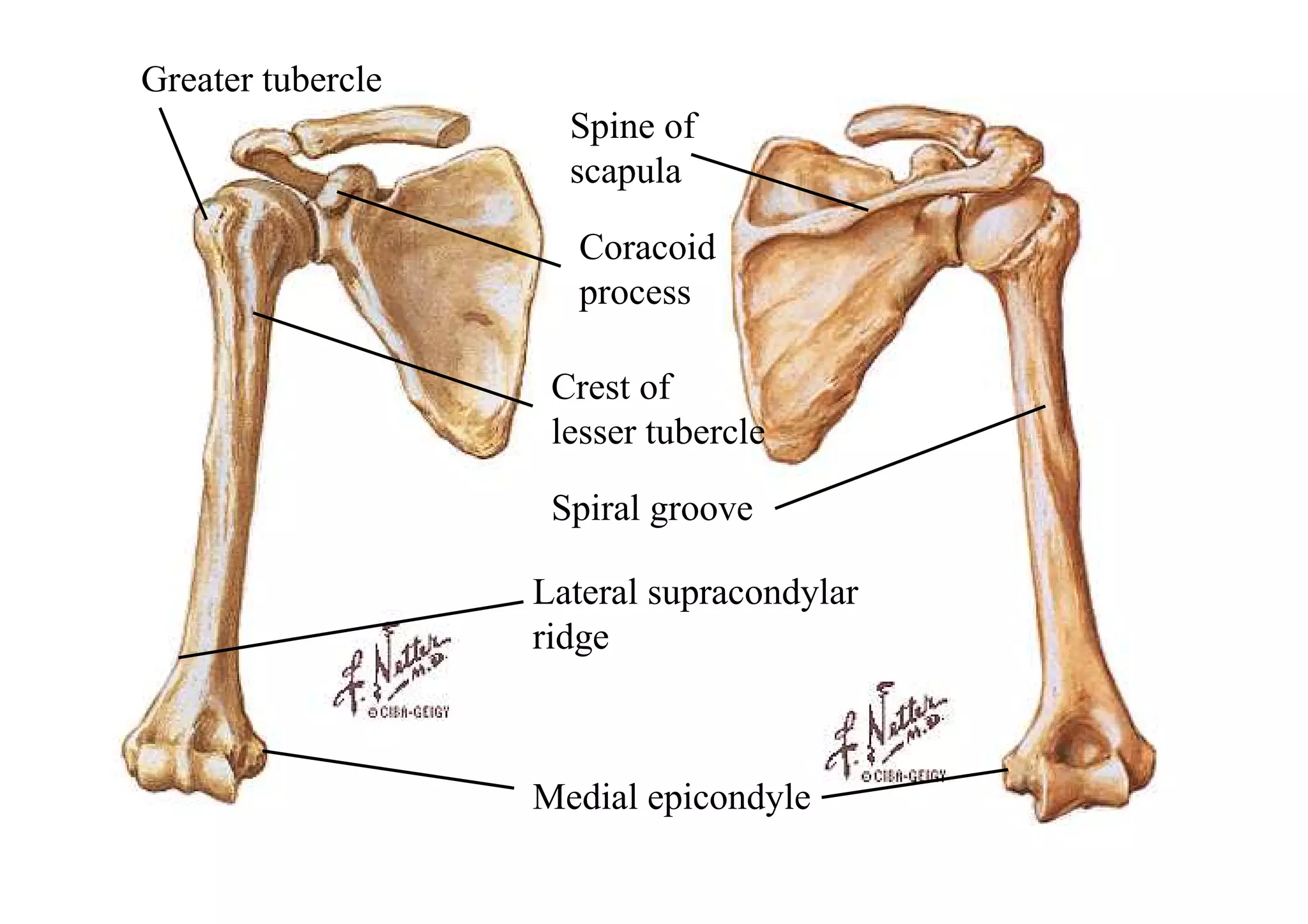
Greater tubercle
                     Spine of
                     scapula

                      Coracoid
                      process

                    Crest of
                    lesser tubercle

                    Spiral groove

                   Lateral supracondylar
                   ridge


                   Medial epicondyle
MCQ
• 1. Regarding the long bone all are true except
  one:
• A. It consists of diaphysis, epiphysis& metaphysis
• B. It is supplied by articular, nutrient, epiphyseal&
  metaphyseal arteries
• C. The metaphysis is the area that is responsible for
  bone growth in length
• D. It has a medullary cavity that contains osteoblasts
MCQ

• Regarding the shapes of bones all are
  true except one:
• A. The short bone is formed of cancellous bone with a
  covering thin compact bone
• B. An Example of short bones is the carpal bones at the
  wrist
• C. The best example of flat bone is the base of the skull
• D. The flat bone is formed of two laminae of compact bone
  with a layer of spongy bone in between
MCQ
Regarding the Skeleton are true except one:

• A. There are two main subdivisions: Axial&
  appendicular skeletons
• B. The appendicular skeleton is formed of bones
  of the limbs
• C. The axial skeleton is formed of skull only
• D. The axial skeleton is formed of skull, vertebral
  column, sternum& ribs
The bones have the following functions
except one
a. Give the shape& framework of the body
b. Provide attachment to muscles
c. Secrete some hormones
d. Protect important vital structures
Cartilages
Cartilages
   PROPERTIES OF CARTILAGE


• Cartilage is a type of hard connective tissue.
It is tough and resilient, It is devoid of nerves, blood vessels
and lymphatics.
• It consists of cells termed chondrocytes (mature cartilage
cells) and Matrix of connective tissue rich of fibres.
• It resists compressive forces as well as long-term effects of
pressure and friction (therefore it covers articular surfaces).
• Cartilage has a high capacity of growth by multiplication of
the chondroblasts.
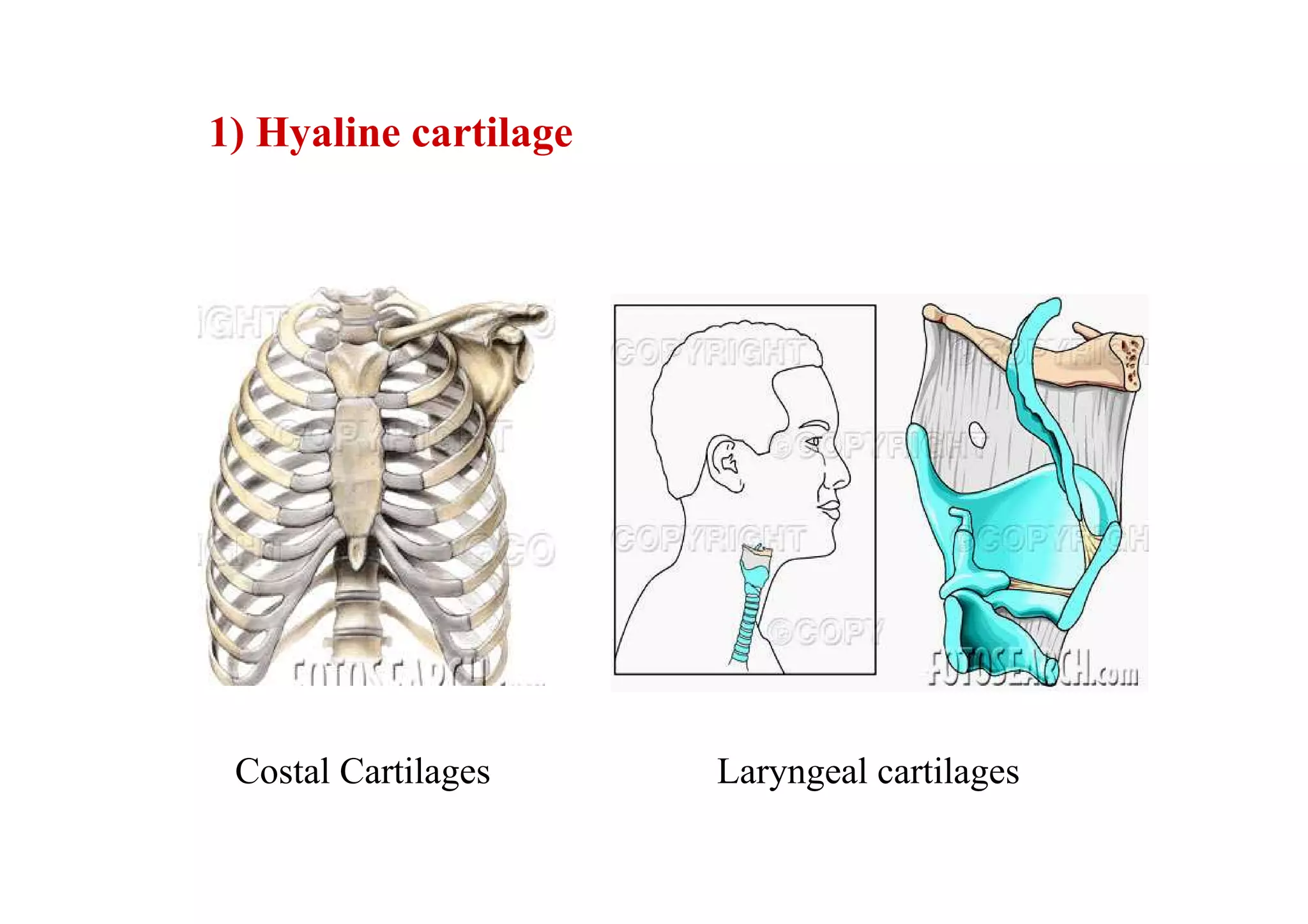
1) Hyaline cartilage


 Costal Cartilages     Laryngeal cartilages
2) White fibrocartilage:


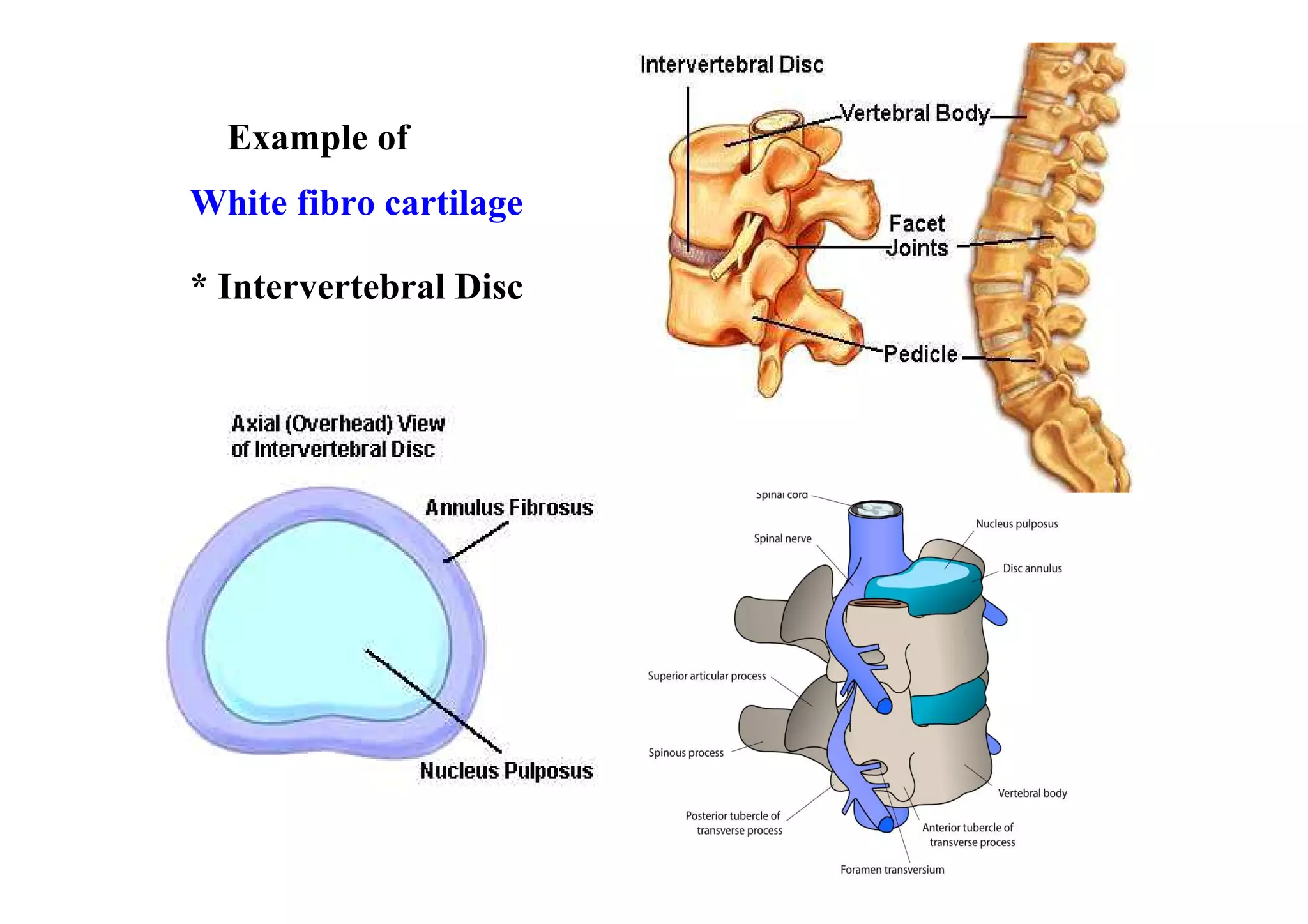
• Intervertebral disc
• Symphysis pubis
• Articular discs
Example of
White fibro cartilage

* Intervertebral Disc
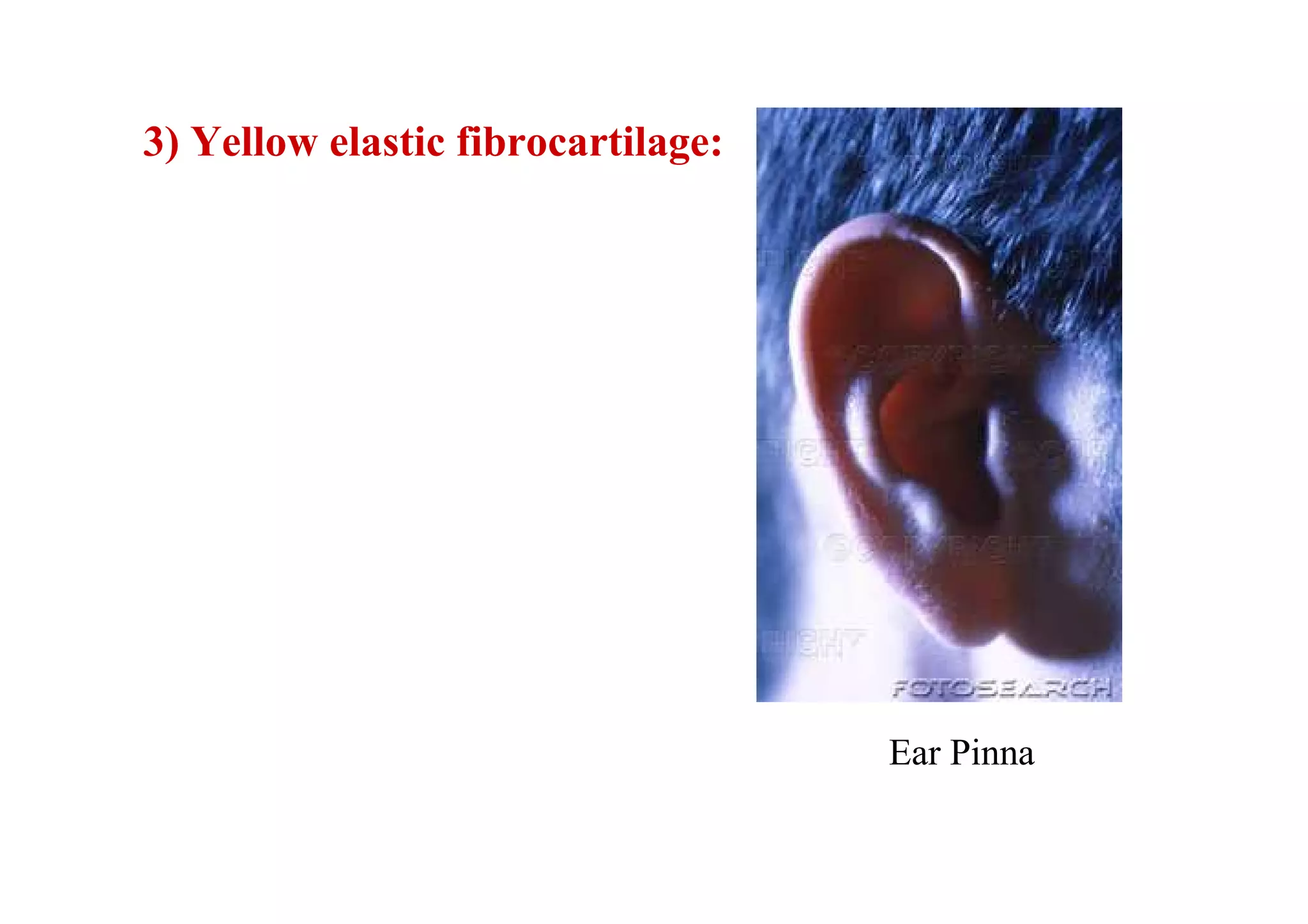
3) Yellow elastic fibrocartilage:


                                    Ear Pinna
• Regarding cartilage the following statements
  are true except one:
• A. It is tough & resilient connective tissue that
  contain chondrocytes
• B. It does not resist compressive forces
• C. It has a high capacity of growth& regeneration
• D. It is devoid of nerves, blood vessels &
  lymphatics
• Regarding the cartilage types the following
  statements are true except one:
• A. The hyaline cartilage is translucent, glossy&
  cover the articular surfaces of bones
• B. The Intervertebral disc is a hyaline a type of
  cartilage
• c. The ear pinna is yellow elastic fibrocartilage
  that is rich in elastic fibers
• C. An example of white fibrocartilage is the
  symphysis pubis
Thanks

Introduction of anatomy lecture1 dr. noura

  • 1.
    Introduction of Anatomy By Dr, Noura El Tahawy Associate professor of Anatomy Batterjee Medical College
  • 2.
    Anatomy • Definition -anatome = up (ana) + cutting (tome) • Disciplines of anatomy – Macroscopic – Microscopic – Developmental – Neuroanatomy • Approach to study of gross anatomy Upper extremity Back Head and neck Thorax Abdomen Pelvis and perineum Lower extremity
  • 3.
    Anatomical Position • Body erect • Head, eyes, toes directed forward • Limbs at sides of body • Palms directed forward
  • 5.
    Anatomical Planes • Median= vertical, front to back in midline • Frontal (coronal) = vertical, perpendicular to median • Horizontal (transverse) = parallel to floor, perpendicular to median, coronal • Sagittal = vertical, parallel to median
  • 7.
    Median plane Ofbody Sagittal plane Of hand Of foot
  • 8.
    Transverse plane Coronal plane Coronal plane
  • 9.
    Terms of Directions • Medial = closer to median plane • Lateral = further from median plane • Anterior (ventral) = towards front of body • Posterior (dorsal) = towards back of body • Superior (cephalic) = towards head • Inferior (caudal) = towards bottom of feet • Superficial = towards surface of body • Deep = towards center of body • Proximal = nearer origin or attachment • Distal = further from origin or attachment
  • 10.
  • 13.
    Terms of movements • Flexion • Opposition • Extension • Elevation • Abduction • Depression • Adduction • Lateral bending • Pronation • Rotation • Supination • Inversion • Circumduction • Eversion • Protraction • Hyperextension • Retraction
  • 14.
    Skeleton • Rigid supportfor body and its parts • Components of skeleton: – Bone – Joints – Structures associated with joints – Cartilage
  • 15.
    Skeleton 1- The AxialSkeleton Bonyframework of the body consisting of : -Skull ( head ) -Vertebral column -Ribs and Sternum (ear ossicles and hyoid bone also)
  • 16.
    Skeleton 2 - TheAppendicular Skeleton * Bones of the Upper Limb shoulder girdles (clavicle and scapula), and the upper limbs ( upper extremities) *Bones of the Lower Limb the pelvic girdles (coxal, innominate or hip bone) and the lower extremities.
  • 17.
    Types of Bones •Long bones – Diaphysis = shaft – Metaphysis = shaft adjacent to epiphysis – Epiphysis = contain ossification center/s • Short bones • Flat bones • Irregular bones • Sesamoid bones
  • 18.
    Types of Bones •Long bone (Fig. A .humerus. • E. Femur) • Short bone: carpus and tarsus. • Irregular bone: vertebrae, skull base, and (Fig. B .calcaneum) • Flat bone: Skull, sternum, scapula (Fig. C. in the skull the two parietal bones separated by the sagittal suture) •Pneumatic bone: paranasal sinuses • Sesamoid bone (Fig. D. patella)
  • 19.
    Bone - Functions • Protection • Support • Movement • Calcium storage • Housing blood-forming cells
  • 20.
    Structure of adultlong bone • Articular cartilage • Epiphyseal line • Periosteal membrane • Compact Bone • Spongy Bone • The shaft has a central medullary cavity which is filled with bone marrow. • Central canal containing: Nutrient vessels and nerves
  • 21.
    Blood Supply oflong Bones * Epiphysial * Nutrient artery Metaphysial arteries * Periosteal vessels
  • 22.
    Bone Markings • Lines,ridges, crests • Rounded elevations – Tuberosity, trochanter, tubercle – Protuberance – Malleolus • Spines, processes • Fossae, notches, grooves • Foramina • Canals • Meatuses • Heads and condyles • Epicondyles
  • 23.
    Greater tubercle Spine of scapula Coracoid process Crest of lesser tubercle Spiral groove Lateral supracondylar ridge Medial epicondyle
  • 24.
    MCQ • 1. Regardingthe long bone all are true except one: • A. It consists of diaphysis, epiphysis& metaphysis • B. It is supplied by articular, nutrient, epiphyseal& metaphyseal arteries • C. The metaphysis is the area that is responsible for bone growth in length • D. It has a medullary cavity that contains osteoblasts
  • 25.
    MCQ • Regarding theshapes of bones all are true except one: • A. The short bone is formed of cancellous bone with a covering thin compact bone • B. An Example of short bones is the carpal bones at the wrist • C. The best example of flat bone is the base of the skull • D. The flat bone is formed of two laminae of compact bone with a layer of spongy bone in between
  • 26.
    MCQ Regarding the Skeletonare true except one: • A. There are two main subdivisions: Axial& appendicular skeletons • B. The appendicular skeleton is formed of bones of the limbs • C. The axial skeleton is formed of skull only • D. The axial skeleton is formed of skull, vertebral column, sternum& ribs
  • 27.
    The bones havethe following functions except one a. Give the shape& framework of the body b. Provide attachment to muscles c. Secrete some hormones d. Protect important vital structures
  • 28.
  • 29.
    Cartilages PROPERTIES OF CARTILAGE • Cartilage is a type of hard connective tissue. It is tough and resilient, It is devoid of nerves, blood vessels and lymphatics. • It consists of cells termed chondrocytes (mature cartilage cells) and Matrix of connective tissue rich of fibres. • It resists compressive forces as well as long-term effects of pressure and friction (therefore it covers articular surfaces). • Cartilage has a high capacity of growth by multiplication of the chondroblasts.
  • 30.
    1) Hyaline cartilage Costal Cartilages Laryngeal cartilages
  • 31.
    2) White fibrocartilage: •Intervertebral disc • Symphysis pubis • Articular discs
  • 32.
    Example of White fibrocartilage * Intervertebral Disc
  • 33.
    3) Yellow elasticfibrocartilage: Ear Pinna
  • 34.
    • Regarding cartilagethe following statements are true except one: • A. It is tough & resilient connective tissue that contain chondrocytes • B. It does not resist compressive forces • C. It has a high capacity of growth& regeneration • D. It is devoid of nerves, blood vessels & lymphatics
  • 35.
    • Regarding thecartilage types the following statements are true except one: • A. The hyaline cartilage is translucent, glossy& cover the articular surfaces of bones • B. The Intervertebral disc is a hyaline a type of cartilage • c. The ear pinna is yellow elastic fibrocartilage that is rich in elastic fibers • C. An example of white fibrocartilage is the symphysis pubis
  • 36.