Forest Succession
Forest Succession :  The gradual supplanting of one community of plants by another, usually as a result of differences in  shade tolerance .
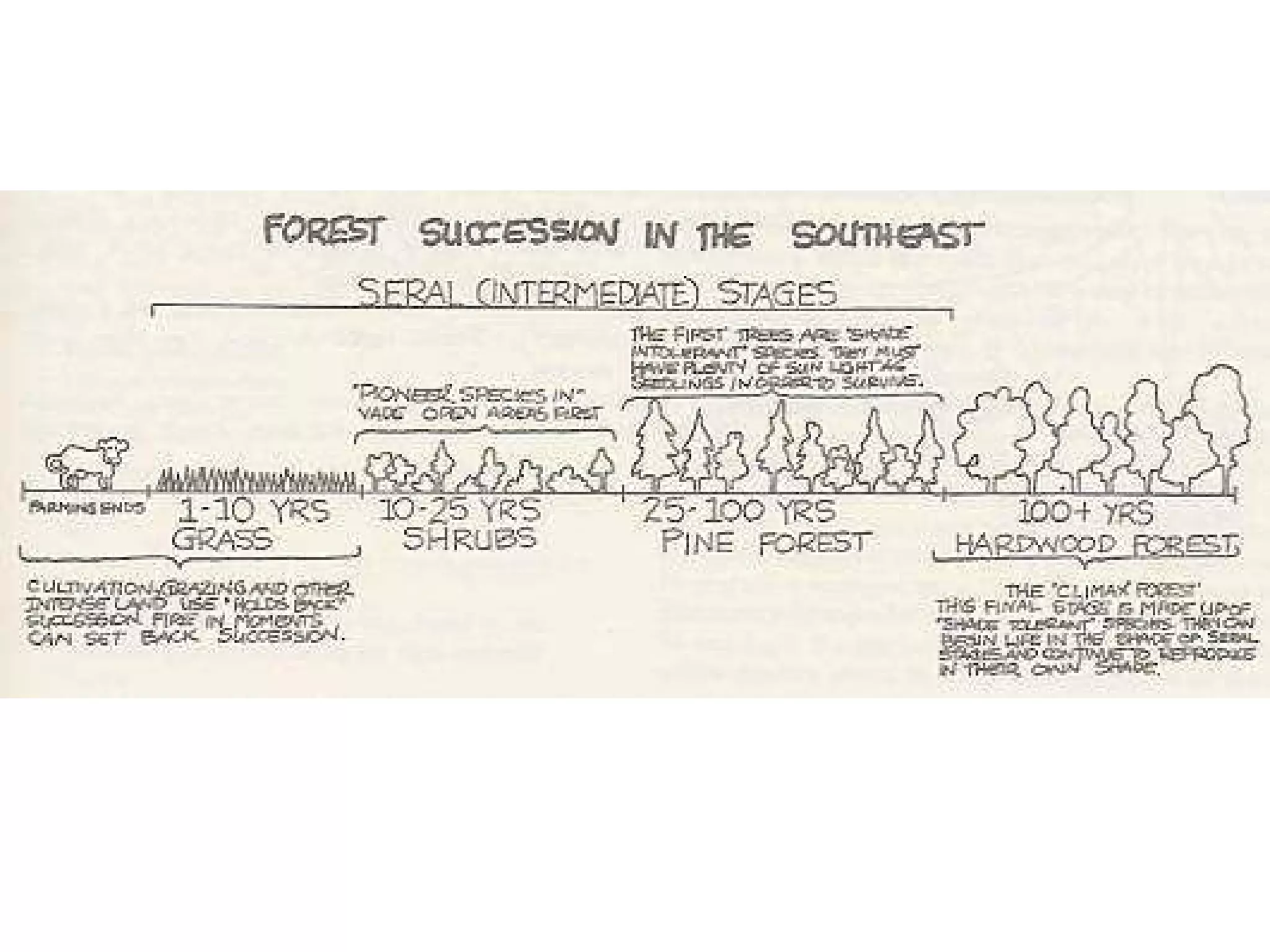
Forest Succession Succession Process. Begins with  disturbance New species grow Based on Shade tolerance  Pioneers – 1 st  to colonize Climax species – last & remaining species
Eastern Deciduous Forest
Pioneer Species The first tree species to inhabit a site after a stand-replacing event fast-growing open or low density crown relatively short life span . Intolerant to shade If no one ever mowed the grass field around the outdoor lab pond again, what would be the first trees to grow there?
Climax Species Used to describe the most shade tolerant tree species that are native to a particular region. Trees that will remain essentially unchanged in terms of species composition for as long as a site remains undisturbed.
Shade Tolerance
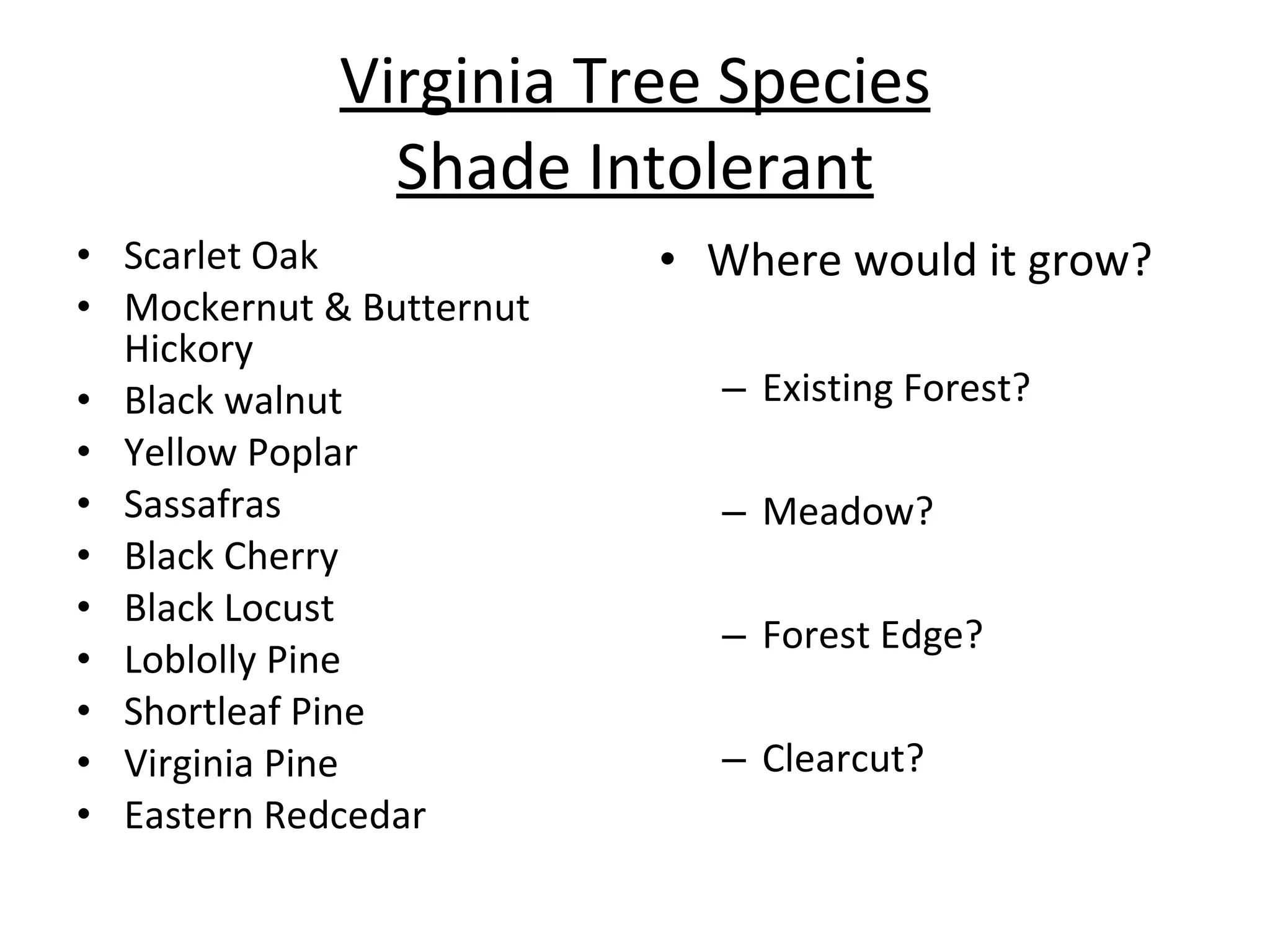
Virginia Tree Species Shade Intolerant Scarlet Oak Mockernut & Butternut Hickory Black walnut Yellow Poplar Sassafras Black Cherry Black Locust Loblolly Pine Shortleaf Pine Virginia Pine Eastern Redcedar Where would it grow? Existing Forest? Meadow? Forest Edge? Clearcut?
Virginia Tree Species Intermediate Tolerance Most Oaks Shagbark Hickory Ash Birch Sycamore White Pine Where would it grow? Existing Forest? Meadow? Forest Edge? Clearcut?
Virginia Tree Species Shade Tolerant Maples Dogwood Black Gum Persimmon Beech Hemlock Where would it grow? Existing Forest? Meadow? Forest Edge? Clearcut?
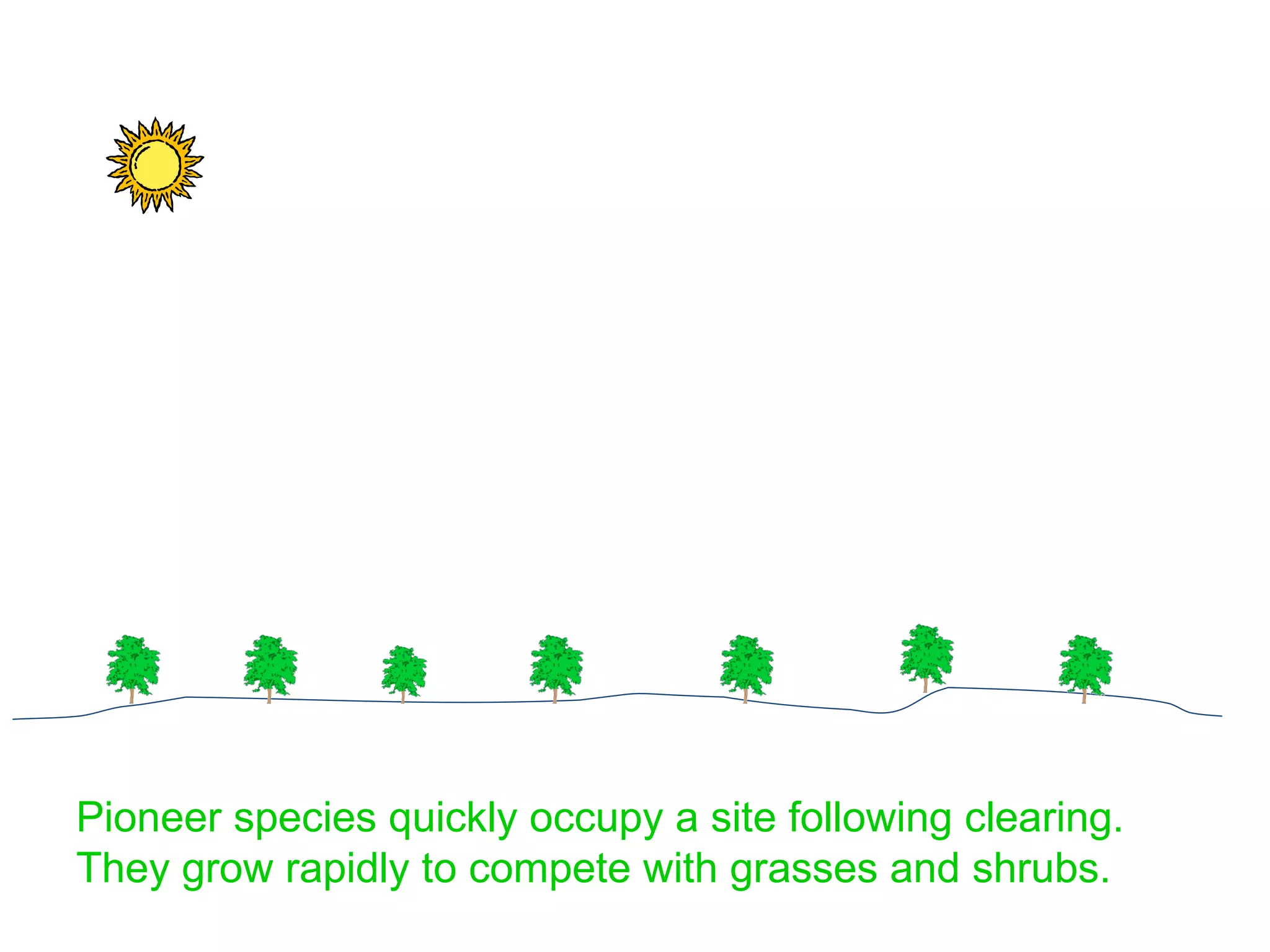
Pioneer species quickly occupy a site following clearing.  They grow rapidly to compete with grasses and shrubs.
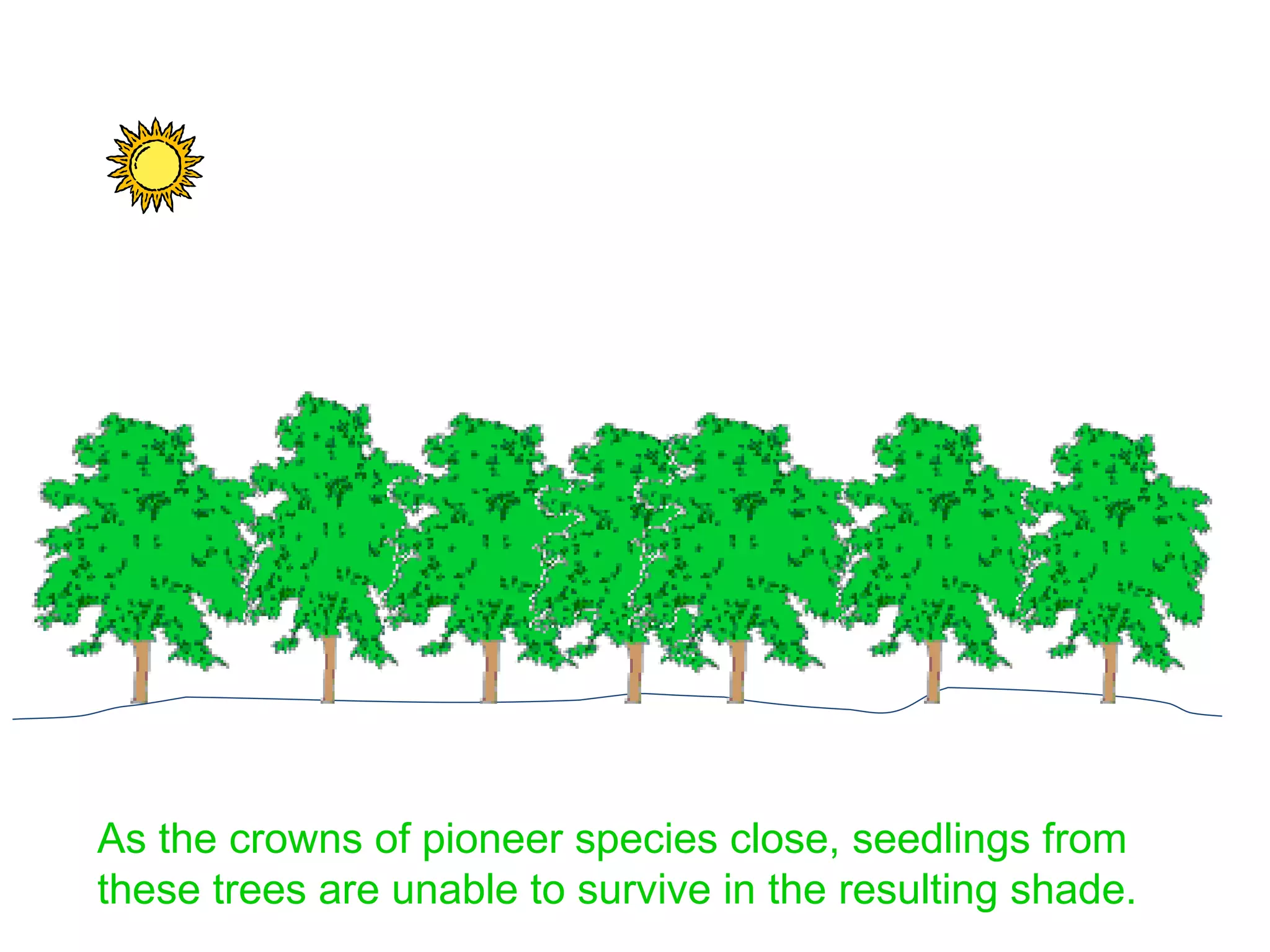
As the crowns of pioneer species close, seedlings from these trees are unable to survive in the resulting shade.
Different species that have a higher tolerance to shade soon become established beneath the pioneers.
As the short-lived pioneers near the end of their life spans, the more tolerant trees in the forest understory begin to take over the site.  The result is a major change in plant and animal species.
Spruce begins to take over an aspen dominated site in northern Minnesota as the short-lived pioneer aspen crowns thin with aging .
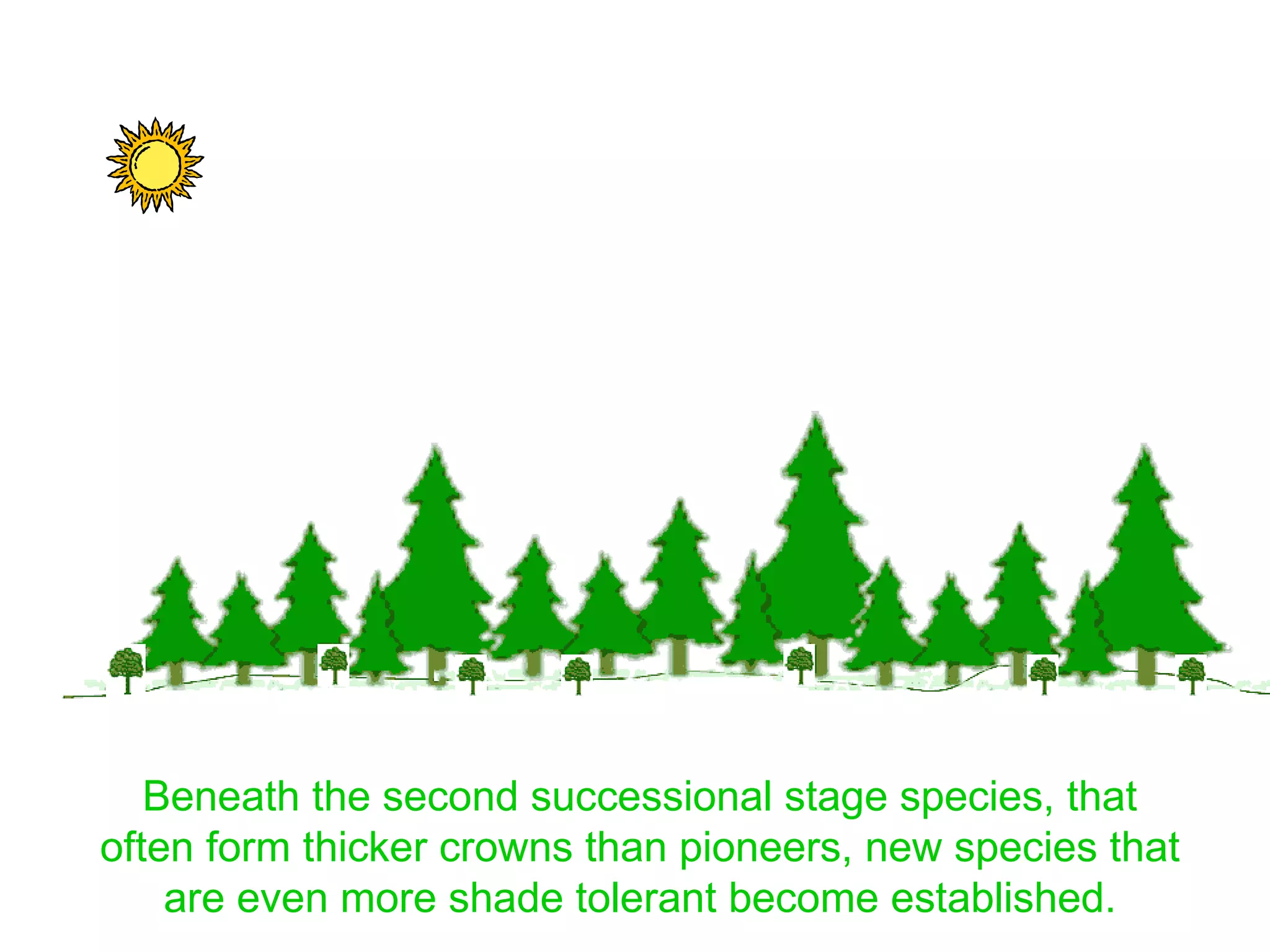
Beneath the second successional stage species, that often form thicker crowns than pioneers, new species that are even more shade tolerant become established.
The process of succession continues until the most shade-tolerant species suitable for the site (climax species) become established.
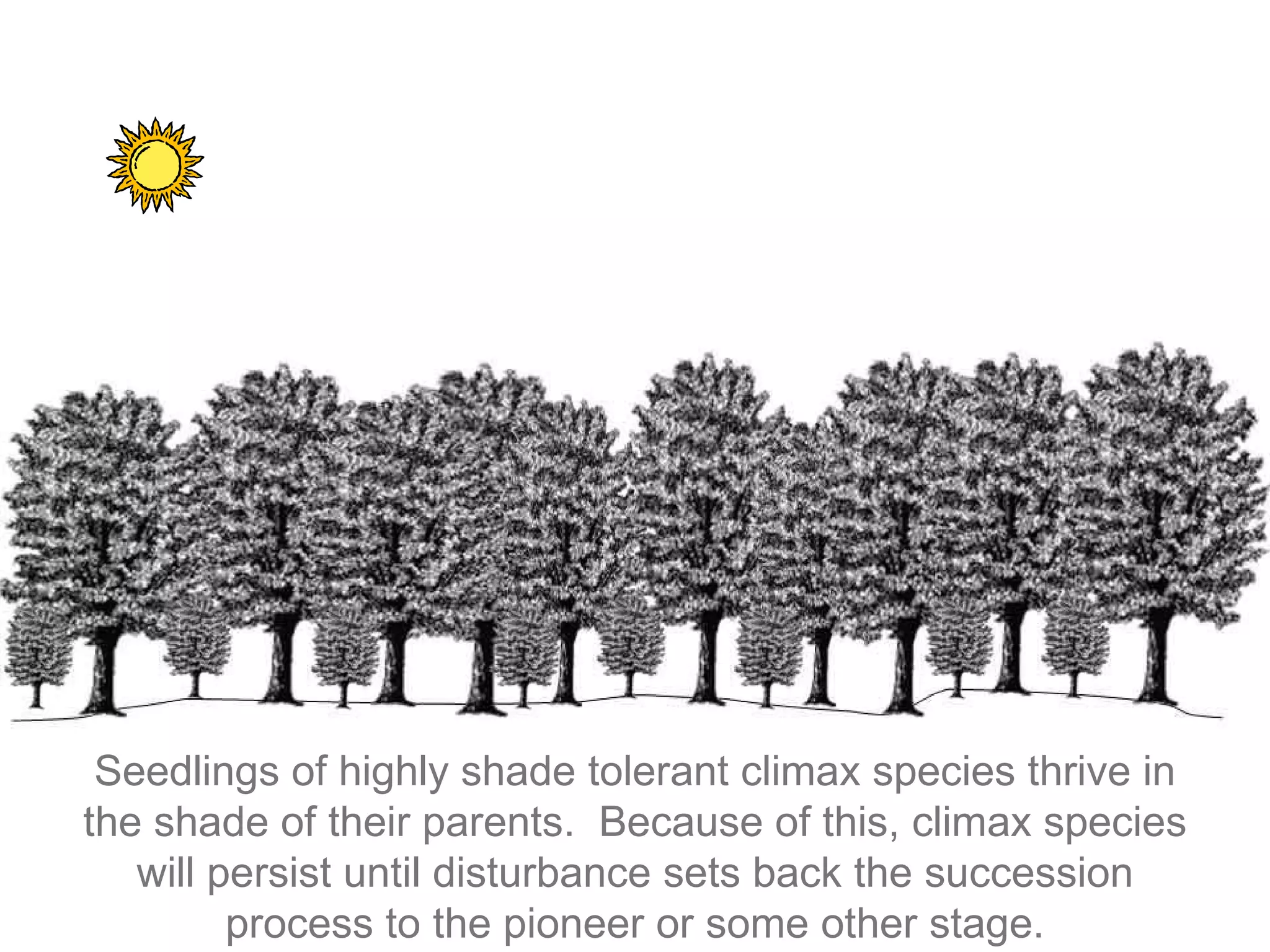
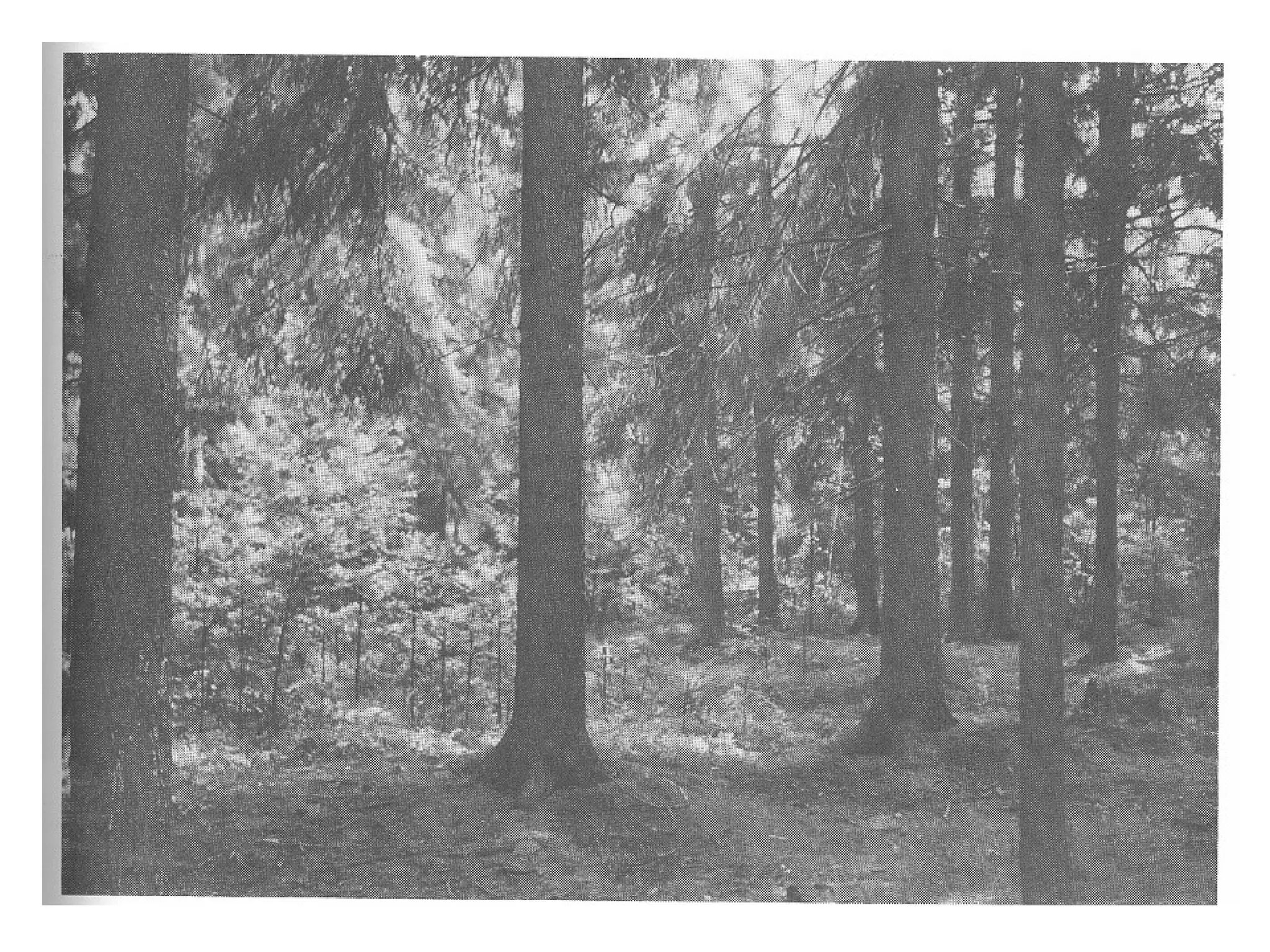
Seedlings of highly shade tolerant climax species thrive in the shade of their parents.  Because of this, climax species will persist until disturbance sets back the succession process to the pioneer or some other stage.
 
Principles of Forest Succession and Ecology  Objectives Learn about the principles of succession in an ever-changing natural area Learn basic principles of forest ecology
Succession Principle 1 All natural areas change over time, whether or not you do anything to them.   This process is called  succession .
Eastern United States The Eastern United States was by nature a deciduous forest This is due to climate conditions Mostly rainfall and temperature And soil type Acidic, weathered, shallow topsoil Without disturbance, the land will always return to forest
 
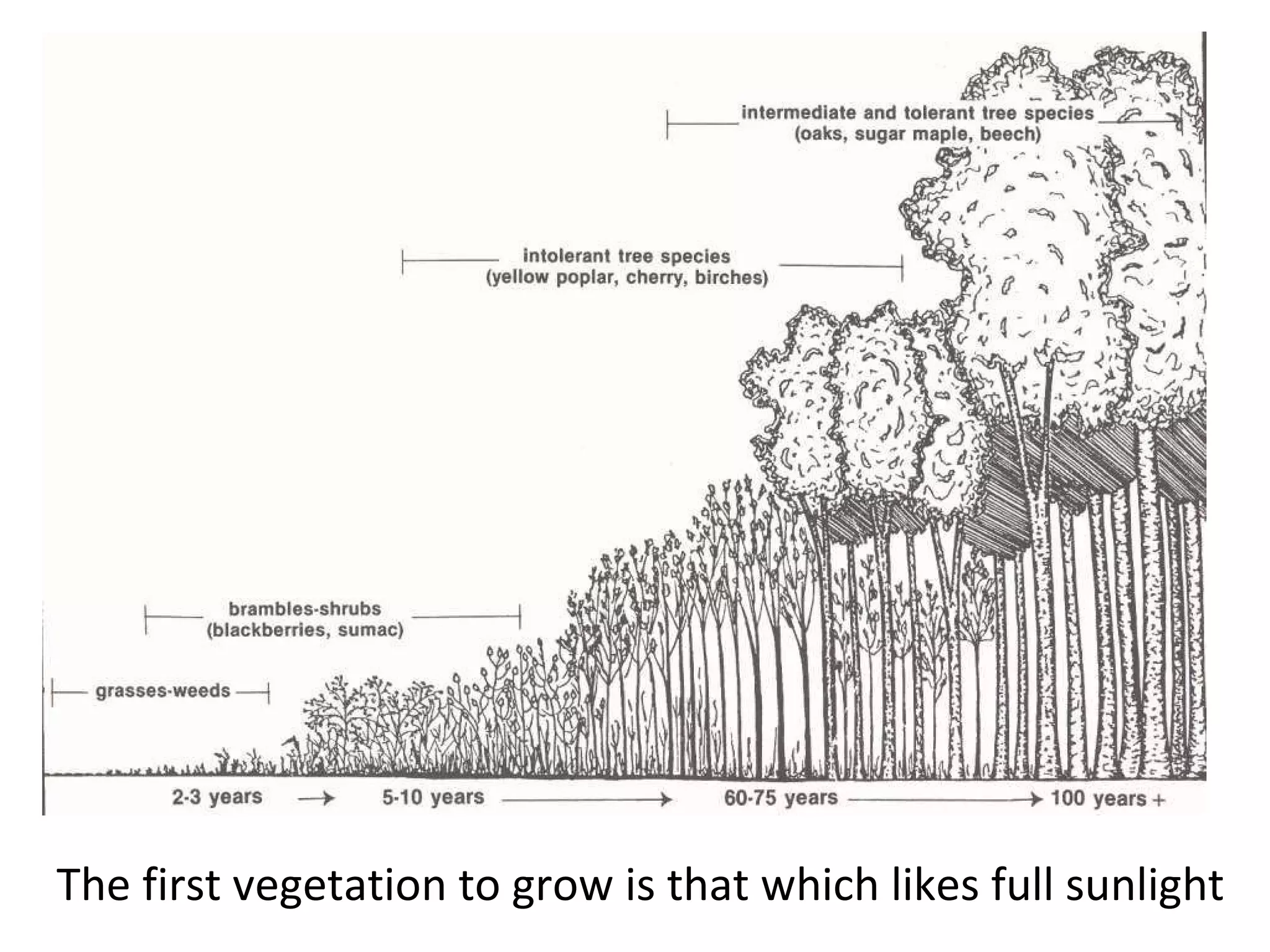
The first vegetation to grow is that which likes full sunlight
Succession stage 1: Herbaceous opening
Succession stage 2: Shrub/seedling brush
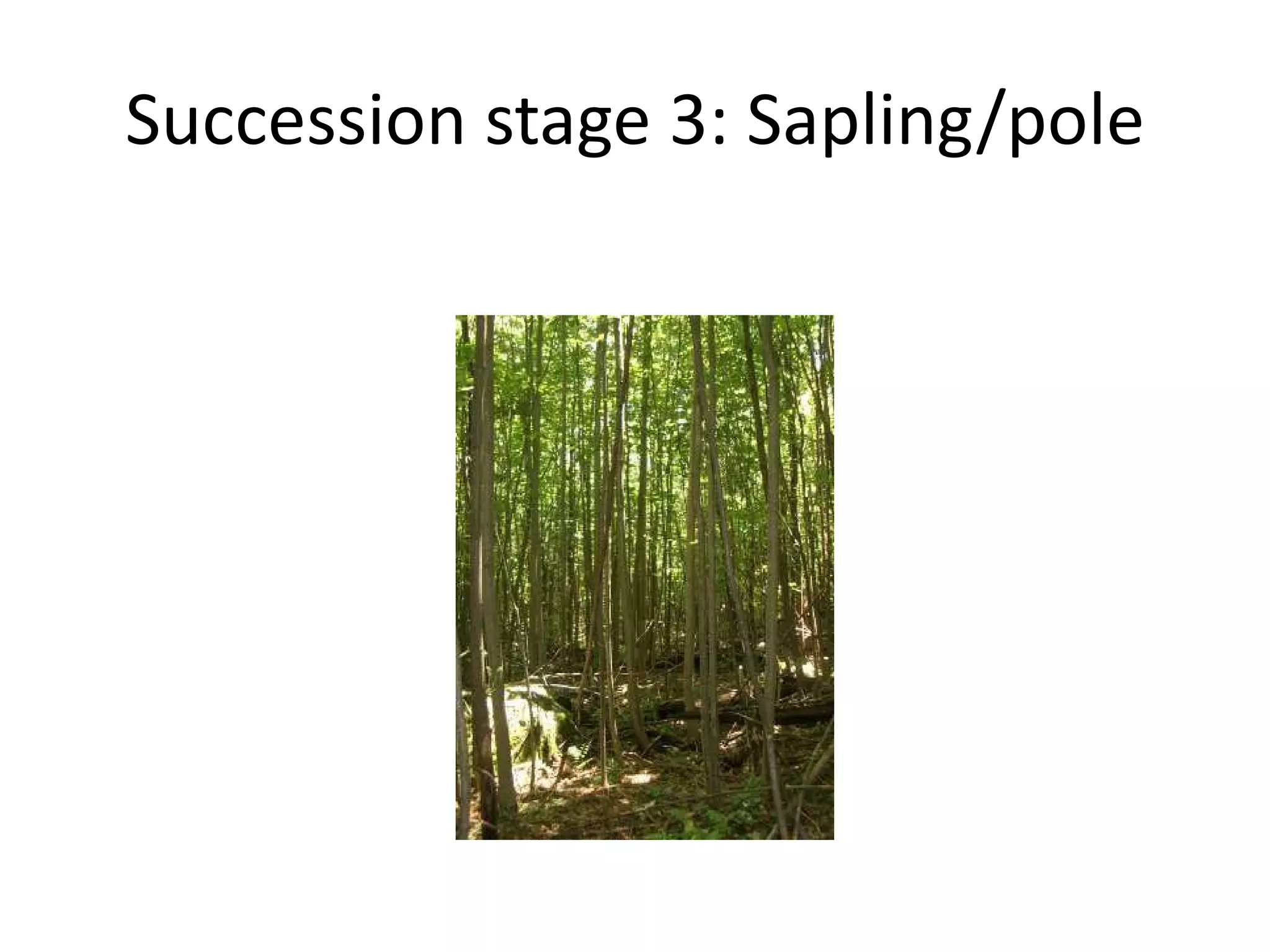
Succession stage 3: Sapling/pole
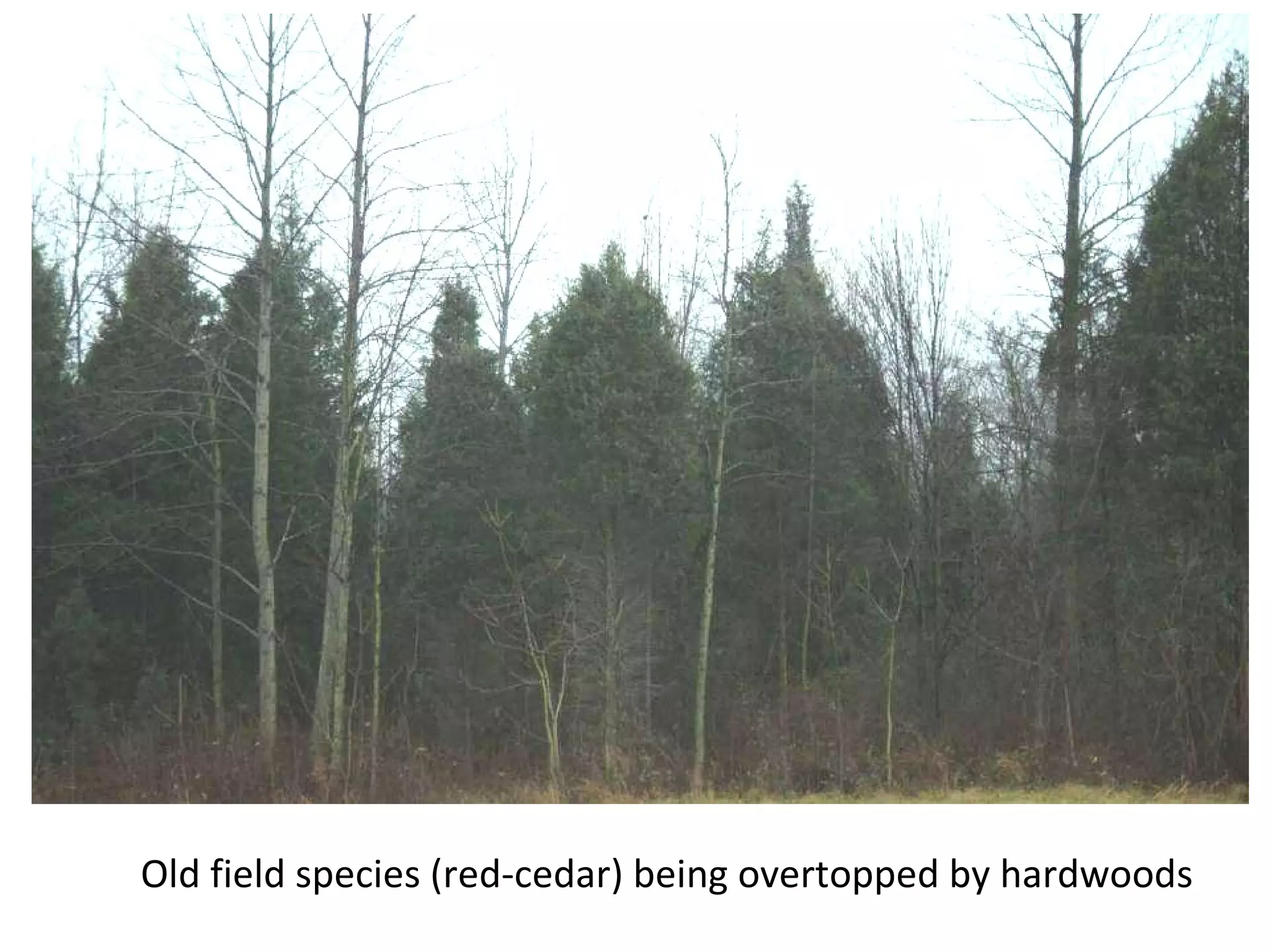
Old field species (red-cedar) being overtopped by hardwoods
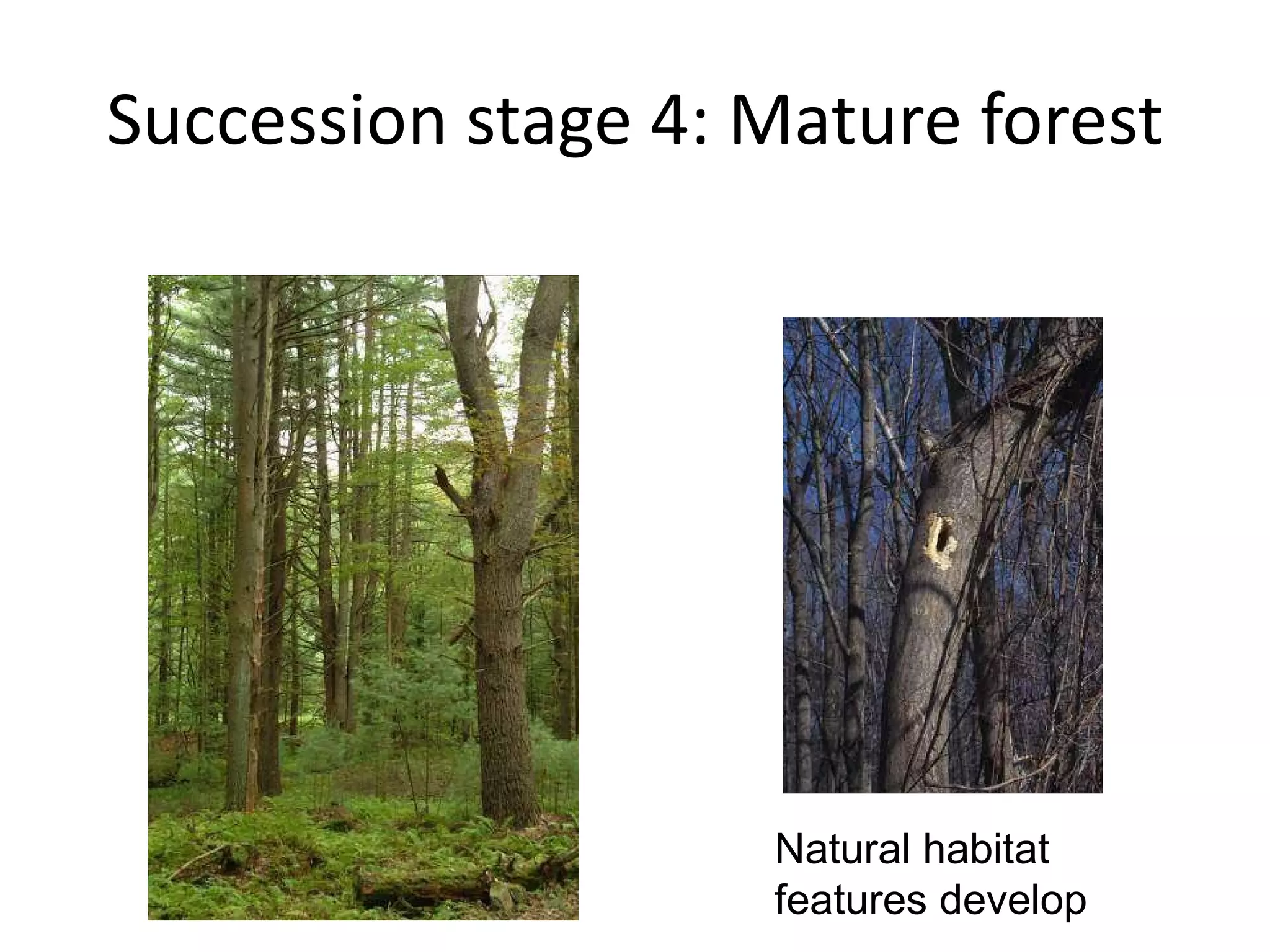
Succession stage 4: Mature forest Natural habitat features develop
Early Successional Species Vary by Region (hawthorn, sweetgum, red-cedar,)
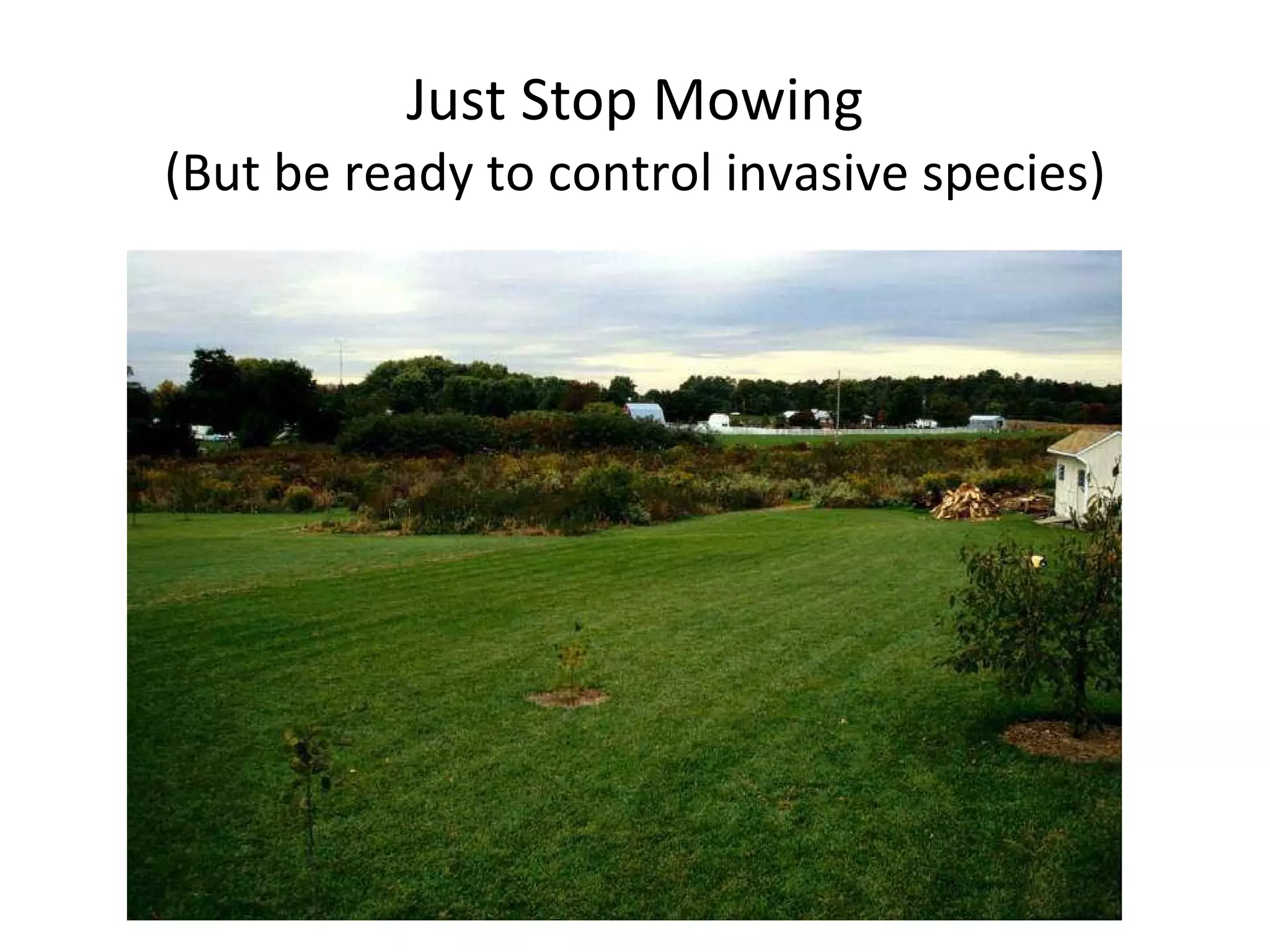
Succession Principle 2 You can alter the process of succession by using select land management activities.  Speed succession: Not mowing or mowing less often Planting trees Retard succession:  Mowing frequently Harvesting trees.
Just Stop Mowing (But be ready to control invasive species)
Tree Planting: Push succession ahead Forest Harvesting:  Push succession back
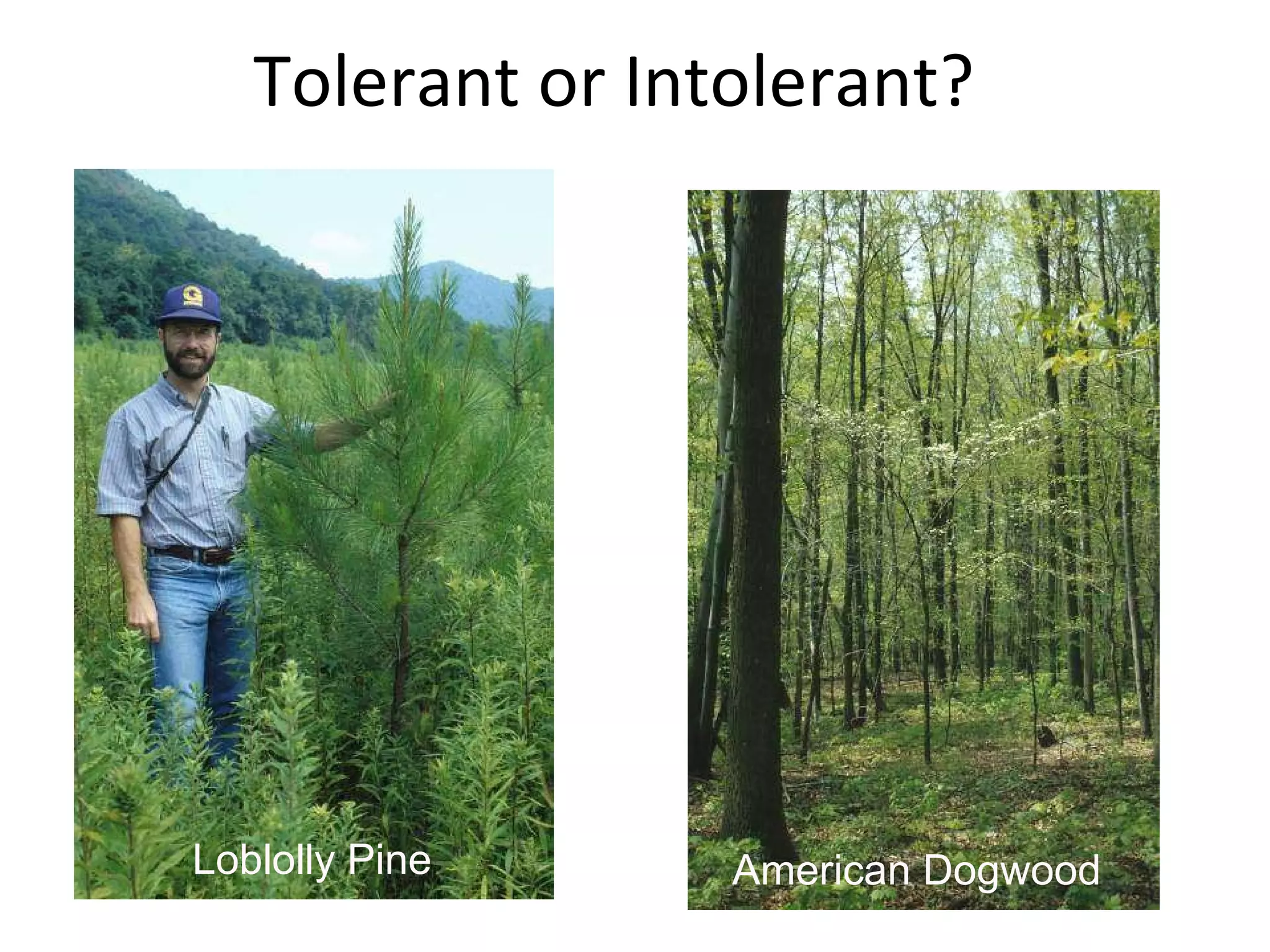
Succession Principle 3 Trees vary in their requirement for sunlight.
Tolerant or Intolerant? Loblolly Pine American Dogwood
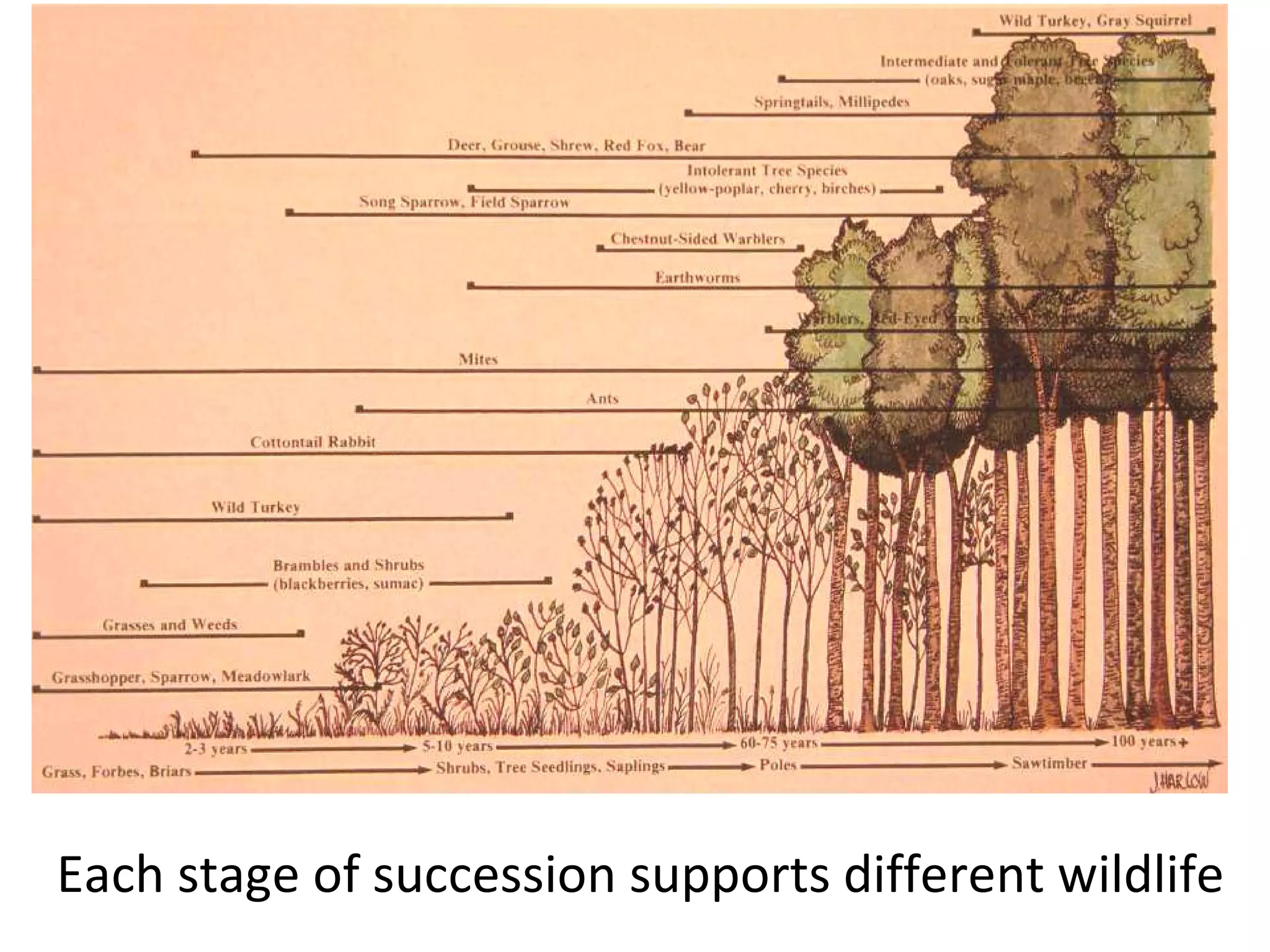
Succession Principle 4 Different successional stages of vegetation provide different kinds of  wildlife habitat  and meet different aesthetic and recreational needs.  Tailor your land management practices to meet your interests in the land.
Each stage of succession supports different wildlife
Succession Principle 5 Every small wooded lot may not contain every stage of succession.
Different stages of succession represent different habitat patches (i.e. mature forest, old field,  young forest, etc)
Take a look at the commercial harvest of aspen in Minnesota .
Clearcut harvesting in Minnesota aspen.
Aspen harvest site one year following clear-cut harvest.
A good site several years following harvest.  50,000 to 100,000 stems per acre from stump sprouting.
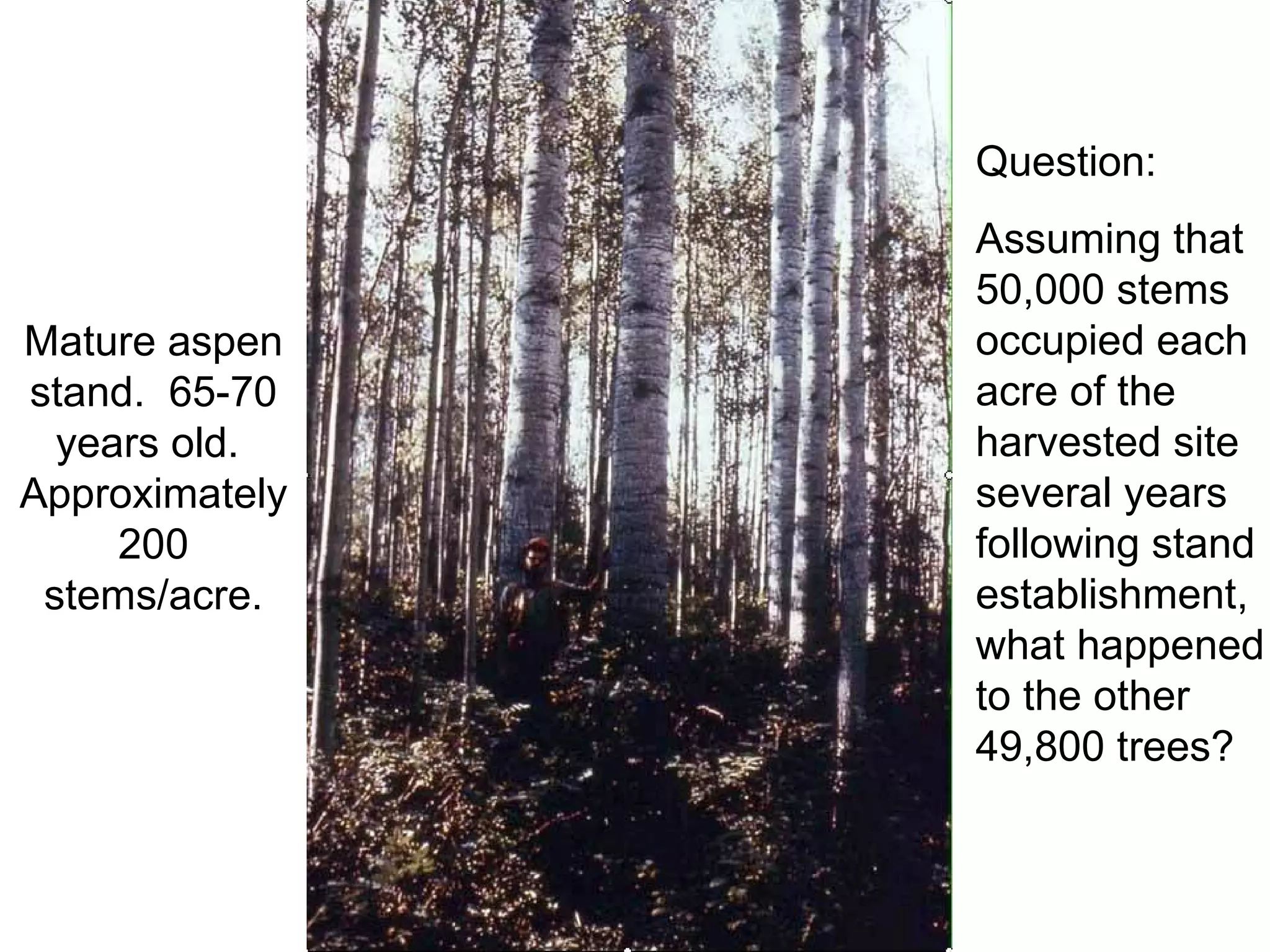
Mature aspen stand.  65-70 years old.  Approximately 200 stems/acre. Question:  Assuming that 50,000 stems occupied each acre of the harvested site several years following stand establishment, what happened to the other 49,800 trees?
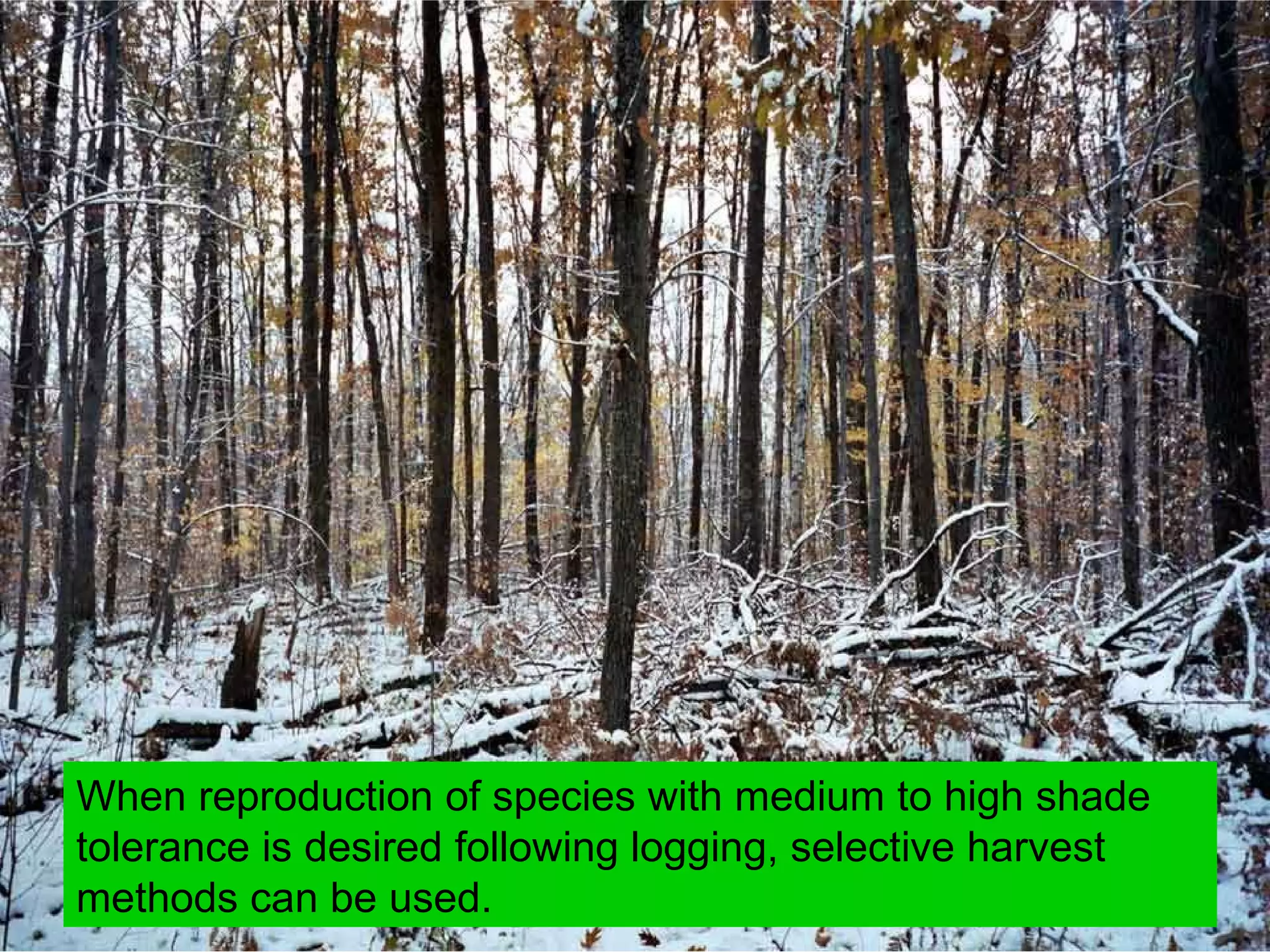
When reproduction of species with medium to high shade tolerance is desired following logging, selective harvest methods can be used.
Old Aerial Photo (1994)
2006 Photo

Forest succession

  • 1.
  • 2.
    Forest Succession : The gradual supplanting of one community of plants by another, usually as a result of differences in shade tolerance .
  • 3.
    Forest Succession SuccessionProcess. Begins with disturbance New species grow Based on Shade tolerance Pioneers – 1 st to colonize Climax species – last & remaining species
  • 4.
  • 5.
    Pioneer Species Thefirst tree species to inhabit a site after a stand-replacing event fast-growing open or low density crown relatively short life span . Intolerant to shade If no one ever mowed the grass field around the outdoor lab pond again, what would be the first trees to grow there?
  • 6.
    Climax Species Usedto describe the most shade tolerant tree species that are native to a particular region. Trees that will remain essentially unchanged in terms of species composition for as long as a site remains undisturbed.
  • 7.
  • 8.
    Virginia Tree SpeciesShade Intolerant Scarlet Oak Mockernut & Butternut Hickory Black walnut Yellow Poplar Sassafras Black Cherry Black Locust Loblolly Pine Shortleaf Pine Virginia Pine Eastern Redcedar Where would it grow? Existing Forest? Meadow? Forest Edge? Clearcut?
  • 9.
    Virginia Tree SpeciesIntermediate Tolerance Most Oaks Shagbark Hickory Ash Birch Sycamore White Pine Where would it grow? Existing Forest? Meadow? Forest Edge? Clearcut?
  • 10.
    Virginia Tree SpeciesShade Tolerant Maples Dogwood Black Gum Persimmon Beech Hemlock Where would it grow? Existing Forest? Meadow? Forest Edge? Clearcut?
  • 11.
    Pioneer species quicklyoccupy a site following clearing. They grow rapidly to compete with grasses and shrubs.
  • 12.
    As the crownsof pioneer species close, seedlings from these trees are unable to survive in the resulting shade.
  • 13.
    Different species thathave a higher tolerance to shade soon become established beneath the pioneers.
  • 14.
    As the short-livedpioneers near the end of their life spans, the more tolerant trees in the forest understory begin to take over the site. The result is a major change in plant and animal species.
  • 15.
    Spruce begins totake over an aspen dominated site in northern Minnesota as the short-lived pioneer aspen crowns thin with aging .
  • 16.
    Beneath the secondsuccessional stage species, that often form thicker crowns than pioneers, new species that are even more shade tolerant become established.
  • 17.
    The process ofsuccession continues until the most shade-tolerant species suitable for the site (climax species) become established.
  • 18.
    Seedlings of highlyshade tolerant climax species thrive in the shade of their parents. Because of this, climax species will persist until disturbance sets back the succession process to the pioneer or some other stage.
  • 19.
  • 20.
    Principles of ForestSuccession and Ecology Objectives Learn about the principles of succession in an ever-changing natural area Learn basic principles of forest ecology
  • 21.
    Succession Principle 1All natural areas change over time, whether or not you do anything to them. This process is called succession .
  • 22.
    Eastern United StatesThe Eastern United States was by nature a deciduous forest This is due to climate conditions Mostly rainfall and temperature And soil type Acidic, weathered, shallow topsoil Without disturbance, the land will always return to forest
  • 23.
  • 24.
    The first vegetationto grow is that which likes full sunlight
  • 25.
    Succession stage 1:Herbaceous opening
  • 26.
    Succession stage 2:Shrub/seedling brush
  • 27.
    Succession stage 3:Sapling/pole
  • 28.
    Old field species(red-cedar) being overtopped by hardwoods
  • 29.
    Succession stage 4:Mature forest Natural habitat features develop
  • 30.
    Early Successional SpeciesVary by Region (hawthorn, sweetgum, red-cedar,)
  • 31.
    Succession Principle 2You can alter the process of succession by using select land management activities. Speed succession: Not mowing or mowing less often Planting trees Retard succession: Mowing frequently Harvesting trees.
  • 32.
    Just Stop Mowing(But be ready to control invasive species)
  • 33.
    Tree Planting: Pushsuccession ahead Forest Harvesting: Push succession back
  • 34.
    Succession Principle 3Trees vary in their requirement for sunlight.
  • 35.
    Tolerant or Intolerant?Loblolly Pine American Dogwood
  • 36.
    Succession Principle 4Different successional stages of vegetation provide different kinds of wildlife habitat and meet different aesthetic and recreational needs. Tailor your land management practices to meet your interests in the land.
  • 37.
    Each stage ofsuccession supports different wildlife
  • 38.
    Succession Principle 5Every small wooded lot may not contain every stage of succession.
  • 39.
    Different stages ofsuccession represent different habitat patches (i.e. mature forest, old field, young forest, etc)
  • 40.
    Take a lookat the commercial harvest of aspen in Minnesota .
  • 41.
    Clearcut harvesting inMinnesota aspen.
  • 42.
    Aspen harvest siteone year following clear-cut harvest.
  • 43.
    A good siteseveral years following harvest. 50,000 to 100,000 stems per acre from stump sprouting.
  • 44.
    Mature aspen stand. 65-70 years old. Approximately 200 stems/acre. Question: Assuming that 50,000 stems occupied each acre of the harvested site several years following stand establishment, what happened to the other 49,800 trees?
  • 45.
    When reproduction ofspecies with medium to high shade tolerance is desired following logging, selective harvest methods can be used.
  • 46.
  • 47.