FORCE FIELD MODEL
R A C H E E T A M H A P S E K A R - 2 4
S U N I L K U M A R M A N G E - 2 2
KURT LEWIN (1890 -1947)
An American psychologist
who was well known for
developing Force Field
Analysis
FORCE FIELD ANALYSIS
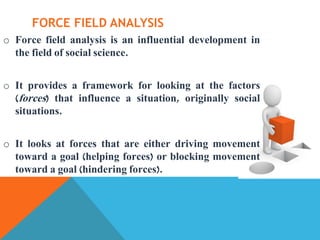
o Force field analysis is an influential development in
the field of social science.
o It provides a framework for looking at the factors
(forces) that influence a situation, originally social
situations.
o It looks at forces that are either driving movement
toward a goal (helping forces) or blocking movement
toward a goal (hindering forces).
oTo Analyze the factors found in complex Problems
oIt works as a Tool for Managing Change
oIt helps to identify those factors that must be addressed and
monitored if change is to be successful.
oIdentify the forces which support change as well as those which will
act against it.
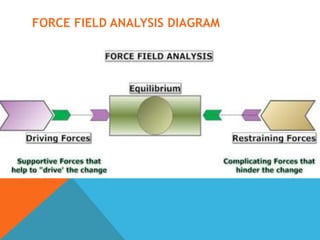
Kurt Lewin assumes that in any situation
there are both driving and restraining forces
that influence any change that may occur:
 Driving Forces
 Restraining Forces
 Equilibrium
Kurt Lewin’s Three-Step Model of
Organizational Change
o Driving forces are forces that push in
a direction that causes change to
occur.
o Driving forces facilitate change
because they push the person in the
desired direction.
o They cause a shift in the equilibrium
towards change.
Force Field Analysis: Driving Forces
DRIVING FORCE
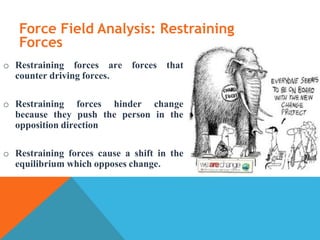
o Restraining forces are forces that
counter driving forces.
o Restraining forces hinder change
because they push the person in the
opposition direction
o Restraining forces cause a shift in the
equilibrium which opposes change.
Force Field Analysis: Restraining
Forces
RESTRAINING FORCES
o Equilibrium is a state of being where
driving forces equal restraining
forces and no change occurs
o Equilibrium can be raised or lowered
by changes that occur between the
driving and restraining forces.
Force Field Analysis: Equilibrium
FORCE FIELD ANALYSIS DIAGRAM
THE FORCE FIELD ANALYSIS IS A METHOD TO:
oInvestigate the Balance of Power involved in issue
oIdentify the most important player (Stake holder) & target group
for the campaign on the issue
oIdentify opponents and Allies
oIdentify how to influence each target group
HOW TO CONDUCT
o Describe the current situation
o Describe the desired situation
o Identify where the current situation will go if no action is taken
o List all the forces driving change toward the desired situation
o List all the forces resisting change toward the desired situation
o Discuss and interrogate all of the forces: are they valid?
o Decides whether the plan is worth implementing
o helping us identify challenges that lie ahead
o Helps to understand the nature of change e.g. Positive or
negative change
o Provides an idea of timeline required
o If skills are restraining the project this analysis can help
identify the training required.
o Reduce communication barriers
BENEFITS OF A FORCE FIELD ANALYSIS
A firm uses the Force Field Analysis to decide if a
low cost version of the current product should be
introduced.
CONCLUSION
This tool has a long history and still maintains
its utility despite its apparent simplicity. Use it
when your team is blocked in some way or you
need to see the wider picture in a change
program. It is an essential tool and its simplicity
is a profound way of looking at an organization.
Force field model

Force field model

  • 1.
    FORCE FIELD MODEL RA C H E E T A M H A P S E K A R - 2 4 S U N I L K U M A R M A N G E - 2 2
  • 2.
    KURT LEWIN (1890-1947) An American psychologist who was well known for developing Force Field Analysis
  • 3.
    FORCE FIELD ANALYSIS oForce field analysis is an influential development in the field of social science. o It provides a framework for looking at the factors (forces) that influence a situation, originally social situations. o It looks at forces that are either driving movement toward a goal (helping forces) or blocking movement toward a goal (hindering forces).
  • 4.
    oTo Analyze thefactors found in complex Problems oIt works as a Tool for Managing Change oIt helps to identify those factors that must be addressed and monitored if change is to be successful. oIdentify the forces which support change as well as those which will act against it.
  • 5.
    Kurt Lewin assumesthat in any situation there are both driving and restraining forces that influence any change that may occur:  Driving Forces  Restraining Forces  Equilibrium Kurt Lewin’s Three-Step Model of Organizational Change
  • 6.
    o Driving forcesare forces that push in a direction that causes change to occur. o Driving forces facilitate change because they push the person in the desired direction. o They cause a shift in the equilibrium towards change. Force Field Analysis: Driving Forces
  • 7.
  • 8.
    o Restraining forcesare forces that counter driving forces. o Restraining forces hinder change because they push the person in the opposition direction o Restraining forces cause a shift in the equilibrium which opposes change. Force Field Analysis: Restraining Forces
  • 9.
  • 10.
    o Equilibrium isa state of being where driving forces equal restraining forces and no change occurs o Equilibrium can be raised or lowered by changes that occur between the driving and restraining forces. Force Field Analysis: Equilibrium
  • 11.
  • 12.
    THE FORCE FIELDANALYSIS IS A METHOD TO: oInvestigate the Balance of Power involved in issue oIdentify the most important player (Stake holder) & target group for the campaign on the issue oIdentify opponents and Allies oIdentify how to influence each target group
  • 13.
    HOW TO CONDUCT oDescribe the current situation o Describe the desired situation o Identify where the current situation will go if no action is taken o List all the forces driving change toward the desired situation o List all the forces resisting change toward the desired situation o Discuss and interrogate all of the forces: are they valid?
  • 14.
    o Decides whetherthe plan is worth implementing o helping us identify challenges that lie ahead o Helps to understand the nature of change e.g. Positive or negative change o Provides an idea of timeline required o If skills are restraining the project this analysis can help identify the training required. o Reduce communication barriers BENEFITS OF A FORCE FIELD ANALYSIS
  • 15.
    A firm usesthe Force Field Analysis to decide if a low cost version of the current product should be introduced.
  • 16.
    CONCLUSION This tool hasa long history and still maintains its utility despite its apparent simplicity. Use it when your team is blocked in some way or you need to see the wider picture in a change program. It is an essential tool and its simplicity is a profound way of looking at an organization.