LINEAR MODEL
OF CURRICULUM DEVELOPMENT
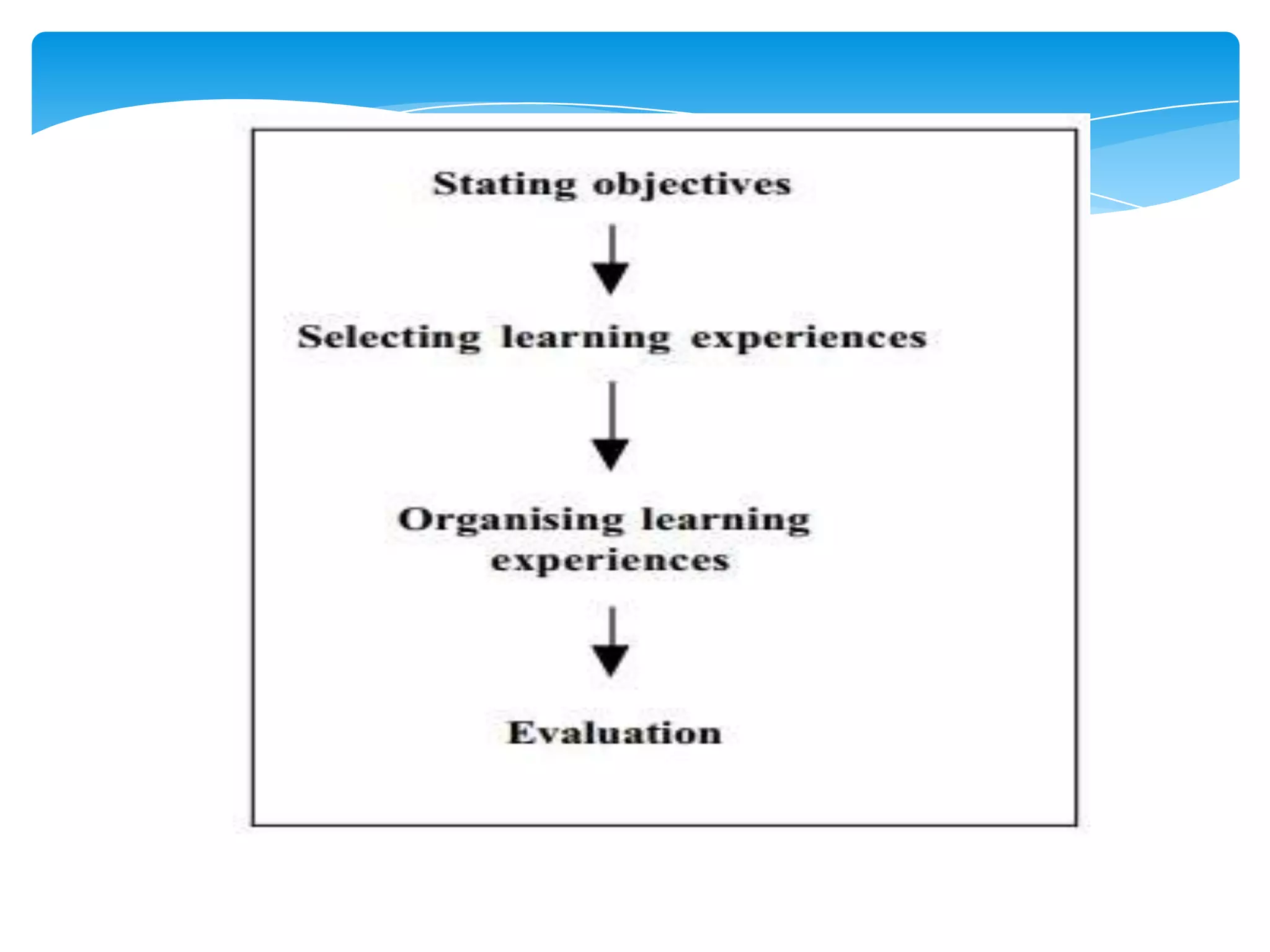
LINEAR
– term used for models whose
steps proceed in a more or
less sequential, straight line
from beginning to end.
How is LINEAR MODEL
different from other
models?
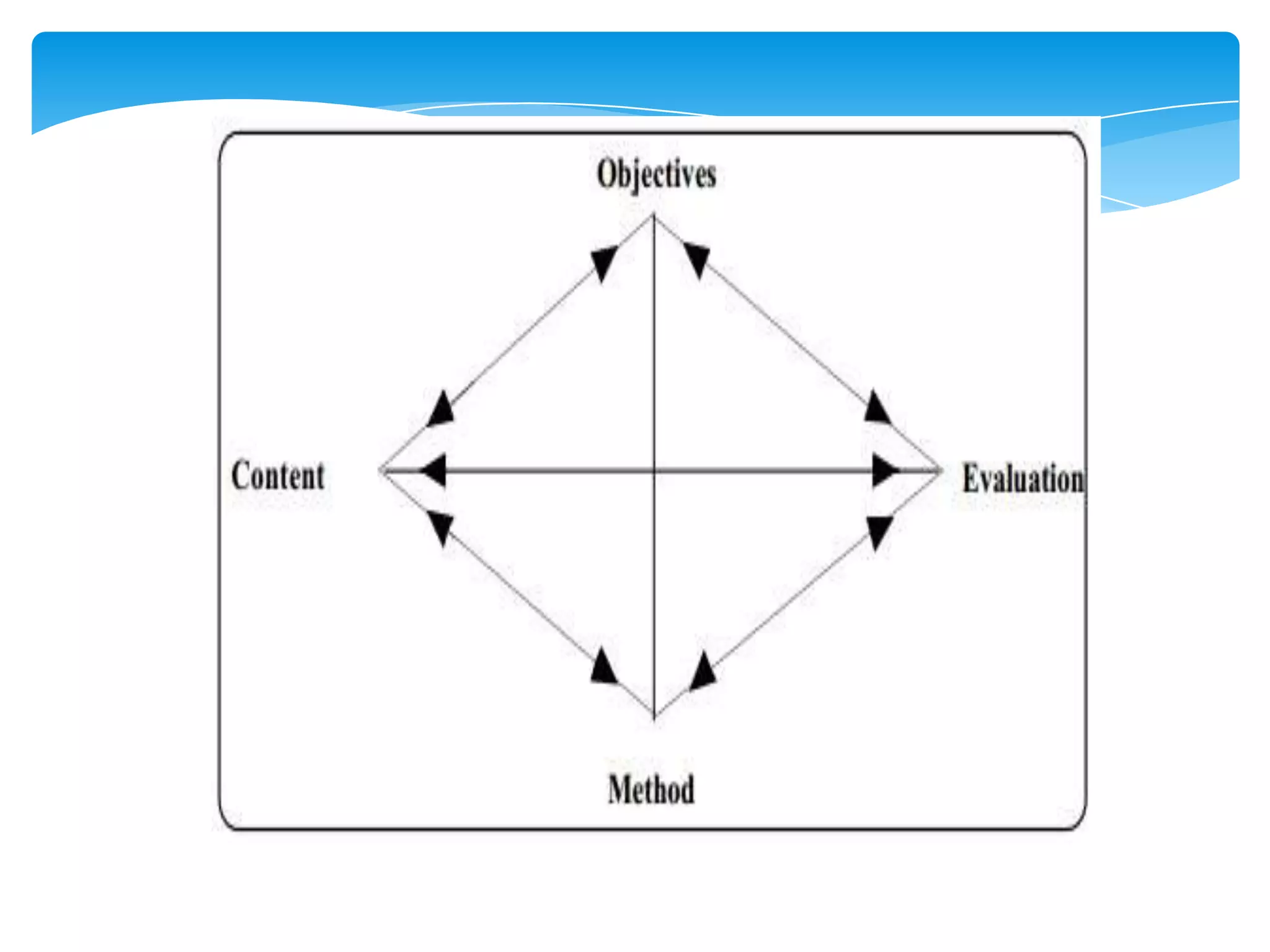
THE INTERACTION MODEL OF
CURRICULUM DEVELOPMENT
- is seen to be a dynamic process
which can begin with any curriculum
element, and these elements can be
followed in any sequence.
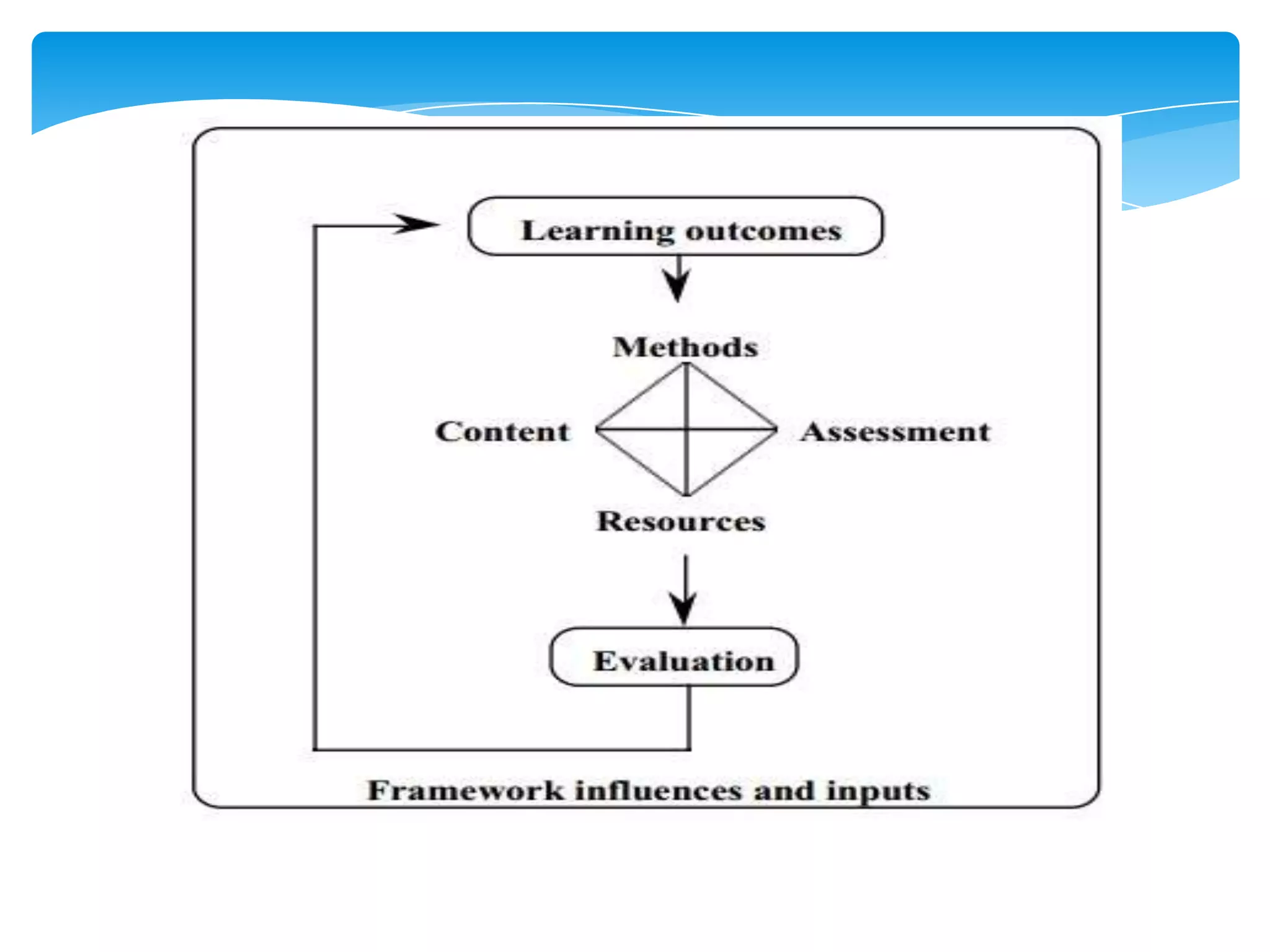
THE OUTCOMES-BASED
MODEL
- structured series of intended
learner outcomes that implies a
planning process and a focus on
what students actually learn
EXAMPLES OF LINEAR
MODELS OF
CURRICULUM DESIGN
RALPH TYLER’S
MODEL
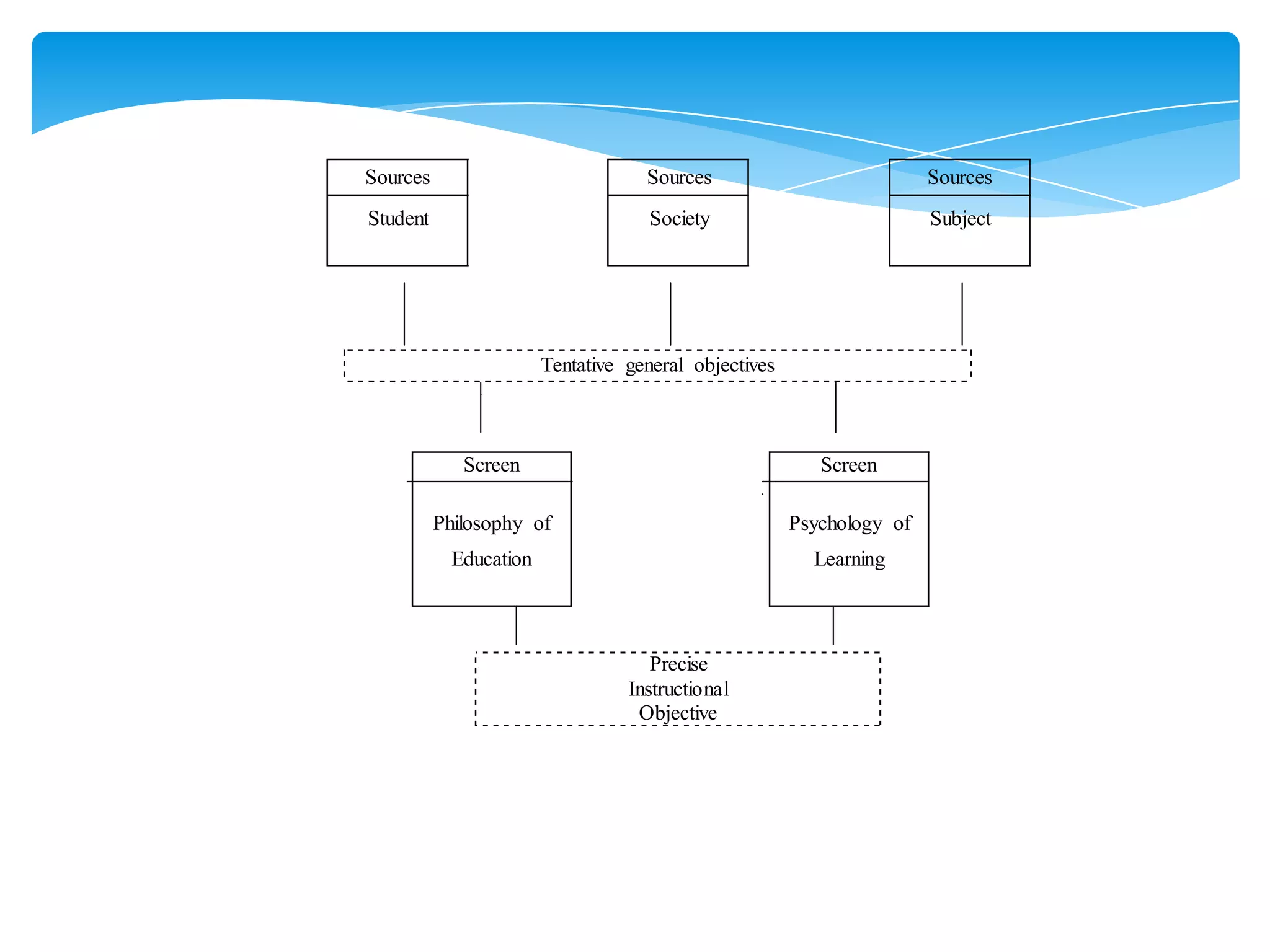
Sources

Sources

Sources

Student

Society

Subject

Tentative general objectives

Screen

Screen

Philosophy of

Psychology of

Education

Learning

Precise
Instructional
Objective
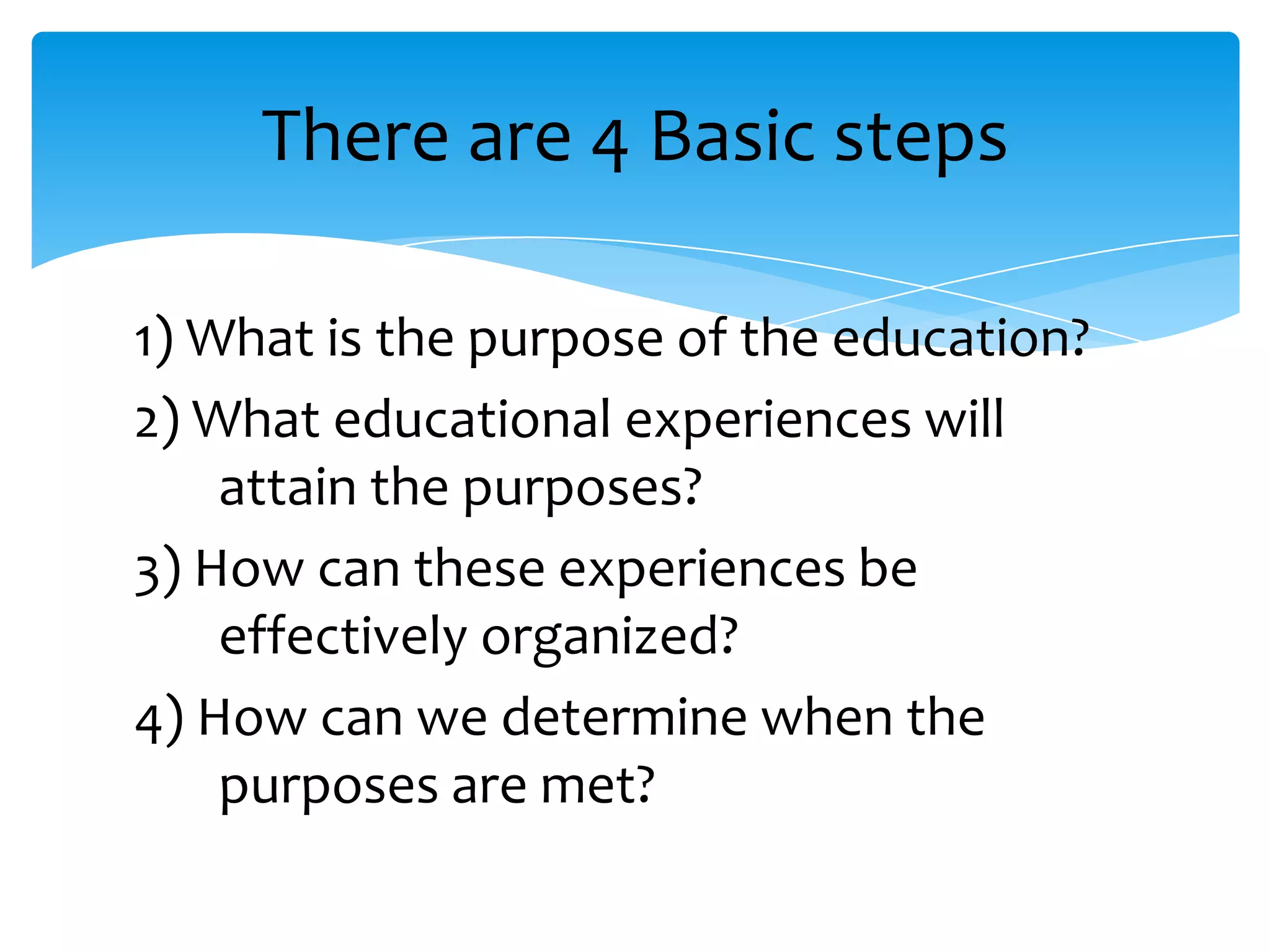
There are 4 Basic steps
1) What is the purpose of the education?
2) What educational experiences will
attain the purposes?
3) How can these experiences be
effectively organized?
4) How can we determine when the
purposes are met?
Tyler recommends that curriculum
planners identify general objectives by
gathering data from three sources:

1. the learners
2. contemporary life outside the school
3. subject matter
Filter through two screens:
1. the philosophical screen
2. the psychological screen.
HILDA TABA’S
MODEL
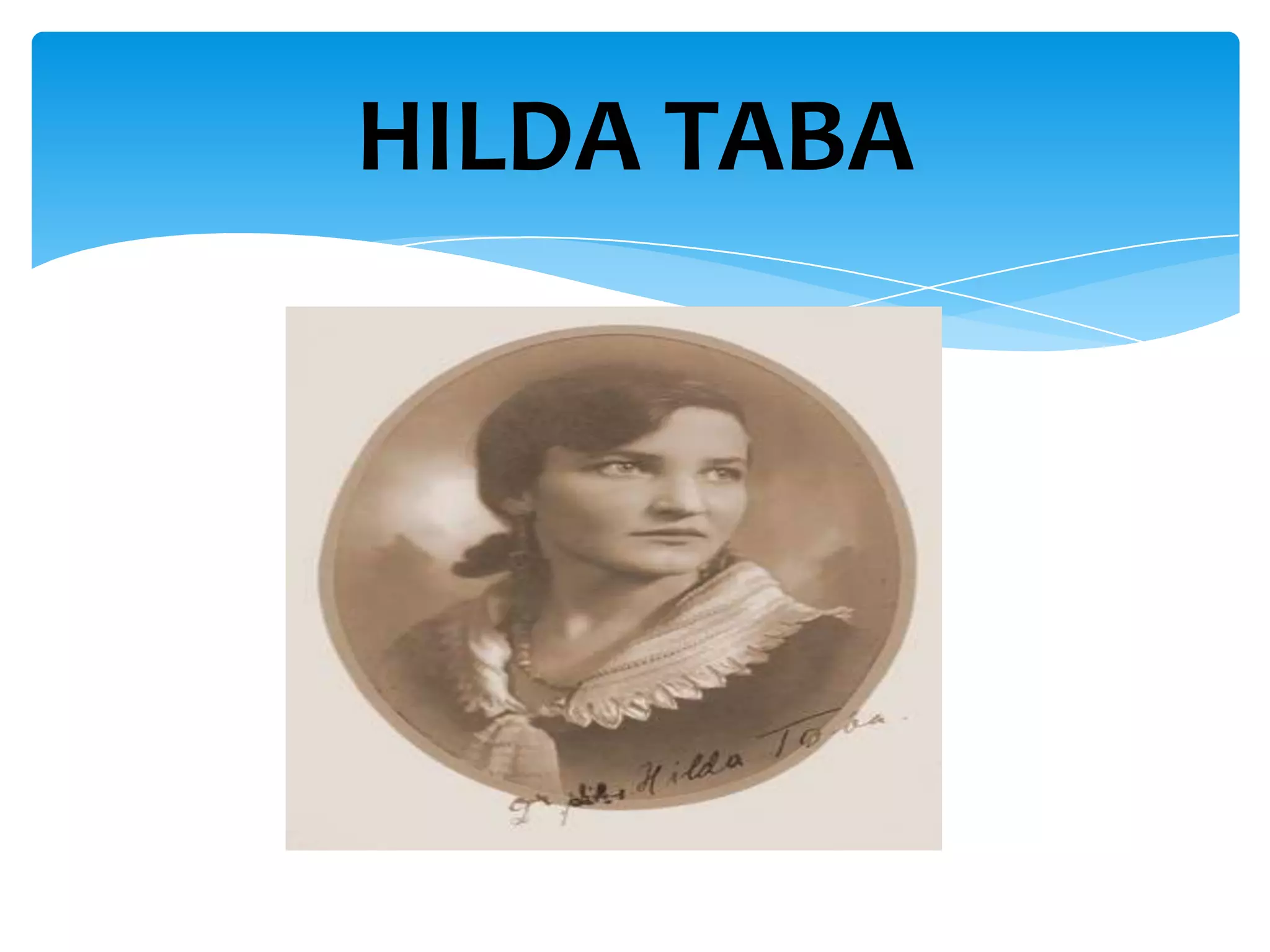
HILDA TABA
Curriculum theorist, curriculum
reformer, and teacher educator.

Hilda Taba contributed to the
theoretical and pedagogical
foundations of concept development
and critical thinking in social studies
curriculum and helped to lay the
foundations of education for diverse
student populations.
- Very simple but complete.
Description of Approach
-Grassroots approach model that advocates for teacher
participation in the development of the curriculum.
-The Taba approach believes in allowing the curriculum
to be authored by the users (teachers) versus the district
supervisors of the implementation of the curriculum.
-Taba approach involved teachers beginning by creating
specific teaching-learning units and building to a
general design.
-Inductive approach rather than traditional deductive
It offers five steps to developing
curriculum:
a. creating the units of work to be studied
b. testing these units with students
c. adapting units as necessary after the testing
d. creating a framework to test to ensure that
all material is covered in a clear and complete
manner.
e. putting the unit of study into practice, while
always creating new units to use in the
classroom.
Step One: Diagnosing Needs,
Step Two: Formulating Specific Objectives
Step Three: Selecting Content
Step Four: Organizing Content
Step Five: Selecting Learning Experiences
Step Six: Organizing Learning Experiences
Step Seven: Evaluating
Step Eight: Checking for Balance
OLIVA MODEL
- A deductive model that offers a faculty a
process for the complete development of
a school’s curriculum.
- Recognized the needs of students in
particular communities are not always
the same as the general needs of
students throughout our society.
Faculty can fashion a plan:
- For the curriculum of an area and design ways in
which it will be carried out through instruction.
- To develop school-wide interdisciplinary programs
that cut across areas of specialization such as career
education, guidance, and class activities.
- For a faculty to focus on the curricular components
of the model to make programmatic decisions .
- To allow a faculty to concentrate on the
instructional components.
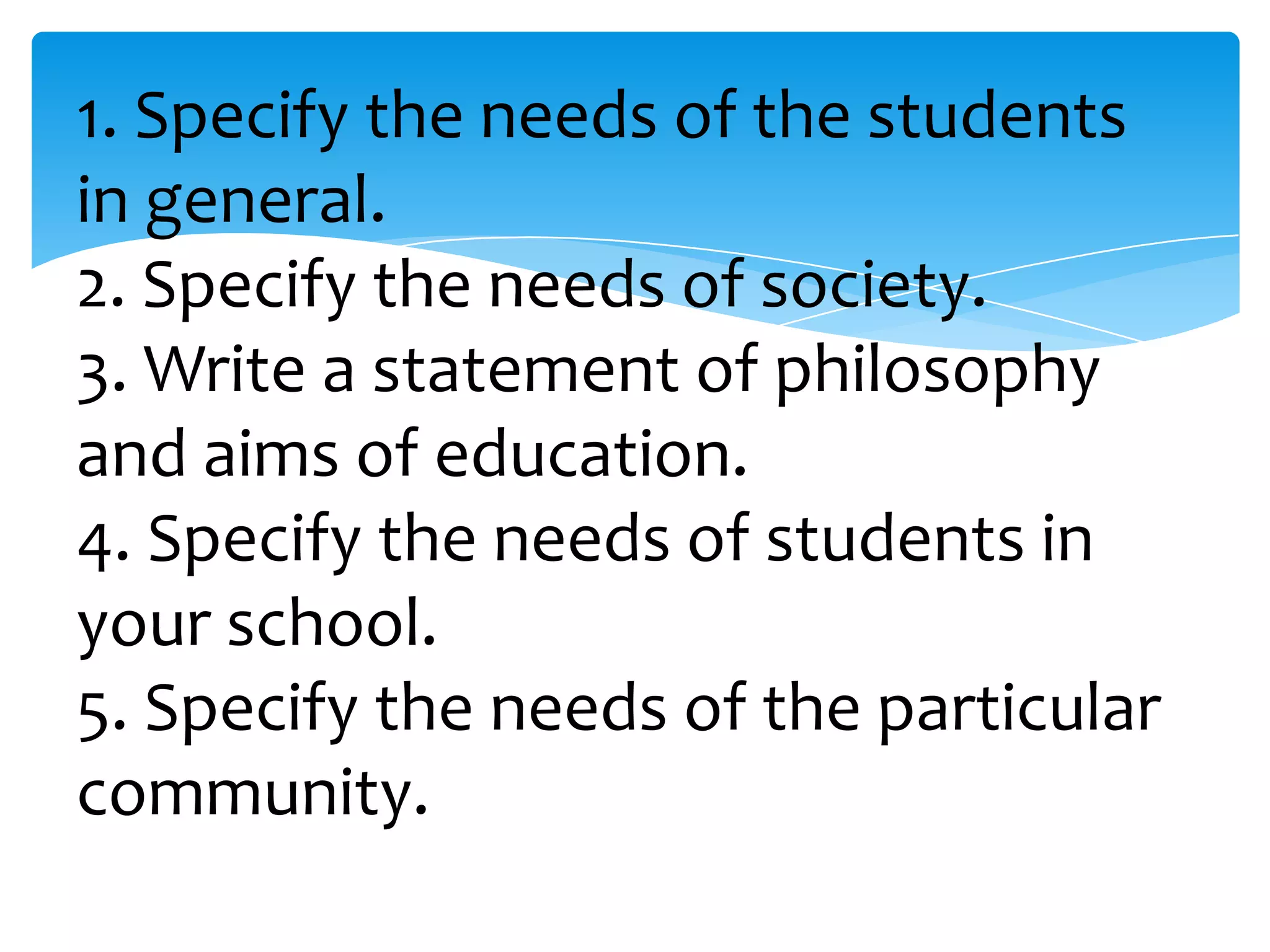
1. Specify the needs of the students
in general.
2. Specify the needs of society.
3. Write a statement of philosophy
and aims of education.
4. Specify the needs of students in
your school.
5. Specify the needs of the particular
community.
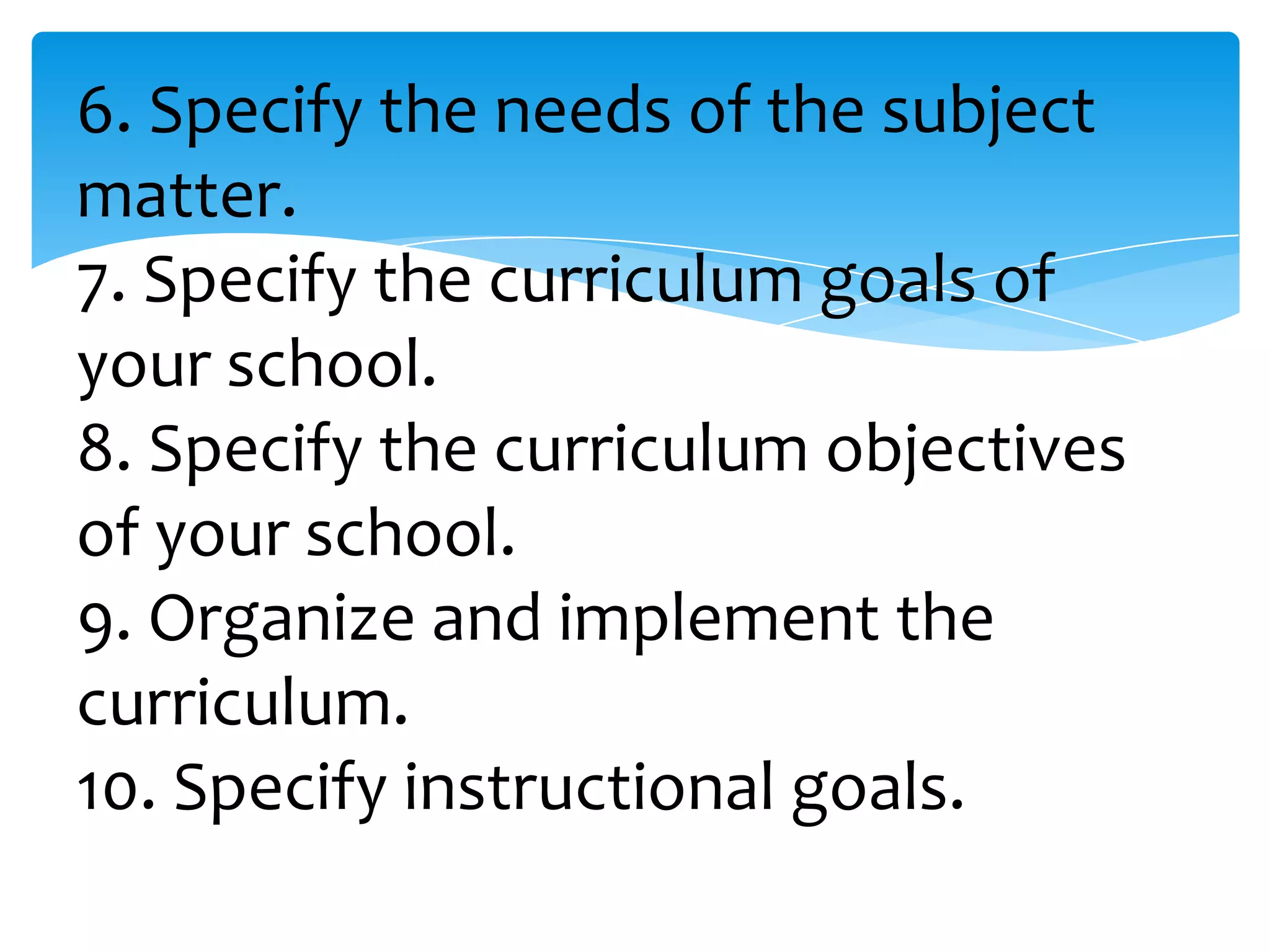
6. Specify the needs of the subject
matter.
7. Specify the curriculum goals of
your school.
8. Specify the curriculum objectives
of your school.
9. Organize and implement the
curriculum.
10. Specify instructional goals.
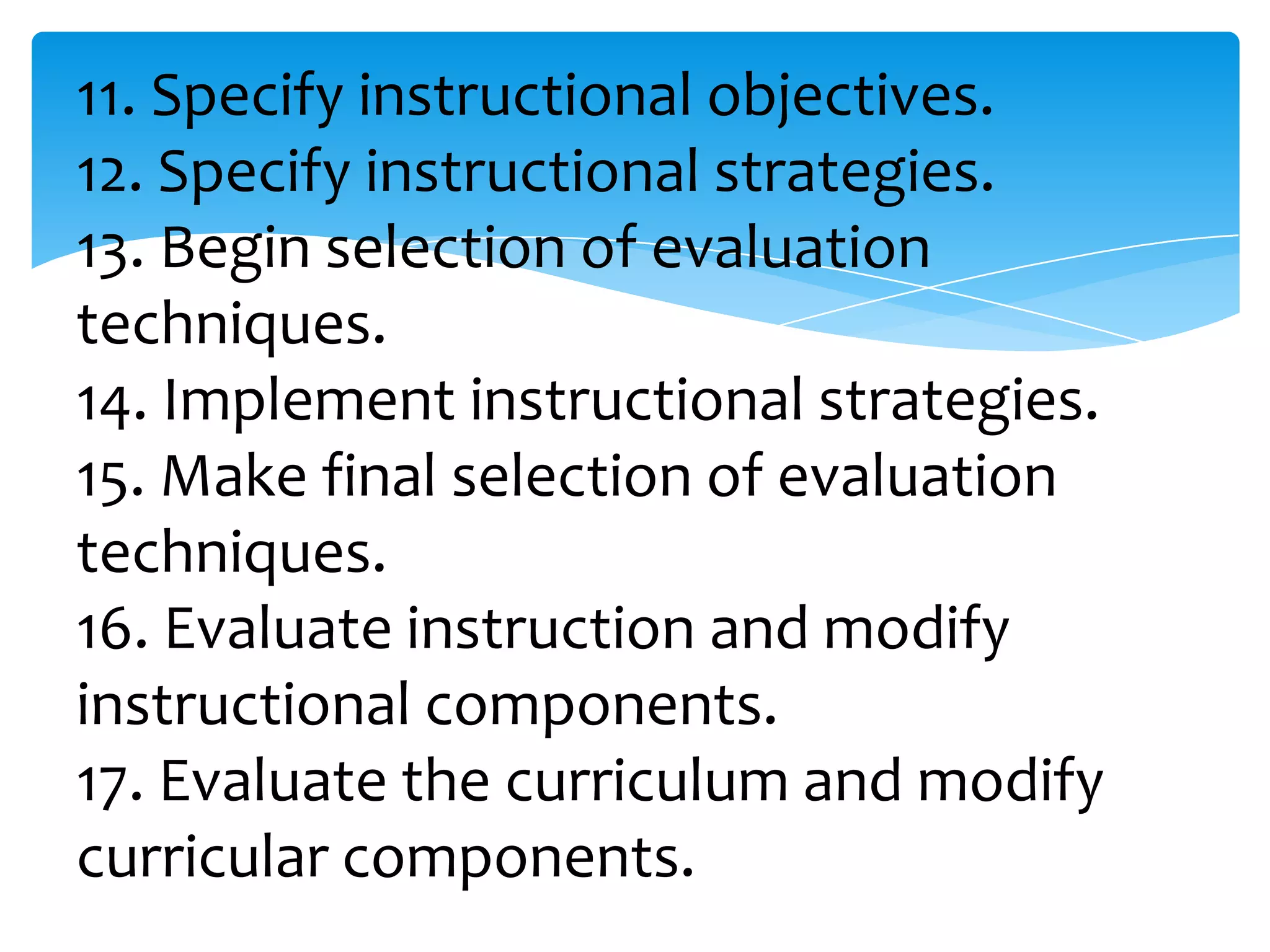
11. Specify instructional objectives.
12. Specify instructional strategies.
13. Begin selection of evaluation
techniques.
14. Implement instructional strategies.
15. Make final selection of evaluation
techniques.
16. Evaluate instruction and modify
instructional components.
17. Evaluate the curriculum and modify
curricular components.

Linear model of Curriculum

  • 1.
  • 2.
    LINEAR – term usedfor models whose steps proceed in a more or less sequential, straight line from beginning to end.
  • 4.
    How is LINEARMODEL different from other models?
  • 5.
    THE INTERACTION MODELOF CURRICULUM DEVELOPMENT - is seen to be a dynamic process which can begin with any curriculum element, and these elements can be followed in any sequence.
  • 7.
    THE OUTCOMES-BASED MODEL - structuredseries of intended learner outcomes that implies a planning process and a focus on what students actually learn
  • 9.
    EXAMPLES OF LINEAR MODELSOF CURRICULUM DESIGN
  • 10.
  • 11.
    Sources Sources Sources Student Society Subject Tentative general objectives Screen Screen Philosophyof Psychology of Education Learning Precise Instructional Objective
  • 12.
    There are 4Basic steps 1) What is the purpose of the education? 2) What educational experiences will attain the purposes? 3) How can these experiences be effectively organized? 4) How can we determine when the purposes are met?
  • 13.
    Tyler recommends thatcurriculum planners identify general objectives by gathering data from three sources: 1. the learners 2. contemporary life outside the school 3. subject matter
  • 14.
    Filter through twoscreens: 1. the philosophical screen 2. the psychological screen.
  • 15.
  • 16.
  • 17.
    Curriculum theorist, curriculum reformer,and teacher educator. Hilda Taba contributed to the theoretical and pedagogical foundations of concept development and critical thinking in social studies curriculum and helped to lay the foundations of education for diverse student populations.
  • 18.
    - Very simplebut complete.
  • 19.
    Description of Approach -Grassrootsapproach model that advocates for teacher participation in the development of the curriculum. -The Taba approach believes in allowing the curriculum to be authored by the users (teachers) versus the district supervisors of the implementation of the curriculum. -Taba approach involved teachers beginning by creating specific teaching-learning units and building to a general design. -Inductive approach rather than traditional deductive
  • 20.
    It offers fivesteps to developing curriculum: a. creating the units of work to be studied b. testing these units with students c. adapting units as necessary after the testing d. creating a framework to test to ensure that all material is covered in a clear and complete manner. e. putting the unit of study into practice, while always creating new units to use in the classroom.
  • 21.
    Step One: DiagnosingNeeds, Step Two: Formulating Specific Objectives Step Three: Selecting Content Step Four: Organizing Content Step Five: Selecting Learning Experiences Step Six: Organizing Learning Experiences Step Seven: Evaluating Step Eight: Checking for Balance
  • 22.
  • 23.
    - A deductivemodel that offers a faculty a process for the complete development of a school’s curriculum. - Recognized the needs of students in particular communities are not always the same as the general needs of students throughout our society.
  • 24.
    Faculty can fashiona plan: - For the curriculum of an area and design ways in which it will be carried out through instruction. - To develop school-wide interdisciplinary programs that cut across areas of specialization such as career education, guidance, and class activities. - For a faculty to focus on the curricular components of the model to make programmatic decisions . - To allow a faculty to concentrate on the instructional components.
  • 25.
    1. Specify theneeds of the students in general. 2. Specify the needs of society. 3. Write a statement of philosophy and aims of education. 4. Specify the needs of students in your school. 5. Specify the needs of the particular community.
  • 26.
    6. Specify theneeds of the subject matter. 7. Specify the curriculum goals of your school. 8. Specify the curriculum objectives of your school. 9. Organize and implement the curriculum. 10. Specify instructional goals.
  • 27.
    11. Specify instructionalobjectives. 12. Specify instructional strategies. 13. Begin selection of evaluation techniques. 14. Implement instructional strategies. 15. Make final selection of evaluation techniques. 16. Evaluate instruction and modify instructional components. 17. Evaluate the curriculum and modify curricular components.