BIRSA
AGRICULTURAL
UNIVERSITY
COURSE CODE: PHT322
COURSE TITLE: Processing of Horticultural Crops
COLLEGE: Horticulture College, Khuntpani, Chaibasa
TOPIC: Unit operations in Food processing(Raw materia
Handling, Washing and Separating
Submitted by:
Vibha Kumari
HORT011810023
Submitted to:
Dr. Sushil Kumar Pandey ,Dept. of Ag. Engg.
Dr. S. Sengupta, Dept. of Horticulture
Dr. Raimuni Hembram, Dept. of Horticulture
Unit Operations in Food Processing
Raw material Handling, Washing,
separating
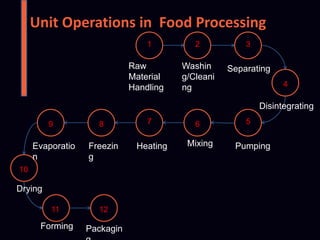
Unit Operations in Food Processing
1 2 3
4
5
6
7
8
9
10
11 12
Raw
Material
Handling
Washin
g/Cleani
ng
Separating
Freezin
g
Heating Pumping
Disintegrating
Evaporatio
n
Drying
Forming Packagin
Mixing
Raw
Material
Handling
It includes varied
operations such as hand or
mechanical harvesting on
the farm, transportation in
trucks or refrigerated
vehicles of perishable
produce to the market or to
the processing plant or to
store/godowns.
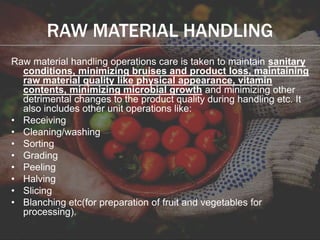
RAW MATERIAL HANDLING
Raw material handling operations care is taken to maintain sanitary
conditions, minimizing bruises and product loss, maintaining
raw material quality like physical appearance, vitamin
contents, minimizing microbial growth and minimizing other
detrimental changes to the product quality during handling etc. It
also includes other unit operations like:
• Receiving
• Cleaning/washing
• Sorting
• Grading
• Peeling
• Halving
• Slicing
• Blanching etc(for preparation of fruit and vegetables for
processing).
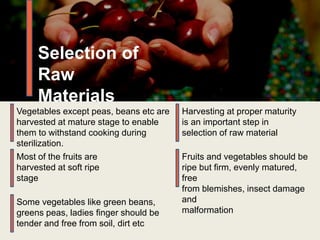
Harvesting at proper maturity
is an important step in
selection of raw material
Most of the fruits are
harvested at soft ripe
stage
Some vegetables like green beans,
greens peas, ladies finger should be
tender and free from soil, dirt etc
Vegetables except peas, beans etc are
harvested at mature stage to enable
them to withstand cooking during
sterilization.
Selection of
Raw
Materials
Fruits and vegetables should be
ripe but firm, evenly matured,
free
from blemishes, insect damage
and
malformation
Washing/
Cleaning
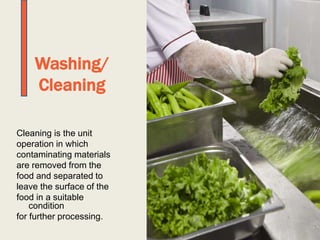
Cleaning is the unit
operation in which
contaminating materials
are removed from the
food and separated to
leave the surface of the
food in a suitable
condition
for further processing.
Procedure
s of
Cleaning
• Soaking
• Spraying
• Floatation
• Washing & Ultrasonic Cleaning
Wet Procedures
• Separation by air
• Magnetic separation
Dry Procedures
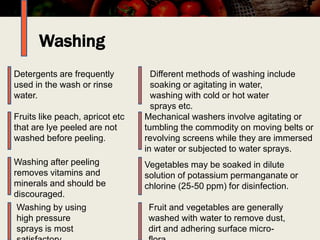
Washing
Fruit and vegetables are generally
washed with water to remove dust,
dirt and adhering surface micro-
Different methods of washing include
soaking or agitating in water,
washing with cold or hot water
sprays etc.
Fruits like peach, apricot etc
that are lye peeled are not
washed before peeling.
Washing by using
high pressure
sprays is most
Washing after peeling
removes vitamins and
minerals and should be
discouraged.
Vegetables may be soaked in dilute
solution of potassium permanganate or
chlorine (25-50 ppm) for disinfection.
Detergents are frequently
used in the wash or rinse
water.
Mechanical washers involve agitating or
tumbling the commodity on moving belts or
revolving screens while they are immersed
in water or subjected to water sprays.
Separating
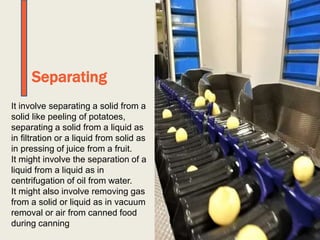
It involve separating a solid from a
solid like peeling of potatoes,
separating a solid from a liquid as
in filtration or a liquid from solid as
in pressing of juice from a fruit.
It might involve the separation of a
liquid from a liquid as in
centrifugation of oil from water.
It might also involve removing gas
from a solid or liquid as in vacuum
removal or air from canned food
during canning
Separating
• Sorting is the separation of foods into
different categories on the basis of a
measurable physical property.
• Sorting and grading ensures the removal
of inferior or damaged commodity.
• For sorting, inspection belt can be used,
in addition to trained personnel who
detect poor quality produce unsuitable for
canning.
• Automatic colour sorters can be used for
sorting to reduce labor cost.
Sorting
• After preliminary sorting, the fruit and
vegetables are graded to obtain uniform
quality with respect to size, colour etc.
• Grading can be done either manually or
with the help of mechanical graders.
• Different types of mechanical graders
include screen grader, roller grader, rope
or cable grader, conveyor grader etc.
Grading
• These are the primary unit operations for
preparing fruit and vegetables for
processing.
Peeling,
Coring
and Pitting
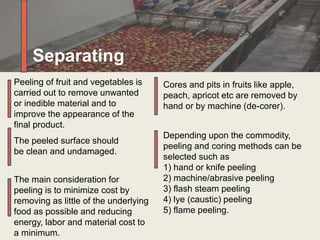
The peeled surface should
be clean and undamaged.
Depending upon the commodity,
peeling and coring methods can be
selected such as
1) hand or knife peeling
2) machine/abrasive peeling
3) flash steam peeling
4) lye (caustic) peeling
5) flame peeling.
The main consideration for
peeling is to minimize cost by
removing as little of the underlying
food as possible and reducing
energy, labor and material cost to
a minimum.
Cores and pits in fruits like apple,
peach, apricot etc are removed by
hand or by machine (de-corer).
Peeling of fruit and vegetables is
carried out to remove unwanted
or inedible material and to
improve the appearance of the
final product.
Separating
Thank you

Unit Operations followed in Food Processing.

  • 1.
    BIRSA AGRICULTURAL UNIVERSITY COURSE CODE: PHT322 COURSETITLE: Processing of Horticultural Crops COLLEGE: Horticulture College, Khuntpani, Chaibasa TOPIC: Unit operations in Food processing(Raw materia Handling, Washing and Separating Submitted by: Vibha Kumari HORT011810023 Submitted to: Dr. Sushil Kumar Pandey ,Dept. of Ag. Engg. Dr. S. Sengupta, Dept. of Horticulture Dr. Raimuni Hembram, Dept. of Horticulture
  • 2.
    Unit Operations inFood Processing Raw material Handling, Washing, separating
  • 3.
    Unit Operations inFood Processing 1 2 3 4 5 6 7 8 9 10 11 12 Raw Material Handling Washin g/Cleani ng Separating Freezin g Heating Pumping Disintegrating Evaporatio n Drying Forming Packagin Mixing
  • 4.
    Raw Material Handling It includes varied operationssuch as hand or mechanical harvesting on the farm, transportation in trucks or refrigerated vehicles of perishable produce to the market or to the processing plant or to store/godowns.
  • 5.
    RAW MATERIAL HANDLING Rawmaterial handling operations care is taken to maintain sanitary conditions, minimizing bruises and product loss, maintaining raw material quality like physical appearance, vitamin contents, minimizing microbial growth and minimizing other detrimental changes to the product quality during handling etc. It also includes other unit operations like: • Receiving • Cleaning/washing • Sorting • Grading • Peeling • Halving • Slicing • Blanching etc(for preparation of fruit and vegetables for processing).
  • 6.
    Harvesting at propermaturity is an important step in selection of raw material Most of the fruits are harvested at soft ripe stage Some vegetables like green beans, greens peas, ladies finger should be tender and free from soil, dirt etc Vegetables except peas, beans etc are harvested at mature stage to enable them to withstand cooking during sterilization. Selection of Raw Materials Fruits and vegetables should be ripe but firm, evenly matured, free from blemishes, insect damage and malformation
  • 7.
    Washing/ Cleaning Cleaning is theunit operation in which contaminating materials are removed from the food and separated to leave the surface of the food in a suitable condition for further processing.
  • 8.
    Procedure s of Cleaning • Soaking •Spraying • Floatation • Washing & Ultrasonic Cleaning Wet Procedures • Separation by air • Magnetic separation Dry Procedures
  • 9.
    Washing Fruit and vegetablesare generally washed with water to remove dust, dirt and adhering surface micro- Different methods of washing include soaking or agitating in water, washing with cold or hot water sprays etc. Fruits like peach, apricot etc that are lye peeled are not washed before peeling. Washing by using high pressure sprays is most Washing after peeling removes vitamins and minerals and should be discouraged. Vegetables may be soaked in dilute solution of potassium permanganate or chlorine (25-50 ppm) for disinfection. Detergents are frequently used in the wash or rinse water. Mechanical washers involve agitating or tumbling the commodity on moving belts or revolving screens while they are immersed in water or subjected to water sprays.
  • 10.
    Separating It involve separatinga solid from a solid like peeling of potatoes, separating a solid from a liquid as in filtration or a liquid from solid as in pressing of juice from a fruit. It might involve the separation of a liquid from a liquid as in centrifugation of oil from water. It might also involve removing gas from a solid or liquid as in vacuum removal or air from canned food during canning
  • 11.
    Separating • Sorting isthe separation of foods into different categories on the basis of a measurable physical property. • Sorting and grading ensures the removal of inferior or damaged commodity. • For sorting, inspection belt can be used, in addition to trained personnel who detect poor quality produce unsuitable for canning. • Automatic colour sorters can be used for sorting to reduce labor cost. Sorting • After preliminary sorting, the fruit and vegetables are graded to obtain uniform quality with respect to size, colour etc. • Grading can be done either manually or with the help of mechanical graders. • Different types of mechanical graders include screen grader, roller grader, rope or cable grader, conveyor grader etc. Grading • These are the primary unit operations for preparing fruit and vegetables for processing. Peeling, Coring and Pitting
  • 12.
    The peeled surfaceshould be clean and undamaged. Depending upon the commodity, peeling and coring methods can be selected such as 1) hand or knife peeling 2) machine/abrasive peeling 3) flash steam peeling 4) lye (caustic) peeling 5) flame peeling. The main consideration for peeling is to minimize cost by removing as little of the underlying food as possible and reducing energy, labor and material cost to a minimum. Cores and pits in fruits like apple, peach, apricot etc are removed by hand or by machine (de-corer). Peeling of fruit and vegetables is carried out to remove unwanted or inedible material and to improve the appearance of the final product. Separating
  • 13.