Conventional Manufacturing
Consisted of 2 varieties
1. Job Shop type systems were capable of
large variety of product, but at a high
cost.
2. Transfer lines could produce large
volumes of a product at a reasonable
cost, but were limited to the production
of one, two, or very few different parts.
What is FMS/FAS?
 A FMS/FAS is one manufacturing
machine, or multiple machines that are
integrated by an automated material
handling system, whose operation is
managed by a computerized control
system. An FMS can be reconfigured
by computer control to manufacture
various products.
What is a manufacturing Cell?
 A manufacturing cell usually consists of two
or three processing workstations (typically
CNC Machining or turning centers) plus a part
handling system.
The following two slides contain a CAD layout
and picture of the RIT Mfg Eng Tech Class of
2000’s manufacturing work cell.
Manufacturing Workcell
Flexibility in a FMS/FAS
 Machine flexibility
 Production flexibility
 Mix flexibility
 Product flexibility
 Routing flexibility
 Volume flexibility
 Expansion flexibility
Components of an FMS/FAS
 Workstations
 Material handling and storage system
 Computer control system
 People to manage and operate the
system
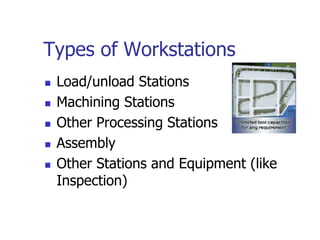
Types of Workstations
 Load/unload Stations
 Machining Stations
 Other Processing Stations
 Assembly
 Other Stations and Equipment (like
Inspection)
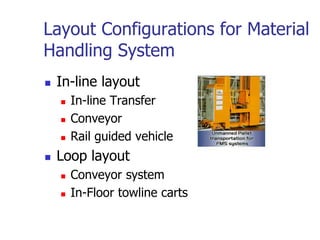
Layout Configurations for Material
Handling System
 In-line layout
 In-line Transfer
 Conveyor
 Rail guided vehicle
 Loop layout
 Conveyor system
 In-Floor towline carts
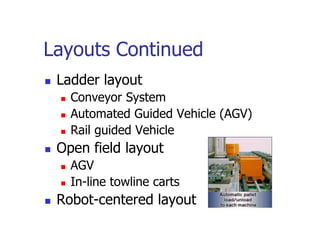
Layouts Continued
 Ladder layout
 Conveyor System
 Automated Guided Vehicle (AGV)
 Rail guided Vehicle
 Open field layout
 AGV
 In-line towline carts
 Robot-centered layout
Computer Control Systems
 Workstation
 Distribution of control instructions to
workstations
 Production control
 Traffic control
 Shuttle control
 Workpiece monitoring
Computer Controls (cont)
 Tool control
 Tool locations
 Tool life monitoring
 Performance monitoring and reporting
 Diagnostics
Why Implement a FMS/FAS?
 Increased machine utilization
 Fewer machines required
 Reduction in factory floor space
required
 Greater responsiveness to change
 Reduced inventory requirements
 Lower manufacturing lead times
Why Implement a FMS/FAS?
(continued)
 Reduced direct labor requirements and
higher labor productivity
 Opportunity for unattended production
FMS Implementation Issues
 Part family considerations
 Processing requirements
 Physical characteristics or workparts
 Production volume
 Scheduling and dispatching
 Machine loading
 Part routing
FMS Issues (cont)
 Part grouping
 Tool management
 Pallet and fixture allocation
 Requires management commitment and
planning
 Major invest of time and money

Fms

  • 1.
    Conventional Manufacturing Consisted of2 varieties 1. Job Shop type systems were capable of large variety of product, but at a high cost. 2. Transfer lines could produce large volumes of a product at a reasonable cost, but were limited to the production of one, two, or very few different parts.
  • 2.
    What is FMS/FAS? A FMS/FAS is one manufacturing machine, or multiple machines that are integrated by an automated material handling system, whose operation is managed by a computerized control system. An FMS can be reconfigured by computer control to manufacture various products.
  • 3.
    What is amanufacturing Cell?  A manufacturing cell usually consists of two or three processing workstations (typically CNC Machining or turning centers) plus a part handling system. The following two slides contain a CAD layout and picture of the RIT Mfg Eng Tech Class of 2000’s manufacturing work cell.
  • 4.
  • 5.
    Flexibility in aFMS/FAS  Machine flexibility  Production flexibility  Mix flexibility  Product flexibility  Routing flexibility  Volume flexibility  Expansion flexibility
  • 6.
    Components of anFMS/FAS  Workstations  Material handling and storage system  Computer control system  People to manage and operate the system
  • 7.
    Types of Workstations Load/unload Stations  Machining Stations  Other Processing Stations  Assembly  Other Stations and Equipment (like Inspection)
  • 8.
    Layout Configurations forMaterial Handling System  In-line layout  In-line Transfer  Conveyor  Rail guided vehicle  Loop layout  Conveyor system  In-Floor towline carts
  • 9.
    Layouts Continued  Ladderlayout  Conveyor System  Automated Guided Vehicle (AGV)  Rail guided Vehicle  Open field layout  AGV  In-line towline carts  Robot-centered layout
  • 10.
    Computer Control Systems Workstation  Distribution of control instructions to workstations  Production control  Traffic control  Shuttle control  Workpiece monitoring
  • 11.
    Computer Controls (cont) Tool control  Tool locations  Tool life monitoring  Performance monitoring and reporting  Diagnostics
  • 12.
    Why Implement aFMS/FAS?  Increased machine utilization  Fewer machines required  Reduction in factory floor space required  Greater responsiveness to change  Reduced inventory requirements  Lower manufacturing lead times
  • 13.
    Why Implement aFMS/FAS? (continued)  Reduced direct labor requirements and higher labor productivity  Opportunity for unattended production
  • 14.
    FMS Implementation Issues Part family considerations  Processing requirements  Physical characteristics or workparts  Production volume  Scheduling and dispatching  Machine loading  Part routing
  • 15.
    FMS Issues (cont) Part grouping  Tool management  Pallet and fixture allocation  Requires management commitment and planning  Major invest of time and money