

Dr. Urfeya Mirza
Division of Veterinary Surgery and
Radiology
Why Give Fluids During Surgery?
Prevent hypotension:
 Vasodilation
 Decreased cardiovascular function
 Blood loss
 Evaporative fluid losses
(Maintenance during surgery 10 ml/kg/hr)
 Prevent/correct acid-base abnormalities (acidosis) due to:
 Respiratory depression: respiratory acidosis
 Decreased cardiac function: metabolic acidosis
Why Give Fluids At Other Times?
 Correct dehydration
 Correct acid-base abnormalities d/t disease
 Correct electrolyte abnormalities
 Deliver drugs in a constant-rate infusion
 Prevent dehydration (GI disease)
 Diuresis (renal disease, toxicities)
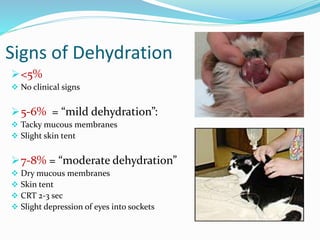
Signs of Dehydration
<5%
 No clinical signs
5-6% = “mild dehydration”:
 Tacky mucous membranes
 Slight skin tent
7-8% = “moderate dehydration”
 Dry mucous membranes
 Skin tent
 CRT 2-3 sec
 Slight depression of eyes into sockets
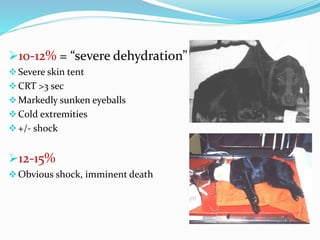
10-12% = “severe dehydration”
Severe skin tent
CRT >3 sec
Markedly sunken eyeballs
Cold extremities
+/- shock
12-15%
Obvious shock, imminent death
Diagnosis Of Dehydration
 Physical exam
 Weight loss
 Skin Tent
 PCV (HCT)
 INCREASED
 Albumin or total protein
 INCREASED
 BUN, creatinine
 INCREASED =“Prerenal azotemia”
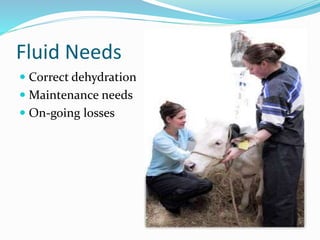
Fluid Needs
 Correct dehydration
 Maintenance needs
 On-going losses
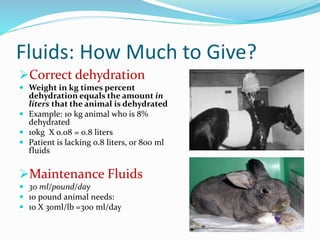
Fluids: How Much to Give?
Correct dehydration
 Weight in kg times percent
dehydration equals the amount in
liters that the animal is dehydrated
 Example: 10 kg animal who is 8%
dehydrated
 10kg X 0.08 = 0.8 liters
 Patient is lacking 0.8 liters, or 800 ml
fluids
Maintenance Fluids
 30 ml/pound/day
 10 pound animal needs:
 10 X 30ml/lb =300 ml/day
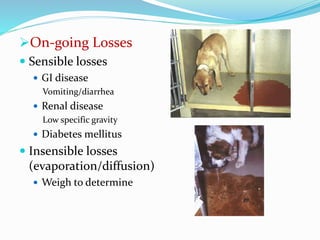
On-going Losses
 Sensible losses
 GI disease
Vomiting/diarrhea
 Renal disease
Low specific gravity
 Diabetes mellitus
 Insensible losses
(evaporation/diffusion)
 Weigh to determine
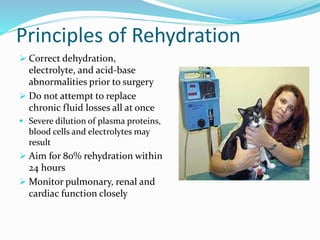
Principles of Rehydration
 Correct dehydration,
electrolyte, and acid-base
abnormalities prior to surgery
 Do not attempt to replace
chronic fluid losses all at once
 Severe dilution of plasma proteins,
blood cells and electrolytes may
result
 Aim for 80% rehydration within
24 hours
 Monitor pulmonary, renal and
cardiac function closely
Types of Fluids
 Colloids (Natural and Synthetic)
 Crystalloids
Natural Colloids
 Blood products:
 Whole blood
 Plasma
 Platelet-rich plasma
 Packed RBC’s
Synthetic Colloids
 Dextrans, Hetastarch
 Used when quantity of a crystalloid is too great to be able
to infuse quickly
 Stays within the vasculature maintain blood pressure
 Duration of effect is determined by molecular size:
bigger = longer
Crystalloids
 Isotonic
Mimic plasma electrolyte concentrations
 Hypertonic
Follow with isotonic
 0.9% NaCl
 Lactated Ringers Solution
 Ringers Solution
 5% Dextrose in water
 Plasmalyte, Normosol, etc
Lactated Ringer’s Solution
 Composition closely resembles ECF
Contains physiological concentrations of: sodium,
chloride, potassium, and calcium
 Also contains lactate, which is metabolized by the liver
alkaline-forming
Because small animals that are sick or under anesthesia
tend towards acidosis
Ringer’s Solution
 Same as LRS except no lactate added
 Commonly used in Large animals
 Large animals who are sick tend towards alkalosis instead
of acidosis
Saline
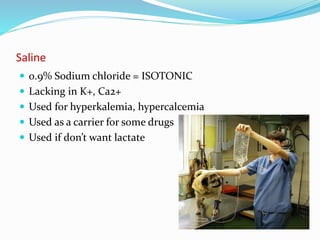
 0.9% Sodium chloride = ISOTONIC
 Lacking in K+, Ca2+
 Used for hyperkalemia, hypercalcemia
 Used as a carrier for some drugs
 Used if don’t want lactate
Dextrose Solutions
 5% dextrose is isotonic
 50% dextrose commonly found
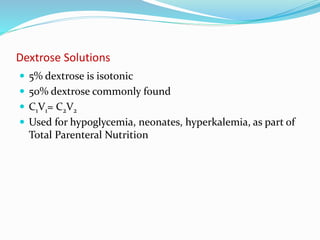
 C1V1= C2V2
 Used for hypoglycemia, neonates, hyperkalemia, as part of
Total Parenteral Nutrition
Additives for Crystalloid Solutions
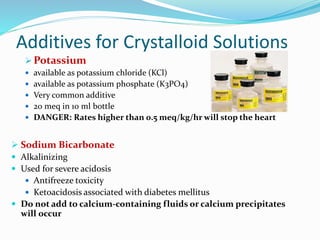
 Potassium
 available as potassium chloride (KCl)
 available as potassium phosphate (K3PO4)
 Very common additive
 20 meq in 10 ml bottle
 DANGER: Rates higher than 0.5 meq/kg/hr will stop the heart
 Sodium Bicarbonate
 Alkalinizing
 Used for severe acidosis
 Antifreeze toxicity
 Ketoacidosis associated with diabetes mellitus
 Do not add to calcium-containing fluids or calcium precipitates
will occur
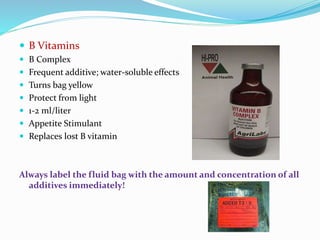
 B Vitamins
 B Complex
 Frequent additive; water-soluble effects
 Turns bag yellow
 Protect from light
 1-2 ml/liter
 Appetite Stimulant
 Replaces lost B vitamin
Always label the fluid bag with the amount and concentration of all
additives immediately!
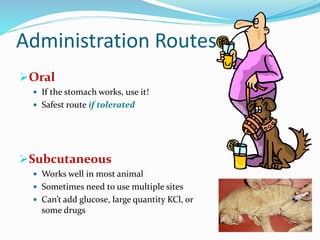
Administration Routes
Oral
 If the stomach works, use it!
 Safest route if tolerated
Subcutaneous
 Works well in most animal
 Sometimes need to use multiple sites
 Can’t add glucose, large quantity KCl, or
some drugs
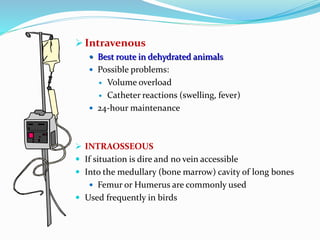
 Intravenous
 Best route in dehydrated animals
 Possible problems:
 Volume overload
 Catheter reactions (swelling, fever)
 24-hour maintenance
 INTRAOSSEOUS
 If situation is dire and no vein accessible
 Into the medullary (bone marrow) cavity of long bones
 Femur or Humerus are commonly used
 Used frequently in birds
Calculate Drops Per Hour
 Calculate ml/hr
 Calculate drops/hr by:
 ml/hr X drops/ml (from the package)
 Gives you drops needed in an hour
 Example: 100 ml X 10 drops per ml = 1000 drops in the first
hour
 Divide drops per hour by 60 min/hr to get drops per
minute
 Divide again by 60 to get drops per second
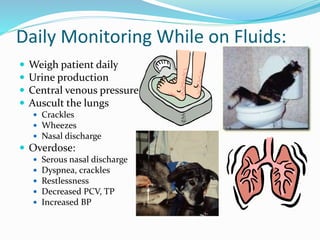
Daily Monitoring While on Fluids:
 Weigh patient daily
 Urine production
 Central venous pressure
 Auscult the lungs
 Crackles
 Wheezes
 Nasal discharge
 Overdose:
 Serous nasal discharge
 Dyspnea, crackles
 Restlessness
 Decreased PCV, TP
 Increased BP
References
 Crystalloid and Colloid Fluid Therapy. In Ettinger
SJ, Feldman EC, Textbook of Veterinary Internal
Medicine, 7th edn.
 Introduction to Fluid Therapy. In Di Bartola SP -
Fluid, Electrolyte and Acid Base Disorders, 4th
edn.
Fluid therapy

Fluid therapy

  • 1.
    Dr. Urfeya Mirza Divisionof Veterinary Surgery and Radiology
  • 2.
    Why Give FluidsDuring Surgery? Prevent hypotension:  Vasodilation  Decreased cardiovascular function  Blood loss  Evaporative fluid losses (Maintenance during surgery 10 ml/kg/hr)  Prevent/correct acid-base abnormalities (acidosis) due to:  Respiratory depression: respiratory acidosis  Decreased cardiac function: metabolic acidosis
  • 3.
    Why Give FluidsAt Other Times?  Correct dehydration  Correct acid-base abnormalities d/t disease  Correct electrolyte abnormalities  Deliver drugs in a constant-rate infusion  Prevent dehydration (GI disease)  Diuresis (renal disease, toxicities)
  • 4.
    Signs of Dehydration <5% No clinical signs 5-6% = “mild dehydration”:  Tacky mucous membranes  Slight skin tent 7-8% = “moderate dehydration”  Dry mucous membranes  Skin tent  CRT 2-3 sec  Slight depression of eyes into sockets
  • 5.
    10-12% = “severedehydration” Severe skin tent CRT >3 sec Markedly sunken eyeballs Cold extremities +/- shock 12-15% Obvious shock, imminent death
  • 6.
    Diagnosis Of Dehydration Physical exam  Weight loss  Skin Tent  PCV (HCT)  INCREASED  Albumin or total protein  INCREASED  BUN, creatinine  INCREASED =“Prerenal azotemia”
  • 7.
    Fluid Needs  Correctdehydration  Maintenance needs  On-going losses
  • 8.
    Fluids: How Muchto Give? Correct dehydration  Weight in kg times percent dehydration equals the amount in liters that the animal is dehydrated  Example: 10 kg animal who is 8% dehydrated  10kg X 0.08 = 0.8 liters  Patient is lacking 0.8 liters, or 800 ml fluids Maintenance Fluids  30 ml/pound/day  10 pound animal needs:  10 X 30ml/lb =300 ml/day
  • 9.
    On-going Losses  Sensiblelosses  GI disease Vomiting/diarrhea  Renal disease Low specific gravity  Diabetes mellitus  Insensible losses (evaporation/diffusion)  Weigh to determine
  • 10.
    Principles of Rehydration Correct dehydration, electrolyte, and acid-base abnormalities prior to surgery  Do not attempt to replace chronic fluid losses all at once  Severe dilution of plasma proteins, blood cells and electrolytes may result  Aim for 80% rehydration within 24 hours  Monitor pulmonary, renal and cardiac function closely
  • 11.
    Types of Fluids Colloids (Natural and Synthetic)  Crystalloids
  • 12.
    Natural Colloids  Bloodproducts:  Whole blood  Plasma  Platelet-rich plasma  Packed RBC’s Synthetic Colloids  Dextrans, Hetastarch  Used when quantity of a crystalloid is too great to be able to infuse quickly  Stays within the vasculature maintain blood pressure  Duration of effect is determined by molecular size: bigger = longer
  • 13.
    Crystalloids  Isotonic Mimic plasmaelectrolyte concentrations  Hypertonic Follow with isotonic  0.9% NaCl  Lactated Ringers Solution  Ringers Solution  5% Dextrose in water  Plasmalyte, Normosol, etc
  • 14.
    Lactated Ringer’s Solution Composition closely resembles ECF Contains physiological concentrations of: sodium, chloride, potassium, and calcium  Also contains lactate, which is metabolized by the liver alkaline-forming Because small animals that are sick or under anesthesia tend towards acidosis
  • 15.
    Ringer’s Solution  Sameas LRS except no lactate added  Commonly used in Large animals  Large animals who are sick tend towards alkalosis instead of acidosis
  • 16.
    Saline  0.9% Sodiumchloride = ISOTONIC  Lacking in K+, Ca2+  Used for hyperkalemia, hypercalcemia  Used as a carrier for some drugs  Used if don’t want lactate
  • 17.
    Dextrose Solutions  5%dextrose is isotonic  50% dextrose commonly found  C1V1= C2V2  Used for hypoglycemia, neonates, hyperkalemia, as part of Total Parenteral Nutrition
  • 18.
    Additives for CrystalloidSolutions  Potassium  available as potassium chloride (KCl)  available as potassium phosphate (K3PO4)  Very common additive  20 meq in 10 ml bottle  DANGER: Rates higher than 0.5 meq/kg/hr will stop the heart  Sodium Bicarbonate  Alkalinizing  Used for severe acidosis  Antifreeze toxicity  Ketoacidosis associated with diabetes mellitus  Do not add to calcium-containing fluids or calcium precipitates will occur
  • 19.
     B Vitamins B Complex  Frequent additive; water-soluble effects  Turns bag yellow  Protect from light  1-2 ml/liter  Appetite Stimulant  Replaces lost B vitamin Always label the fluid bag with the amount and concentration of all additives immediately!
  • 20.
    Administration Routes Oral  Ifthe stomach works, use it!  Safest route if tolerated Subcutaneous  Works well in most animal  Sometimes need to use multiple sites  Can’t add glucose, large quantity KCl, or some drugs
  • 21.
     Intravenous  Bestroute in dehydrated animals  Possible problems:  Volume overload  Catheter reactions (swelling, fever)  24-hour maintenance  INTRAOSSEOUS  If situation is dire and no vein accessible  Into the medullary (bone marrow) cavity of long bones  Femur or Humerus are commonly used  Used frequently in birds
  • 22.
    Calculate Drops PerHour  Calculate ml/hr  Calculate drops/hr by:  ml/hr X drops/ml (from the package)  Gives you drops needed in an hour  Example: 100 ml X 10 drops per ml = 1000 drops in the first hour  Divide drops per hour by 60 min/hr to get drops per minute  Divide again by 60 to get drops per second
  • 23.
    Daily Monitoring Whileon Fluids:  Weigh patient daily  Urine production  Central venous pressure  Auscult the lungs  Crackles  Wheezes  Nasal discharge  Overdose:  Serous nasal discharge  Dyspnea, crackles  Restlessness  Decreased PCV, TP  Increased BP
  • 24.
    References  Crystalloid andColloid Fluid Therapy. In Ettinger SJ, Feldman EC, Textbook of Veterinary Internal Medicine, 7th edn.  Introduction to Fluid Therapy. In Di Bartola SP - Fluid, Electrolyte and Acid Base Disorders, 4th edn.