Flipped Classroom (Part 1) Turning the Classroom Inside Out
Office of Instructional Technology
Purdue University Calumet
Ningchun Han, Ed.D
What is the Flipped Classroom?


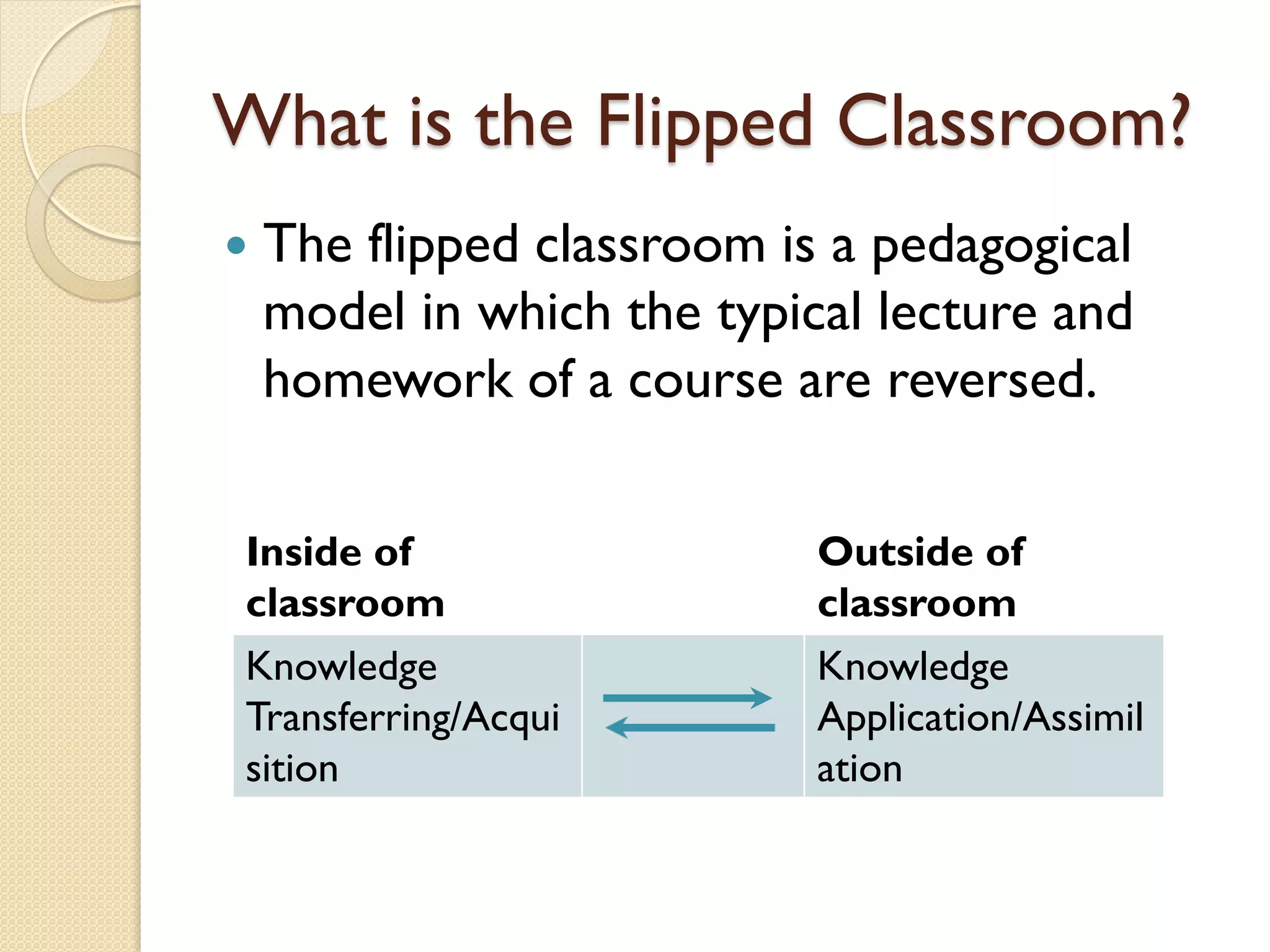
The flipped classroom is a pedagogical
model in which the typical lecture and
homework of a course are reversed.

Inside of
classroom
Knowledge
Transferring/Acqui
sition

Outside of
classroom
Knowledge
Application/Assimil
ation
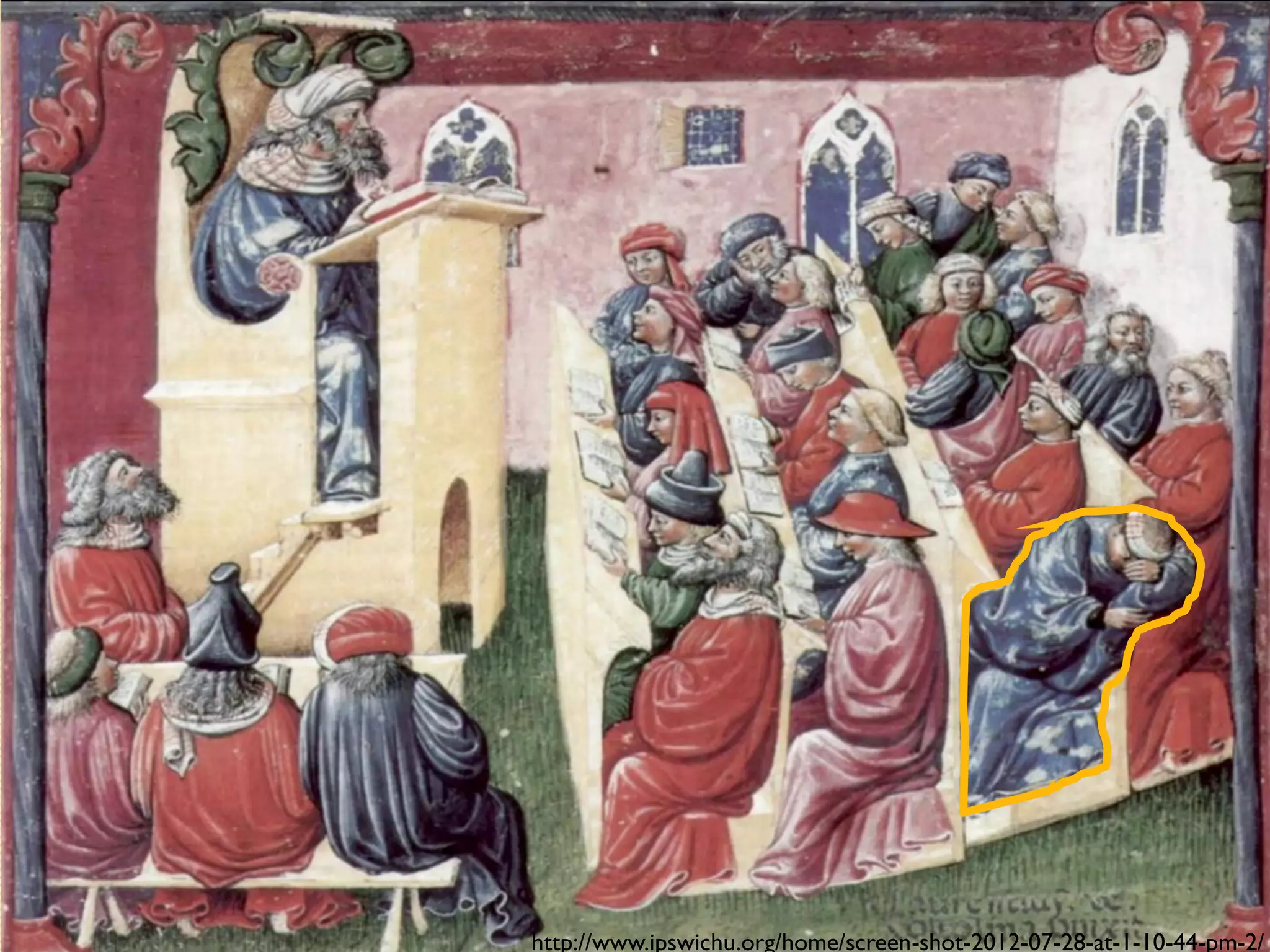
http://www.ipswichu.org/home/screen-shot-2012-07-28-at-1-10-44-pm-2/
How it works?
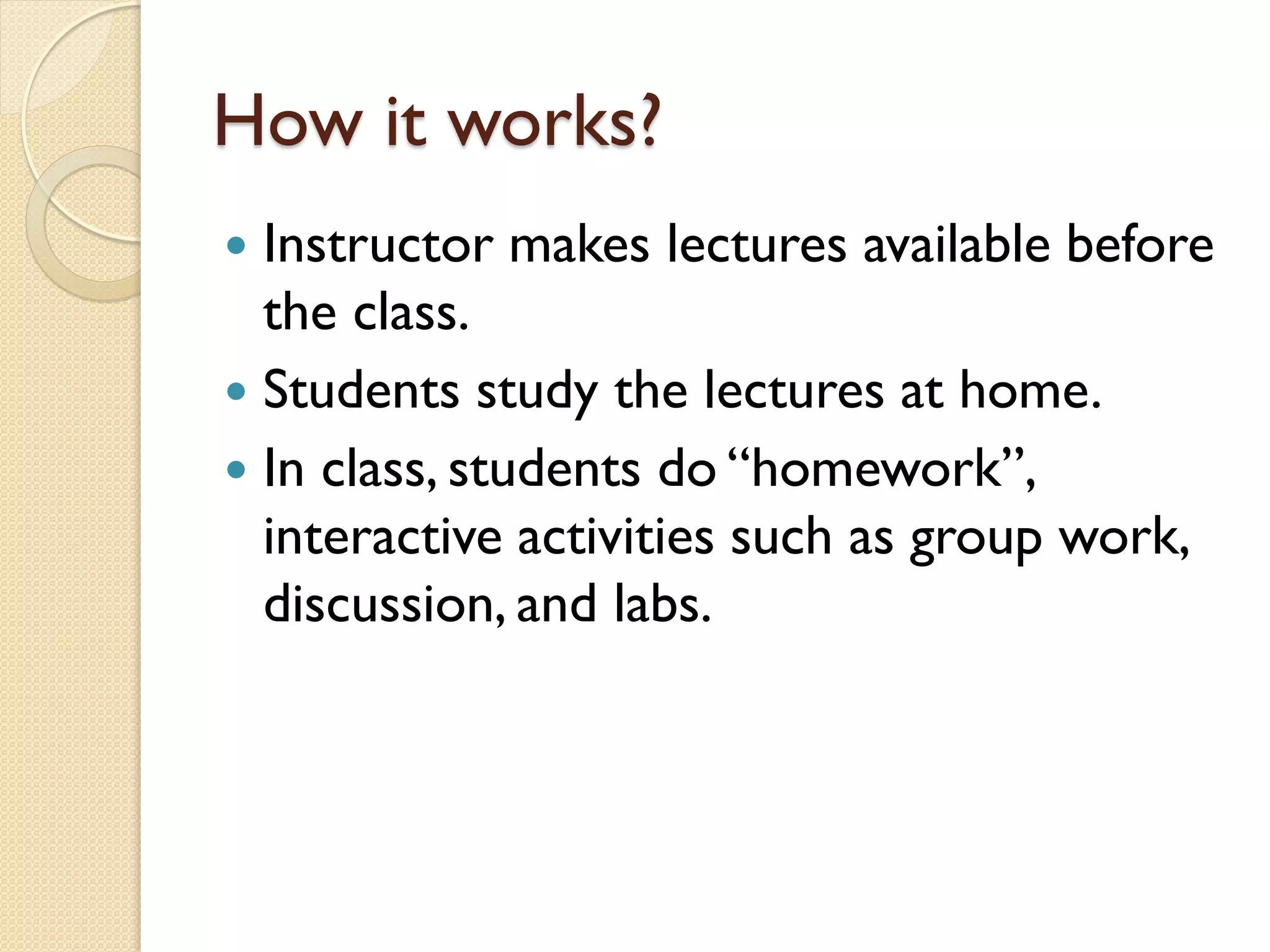
Instructor makes lectures available before
the class.
 Students study the lectures at home.
 In class, students do “homework”,
interactive activities such as group work,
discussion, and labs.

How it started?

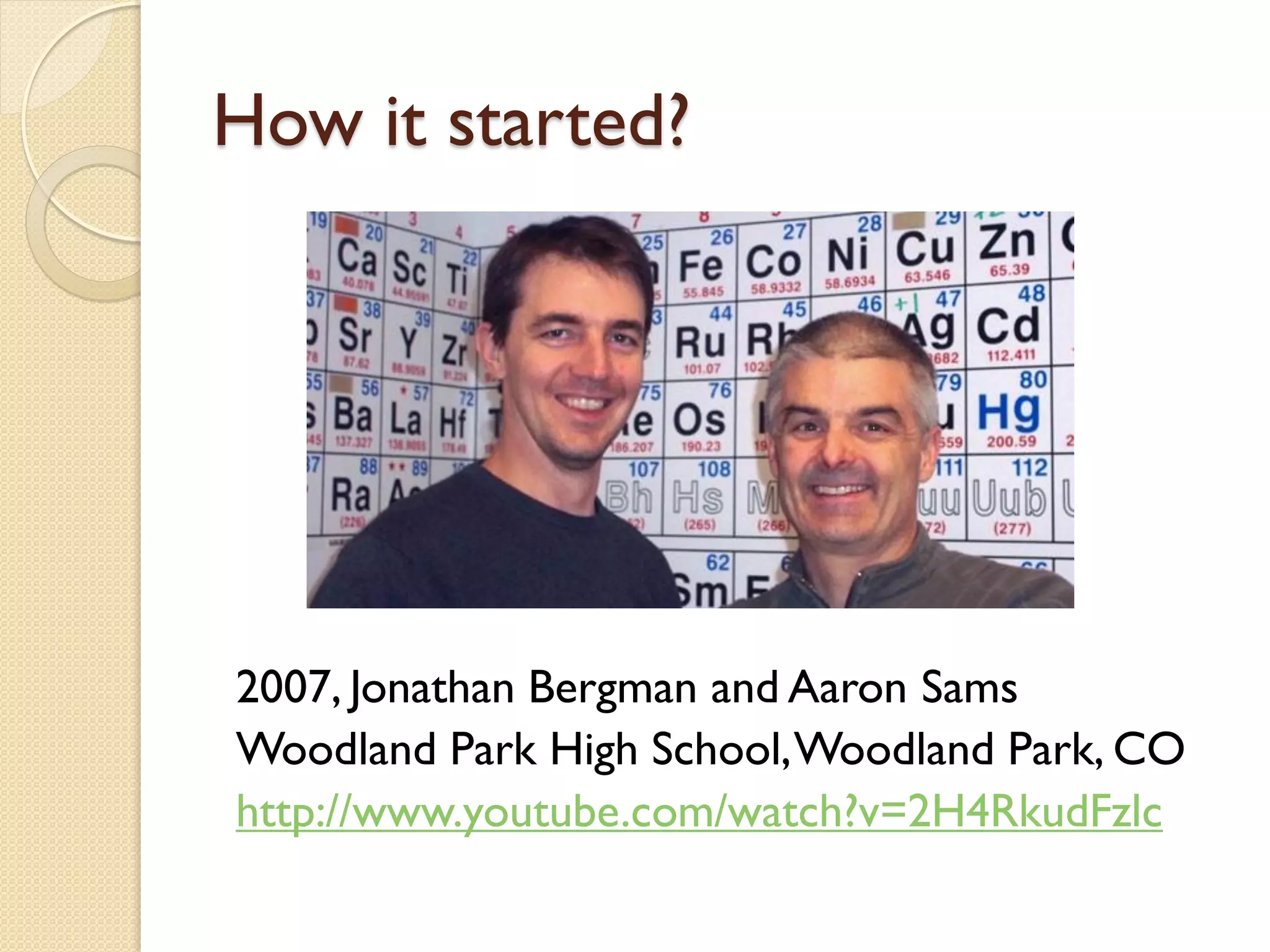
2007, Jonathan Bergman and Aaron Sams
Woodland Park High School, Woodland Park, CO
http://www.youtube.com/watch?v=2H4RkudFzlc
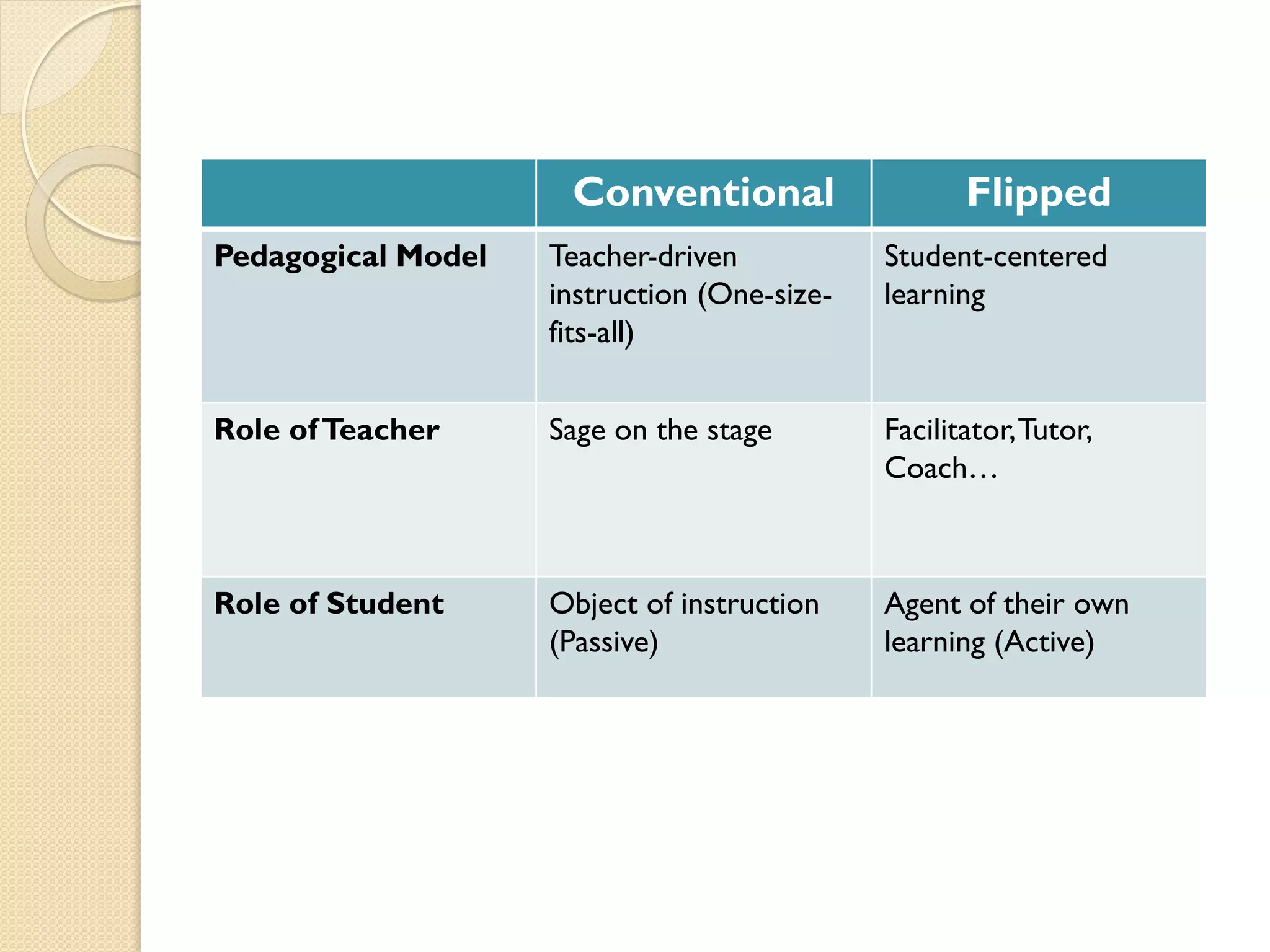
Conventional

Flipped

Pedagogical Model

Teacher-driven
instruction (One-sizefits-all)

Student-centered
learning

Role of Teacher

Sage on the stage

Facilitator, Tutor,
Coach…

Role of Student

Object of instruction
(Passive)

Agent of their own
learning (Active)
Why it works?


Constructivism
Learners construct knowledge based on what
they already understand as they make
connections between new information and old
information.
Why it works?


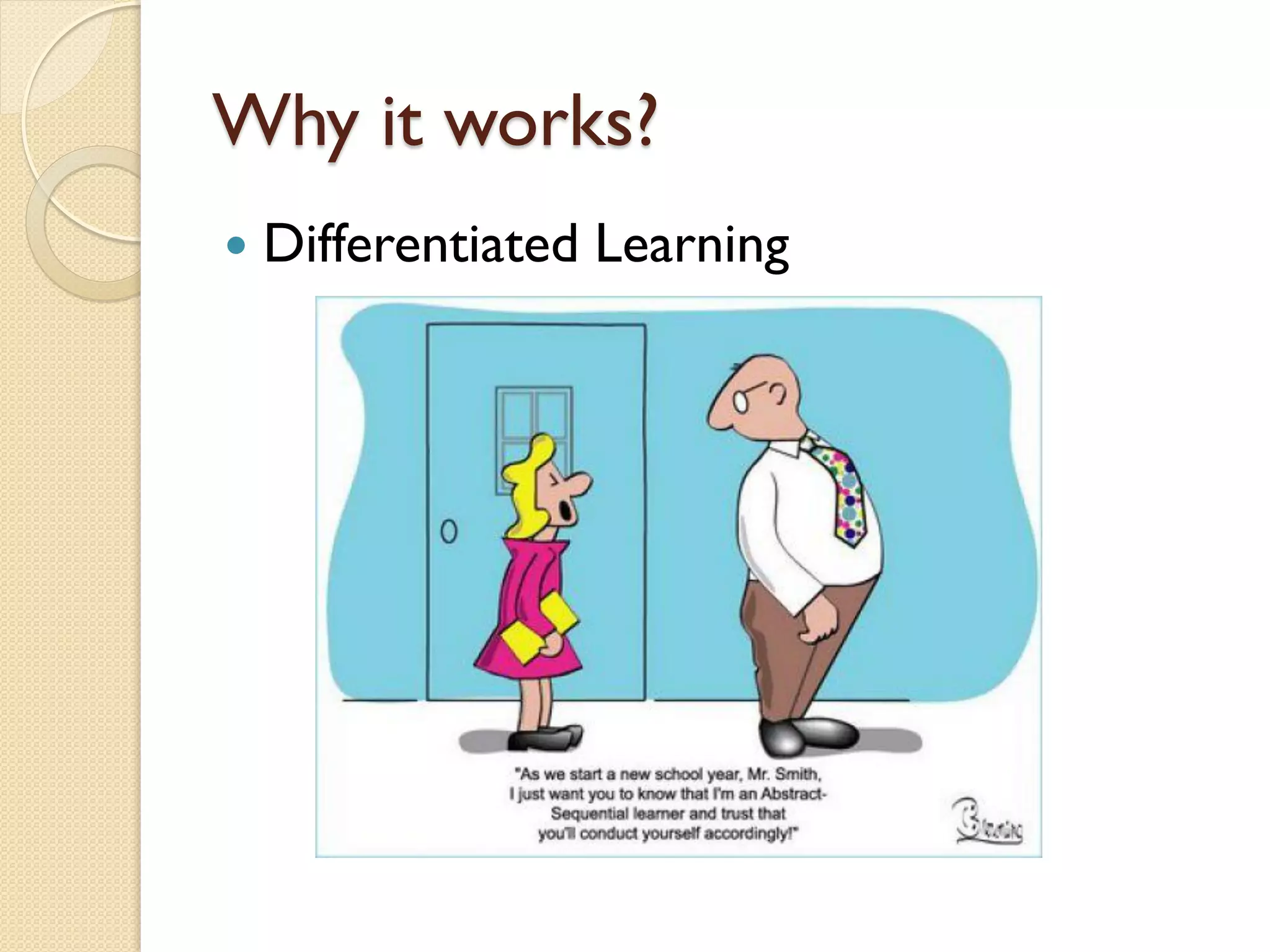
Differentiated Learning
Why it works?


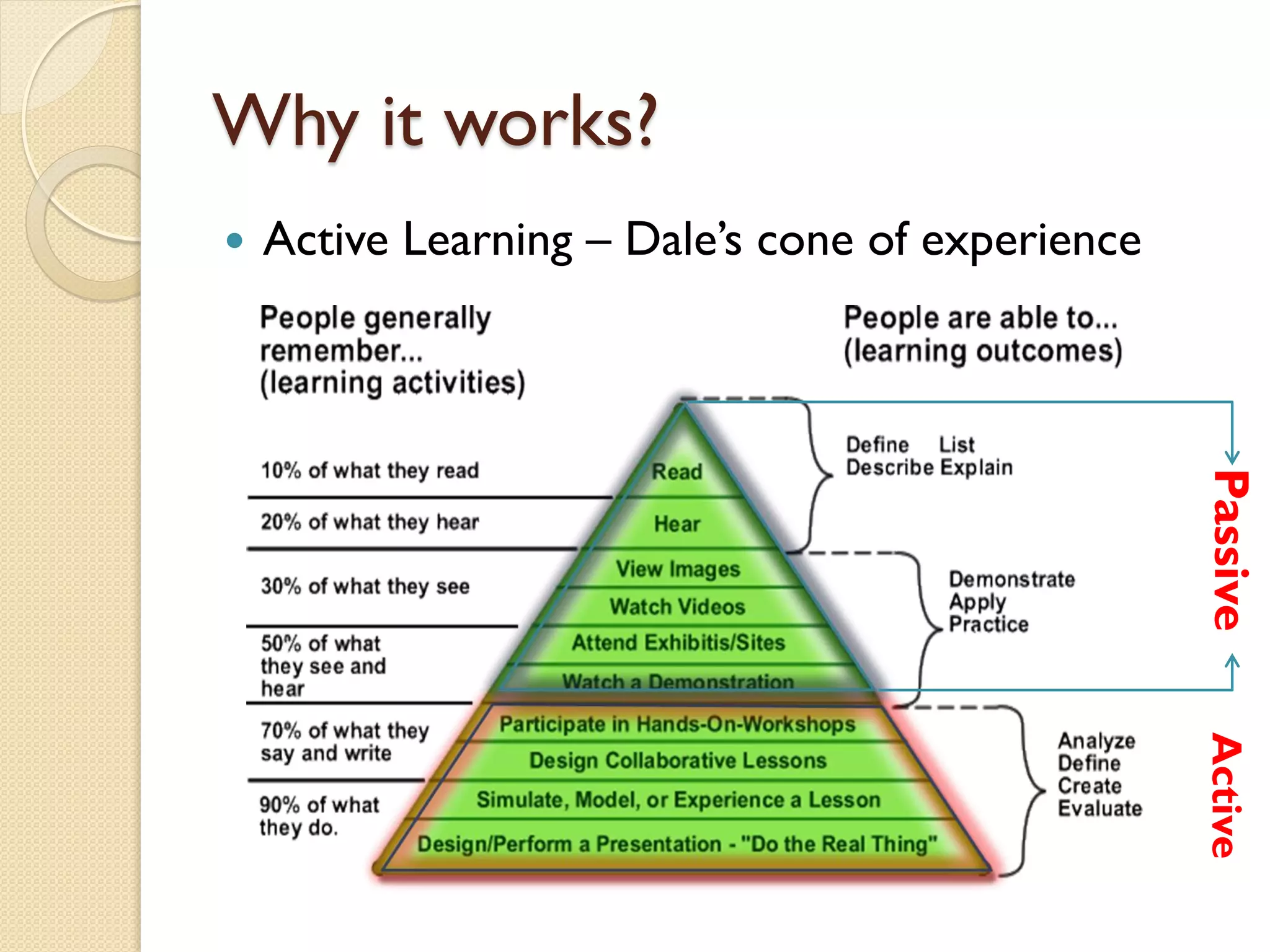
Active Learning – Dale’s cone of experience

Passive
Active
Why it works?


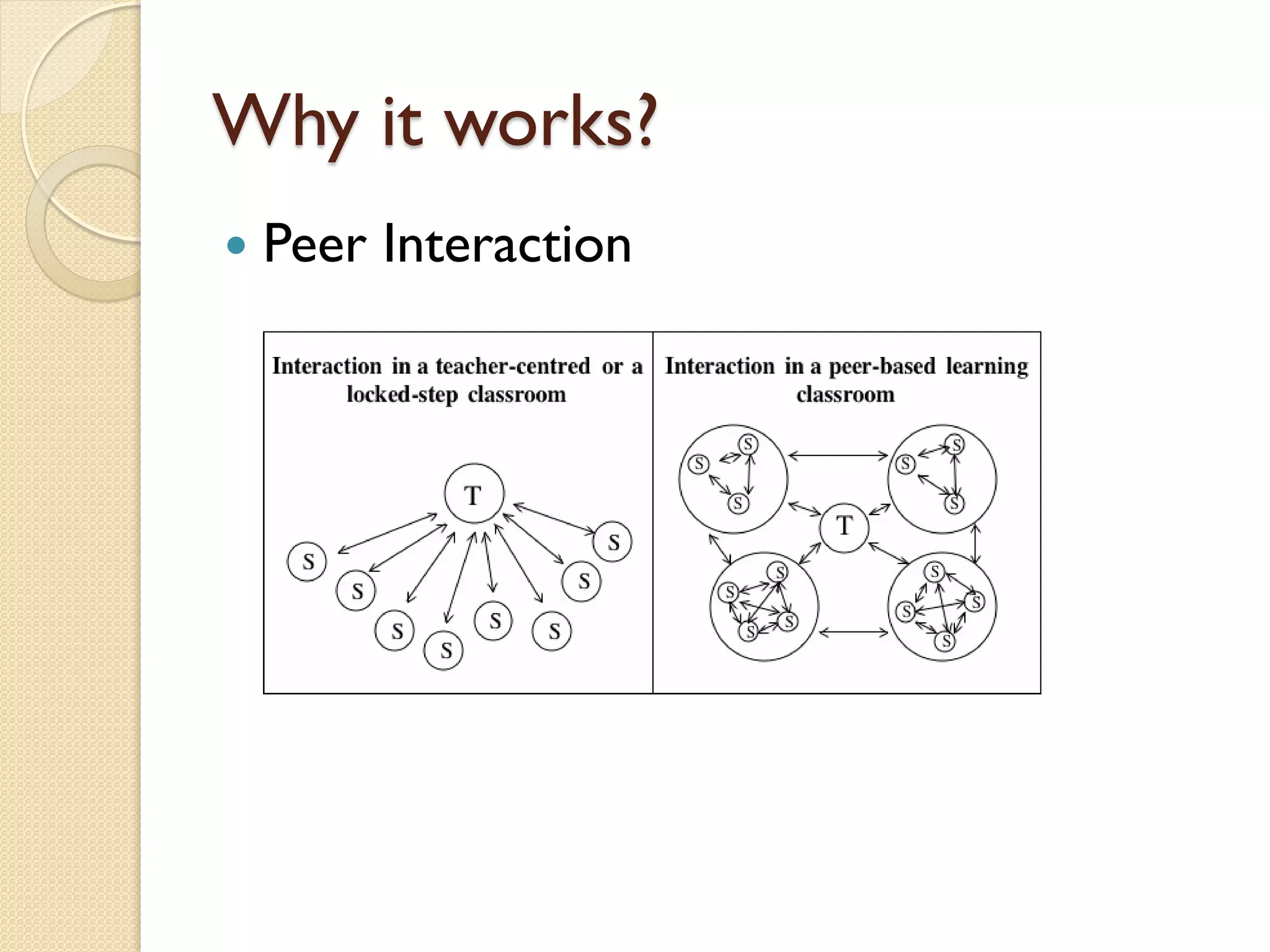
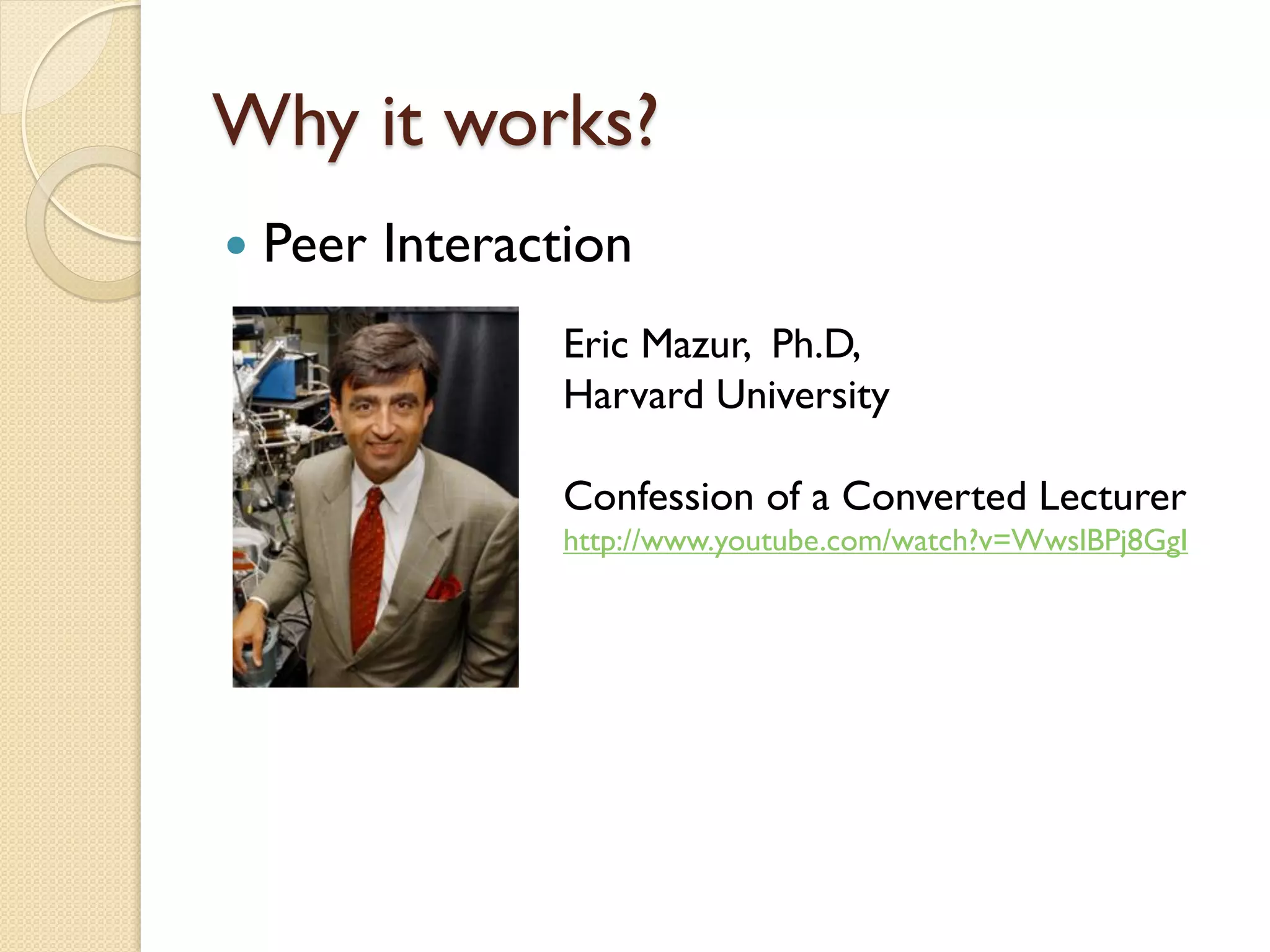
Peer Interaction
Why it works?


Peer Interaction
Eric Mazur, Ph.D,
Harvard University
Confession of a Converted Lecturer
http://www.youtube.com/watch?v=WwslBPj8GgI
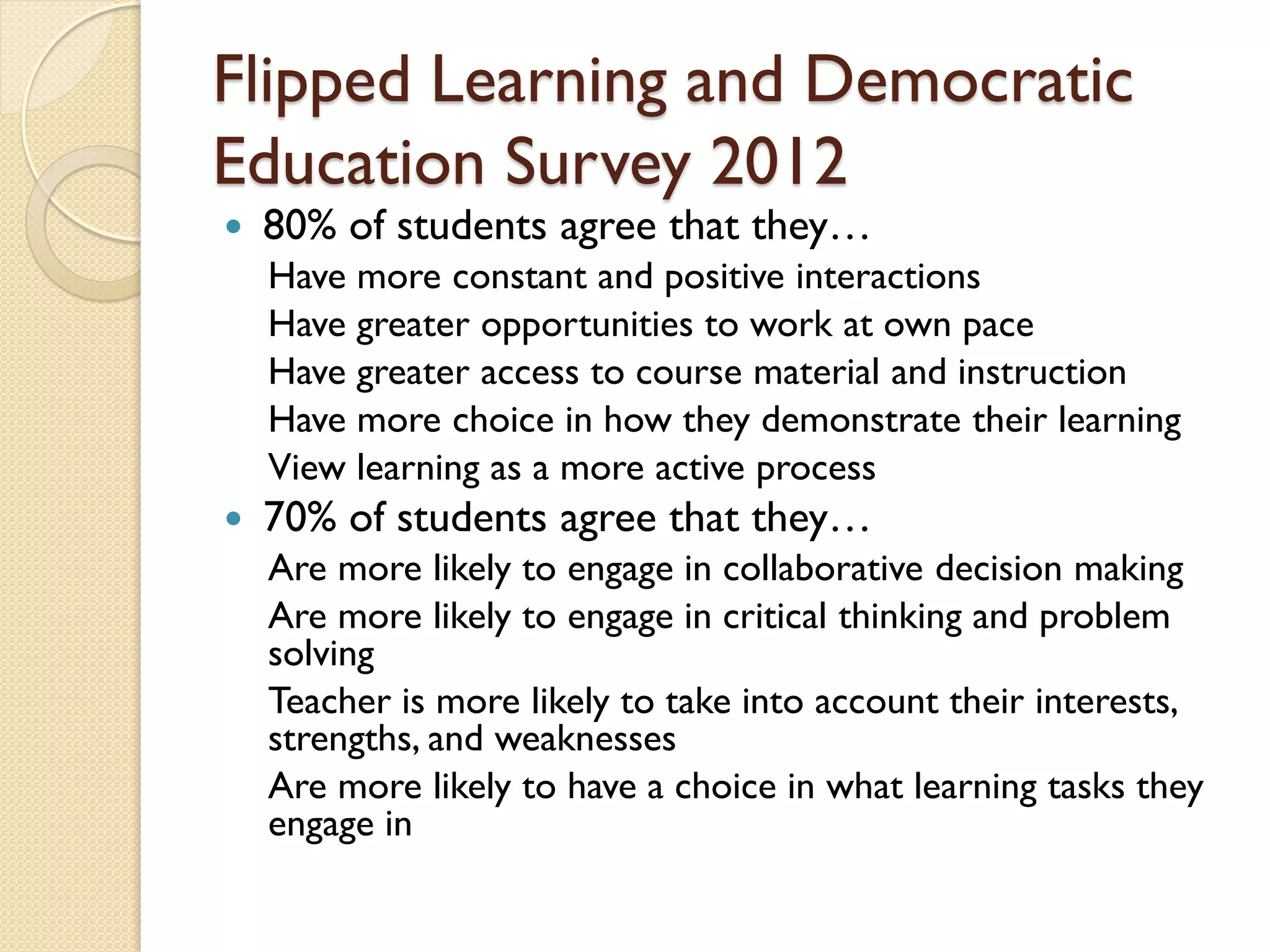
Flipped Learning and Democratic
Education Survey 2012


80% of students agree that they…

Have more constant and positive interactions
Have greater opportunities to work at own pace
Have greater access to course material and instruction
Have more choice in how they demonstrate their learning
View learning as a more active process


70% of students agree that they…
Are more likely to engage in collaborative decision making
Are more likely to engage in critical thinking and problem
solving
Teacher is more likely to take into account their interests,
strengths, and weaknesses
Are more likely to have a choice in what learning tasks they
engage in
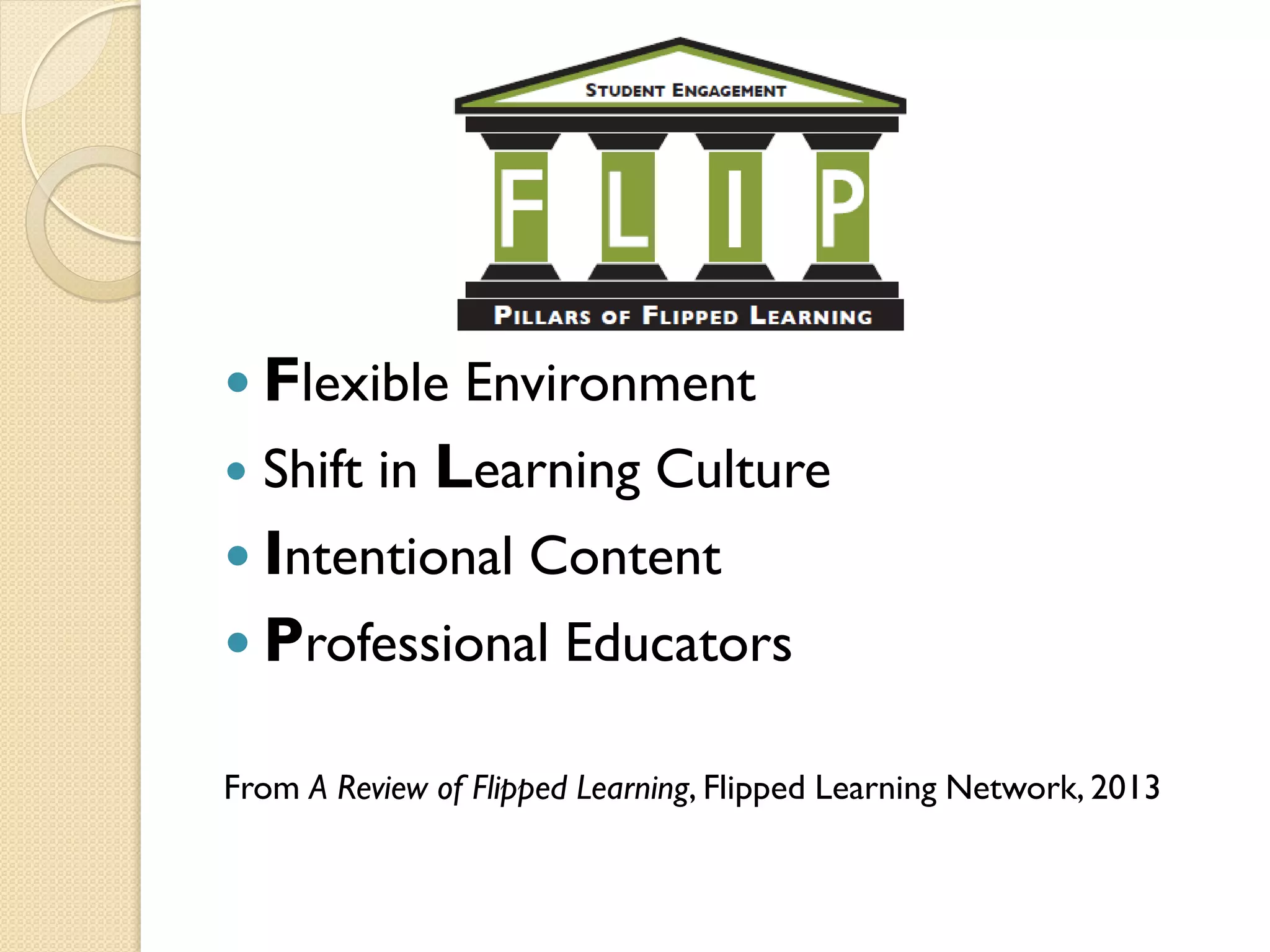
 Flexible Environment


Shift in Learning Culture

 Intentional Content

 Professional Educators
From A Review of Flipped Learning, Flipped Learning Network, 2013
How to Flip?


Require students to study before the class
meeting
◦ Reading assignments with quizzes
◦ Recorded lectures with quizzes
◦ Why re-invent the wheel?

Consider using book publishers’ study materials (lectures,
interactive media, adaptive learning)

◦ Open a discussion forum for Q&A
◦ Require students to submit a question to the
instructor
◦ Provide resources: Khan Academy, TED-Ed,
YouTube, etc.
How to Flip?


Inside of the Classroom
Addressing difficult areas students have expressed
Teaching by questioning
Small group discussion
Debates
Role play
Lab activities
Project-based learning
Case studies
and more…
How to flip?


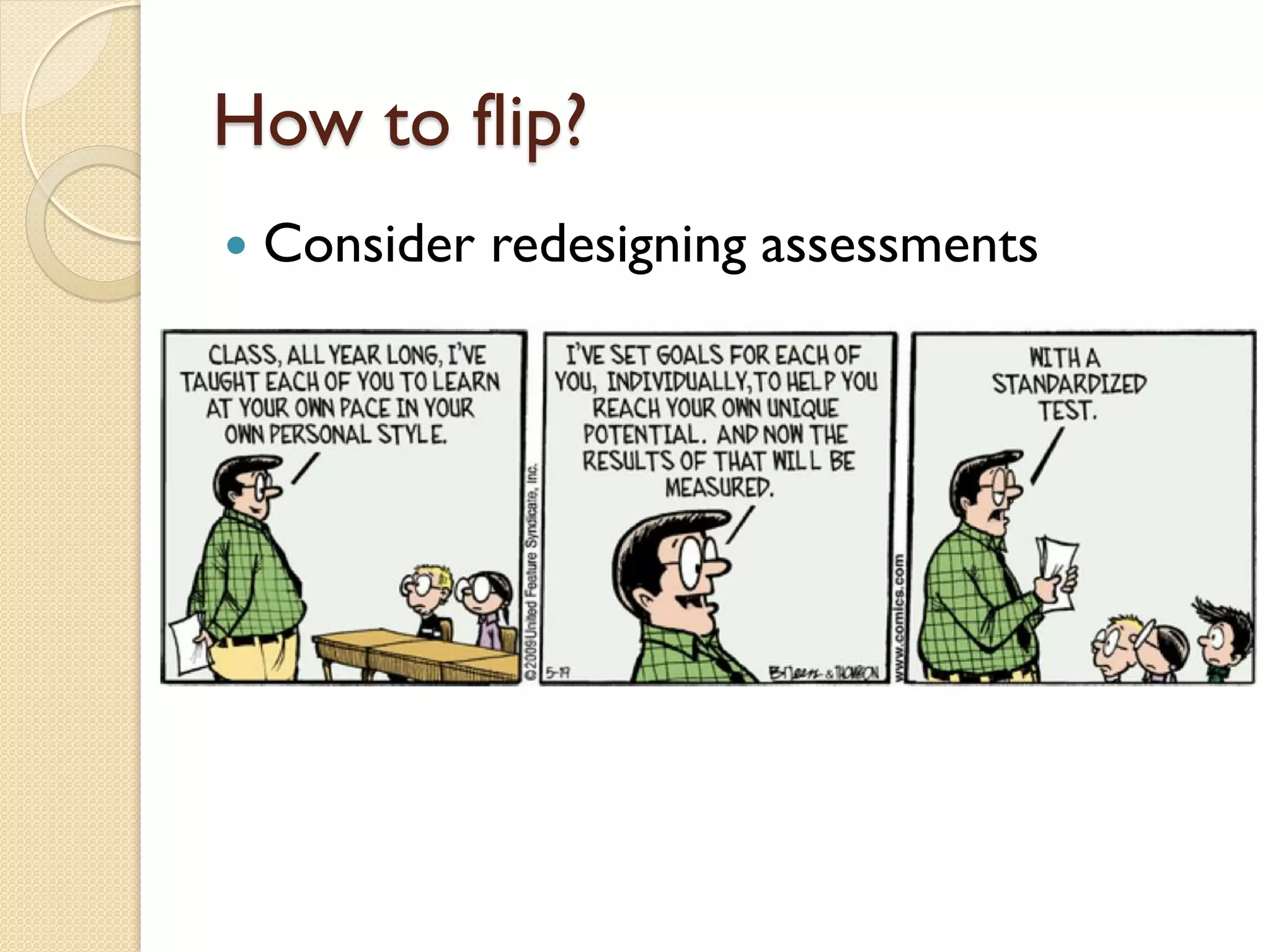
Consider redesigning assessments
Questions?
Remember our door is always open!
Office of Instructional Technology
Gyte 135
Ext. 2873

Flipped classroom (Part 1)

  • 1.
    Flipped Classroom (Part1) Turning the Classroom Inside Out Office of Instructional Technology Purdue University Calumet Ningchun Han, Ed.D
  • 2.
    What is theFlipped Classroom?  The flipped classroom is a pedagogical model in which the typical lecture and homework of a course are reversed. Inside of classroom Knowledge Transferring/Acqui sition Outside of classroom Knowledge Application/Assimil ation
  • 3.
  • 6.
    How it works? Instructormakes lectures available before the class.  Students study the lectures at home.  In class, students do “homework”, interactive activities such as group work, discussion, and labs. 
  • 7.
    How it started? 2007,Jonathan Bergman and Aaron Sams Woodland Park High School, Woodland Park, CO http://www.youtube.com/watch?v=2H4RkudFzlc
  • 8.
    Conventional Flipped Pedagogical Model Teacher-driven instruction (One-sizefits-all) Student-centered learning Roleof Teacher Sage on the stage Facilitator, Tutor, Coach… Role of Student Object of instruction (Passive) Agent of their own learning (Active)
  • 9.
    Why it works?  Constructivism Learnersconstruct knowledge based on what they already understand as they make connections between new information and old information.
  • 10.
  • 11.
    Why it works?  ActiveLearning – Dale’s cone of experience Passive Active
  • 12.
  • 13.
    Why it works?  PeerInteraction Eric Mazur, Ph.D, Harvard University Confession of a Converted Lecturer http://www.youtube.com/watch?v=WwslBPj8GgI
  • 14.
    Flipped Learning andDemocratic Education Survey 2012  80% of students agree that they… Have more constant and positive interactions Have greater opportunities to work at own pace Have greater access to course material and instruction Have more choice in how they demonstrate their learning View learning as a more active process  70% of students agree that they… Are more likely to engage in collaborative decision making Are more likely to engage in critical thinking and problem solving Teacher is more likely to take into account their interests, strengths, and weaknesses Are more likely to have a choice in what learning tasks they engage in
  • 15.
     Flexible Environment  Shiftin Learning Culture  Intentional Content  Professional Educators From A Review of Flipped Learning, Flipped Learning Network, 2013
  • 16.
    How to Flip?  Requirestudents to study before the class meeting ◦ Reading assignments with quizzes ◦ Recorded lectures with quizzes ◦ Why re-invent the wheel? Consider using book publishers’ study materials (lectures, interactive media, adaptive learning) ◦ Open a discussion forum for Q&A ◦ Require students to submit a question to the instructor ◦ Provide resources: Khan Academy, TED-Ed, YouTube, etc.
  • 17.
    How to Flip?  Insideof the Classroom Addressing difficult areas students have expressed Teaching by questioning Small group discussion Debates Role play Lab activities Project-based learning Case studies and more…
  • 18.
    How to flip?  Considerredesigning assessments
  • 19.
    Questions? Remember our dooris always open! Office of Instructional Technology Gyte 135 Ext. 2873