FLAPS IN ORAL SURGERY
• PREPARED BY:
MUHAMMED BAHADEEN
Types of Flaps .
• 1 Trapezoidal Flap .
• 2 Triangular Flap .
• 3 Envelope Flap .
• 4 Semilunar Flap .
• 5 Other Types of Flaps.
• 6 Pedicle Flaps .
Types of Flaps
Trapezoidal Flap
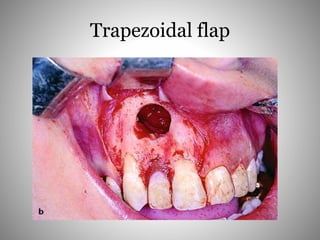
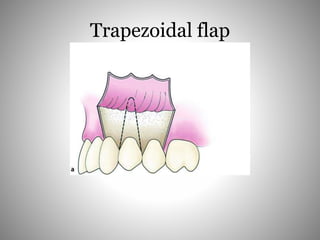
• The trapezoidal flap is formed by a horizontal
incision along the gingivae, and two oblique
vertical releasing incisions extending to the buccal
vestibule.
• The vertical releasing incisions always extend to
the interdental papilla and never to the center of
the labial or buccal surface of the tooth. This
ensures the integrity of the gingiva proper, because
if the incision were to begin at the center of the
tooth, contraction after healing would leave the
cervical area of the tooth exposed.
Trapezoidal flap
Trapezoidal flap
advantages
• Provides excellent access.
• allows surgery to be performed on more
than one or two teeth.
• produces no tension in the tissues, allows
easy reapproximation of the flap to its
original position and hastens the healing
process.
Disadvantages
• Produces a defect in the attached gingiva
(recession of gingiva).
Triangular Flap
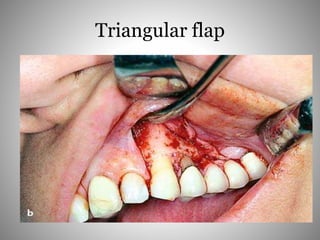
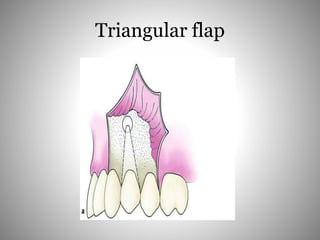
• This flap is the result of an L-shaped incision
with a horizontal incision made along the
gingival sulcus and a vertical or oblique
incision.
• The vertical incision begins approximately at
the vestibular fold and extends to the
interdental papilla of the gingiva. The
triangular flap is performed labially or
buccally on both jaws and is indicated in the
surgical removal of root tips, small cysts, and
apicoectomies.
Triangular flap
Triangular flap
Advantages
• Ensures an adequate blood supply,
satisfactory visualization, very good
stability and reapproximation.
• it is easily modified with a small releasing
incision, or an additional vertical incision,
or even lengthening of the horizontal
incision.
Disadvantages
• Limited access to long roots, tension is
created when the flap is held with a
retractor, and it causes a defect in the
attached gingiva.
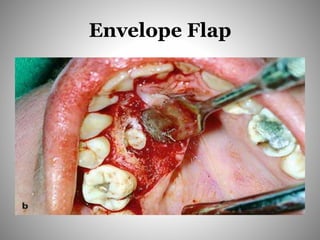
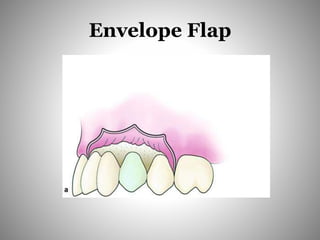
Envelope Flap
• This type of flap is the result of an extended
horizontal incision along the cervical lines of the
teeth.
• The incision is made in the gingival sulcus and
extends along four or five teeth. The tissue
connected to the cervical lines of these teeth and
the interdental papillae is thus freed.
• The envelope flap is used for surgery of incisors,
premolars and molars, on the labial or buccal and
palatal or lingual surface and is usually indicated
when the surgical procedure involves the cervical
lines of the teeth.
Envelope Flap
Envelope Flap
Advantages
• . Avoidance of vertical incision and easy
reapproximation to original position.
Disadvantages
• Difficult reflection (mainly palatally),great
tension with a risk of the ends tearing,
limited visualization in apicoectomies,
limited access, possibility of injury of
palatal vessels and nerves, defect of
attached gingiva.
Flap Resulting from Y-shaped
Incision
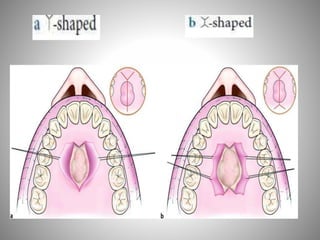
• An incision is made along the midline of
the palate, as well as two anterolateral
incisions, which are anterior to the canines
This type of flap is indicated in surgical
procedures involving the removal of small
exostoses.
• This type of flap is used in larger
exostoses, and is basically an
• extension of the Y -shaped incision The
difference is that two more posterolateral
incisions are made, which are necessary
for adequate access to the surgical field.
This flap is designed such that major
branches of the greater palatine artery are
not severed.
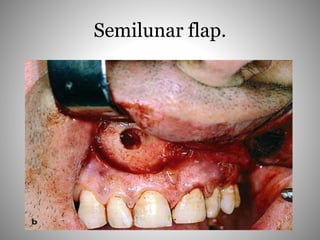
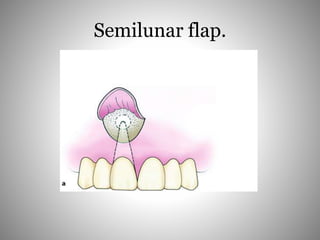
Semilunar Flap
• This flap is the result of a curved incision, which
begins just beneath the vestibular fold and has a
bow shape course with the convex part towards the
attached gingiva.
• The lowest point of the incision must be at least
0.5 cm from the gingiva lmargin, so that the blood
supply is not compromised. Each end of the
incision must extend at least one tooth over on
each side of the area of bone removal. The
semilunar flap is used in apicoectomies and
removal of small cysts and root tips.
Semilunar flap.
Semilunar flap.
Advantages
• Small incision and easy reflection, no
recession of gingivae around the prosthetic
restoration, no intervention at the
periodontium, easier oral hygiene
compared to other types of flaps.
Disadvantages
• Possibility of the incision being performed
right over the bone lesion due to
miscalculation, scarring mainly in the
anterior area, difficulty of
reapproximation and suturing due to
absence of specific reference points,
limited access and visualization, tendency
to tear.
• The three main types of pedicle flaps used
for closure of an oroantral communication
are:
• buccal.
• palatal.
• bridge flaps.
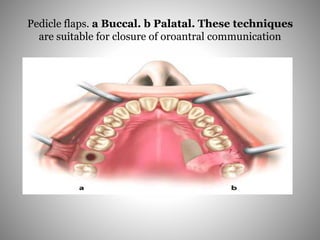
Pedicle flaps. a Buccal. b Palatal. These techniques
are suitable for closure of oroantral communication
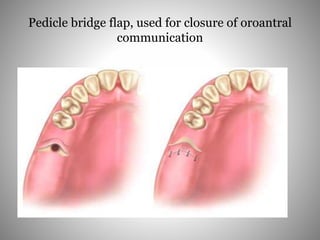
Pedicle bridge flap, used for closure of oroantral
communication
REFRENCE
• Fragiskos D. Fragiskos/Oral Surgery

Flaps in oral surgery

  • 1.
    FLAPS IN ORALSURGERY • PREPARED BY: MUHAMMED BAHADEEN
  • 2.
    Types of Flaps. • 1 Trapezoidal Flap . • 2 Triangular Flap . • 3 Envelope Flap . • 4 Semilunar Flap . • 5 Other Types of Flaps. • 6 Pedicle Flaps .
  • 3.
  • 4.
    Trapezoidal Flap • Thetrapezoidal flap is formed by a horizontal incision along the gingivae, and two oblique vertical releasing incisions extending to the buccal vestibule. • The vertical releasing incisions always extend to the interdental papilla and never to the center of the labial or buccal surface of the tooth. This ensures the integrity of the gingiva proper, because if the incision were to begin at the center of the tooth, contraction after healing would leave the cervical area of the tooth exposed.
  • 5.
  • 6.
  • 7.
    advantages • Provides excellentaccess. • allows surgery to be performed on more than one or two teeth. • produces no tension in the tissues, allows easy reapproximation of the flap to its original position and hastens the healing process.
  • 8.
    Disadvantages • Produces adefect in the attached gingiva (recession of gingiva).
  • 9.
    Triangular Flap • Thisflap is the result of an L-shaped incision with a horizontal incision made along the gingival sulcus and a vertical or oblique incision. • The vertical incision begins approximately at the vestibular fold and extends to the interdental papilla of the gingiva. The triangular flap is performed labially or buccally on both jaws and is indicated in the surgical removal of root tips, small cysts, and apicoectomies.
  • 10.
  • 11.
  • 12.
    Advantages • Ensures anadequate blood supply, satisfactory visualization, very good stability and reapproximation. • it is easily modified with a small releasing incision, or an additional vertical incision, or even lengthening of the horizontal incision.
  • 13.
    Disadvantages • Limited accessto long roots, tension is created when the flap is held with a retractor, and it causes a defect in the attached gingiva.
  • 14.
    Envelope Flap • Thistype of flap is the result of an extended horizontal incision along the cervical lines of the teeth. • The incision is made in the gingival sulcus and extends along four or five teeth. The tissue connected to the cervical lines of these teeth and the interdental papillae is thus freed. • The envelope flap is used for surgery of incisors, premolars and molars, on the labial or buccal and palatal or lingual surface and is usually indicated when the surgical procedure involves the cervical lines of the teeth.
  • 15.
  • 16.
  • 17.
    Advantages • . Avoidanceof vertical incision and easy reapproximation to original position.
  • 18.
    Disadvantages • Difficult reflection(mainly palatally),great tension with a risk of the ends tearing, limited visualization in apicoectomies, limited access, possibility of injury of palatal vessels and nerves, defect of attached gingiva.
  • 19.
    Flap Resulting fromY-shaped Incision • An incision is made along the midline of the palate, as well as two anterolateral incisions, which are anterior to the canines This type of flap is indicated in surgical procedures involving the removal of small exostoses.
  • 20.
    • This typeof flap is used in larger exostoses, and is basically an • extension of the Y -shaped incision The difference is that two more posterolateral incisions are made, which are necessary for adequate access to the surgical field. This flap is designed such that major branches of the greater palatine artery are not severed.
  • 22.
    Semilunar Flap • Thisflap is the result of a curved incision, which begins just beneath the vestibular fold and has a bow shape course with the convex part towards the attached gingiva. • The lowest point of the incision must be at least 0.5 cm from the gingiva lmargin, so that the blood supply is not compromised. Each end of the incision must extend at least one tooth over on each side of the area of bone removal. The semilunar flap is used in apicoectomies and removal of small cysts and root tips.
  • 23.
  • 24.
  • 25.
    Advantages • Small incisionand easy reflection, no recession of gingivae around the prosthetic restoration, no intervention at the periodontium, easier oral hygiene compared to other types of flaps.
  • 26.
    Disadvantages • Possibility ofthe incision being performed right over the bone lesion due to miscalculation, scarring mainly in the anterior area, difficulty of reapproximation and suturing due to absence of specific reference points, limited access and visualization, tendency to tear.
  • 27.
    • The threemain types of pedicle flaps used for closure of an oroantral communication are: • buccal. • palatal. • bridge flaps.
  • 28.
    Pedicle flaps. aBuccal. b Palatal. These techniques are suitable for closure of oroantral communication
  • 29.
    Pedicle bridge flap,used for closure of oroantral communication
  • 30.
    REFRENCE • Fragiskos D.Fragiskos/Oral Surgery