‫د‬ ‫اعداد‬.‫محمد‬ ‫حيدر‬
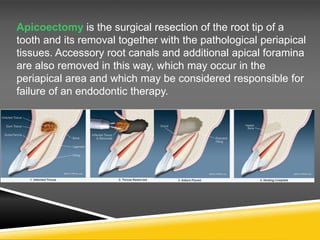
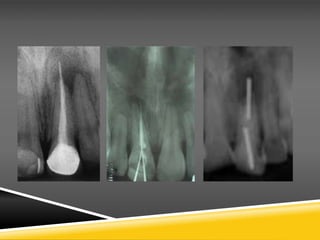
Apicoectomy is the surgical resection of the root tip of a
tooth and its removal together with the pathological periapical
tissues. Accessory root canals and additional apical foramina
are also removed in this way, which may occur in the
periapical area and which may be considered responsible for
failure of an endodontic therapy.
Indications
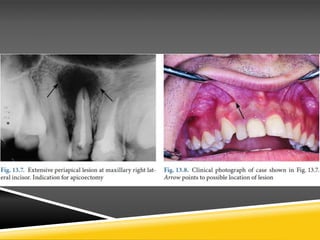
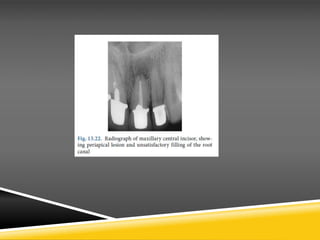
1. Teeth with active periapical inflammation, despite the presence of a
satisfactory endodontic therapy.
2. Teeth with periapical inflammation and unsatisfactory endodontic therapy,
which cannot be repeated because of:
– Completely calcified root canal.
– Severely curved root canals.
– Presence of posts or cores in root canal.
– Breakage of small instrument in root canal
– The presence of irretrievable filling material.
3. Teeth with periapical inflammation, where completion of endodontic therapy
is impossible due to:
– Foreign bodies driven into periapical tissues..
– Perforation of root.
– Fracture at apical third of tooth.
– Dental anomalies
surgical root canal procedures should not be
considered as the primary treatment option to
treat teeth with associated apical pathology.
if after the apicoectomy the apex has not been completely sealed, then
retrograde filling
is required. The purpose of retrograde filling is to obstruct the exit of bacteria and
the by-products of nonvital pulp, which remained in the root canal.
Contraindications
All conditions that could be considered contraindications for oral surgery
concerning the age of the patient and general healt problems, such as
severe cardiovascular diseases, leukemia, tuberculosis, etc.
• Teeth with severe resorption of periodontal tissues (deep periodontal
pockets, great bone destruction).
• Teeth with short root length.
• Teeth whose apices have a close relationship with anatomic
structures.
Armamentarium
The following instruments are necessary for performing an apicoectomy:
• Microhead handpiece (straight and contra-angle) and microbur
• Special narrow periapical curette tips for preparation of the periapical cavity
• Apical retrograde micro-mirror and micro-explorers
• Local anesthetic syringe and cartridges.
• Scalpel handle.
• Scalpel blade (no. 15).
• Mirror.
• Periosteal elevator.
• Cotton pliers.
• Small hemostat.
• Suction tips (small, large).
• Irrigation receptacle.
• Needle holder.
• Retractors.
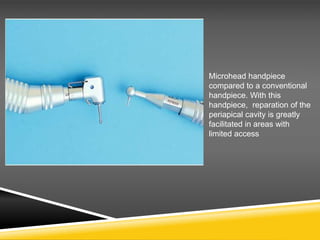
Microhead handpiece
compared to a conventional
handpiece. With this
handpiece, reparation of the
periapical cavity is greatly
facilitated in areas with
limited access
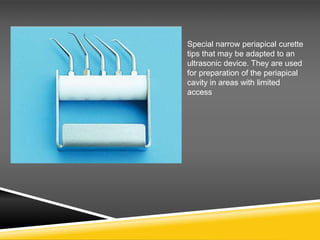
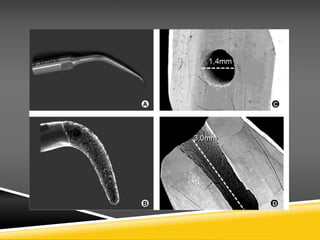
Special narrow periapical curette
tips that may be adapted to an
ultrasonic device. They are used
for preparation of the periapical
cavity in areas with limited
access
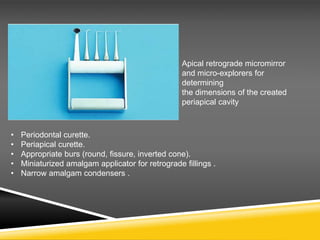
Apical retrograde micromirror
and micro-explorers for
determining
the dimensions of the created
periapical cavity
• Periodontal curette.
• Periapical curette.
• Appropriate burs (round, fissure, inverted cone).
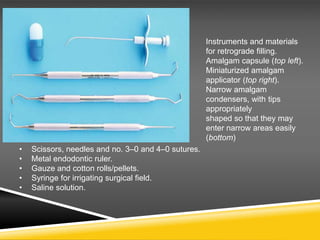
• Miniaturized amalgam applicator for retrograde fillings .
• Narrow amalgam condensers .
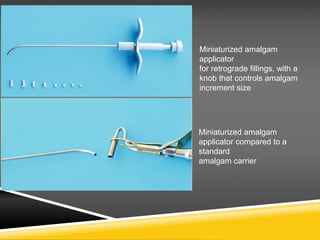
Miniaturized amalgam
applicator
for retrograde fillings, with a
knob that controls amalgam
increment size
Miniaturized amalgam
applicator compared to a
standard
amalgam carrier
Instruments and materials
for retrograde filling.
Amalgam capsule (top left).
Miniaturized amalgam
applicator (top right).
Narrow amalgam
condensers, with tips
appropriately
shaped so that they may
enter narrow areas easily
(bottom)
• Scissors, needles and no. 3–0 and 4–0 sutures.
• Metal endodontic ruler.
• Gauze and cotton rolls/pellets.
• Syringe for irrigating surgical field.
• Saline solution.
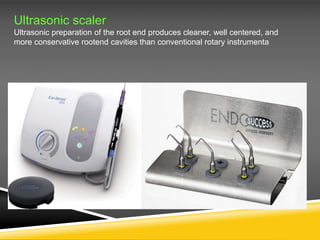
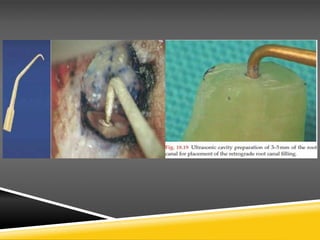
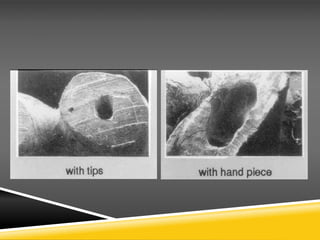
Ultrasonic scaler
Ultrasonic preparation of the root end produces cleaner, well centered, and
more conservative rootend cavities than conventional rotary instrumenta
Surgical Technique
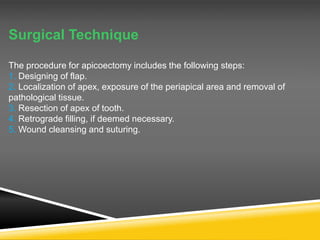
The procedure for apicoectomy includes the following steps:
1. Designing of flap.
2. Localization of apex, exposure of the periapical area and removal of
pathological tissue.
3. Resection of apex of tooth.
4. Retrograde filling, if deemed necessary.
5. Wound cleansing and suturing.
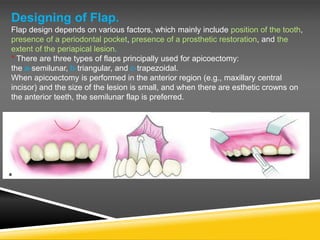
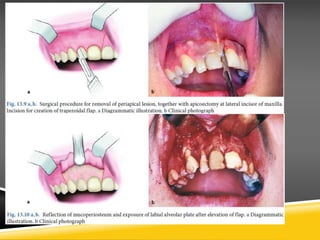
Designing of Flap.
Flap design depends on various factors, which mainly include position of the tooth,
presence of a periodontal pocket, presence of a prosthetic restoration, and the
extent of the periapical lesion.
* There are three types of flaps principally used for apicoectomy:
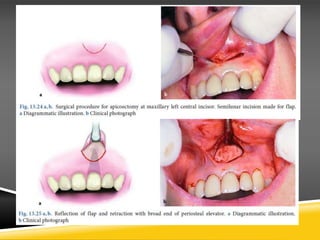
the a-semilunar, b-triangular, and c-trapezoidal.
When apicoectomy is performed in the anterior region (e.g., maxillary central
incisor) and the size of the lesion is small, and when there are esthetic crowns on
the anterior teeth, the semilunar flap is preferred.
Localization and Exposure of Apex.
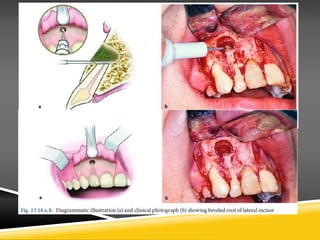
The next step after creating a flap is localization and exposure
of the apex. When the periapical lesion has perforated the
buccal bone, localization and exposure of the root tip is easy,
after removing the pathological tissues with a curette. If the
buccal bone covering the lesion has not been completely
destroyed, but is very thin, then its surface is detected with an
explorer or dental curette, whereupon, due to decreased bone
density, the underlying bone is easily removed and the apex
localized.
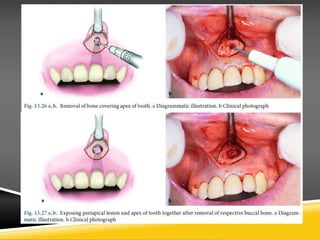
When the buccal bone remains completely intact, then the
root tip may be located with a radiograph. More specifically,
after taking a radiograph, the length of the root is
determinedwith a sterilized endodontic file or metal
endodontic ruler. The length measured is then transferred to
the surgical field, determining the exact position of the root
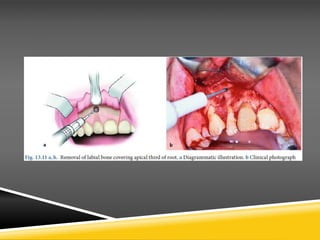
tip.Afterwards,with a round bur and a steady stream of saline
solution, the bone covering the root tip is removed
peripherally, creating an osseous window until the apex of the
tooth is exposedIf the overlying bone is thin and the
pathological lesion is large, the osseous window is enlarged
with a blunt bur or a rongeur. Enough bone is removed until
easy access to the entire lesion is permitted. A curette is then
used to remove pathological tissue and every foreign body or
filling material, while resection of the root tip follows
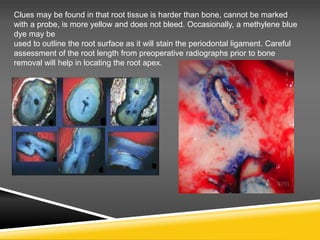
Clues may be found in that root tissue is harder than bone, cannot be marked
with a probe, is more yellow and does not bleed. Occasionally, a methylene blue
dye may be
used to outline the root surface as it will stain the periodontal ligament. Careful
assessment of the root length from preoperative radiographs prior to bone
removal will help in locating the root apex.
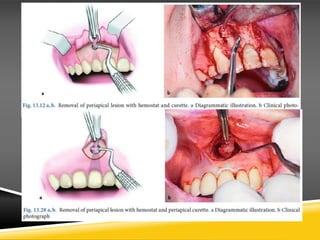
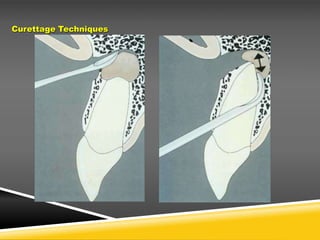
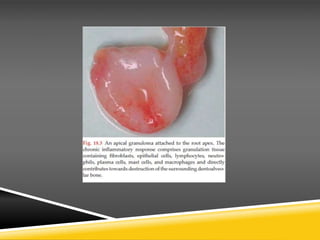
Periradicular curettage
Periapical periodontitis is the body’s natural immune response to the inflammatory
mediators and infective agents within and around the root apex. Thus, no matter
how thoroughly the granulation tissue that forms the PRD lesion is removed from
the surgical
site, unless the actual source of infection within the root canal is addressed by root
resection and retrograde restoration, the surgery will likely fail. The presence of
many different foreign body materials within PRD lesions has been reported These
include, of particular interest, remnants of paper points caused by inadequate
measurement during canal preparation procedures, and vegetable material
entering the exposed root canal when a tooth is “left open for drainage”. This
procedure of “opendrainage” is no longer recommended.
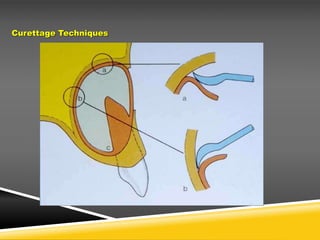
Is better to remove the lesion as one piece
Curettage Techniques
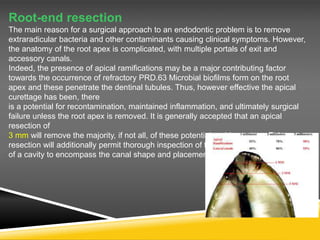
Root-end resection
The main reason for a surgical approach to an endodontic problem is to remove
extraradicular bacteria and other contaminants causing clinical symptoms. However,
the anatomy of the root apex is complicated, with multiple portals of exit and
accessory canals.
Indeed, the presence of apical ramifications may be a major contributing factor
towards the occurrence of refractory PRD.63 Microbial biofilms form on the root
apex and these penetrate the dentinal tubules. Thus, however effective the apical
curettage has been, there
is a potential for recontamination, maintained inflammation, and ultimately surgical
failure unless the root apex is removed. It is generally accepted that an apical
resection of
3 mm will remove the majority, if not all, of these potential problem areas. This
resection will additionally permit thorough inspection of the root canal, preparation
of a cavity to encompass the canal shape and placement of a retrograde seal.
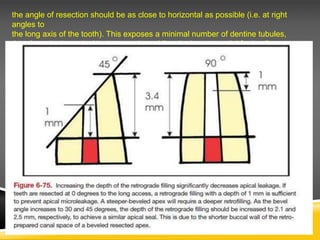
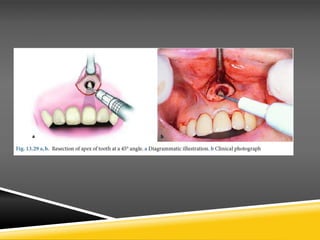
the angle of resection should be as close to horizontal as possible (i.e. at right
angles to
the long axis of the tooth). This exposes a minimal number of dentine tubules,
thereby reducing apical leakage and providing the best potential for healing
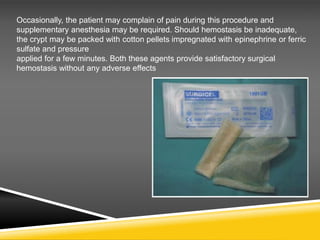
Occasionally, the patient may complain of pain during this procedure and
supplementary anesthesia may be required. Should hemostasis be inadequate,
the crypt may be packed with cotton pellets impregnated with epinephrine or ferric
sulfate and pressure
applied for a few minutes. Both these agents provide satisfactory surgical
hemostasis without any adverse effects
Retrograde Filling.
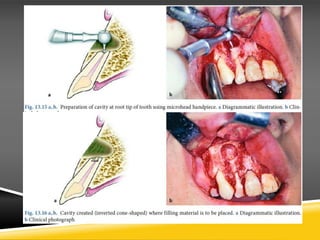
After beveling of the apex and curettage of periapical tissues, gauze impregnated
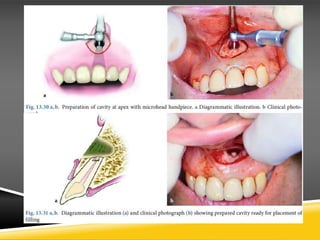
with adrenaline to minimize bleeding is placed in the bony defect. A microhead
handpiece with a narrow round microbur is then used to prepare a cavity
approximately 2 mmlong, with a diameter slightly larger than that of the root canal.
The cavity may be enlarged at its base using an inverted cone-shaped bur to
undercut the preparation for better retention of the filling material During preparation
of the cavity, the dentistmust pay careful attention to the width of the cavity, which
must be as narrow as possible, because there is a risk of weakening the root tip and
causing a fracture (which may not even be perceived) during condensing. After drying
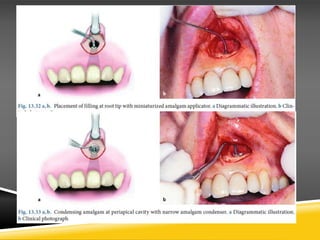
the bone cavity with gauze or a cotton pellet, sterile gauze is packed inside the bone
deficit and around the apex of the tooth, in such a way that only the prepared cavity
of the root end is exposed. Splattering of amalgam1) is thus avoided at the periapical
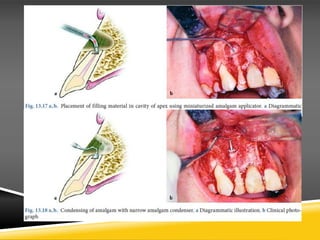
region. The amalgam is placed inside the cavity with the miniaturized amalgam
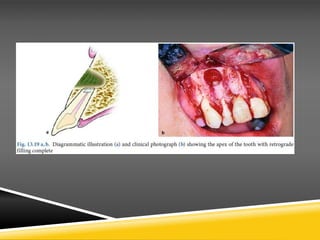
applicator and is condensed with the narrow amalgam condenser The excess
amalgam is carefully removed and the filling is smoothed with the usual instruments.
Root-end filling materials
As well as developments in microsurgery techniques, significant advances have
been made in root-end filling materials. First described by Torabinejad et al. in
1995,43 MTA is now recognized to have significantly better properties than any
other material for this purpose. Unlike all of the other traditionally used root-end
filling materials (amalgam, zinc oxide– eugenol cements, glass ionomer
cements) the set of the freshly placed material is not affected by the presence of
moisture, including blood. It is less cytotoxic and more tissue compatible than
previously used materials. Reports from animal studies demonstrate less
inflammation and greater cementum deposition over set MTA compared with
other materials within days of surgery. Furthermore, scanning electron
microscopy (SEM) images reveal cementoblasts adhering to the material. The
only reported disadvantage of MTA is the slight difficulty in handling and
placement. This has been overcome to a certain extent with the introduction of a
white MTA material which in some respects has superseded the original gray
powder. When properly mixed, it has a creamy consistency and is less difficult to
place when using appropriate instruments.
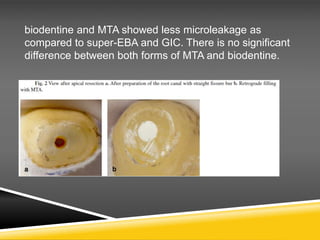
biodentine and MTA showed less microleakage as
compared to super-EBA and GIC. There is no significant
difference between both forms of MTA and biodentine.
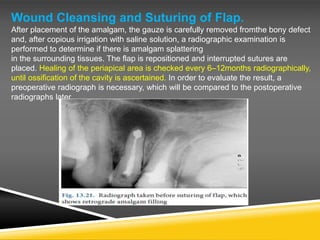
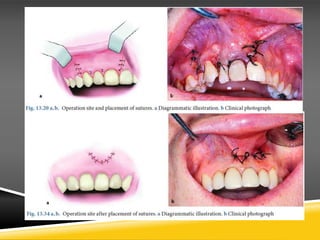
Wound Cleansing and Suturing of Flap.
After placement of the amalgam, the gauze is carefully removed fromthe bony defect
and, after copious irrigation with saline solution, a radiographic examination is
performed to determine if there is amalgam splattering
in the surrounding tissues. The flap is repositioned and interrupted sutures are
placed. Healing of the periapical area is checked every 6–12months radiographically,
until ossification of the cavity is ascertained. In order to evaluate the result, a
preoperative radiograph is necessary, which will be compared to the postoperative
radiographs later
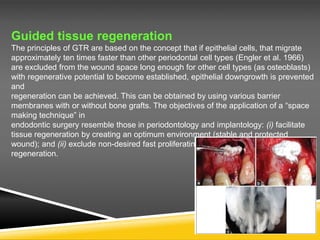
Guided tissue regeneration
The principles of GTR are based on the concept that if epithelial cells, that migrate
approximately ten times faster than other periodontal cell types (Engler et al. 1966)
are excluded from the wound space long enough for other cell types (as osteoblasts)
with regenerative potential to become established, epithelial downgrowth is prevented
and
regeneration can be achieved. This can be obtained by using various barrier
membranes with or without bone grafts. The objectives of the application of a “space
making technique” in
endodontic surgery resemble those in periodontology and implantology: (i) facilitate
tissue regeneration by creating an optimum environment (stable and protected
wound); and (ii) exclude non-desired fast proliferating cells from interfering with tissue
regeneration.
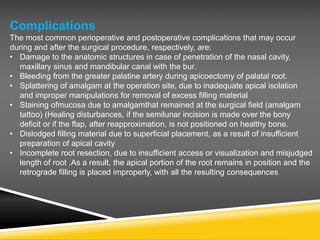
Complications
The most common perioperative and postoperative complications that may occur
during and after the surgical procedure, respectively, are:
• Damage to the anatomic structures in case of penetration of the nasal cavity,
maxillary sinus and mandibular canal with the bur.
• Bleeding from the greater palatine artery during apicoectomy of palatal root.
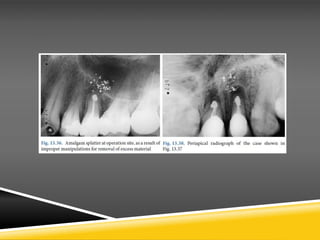
• Splattering of amalgam at the operation site, due to inadequate apical isolation
and improper manipulations for removal of excess filling material
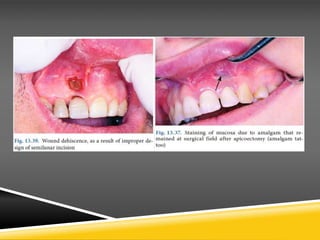
• Staining ofmucosa due to amalgamthat remained at the surgical field (amalgam
tattoo) (Healing disturbances, if the semilunar incision is made over the bony
deficit or if the flap, after reapproximation, is not positioned on healthy bone.
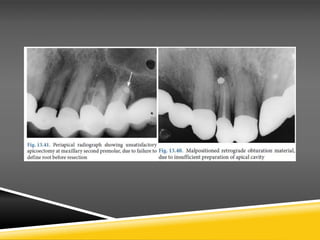
• Dislodged filling material due to superficial placement, as a result of insufficient
preparation of apical cavity
• Incomplete root resection, due to insufficient access or visualization and misjudged
length of root .As a result, the apical portion of the root remains in position and the
retrograde filling is placed improperly, with all the resulting consequences
apicoectomy
apicoectomy
apicoectomy
apicoectomy
apicoectomy

apicoectomy

  • 1.
  • 2.
    Apicoectomy is thesurgical resection of the root tip of a tooth and its removal together with the pathological periapical tissues. Accessory root canals and additional apical foramina are also removed in this way, which may occur in the periapical area and which may be considered responsible for failure of an endodontic therapy.
  • 3.
    Indications 1. Teeth withactive periapical inflammation, despite the presence of a satisfactory endodontic therapy. 2. Teeth with periapical inflammation and unsatisfactory endodontic therapy, which cannot be repeated because of: – Completely calcified root canal. – Severely curved root canals. – Presence of posts or cores in root canal. – Breakage of small instrument in root canal – The presence of irretrievable filling material. 3. Teeth with periapical inflammation, where completion of endodontic therapy is impossible due to: – Foreign bodies driven into periapical tissues.. – Perforation of root. – Fracture at apical third of tooth. – Dental anomalies
  • 4.
    surgical root canalprocedures should not be considered as the primary treatment option to treat teeth with associated apical pathology.
  • 8.
    if after theapicoectomy the apex has not been completely sealed, then retrograde filling is required. The purpose of retrograde filling is to obstruct the exit of bacteria and the by-products of nonvital pulp, which remained in the root canal. Contraindications All conditions that could be considered contraindications for oral surgery concerning the age of the patient and general healt problems, such as severe cardiovascular diseases, leukemia, tuberculosis, etc. • Teeth with severe resorption of periodontal tissues (deep periodontal pockets, great bone destruction). • Teeth with short root length. • Teeth whose apices have a close relationship with anatomic structures.
  • 9.
    Armamentarium The following instrumentsare necessary for performing an apicoectomy: • Microhead handpiece (straight and contra-angle) and microbur • Special narrow periapical curette tips for preparation of the periapical cavity • Apical retrograde micro-mirror and micro-explorers • Local anesthetic syringe and cartridges. • Scalpel handle. • Scalpel blade (no. 15). • Mirror. • Periosteal elevator. • Cotton pliers. • Small hemostat. • Suction tips (small, large). • Irrigation receptacle. • Needle holder. • Retractors.
  • 10.
    Microhead handpiece compared toa conventional handpiece. With this handpiece, reparation of the periapical cavity is greatly facilitated in areas with limited access
  • 11.
    Special narrow periapicalcurette tips that may be adapted to an ultrasonic device. They are used for preparation of the periapical cavity in areas with limited access
  • 12.
    Apical retrograde micromirror andmicro-explorers for determining the dimensions of the created periapical cavity • Periodontal curette. • Periapical curette. • Appropriate burs (round, fissure, inverted cone). • Miniaturized amalgam applicator for retrograde fillings . • Narrow amalgam condensers .
  • 13.
    Miniaturized amalgam applicator for retrogradefillings, with a knob that controls amalgam increment size Miniaturized amalgam applicator compared to a standard amalgam carrier
  • 14.
    Instruments and materials forretrograde filling. Amalgam capsule (top left). Miniaturized amalgam applicator (top right). Narrow amalgam condensers, with tips appropriately shaped so that they may enter narrow areas easily (bottom) • Scissors, needles and no. 3–0 and 4–0 sutures. • Metal endodontic ruler. • Gauze and cotton rolls/pellets. • Syringe for irrigating surgical field. • Saline solution.
  • 15.
    Ultrasonic scaler Ultrasonic preparationof the root end produces cleaner, well centered, and more conservative rootend cavities than conventional rotary instrumenta
  • 19.
    Surgical Technique The procedurefor apicoectomy includes the following steps: 1. Designing of flap. 2. Localization of apex, exposure of the periapical area and removal of pathological tissue. 3. Resection of apex of tooth. 4. Retrograde filling, if deemed necessary. 5. Wound cleansing and suturing.
  • 20.
    Designing of Flap. Flapdesign depends on various factors, which mainly include position of the tooth, presence of a periodontal pocket, presence of a prosthetic restoration, and the extent of the periapical lesion. * There are three types of flaps principally used for apicoectomy: the a-semilunar, b-triangular, and c-trapezoidal. When apicoectomy is performed in the anterior region (e.g., maxillary central incisor) and the size of the lesion is small, and when there are esthetic crowns on the anterior teeth, the semilunar flap is preferred.
  • 23.
    Localization and Exposureof Apex. The next step after creating a flap is localization and exposure of the apex. When the periapical lesion has perforated the buccal bone, localization and exposure of the root tip is easy, after removing the pathological tissues with a curette. If the buccal bone covering the lesion has not been completely destroyed, but is very thin, then its surface is detected with an explorer or dental curette, whereupon, due to decreased bone density, the underlying bone is easily removed and the apex localized.
  • 26.
    When the buccalbone remains completely intact, then the root tip may be located with a radiograph. More specifically, after taking a radiograph, the length of the root is determinedwith a sterilized endodontic file or metal endodontic ruler. The length measured is then transferred to the surgical field, determining the exact position of the root tip.Afterwards,with a round bur and a steady stream of saline solution, the bone covering the root tip is removed peripherally, creating an osseous window until the apex of the tooth is exposedIf the overlying bone is thin and the pathological lesion is large, the osseous window is enlarged with a blunt bur or a rongeur. Enough bone is removed until easy access to the entire lesion is permitted. A curette is then used to remove pathological tissue and every foreign body or filling material, while resection of the root tip follows
  • 27.
    Clues may befound in that root tissue is harder than bone, cannot be marked with a probe, is more yellow and does not bleed. Occasionally, a methylene blue dye may be used to outline the root surface as it will stain the periodontal ligament. Careful assessment of the root length from preoperative radiographs prior to bone removal will help in locating the root apex.
  • 28.
    Periradicular curettage Periapical periodontitisis the body’s natural immune response to the inflammatory mediators and infective agents within and around the root apex. Thus, no matter how thoroughly the granulation tissue that forms the PRD lesion is removed from the surgical site, unless the actual source of infection within the root canal is addressed by root resection and retrograde restoration, the surgery will likely fail. The presence of many different foreign body materials within PRD lesions has been reported These include, of particular interest, remnants of paper points caused by inadequate measurement during canal preparation procedures, and vegetable material entering the exposed root canal when a tooth is “left open for drainage”. This procedure of “opendrainage” is no longer recommended. Is better to remove the lesion as one piece
  • 30.
  • 31.
  • 33.
    Root-end resection The mainreason for a surgical approach to an endodontic problem is to remove extraradicular bacteria and other contaminants causing clinical symptoms. However, the anatomy of the root apex is complicated, with multiple portals of exit and accessory canals. Indeed, the presence of apical ramifications may be a major contributing factor towards the occurrence of refractory PRD.63 Microbial biofilms form on the root apex and these penetrate the dentinal tubules. Thus, however effective the apical curettage has been, there is a potential for recontamination, maintained inflammation, and ultimately surgical failure unless the root apex is removed. It is generally accepted that an apical resection of 3 mm will remove the majority, if not all, of these potential problem areas. This resection will additionally permit thorough inspection of the root canal, preparation of a cavity to encompass the canal shape and placement of a retrograde seal.
  • 36.
    the angle ofresection should be as close to horizontal as possible (i.e. at right angles to the long axis of the tooth). This exposes a minimal number of dentine tubules, thereby reducing apical leakage and providing the best potential for healing
  • 38.
    Occasionally, the patientmay complain of pain during this procedure and supplementary anesthesia may be required. Should hemostasis be inadequate, the crypt may be packed with cotton pellets impregnated with epinephrine or ferric sulfate and pressure applied for a few minutes. Both these agents provide satisfactory surgical hemostasis without any adverse effects
  • 39.
    Retrograde Filling. After bevelingof the apex and curettage of periapical tissues, gauze impregnated with adrenaline to minimize bleeding is placed in the bony defect. A microhead handpiece with a narrow round microbur is then used to prepare a cavity approximately 2 mmlong, with a diameter slightly larger than that of the root canal. The cavity may be enlarged at its base using an inverted cone-shaped bur to undercut the preparation for better retention of the filling material During preparation of the cavity, the dentistmust pay careful attention to the width of the cavity, which must be as narrow as possible, because there is a risk of weakening the root tip and causing a fracture (which may not even be perceived) during condensing. After drying the bone cavity with gauze or a cotton pellet, sterile gauze is packed inside the bone deficit and around the apex of the tooth, in such a way that only the prepared cavity of the root end is exposed. Splattering of amalgam1) is thus avoided at the periapical region. The amalgam is placed inside the cavity with the miniaturized amalgam applicator and is condensed with the narrow amalgam condenser The excess amalgam is carefully removed and the filling is smoothed with the usual instruments.
  • 45.
    Root-end filling materials Aswell as developments in microsurgery techniques, significant advances have been made in root-end filling materials. First described by Torabinejad et al. in 1995,43 MTA is now recognized to have significantly better properties than any other material for this purpose. Unlike all of the other traditionally used root-end filling materials (amalgam, zinc oxide– eugenol cements, glass ionomer cements) the set of the freshly placed material is not affected by the presence of moisture, including blood. It is less cytotoxic and more tissue compatible than previously used materials. Reports from animal studies demonstrate less inflammation and greater cementum deposition over set MTA compared with other materials within days of surgery. Furthermore, scanning electron microscopy (SEM) images reveal cementoblasts adhering to the material. The only reported disadvantage of MTA is the slight difficulty in handling and placement. This has been overcome to a certain extent with the introduction of a white MTA material which in some respects has superseded the original gray powder. When properly mixed, it has a creamy consistency and is less difficult to place when using appropriate instruments.
  • 46.
    biodentine and MTAshowed less microleakage as compared to super-EBA and GIC. There is no significant difference between both forms of MTA and biodentine.
  • 47.
    Wound Cleansing andSuturing of Flap. After placement of the amalgam, the gauze is carefully removed fromthe bony defect and, after copious irrigation with saline solution, a radiographic examination is performed to determine if there is amalgam splattering in the surrounding tissues. The flap is repositioned and interrupted sutures are placed. Healing of the periapical area is checked every 6–12months radiographically, until ossification of the cavity is ascertained. In order to evaluate the result, a preoperative radiograph is necessary, which will be compared to the postoperative radiographs later
  • 49.
    Guided tissue regeneration Theprinciples of GTR are based on the concept that if epithelial cells, that migrate approximately ten times faster than other periodontal cell types (Engler et al. 1966) are excluded from the wound space long enough for other cell types (as osteoblasts) with regenerative potential to become established, epithelial downgrowth is prevented and regeneration can be achieved. This can be obtained by using various barrier membranes with or without bone grafts. The objectives of the application of a “space making technique” in endodontic surgery resemble those in periodontology and implantology: (i) facilitate tissue regeneration by creating an optimum environment (stable and protected wound); and (ii) exclude non-desired fast proliferating cells from interfering with tissue regeneration.
  • 51.
    Complications The most commonperioperative and postoperative complications that may occur during and after the surgical procedure, respectively, are: • Damage to the anatomic structures in case of penetration of the nasal cavity, maxillary sinus and mandibular canal with the bur. • Bleeding from the greater palatine artery during apicoectomy of palatal root. • Splattering of amalgam at the operation site, due to inadequate apical isolation and improper manipulations for removal of excess filling material • Staining ofmucosa due to amalgamthat remained at the surgical field (amalgam tattoo) (Healing disturbances, if the semilunar incision is made over the bony deficit or if the flap, after reapproximation, is not positioned on healthy bone. • Dislodged filling material due to superficial placement, as a result of insufficient preparation of apical cavity • Incomplete root resection, due to insufficient access or visualization and misjudged length of root .As a result, the apical portion of the root remains in position and the retrograde filling is placed improperly, with all the resulting consequences