FIXATION AND FIXATIVES:
DR. M.A. SEIDU/CECILIA KRAMPAH
INTRODUCTION
• Histopathology is a comparative science in
which:
Normal tissues of a particular area is compared
with tissues from the area for abnormalities
Abnormal tissues are compared with other
abnormal tissues from the same area for
similarities
INTRODUCTION
• To this effect certain preparations are
necessary to ensure that there are no
misleading occurrences
• It is essential that tissues are maintained in
the same nature that they were before they
were removed from the body
• It is essential that at every stage of handling
tissues for histopathology, the preparation
must be reproducible.
CHALLENGES TO MAINTENANCE OF
TISSUES AFTER REMOVAL
• Two phenomena occur when tissues are
removed from the body or after death:
• Autolysis
• Putrefaction
AUTOLYSIS
• This is the process of self-destruction initiated soon
after cell death by the action of intracellular
enzymes located in lysosomes – Autolysis
• This results in breakdown of protein and the final
liquefaction of the cell
• Autolysis:
– is more rapid in tissues rich in enzymes such as the liver,
kidney and brain
– less so in tissues such as fibrous tissue
Putrefaction
• This occurs as a result of bacterial decomposition
(putrefaction) producing changes in tissues that
mimic autolysis
–These changes are produced by bacterial proliferation
in the dead tissues
–The bacteria may be derived from the body’s normal
flora or may be present in infected tissues at the time
of death
FIXATION
• FIXATION: The process by which tissues are
preserved so that they will withstand subsequent
treatment with other reagents without loss, distortion
or decomposition.
– The cells and extra-cellular materials must be preserved
in such a way that there will be as little alteration as
possible to their structure and chemical composition.
– The constituents of the tissue must be rendered insoluble
in all the reagents to which they will subsequently be
exposed
FIXATION
• Fixation is therefore:
–The first step in histopathological
examination
–And represents the foundation for
subsequent stages in the preparation of
tissue for microscopic examination.
–The chemicals and physical agents used in
fixation are called FIXATIVES
AIMS OF FIXATION
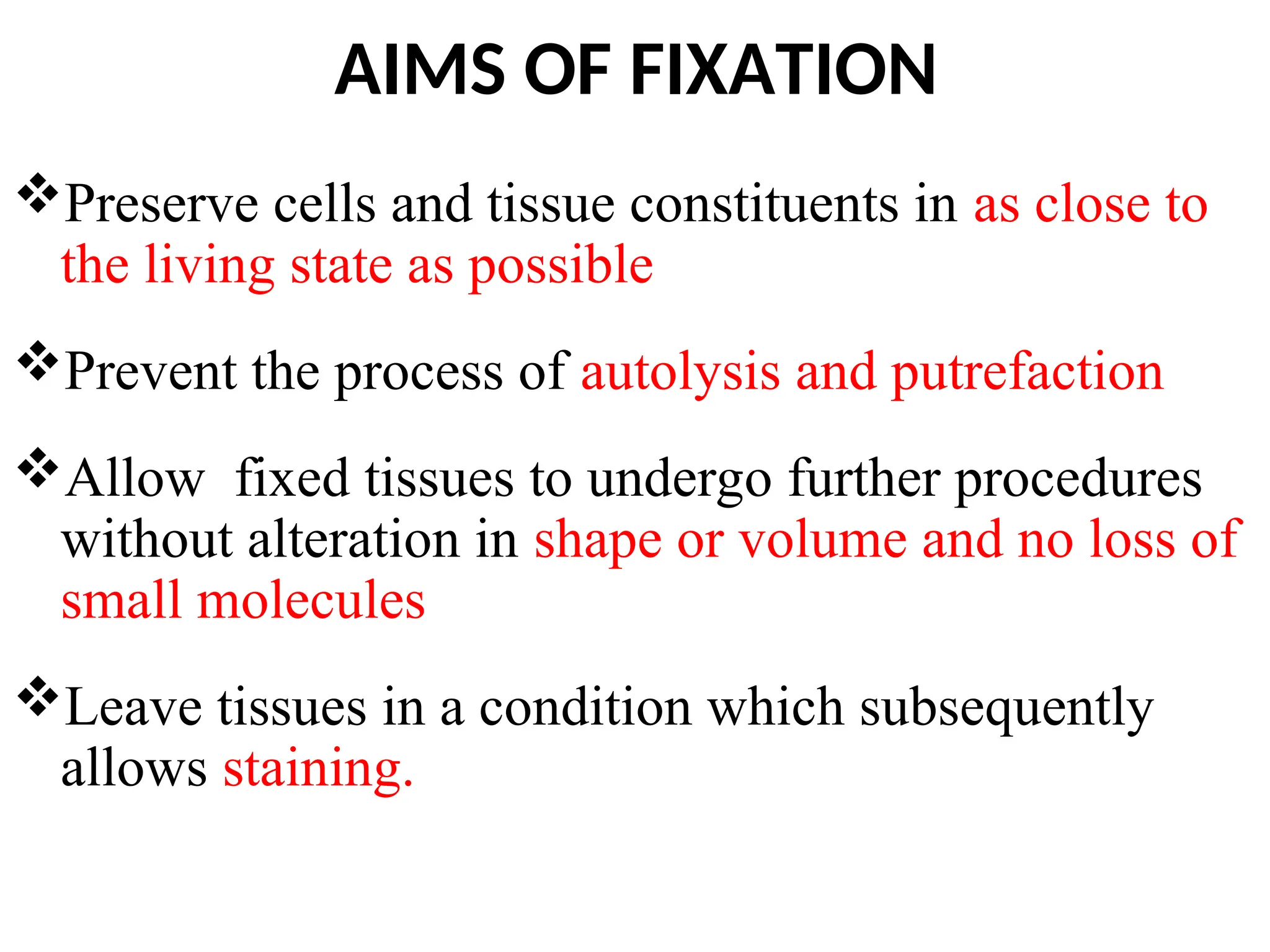
Preserve cells and tissue constituents in as close to
the living state as possible
Prevent the process of autolysis and putrefaction
Allow fixed tissues to undergo further procedures
without alteration in shape or volume and no loss of
small molecules
Leave tissues in a condition which subsequently
allows staining.
• TISSUE CONTITUENTS INVOLVED IN
FIXATION
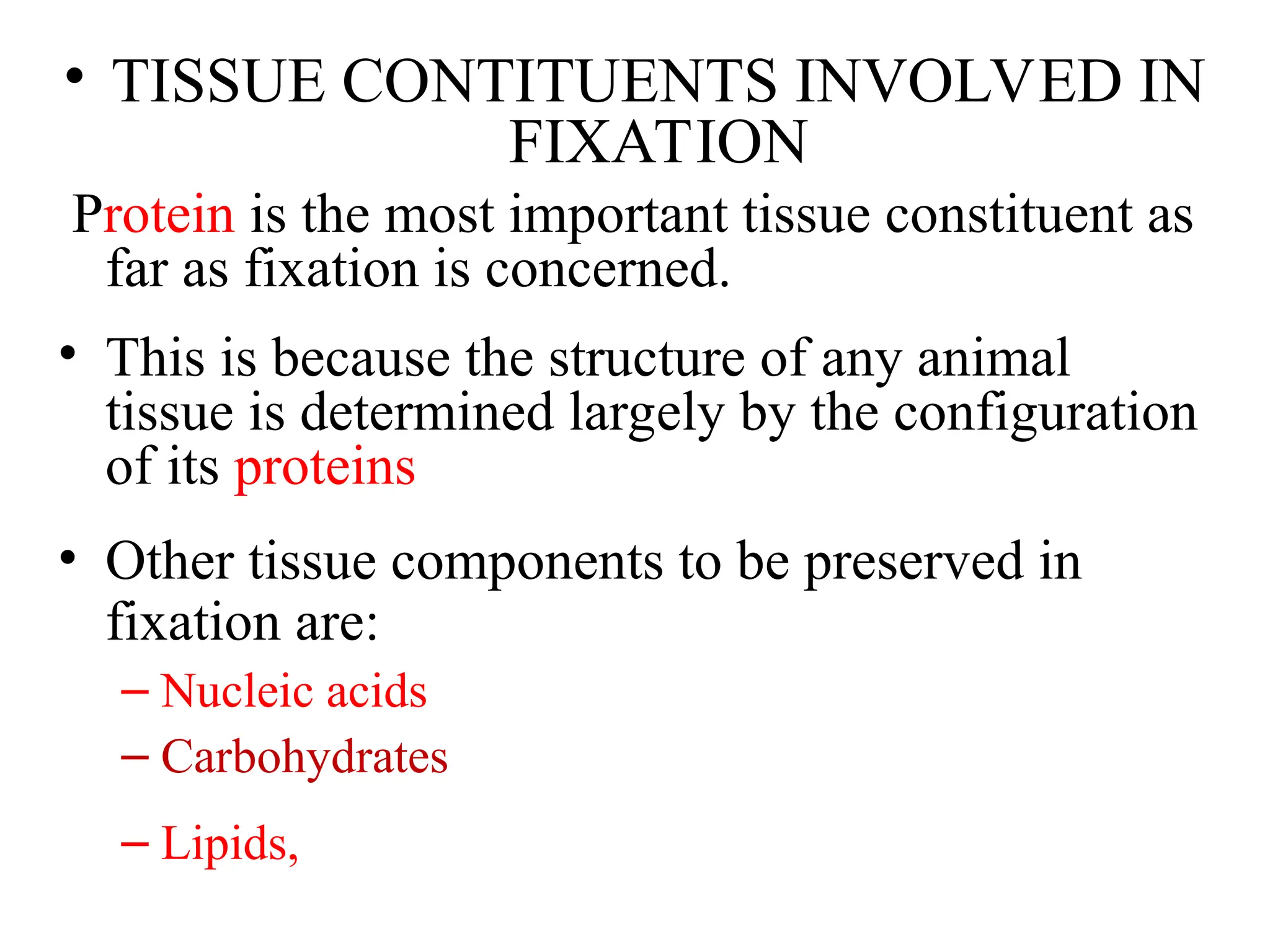
Protein is the most important tissue constituent as
far as fixation is concerned.
• This is because the structure of any animal
tissue is determined largely by the configuration
of its proteins
• Other tissue components to be preserved in
fixation are:
– Nucleic acids
– Carbohydrates
– Lipids,
CLASSIFICATION OF FIXATIVES
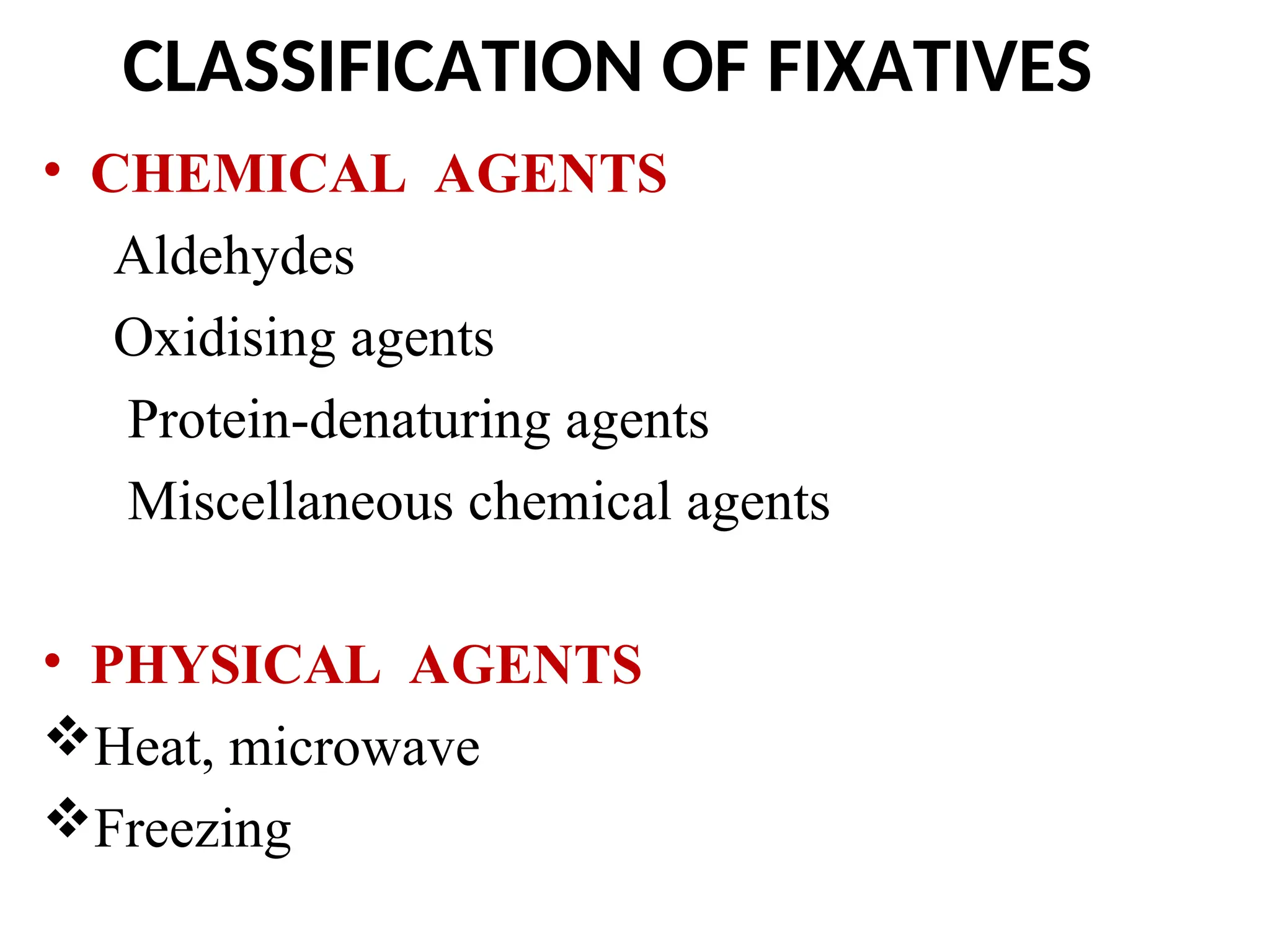
• CHEMICAL AGENTS
Aldehydes
Oxidising agents
Protein-denaturing agents
Miscellaneous chemical agents
• PHYSICAL AGENTS
Heat, microwave
Freezing
CHEMICAL FIXATIVES
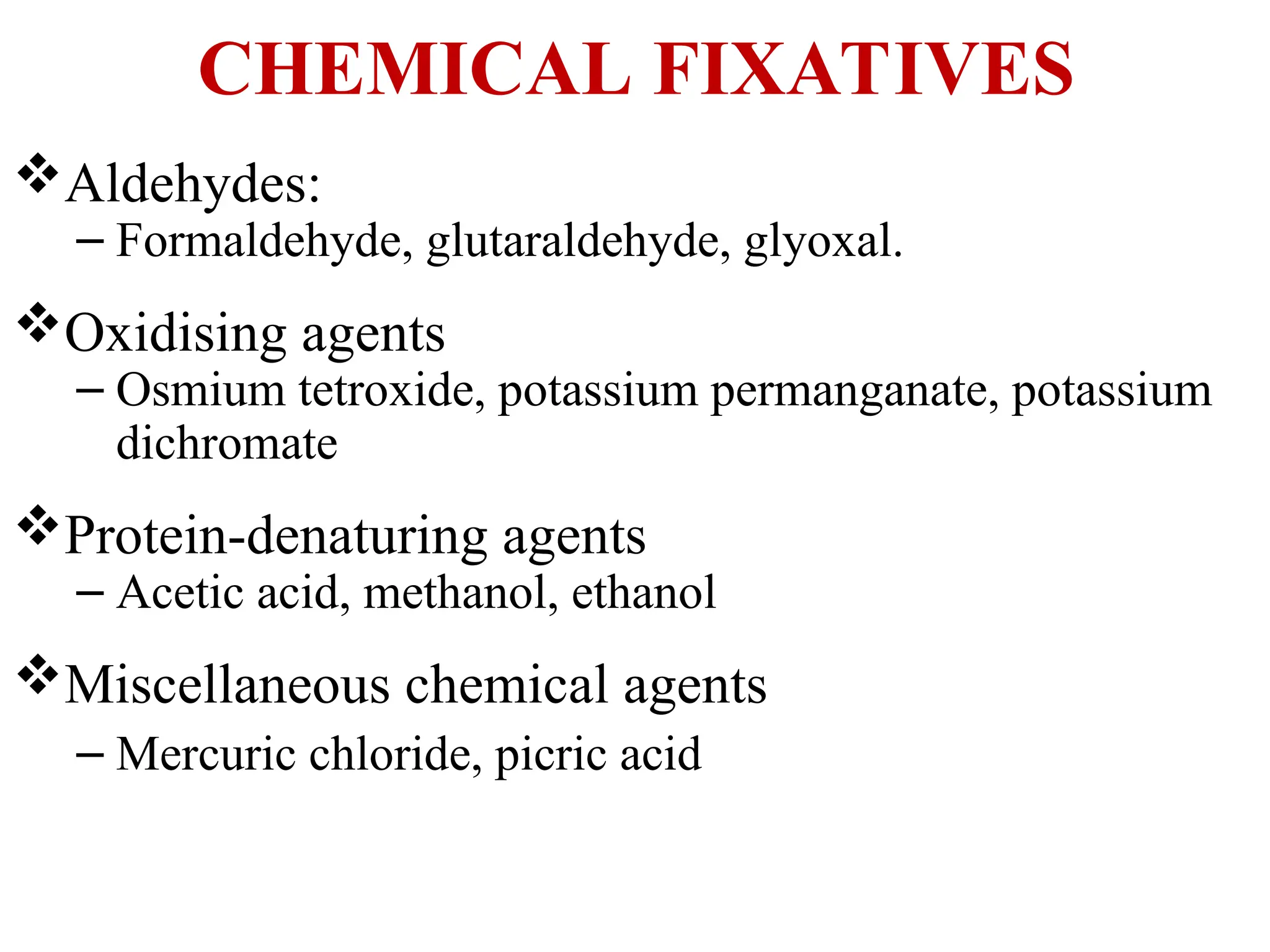
Aldehydes:
– Formaldehyde, glutaraldehyde, glyoxal.
Oxidising agents
– Osmium tetroxide, potassium permanganate, potassium
dichromate
Protein-denaturing agents
– Acetic acid, methanol, ethanol
Miscellaneous chemical agents
– Mercuric chloride, picric acid
• PHYSICAL METHODS
Heat,
- Microwave,
- Boiling
Freezing
– Frozen sections
– Freeze-drying: Rapidly freezing of fresh tissue at -160o
C
and subsequently removing water molecules by
sublimation in a vacuum.
– Freeze substitution: Rapidly freezing of tissue and the
substitution of the ice removed by a dehydrating solution
MECHANISMS OF FIXATION
REACTION OF FIXATIVES WITH PROTEINS
• Probably the most well known in fixation
• Fixatives form cross-links between proteins.
• Increasing polymerization   m.w. resulting in
increased viscosity and formation of a gel
• Soluble proteins are rendered insoluble by being
fixed to structural proteins.
Aldehydes
• Aldehydes form cross-linkages
• The reaction with formaldehyde is reversible by an
excess of water
• Glutaraldehyde is most effective at cross-linking
and the reaction is rapid and irreversible.
Oxidizing Agents
• Mechanism of reaction with proteins by oxidizing
agents is not known.
• Osmium tetroxide forms cross-links with proteins.
• Potassium permanganate and dichromate are less
reactive towards proteins.
Mercuric chloride
• The chemistry of fixation by HgCl2 is poorly
understood.
Heat/Microwave irradiation
• Application of heat results in the coagulation of
proteins.
• Externally applied heat acts first on the superficial
layers but heat delivered by microwaves is absorbed
at all depths within a specimen.
• Microwave energy interacts with dipolar molecules
causing their oscillation with a frequency of 2.5
GHz (billion cycles per second)
Heat/Microwave irradiation
• Water molecules and polar side-chains of proteins
throughout the tissue have their thermal energy
increased with consequent heating of proteins
• There is no significant cross-linking of the protein
molecules, but proteins are stabilized through
denaturation.
• Heat/Microwave irradiation
• When the specimen is already immersed in a
chemical fixative, microwave radiation:
– promotes diffusion of fixative into the tissue
– in formaldehyde-based fixatives, accelerates the cross-
linking of proteins
• When microwave radiation is the sole fixative agent,
cellular distortion occurs so that close resemblance
to the living state is lost.
• The practice is to heat the specimen, already
immersed in a chemical fixative
REACTION OF FIXATIVES WITH NUCLEIC ACIDS
• Not much is known about the reaction of nucleic
acids with fixatives.
• In their normal state, DNA and RNA do not react
with formaldehyde or glutaraldehyde.
• However, their association with protein
(nucleoprotein), allows cross-linkages of the
proteins to prevent their dissolution.
• Since there is little “fixation” of nucleic acids, their
retention in tissues must be due to entrapment by the
protein gel
REACTION OF FIXATIVES WITH LIPIDS
• In general, following aldehyde fixation, many
lipids are still labile.
• Phospholipids containing amino groups are fixed
by aldehydes
• The only chemical agents that truly fix lipids are
osmium tetroxide and chromic acid.
REACTION OF FIXATIVES WITH CARBOHYDRATES
• Two main carbohydrates are considered in tissue
carbohydrate demonstration, glycogen and mucins.
• Two schools of thought concerning glycogen
fixation:
– Removal of bound water molecules from glycogen by the
fixative decreases its solubility - equivalent to
denaturation
– Preservation is due to fixation of associated proteins
rather than glycogen itself or the result of trapping in a
matrix of fixed protein.
• REACTION OF FIXATIVES WITH CARBOHYDRATES
• Alcoholic fixatives are preferred by some workers
for mucins
• Alcohols act partly by forming a meshwork of
denatured protein, and partly by precipitating the
carbohydrate moiety
• Procedures requiring long immersion in aqueous
solutions may lead to some loss of precipitated
mucins and glycogen.
FIXATIVES
IDEAL FIXATIVE
• An ideal fixative should:
Penetrate a tissue quickly
Be rapid in action
Be isotonic
Cause a minimum loss and minimal physical and
chemical alteration of the cell and its components
Be affordable, stable and safe to handle
• These are not completely fulfilled by
any single fixative.
FIXATIVES
• Fixatives are placed in two categories.
• Simple fixatives: Single chemicals acting as
fixatives
• Compound fixatives: Since no single chemical can
fulfil all the requirements of histopathology a
mixture of chemicals could carry some advantage
FORMALDEHYDE (FORMALIN)
The most widely used fixative in histopathology,
either by itself or in combinations with other
chemicals.
It is a gas sold as a saturated solution of
formaldehyde (H.CHO) in water containing 40%
gas by weight.
For the purposes of determining strengths of diluted
solutions the 40% (saturated solution) is regarded
as 100% formalin.
FORMALDEHYDE (FORMALIN)
Formalin fixatives become acidic when oxidised
which reduces its preserving capabilities.
When acidic Formalin solution is used on bloody
tissues, they produce brown pigments (formalin
pigments).
Buffering with NaH2PO4 and Na2HPO4 can
effectively neutralize formalin fixatives and prevent
the formation of the pigments.
CaCO3 chips can also be used for neutralizing
formalin, but CaCO3 can be deposited in tissues,
producing ‘pseudocalcification
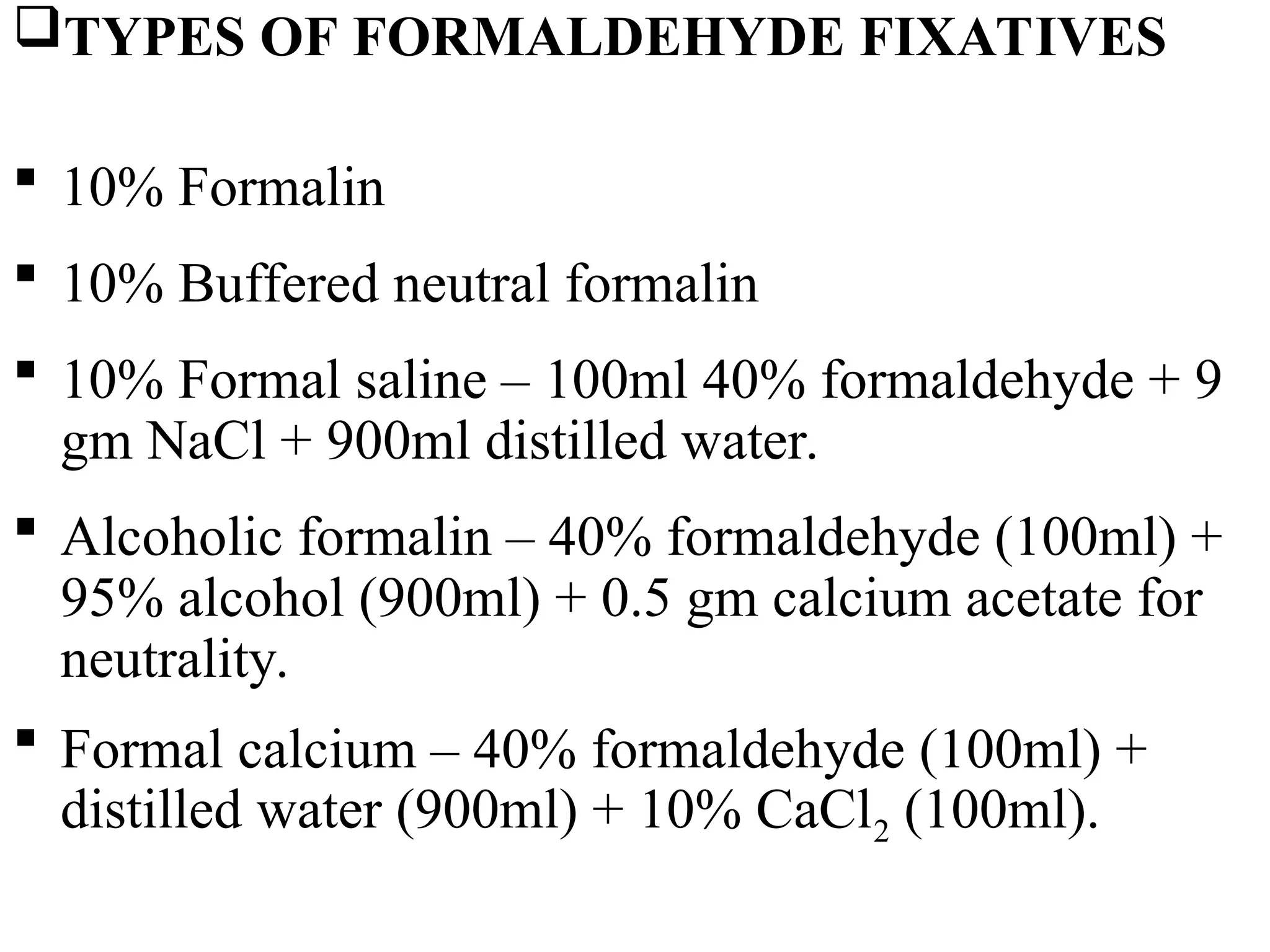
TYPES OF FORMALDEHYDE FIXATIVES
 10% Formalin
 10% Buffered neutral formalin
 10% Formal saline – 100ml 40% formaldehyde + 9
gm NaCl + 900ml distilled water.
 Alcoholic formalin – 40% formaldehyde (100ml) +
95% alcohol (900ml) + 0.5 gm calcium acetate for
neutrality.
 Formal calcium – 40% formaldehyde (100ml) +
distilled water (900ml) + 10% CaCl2 (100ml).
• ADVANTAGES OF FORMALIN FIXATIVES
Cheap, easy to prepare and relatively stable,
especially if buffered
Allows subsequent application of many staining
techniques without special preliminary procedures.
Frozen sections can be prepared with ease from
formalin-fixed material.
ADVANTAGES OF FORMALIN FIXATIVES
 Staining for fat and some enzymes can easily be
carried out on tissues fixed in formalin
Penetrates tissue reasonably well (medium
speed fixative)
Natural tissue colours can be restored after
formalin fixation.
DISADVANTEGES OF FORMALIN FIXATION
May lead to dermatitis of the hands of some workers
Fumes are irritating to nostril and eyes
Use of unbuffered formalin tends to reduce
basophilic staining i.e., does not give the best
nuclear definition
DISADVANTEGES OF FORMALIN FIXATION
Formation of formalin pigment in tissue
containing blood (e.g., spleen)
Reduces PAS positivity of reactive mucins due
to its polymerizing action
Potentially carcinogenic
CHROMATE
A strong oxidizing agent
Not used alone but in combination with other
ingredients
Penetrates slowly and leaves tissues in a state in
which shrinkage may occur during subsequent
processing
Potassium dichromate reacts with adrenal to
produce black or brown water-insoluble precipitates
Oxidation product is visible both grossly and in
histological sections
ADVANTAGES
Preserves phospholipids in paraffin sections
Chromation increases the intensity of PAS reaction
in PAS-reactive lipids
DISADVANTAGES
Tissue should be washed thoroughly to prevent
dichromate reacting with dehydrating alcohols to
produce an insoluble green precipitate that cannot
be removed in later processing
• ALCOHOLIC FIXATIVES
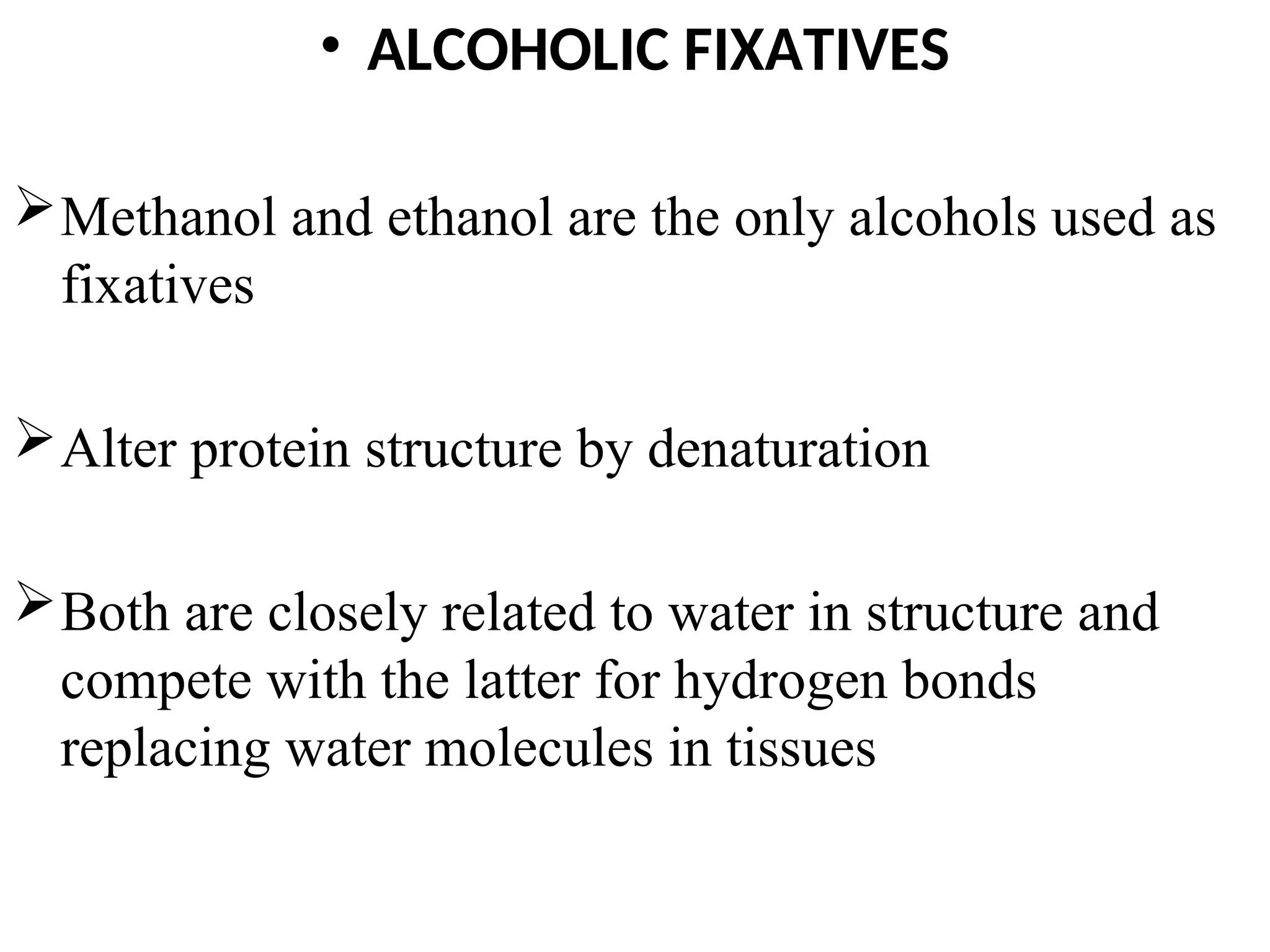
Methanol and ethanol are the only alcohols used as
fixatives
Alter protein structure by denaturation
Both are closely related to water in structure and
compete with the latter for hydrogen bonds
replacing water molecules in tissues
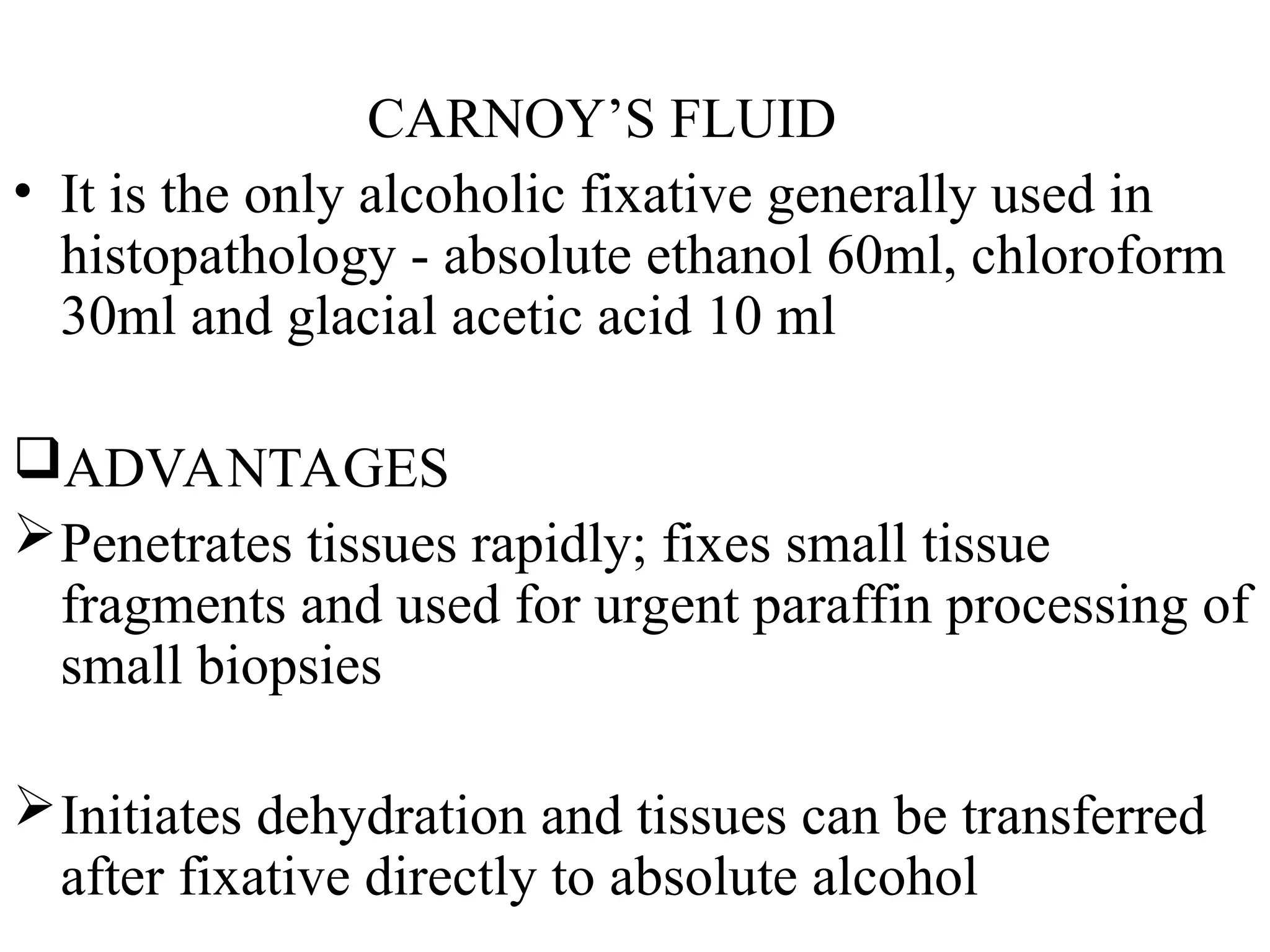
CARNOY’S FLUID
• It is the only alcoholic fixative generally used in
histopathology - absolute ethanol 60ml, chloroform
30ml and glacial acetic acid 10 ml
ADVANTAGES
Penetrates tissues rapidly; fixes small tissue
fragments and used for urgent paraffin processing of
small biopsies
Initiates dehydration and tissues can be transferred
after fixative directly to absolute alcohol
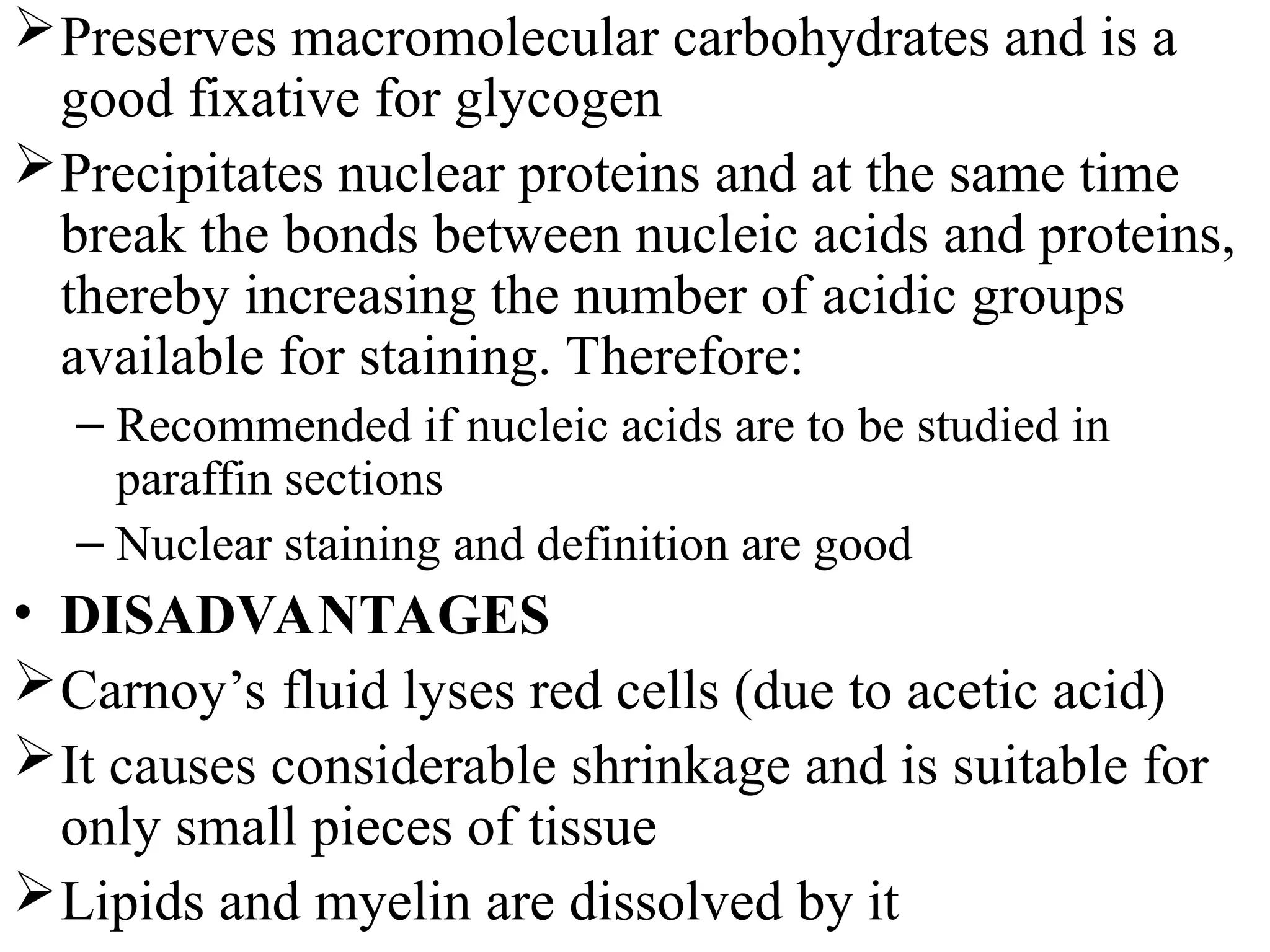
Preserves macromolecular carbohydrates and is a
good fixative for glycogen
Precipitates nuclear proteins and at the same time
break the bonds between nucleic acids and proteins,
thereby increasing the number of acidic groups
available for staining. Therefore:
– Recommended if nucleic acids are to be studied in
paraffin sections
– Nuclear staining and definition are good
• DISADVANTAGES
Carnoy’s fluid lyses red cells (due to acetic acid)
It causes considerable shrinkage and is suitable for
only small pieces of tissue
Lipids and myelin are dissolved by it
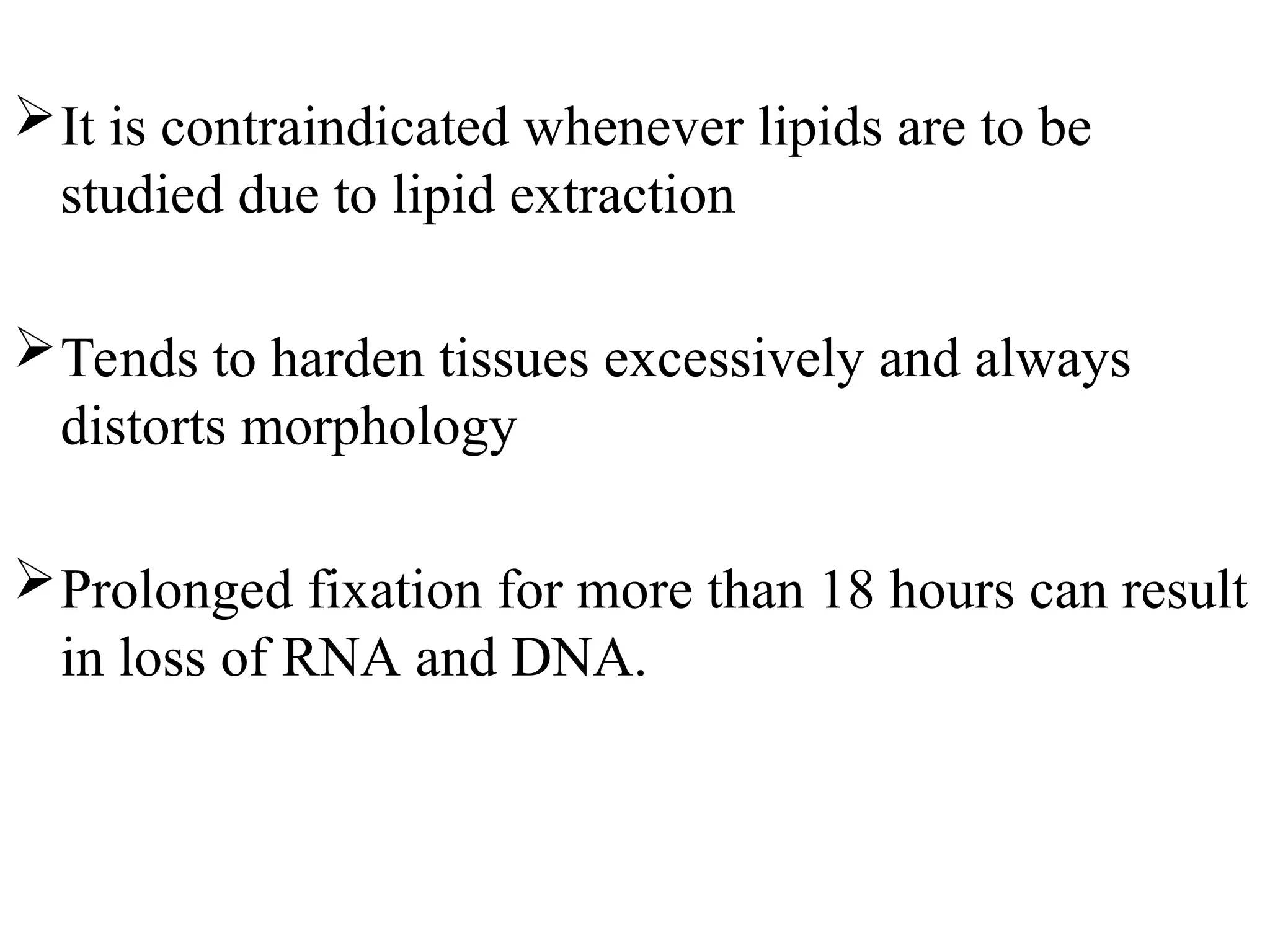
It is contraindicated whenever lipids are to be
studied due to lipid extraction
Tends to harden tissues excessively and always
distorts morphology
Prolonged fixation for more than 18 hours can result
in loss of RNA and DNA.
• ACETONE
Similar in action to ethanol and methanol but does
not make liver glycogen insoluble
Has a rapid action but causes brittleness if tissue
exposure is prolonged
More volatile than alcohols and because of this and
its flammability, it is not used in automated
processing schedules
ACETIC ACID
Never used alone:
– Fixes only nucleoproteins by precipitation – does not fix
proteins
– Causes tissues to swell
Used in combination with other fixatives that cause
shrinkage, such as ethanol, methanol and picric acid
Penetrates rapidly and thoroughly
Causes lyses of red cells
All mucins except gastric neutral mucin are
precipitated by acetic acid.
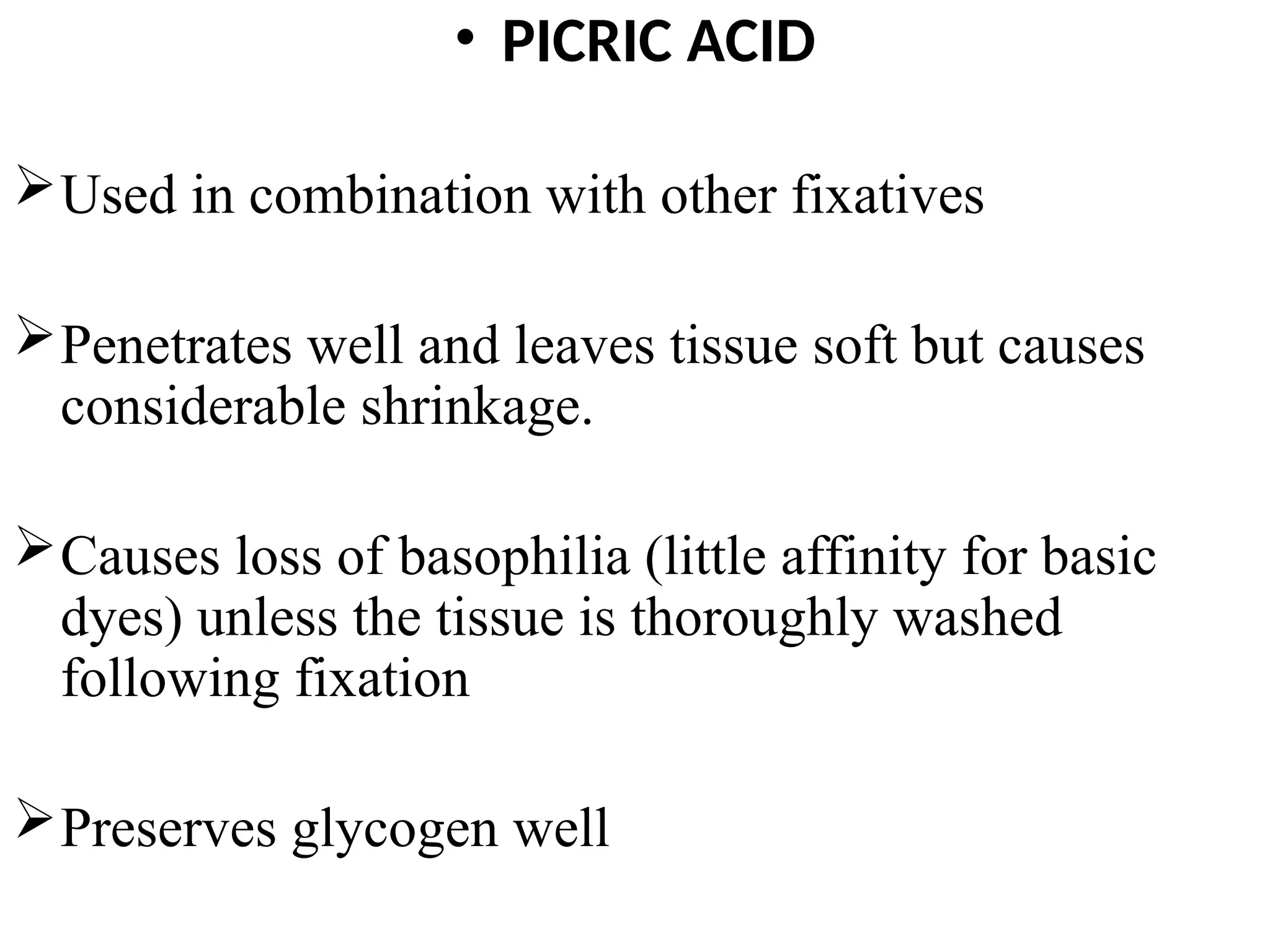
• PICRIC ACID
Used in combination with other fixatives
Penetrates well and leaves tissue soft but causes
considerable shrinkage.
Causes loss of basophilia (little affinity for basic
dyes) unless the tissue is thoroughly washed
following fixation
Preserves glycogen well
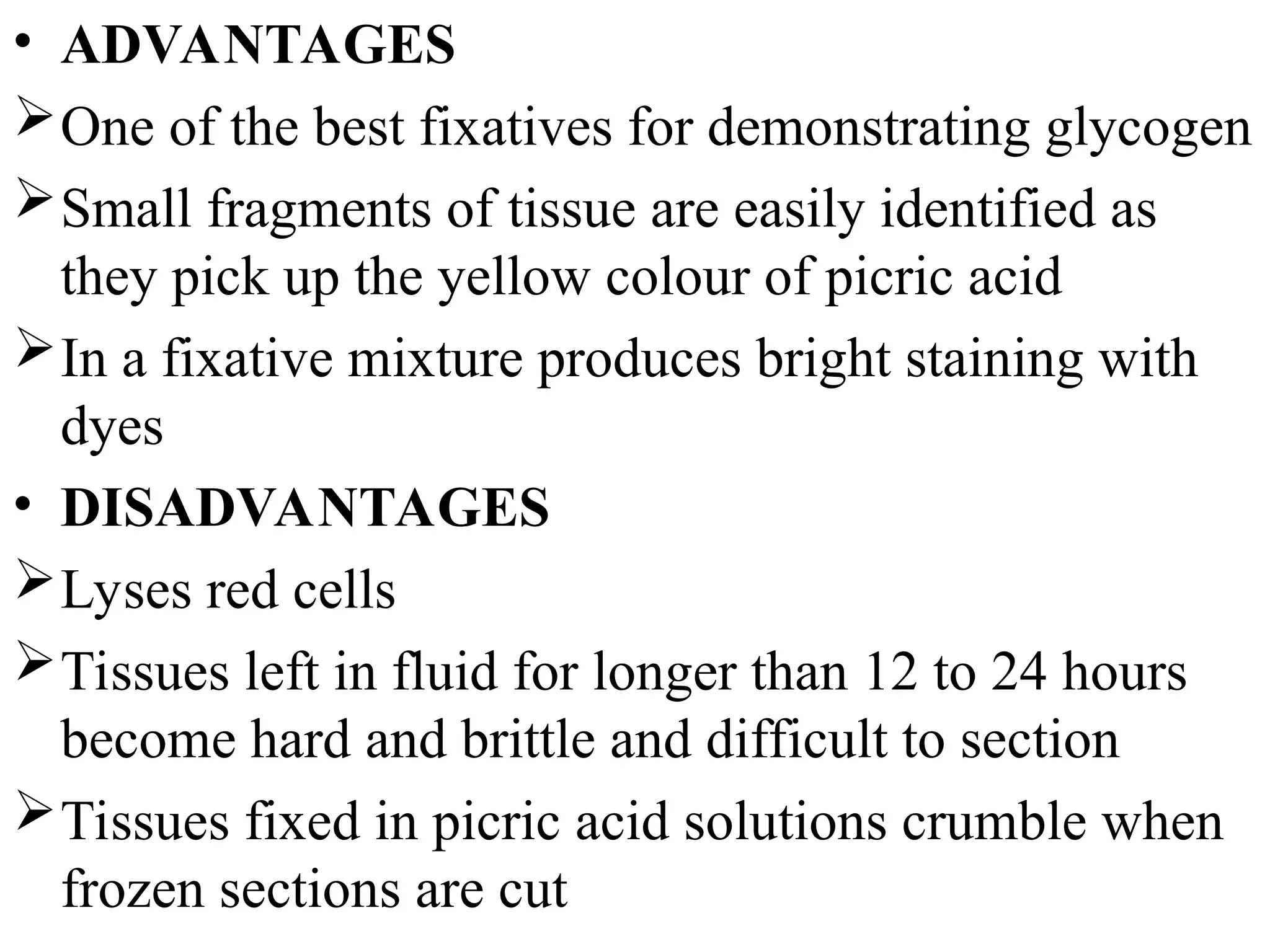
• ADVANTAGES
One of the best fixatives for demonstrating glycogen
Small fragments of tissue are easily identified as
they pick up the yellow colour of picric acid
In a fixative mixture produces bright staining with
dyes
• DISADVANTAGES
Lyses red cells
Tissues left in fluid for longer than 12 to 24 hours
become hard and brittle and difficult to section
Tissues fixed in picric acid solutions crumble when
frozen sections are cut
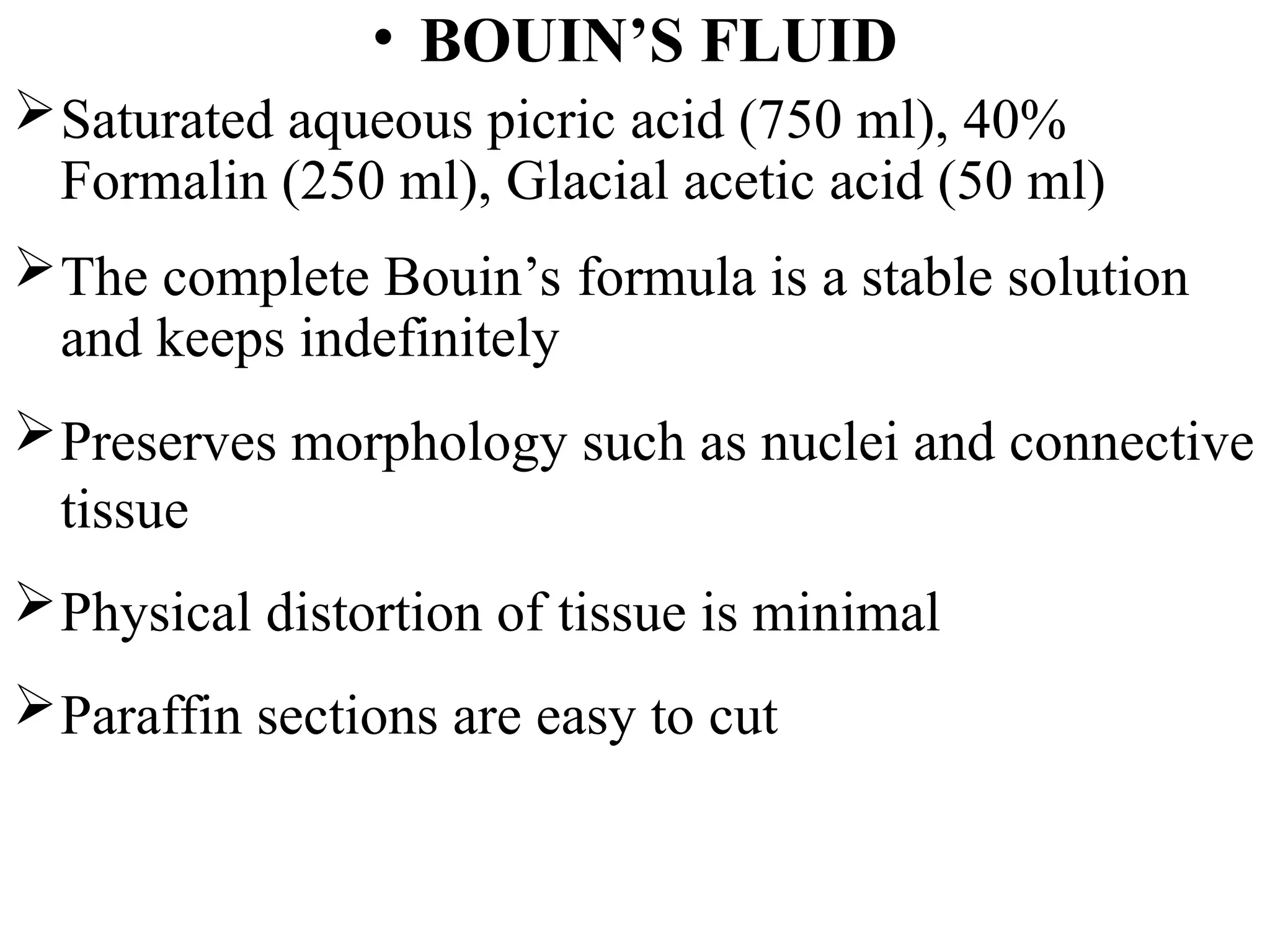
• BOUIN’S FLUID
Saturated aqueous picric acid (750 ml), 40%
Formalin (250 ml), Glacial acetic acid (50 ml)
The complete Bouin’s formula is a stable solution
and keeps indefinitely
Preserves morphology such as nuclei and connective
tissue
Physical distortion of tissue is minimal
Paraffin sections are easy to cut
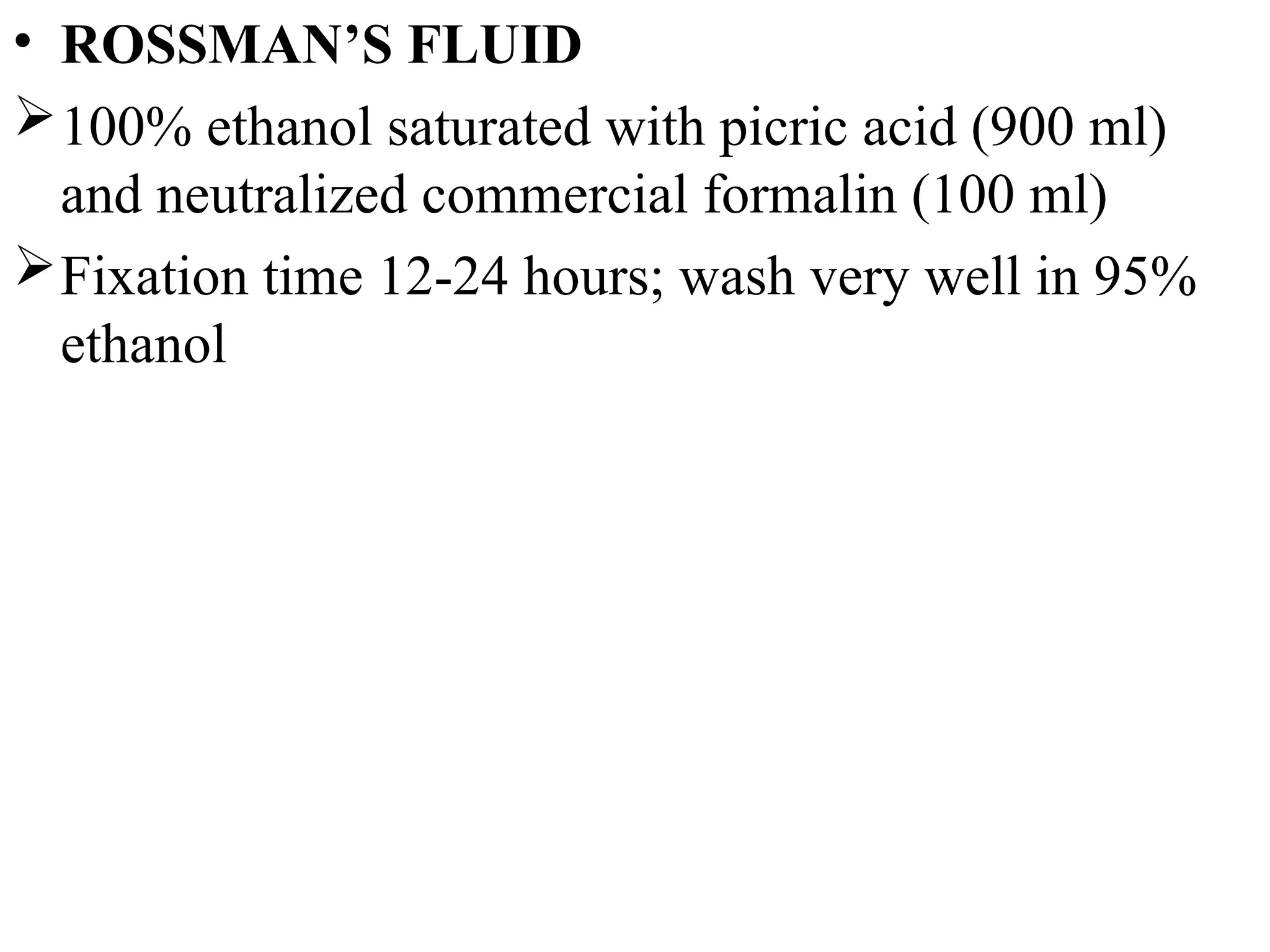
• ROSSMAN’S FLUID
100% ethanol saturated with picric acid (900 ml)
and neutralized commercial formalin (100 ml)
Fixation time 12-24 hours; wash very well in 95%
ethanol
• MERCURIC CHLORIDE
Usually combined with other fixatives
Mixtures containing mercuric chloride include:
- Zenker’s,
- Helly’s,
- Susa
- Formol sublimate
• ADVANTAGES
Give better staining of nuclei and connective tissue
Cytoplasmic staining with acidic dyes is enhanced
• DISADVANTAGES
Solutions of mercuric chloride corrode all metals
except nickel alloys
Zenker’s solution causes considerable lysis of red
cells and removes much iron from haemosiderin.
All mercurial fixatives reduce the amount of
demonstrable glycogen

FIXATION AND FIXATIVES IN HISTOPATHOLOGY

  • 1.
    FIXATION AND FIXATIVES: DR.M.A. SEIDU/CECILIA KRAMPAH
  • 2.
    INTRODUCTION • Histopathology isa comparative science in which: Normal tissues of a particular area is compared with tissues from the area for abnormalities Abnormal tissues are compared with other abnormal tissues from the same area for similarities
  • 3.
    INTRODUCTION • To thiseffect certain preparations are necessary to ensure that there are no misleading occurrences • It is essential that tissues are maintained in the same nature that they were before they were removed from the body • It is essential that at every stage of handling tissues for histopathology, the preparation must be reproducible.
  • 4.
    CHALLENGES TO MAINTENANCEOF TISSUES AFTER REMOVAL • Two phenomena occur when tissues are removed from the body or after death: • Autolysis • Putrefaction
  • 5.
    AUTOLYSIS • This isthe process of self-destruction initiated soon after cell death by the action of intracellular enzymes located in lysosomes – Autolysis • This results in breakdown of protein and the final liquefaction of the cell • Autolysis: – is more rapid in tissues rich in enzymes such as the liver, kidney and brain – less so in tissues such as fibrous tissue
  • 6.
    Putrefaction • This occursas a result of bacterial decomposition (putrefaction) producing changes in tissues that mimic autolysis –These changes are produced by bacterial proliferation in the dead tissues –The bacteria may be derived from the body’s normal flora or may be present in infected tissues at the time of death
  • 7.
    FIXATION • FIXATION: Theprocess by which tissues are preserved so that they will withstand subsequent treatment with other reagents without loss, distortion or decomposition. – The cells and extra-cellular materials must be preserved in such a way that there will be as little alteration as possible to their structure and chemical composition. – The constituents of the tissue must be rendered insoluble in all the reagents to which they will subsequently be exposed
  • 8.
    FIXATION • Fixation istherefore: –The first step in histopathological examination –And represents the foundation for subsequent stages in the preparation of tissue for microscopic examination. –The chemicals and physical agents used in fixation are called FIXATIVES
  • 9.
    AIMS OF FIXATION Preservecells and tissue constituents in as close to the living state as possible Prevent the process of autolysis and putrefaction Allow fixed tissues to undergo further procedures without alteration in shape or volume and no loss of small molecules Leave tissues in a condition which subsequently allows staining.
  • 10.
    • TISSUE CONTITUENTSINVOLVED IN FIXATION Protein is the most important tissue constituent as far as fixation is concerned. • This is because the structure of any animal tissue is determined largely by the configuration of its proteins • Other tissue components to be preserved in fixation are: – Nucleic acids – Carbohydrates – Lipids,
  • 11.
    CLASSIFICATION OF FIXATIVES •CHEMICAL AGENTS Aldehydes Oxidising agents Protein-denaturing agents Miscellaneous chemical agents • PHYSICAL AGENTS Heat, microwave Freezing
  • 12.
    CHEMICAL FIXATIVES Aldehydes: – Formaldehyde,glutaraldehyde, glyoxal. Oxidising agents – Osmium tetroxide, potassium permanganate, potassium dichromate Protein-denaturing agents – Acetic acid, methanol, ethanol Miscellaneous chemical agents – Mercuric chloride, picric acid
  • 13.
    • PHYSICAL METHODS Heat, -Microwave, - Boiling Freezing – Frozen sections – Freeze-drying: Rapidly freezing of fresh tissue at -160o C and subsequently removing water molecules by sublimation in a vacuum. – Freeze substitution: Rapidly freezing of tissue and the substitution of the ice removed by a dehydrating solution
  • 14.
    MECHANISMS OF FIXATION REACTIONOF FIXATIVES WITH PROTEINS • Probably the most well known in fixation • Fixatives form cross-links between proteins. • Increasing polymerization   m.w. resulting in increased viscosity and formation of a gel • Soluble proteins are rendered insoluble by being fixed to structural proteins.
  • 15.
    Aldehydes • Aldehydes formcross-linkages • The reaction with formaldehyde is reversible by an excess of water • Glutaraldehyde is most effective at cross-linking and the reaction is rapid and irreversible. Oxidizing Agents • Mechanism of reaction with proteins by oxidizing agents is not known. • Osmium tetroxide forms cross-links with proteins. • Potassium permanganate and dichromate are less reactive towards proteins.
  • 16.
    Mercuric chloride • Thechemistry of fixation by HgCl2 is poorly understood. Heat/Microwave irradiation • Application of heat results in the coagulation of proteins. • Externally applied heat acts first on the superficial layers but heat delivered by microwaves is absorbed at all depths within a specimen. • Microwave energy interacts with dipolar molecules causing their oscillation with a frequency of 2.5 GHz (billion cycles per second)
  • 17.
    Heat/Microwave irradiation • Watermolecules and polar side-chains of proteins throughout the tissue have their thermal energy increased with consequent heating of proteins • There is no significant cross-linking of the protein molecules, but proteins are stabilized through denaturation.
  • 18.
    • Heat/Microwave irradiation •When the specimen is already immersed in a chemical fixative, microwave radiation: – promotes diffusion of fixative into the tissue – in formaldehyde-based fixatives, accelerates the cross- linking of proteins • When microwave radiation is the sole fixative agent, cellular distortion occurs so that close resemblance to the living state is lost. • The practice is to heat the specimen, already immersed in a chemical fixative
  • 19.
    REACTION OF FIXATIVESWITH NUCLEIC ACIDS • Not much is known about the reaction of nucleic acids with fixatives. • In their normal state, DNA and RNA do not react with formaldehyde or glutaraldehyde. • However, their association with protein (nucleoprotein), allows cross-linkages of the proteins to prevent their dissolution. • Since there is little “fixation” of nucleic acids, their retention in tissues must be due to entrapment by the protein gel
  • 20.
    REACTION OF FIXATIVESWITH LIPIDS • In general, following aldehyde fixation, many lipids are still labile. • Phospholipids containing amino groups are fixed by aldehydes • The only chemical agents that truly fix lipids are osmium tetroxide and chromic acid.
  • 21.
    REACTION OF FIXATIVESWITH CARBOHYDRATES • Two main carbohydrates are considered in tissue carbohydrate demonstration, glycogen and mucins. • Two schools of thought concerning glycogen fixation: – Removal of bound water molecules from glycogen by the fixative decreases its solubility - equivalent to denaturation – Preservation is due to fixation of associated proteins rather than glycogen itself or the result of trapping in a matrix of fixed protein.
  • 22.
    • REACTION OFFIXATIVES WITH CARBOHYDRATES • Alcoholic fixatives are preferred by some workers for mucins • Alcohols act partly by forming a meshwork of denatured protein, and partly by precipitating the carbohydrate moiety • Procedures requiring long immersion in aqueous solutions may lead to some loss of precipitated mucins and glycogen.
  • 23.
  • 24.
    IDEAL FIXATIVE • Anideal fixative should: Penetrate a tissue quickly Be rapid in action Be isotonic Cause a minimum loss and minimal physical and chemical alteration of the cell and its components Be affordable, stable and safe to handle • These are not completely fulfilled by any single fixative.
  • 25.
    FIXATIVES • Fixatives areplaced in two categories. • Simple fixatives: Single chemicals acting as fixatives • Compound fixatives: Since no single chemical can fulfil all the requirements of histopathology a mixture of chemicals could carry some advantage
  • 26.
    FORMALDEHYDE (FORMALIN) The mostwidely used fixative in histopathology, either by itself or in combinations with other chemicals. It is a gas sold as a saturated solution of formaldehyde (H.CHO) in water containing 40% gas by weight. For the purposes of determining strengths of diluted solutions the 40% (saturated solution) is regarded as 100% formalin.
  • 27.
    FORMALDEHYDE (FORMALIN) Formalin fixativesbecome acidic when oxidised which reduces its preserving capabilities. When acidic Formalin solution is used on bloody tissues, they produce brown pigments (formalin pigments). Buffering with NaH2PO4 and Na2HPO4 can effectively neutralize formalin fixatives and prevent the formation of the pigments. CaCO3 chips can also be used for neutralizing formalin, but CaCO3 can be deposited in tissues, producing ‘pseudocalcification
  • 28.
    TYPES OF FORMALDEHYDEFIXATIVES  10% Formalin  10% Buffered neutral formalin  10% Formal saline – 100ml 40% formaldehyde + 9 gm NaCl + 900ml distilled water.  Alcoholic formalin – 40% formaldehyde (100ml) + 95% alcohol (900ml) + 0.5 gm calcium acetate for neutrality.  Formal calcium – 40% formaldehyde (100ml) + distilled water (900ml) + 10% CaCl2 (100ml).
  • 29.
    • ADVANTAGES OFFORMALIN FIXATIVES Cheap, easy to prepare and relatively stable, especially if buffered Allows subsequent application of many staining techniques without special preliminary procedures. Frozen sections can be prepared with ease from formalin-fixed material.
  • 30.
    ADVANTAGES OF FORMALINFIXATIVES  Staining for fat and some enzymes can easily be carried out on tissues fixed in formalin Penetrates tissue reasonably well (medium speed fixative) Natural tissue colours can be restored after formalin fixation.
  • 31.
    DISADVANTEGES OF FORMALINFIXATION May lead to dermatitis of the hands of some workers Fumes are irritating to nostril and eyes Use of unbuffered formalin tends to reduce basophilic staining i.e., does not give the best nuclear definition
  • 32.
    DISADVANTEGES OF FORMALINFIXATION Formation of formalin pigment in tissue containing blood (e.g., spleen) Reduces PAS positivity of reactive mucins due to its polymerizing action Potentially carcinogenic
  • 33.
    CHROMATE A strong oxidizingagent Not used alone but in combination with other ingredients Penetrates slowly and leaves tissues in a state in which shrinkage may occur during subsequent processing Potassium dichromate reacts with adrenal to produce black or brown water-insoluble precipitates Oxidation product is visible both grossly and in histological sections
  • 34.
    ADVANTAGES Preserves phospholipids inparaffin sections Chromation increases the intensity of PAS reaction in PAS-reactive lipids DISADVANTAGES Tissue should be washed thoroughly to prevent dichromate reacting with dehydrating alcohols to produce an insoluble green precipitate that cannot be removed in later processing
  • 35.
    • ALCOHOLIC FIXATIVES Methanoland ethanol are the only alcohols used as fixatives Alter protein structure by denaturation Both are closely related to water in structure and compete with the latter for hydrogen bonds replacing water molecules in tissues
  • 36.
    CARNOY’S FLUID • Itis the only alcoholic fixative generally used in histopathology - absolute ethanol 60ml, chloroform 30ml and glacial acetic acid 10 ml ADVANTAGES Penetrates tissues rapidly; fixes small tissue fragments and used for urgent paraffin processing of small biopsies Initiates dehydration and tissues can be transferred after fixative directly to absolute alcohol
  • 37.
    Preserves macromolecular carbohydratesand is a good fixative for glycogen Precipitates nuclear proteins and at the same time break the bonds between nucleic acids and proteins, thereby increasing the number of acidic groups available for staining. Therefore: – Recommended if nucleic acids are to be studied in paraffin sections – Nuclear staining and definition are good • DISADVANTAGES Carnoy’s fluid lyses red cells (due to acetic acid) It causes considerable shrinkage and is suitable for only small pieces of tissue Lipids and myelin are dissolved by it
  • 38.
    It is contraindicatedwhenever lipids are to be studied due to lipid extraction Tends to harden tissues excessively and always distorts morphology Prolonged fixation for more than 18 hours can result in loss of RNA and DNA.
  • 39.
    • ACETONE Similar inaction to ethanol and methanol but does not make liver glycogen insoluble Has a rapid action but causes brittleness if tissue exposure is prolonged More volatile than alcohols and because of this and its flammability, it is not used in automated processing schedules
  • 40.
    ACETIC ACID Never usedalone: – Fixes only nucleoproteins by precipitation – does not fix proteins – Causes tissues to swell Used in combination with other fixatives that cause shrinkage, such as ethanol, methanol and picric acid Penetrates rapidly and thoroughly Causes lyses of red cells All mucins except gastric neutral mucin are precipitated by acetic acid.
  • 41.
    • PICRIC ACID Usedin combination with other fixatives Penetrates well and leaves tissue soft but causes considerable shrinkage. Causes loss of basophilia (little affinity for basic dyes) unless the tissue is thoroughly washed following fixation Preserves glycogen well
  • 42.
    • ADVANTAGES One ofthe best fixatives for demonstrating glycogen Small fragments of tissue are easily identified as they pick up the yellow colour of picric acid In a fixative mixture produces bright staining with dyes • DISADVANTAGES Lyses red cells Tissues left in fluid for longer than 12 to 24 hours become hard and brittle and difficult to section Tissues fixed in picric acid solutions crumble when frozen sections are cut
  • 43.
    • BOUIN’S FLUID Saturatedaqueous picric acid (750 ml), 40% Formalin (250 ml), Glacial acetic acid (50 ml) The complete Bouin’s formula is a stable solution and keeps indefinitely Preserves morphology such as nuclei and connective tissue Physical distortion of tissue is minimal Paraffin sections are easy to cut
  • 44.
    • ROSSMAN’S FLUID 100%ethanol saturated with picric acid (900 ml) and neutralized commercial formalin (100 ml) Fixation time 12-24 hours; wash very well in 95% ethanol
  • 45.
    • MERCURIC CHLORIDE Usuallycombined with other fixatives Mixtures containing mercuric chloride include: - Zenker’s, - Helly’s, - Susa - Formol sublimate
  • 46.
    • ADVANTAGES Give betterstaining of nuclei and connective tissue Cytoplasmic staining with acidic dyes is enhanced • DISADVANTAGES Solutions of mercuric chloride corrode all metals except nickel alloys Zenker’s solution causes considerable lysis of red cells and removes much iron from haemosiderin. All mercurial fixatives reduce the amount of demonstrable glycogen