UNIT

1

Living organisms

THE FIVE KINGDOMS

Natural Science 2. Secondary Education
UNIT

1

The five kingdoms

The kingdom is the broadest category used in the system to
classify living things.
Today, living things are classified into five kingdoms: monera,
protoctista, fungi, plants and animals.

Natural Science 2. Secondary Education
UNIT

1

The five kingdoms
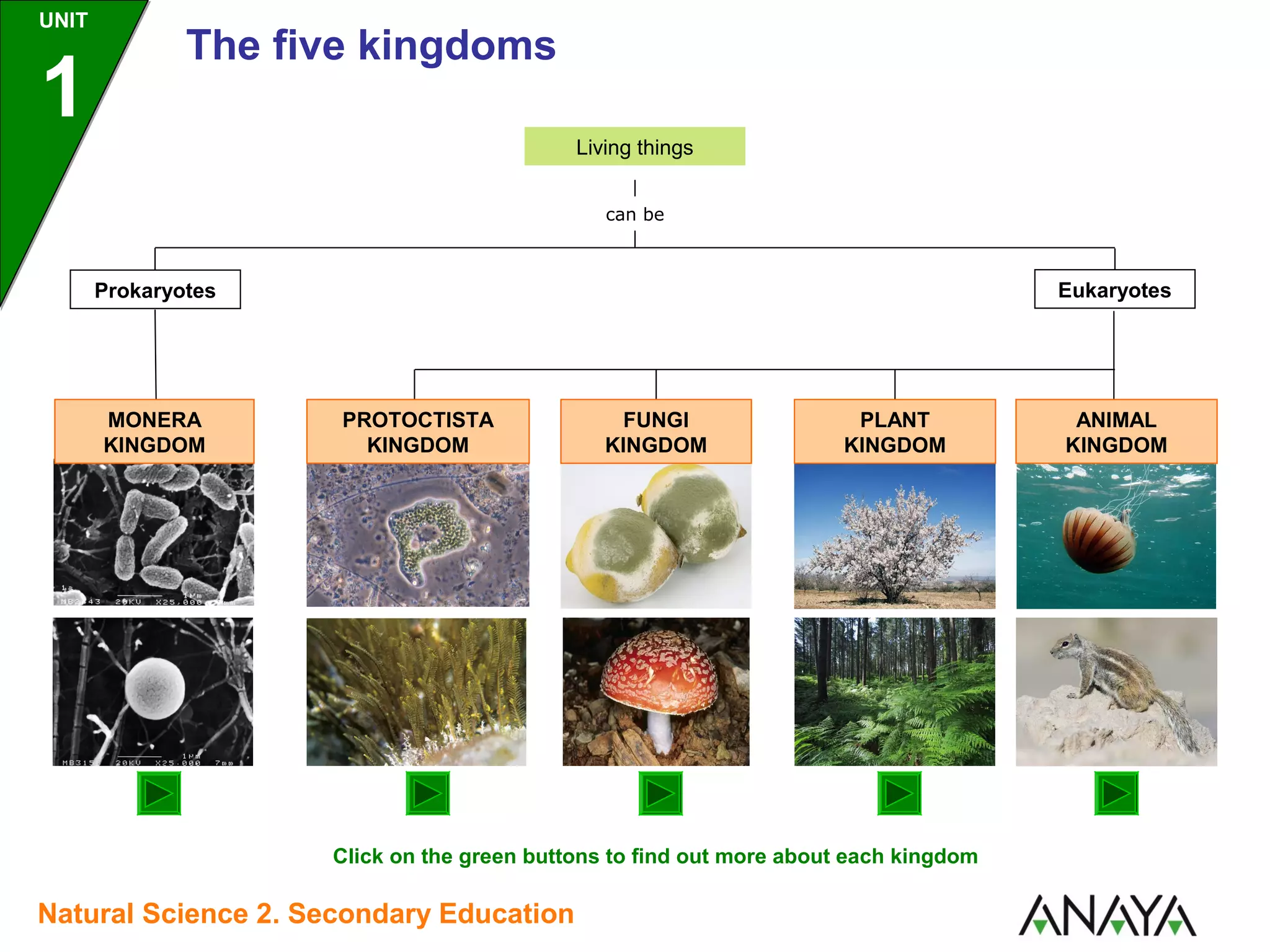
Living things
can be

Eukaryotes

Prokaryotes

MONERA
KINGDOM

PROTOCTISTA
KINGDOM

FUNGI
KINGDOM

PLANT
KINGDOM

Click on the green buttons to find out more about each kingdom

Natural Science 2. Secondary Education

ANIMAL
KINGDOM
UNIT

1

The five kingdoms
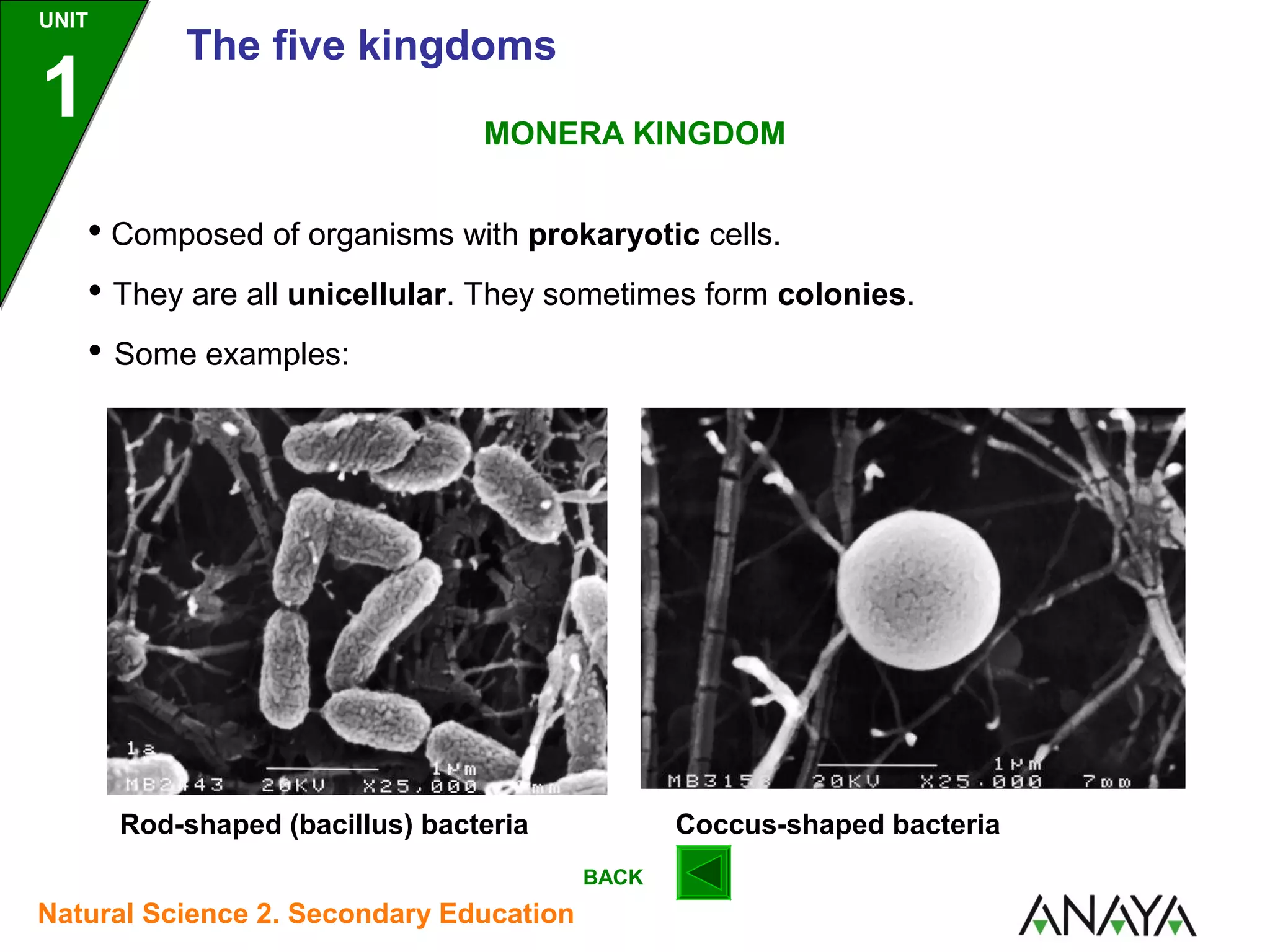
MONERA KINGDOM

• Composed of organisms with prokaryotic cells.
• They are all unicellular. They sometimes form colonies.
• Some examples:

Rod-shaped (bacillus) bacteria

Coccus-shaped bacteria
BACK

Natural Science 2. Secondary Education
UNIT

1

The five kingdoms
PROTOCTISTA KINGDOM

• Composed of organisms with eukaryotic cells.
• They can be unicellular, or multicellular with no tissues.
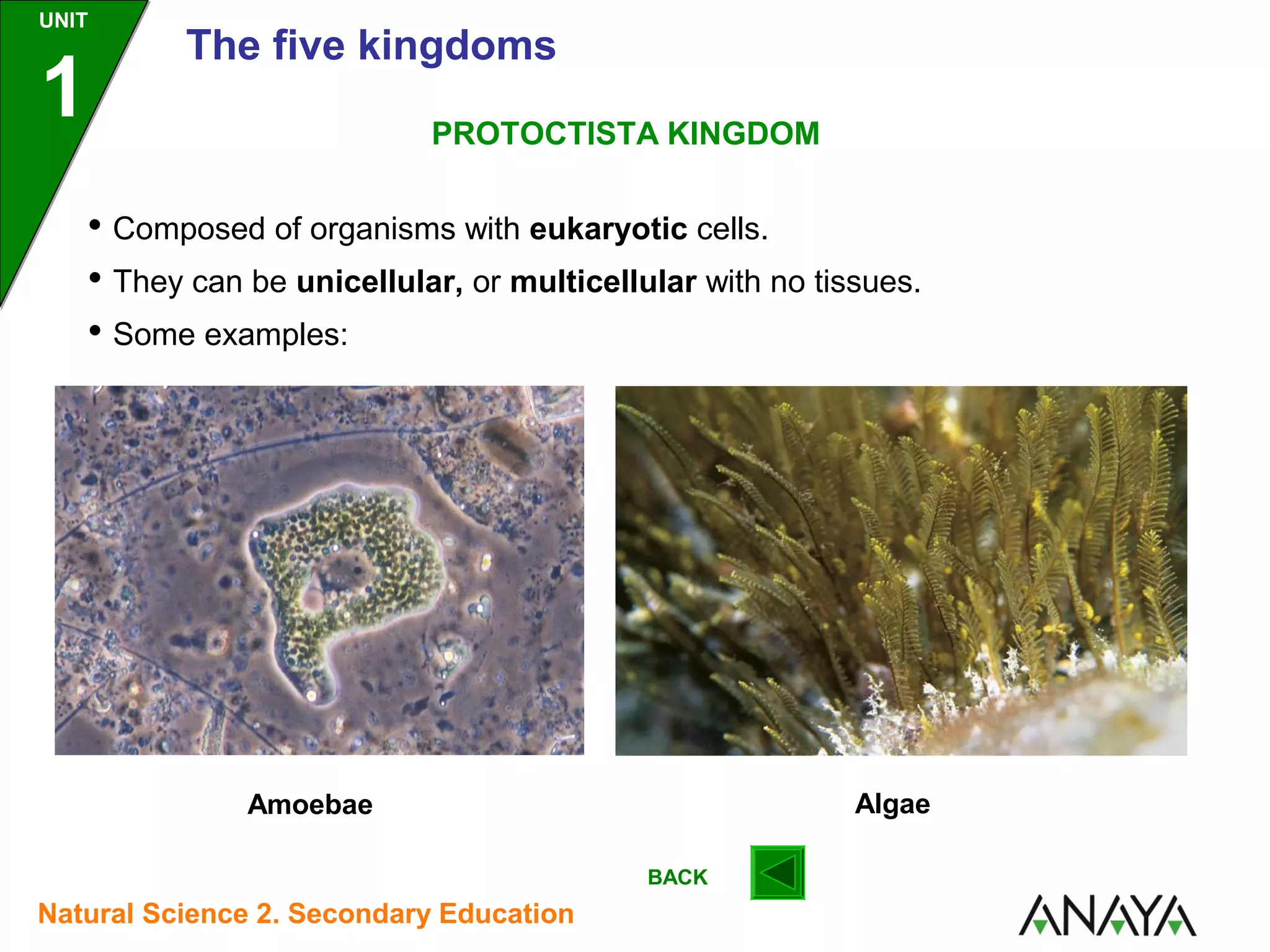
• Some examples:

Algae

Amoebae
BACK

Natural Science 2. Secondary Education
UNIT

1

The five kingdoms
FUNGI KINGDOM

• Composed of organisms with eukaryotic cells.
• They can be unicellular, or multicellular with no tissues.
• They are heterotrophic decomposers.
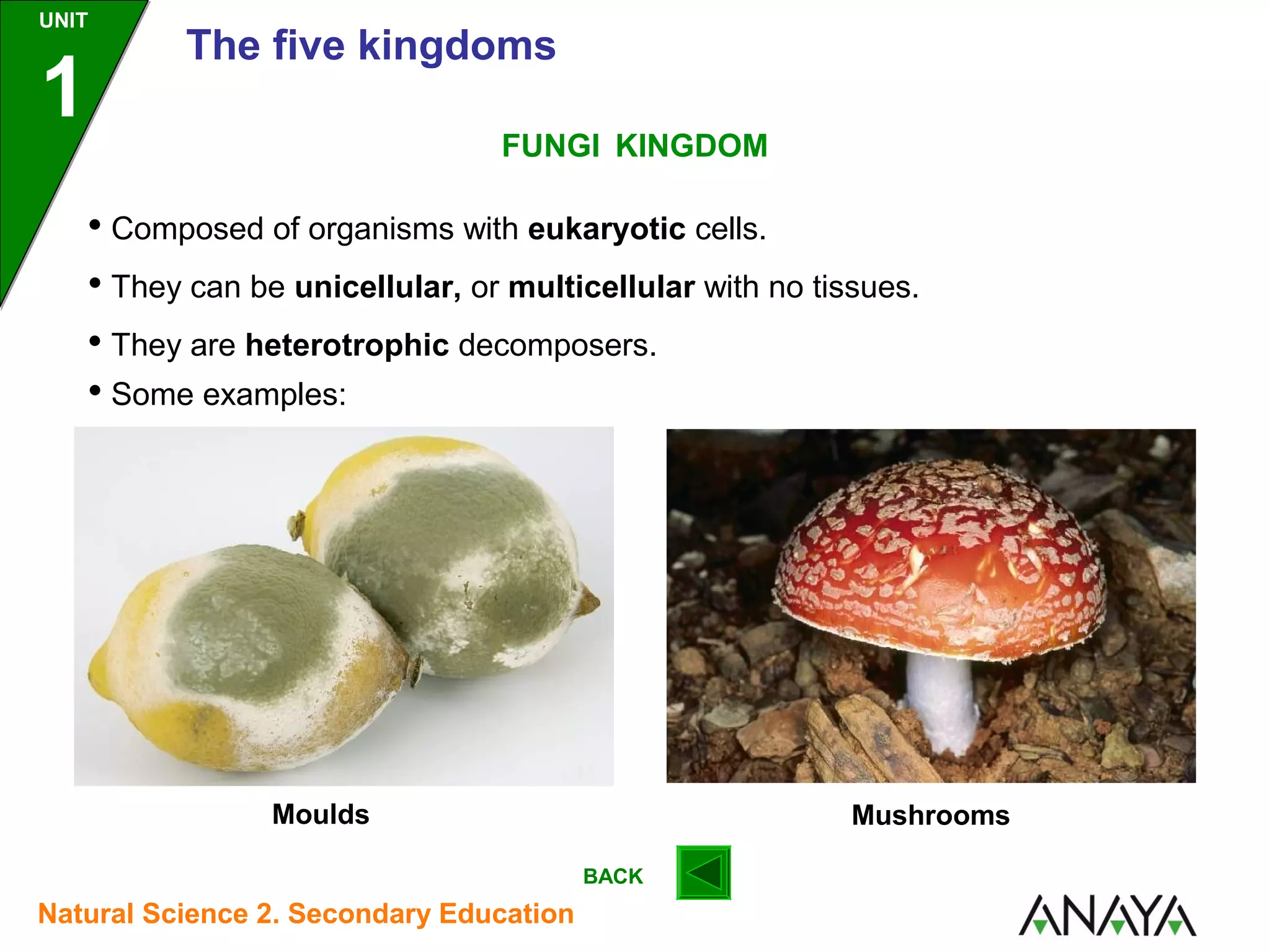
• Some examples:

Moulds

Mushrooms
BACK

Natural Science 2. Secondary Education
UNIT

1

The five kingdoms
PLANT KINGDOM

• Composed of organisms with eukaryotic cells.
• They are multicellular organisms with tissues. Some have organs.
• They are autotrophic organisms.
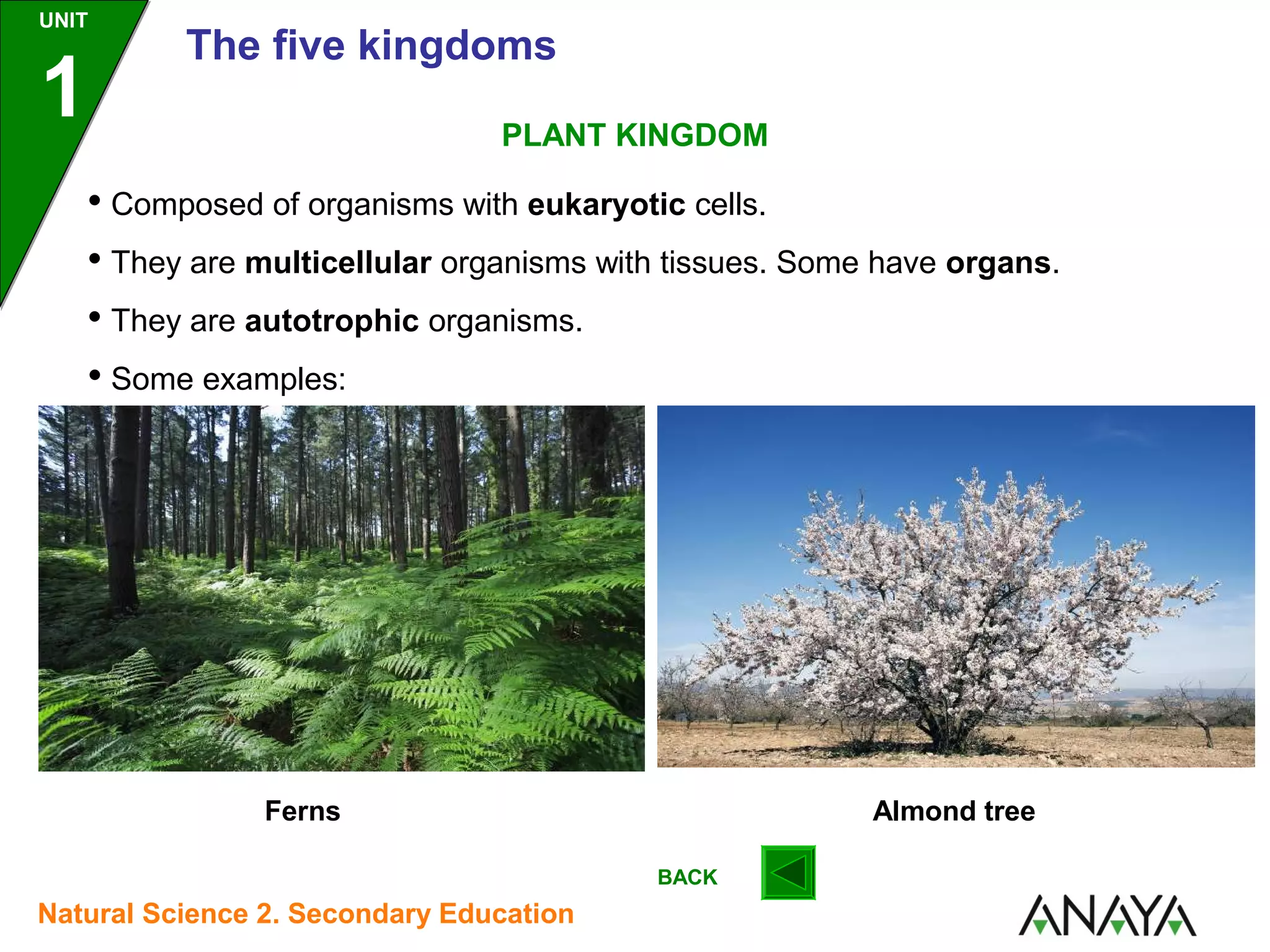
• Some examples:

Ferns

Almond tree
BACK

Natural Science 2. Secondary Education
UNIT

1

The five kingdoms
ANIMAL KINGDOM

• Composed of organisms with eukaryotic cells.
• They are multicellular organisms with tissues.
• Most of them have organs and some even have systems.
• They are heterotrophic organisms.
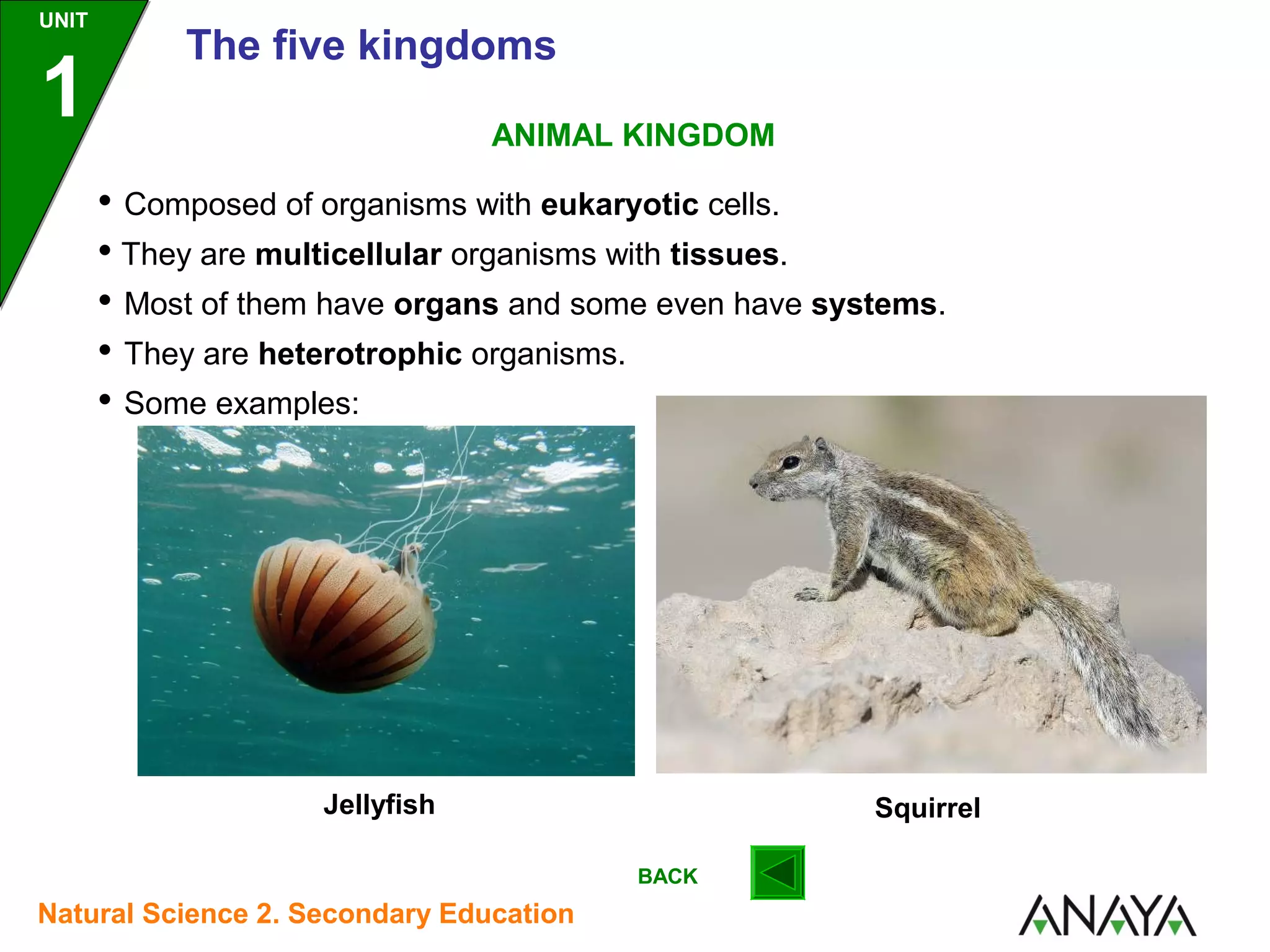
• Some examples:

Jellyfish

Squirrel
BACK

Natural Science 2. Secondary Education
UNIT

1

The five kingdoms

• To complete the activities In this presentation CLICK
Activities

Natural Science 2. Secondary Education
UNIT

1

The five kingdoms

Activities
Apply what you’ve learned
1 Give an example, besides those seen in the presentation, of an organism
that belongs to the Protoctista Kingdom and another that belongs to the Plant
Kingdom.
2 Make a table summarising the main characteristics of the five
kingdoms.

• To see this presentation again CLICK
Start

Natural Science 2. Secondary Education

_fivekingdoms

  • 1.
    UNIT 1 Living organisms THE FIVEKINGDOMS Natural Science 2. Secondary Education
  • 2.
    UNIT 1 The five kingdoms Thekingdom is the broadest category used in the system to classify living things. Today, living things are classified into five kingdoms: monera, protoctista, fungi, plants and animals. Natural Science 2. Secondary Education
  • 3.
    UNIT 1 The five kingdoms Livingthings can be Eukaryotes Prokaryotes MONERA KINGDOM PROTOCTISTA KINGDOM FUNGI KINGDOM PLANT KINGDOM Click on the green buttons to find out more about each kingdom Natural Science 2. Secondary Education ANIMAL KINGDOM
  • 4.
    UNIT 1 The five kingdoms MONERAKINGDOM • Composed of organisms with prokaryotic cells. • They are all unicellular. They sometimes form colonies. • Some examples: Rod-shaped (bacillus) bacteria Coccus-shaped bacteria BACK Natural Science 2. Secondary Education
  • 5.
    UNIT 1 The five kingdoms PROTOCTISTAKINGDOM • Composed of organisms with eukaryotic cells. • They can be unicellular, or multicellular with no tissues. • Some examples: Algae Amoebae BACK Natural Science 2. Secondary Education
  • 6.
    UNIT 1 The five kingdoms FUNGIKINGDOM • Composed of organisms with eukaryotic cells. • They can be unicellular, or multicellular with no tissues. • They are heterotrophic decomposers. • Some examples: Moulds Mushrooms BACK Natural Science 2. Secondary Education
  • 7.
    UNIT 1 The five kingdoms PLANTKINGDOM • Composed of organisms with eukaryotic cells. • They are multicellular organisms with tissues. Some have organs. • They are autotrophic organisms. • Some examples: Ferns Almond tree BACK Natural Science 2. Secondary Education
  • 8.
    UNIT 1 The five kingdoms ANIMALKINGDOM • Composed of organisms with eukaryotic cells. • They are multicellular organisms with tissues. • Most of them have organs and some even have systems. • They are heterotrophic organisms. • Some examples: Jellyfish Squirrel BACK Natural Science 2. Secondary Education
  • 9.
    UNIT 1 The five kingdoms •To complete the activities In this presentation CLICK Activities Natural Science 2. Secondary Education
  • 10.
    UNIT 1 The five kingdoms Activities Applywhat you’ve learned 1 Give an example, besides those seen in the presentation, of an organism that belongs to the Protoctista Kingdom and another that belongs to the Plant Kingdom. 2 Make a table summarising the main characteristics of the five kingdoms. • To see this presentation again CLICK Start Natural Science 2. Secondary Education