Classification
of
Living Things
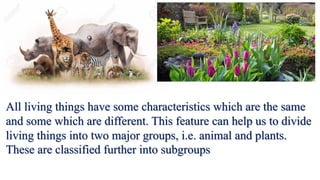
All living things have some characteristics which are the same
and some which are different. This feature can help us to divide
living things into two major groups, i.e. animal and plants.
These are classified further into subgroups
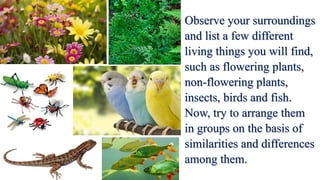
Observe your surroundings
and list a few different
living things you will find,
such as flowering plants,
non-flowering plants,
insects, birds and fish.
Now, try to arrange them
in groups on the basis of
similarities and differences
among them.
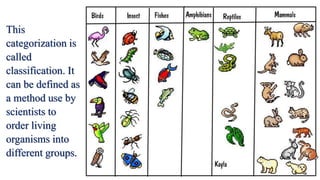
This
categorization is
called
classification. It
can be defined as
a method use by
scientists to
order living
organisms into
different groups.
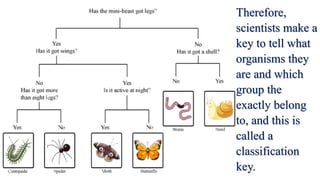
Therefore,
scientists make a
key to tell what
organisms they
are and which
group the
exactly belong
to, and this is
called a
classification
key.
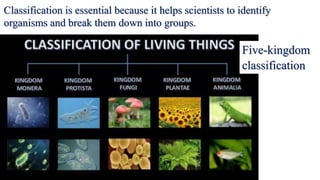
Classification is essential because it helps scientists to identify
organisms and break them down into groups.
Five-kingdom
classification
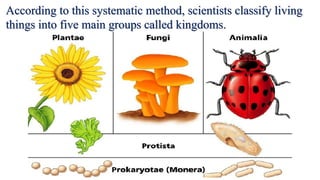
According to this systematic method, scientists classify living
things into five main groups called kingdoms.
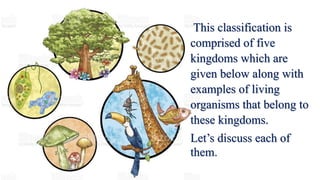
This classification is
comprised of five
kingdoms which are
given below along with
examples of living
organisms that belong to
these kingdoms.
Let’s discuss each of
them.
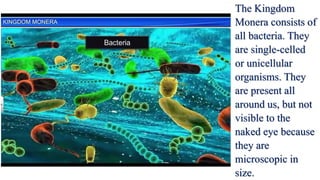
The Kingdom
Monera consists of
all bacteria. They
are single-celled
or unicellular
organisms. They
are present all
around us, but not
visible to the
naked eye because
they are
microscopic in
size.
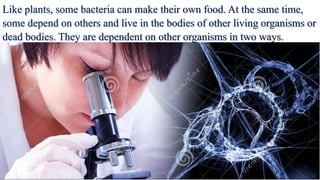
Like plants, some bacteria can make their own food. At the same time,
some depend on others and live in the bodies of other living organisms or
dead bodies. They are dependent on other organisms in two ways.
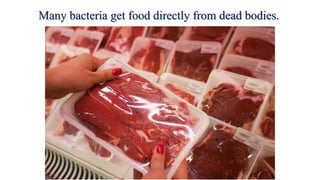
Many bacteria get food directly from dead bodies.
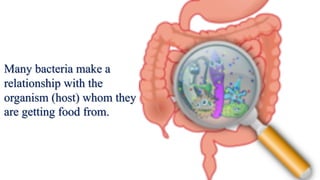
Many bacteria make a
relationship with the
organism (host) whom they
are getting food from.
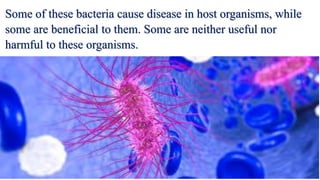
Some of these bacteria cause disease in host organisms, while
some are beneficial to them. Some are neither useful nor
harmful to these organisms.
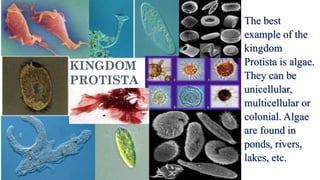
The best
example of the
kingdom
Protista is algae.
They can be
unicellular,
multicellular or
colonial. Algae
are found in
ponds, rivers,
lakes, etc.
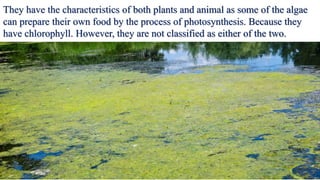
They have the characteristics of both plants and animal as some of the algae
can prepare their own food by the process of photosynthesis. Because they
have chlorophyll. However, they are not classified as either of the two.
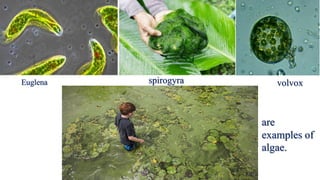
Euglena spirogyra volvox
are
examples of
algae.
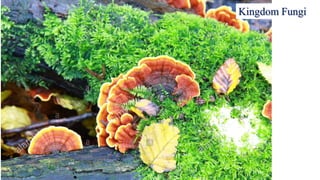
Kingdom Fungi
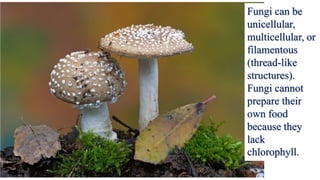
Fungi can be
unicellular,
multicellular, or
filamentous
(thread-like
structures).
Fungi cannot
prepare their
own food
because they
lack
chlorophyll.
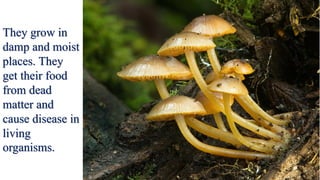
They grow in
damp and moist
places. They
get their food
from dead
matter and
cause disease in
living
organisms.
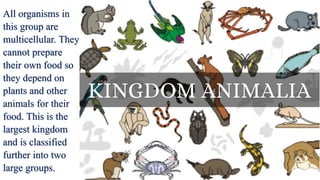
All organisms in
this group are
multicellular. They
cannot prepare
their own food so
they depend on
plants and other
animals for their
food. This is the
largest kingdom
and is classified
further into two
large groups.
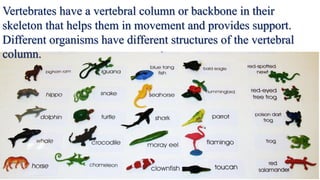
Vertebrates have a vertebral column or backbone in their
skeleton that helps them in movement and provides support.
Different organisms have different structures of the vertebral
column.
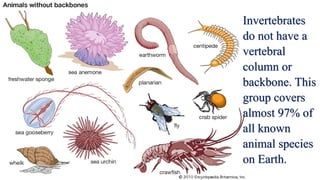
Invertebrates
do not have a
vertebral
column or
backbone. This
group covers
almost 97% of
all known
animal species
on Earth.
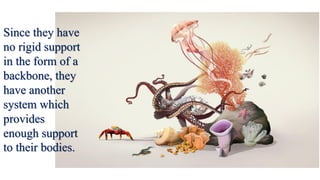
Since they have
no rigid support
in the form of a
backbone, they
have another
system which
provides
enough support
to their bodies.
For example, invertebrates like insects have a hard outer shell for support. Their
outer covering or shell is called exoskeleton, i.e. the skeleton outside the body
which is made of chitin, a tough semi-transparent substance. Other examples are the
jellyfish, earthworm, crab, octopus, starfish, etc.
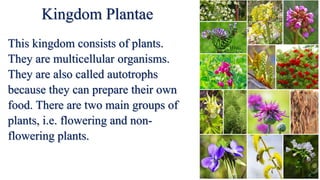
Kingdom Plantae
This kingdom consists of plants.
They are multicellular organisms.
They are also called autotrophs
because they can prepare their own
food. There are two main groups of
plants, i.e. flowering and non-
flowering plants.
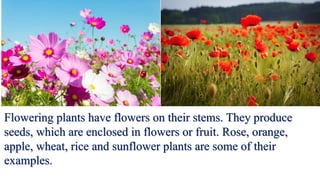
Flowering plants have flowers on their stems. They produce
seeds, which are enclosed in flowers or fruit. Rose, orange,
apple, wheat, rice and sunflower plants are some of their
examples.
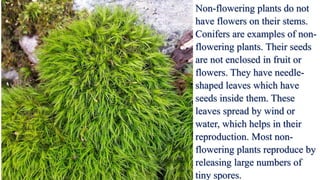
Non-flowering plants do not
have flowers on their stems.
Conifers are examples of non-
flowering plants. Their seeds
are not enclosed in fruit or
flowers. They have needle-
shaped leaves which have
seeds inside them. These
leaves spread by wind or
water, which helps in their
reproduction. Most non-
flowering plants reproduce by
releasing large numbers of
tiny spores.

Classification chapter class fiv science

  • 1.
  • 2.
    All living thingshave some characteristics which are the same and some which are different. This feature can help us to divide living things into two major groups, i.e. animal and plants. These are classified further into subgroups
  • 3.
    Observe your surroundings andlist a few different living things you will find, such as flowering plants, non-flowering plants, insects, birds and fish. Now, try to arrange them in groups on the basis of similarities and differences among them.
  • 4.
    This categorization is called classification. It canbe defined as a method use by scientists to order living organisms into different groups.
  • 5.
    Therefore, scientists make a keyto tell what organisms they are and which group the exactly belong to, and this is called a classification key.
  • 6.
    Classification is essentialbecause it helps scientists to identify organisms and break them down into groups. Five-kingdom classification
  • 7.
    According to thissystematic method, scientists classify living things into five main groups called kingdoms.
  • 8.
    This classification is comprisedof five kingdoms which are given below along with examples of living organisms that belong to these kingdoms. Let’s discuss each of them.
  • 9.
    The Kingdom Monera consistsof all bacteria. They are single-celled or unicellular organisms. They are present all around us, but not visible to the naked eye because they are microscopic in size.
  • 10.
    Like plants, somebacteria can make their own food. At the same time, some depend on others and live in the bodies of other living organisms or dead bodies. They are dependent on other organisms in two ways.
  • 11.
    Many bacteria getfood directly from dead bodies.
  • 12.
    Many bacteria makea relationship with the organism (host) whom they are getting food from.
  • 13.
    Some of thesebacteria cause disease in host organisms, while some are beneficial to them. Some are neither useful nor harmful to these organisms.
  • 14.
    The best example ofthe kingdom Protista is algae. They can be unicellular, multicellular or colonial. Algae are found in ponds, rivers, lakes, etc.
  • 15.
    They have thecharacteristics of both plants and animal as some of the algae can prepare their own food by the process of photosynthesis. Because they have chlorophyll. However, they are not classified as either of the two.
  • 16.
  • 17.
  • 18.
    Fungi can be unicellular, multicellular,or filamentous (thread-like structures). Fungi cannot prepare their own food because they lack chlorophyll.
  • 19.
    They grow in dampand moist places. They get their food from dead matter and cause disease in living organisms.
  • 20.
    All organisms in thisgroup are multicellular. They cannot prepare their own food so they depend on plants and other animals for their food. This is the largest kingdom and is classified further into two large groups.
  • 21.
    Vertebrates have avertebral column or backbone in their skeleton that helps them in movement and provides support. Different organisms have different structures of the vertebral column.
  • 22.
    Invertebrates do not havea vertebral column or backbone. This group covers almost 97% of all known animal species on Earth.
  • 23.
    Since they have norigid support in the form of a backbone, they have another system which provides enough support to their bodies.
  • 24.
    For example, invertebrateslike insects have a hard outer shell for support. Their outer covering or shell is called exoskeleton, i.e. the skeleton outside the body which is made of chitin, a tough semi-transparent substance. Other examples are the jellyfish, earthworm, crab, octopus, starfish, etc.
  • 25.
    Kingdom Plantae This kingdomconsists of plants. They are multicellular organisms. They are also called autotrophs because they can prepare their own food. There are two main groups of plants, i.e. flowering and non- flowering plants.
  • 26.
    Flowering plants haveflowers on their stems. They produce seeds, which are enclosed in flowers or fruit. Rose, orange, apple, wheat, rice and sunflower plants are some of their examples.
  • 27.
    Non-flowering plants donot have flowers on their stems. Conifers are examples of non- flowering plants. Their seeds are not enclosed in fruit or flowers. They have needle- shaped leaves which have seeds inside them. These leaves spread by wind or water, which helps in their reproduction. Most non- flowering plants reproduce by releasing large numbers of tiny spores.