Presented  by  :  Sheetal Narkar
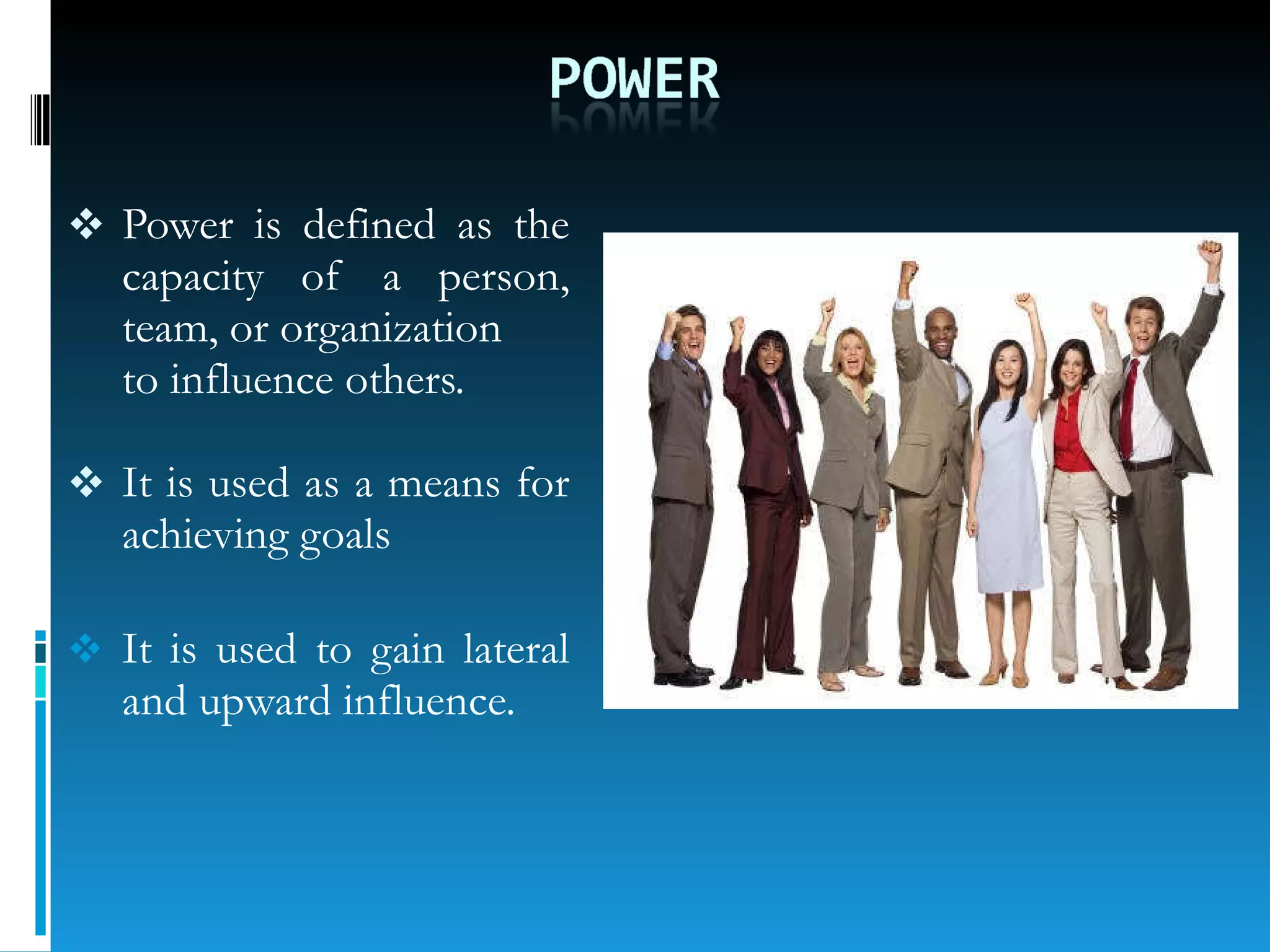
Power is defined as the capacity  of  a  person, team, or organization to influence others. It is used as a means for achieving goals It is used to gain lateral and upward influence.
 
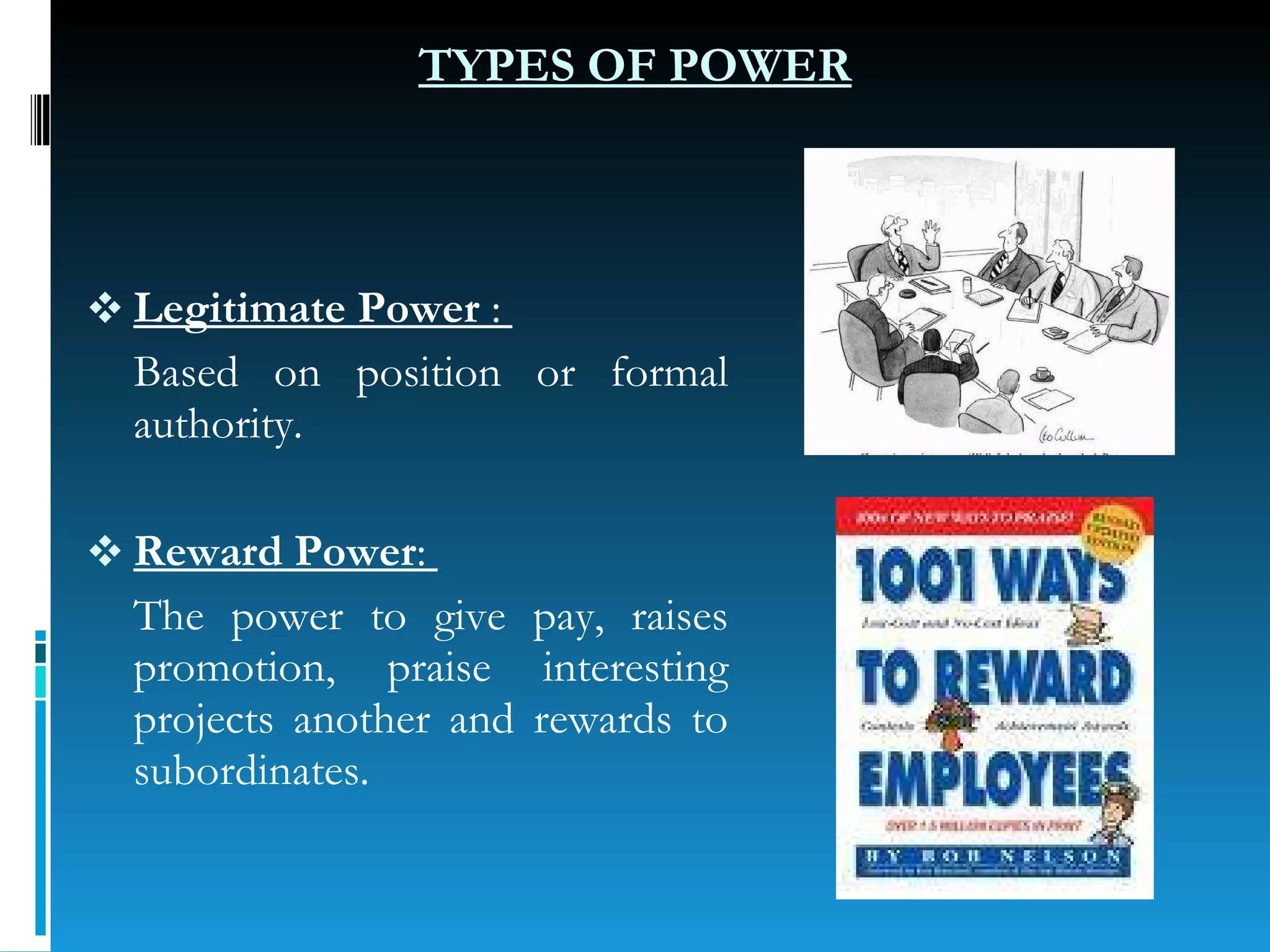
TYPES OF POWER Legitimate Power  :  Based on position or formal authority. Reward Power :  The power to give pay, raises promotion, praise interesting projects another and rewards to subordinates.
Coercive Power : The power to give or withhold punishment such as suspension, termination, or even the withholding of praise and goodwill.  Information Power :  Power that comes from access to and control over information.  TYPES OF POWER
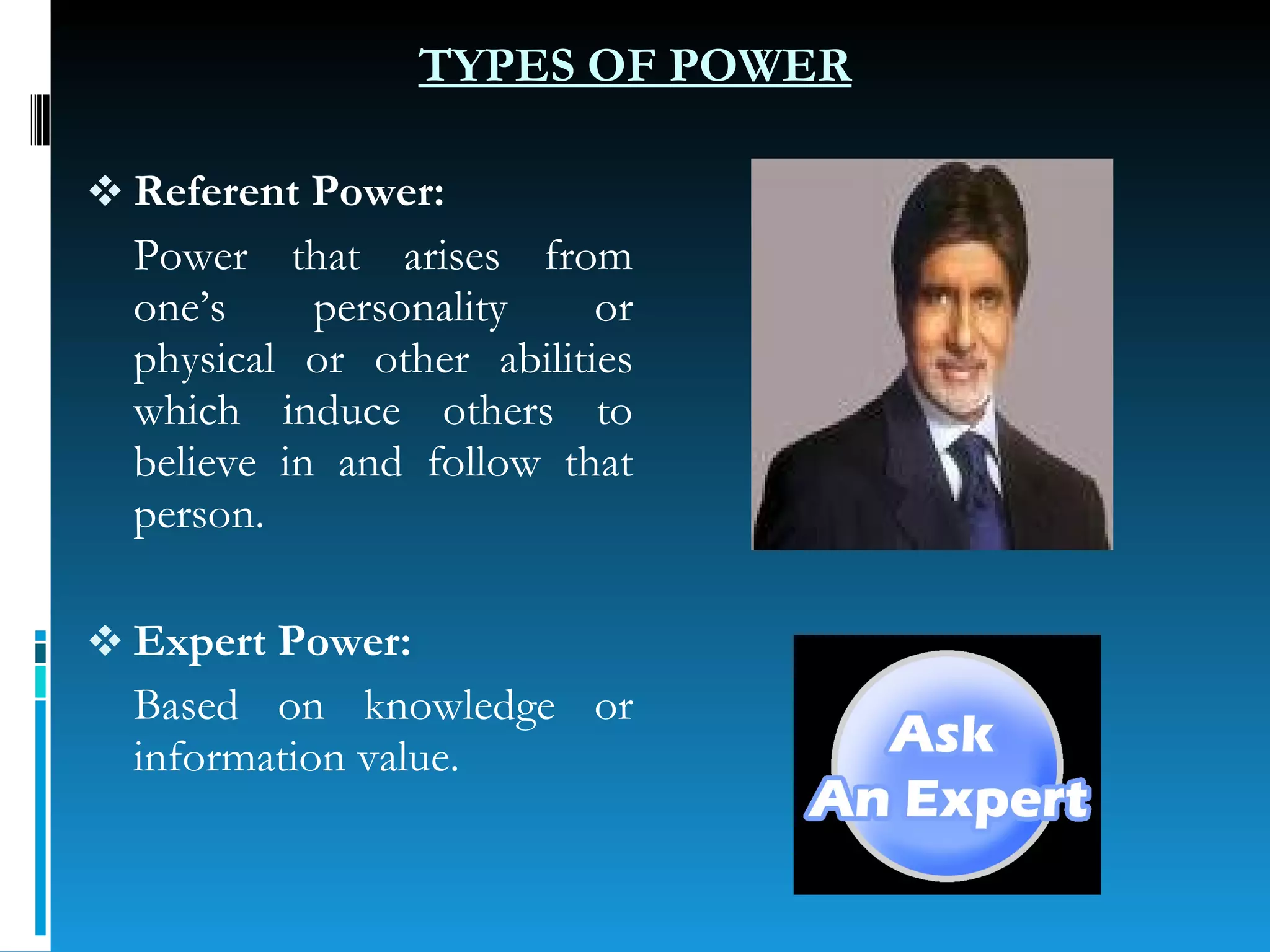
Referent Power:  Power that arises from one’s personality or physical or other abilities which induce others to believe in and follow that person.  Expert Power:  Based on knowledge or information value.  TYPES OF POWER
POLITICS
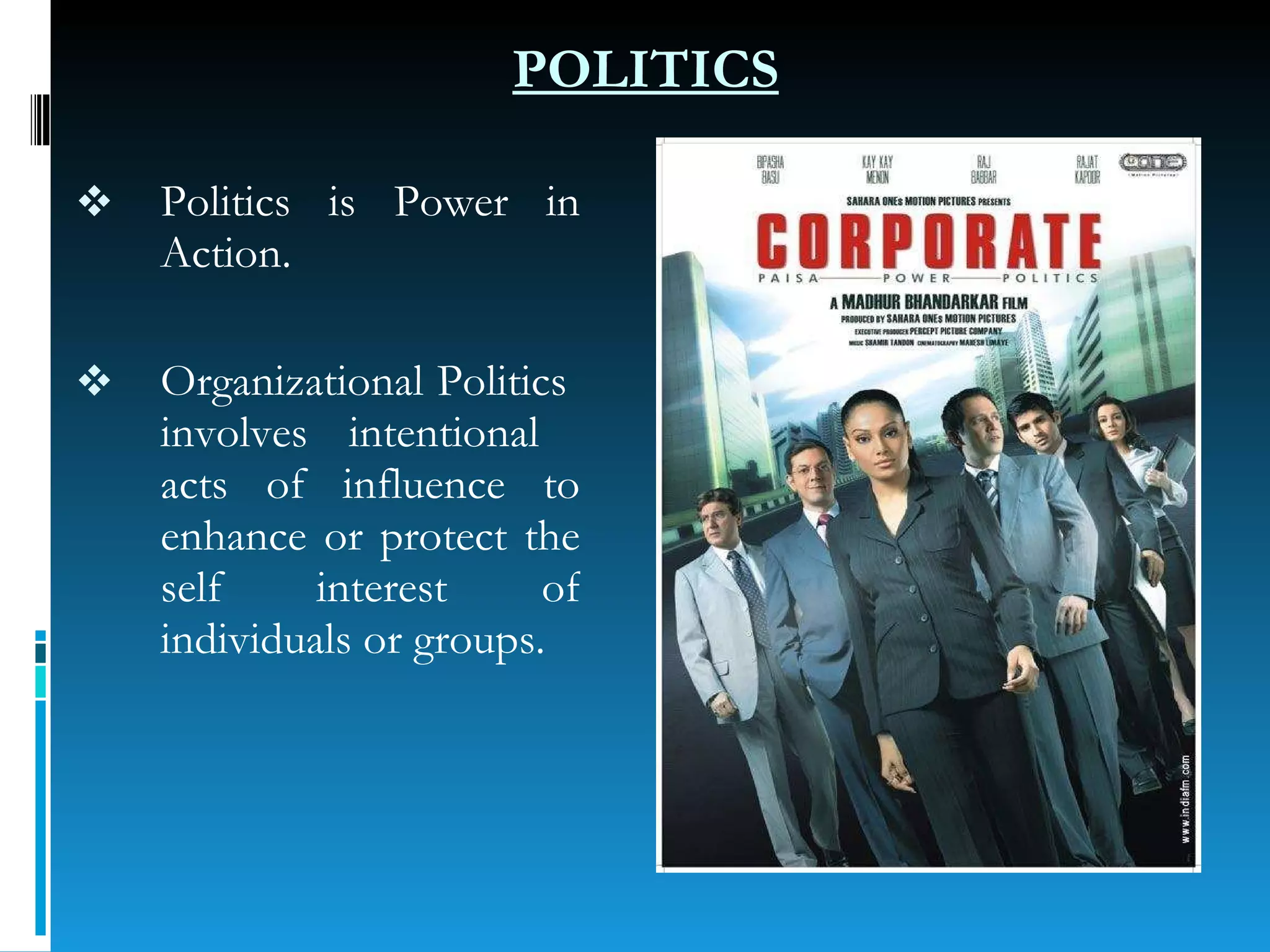
POLITICS Politics is Power in Action. Organizational Politics  involves intentional  acts of influence to enhance or protect the self interest of individuals or groups.
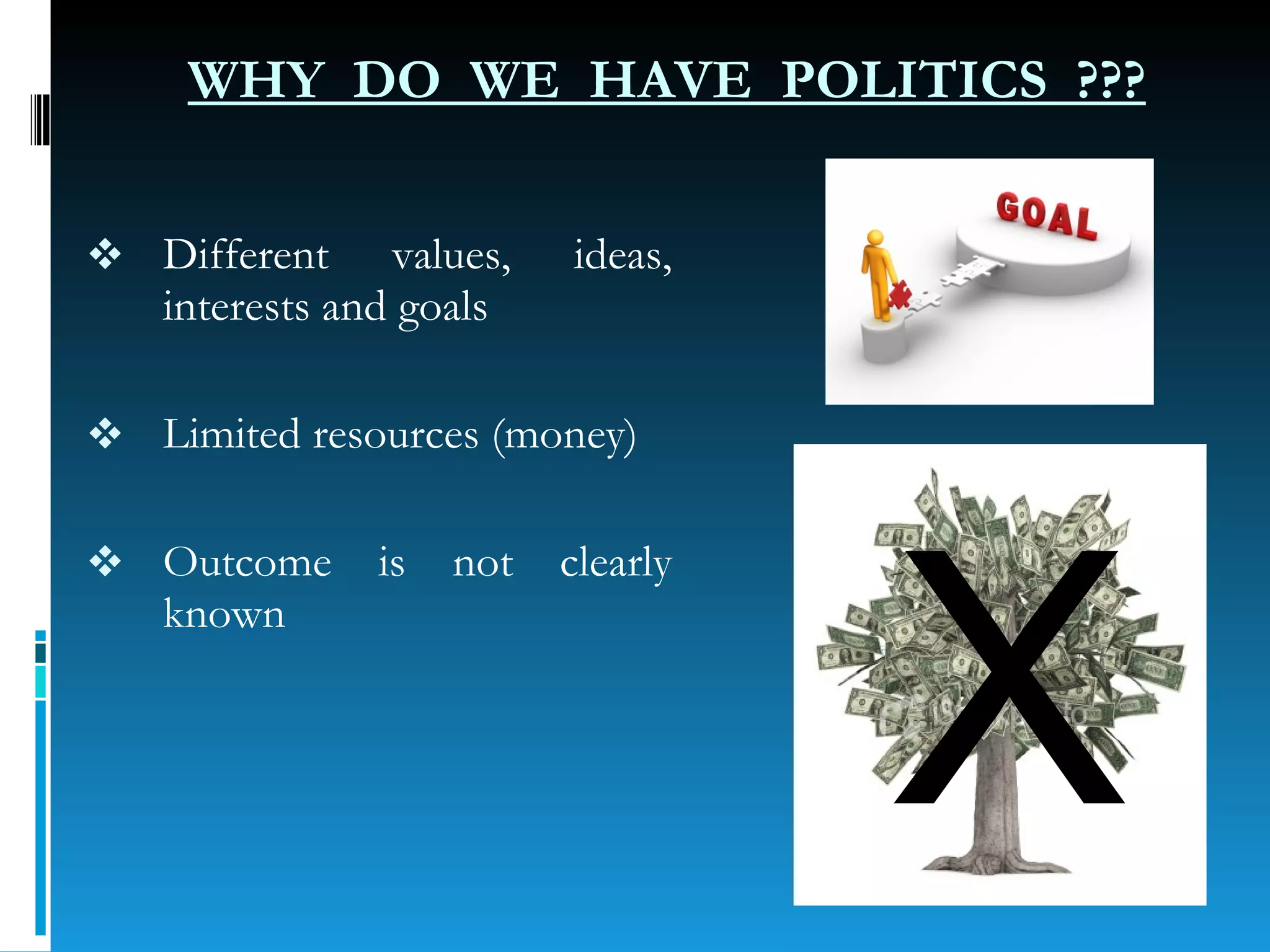
WHY  DO  WE  HAVE  POLITICS  ??? Different values, ideas, interests and goals Limited resources (money)  Outcome is not clearly known X
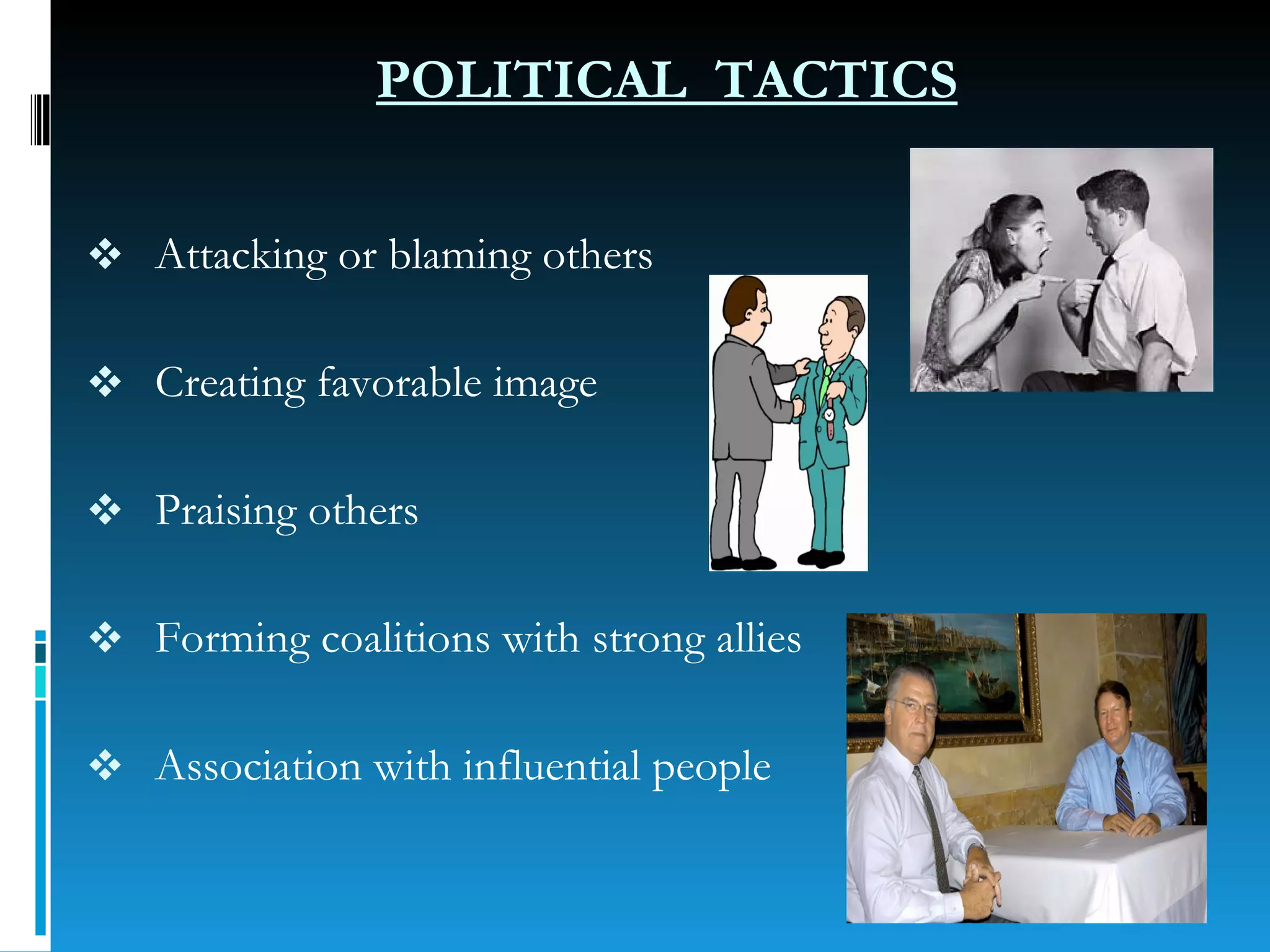
POLITICAL  TACTICS Attacking or blaming others Creating favorable image Praising others  Forming coalitions with strong allies Association with influential people
FACTORS  INFLUENCING  POLITICAL  BEHAVIOUR Individual factors: Inefficiency of the employee High need for power, status, security or autonomy
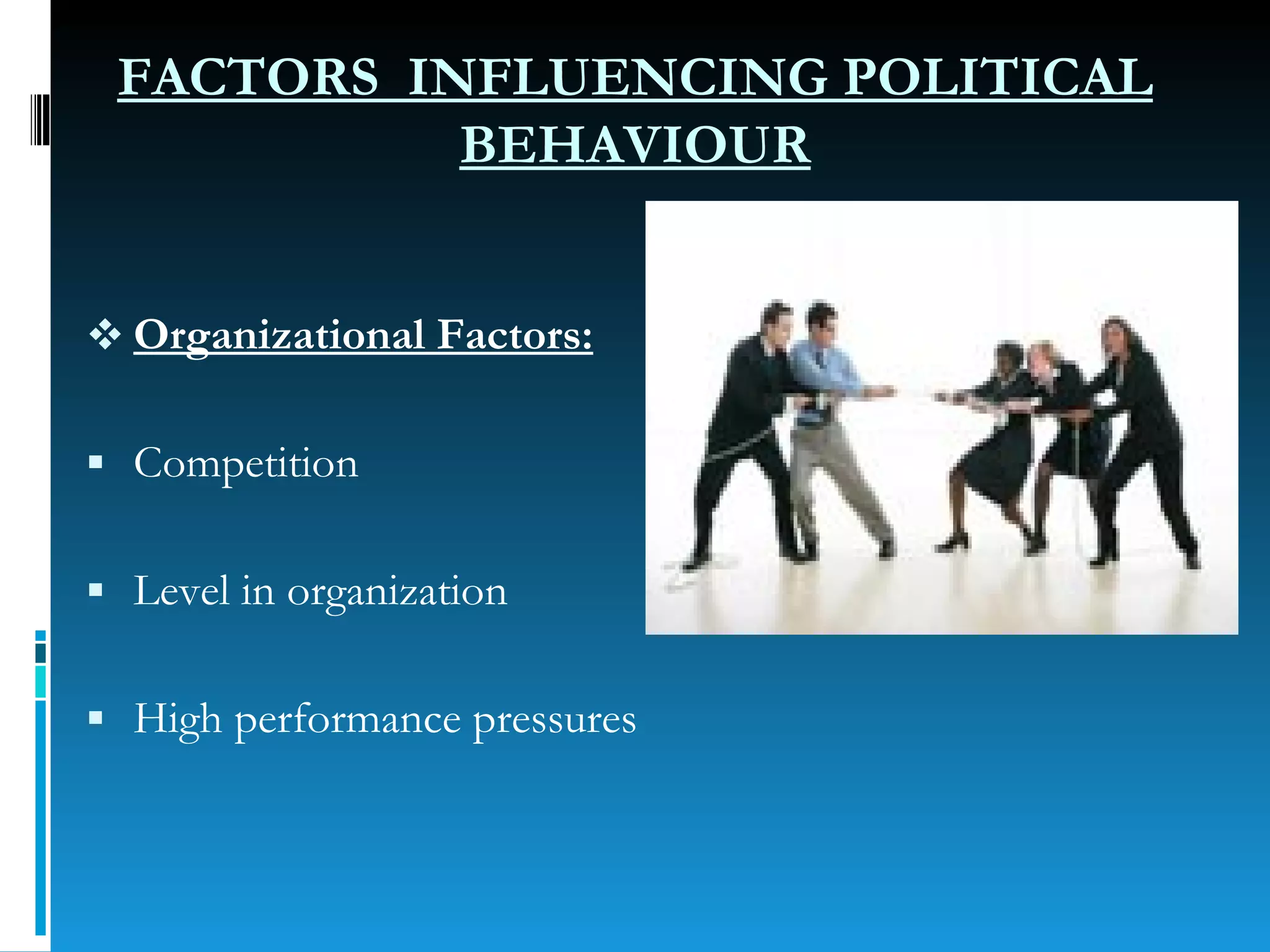
Organizational Factors: Competition Level in organization High performance pressures FACTORS  INFLUENCING POLITICAL BEHAVIOUR
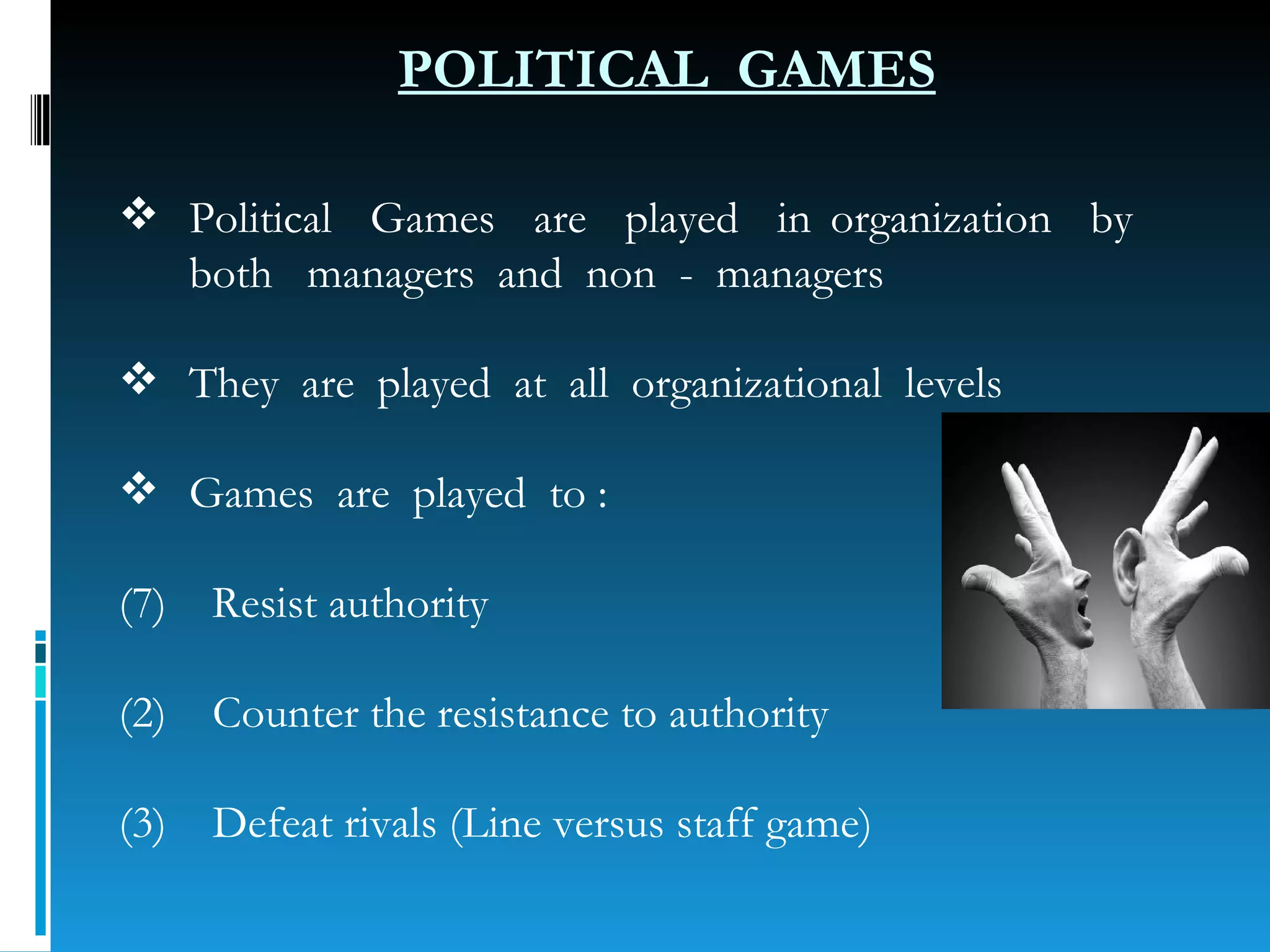
POLITICAL  GAMES Political  Games  are  played  in organization  by  both  managers  and  non  -  managers They  are  played  at  all  organizational  levels  Games  are  played  to : Resist authority  (2)  Counter the resistance to authority (3)  Defeat rivals (Line versus staff game)
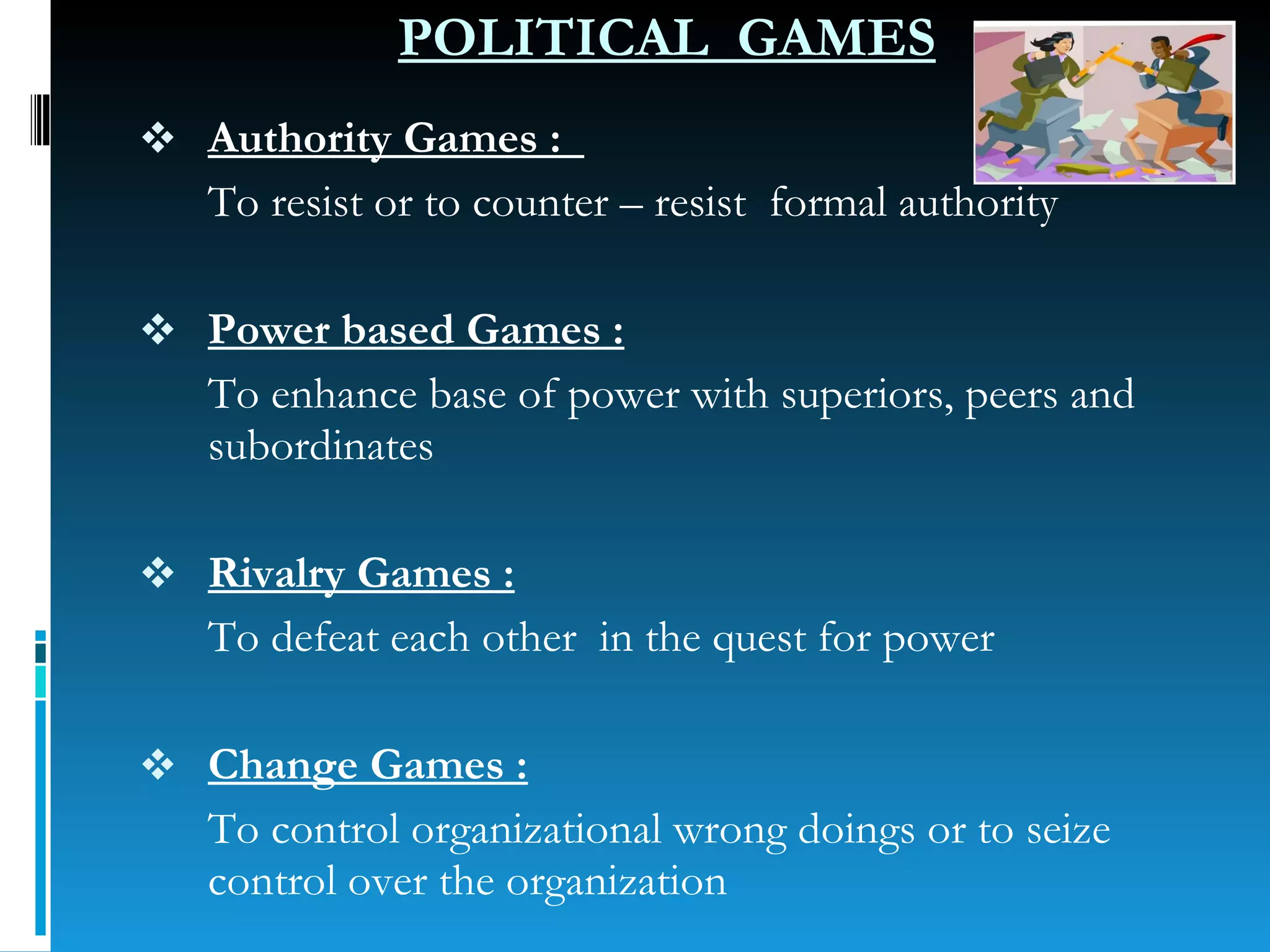
Authority Games :  To resist or to counter – resist  formal authority Power based Games : To enhance base of power with superiors, peers and subordinates Rivalry Games : To defeat each other  in the quest for power Change Games : To control organizational wrong doings or to seize control over the organization POLITICAL  GAMES
 
POSITIVE  POLITICAL  STRATEGIES Build relationships Social groups Inside the organization Outside the organization Vertically as well as horizontally
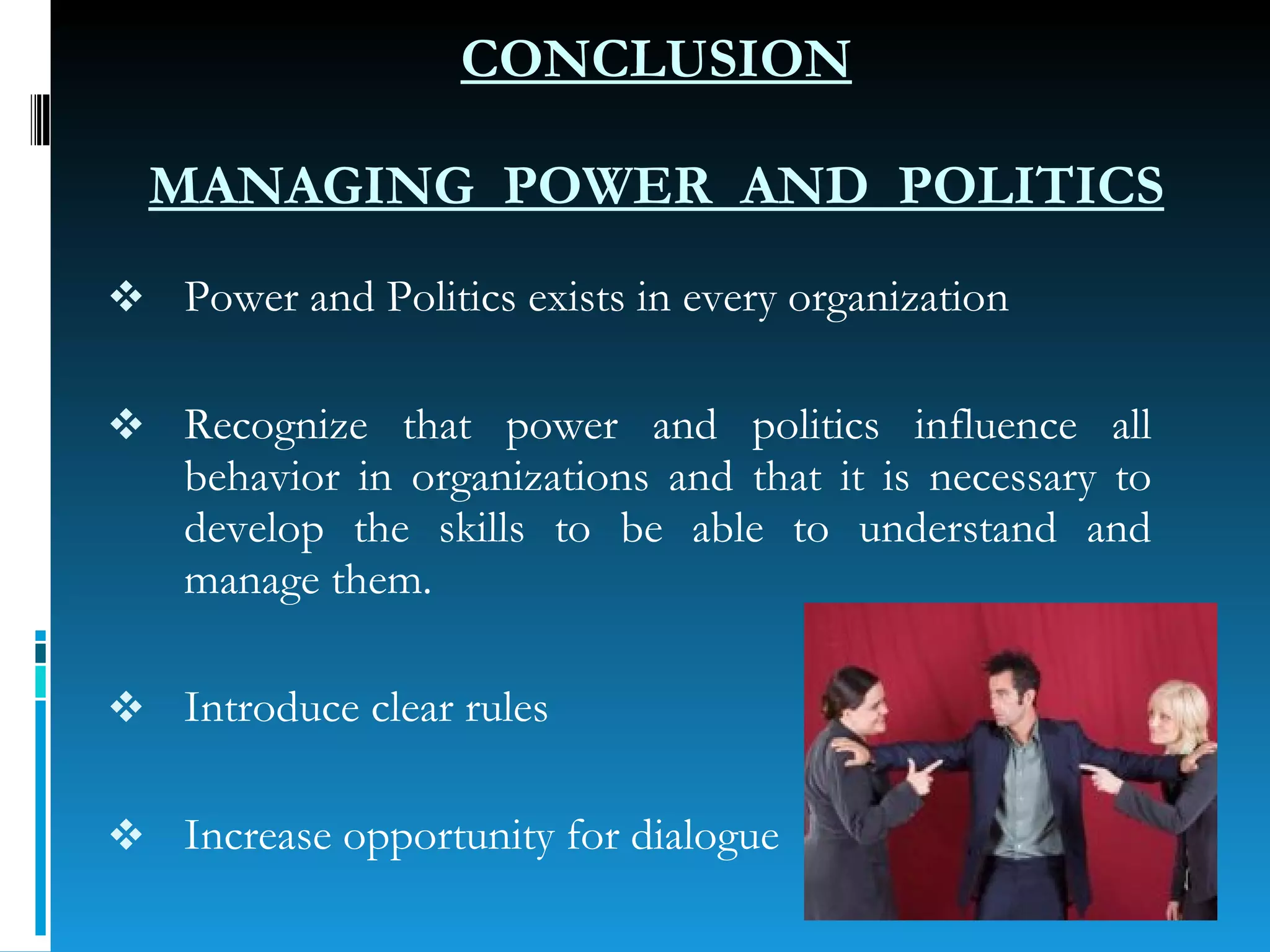
CONCLUSION MANAGING  POWER  AND  POLITICS Power and Politics exists in every organization Recognize that power and politics influence all behavior in organizations and that it is necessary to develop the skills to be able to understand and manage them. Introduce clear rules Increase opportunity for dialogue
 

Power and Politics

  • 1.
    Presented by : Sheetal Narkar
  • 2.
    Power is definedas the capacity of a person, team, or organization to influence others. It is used as a means for achieving goals It is used to gain lateral and upward influence.
  • 3.
  • 4.
    TYPES OF POWERLegitimate Power : Based on position or formal authority. Reward Power : The power to give pay, raises promotion, praise interesting projects another and rewards to subordinates.
  • 5.
    Coercive Power :The power to give or withhold punishment such as suspension, termination, or even the withholding of praise and goodwill. Information Power : Power that comes from access to and control over information. TYPES OF POWER
  • 6.
    Referent Power: Power that arises from one’s personality or physical or other abilities which induce others to believe in and follow that person. Expert Power: Based on knowledge or information value. TYPES OF POWER
  • 7.
  • 8.
    POLITICS Politics isPower in Action. Organizational Politics involves intentional acts of influence to enhance or protect the self interest of individuals or groups.
  • 9.
    WHY DO WE HAVE POLITICS ??? Different values, ideas, interests and goals Limited resources (money) Outcome is not clearly known X
  • 10.
    POLITICAL TACTICSAttacking or blaming others Creating favorable image Praising others Forming coalitions with strong allies Association with influential people
  • 11.
    FACTORS INFLUENCING POLITICAL BEHAVIOUR Individual factors: Inefficiency of the employee High need for power, status, security or autonomy
  • 12.
    Organizational Factors: CompetitionLevel in organization High performance pressures FACTORS INFLUENCING POLITICAL BEHAVIOUR
  • 13.
    POLITICAL GAMESPolitical Games are played in organization by both managers and non - managers They are played at all organizational levels Games are played to : Resist authority (2) Counter the resistance to authority (3) Defeat rivals (Line versus staff game)
  • 14.
    Authority Games : To resist or to counter – resist formal authority Power based Games : To enhance base of power with superiors, peers and subordinates Rivalry Games : To defeat each other in the quest for power Change Games : To control organizational wrong doings or to seize control over the organization POLITICAL GAMES
  • 15.
  • 16.
    POSITIVE POLITICAL STRATEGIES Build relationships Social groups Inside the organization Outside the organization Vertically as well as horizontally
  • 17.
    CONCLUSION MANAGING POWER AND POLITICS Power and Politics exists in every organization Recognize that power and politics influence all behavior in organizations and that it is necessary to develop the skills to be able to understand and manage them. Introduce clear rules Increase opportunity for dialogue
  • 18.