01 . INTRODUCTION
Importance of Fiscal Policy and Government Finance
โ€ข Economic Stability: Regulates aggregate demand to stabilize the business cycle.
โ€ข Inflation Control: Adjusts taxation and spending to mitigate inflationary
pressures.
โ€ข Employment and Labor Market: Influences employment levels through fiscal
measures.
โ€ข Income Distribution: Redistributes income and promotes social welfare
Investment in Infrastructure: Stimulates economic growth through public spending
on infrastructure.
โ€ข Crisis Management: Acts as a tool ation during economic crises.
โ€ข Long-Term Sustainability: Ensures fiscal sustainability and investor confidence.
02. What is Fiscal Policy?
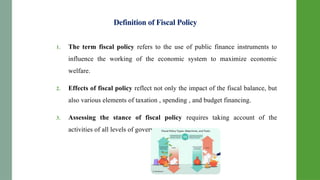
Definition of Fiscal Policy
1. The term fiscal policy refers to the use of public finance instruments to
influence the working of the economic system to maximize economic
welfare.
2. Effects of fiscal policy reflect not only the impact of the fiscal balance, but
also various elements of taxation , spending , and budget financing.
3. Assessing the stance of fiscal policy requires taking account of the
activities of all levels of government.
Significance in Economic Management
โ€ข Macroeconomic Stabilization: Adjusts spending and taxation to stabilize the
economy.
โ€ข Demand Management: Controls aggregate demand to achieve desired
economic outcomes.
โ€ข Inflation Control: Utilizes fiscal measures to mitigate inflationary pressures.
โ€ข Promotion of Economic Growth: Invests in infrastructure and public goods
to stimulate growth.
โ€ข Income Redistribution: Implements progressive taxation to address income
inequality.
โ€ข Crisis Response: Acts as a tool for managing economic crises and downturns
effectively.
โ€ข Long-Term Fiscal Sustainability: Ensures prudent fiscal management for
sustainable economic health
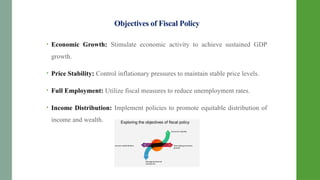
Objectives of Fiscal Policy
โ€ข Economic Growth: Stimulate economic activity to achieve sustained GDP
growth.
โ€ข Price Stability: Control inflationary pressures to maintain stable price levels.
โ€ข Full Employment: Utilize fiscal measures to reduce unemployment rates.
โ€ข Income Distribution: Implement policies to promote equitable distribution of
income and wealth.
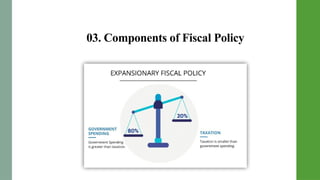
03. Components of Fiscal Policy
Government Spending
Examples of government spending include
โ€ข Infrastructure development
โ€ข Healthcare
โ€ข Education
โ€ข defense.
Taxation
Different types of taxes
โ€ข Income tax, Corporate tax, sales tax) and their roles in revenue
generation and economic regulation.
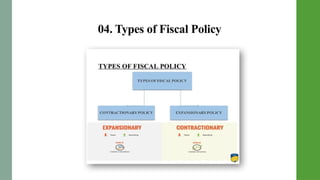
04. Types of Fiscal Policy
Expansionary Fiscal Policy
โ€ข Increased Government Spending: Direct investment in infrastructure,
education, healthcare, etc.
โ€ข Tax Cuts: Reductions in taxes, such as income tax or sales tax, to boost
disposable income.
โ€ข Stimulate Consumer Spending: Encourages individuals and businesses to
spend more, thereby increasing aggregate demand.
โ€ข Job Creation: Creates employment opportunities through public works projects
and increased business activity.
Contractionary Fiscal Policy
โ€ข Decreased Government Spending: Cuts in expenditure for non-essential
programs and services.
โ€ข Increased Taxes: Raises in taxation rates, such as income tax or consumption
tax.
โ€ข Inflation Control: Aims to reduce aggregate demand to counter inflationary
pressures.
โ€ข Budget Surplus: Generates surplus by reducing expenditure or increasing
revenue, aiding in debt reduction.
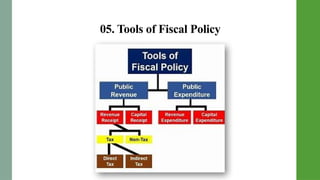
05. Tools of Fiscal Policy
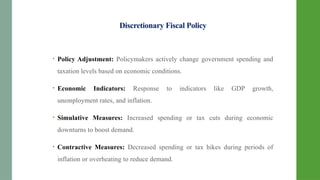
Discretionary Fiscal Policy
โ€ข Policy Adjustment: Policymakers actively change government spending and
taxation levels based on economic conditions.
โ€ข Economic Indicators: Response to indicators like GDP growth,
unemployment rates, and inflation.
โ€ข Simulative Measures: Increased spending or tax cuts during economic
downturns to boost demand.
โ€ข Contractive Measures: Decreased spending or tax hikes during periods of
inflation or overheating to reduce demand.
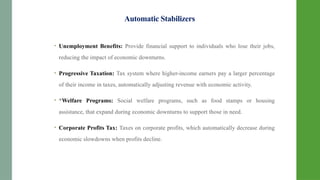
Automatic Stabilizers
โ€ข Unemployment Benefits: Provide financial support to individuals who lose their jobs,
reducing the impact of economic downturns.
โ€ข Progressive Taxation: Tax system where higher-income earners pay a larger percentage
of their income in taxes, automatically adjusting revenue with economic activity.
โ€ข *Welfare Programs: Social welfare programs, such as food stamps or housing
assistance, that expand during economic downturns to support those in need.
โ€ข Corporate Profits Tax: Taxes on corporate profits, which automatically decrease during
economic slowdowns when profits decline.
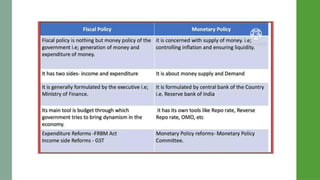
06. Fiscal Policy vs. Monetary Policy
07. Government Finance
Sources of Government Revenue
โ€ข Revenue Sources: Taxes (income, sales, corporate), fees, fines, and borrowing
(bonds).
โ€ข Expenditure Allocation: Distribution of funds to sectors like education,
healthcare, defense, and infrastructure.
โ€ข Budgeting Process: Involves formulation, approval, execution, and evaluation
of government budgets.
โ€ข Budget Deficit/Surplus: Discrepancy between revenue and expenditure,
influencing debt levels and economic stability.
โ€ข Debt Management: Strategies to manage and reduce public debt while
maintaining fiscal sustainability.
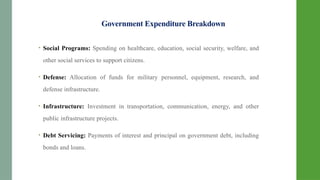
Government Expenditure Breakdown
โ€ข Social Programs: Spending on healthcare, education, social security, welfare, and
other social services to support citizens.
โ€ข Defense: Allocation of funds for military personnel, equipment, research, and
defense infrastructure.
โ€ข Infrastructure: Investment in transportation, communication, energy, and other
public infrastructure projects.
โ€ข Debt Servicing: Payments of interest and principal on government debt, including
bonds and loans.
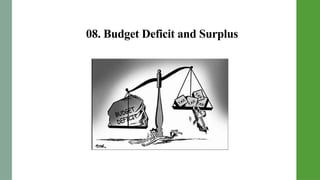
08. Budget Deficit and Surplus
Budget Deficit
โ€ข Increased Debt: Leads to borrowing to cover the deficit, resulting
in a rise in public debt levels.
โ€ข Interest Payments: Incurs interest expenses on borrowed funds,
diverting resources from other priorities.
Economic Stimulus: Can be used to boost aggregate demand during
economic downturns but may lead to inflationary pressures
if unsustainable.
Budget Surplus:
Debt Reduction: Surpluses can be used to pay down existing debt, reducing interest
expenses and enhancing fiscal sustainability.
Savings and Investments: Provides funds for investment in infrastructure, education,
healthcare, or tax cuts.
Potential Economic Contraction: Surpluses may reduce aggregate demand, potentially
leading to slower economic growth if not managed appropriately.
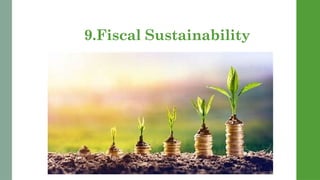
9.Fiscal Sustainability
Importance for Long-Term Economic Stability
โ€ข Stability and Confidence: Promotes investor and consumer confidence in the
government's ability to meet its financial obligations.
โ€ข Avoidance of Debt Crisis: Prevents the accumulation of unsustainable levels
of debt that could lead to a fiscal crisis and potential default.
โ€ข Favorable Borrowing Costs: Maintains access to affordable financing,
avoiding higher interest rates associated with perceived fiscal risk.
โ€ข Resource Allocation: Enables the allocation of resources to productive
investments and social programs, supporting sustainable economic growth.
โ€ข Inter-Generational Equity: Ensures that future generations are not
burdened with excessive debt obligations, preserving inter-generational
equity and fairness.
Political Stability and Governance:
โ€ข Political stability fosters consistent fiscal policies and effective governance, contributing to
fiscal sustainability.
โ€ข Transparency, accountability, and institutional capacity for fiscal management are crucial.
Demographics:
โ€ข Aging populations may increase demand for pension and healthcare spending, affecting
fiscal sustainability.
โ€ข Changes in demographics impact workforce participation, tax revenues, and social
welfare expenditures.
External Factors and Shocks:
โ€ข Global economic conditions, financial market volatility, and geopolitical events can impact
fiscal sustainability.
โ€ข Preparedness for external shocks through contingency planning and risk
management strategies.
10.Role of Fiscal Policy in Economic
Recovery
Fiscal Policy Response to Economic Downturns:
โ€ข Expansionary Fiscal Measures
โ€ข Counter-Cyclical Role
โ€ข Support for Affected Individuals and Businesses
โ€ข Fiscal Sustainability Considerations
โ€ข Coordination with Monetary Policy
Presentation1[1].pptxszdsdsdsffsdfsfsdffsf

Presentation1[1].pptxszdsdsdsffsdfsfsdffsf

  • 2.
  • 3.
    Importance of FiscalPolicy and Government Finance โ€ข Economic Stability: Regulates aggregate demand to stabilize the business cycle. โ€ข Inflation Control: Adjusts taxation and spending to mitigate inflationary pressures. โ€ข Employment and Labor Market: Influences employment levels through fiscal measures. โ€ข Income Distribution: Redistributes income and promotes social welfare Investment in Infrastructure: Stimulates economic growth through public spending on infrastructure. โ€ข Crisis Management: Acts as a tool ation during economic crises. โ€ข Long-Term Sustainability: Ensures fiscal sustainability and investor confidence.
  • 4.
    02. What isFiscal Policy?
  • 5.
    Definition of FiscalPolicy 1. The term fiscal policy refers to the use of public finance instruments to influence the working of the economic system to maximize economic welfare. 2. Effects of fiscal policy reflect not only the impact of the fiscal balance, but also various elements of taxation , spending , and budget financing. 3. Assessing the stance of fiscal policy requires taking account of the activities of all levels of government.
  • 6.
    Significance in EconomicManagement โ€ข Macroeconomic Stabilization: Adjusts spending and taxation to stabilize the economy. โ€ข Demand Management: Controls aggregate demand to achieve desired economic outcomes. โ€ข Inflation Control: Utilizes fiscal measures to mitigate inflationary pressures. โ€ข Promotion of Economic Growth: Invests in infrastructure and public goods to stimulate growth. โ€ข Income Redistribution: Implements progressive taxation to address income inequality. โ€ข Crisis Response: Acts as a tool for managing economic crises and downturns effectively. โ€ข Long-Term Fiscal Sustainability: Ensures prudent fiscal management for sustainable economic health
  • 7.
    Objectives of FiscalPolicy โ€ข Economic Growth: Stimulate economic activity to achieve sustained GDP growth. โ€ข Price Stability: Control inflationary pressures to maintain stable price levels. โ€ข Full Employment: Utilize fiscal measures to reduce unemployment rates. โ€ข Income Distribution: Implement policies to promote equitable distribution of income and wealth.
  • 8.
    03. Components ofFiscal Policy
  • 9.
    Government Spending Examples ofgovernment spending include โ€ข Infrastructure development โ€ข Healthcare โ€ข Education โ€ข defense.
  • 10.
    Taxation Different types oftaxes โ€ข Income tax, Corporate tax, sales tax) and their roles in revenue generation and economic regulation.
  • 11.
    04. Types ofFiscal Policy
  • 12.
    Expansionary Fiscal Policy โ€ขIncreased Government Spending: Direct investment in infrastructure, education, healthcare, etc. โ€ข Tax Cuts: Reductions in taxes, such as income tax or sales tax, to boost disposable income. โ€ข Stimulate Consumer Spending: Encourages individuals and businesses to spend more, thereby increasing aggregate demand. โ€ข Job Creation: Creates employment opportunities through public works projects and increased business activity.
  • 13.
    Contractionary Fiscal Policy โ€ขDecreased Government Spending: Cuts in expenditure for non-essential programs and services. โ€ข Increased Taxes: Raises in taxation rates, such as income tax or consumption tax. โ€ข Inflation Control: Aims to reduce aggregate demand to counter inflationary pressures. โ€ข Budget Surplus: Generates surplus by reducing expenditure or increasing revenue, aiding in debt reduction.
  • 14.
    05. Tools ofFiscal Policy
  • 15.
    Discretionary Fiscal Policy โ€ขPolicy Adjustment: Policymakers actively change government spending and taxation levels based on economic conditions. โ€ข Economic Indicators: Response to indicators like GDP growth, unemployment rates, and inflation. โ€ข Simulative Measures: Increased spending or tax cuts during economic downturns to boost demand. โ€ข Contractive Measures: Decreased spending or tax hikes during periods of inflation or overheating to reduce demand.
  • 16.
    Automatic Stabilizers โ€ข UnemploymentBenefits: Provide financial support to individuals who lose their jobs, reducing the impact of economic downturns. โ€ข Progressive Taxation: Tax system where higher-income earners pay a larger percentage of their income in taxes, automatically adjusting revenue with economic activity. โ€ข *Welfare Programs: Social welfare programs, such as food stamps or housing assistance, that expand during economic downturns to support those in need. โ€ข Corporate Profits Tax: Taxes on corporate profits, which automatically decrease during economic slowdowns when profits decline.
  • 17.
    06. Fiscal Policyvs. Monetary Policy
  • 19.
  • 20.
    Sources of GovernmentRevenue โ€ข Revenue Sources: Taxes (income, sales, corporate), fees, fines, and borrowing (bonds). โ€ข Expenditure Allocation: Distribution of funds to sectors like education, healthcare, defense, and infrastructure. โ€ข Budgeting Process: Involves formulation, approval, execution, and evaluation of government budgets. โ€ข Budget Deficit/Surplus: Discrepancy between revenue and expenditure, influencing debt levels and economic stability. โ€ข Debt Management: Strategies to manage and reduce public debt while maintaining fiscal sustainability.
  • 21.
    Government Expenditure Breakdown โ€ขSocial Programs: Spending on healthcare, education, social security, welfare, and other social services to support citizens. โ€ข Defense: Allocation of funds for military personnel, equipment, research, and defense infrastructure. โ€ข Infrastructure: Investment in transportation, communication, energy, and other public infrastructure projects. โ€ข Debt Servicing: Payments of interest and principal on government debt, including bonds and loans.
  • 22.
    08. Budget Deficitand Surplus
  • 23.
    Budget Deficit โ€ข IncreasedDebt: Leads to borrowing to cover the deficit, resulting in a rise in public debt levels. โ€ข Interest Payments: Incurs interest expenses on borrowed funds, diverting resources from other priorities. Economic Stimulus: Can be used to boost aggregate demand during economic downturns but may lead to inflationary pressures if unsustainable.
  • 24.
    Budget Surplus: Debt Reduction:Surpluses can be used to pay down existing debt, reducing interest expenses and enhancing fiscal sustainability. Savings and Investments: Provides funds for investment in infrastructure, education, healthcare, or tax cuts. Potential Economic Contraction: Surpluses may reduce aggregate demand, potentially leading to slower economic growth if not managed appropriately.
  • 25.
  • 26.
    Importance for Long-TermEconomic Stability โ€ข Stability and Confidence: Promotes investor and consumer confidence in the government's ability to meet its financial obligations. โ€ข Avoidance of Debt Crisis: Prevents the accumulation of unsustainable levels of debt that could lead to a fiscal crisis and potential default. โ€ข Favorable Borrowing Costs: Maintains access to affordable financing, avoiding higher interest rates associated with perceived fiscal risk. โ€ข Resource Allocation: Enables the allocation of resources to productive investments and social programs, supporting sustainable economic growth. โ€ข Inter-Generational Equity: Ensures that future generations are not burdened with excessive debt obligations, preserving inter-generational equity and fairness.
  • 27.
    Political Stability andGovernance: โ€ข Political stability fosters consistent fiscal policies and effective governance, contributing to fiscal sustainability. โ€ข Transparency, accountability, and institutional capacity for fiscal management are crucial. Demographics: โ€ข Aging populations may increase demand for pension and healthcare spending, affecting fiscal sustainability. โ€ข Changes in demographics impact workforce participation, tax revenues, and social welfare expenditures. External Factors and Shocks: โ€ข Global economic conditions, financial market volatility, and geopolitical events can impact fiscal sustainability. โ€ข Preparedness for external shocks through contingency planning and risk management strategies.
  • 28.
    10.Role of FiscalPolicy in Economic Recovery
  • 29.
    Fiscal Policy Responseto Economic Downturns: โ€ข Expansionary Fiscal Measures โ€ข Counter-Cyclical Role โ€ข Support for Affected Individuals and Businesses โ€ข Fiscal Sustainability Considerations โ€ข Coordination with Monetary Policy