Downloaded 287 times
![History
ALAN T. PEACOCK,
University of Edinburgh
JACK WISEMAN,
London School of
Economics
and Political Science
The Growth of
Public Expenditure
in the United
Kingdom (1961)
[A study of behavior of
British government
expenditures from 1890 to
1955]](https://image.slidesharecdn.com/thepeacock-wisemanhypothesis-131021114826-phpapp01/85/The-Peacock-Wiseman-hypothesis-2-320.jpg)
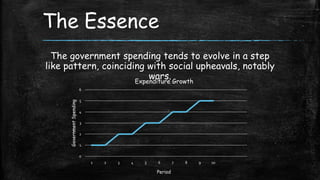
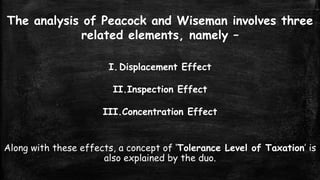
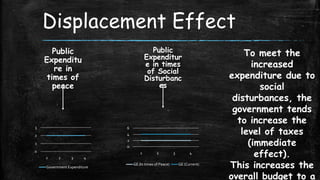
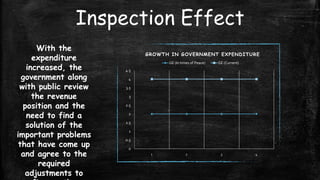
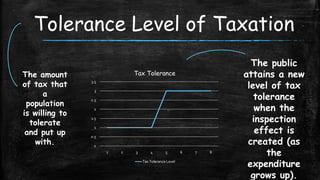


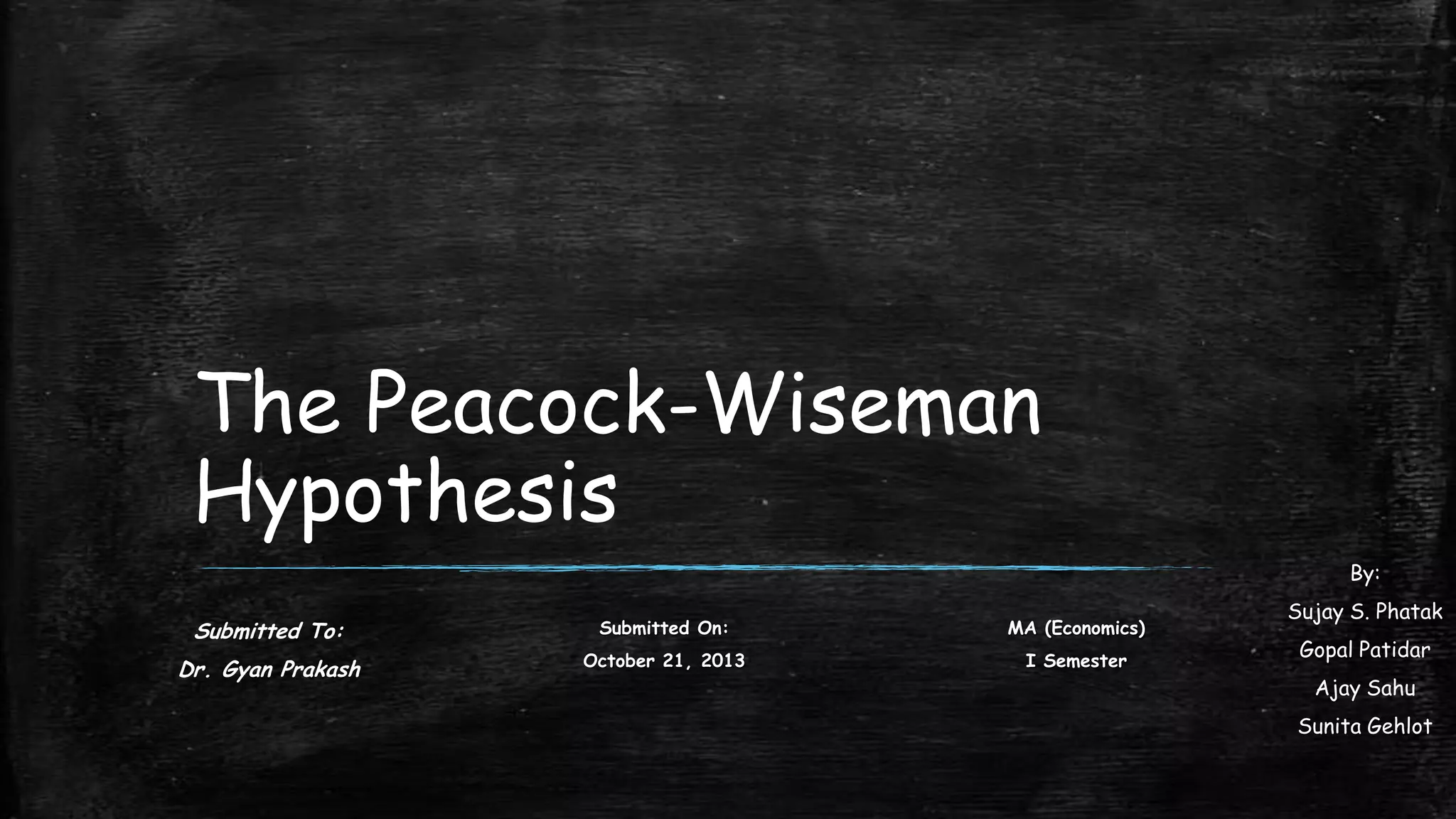
The Peacock-Wiseman Hypothesis proposes that government spending evolves in a step-like pattern coinciding with social upheavals like wars. It involves three related elements: 1) The displacement effect, where spending increases during disturbances, raising taxes and the budget. 2) The inspection effect, where increased spending leads to reviewing revenue needs. 3) The concentration effect, where spending and revenue stabilize at a new higher level until the next disturbance causes another displacement effect. Along with these effects, it explains the concept of a tolerance level of taxation that a population is willing to tolerate.


