Theories of first
language
acquisition
Issues in first
language
acquisition
FIRST LANGUAGE ACQUISITION
Language Acquisition
 Children acquire language
through a subconscious
process. They are are
unaware of grammatical
rules.
 To acquire language, the
learner needs a source of
natural communication. The
emphasis is on the text of the
communication and not on
the form or structure.
Language Learning
 Research has shown that
knowing grammar rules
does not necessarily result
in good speaking or
writing: Usage versus
use.
 A student who has
memorized the rules of
the language might
succeed on a
standardized test of
English language
(competence), but may
not be able to speak or
write correctly
(performance)
 Behaviorists consider effective
language behavior to be the
production of correct responses
to stimuli. The need to use
language is stimulated and
language is uttered in response
to stimuli.
 B.F. Skinner is the best known
behaviorist who speculated that
children are conditioned by
their environment to respond to
certain stimuli with language.
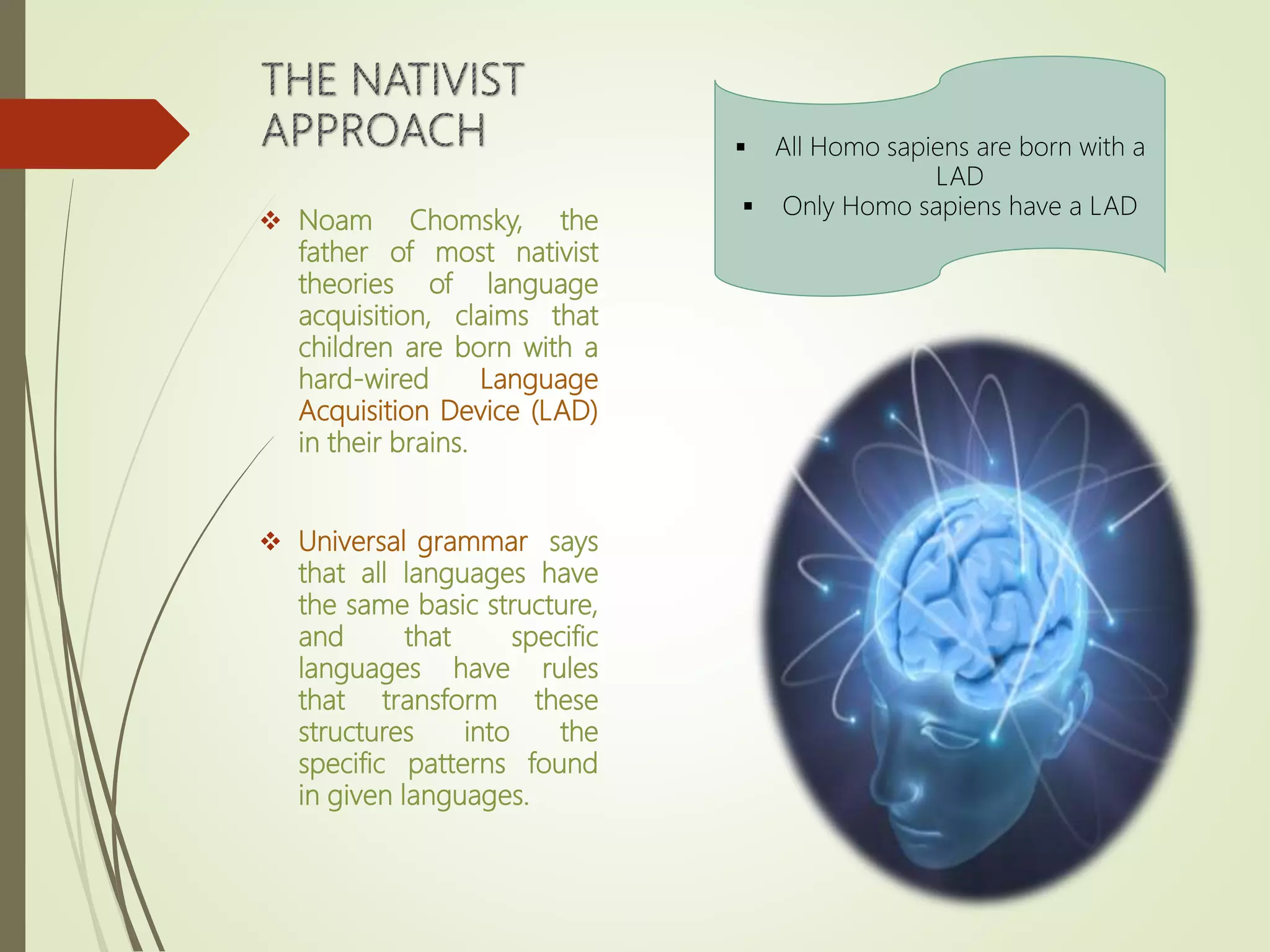
 Noam Chomsky, the
father of most nativist
theories of language
acquisition, claims that
children are born with a
hard-wired Language
Acquisition Device (LAD)
in their brains.
 Universal grammar says
that all languages have
the same basic structure,
and that specific
languages have rules
that transform these
structures into the
specific patterns found
in given languages.
 All Homo sapiens are born with a
LAD
 Only Homo sapiens have a LAD
Piaget described whole
development as a result of
children’s interaction with their
environment. There is a
complementary interaction
between their developing
perceptual cognitive capacities
and their linguistic experience.
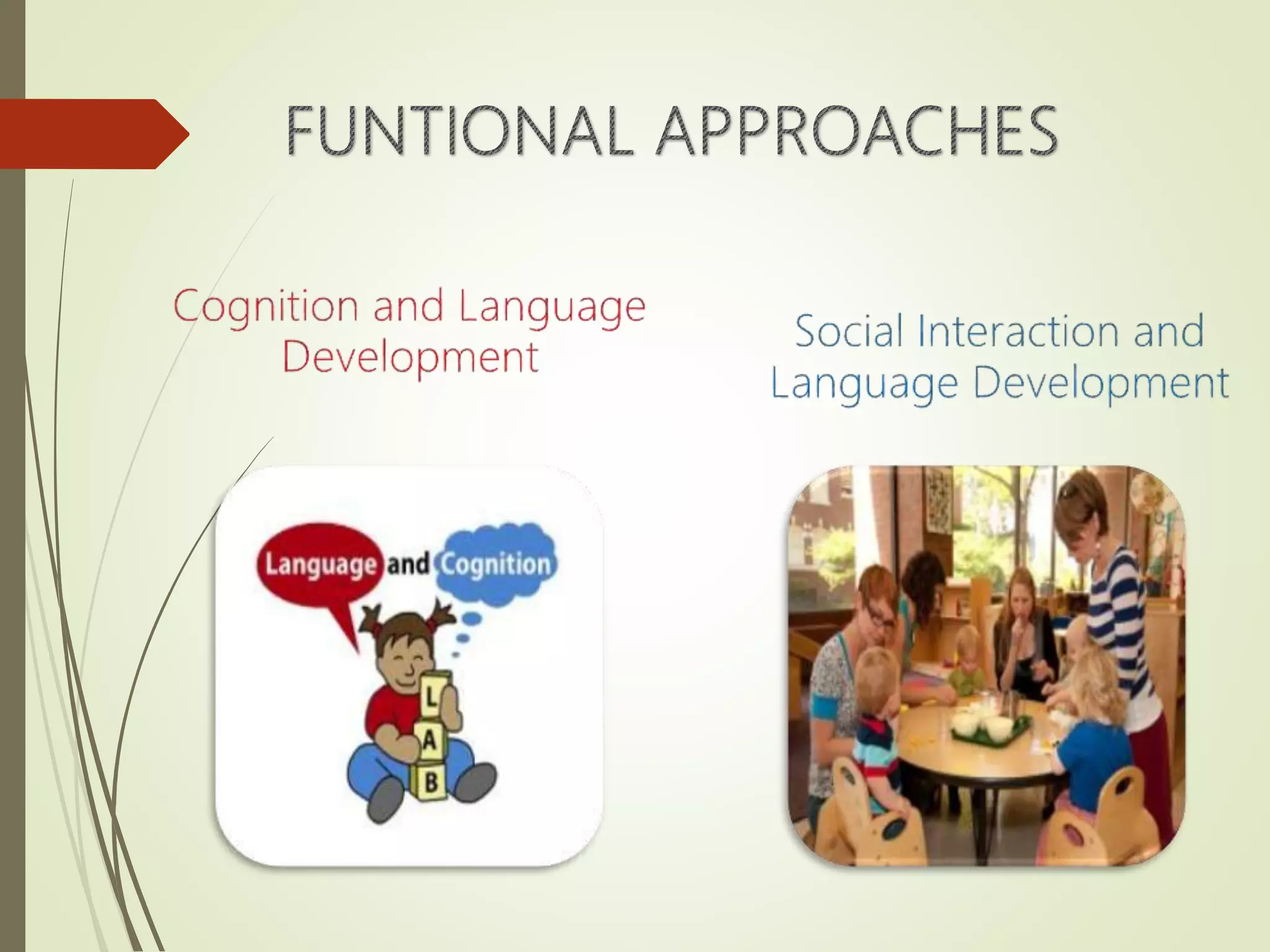
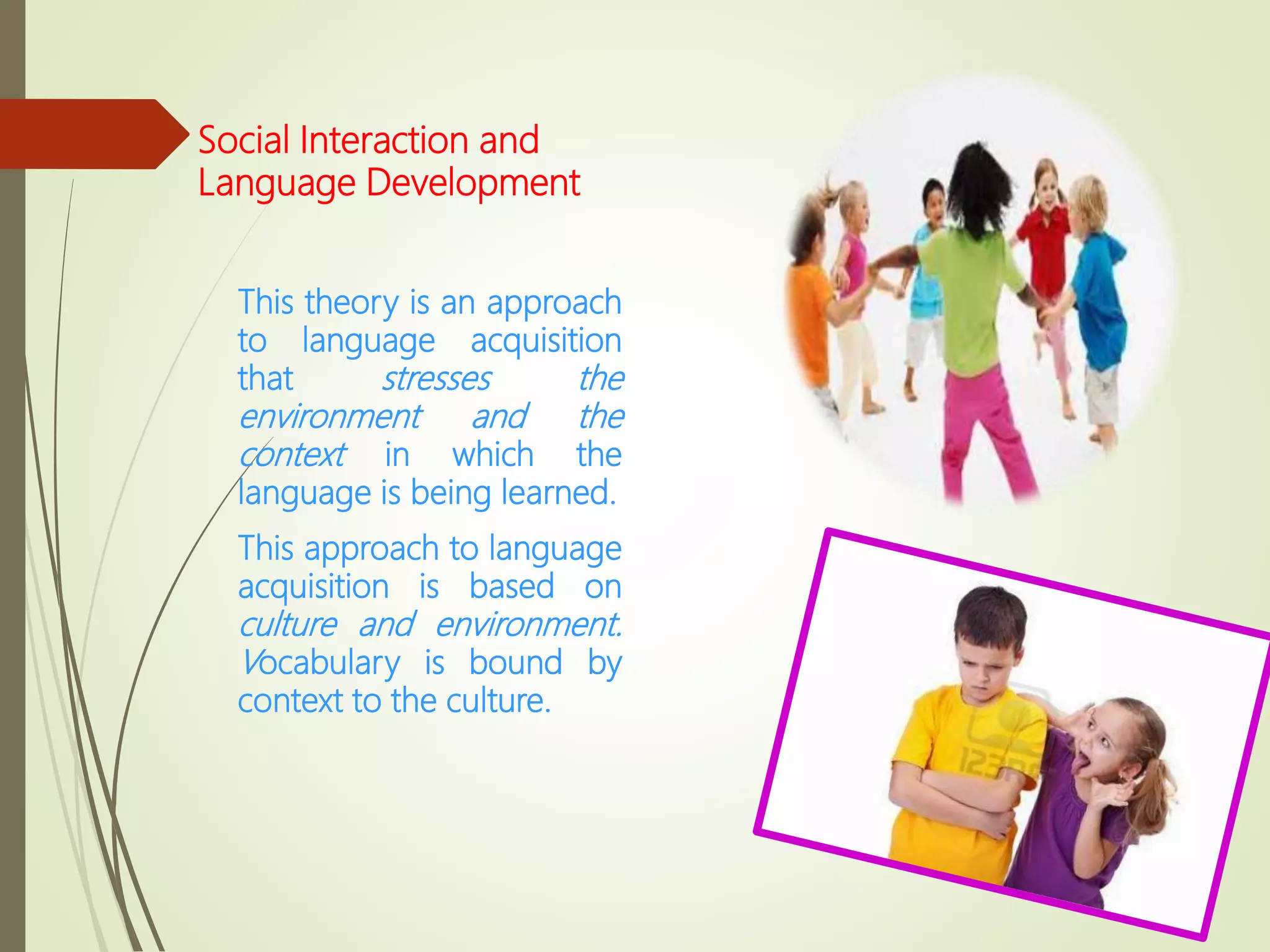
Social Interaction and
Language Development
This theory is an approach
to language acquisition
that stresses the
environment and the
context in which the
language is being learned.
This approach to language
acquisition is based on
culture and environment.
Vocabulary is bound by
context to the culture.
 Competence refers to
one’s underlying of a
system, event, or fact;
non observable ability to
do something.
 Performance is the
overtly observable and
concrete manifestation or
realization of
competence. It is the
actual doing of
something.
They both can be aspects of
performance and competence. It
is thought that comprehension
(listening and reading) can be
associated with competence,
while production (speaking,
writing) are associated with
performance.
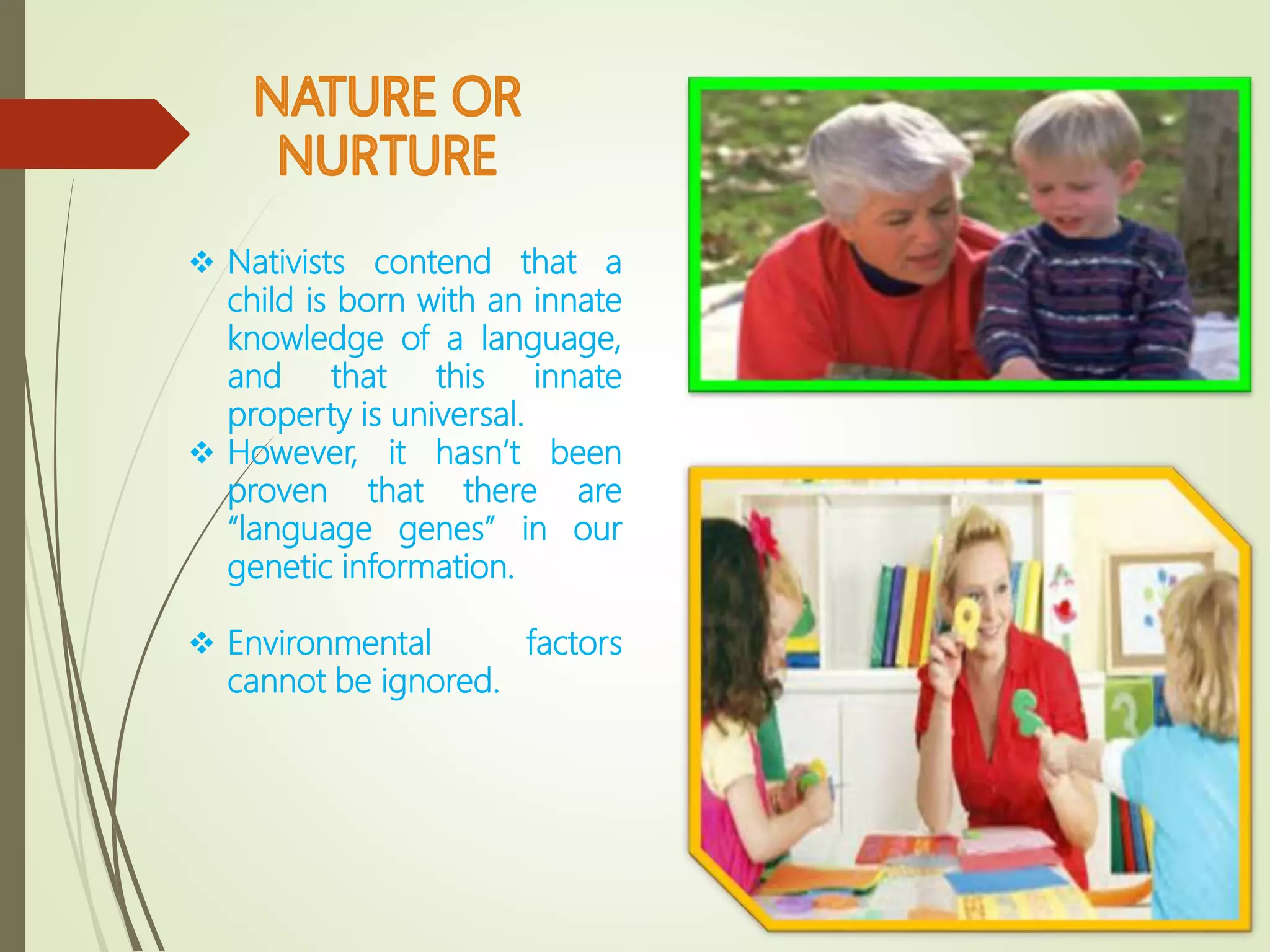
 Nativists contend that a
child is born with an innate
knowledge of a language,
and that this innate
property is universal.
 However, it hasn’t been
proven that there are
“language genes” in our
genetic information.
 Environmental factors
cannot be ignored.
 The issue at stake is to
determine how thought affects
language, how language
affects thought, and how
linguists can best describe and
explain the interaction of the
two.
 There have been some
positions on this such as that of
Piaget, who claimed that
cognitive development is at the
center of human organisms
and that language depends on
cognitive development.
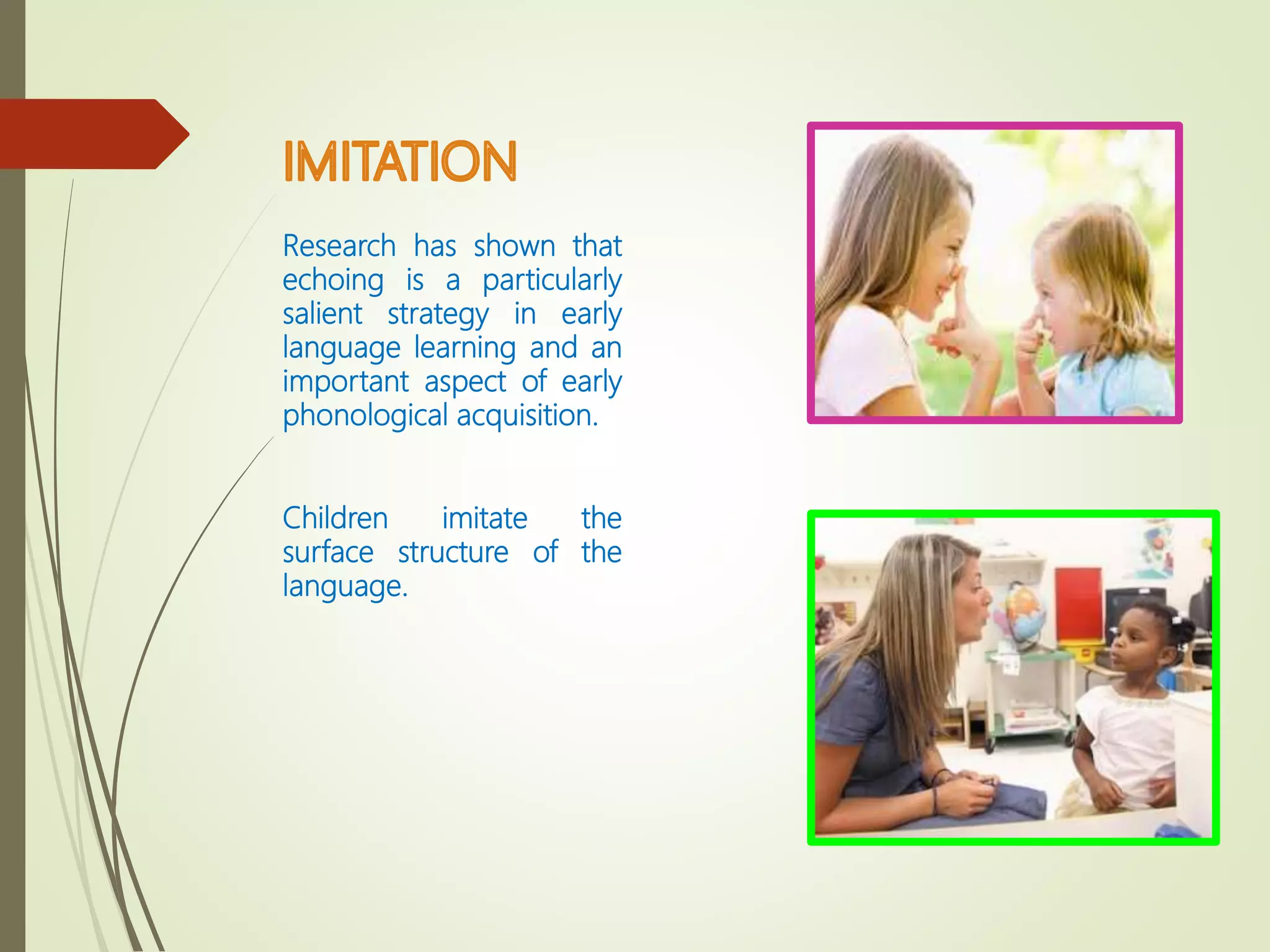
Research has shown that
echoing is a particularly
salient strategy in early
language learning and an
important aspect of early
phonological acquisition.
Children imitate the
surface structure of the
language.
 Children like to play
with language.
 Practicing a
language involves
speaking and
comprehension
practice.
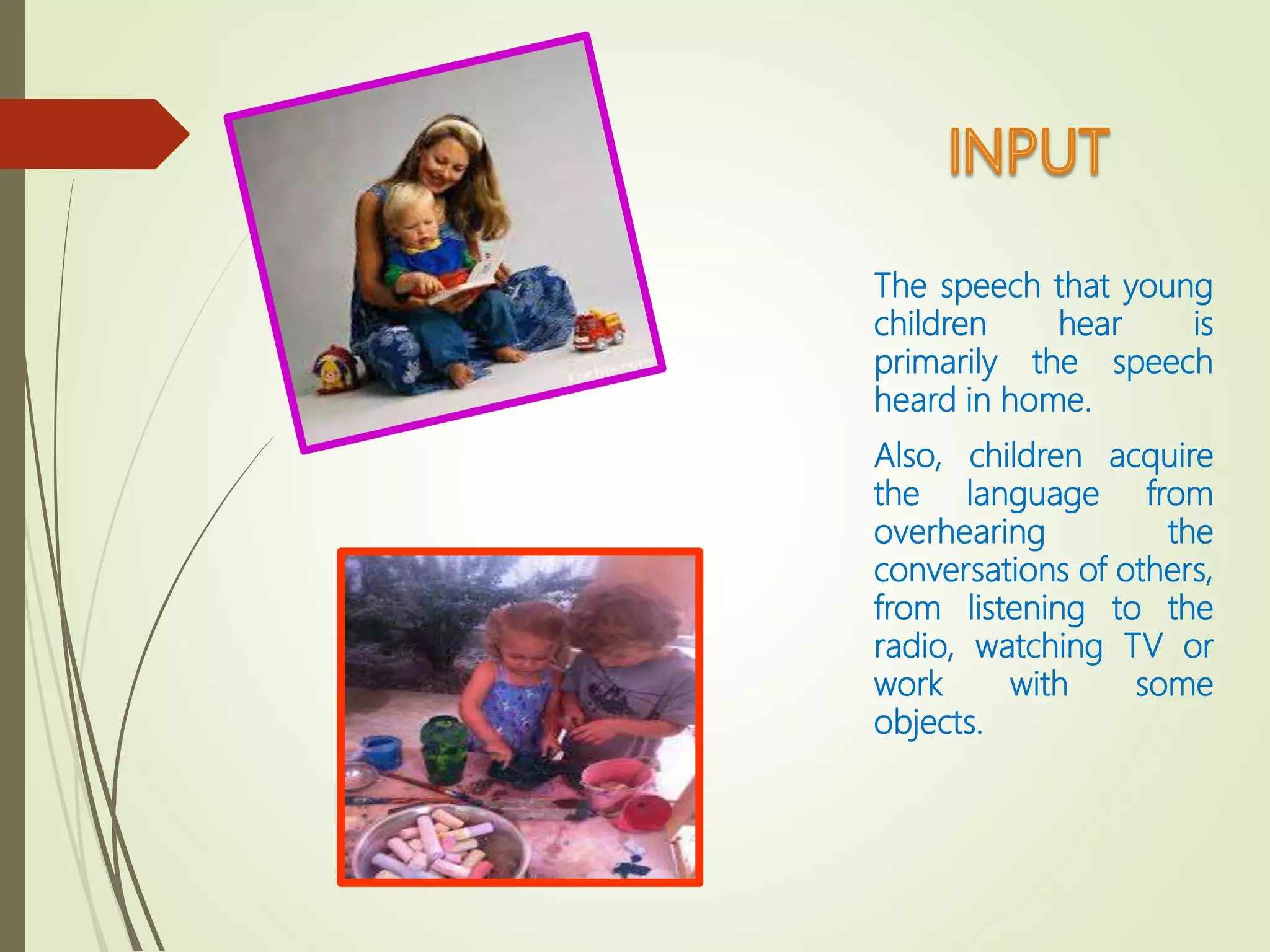
The speech that young
children hear is
primarily the speech
heard in home.
Also, children acquire
the language from
overhearing the
conversations of others,
from listening to the
radio, watching TV or
work with some
objects.
The child will learn
how to initiate a
conversation and
give responses.
The child will identify
whether he is being
requested for
information, for an
action, or for help.
Thank
you!

First language acquisition

  • 1.
    Theories of first language acquisition Issuesin first language acquisition FIRST LANGUAGE ACQUISITION
  • 2.
    Language Acquisition  Childrenacquire language through a subconscious process. They are are unaware of grammatical rules.  To acquire language, the learner needs a source of natural communication. The emphasis is on the text of the communication and not on the form or structure.
  • 3.
    Language Learning  Researchhas shown that knowing grammar rules does not necessarily result in good speaking or writing: Usage versus use.  A student who has memorized the rules of the language might succeed on a standardized test of English language (competence), but may not be able to speak or write correctly (performance)
  • 5.
     Behaviorists considereffective language behavior to be the production of correct responses to stimuli. The need to use language is stimulated and language is uttered in response to stimuli.  B.F. Skinner is the best known behaviorist who speculated that children are conditioned by their environment to respond to certain stimuli with language.
  • 6.
     Noam Chomsky,the father of most nativist theories of language acquisition, claims that children are born with a hard-wired Language Acquisition Device (LAD) in their brains.  Universal grammar says that all languages have the same basic structure, and that specific languages have rules that transform these structures into the specific patterns found in given languages.  All Homo sapiens are born with a LAD  Only Homo sapiens have a LAD
  • 8.
    Piaget described whole developmentas a result of children’s interaction with their environment. There is a complementary interaction between their developing perceptual cognitive capacities and their linguistic experience.
  • 9.
    Social Interaction and LanguageDevelopment This theory is an approach to language acquisition that stresses the environment and the context in which the language is being learned. This approach to language acquisition is based on culture and environment. Vocabulary is bound by context to the culture.
  • 11.
     Competence refersto one’s underlying of a system, event, or fact; non observable ability to do something.  Performance is the overtly observable and concrete manifestation or realization of competence. It is the actual doing of something.
  • 12.
    They both canbe aspects of performance and competence. It is thought that comprehension (listening and reading) can be associated with competence, while production (speaking, writing) are associated with performance.
  • 13.
     Nativists contendthat a child is born with an innate knowledge of a language, and that this innate property is universal.  However, it hasn’t been proven that there are “language genes” in our genetic information.  Environmental factors cannot be ignored.
  • 14.
     The issueat stake is to determine how thought affects language, how language affects thought, and how linguists can best describe and explain the interaction of the two.  There have been some positions on this such as that of Piaget, who claimed that cognitive development is at the center of human organisms and that language depends on cognitive development.
  • 15.
    Research has shownthat echoing is a particularly salient strategy in early language learning and an important aspect of early phonological acquisition. Children imitate the surface structure of the language.
  • 16.
     Children liketo play with language.  Practicing a language involves speaking and comprehension practice.
  • 17.
    The speech thatyoung children hear is primarily the speech heard in home. Also, children acquire the language from overhearing the conversations of others, from listening to the radio, watching TV or work with some objects.
  • 18.
    The child willlearn how to initiate a conversation and give responses. The child will identify whether he is being requested for information, for an action, or for help.
  • 19.