Career Choices
By Meibis González
Unit Objectives
• 1. Use vocabulary related to skills and
personal qualities.
• 2. Use a range or phrase for giving advice
and making suggestions.
• 3. Be aware of building rapport at first
meetings.
Unit objectives
• 4. Use a range of expressions to start,
close and show interest in simple face to
face conversations on familiar topics.
• 5. Write an e-mail introducing yourself to
work colleagues.
1.1 Think of life skills you have
• Calm
• Good with computers
• Good with numbers
• Good with people
• Good at problem- solving
• Organized
• Reliable
• Resourceful
What personal qualities and
skills do employers look for?
• https://www.youtube.com/watch?v=ivs9
S67wdEI
• What two or three personal
qualities or skills can make an
unsuccessful twenty-first
century?
Think of possible situations
where these are needed…
• Think outside the box
• Have a can-do-attitude
• Set goals
• Critical thinking
• Have a lot of determination
• Be a good team player
• Have integrity
• Have good communication
Task: Job Description
1. Choose a job and list three to four
activities the person does in that job.
2. Think of personal qualities and skills
the persona needs to carry out that job.
1.2 What role does social media
play in finding a job?
• What impact does a profile in a
social network make in finding a
job?
• What information you should avoid
putting in an online profile? Why?
Making an online profile
noticeable using a social media
• Be sure to include the most important
information, so that employers don’t
have to dig for it.
• Have a complete (and relevant)
profile.
• Keep it professional
• Update your profile frequently.
More tips…
• Join career-relevant groups.
• Keep your connections career-
focused
• Have a professional-looking
headshot
• Highlight skills and achievements
that help employers
Advice and Suggestions
• You could
• You should
• You ought to
• Why don´t you…
• Why not try to…(verb +ing)
• How about (verb + ing)
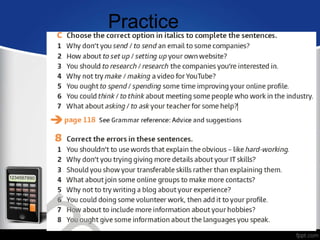
Practice
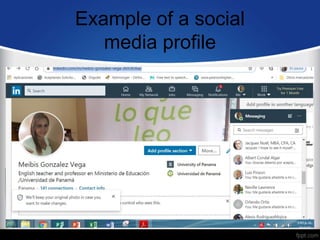
Example of a social
media profile
1.3 Building Rapport
• What is rapport?
• Why is it important?
• How can we build rapport in a class?
• How can we build rapport in a job?
Rapport
It is a close and harmonious
relationship in which the people or
groups concerned understand each
other's feelings or ideas and
communicate well. This
communication with people
strengthen your connection with
them and ensure you are
understood.
Watch the video about Rapport
• https://www.youtube.com/watch?v=YKZ
1TSZZ5XM
• What are your thoughts about the use of
small talk and vulnerability sharing as
strategies to develop rapport?
Building Rapport
• Check your appearance.
• Remember the basics of good
communication.
• Find common ground.
• Create shared experiences.
• Be empathic.
• Mirror and match mannerisms and
speech appropriately.
Building rapport
• As a Student
Building Rapport
• Learn to call your students by name.
• Learn something about your students'
interests, hobbies, and aspirations.
• Arrive to class early and stay late -- and
chat with your students.
• Explain your course policies -- and why
they are what they are.
Building Rapport
• Get online -- use e-mail to increase
accessibility to your students.
• Interact more, lecture less -- emphasize active
learning.
• Reward student comments and questions with
verbal praise
• Be enthusiastic about teaching and
passionate about your subject matter.
Building Rapport
• Lighten up -- crack a joke now and then.
• Be humble and, when appropriate, self-
deprecating.
• Make eye contact with each student --
without staring, glaring, or flaring.
• Be respectful.
• Create and use personally relevant class
examples.
• Don't forget to smile!
1.4 Business Skills
Networking
• Have you ever attended a career
event such as a job fair?
• What was your experience?
• If not, what do you think about this
events? Would you like to participate
in one? What would you need to
have?
How to prepare for a careers
event?
• 1. Update your CV and bring several
copies.
• 2. Look at the list of the attending
companies and target those that interest
you most.
• 3. Collect business cards and brochures.
• 4 Write an online profile.
How to prepare for a careers
event?
• 5. Dress professionally
• 6. Arrive early and plan extra time for your
target employers.
• 7. Research your target employers and
prepare a list of questions you want to ask.
• 8. Prepare a short professional introduction
(include experience, strengths, career
interests and goals)
Can you think of phrases for…
• Starting a conversation?
• Showing interest?
• Closing a conversation?
1.5 Writing E-mails to introduce
yourself
Formal versus Informal writing .
Which of these two emails is more formal?
Why?
click here
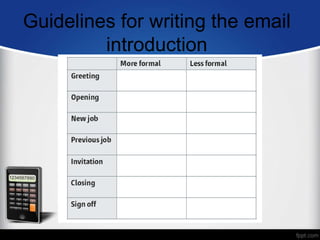
Guidelines for writing the email
introduction
Career Choices

Career Choices

  • 1.
  • 2.
    Unit Objectives • 1.Use vocabulary related to skills and personal qualities. • 2. Use a range or phrase for giving advice and making suggestions. • 3. Be aware of building rapport at first meetings.
  • 3.
    Unit objectives • 4.Use a range of expressions to start, close and show interest in simple face to face conversations on familiar topics. • 5. Write an e-mail introducing yourself to work colleagues.
  • 4.
    1.1 Think oflife skills you have • Calm • Good with computers • Good with numbers • Good with people • Good at problem- solving • Organized • Reliable • Resourceful
  • 5.
    What personal qualitiesand skills do employers look for? • https://www.youtube.com/watch?v=ivs9 S67wdEI
  • 6.
    • What twoor three personal qualities or skills can make an unsuccessful twenty-first century?
  • 7.
    Think of possiblesituations where these are needed… • Think outside the box • Have a can-do-attitude • Set goals • Critical thinking • Have a lot of determination • Be a good team player • Have integrity • Have good communication
  • 8.
    Task: Job Description 1.Choose a job and list three to four activities the person does in that job. 2. Think of personal qualities and skills the persona needs to carry out that job.
  • 9.
    1.2 What roledoes social media play in finding a job? • What impact does a profile in a social network make in finding a job? • What information you should avoid putting in an online profile? Why?
  • 10.
    Making an onlineprofile noticeable using a social media • Be sure to include the most important information, so that employers don’t have to dig for it. • Have a complete (and relevant) profile. • Keep it professional • Update your profile frequently.
  • 11.
    More tips… • Joincareer-relevant groups. • Keep your connections career- focused • Have a professional-looking headshot • Highlight skills and achievements that help employers
  • 12.
    Advice and Suggestions •You could • You should • You ought to • Why don´t you… • Why not try to…(verb +ing) • How about (verb + ing)
  • 13.
  • 14.
    Example of asocial media profile
  • 15.
    1.3 Building Rapport •What is rapport? • Why is it important? • How can we build rapport in a class? • How can we build rapport in a job?
  • 16.
    Rapport It is aclose and harmonious relationship in which the people or groups concerned understand each other's feelings or ideas and communicate well. This communication with people strengthen your connection with them and ensure you are understood.
  • 17.
    Watch the videoabout Rapport • https://www.youtube.com/watch?v=YKZ 1TSZZ5XM • What are your thoughts about the use of small talk and vulnerability sharing as strategies to develop rapport?
  • 18.
    Building Rapport • Checkyour appearance. • Remember the basics of good communication. • Find common ground. • Create shared experiences. • Be empathic. • Mirror and match mannerisms and speech appropriately.
  • 19.
  • 20.
    Building Rapport • Learnto call your students by name. • Learn something about your students' interests, hobbies, and aspirations. • Arrive to class early and stay late -- and chat with your students. • Explain your course policies -- and why they are what they are.
  • 21.
    Building Rapport • Getonline -- use e-mail to increase accessibility to your students. • Interact more, lecture less -- emphasize active learning. • Reward student comments and questions with verbal praise • Be enthusiastic about teaching and passionate about your subject matter.
  • 22.
    Building Rapport • Lightenup -- crack a joke now and then. • Be humble and, when appropriate, self- deprecating. • Make eye contact with each student -- without staring, glaring, or flaring. • Be respectful. • Create and use personally relevant class examples. • Don't forget to smile!
  • 23.
    1.4 Business Skills Networking •Have you ever attended a career event such as a job fair? • What was your experience? • If not, what do you think about this events? Would you like to participate in one? What would you need to have?
  • 25.
    How to preparefor a careers event? • 1. Update your CV and bring several copies. • 2. Look at the list of the attending companies and target those that interest you most. • 3. Collect business cards and brochures. • 4 Write an online profile.
  • 26.
    How to preparefor a careers event? • 5. Dress professionally • 6. Arrive early and plan extra time for your target employers. • 7. Research your target employers and prepare a list of questions you want to ask. • 8. Prepare a short professional introduction (include experience, strengths, career interests and goals)
  • 27.
    Can you thinkof phrases for… • Starting a conversation? • Showing interest? • Closing a conversation?
  • 28.
    1.5 Writing E-mailsto introduce yourself Formal versus Informal writing . Which of these two emails is more formal? Why? click here
  • 29.
    Guidelines for writingthe email introduction