Downloaded 4,174 times
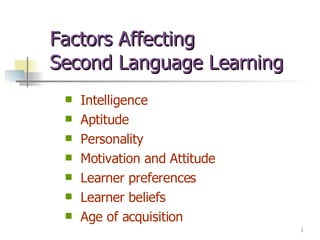
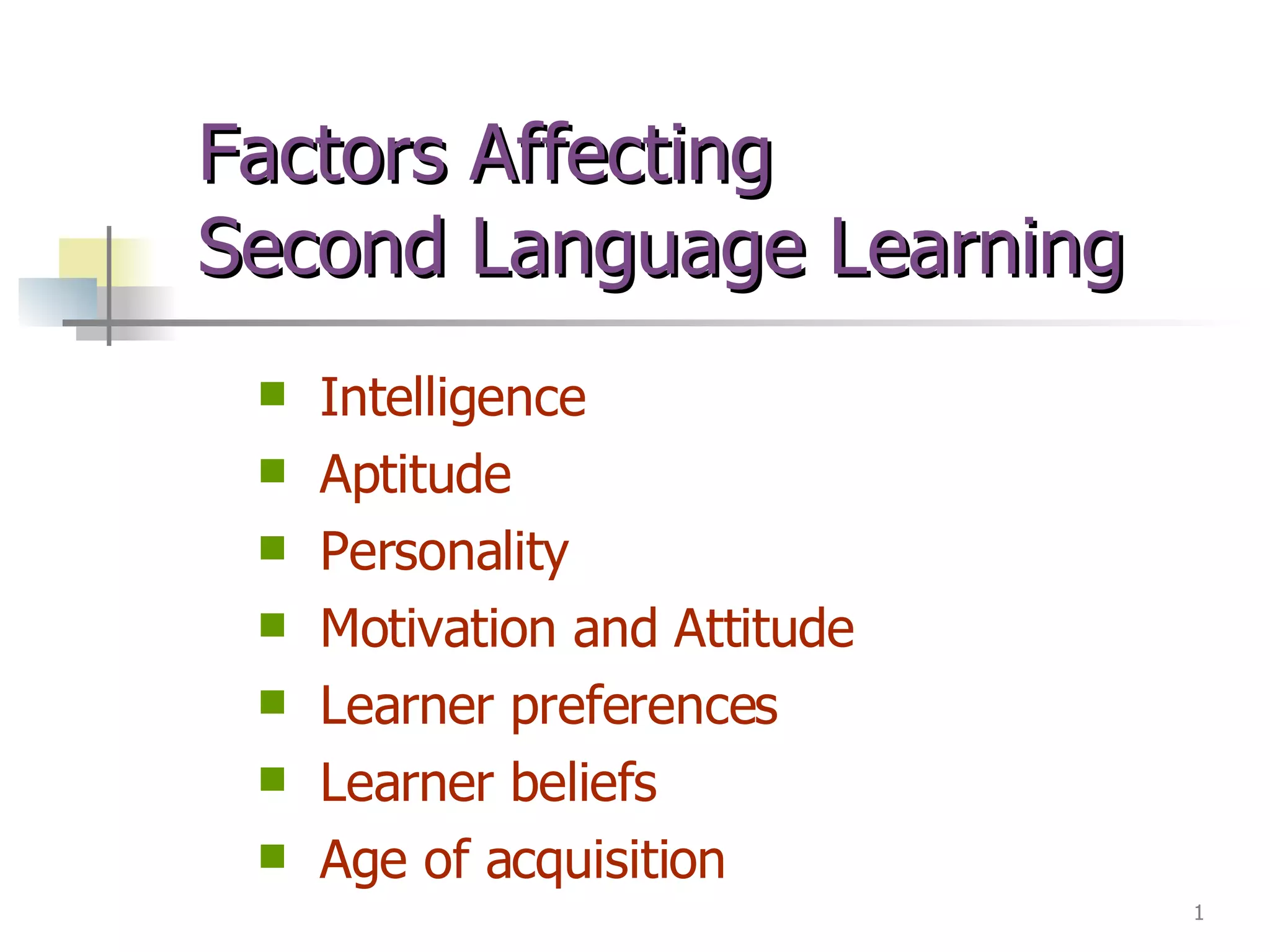

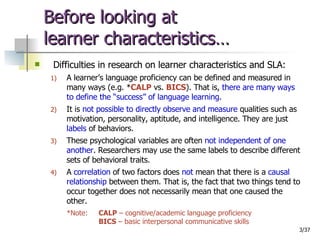
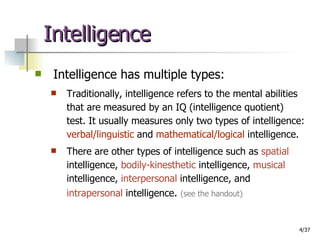
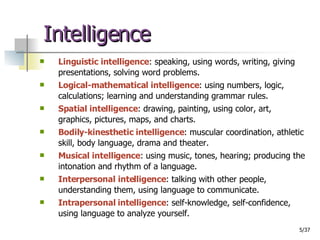
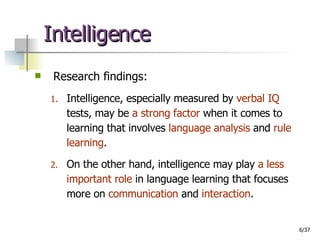
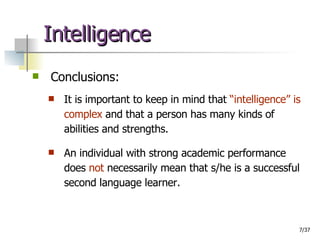
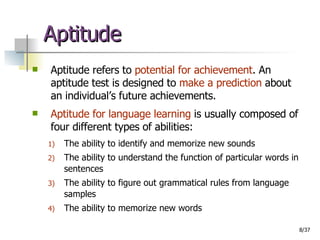
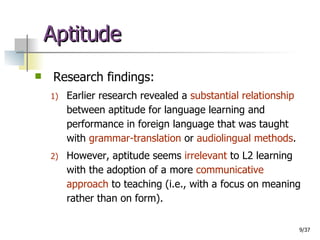
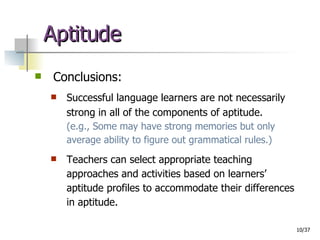
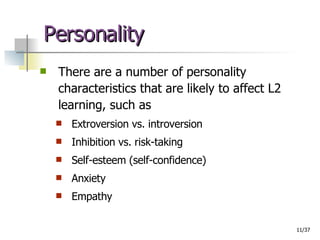
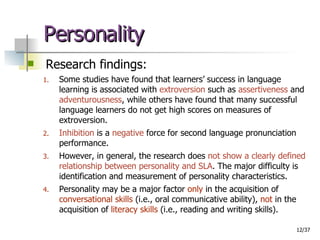
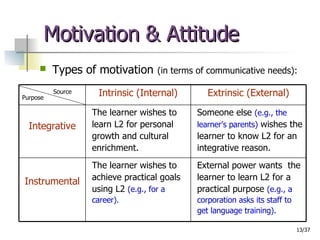

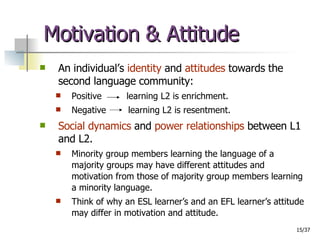

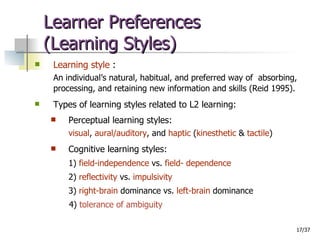
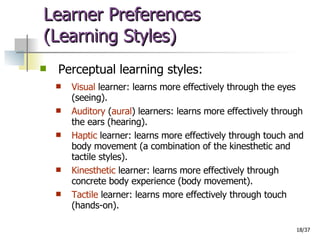







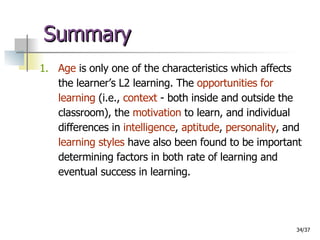
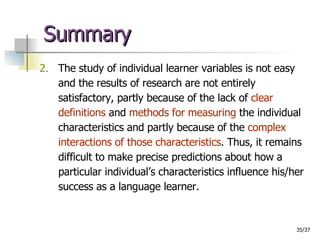
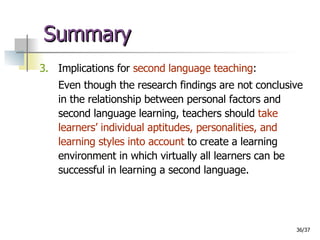


The document discusses several factors that can affect second language learning, including intelligence, aptitude, personality, motivation, learner preferences/styles, and age of acquisition. Regarding intelligence, different types exist (e.g. linguistic, logical) and it may correlate more with rule-based learning than communicative skills. Aptitude predicts future achievement and includes abilities like sound identification and grammar rule inference. Personality's role is unclear but extroversion and risk-taking may help, while inhibition hinders pronunciation. Motivation can be intrinsic or extrinsic/instrumental, and identity/attitudes also influence learning. Learner styles include visual/auditory preferences and field independence/dependence in processing information.


