FIRST AID
FOR BURN

Presented
by:SabitaPoudel
B.Sc Nursing
2ndyear,2010
BURN INJURY IS CAUSED BY
 Dry heat, sun, electric
  current, lightening, radiation, chemicals, acid,
   alkalis(lime, soda, potash etc)
 A scald is an injury caused by moist heat:
  boiling water, steam, hot oil etc.
 The effects of burn and scald are same.
TYPES OF BURN ON THE
BASIS OF CAUSE OF
INJURY:

     DRY BURNS: Flames, lighted cigarettes and
    electrical equipments such as iron are common
    causes of burns
   SCALDS: Steam, hot water produces scalds.

   CHEMICAL BURNS:Acids and alkalis causes it.
                  : Electric
    ELECTRICAL BURNS

    currents and lightening
    generate heat and burn
    skin.
   RADIATION BURNS: Sunrays, light
    reflected and
    overexposure to X-rays can
    cause such type of burn.
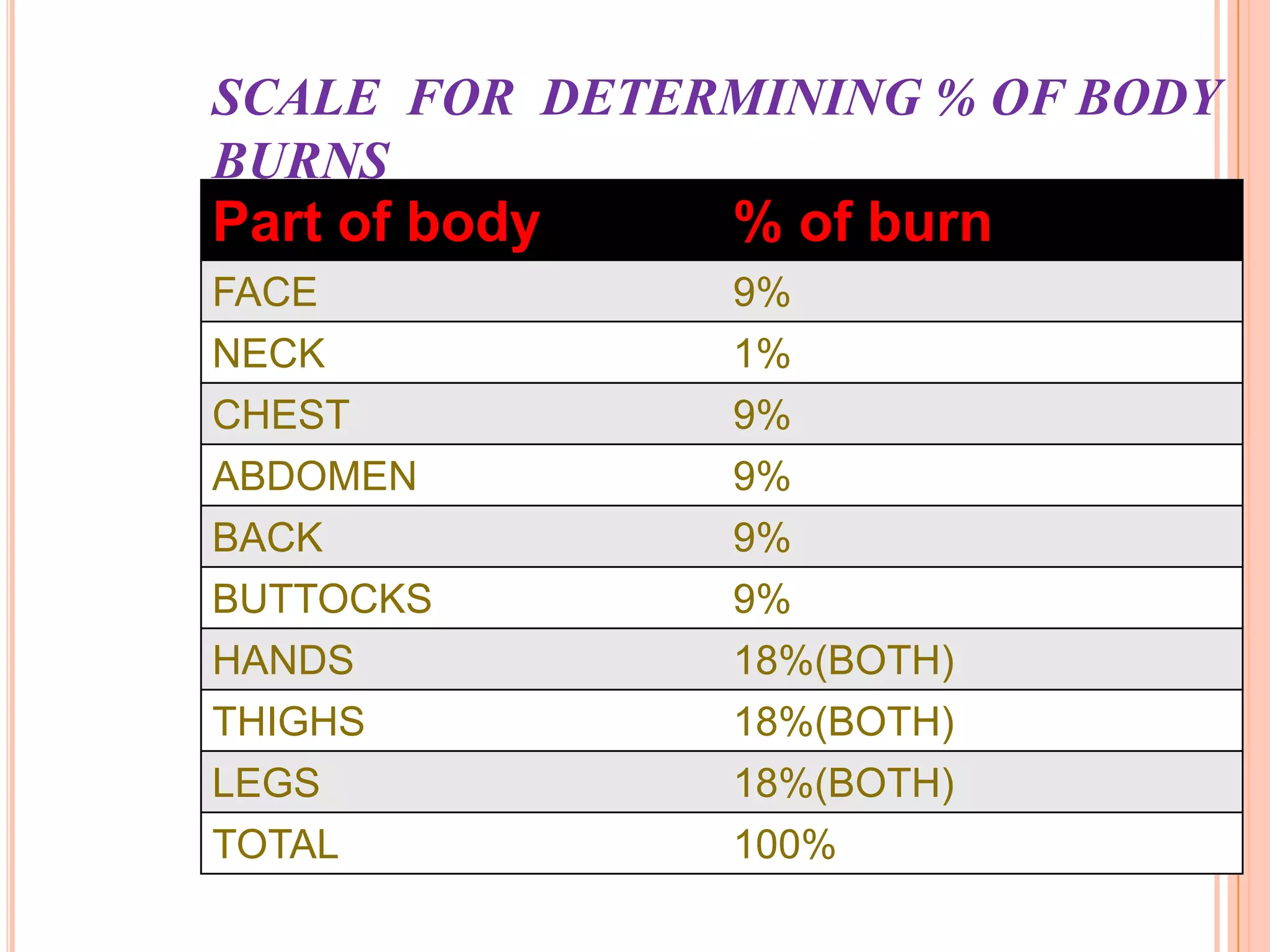
SCALE FOR DETERMINING % OF BODY
BURNS
Part of body    % of burn
FACE            9%
NECK            1%
CHEST           9%
ABDOMEN         9%
BACK            9%
BUTTOCKS        9%
HANDS           18%(BOTH)
THIGHS          18%(BOTH)
LEGS            18%(BOTH)
TOTAL           100%
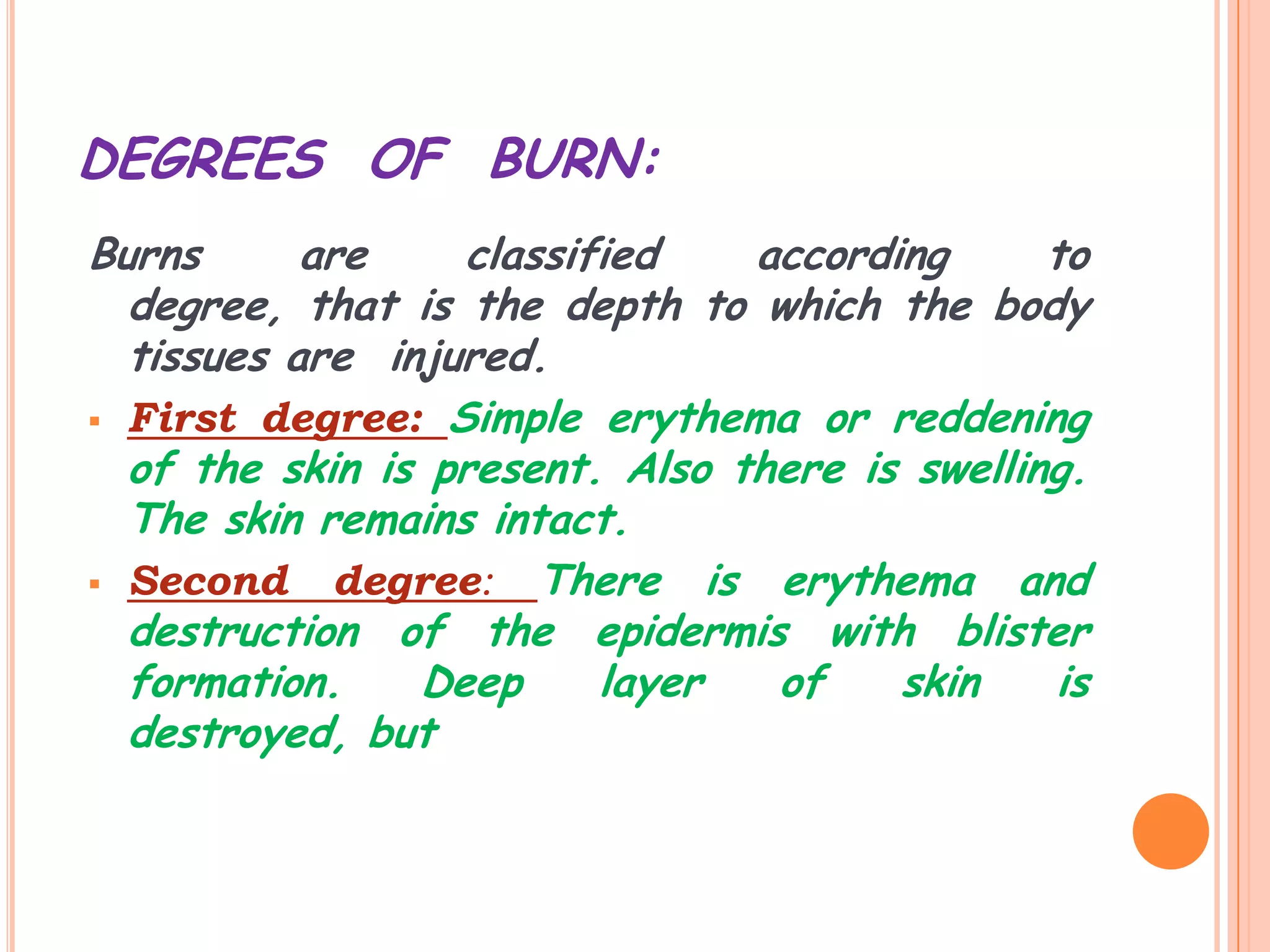
DEGREES OF BURN:
Burns      are    classified    according      to
  degree, that is the depth to which the body
  tissues are injured.
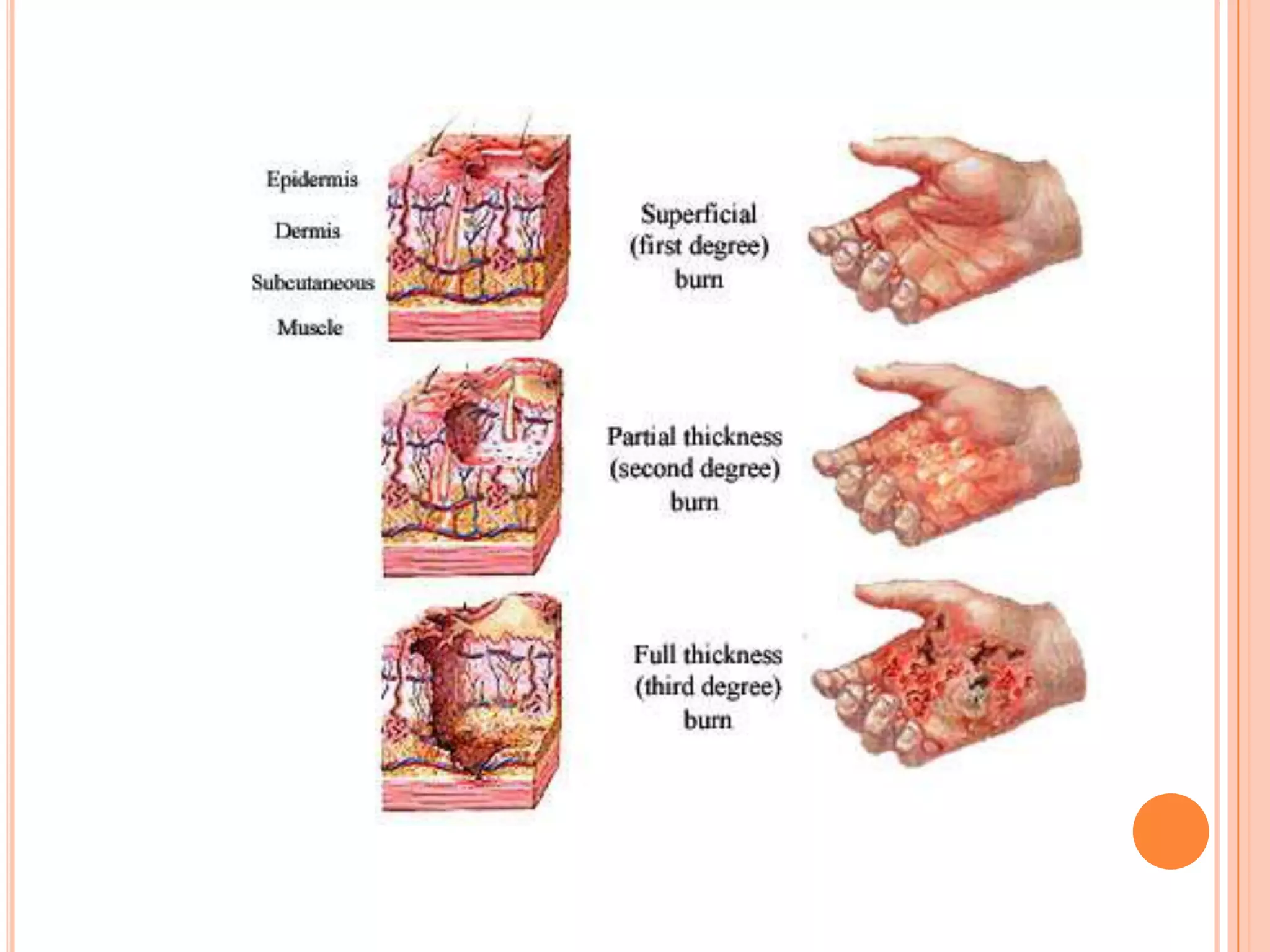
 First degree: Simple erythema or reddening
  of the skin is present. Also there is swelling.
  The skin remains intact.
 Second     degree: There is erythema and
  destruction of the epidermis with blister
  formation.    Deep     layer   of    skin     is
  destroyed, but
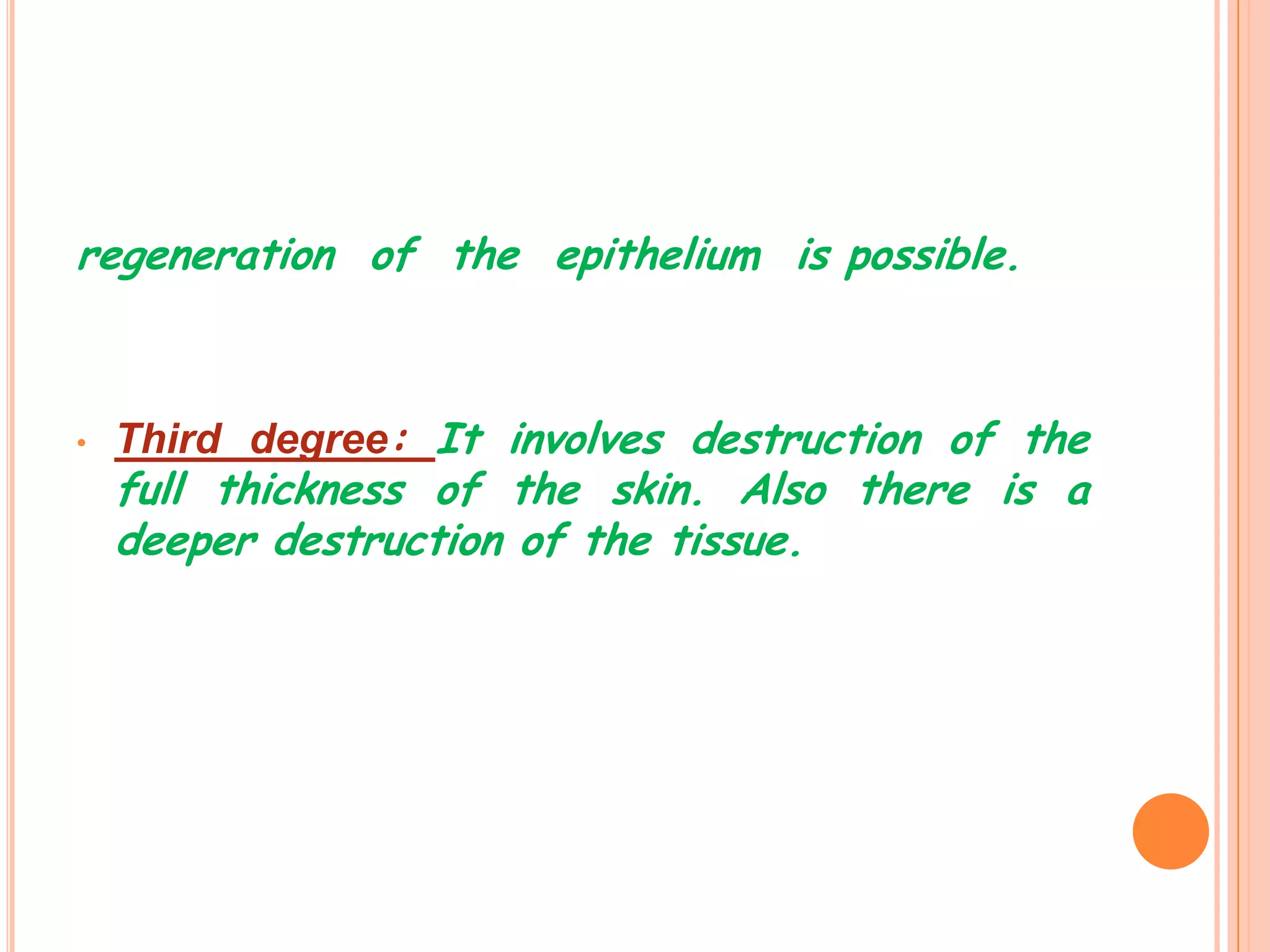
regeneration of the epithelium is possible.


•   Third degree: It involves destruction of the
    full thickness of the skin. Also there is a
    deeper destruction of the tissue.
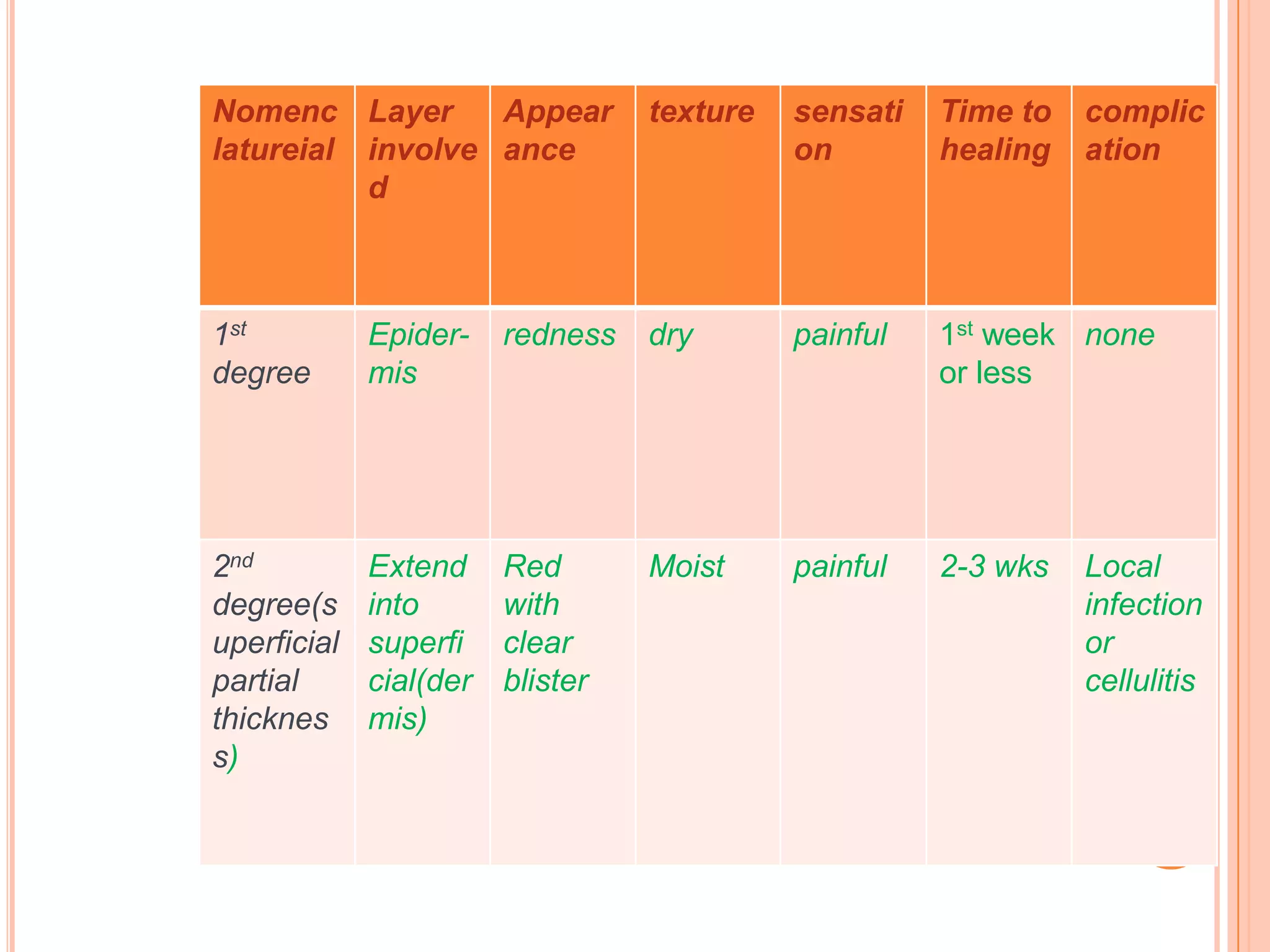
Nomenc Layer      Appear          texture   sensati   Time to   complic
latureial involve ance                      on        healing   ation
          d


1st          Epider-    redness   dry       painful   1st week none
degree       mis                                      or less


2nd          Extend     Red       Moist     painful   2-3 wks   Local
degree(s     into       with                                    infection
uperficial   superfi    clear                                   or
partial      cial(der   blister                                 cellulitis
thicknes     mis)
s)
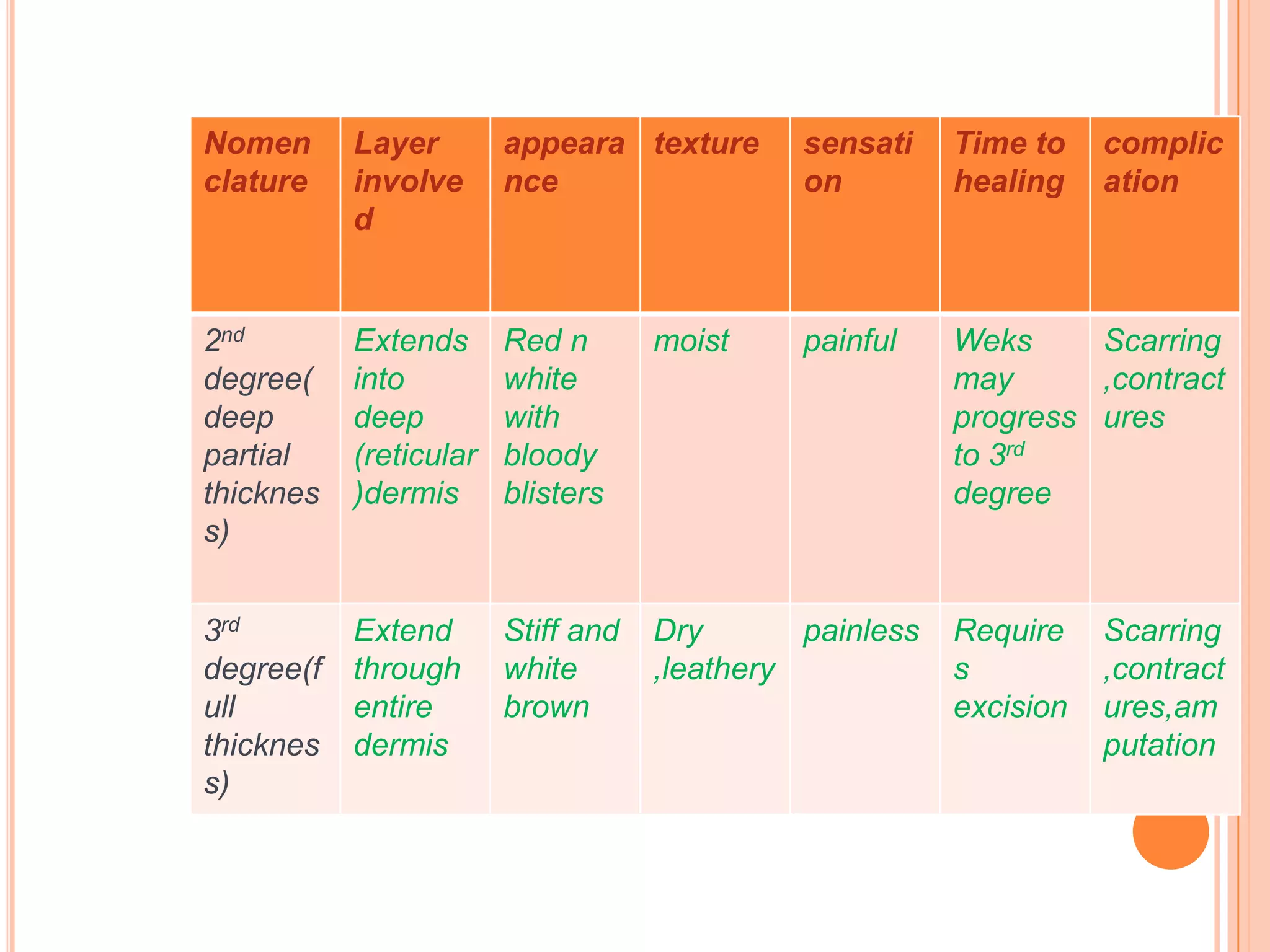
Nomen      Layer        appeara texture       sensati    Time to    complic
clature    involve      nce                   on         healing    ation
           d


2nd        Extends      Red n       moist     painful    Weks     Scarring
degree(    into         white                            may      ,contract
deep       deep         with                             progress ures
partial    (reticular   bloody                           to 3rd
thicknes   )dermis      blisters                         degree
s)


3rd        Extend       Stiff and   Dry       painless   Require    Scarring
degree(f   through      white       ,leathery            s          ,contract
ull        entire       brown                            excision   ures,am
thicknes   dermis                                                   putation
s)
SYMPTOMS:
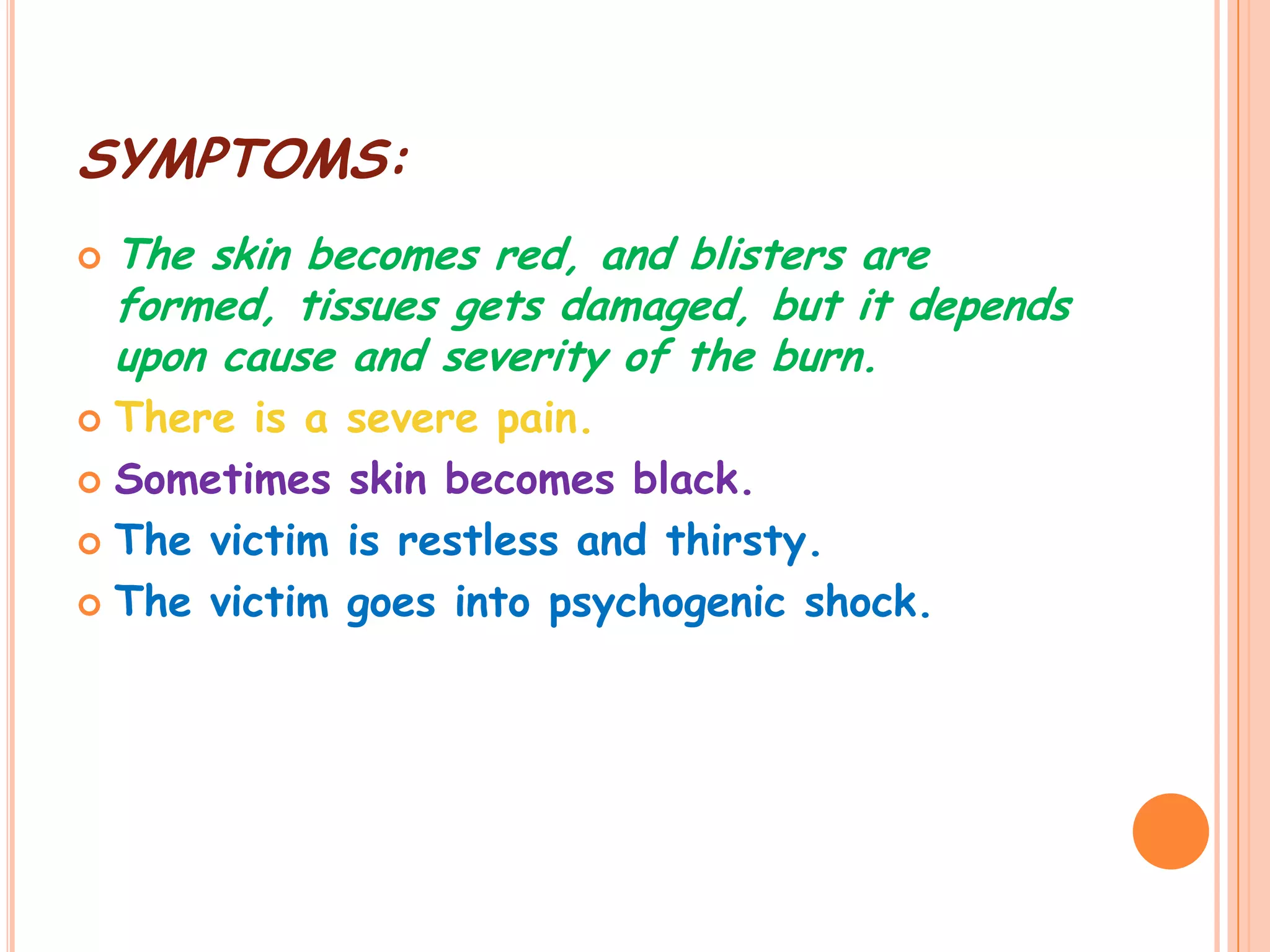
   The skin becomes red, and blisters are
    formed, tissues gets damaged, but it depends
    upon cause and severity of the burn.
 There is a   severe pain.
 Sometimes    skin becomes black.
 The victim   is restless and thirsty.
 The victim   goes into psychogenic shock.
FIRST AID FOR BURNS AND
SCARS
A.   FOR MINOR CASES:
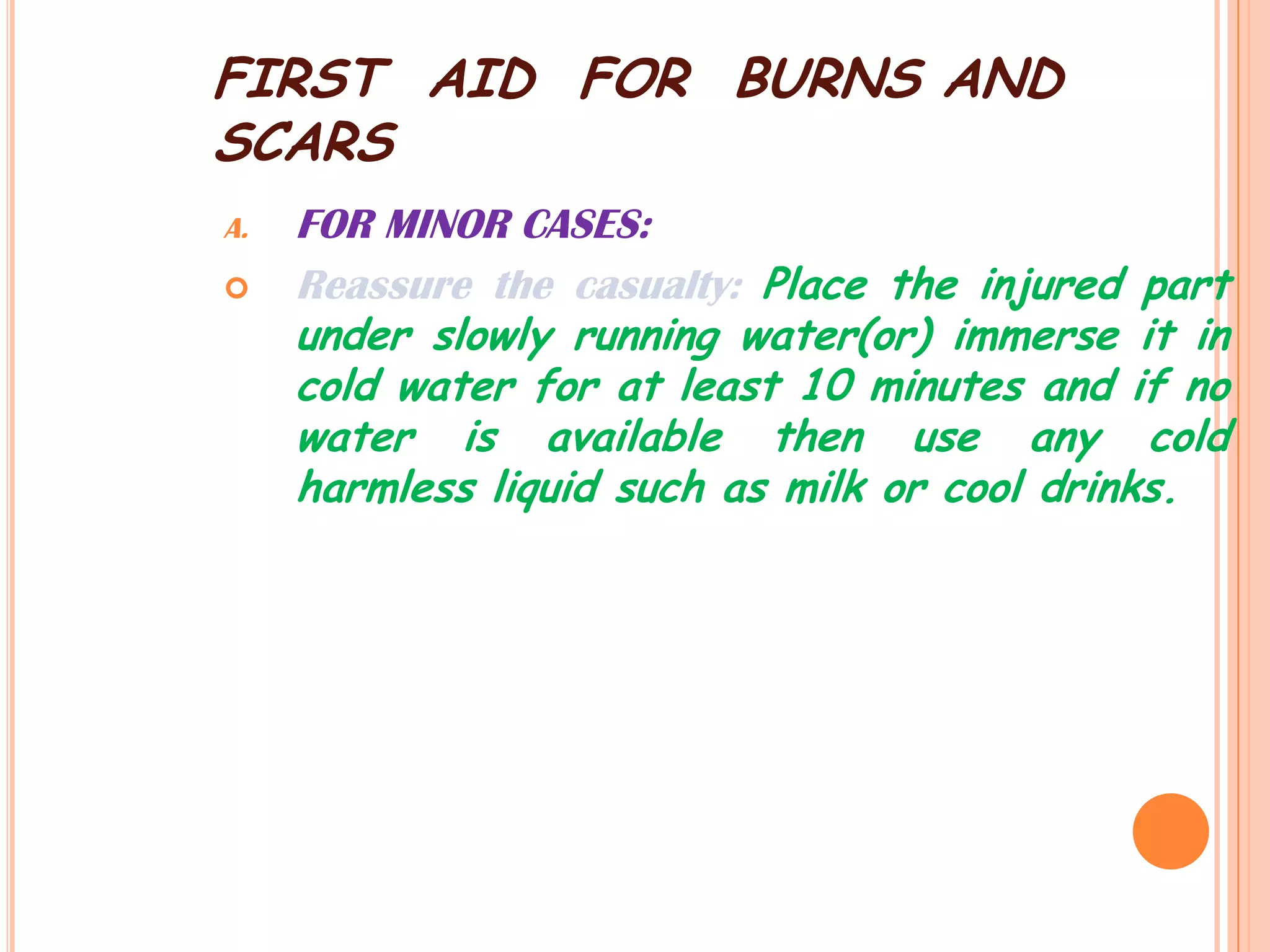
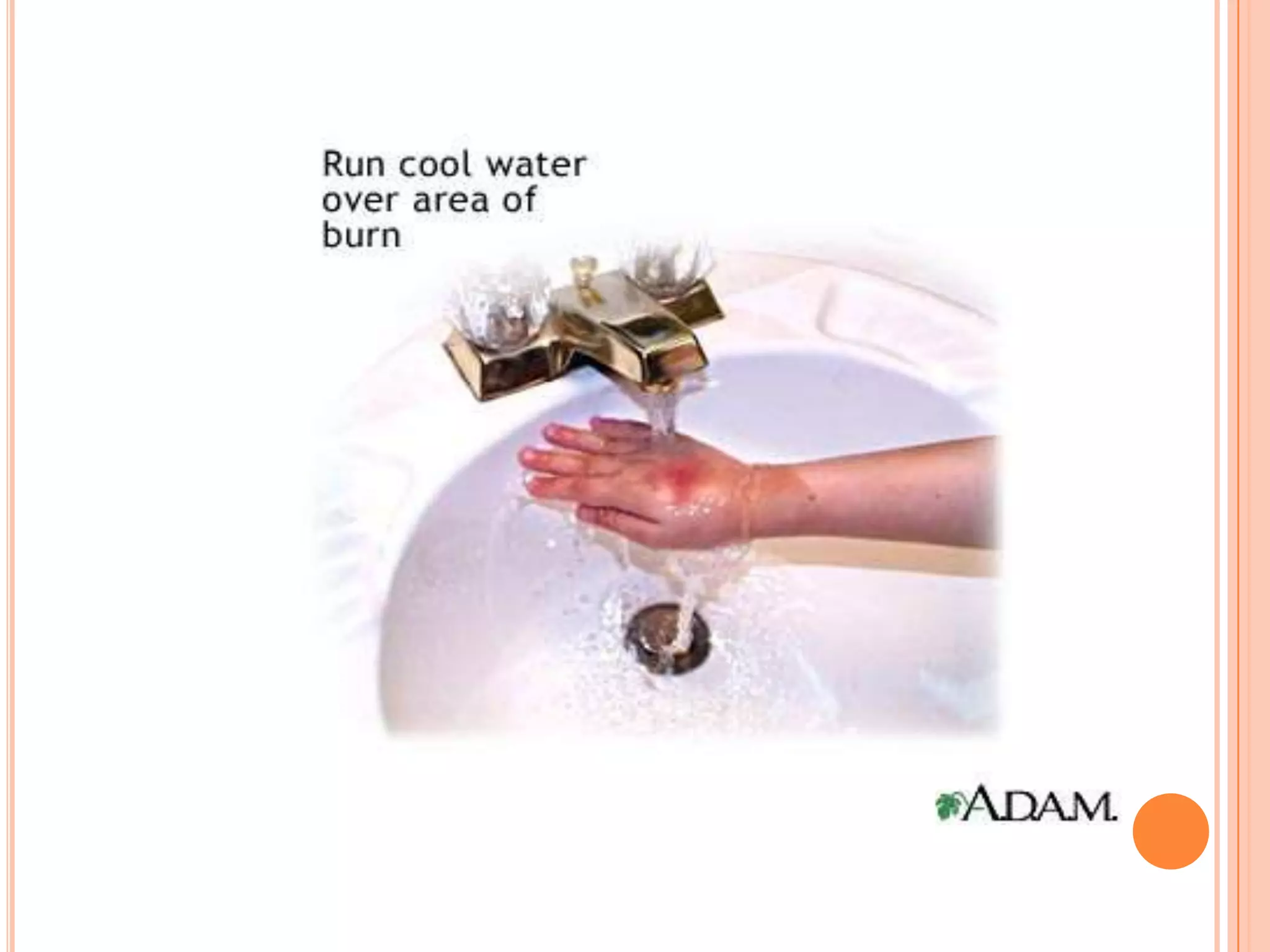
    Reassure the casualty: Place the injured part
     under slowly running water(or) immerse it in
     cold water for at least 10 minutes and if no
     water is available then use any cold
     harmless liquid such as milk or cool drinks.
 Gently remove any rings, watches, belts,
  shoes or other constricting clothing from the
  injured area before it starts to swell.
 Dress the area with clean, preferably sterile
  dressings.
 Do not break blisters, remove any loose skin.

 Do not apply lotions, ointments or fat to the
  injury.
oDo not use adhesive dressings.
     o   If in about the severity of the
         injury-seek medical aid.
B.   FOR SEVERE CASES:
    Lay the casualty down. Protect the burnt
     area from contact with the ground if
     possible. If the burnt area is still
     hot, carefully pour jugs of water or suitable
     cold liquid over the burnt area
 Gently remove any rings, watches, belts or
  constricting clothing from the injured area
  before it starts to swell.
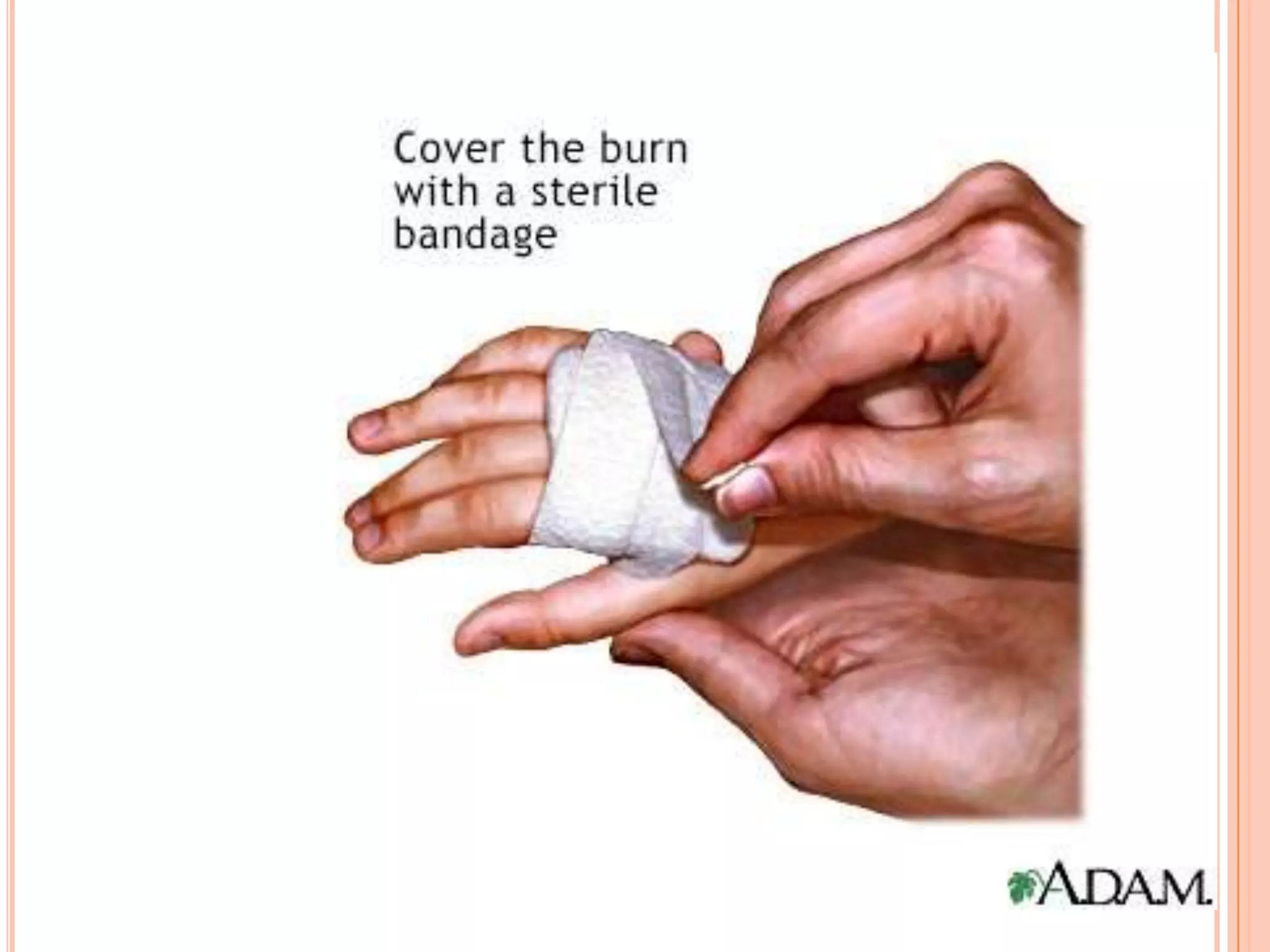
 Cover the injured area with a sterile dressing
  or secure with a bandage.
 For facial burns, cool with water until pain is
  relieved.
 Do not remove anything sticking to a burn.
 Do not apply lotions, ointments or fats to the
  injury.
 Remove rings, bracelets and any other tight
  fitting clothes and articles.
 Give small drinks at frequent intervals. It will
  prevent the dehydration.
BURNS IN THE MOUTH AND THROAT
 Burns to the mouth and throat usually result
 from drinking very hot liquid , swallowing
 corrosive chemicals or inhaling very hot air.
 These injuries are very serious because the
 tissues in the throat swell quickly and can
 close the airway making it difficult.
FIRST AID
   Reassure the casualty.
   If she is conscious, give her sips of cold
    water at frequent intervals.
   Remove any constricting clothing or jewellery
    from her neck and chest.
   If she becomes unconscious:
   Open her airway and check breathing.
   Complete the ABC of resuscitation if
    necessary.
   Place in the recovery position.

   To minimize shock, treat as for shock.

   Arrange     urgent   removal     to   hospital,
    maintaining the treatment position.
CHEMICAL BURN TO THE EYE
     Any chemical in the eye, including lime,
    cement and battery fluid should be washed
    out immediately with large quantities of
    water.

      Make the patient lie down, then gently
    pour cupful of water into the inner corner of
    the eye, letting it run to the other side,
    continue this process until the chemical is
    removed.

     Then put several drops of castor oil into
    the eye. Cover with a sterile compress and
ELECTRICAL BURN
 Donot go near the victim unless you are sure the
  power source has turned off.
 If the victim is unconscious ,check vitals .

 Cover the electrical burn with dressing
THANK YOU

First ai d 4 burn

  • 1.
  • 2.
    BURN INJURY ISCAUSED BY  Dry heat, sun, electric current, lightening, radiation, chemicals, acid, alkalis(lime, soda, potash etc)  A scald is an injury caused by moist heat: boiling water, steam, hot oil etc.  The effects of burn and scald are same.
  • 3.
    TYPES OF BURNON THE BASIS OF CAUSE OF INJURY:  DRY BURNS: Flames, lighted cigarettes and electrical equipments such as iron are common causes of burns  SCALDS: Steam, hot water produces scalds.  CHEMICAL BURNS:Acids and alkalis causes it.
  • 4.
    : Electric ELECTRICAL BURNS currents and lightening generate heat and burn skin.  RADIATION BURNS: Sunrays, light reflected and overexposure to X-rays can cause such type of burn.
  • 5.
    SCALE FOR DETERMINING% OF BODY BURNS Part of body % of burn FACE 9% NECK 1% CHEST 9% ABDOMEN 9% BACK 9% BUTTOCKS 9% HANDS 18%(BOTH) THIGHS 18%(BOTH) LEGS 18%(BOTH) TOTAL 100%
  • 6.
    DEGREES OF BURN: Burns are classified according to degree, that is the depth to which the body tissues are injured.  First degree: Simple erythema or reddening of the skin is present. Also there is swelling. The skin remains intact.  Second degree: There is erythema and destruction of the epidermis with blister formation. Deep layer of skin is destroyed, but
  • 7.
    regeneration of theepithelium is possible. • Third degree: It involves destruction of the full thickness of the skin. Also there is a deeper destruction of the tissue.
  • 8.
    Nomenc Layer Appear texture sensati Time to complic latureial involve ance on healing ation d 1st Epider- redness dry painful 1st week none degree mis or less 2nd Extend Red Moist painful 2-3 wks Local degree(s into with infection uperficial superfi clear or partial cial(der blister cellulitis thicknes mis) s)
  • 9.
    Nomen Layer appeara texture sensati Time to complic clature involve nce on healing ation d 2nd Extends Red n moist painful Weks Scarring degree( into white may ,contract deep deep with progress ures partial (reticular bloody to 3rd thicknes )dermis blisters degree s) 3rd Extend Stiff and Dry painless Require Scarring degree(f through white ,leathery s ,contract ull entire brown excision ures,am thicknes dermis putation s)
  • 11.
    SYMPTOMS:  The skin becomes red, and blisters are formed, tissues gets damaged, but it depends upon cause and severity of the burn.  There is a severe pain.  Sometimes skin becomes black.  The victim is restless and thirsty.  The victim goes into psychogenic shock.
  • 12.
    FIRST AID FORBURNS AND SCARS A. FOR MINOR CASES:  Reassure the casualty: Place the injured part under slowly running water(or) immerse it in cold water for at least 10 minutes and if no water is available then use any cold harmless liquid such as milk or cool drinks.
  • 13.
     Gently removeany rings, watches, belts, shoes or other constricting clothing from the injured area before it starts to swell.  Dress the area with clean, preferably sterile dressings.  Do not break blisters, remove any loose skin.  Do not apply lotions, ointments or fat to the injury.
  • 14.
    oDo not useadhesive dressings. o If in about the severity of the injury-seek medical aid. B. FOR SEVERE CASES:  Lay the casualty down. Protect the burnt area from contact with the ground if possible. If the burnt area is still hot, carefully pour jugs of water or suitable cold liquid over the burnt area
  • 15.
     Gently removeany rings, watches, belts or constricting clothing from the injured area before it starts to swell.  Cover the injured area with a sterile dressing or secure with a bandage.  For facial burns, cool with water until pain is relieved.
  • 17.
     Do notremove anything sticking to a burn.  Do not apply lotions, ointments or fats to the injury.  Remove rings, bracelets and any other tight fitting clothes and articles.  Give small drinks at frequent intervals. It will prevent the dehydration.
  • 19.
    BURNS IN THEMOUTH AND THROAT Burns to the mouth and throat usually result from drinking very hot liquid , swallowing corrosive chemicals or inhaling very hot air. These injuries are very serious because the tissues in the throat swell quickly and can close the airway making it difficult.
  • 20.
    FIRST AID  Reassure the casualty.  If she is conscious, give her sips of cold water at frequent intervals.  Remove any constricting clothing or jewellery from her neck and chest.  If she becomes unconscious:  Open her airway and check breathing.  Complete the ABC of resuscitation if necessary.
  • 21.
    Place in the recovery position.  To minimize shock, treat as for shock.  Arrange urgent removal to hospital, maintaining the treatment position.
  • 22.
    CHEMICAL BURN TOTHE EYE  Any chemical in the eye, including lime, cement and battery fluid should be washed out immediately with large quantities of water.  Make the patient lie down, then gently pour cupful of water into the inner corner of the eye, letting it run to the other side, continue this process until the chemical is removed.  Then put several drops of castor oil into the eye. Cover with a sterile compress and
  • 23.
    ELECTRICAL BURN  Donotgo near the victim unless you are sure the power source has turned off.  If the victim is unconscious ,check vitals .  Cover the electrical burn with dressing
  • 24.