Prepared By:
Zuhair Rushdi Mustafa
Lecturer at University of Duhok
College of Nursing
Wounds And Bleeding
What does it mean wound?
Wound is a break in the structure of an organ or tissue
caused by an external agent.
Types of Wounds
A. Non-penetrating wounds
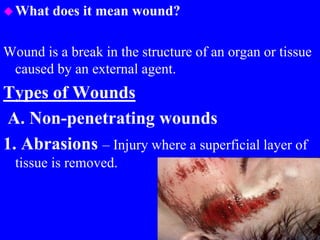
1. Abrasions – Injury where a superficial layer of
tissue is removed.
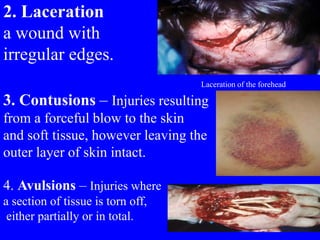
2. Laceration
a wound with
irregular edges.
Laceration of the forehead
3. Contusions – Injuries resulting
from a forceful blow to the skin
and soft tissue, however leaving the
outer layer of skin intact.
4. Avulsions – Injuries where
a section of tissue is torn off,
either partially or in total.
B. Penetrating wounds:
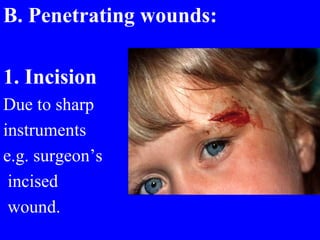
1. Incision
Due to sharp
instruments
e.g. surgeon’s
incised
wound.
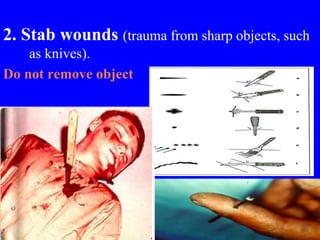
2. Stab wounds (trauma from sharp objects, such
as knives).
Do not remove object
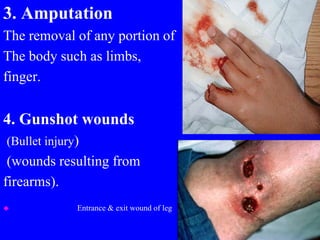
3. Amputation
The removal of any portion of
The body such as limbs,
finger.
4. Gunshot wounds
(Bullet injury)
(wounds resulting from
firearms).
 Entrance & exit wound of leg
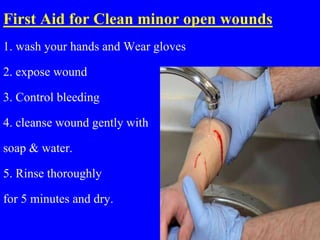
First Aid for Clean minor open wounds
1. wash your hands and Wear gloves
2. expose wound
3. Control bleeding
4. cleanse wound gently with
soap & water.
5. Rinse thoroughly
for 5 minutes and dry.
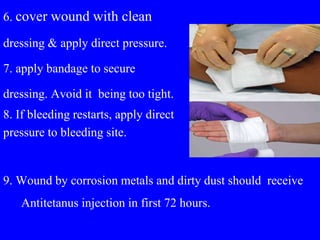
6. cover wound with clean
dressing & apply direct pressure.
7. apply bandage to secure
dressing. Avoid it being too tight.
8. If bleeding restarts, apply direct
pressure to bleeding site.
9. Wound by corrosion metals and dirty dust should receive
Antitetanus injection in first 72 hours.
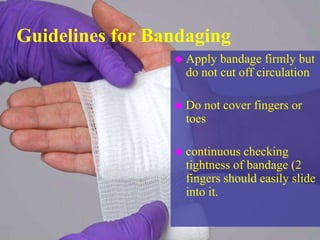
Guidelines for Bandaging
 Apply bandage firmly but
do not cut off circulation
 Do not cover fingers or
toes
 continuous checking
tightness of bandage (2
fingers should easily slide
into it.
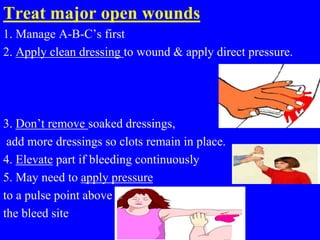
Treat major open wounds
1. Manage A-B-C’s first
2. Apply clean dressing to wound & apply direct pressure.
3. Don’t remove soaked dressings,
add more dressings so clots remain in place.
4. Elevate part if bleeding continuously
5. May need to apply pressure
to a pulse point above
the bleed site
When to Seek Medical Attention for Wound
 Bleeding not easily controlled
 Any deep or large wound
 Significant wound on face
 Infected wound
 Any bite
 Foreign object in wound (do not attempt to remove object
from wound because it may lead to sever bleeding)
 Puncture wound
 Wounds that require stitches
– Gaping wounds
– Cuts longer than 1 inch (2.54 cm)
– Cuts on face or hands when edges don’t close
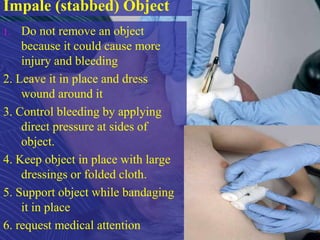
Impale (stabbed) Object
1. Do not remove an object
because it could cause more
injury and bleeding
2. Leave it in place and dress
wound around it
3. Control bleeding by applying
direct pressure at sides of
object.
4. Keep object in place with large
dressings or folded cloth.
5. Support object while bandaging
it in place
6. request medical attention
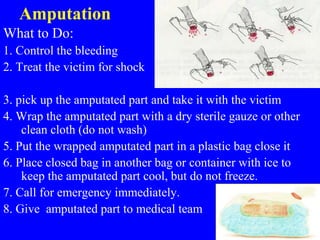
Amputation
What to Do:
1. Control the bleeding
2. Treat the victim for shock
3. pick up the amputated part and take it with the victim
4. Wrap the amputated part with a dry sterile gauze or other
clean cloth (do not wash)
5. Put the wrapped amputated part in a plastic bag close it
6. Place closed bag in another bag or container with ice to
keep the amputated part cool, but do not freeze.
7. Call for emergency immediately.
8. Give amputated part to medical team
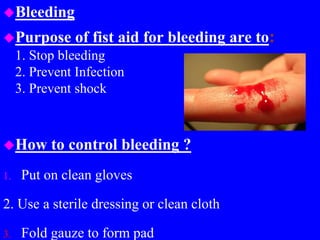
Bleeding
Purpose of fist aid for bleeding are to:
1. Stop bleeding
2. Prevent Infection
3. Prevent shock
How to control bleeding ?
1. Put on clean gloves
2. Use a sterile dressing or clean cloth
3. Fold gauze to form pad
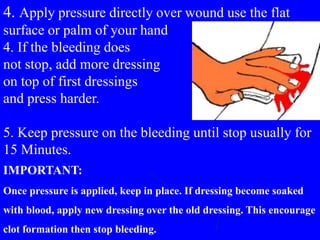
4. Apply pressure directly over wound use the flat
surface or palm of your hand
4. If the bleeding does
not stop, add more dressing
on top of first dressings
and press harder.
5. Keep pressure on the bleeding until stop usually for
15 Minutes.
IMPORTANT:
Once pressure is applied, keep in place. If dressing become soaked
with blood, apply new dressing over the old dressing. This encourage
clot formation then stop bleeding.
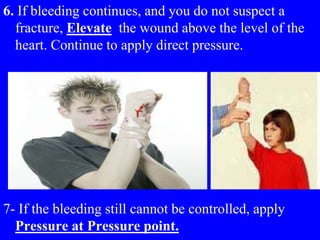
6. If bleeding continues, and you do not suspect a
fracture, Elevate the wound above the level of the
heart. Continue to apply direct pressure.
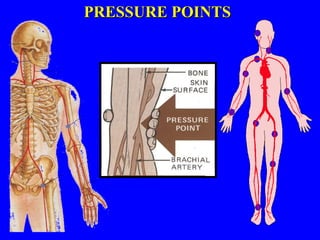
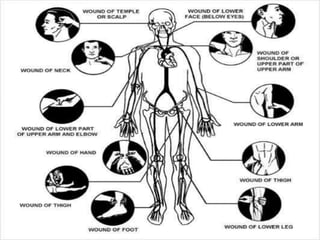
7- If the bleeding still cannot be controlled, apply
Pressure at Pressure point.
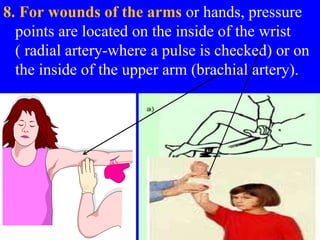
8. For wounds of the arms or hands, pressure
points are located on the inside of the wrist
( radial artery-where a pulse is checked) or on
the inside of the upper arm (brachial artery).
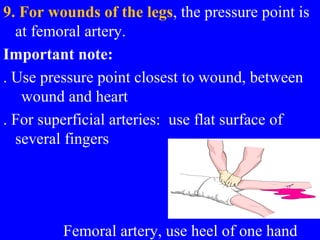
9. For wounds of the legs, the pressure point is
at femoral artery.
Important note:
. Use pressure point closest to wound, between
wound and heart
. For superficial arteries: use flat surface of
several fingers
Femoral artery, use heel of one hand
PRESSURE POINTS
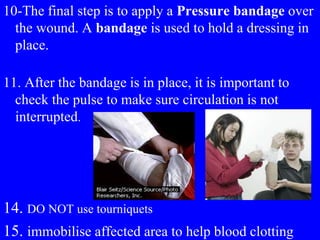
10-The final step is to apply a Pressure bandage over
the wound. A bandage is used to hold a dressing in
place.
11. After the bandage is in place, it is important to
check the pulse to make sure circulation is not
interrupted.
14. DO NOT use tourniquets
15. immobilise affected area to help blood clotting
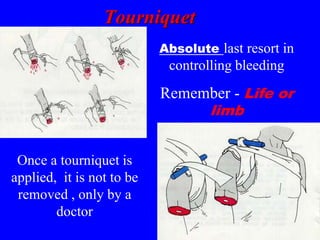
Tourniquet
Absolute last resort in
controlling bleeding
Remember - Life or
limb
Once a tourniquet is
applied, it is not to be
removed , only by a
doctor
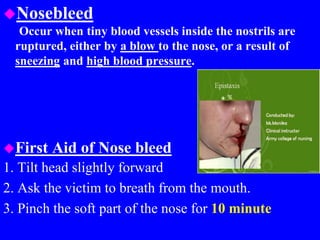
Nosebleed
Occur when tiny blood vessels inside the nostrils are
ruptured, either by a blow to the nose, or a result of
sneezing and high blood pressure.
First Aid of Nose bleed
1. Tilt head slightly forward
2. Ask the victim to breath from the mouth.
3. Pinch the soft part of the nose for 10 minute
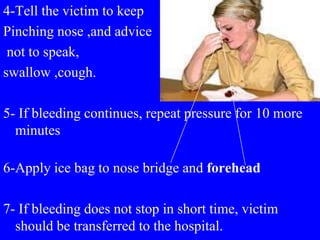
4-Tell the victim to keep
Pinching nose ,and advice
not to speak,
swallow ,cough.
5- If bleeding continues, repeat pressure for 10 more
minutes
6-Apply ice bag to nose bridge and forehead
7- If bleeding does not stop in short time, victim
should be transferred to the hospital.

First Aid for Wounds

  • 1.
    Prepared By: Zuhair RushdiMustafa Lecturer at University of Duhok College of Nursing Wounds And Bleeding
  • 2.
    What does itmean wound? Wound is a break in the structure of an organ or tissue caused by an external agent. Types of Wounds A. Non-penetrating wounds 1. Abrasions – Injury where a superficial layer of tissue is removed.
  • 3.
    2. Laceration a woundwith irregular edges. Laceration of the forehead 3. Contusions – Injuries resulting from a forceful blow to the skin and soft tissue, however leaving the outer layer of skin intact. 4. Avulsions – Injuries where a section of tissue is torn off, either partially or in total.
  • 4.
    B. Penetrating wounds: 1.Incision Due to sharp instruments e.g. surgeon’s incised wound.
  • 5.
    2. Stab wounds(trauma from sharp objects, such as knives). Do not remove object
  • 6.
    3. Amputation The removalof any portion of The body such as limbs, finger. 4. Gunshot wounds (Bullet injury) (wounds resulting from firearms).  Entrance & exit wound of leg
  • 7.
    First Aid forClean minor open wounds 1. wash your hands and Wear gloves 2. expose wound 3. Control bleeding 4. cleanse wound gently with soap & water. 5. Rinse thoroughly for 5 minutes and dry.
  • 8.
    6. cover woundwith clean dressing & apply direct pressure. 7. apply bandage to secure dressing. Avoid it being too tight. 8. If bleeding restarts, apply direct pressure to bleeding site. 9. Wound by corrosion metals and dirty dust should receive Antitetanus injection in first 72 hours.
  • 9.
    Guidelines for Bandaging Apply bandage firmly but do not cut off circulation  Do not cover fingers or toes  continuous checking tightness of bandage (2 fingers should easily slide into it.
  • 10.
    Treat major openwounds 1. Manage A-B-C’s first 2. Apply clean dressing to wound & apply direct pressure. 3. Don’t remove soaked dressings, add more dressings so clots remain in place. 4. Elevate part if bleeding continuously 5. May need to apply pressure to a pulse point above the bleed site
  • 11.
    When to SeekMedical Attention for Wound  Bleeding not easily controlled  Any deep or large wound  Significant wound on face  Infected wound  Any bite  Foreign object in wound (do not attempt to remove object from wound because it may lead to sever bleeding)  Puncture wound  Wounds that require stitches – Gaping wounds – Cuts longer than 1 inch (2.54 cm) – Cuts on face or hands when edges don’t close
  • 12.
    Impale (stabbed) Object 1.Do not remove an object because it could cause more injury and bleeding 2. Leave it in place and dress wound around it 3. Control bleeding by applying direct pressure at sides of object. 4. Keep object in place with large dressings or folded cloth. 5. Support object while bandaging it in place 6. request medical attention
  • 13.
    Amputation What to Do: 1.Control the bleeding 2. Treat the victim for shock 3. pick up the amputated part and take it with the victim 4. Wrap the amputated part with a dry sterile gauze or other clean cloth (do not wash) 5. Put the wrapped amputated part in a plastic bag close it 6. Place closed bag in another bag or container with ice to keep the amputated part cool, but do not freeze. 7. Call for emergency immediately. 8. Give amputated part to medical team
  • 14.
    Bleeding Purpose of fistaid for bleeding are to: 1. Stop bleeding 2. Prevent Infection 3. Prevent shock How to control bleeding ? 1. Put on clean gloves 2. Use a sterile dressing or clean cloth 3. Fold gauze to form pad
  • 15.
    4. Apply pressuredirectly over wound use the flat surface or palm of your hand 4. If the bleeding does not stop, add more dressing on top of first dressings and press harder. 5. Keep pressure on the bleeding until stop usually for 15 Minutes. IMPORTANT: Once pressure is applied, keep in place. If dressing become soaked with blood, apply new dressing over the old dressing. This encourage clot formation then stop bleeding.
  • 16.
    6. If bleedingcontinues, and you do not suspect a fracture, Elevate the wound above the level of the heart. Continue to apply direct pressure. 7- If the bleeding still cannot be controlled, apply Pressure at Pressure point.
  • 17.
    8. For woundsof the arms or hands, pressure points are located on the inside of the wrist ( radial artery-where a pulse is checked) or on the inside of the upper arm (brachial artery).
  • 18.
    9. For woundsof the legs, the pressure point is at femoral artery. Important note: . Use pressure point closest to wound, between wound and heart . For superficial arteries: use flat surface of several fingers Femoral artery, use heel of one hand
  • 19.
  • 21.
    10-The final stepis to apply a Pressure bandage over the wound. A bandage is used to hold a dressing in place. 11. After the bandage is in place, it is important to check the pulse to make sure circulation is not interrupted. 14. DO NOT use tourniquets 15. immobilise affected area to help blood clotting
  • 22.
    Tourniquet Absolute last resortin controlling bleeding Remember - Life or limb Once a tourniquet is applied, it is not to be removed , only by a doctor
  • 23.
    Nosebleed Occur when tinyblood vessels inside the nostrils are ruptured, either by a blow to the nose, or a result of sneezing and high blood pressure. First Aid of Nose bleed 1. Tilt head slightly forward 2. Ask the victim to breath from the mouth. 3. Pinch the soft part of the nose for 10 minute
  • 24.
    4-Tell the victimto keep Pinching nose ,and advice not to speak, swallow ,cough. 5- If bleeding continues, repeat pressure for 10 more minutes 6-Apply ice bag to nose bridge and forehead 7- If bleeding does not stop in short time, victim should be transferred to the hospital.