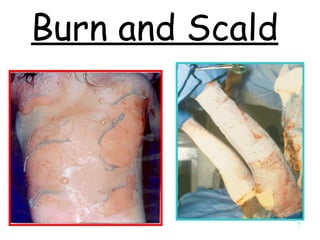
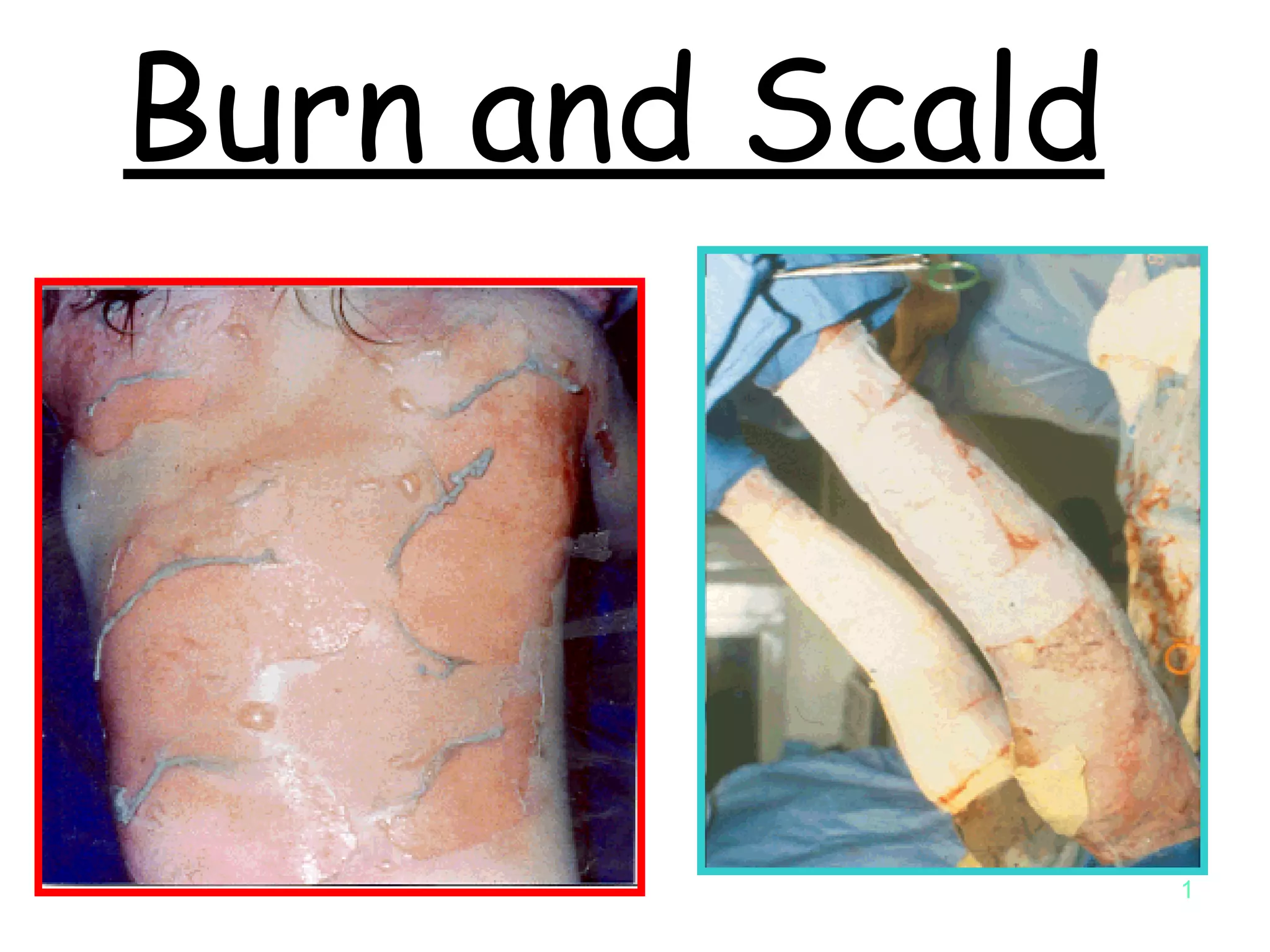
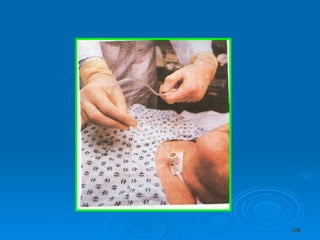
Burn and Scald
Burn & Scald Etiology A  burn  injury occurs as a result of destruction of the skin from direct or indirect thermal force.  Burn are caused by exposure to heat, electric current, radiation or chemical. Scald burn   result from exposure to moist heat (steam or hot fluids) and involve superficial.
Types of burn injury Thermal burns. Chemical burns Electrical burns  Radiation burns.
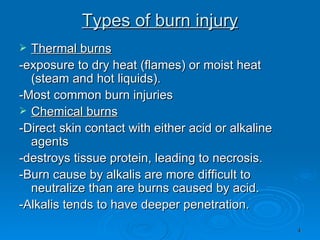
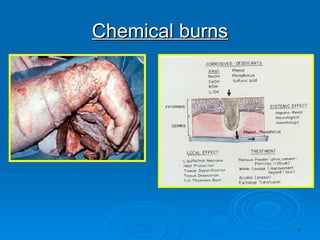
Types of burn injury Thermal burns -exposure to dry heat (flames) or moist heat (steam and hot liquids). -Most common burn injuries  Chemical burns -Direct skin contact with either acid or alkaline agents -destroys tissue protein, leading to necrosis. -Burn cause by alkalis are more difficult to neutralize than are burns caused by acid. -Alkalis tends to have deeper penetration.
Chemical burns
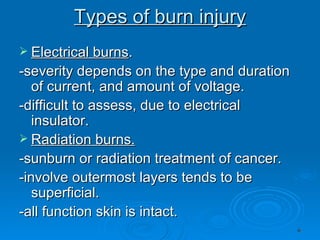
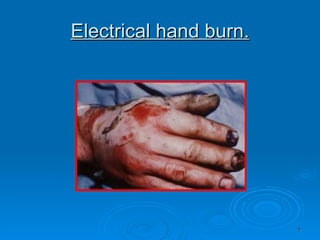
Types of burn injury Electrical burns . -severity depends on the type and duration of current, and amount of voltage. -difficult to assess, due to electrical insulator. Radiation burns. -sunburn or radiation treatment of cancer. -involve outermost layers tends to be superficial. -all function skin is intact.
Electrical hand burn.
Burn & Scald:Epidemiology 1 million people suffer  thermal injury each year in U.S. 45,000 persons are admitted to hospital. ↑45,000 persons die as a result of burn injury. The direct cost of treating a burn injury can be high. Cost are higher for large burns.
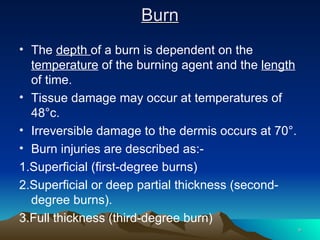
Burn The  depth  of a burn is dependent on the  temperature  of the burning agent and the  length  of time. Tissue damage may occur at temperatures of 48°c. Irreversible damage to the dermis occurs at 70°. Burn injuries are described as:- 1.Superficial (first-degree burns) 2.Superficial or deep partial thickness (second-degree burns). 3.Full thickness (third-degree burn)


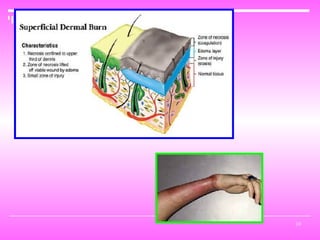
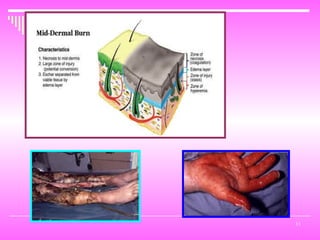
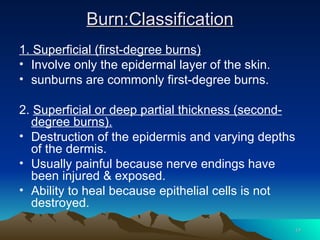
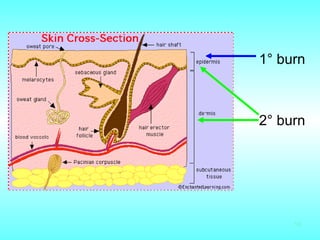
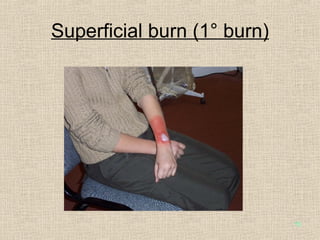
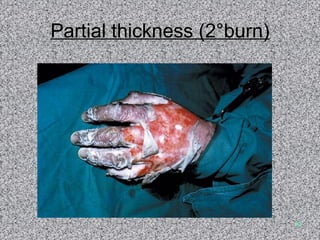
Burn:Classification 1. Superficial (first-degree burns) Involve only the epidermal layer of the skin. sunburns are commonly first-degree burns. 2.  Superficial or deep partial thickness (second-degree burns). Destruction of the epidermis and varying depths of the dermis. Usually painful because nerve endings have been injured & exposed. Ability to heal because epithelial cells is not destroyed.
1° burn 2° burn
Superficial burn (1° burn)
Partial thickness (2°burn)
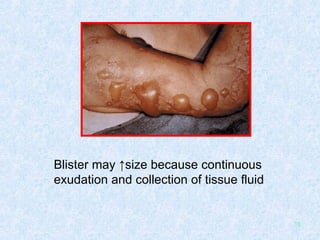
Burn:Classification Present of blisters indicates  superficial partial-thickness  injury. Blister may ↑size because continuous exudation and collection of tissue fluid. Healing phase of partial thickness, itching  and dryness because ↑vascularization of sebaceous glands, ↓reduction of secretions and ↑perspiration.
Blister may ↑size because continuous  exudation and collection of tissue fluid
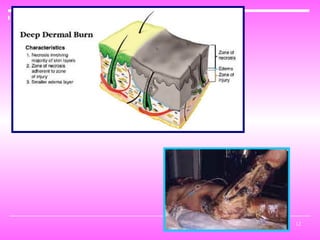
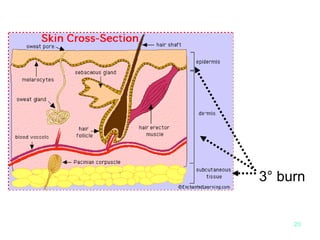
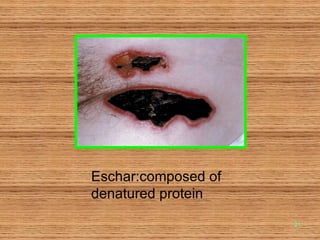
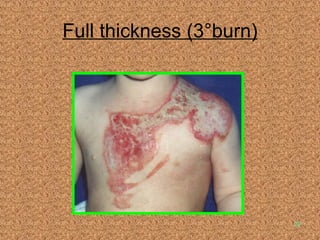
Burn:Classification 3.Full thickness (third-degree burn) Destruction of the epidermis and the entire dermis, subcutaneous layer, muscle and bone. Nerve ending are destroyed-painless wound. Eschar may be formed due to surface dehydration. Black networks of coagulate capillaries may be seen. Need skin grafting because the destroyed tissue is unable to epithelialize. Deep partial-thickness burn may convert to a full-thickness burn because of infection, trauma or ↓blood supply.
3° burn
Eschar:composed of denatured protein
Full thickness (3°burn)
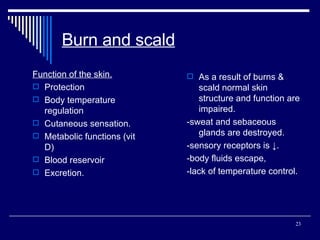
Burn and scald Function of the skin. Protection Body temperature regulation Cutaneous sensation. Metabolic functions (vit D) Blood reservoir Excretion. As a result of burns & scald normal skin structure and function are impaired. -sweat and sebaceous glands are destroyed. -sensory receptors is ↓. -body fluids escape, -lack of temperature control.
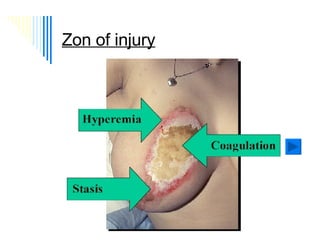
Pathopysiology Local tissue response Systemic response to burn injury. Local tissue response Damage to skin from thermal injury cause tissue changes know as zone of injury. If the heat is severe, a  zone of coagulation  is formed, in this area protein has been coagulated and the damage is irresversible.
Local tissue response Therefore, blood vessels are damage, resulting in ↓perfusion. Zon of statis Poor blood flow and tissue edema  will cause risk for death over a few hours or days. Further necrosis can happen, because other factors e.g dehydration and infection. Due to these wound have to be clean/care, hydration and prevention of infection are essential to limit further destruction.
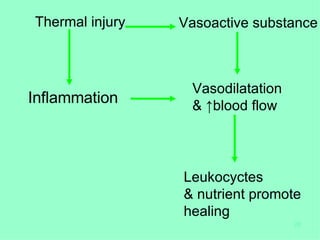
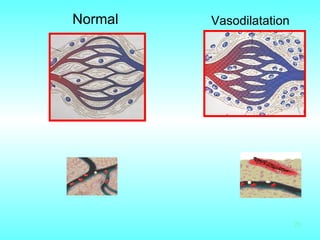
Local tissue response Zone of hyperemia  or inflammation is at the outer edge of the burn. Here blood flow is ↑because of vasodilation. Vasodilation because of the release of vasoactive substances. ↑ blood flow brings leukocytes and nutrients to promote wound healing.
Zon of injury
Thermal injury Inflammation Vasodilatation & ↑blood flow Leukocyctes  & nutrient promote  healing Vasoactive substance
Normal Vasodilatation
Systemic response to burn injury: severe burn Every organ system is affected by a major burn injury. Systemic changes known as burn shock develop with a burn greater than 25% of the total body surface area (TBSA)-major burn injury. Damaged tissue released cellular mediators and vasoactive substances. E.g, histamine, serotonin & prostaglandins
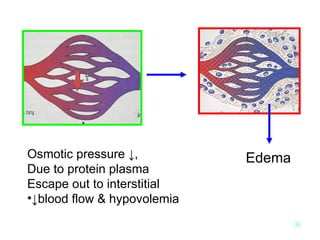
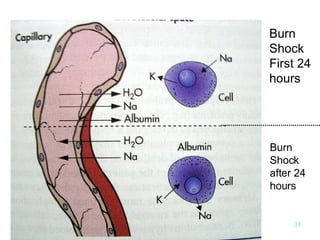
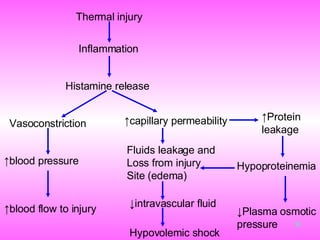
Systemic response to burn injury These substances induce a systemic inflammatory response and cause vasoconstriction & capillary permeability Vasoconstriction occur for a short period due to vascular system attempts to compensate for fluids loss. Vascular permeability, resulting in hypovolemia and edema.  This phase begins at injury, peaks in 12-24 hours, and last for 48 to 72 hours
Edema Osmotic pressure ↓, Due to protein plasma Escape out to interstitial ↓ blood flow & hypovolemia
Intravascular Normal
Burn  Shock  First 24 hours Burn  Shock  after 24 hours
Thermal injury Inflammation Histamine release Vasoconstriction ↑ blood pressure ↑ blood flow to injury ↑ capillary permeability Fluids leakage and Loss from injury Site (edema) ↓ intravascular fluid Hypovolemic shock ↑ Protein  leakage Hypoproteinemia ↓ Plasma osmotic pressure
Factors determining severity of burns Size of burn Depth of burn Age of victim Body part involved Mechanism of injury History of cardiac, pulmonary, renal, or hepatic disease  Injuries sustained at time of burn.
Effects of a severe burn Cardiovascular Respiratory Immune Integumentary Gastrointestinal Urinary
Cardiovascular system Blood pressure falls-fluid leaks from intravascular to interstitial (sodium and protein) When blood pressure is low, pulse rate ↑. Blood flow in intravascular is concentrated and cause static. Cardiac output ↓,  Due to that tissue perfusion ↓,
Hematologic changes Some RBC is destroys to the burn injury.-anemia Thrombocytopenia, abnormal platelet function, depressed  fibrinogen levels, deficit plasma clotting factors. Life span ↓RBC. Blood loss during diagnostic and therapeutic procedure.
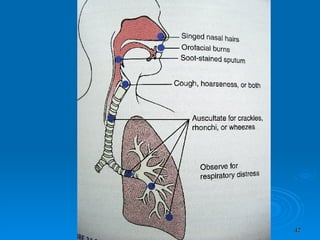
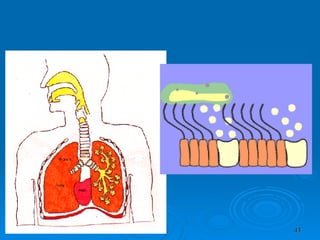
Respiration system Majority of deaths from fire are due to smoke inhalation. Pulmonary damage can be from direct inhalation injury or systemic respond to the injury. Damage to cilia and cell in the airway-inflammation. Mucociliary transport mechanism not functioning-bronchial congestion and infection. Pulmonary edema, fluids escape to interstitial.  Airway obstruction.
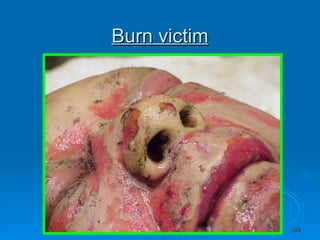
Factors determining inhalation injury or potential airway obstruction Burns to face and neck Singed hairs, nasal hair, beard, eyelids or eyelashes Intraoral charcoal, especially on teeth and gums Hoarseness Smell of smoke on victims clothes or on victim. Respiratory distress. Copious sputum production.
 
 
Features of respiratory failure   Inability to speak due to dyspnea  Sweating  Apparent exhaustion/tired Tachycardia  Tachypnea [R. Rate > 40 /min in adults ]
Management Anaesthetic consultation  High flow oxygen  Tracheobronchial [ bronchoscopy]  Physiotherapy  Close monitoring [preferably ICU ]  Ventilatory support  Hemodynamic support, when required
Gastrointestinal Burn >20% experience ↓peristalsis, gastric distention and ↑risk of aspiration. Paralytic ileus due to secondary to burn trauma. Stress ulcer (stomach/duodenum) due to burn injury. Indication of stress ulcer-malena stool or hematemesis. These signs suggest gastric or duodenal erosion (Curling`s ulcer) Gastric distention and nausea may lead to vomiting.
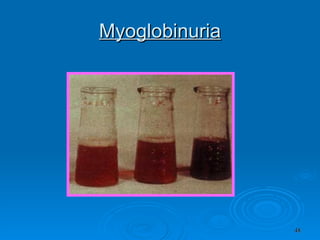
Urinary system Hypovolemic state, blood flow to kidney ↓, causing renal ischemia. If this continues, acute renal failure may develop. Full thickness and electrical burns, myoglobin (from muscle breakdown) and heamoglobin (from RBC breakdown) are released into the bloodstream and occlude renal tubules. Adequate fluid replacement and diuretics can counteract this obstruction.
Myoglobinuria
Immunologic changes Skin barrier to invading organisms s destroyed, circulating levels of immunoglobulins are ↓ Changes in WBC both quantitative and qualitative. Depression of neutrophil, phagocytic and bactericidal activity is found after burn injury. All this changes in the immune system can make the burn patient more susceptible to infection.
Complications Early   Hypovolemia  Fluid overload  Renal dysfunction  Hemoglobinuria  Stress gastroduodenal ulcers  Pulmonary dysfunction  Local / systemic sepsis
Complications Late Scarring –hypertrophic, keloid  Contractures – limbs, neck  Disfigurement  Functional disability  Posttraumatic stress
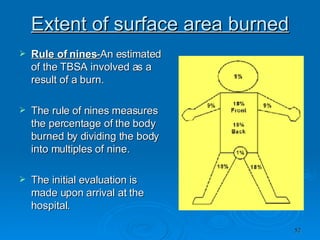
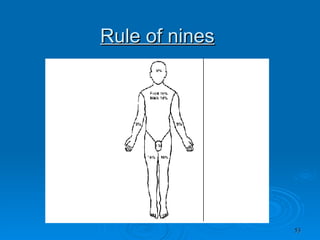
Extent of surface area burned Rule of   nines - An estimated of the TBSA involved as a result of a burn. The rule of nines measures the percentage of the body burned by dividing the body into multiples of nine. The initial evaluation is made upon arrival at the hospital.
Rule of nines
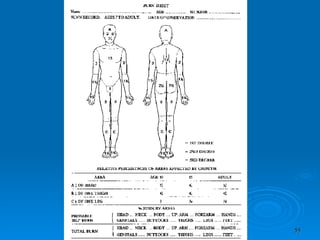
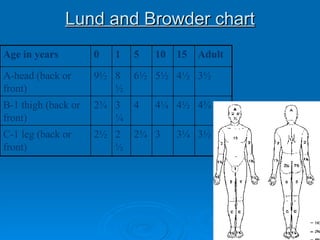
Lund and Browder More precise method of estimating  Recognizes that the percentage of BSA of various anatomic parts. By dividing the body into very small areas and providing an estimate of proportion of BSA accounted for by such body parts Includes, a table indicating the adjustment for different ages Head and trunk represent larger proportions of body surface in children.
 
Lund and Browder chart 3½   3¼   3   2¾   2½   2½   C-1 leg (back or front)   4¾   4½   4¼   4   3¼   2¾   B-1 thigh (back or front)   3½   4½   5½   6½   8½   9½   A-head (back or front)   Adult   15   10   5   1   0   Age in years
Review Types of burn injury Burn: Classification Pathophysiology:-  local tissue respond (zon of injury) systemic respond to burn injury. surface area burned:- Rule of nines and Lund & Bruder Browder
Prehospital patient management Rescuers must ensure their own safety, ones safety is establish:- Eliminate the heat source. Stabilizing the victim condition. Identify the type of burn. Preventing heat loss. Reducing wound contamination. Restrict jewelry and clothing is removed  Preparing for emergency transport.
Stop the burning process:Thermal burns. Stop the flame: extinguish the flame/lavage with water. Cool the burn Do not used ice water for cooling it causes vasoconstriction and may result in further injury. Cover the wound to minimize bacteria contamination Cover victim to prevent hypothermia.
Chemical burns Immediately remove the clothing and a hose or shower to lavage the involved area for a minimum 20 minutes. Electrical burns -Serious harm to victim and rescuer. -Ensure source of electrical has been disconnected. -Use non conductive device to remove victim. -If victim unresponsive, assess respiration and pulse. -Commenced CPR (cardiopulmonary resuscitation) if no pulse.
Radiation burn Usually minor, involved epidermal layer of skin. Helping the normal body mechanism to promote wound healing Shielding, establishing distance. Limit time of exposure to radioactive source.
Phases of treatment 3 phases of treatment can be identified in the care of the severely burned patient. The emergent phase refers to the first 24 to 48 hours after a burn. Acute phase Rehabilitation phase.
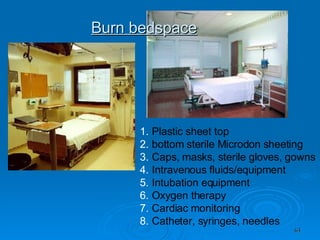
Burn bedspace Plastic sheet top bottom sterile Microdon sheeting Caps, masks, sterile gloves, gowns Intravenous fluids/equipment Intubation equipment Oxygen therapy Cardiac monitoring Catheter, syringes, needles
Isolation Reverse Isolation is designed to prevent transmission of microorganisms to patient. Burn patient are protected from infection from other patients, visitors, and health care providers.  Universal precautions, apply to all burn patients.  The minimum requirements: Universal Precautions are……………..
Universal Precautions 1. All patients have a private room 2. Handwashing is required before entering and after leaving the patient's room. 3. Gowns, gloves and masks,  4. Health care provider having URTI are not allowed to enter room
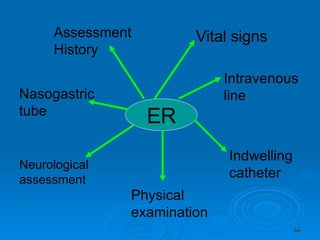
ER Assessment History Physical examination Intravenous line Nasogastric tube Indwelling catheter Neurological assessment Vital signs
Emergency department Management: Emergent/immediate phase 1. Assessment -Health history, how, when, duration of contact, location, age, medical history. 2. Physical examination Respiration, patent airway, sign of inhalation injury. Listen for hoarsenes and crackle. Need intubation. Observe for upper body burned, erythema or blistering of lips or buccal mucosa or pharynx Area of body burned-face, hands, feet, perineum.
Emergency department Management: Emergent/immediate phase Cardiac monitoring, is indicated for cardiac history, electrical injury or respiratory problems. Vital signs-BP, PR. For severe burn an arterial catheter is used for blood pressure. Large bore intravenous lines and an indwelling urinary catheter are inserted to assess and monitor fluid intake and output. May assist in determining the extent of preburn renal function and fluids status.
Emergency department Management: Emergent/immediate phase Nurse needs to know the maximal volume of fluid the patient should receive. Infusion pumps and rate controller are useful devices for correctly delivery. Insert nasogastric tube to remove gastric juice, which can prevent aspiration and vomiting. The neurologic assessment focuses on the pateint`s levels of consciousness, psychologic s  status, pain, behavior and anxiety.
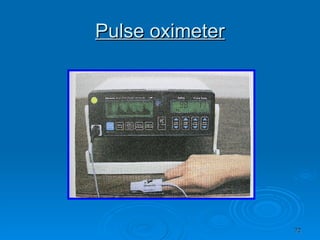
Support vital sign If the patient has no pulse and not breathing, begin CPR. Establish airway-nasotracheal suction and endotracheal intubation.-oxygen 100% via face mask. Connect to cardiac monitor and observe for arrhytmia. Pulse oximeter-assessment for patient oxygen  saturation.
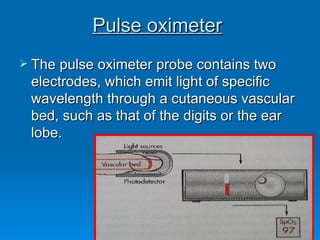
Pulse oximeter The pulse oximeter probe contains two electrodes, which emit light of specific wavelength through a cutaneous vascular bed, such as that of the digits or the ear lobe.
Pulse oximeter
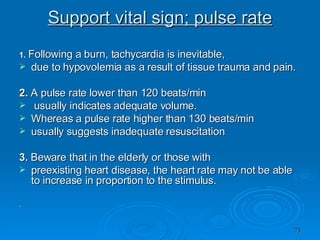
Support vital sign; pulse rate 1.   Following a burn, tachycardia is inevitable, due to hypovolemia as a result of tissue trauma and pain. 2.  A pulse rate lower than 120 beats/min usually indicates adequate volume. Whereas a pulse rate higher than 130 beats/min usually suggests inadequate resuscitation 3.  Beware that in the elderly or those with preexisting heart disease, the heart rate may not be able to increase in proportion to the stimulus. .
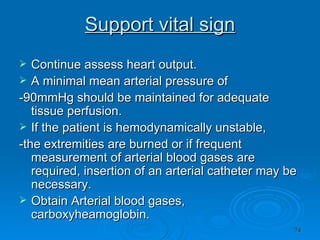
Support vital sign Continue assess heart output. A minimal mean arterial pressure of -90mmHg should be maintained for adequate tissue perfusion. If the patient is hemodynamically unstable, -the extremities are burned or if frequent measurement of arterial blood gases are required, insertion of an arterial catheter may be necessary. Obtain Arterial blood gases, carboxyheamoglobin.
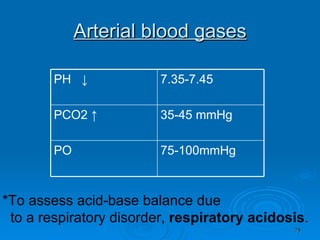
Arterial blood gases *To assess acid-base balance due to a respiratory disorder,  respiratory acidosis . 75-100mmHg PO  35-45 mmHg PCO2 ↑ 7.35-7.45 PH  ↓
Support vital sign Cover patient to maintain body temperature and to prevent wound contamination Initiate fluids replacement  Urine output, this is the single best monitor of fluid replacement. Weight should be measured daily, as changes in weight from  admission allow an assessment of fluid balance
Insert Foley catheter   1.Foley catheter should be placed in all patients undergoing resuscitation for severe burns and in patients with smaller burns with a history of difficulty voiding.  2. A loose-fitting catheter should be placed to prevent urethral stricture.  3.The catheter should remain in place throughout resuscitation.  4. Acceptable values are 0.5ml/kg/hr in an adult and at least 1ml/kg/hr in a child
Summary; Emergent phase
Emergency Management Site   -Maintain clear airway  -Remove from source of injury  -Prevent ongoing thermal injury  -Keep others safe  -Arrange prompt transfer to Burns Unit
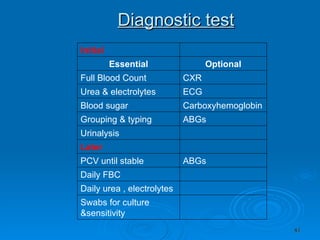
Emergency Management Hospital   Priorities   -Airway  -IV access – large bore peripheral line  -Analgesia – diluted opioids, - intravenously, large bore. Catheterise bladder  Investigations [ see box below]
Diagnostic test   Swabs for culture &sensitivity   Daily urea , electrolytes   Daily FBC ABGs PCV until stable   Later   Urinalysis ABGs Grouping & typing Carboxyhemoglobin Blood sugar ECG Urea & electrolytes CXR Full Blood Count Optional Essential   Initial
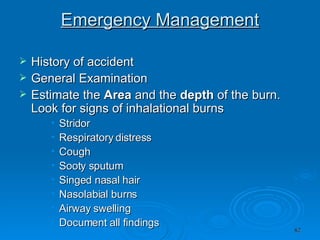
Emergency Management History of accident  General Examination  Estimate the  Area  and the  depth  of the burn. Look for signs of inhalational burns  Stridor  Respiratory distress  Cough  Sooty sputum  Singed nasal hair  Nasolabial burns  Airway swelling  Document all findings
  Estimation of Total Body Surface Area Burned [ TBSA] Major Burns  : >10 % BSA deep burn in a child                          >25% BSA deep burn in an adult  All major burns WILL need parenteral fluid resuscitation , since the main cause of early mortality is  Burns Shock.
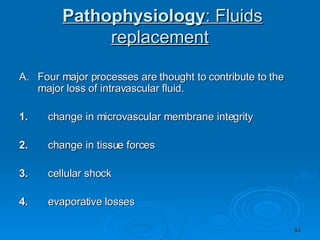
Pathophysiology : Fluids replacement A.  Four major processes are thought to contribute to the major loss of intravascular fluid. 1.        change in microvascular membrane integrity 2.        change in tissue forces 3.        cellular shock 4.        evaporative losses  
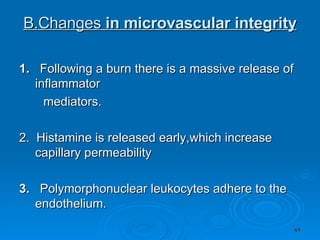
B.Changes  in microvascular integrity 1.  Following a burn there is a massive release of inflammator mediators. 2.  Histamine is released early,which increase capillary permeability 3.  Polymorphonuclear leukocytes adhere to the endothelium.
   C.  Changes in tissue forces   1. The capillary leak causes fluid and plasma proteins to shift from the intravascular to the interstitial space.  2. This causes hypoproteinemia, decreased intravascular osmotic pressure and increased interstitial osmotic pressure.  3.Edema results when the volume of interstitial fluid exceeds the capacity of  the lymphatics to remove it.
E. Evaporative losses Additional evaporative losses through the burn wound can be between 4 and 20 times greater than normal and persist until complete wound closure is obtained.
Fluids resuscitation Lactated Ringer’s (LR) solution is the most popular resuscitation fluid used.  There are numerous formula that can be used for fluid  resuscitation.  No  fluid resuscitation formula has proven to be superior.  All formulas are only a starting point. Administered fluids through 2 large bore needle.
Fluids resuscitation Fluid prescription for adults commonly uses the Parkland Formula which is: 4cc X weight (kg) X %TBSA burn = cc’s for 1st 24 hours (Ringer's Lactated) First half of this total is administered over the first 8 hours, And the second half over the next 16 hours. Over 24 hours, >30% burn, provide 5% dextrose
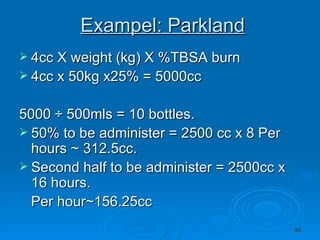
Exampel: Parkland 4cc X weight (kg) X %TBSA burn 4cc x 50kg x25% = 5000cc 5000 ÷ 500mls = 10 bottles. 50% to be administer = 2500 cc x 8 Per hours ~ 312.5cc. Second half to be administer = 2500cc x 16 hours. Per hour~156.25cc
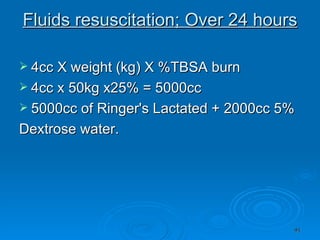
Fluids resuscitation; Over 24 hours 4cc X weight (kg) X %TBSA burn 4cc x 50kg x25% = 5000cc 5000cc of Ringer's Lactated + 2000cc 5%  Dextrose water.
Fluids resuscitation Calculate fluid deficit and decide fluid requirement  2 types of fluids – Crystalloids  and  Colloids   Crystalloids  [e.g. –Ringer’s Lactate]  -Several formulas: Evans, Brookland etc.  3 – 4 ml / Kg. bodyweight / % Burn  during the first 24 hours, -half of which is to be given in the first 8 hrs [ from the time of injury ]
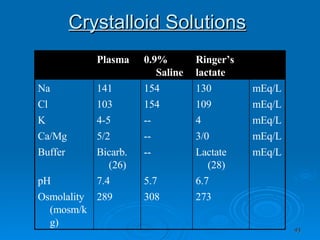
Crystalloid Solutions      273 308 289 Osmolality (mosm/kg)    6.7 5.7 7.4 pH mEq/L Lactate (28) -- Bicarb. (26) Buffer mEq/L 3/0 -- 5/2 Ca/Mg mEq/L 4 -- 4-5 K mEq/L 109 154 103 Cl mEq/L 130 154 141 Na     Ringer’s  lactate  0.9% Saline  Plasma   
Colloids  [e.g. Human Albumin Solution ]   1.Proteins in plasma generate osmotic pressure and serve to maintain the intravascular volume.  -The administration of colloid compensates for this protein lost. 2 .  Much debate exists as to when capillary integrity is established and when or if colloid should be given 3.  Early infusion of colloid solutions may decrease overall fluid requirements and reduce edema.  However, excessive use of colloid risks iatrogenic pulmonary complications.
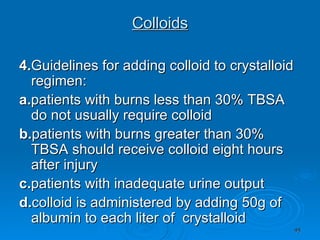
Colloids 4. Guidelines for adding colloid to crystalloid regimen: a. patients with burns less than 30% TBSA do not usually require colloid b. patients with burns greater than 30% TBSA should receive colloid eight hours after injury c. patients with inadequate urine output d. colloid is administered by adding 50g of albumin to each liter of  crystalloid
Rate of infusion Adult formula : Fluid first 24 hours = 4cc x % total body surface x body weight (one half in first 8 hours) if shock present give bolus of fluid until perfusion restored    then use constant rate, adjusting as needed  after 10 to 12 hrs.  gradually decrease infusion rate to avoid excess edema while maintaining perfusion
Intravenous Access A peripheral vein catheter through nonburn tissue is the route preferred for fluid administration.  A central line or pulmonary artery line is only occasionally needed to monitor the patient during the initial resuscitation period and is removed as soon as it is no longer needed.  The possibilities for intravenous access are:
Choices For Access First choice: Peripheral vein; nonburn area   Second choice: Central vein; nonburn area   Third choice: Peripheral vein; burn area   Worst choice: Central vein; burn area
Choices For Access Central venous access 1.  subclavian vein- most desirable site due to lowest infection rate 2.  internal jugular vein 3.  femoral vein
Interventions: Ineffective airway clearance Baseline assessments respiratory status. Chest x-ray, ABG, vital signs. Intubation for burns of chest, face or neck. Maintain the head of the bed at 30°. Turn patient side to side every 2 hours to prevent hypostatic pneumonia.
Ineffective airway clearance Encourage coughing and deep breathing exercise promote airway clearance of mucus and fibrin. Chest physiotherapy -  via percussion and vibrations, assists with bronchial drainage Positioning - patients are shaken and turned side to side every two hours to aid in secretion mobilization Early ambulation - allows adequate air exchange in lung regions that are normally hyperventilated while the patient is recumbent
Ineffective airway clearance To keep airway clear, suction the client frequently, removes accumulated secretions that cannot be removed by spontaneous cough.  Caring of patient with nasotracheal tube placement and orotracheal-more than 3 week tracheostomy performed. Aseptic procedure for suctioning. Patients should be hyperoxygenated with 100% oxygen prior to suctioning. This should not be continued for more than 15 seconds without further oxygenation.  Vagal stimulation and bradycardia are possible complications.
Ineffective airway clearance Medication to dilate constricted bronchial passages.-via intravenous/inhalants to control bronchospasms and wheezing. Proper positioning to ↓the work of breathing and promote chest expansion. Ensure adequate tissue oxygenation-pulse oxymeter. Oxygenation therapy, ↓oxygenation saturation.
Burn victim
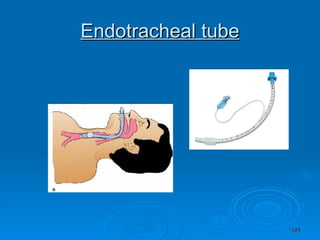
Endotracheal tube
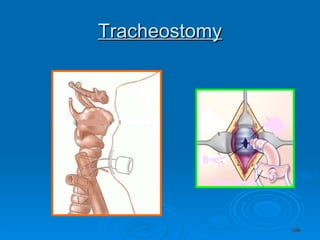
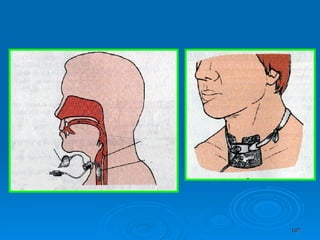
Tracheostomy


Burn And Scald

  • 1.
  • 2.
    Burn & ScaldEtiology A burn injury occurs as a result of destruction of the skin from direct or indirect thermal force. Burn are caused by exposure to heat, electric current, radiation or chemical. Scald burn result from exposure to moist heat (steam or hot fluids) and involve superficial.
  • 3.
    Types of burninjury Thermal burns. Chemical burns Electrical burns Radiation burns.
  • 4.
    Types of burninjury Thermal burns -exposure to dry heat (flames) or moist heat (steam and hot liquids). -Most common burn injuries Chemical burns -Direct skin contact with either acid or alkaline agents -destroys tissue protein, leading to necrosis. -Burn cause by alkalis are more difficult to neutralize than are burns caused by acid. -Alkalis tends to have deeper penetration.
  • 5.
  • 6.
    Types of burninjury Electrical burns . -severity depends on the type and duration of current, and amount of voltage. -difficult to assess, due to electrical insulator. Radiation burns. -sunburn or radiation treatment of cancer. -involve outermost layers tends to be superficial. -all function skin is intact.
  • 7.
  • 8.
    Burn & Scald:Epidemiology1 million people suffer thermal injury each year in U.S. 45,000 persons are admitted to hospital. ↑45,000 persons die as a result of burn injury. The direct cost of treating a burn injury can be high. Cost are higher for large burns.
  • 9.
    Burn The depth of a burn is dependent on the temperature of the burning agent and the length of time. Tissue damage may occur at temperatures of 48°c. Irreversible damage to the dermis occurs at 70°. Burn injuries are described as:- 1.Superficial (first-degree burns) 2.Superficial or deep partial thickness (second-degree burns). 3.Full thickness (third-degree burn)
  • 10.
  • 11.
  • 12.
  • 13.
    Burn:Classification 1. Superficial(first-degree burns) Involve only the epidermal layer of the skin. sunburns are commonly first-degree burns. 2. Superficial or deep partial thickness (second-degree burns). Destruction of the epidermis and varying depths of the dermis. Usually painful because nerve endings have been injured & exposed. Ability to heal because epithelial cells is not destroyed.
  • 14.
  • 15.
  • 16.
  • 17.
    Burn:Classification Present ofblisters indicates superficial partial-thickness injury. Blister may ↑size because continuous exudation and collection of tissue fluid. Healing phase of partial thickness, itching and dryness because ↑vascularization of sebaceous glands, ↓reduction of secretions and ↑perspiration.
  • 18.
    Blister may ↑sizebecause continuous exudation and collection of tissue fluid
  • 19.
    Burn:Classification 3.Full thickness(third-degree burn) Destruction of the epidermis and the entire dermis, subcutaneous layer, muscle and bone. Nerve ending are destroyed-painless wound. Eschar may be formed due to surface dehydration. Black networks of coagulate capillaries may be seen. Need skin grafting because the destroyed tissue is unable to epithelialize. Deep partial-thickness burn may convert to a full-thickness burn because of infection, trauma or ↓blood supply.
  • 20.
  • 21.
  • 22.
  • 23.
    Burn and scaldFunction of the skin. Protection Body temperature regulation Cutaneous sensation. Metabolic functions (vit D) Blood reservoir Excretion. As a result of burns & scald normal skin structure and function are impaired. -sweat and sebaceous glands are destroyed. -sensory receptors is ↓. -body fluids escape, -lack of temperature control.
  • 24.
    Pathopysiology Local tissueresponse Systemic response to burn injury. Local tissue response Damage to skin from thermal injury cause tissue changes know as zone of injury. If the heat is severe, a zone of coagulation is formed, in this area protein has been coagulated and the damage is irresversible.
  • 25.
    Local tissue responseTherefore, blood vessels are damage, resulting in ↓perfusion. Zon of statis Poor blood flow and tissue edema will cause risk for death over a few hours or days. Further necrosis can happen, because other factors e.g dehydration and infection. Due to these wound have to be clean/care, hydration and prevention of infection are essential to limit further destruction.
  • 26.
    Local tissue responseZone of hyperemia or inflammation is at the outer edge of the burn. Here blood flow is ↑because of vasodilation. Vasodilation because of the release of vasoactive substances. ↑ blood flow brings leukocytes and nutrients to promote wound healing.
  • 27.
  • 28.
    Thermal injury InflammationVasodilatation & ↑blood flow Leukocyctes & nutrient promote healing Vasoactive substance
  • 29.
  • 30.
    Systemic response toburn injury: severe burn Every organ system is affected by a major burn injury. Systemic changes known as burn shock develop with a burn greater than 25% of the total body surface area (TBSA)-major burn injury. Damaged tissue released cellular mediators and vasoactive substances. E.g, histamine, serotonin & prostaglandins
  • 31.
    Systemic response toburn injury These substances induce a systemic inflammatory response and cause vasoconstriction & capillary permeability Vasoconstriction occur for a short period due to vascular system attempts to compensate for fluids loss. Vascular permeability, resulting in hypovolemia and edema. This phase begins at injury, peaks in 12-24 hours, and last for 48 to 72 hours
  • 32.
    Edema Osmotic pressure↓, Due to protein plasma Escape out to interstitial ↓ blood flow & hypovolemia
  • 33.
  • 34.
    Burn Shock First 24 hours Burn Shock after 24 hours
  • 35.
    Thermal injury InflammationHistamine release Vasoconstriction ↑ blood pressure ↑ blood flow to injury ↑ capillary permeability Fluids leakage and Loss from injury Site (edema) ↓ intravascular fluid Hypovolemic shock ↑ Protein leakage Hypoproteinemia ↓ Plasma osmotic pressure
  • 36.
    Factors determining severityof burns Size of burn Depth of burn Age of victim Body part involved Mechanism of injury History of cardiac, pulmonary, renal, or hepatic disease Injuries sustained at time of burn.
  • 37.
    Effects of asevere burn Cardiovascular Respiratory Immune Integumentary Gastrointestinal Urinary
  • 38.
    Cardiovascular system Bloodpressure falls-fluid leaks from intravascular to interstitial (sodium and protein) When blood pressure is low, pulse rate ↑. Blood flow in intravascular is concentrated and cause static. Cardiac output ↓, Due to that tissue perfusion ↓,
  • 39.
    Hematologic changes SomeRBC is destroys to the burn injury.-anemia Thrombocytopenia, abnormal platelet function, depressed fibrinogen levels, deficit plasma clotting factors. Life span ↓RBC. Blood loss during diagnostic and therapeutic procedure.
  • 40.
    Respiration system Majorityof deaths from fire are due to smoke inhalation. Pulmonary damage can be from direct inhalation injury or systemic respond to the injury. Damage to cilia and cell in the airway-inflammation. Mucociliary transport mechanism not functioning-bronchial congestion and infection. Pulmonary edema, fluids escape to interstitial. Airway obstruction.
  • 41.
    Factors determining inhalationinjury or potential airway obstruction Burns to face and neck Singed hairs, nasal hair, beard, eyelids or eyelashes Intraoral charcoal, especially on teeth and gums Hoarseness Smell of smoke on victims clothes or on victim. Respiratory distress. Copious sputum production.
  • 42.
  • 43.
  • 44.
    Features of respiratoryfailure Inability to speak due to dyspnea Sweating Apparent exhaustion/tired Tachycardia Tachypnea [R. Rate > 40 /min in adults ]
  • 45.
    Management Anaesthetic consultation High flow oxygen Tracheobronchial [ bronchoscopy] Physiotherapy Close monitoring [preferably ICU ] Ventilatory support Hemodynamic support, when required
  • 46.
    Gastrointestinal Burn >20%experience ↓peristalsis, gastric distention and ↑risk of aspiration. Paralytic ileus due to secondary to burn trauma. Stress ulcer (stomach/duodenum) due to burn injury. Indication of stress ulcer-malena stool or hematemesis. These signs suggest gastric or duodenal erosion (Curling`s ulcer) Gastric distention and nausea may lead to vomiting.
  • 47.
    Urinary system Hypovolemicstate, blood flow to kidney ↓, causing renal ischemia. If this continues, acute renal failure may develop. Full thickness and electrical burns, myoglobin (from muscle breakdown) and heamoglobin (from RBC breakdown) are released into the bloodstream and occlude renal tubules. Adequate fluid replacement and diuretics can counteract this obstruction.
  • 48.
  • 49.
    Immunologic changes Skinbarrier to invading organisms s destroyed, circulating levels of immunoglobulins are ↓ Changes in WBC both quantitative and qualitative. Depression of neutrophil, phagocytic and bactericidal activity is found after burn injury. All this changes in the immune system can make the burn patient more susceptible to infection.
  • 50.
    Complications Early Hypovolemia Fluid overload Renal dysfunction Hemoglobinuria Stress gastroduodenal ulcers Pulmonary dysfunction Local / systemic sepsis
  • 51.
    Complications Late Scarring–hypertrophic, keloid Contractures – limbs, neck Disfigurement Functional disability Posttraumatic stress
  • 52.
    Extent of surfacearea burned Rule of nines - An estimated of the TBSA involved as a result of a burn. The rule of nines measures the percentage of the body burned by dividing the body into multiples of nine. The initial evaluation is made upon arrival at the hospital.
  • 53.
  • 54.
    Lund and BrowderMore precise method of estimating Recognizes that the percentage of BSA of various anatomic parts. By dividing the body into very small areas and providing an estimate of proportion of BSA accounted for by such body parts Includes, a table indicating the adjustment for different ages Head and trunk represent larger proportions of body surface in children.
  • 55.
  • 56.
    Lund and Browderchart 3½ 3¼ 3 2¾ 2½ 2½ C-1 leg (back or front) 4¾ 4½ 4¼ 4 3¼ 2¾ B-1 thigh (back or front) 3½ 4½ 5½ 6½ 8½ 9½ A-head (back or front) Adult 15 10 5 1 0 Age in years
  • 57.
    Review Types ofburn injury Burn: Classification Pathophysiology:- local tissue respond (zon of injury) systemic respond to burn injury. surface area burned:- Rule of nines and Lund & Bruder Browder
  • 58.
    Prehospital patient managementRescuers must ensure their own safety, ones safety is establish:- Eliminate the heat source. Stabilizing the victim condition. Identify the type of burn. Preventing heat loss. Reducing wound contamination. Restrict jewelry and clothing is removed Preparing for emergency transport.
  • 59.
    Stop the burningprocess:Thermal burns. Stop the flame: extinguish the flame/lavage with water. Cool the burn Do not used ice water for cooling it causes vasoconstriction and may result in further injury. Cover the wound to minimize bacteria contamination Cover victim to prevent hypothermia.
  • 60.
    Chemical burns Immediatelyremove the clothing and a hose or shower to lavage the involved area for a minimum 20 minutes. Electrical burns -Serious harm to victim and rescuer. -Ensure source of electrical has been disconnected. -Use non conductive device to remove victim. -If victim unresponsive, assess respiration and pulse. -Commenced CPR (cardiopulmonary resuscitation) if no pulse.
  • 61.
    Radiation burn Usuallyminor, involved epidermal layer of skin. Helping the normal body mechanism to promote wound healing Shielding, establishing distance. Limit time of exposure to radioactive source.
  • 62.
    Phases of treatment3 phases of treatment can be identified in the care of the severely burned patient. The emergent phase refers to the first 24 to 48 hours after a burn. Acute phase Rehabilitation phase.
  • 63.
    Burn bedspace Plasticsheet top bottom sterile Microdon sheeting Caps, masks, sterile gloves, gowns Intravenous fluids/equipment Intubation equipment Oxygen therapy Cardiac monitoring Catheter, syringes, needles
  • 64.
    Isolation Reverse Isolationis designed to prevent transmission of microorganisms to patient. Burn patient are protected from infection from other patients, visitors, and health care providers. Universal precautions, apply to all burn patients. The minimum requirements: Universal Precautions are……………..
  • 65.
    Universal Precautions 1.All patients have a private room 2. Handwashing is required before entering and after leaving the patient's room. 3. Gowns, gloves and masks, 4. Health care provider having URTI are not allowed to enter room
  • 66.
    ER Assessment HistoryPhysical examination Intravenous line Nasogastric tube Indwelling catheter Neurological assessment Vital signs
  • 67.
    Emergency department Management:Emergent/immediate phase 1. Assessment -Health history, how, when, duration of contact, location, age, medical history. 2. Physical examination Respiration, patent airway, sign of inhalation injury. Listen for hoarsenes and crackle. Need intubation. Observe for upper body burned, erythema or blistering of lips or buccal mucosa or pharynx Area of body burned-face, hands, feet, perineum.
  • 68.
    Emergency department Management:Emergent/immediate phase Cardiac monitoring, is indicated for cardiac history, electrical injury or respiratory problems. Vital signs-BP, PR. For severe burn an arterial catheter is used for blood pressure. Large bore intravenous lines and an indwelling urinary catheter are inserted to assess and monitor fluid intake and output. May assist in determining the extent of preburn renal function and fluids status.
  • 69.
    Emergency department Management:Emergent/immediate phase Nurse needs to know the maximal volume of fluid the patient should receive. Infusion pumps and rate controller are useful devices for correctly delivery. Insert nasogastric tube to remove gastric juice, which can prevent aspiration and vomiting. The neurologic assessment focuses on the pateint`s levels of consciousness, psychologic s status, pain, behavior and anxiety.
  • 70.
    Support vital signIf the patient has no pulse and not breathing, begin CPR. Establish airway-nasotracheal suction and endotracheal intubation.-oxygen 100% via face mask. Connect to cardiac monitor and observe for arrhytmia. Pulse oximeter-assessment for patient oxygen saturation.
  • 71.
    Pulse oximeter Thepulse oximeter probe contains two electrodes, which emit light of specific wavelength through a cutaneous vascular bed, such as that of the digits or the ear lobe.
  • 72.
  • 73.
    Support vital sign;pulse rate 1.   Following a burn, tachycardia is inevitable, due to hypovolemia as a result of tissue trauma and pain. 2.  A pulse rate lower than 120 beats/min usually indicates adequate volume. Whereas a pulse rate higher than 130 beats/min usually suggests inadequate resuscitation 3.  Beware that in the elderly or those with preexisting heart disease, the heart rate may not be able to increase in proportion to the stimulus. .
  • 74.
    Support vital signContinue assess heart output. A minimal mean arterial pressure of -90mmHg should be maintained for adequate tissue perfusion. If the patient is hemodynamically unstable, -the extremities are burned or if frequent measurement of arterial blood gases are required, insertion of an arterial catheter may be necessary. Obtain Arterial blood gases, carboxyheamoglobin.
  • 75.
    Arterial blood gases*To assess acid-base balance due to a respiratory disorder, respiratory acidosis . 75-100mmHg PO 35-45 mmHg PCO2 ↑ 7.35-7.45 PH ↓
  • 76.
    Support vital signCover patient to maintain body temperature and to prevent wound contamination Initiate fluids replacement Urine output, this is the single best monitor of fluid replacement. Weight should be measured daily, as changes in weight from admission allow an assessment of fluid balance
  • 77.
    Insert Foley catheter 1.Foley catheter should be placed in all patients undergoing resuscitation for severe burns and in patients with smaller burns with a history of difficulty voiding. 2. A loose-fitting catheter should be placed to prevent urethral stricture. 3.The catheter should remain in place throughout resuscitation. 4. Acceptable values are 0.5ml/kg/hr in an adult and at least 1ml/kg/hr in a child
  • 78.
  • 79.
    Emergency Management Site -Maintain clear airway -Remove from source of injury -Prevent ongoing thermal injury -Keep others safe -Arrange prompt transfer to Burns Unit
  • 80.
    Emergency Management Hospital Priorities -Airway -IV access – large bore peripheral line -Analgesia – diluted opioids, - intravenously, large bore. Catheterise bladder Investigations [ see box below]
  • 81.
    Diagnostic test  Swabs for culture &sensitivity   Daily urea , electrolytes   Daily FBC ABGs PCV until stable   Later   Urinalysis ABGs Grouping & typing Carboxyhemoglobin Blood sugar ECG Urea & electrolytes CXR Full Blood Count Optional Essential   Initial
  • 82.
    Emergency Management Historyof accident General Examination Estimate the Area and the depth of the burn. Look for signs of inhalational burns Stridor Respiratory distress Cough Sooty sputum Singed nasal hair Nasolabial burns Airway swelling Document all findings
  • 83.
      Estimation ofTotal Body Surface Area Burned [ TBSA] Major Burns : >10 % BSA deep burn in a child                         >25% BSA deep burn in an adult All major burns WILL need parenteral fluid resuscitation , since the main cause of early mortality is Burns Shock.
  • 84.
    Pathophysiology : Fluidsreplacement A. Four major processes are thought to contribute to the major loss of intravascular fluid. 1.       change in microvascular membrane integrity 2.       change in tissue forces 3.       cellular shock 4.       evaporative losses  
  • 85.
    B.Changes inmicrovascular integrity 1. Following a burn there is a massive release of inflammator mediators. 2. Histamine is released early,which increase capillary permeability 3. Polymorphonuclear leukocytes adhere to the endothelium.
  • 86.
      C. Changes in tissue forces 1. The capillary leak causes fluid and plasma proteins to shift from the intravascular to the interstitial space. 2. This causes hypoproteinemia, decreased intravascular osmotic pressure and increased interstitial osmotic pressure. 3.Edema results when the volume of interstitial fluid exceeds the capacity of the lymphatics to remove it.
  • 87.
    E. Evaporative lossesAdditional evaporative losses through the burn wound can be between 4 and 20 times greater than normal and persist until complete wound closure is obtained.
  • 88.
    Fluids resuscitation LactatedRinger’s (LR) solution is the most popular resuscitation fluid used. There are numerous formula that can be used for fluid resuscitation. No fluid resuscitation formula has proven to be superior. All formulas are only a starting point. Administered fluids through 2 large bore needle.
  • 89.
    Fluids resuscitation Fluidprescription for adults commonly uses the Parkland Formula which is: 4cc X weight (kg) X %TBSA burn = cc’s for 1st 24 hours (Ringer's Lactated) First half of this total is administered over the first 8 hours, And the second half over the next 16 hours. Over 24 hours, >30% burn, provide 5% dextrose
  • 90.
    Exampel: Parkland 4ccX weight (kg) X %TBSA burn 4cc x 50kg x25% = 5000cc 5000 ÷ 500mls = 10 bottles. 50% to be administer = 2500 cc x 8 Per hours ~ 312.5cc. Second half to be administer = 2500cc x 16 hours. Per hour~156.25cc
  • 91.
    Fluids resuscitation; Over24 hours 4cc X weight (kg) X %TBSA burn 4cc x 50kg x25% = 5000cc 5000cc of Ringer's Lactated + 2000cc 5% Dextrose water.
  • 92.
    Fluids resuscitation Calculatefluid deficit and decide fluid requirement 2 types of fluids – Crystalloids and Colloids Crystalloids [e.g. –Ringer’s Lactate] -Several formulas: Evans, Brookland etc. 3 – 4 ml / Kg. bodyweight / % Burn during the first 24 hours, -half of which is to be given in the first 8 hrs [ from the time of injury ]
  • 93.
    Crystalloid Solutions   273 308 289 Osmolality (mosm/kg)   6.7 5.7 7.4 pH mEq/L Lactate (28) -- Bicarb. (26) Buffer mEq/L 3/0 -- 5/2 Ca/Mg mEq/L 4 -- 4-5 K mEq/L 109 154 103 Cl mEq/L 130 154 141 Na   Ringer’s lactate 0.9% Saline Plasma  
  • 94.
    Colloids [e.g.Human Albumin Solution ] 1.Proteins in plasma generate osmotic pressure and serve to maintain the intravascular volume. -The administration of colloid compensates for this protein lost. 2 .  Much debate exists as to when capillary integrity is established and when or if colloid should be given 3. Early infusion of colloid solutions may decrease overall fluid requirements and reduce edema. However, excessive use of colloid risks iatrogenic pulmonary complications.
  • 95.
    Colloids 4. Guidelinesfor adding colloid to crystalloid regimen: a. patients with burns less than 30% TBSA do not usually require colloid b. patients with burns greater than 30% TBSA should receive colloid eight hours after injury c. patients with inadequate urine output d. colloid is administered by adding 50g of albumin to each liter of crystalloid
  • 96.
    Rate of infusionAdult formula : Fluid first 24 hours = 4cc x % total body surface x body weight (one half in first 8 hours) if shock present give bolus of fluid until perfusion restored   then use constant rate, adjusting as needed after 10 to 12 hrs. gradually decrease infusion rate to avoid excess edema while maintaining perfusion
  • 97.
    Intravenous Access Aperipheral vein catheter through nonburn tissue is the route preferred for fluid administration. A central line or pulmonary artery line is only occasionally needed to monitor the patient during the initial resuscitation period and is removed as soon as it is no longer needed. The possibilities for intravenous access are:
  • 98.
    Choices For AccessFirst choice: Peripheral vein; nonburn area Second choice: Central vein; nonburn area Third choice: Peripheral vein; burn area Worst choice: Central vein; burn area
  • 99.
    Choices For AccessCentral venous access 1. subclavian vein- most desirable site due to lowest infection rate 2. internal jugular vein 3. femoral vein
  • 100.
    Interventions: Ineffective airwayclearance Baseline assessments respiratory status. Chest x-ray, ABG, vital signs. Intubation for burns of chest, face or neck. Maintain the head of the bed at 30°. Turn patient side to side every 2 hours to prevent hypostatic pneumonia.
  • 101.
    Ineffective airway clearanceEncourage coughing and deep breathing exercise promote airway clearance of mucus and fibrin. Chest physiotherapy - via percussion and vibrations, assists with bronchial drainage Positioning - patients are shaken and turned side to side every two hours to aid in secretion mobilization Early ambulation - allows adequate air exchange in lung regions that are normally hyperventilated while the patient is recumbent
  • 102.
    Ineffective airway clearanceTo keep airway clear, suction the client frequently, removes accumulated secretions that cannot be removed by spontaneous cough. Caring of patient with nasotracheal tube placement and orotracheal-more than 3 week tracheostomy performed. Aseptic procedure for suctioning. Patients should be hyperoxygenated with 100% oxygen prior to suctioning. This should not be continued for more than 15 seconds without further oxygenation. Vagal stimulation and bradycardia are possible complications.
  • 103.
    Ineffective airway clearanceMedication to dilate constricted bronchial passages.-via intravenous/inhalants to control bronchospasms and wheezing. Proper positioning to ↓the work of breathing and promote chest expansion. Ensure adequate tissue oxygenation-pulse oxymeter. Oxygenation therapy, ↓oxygenation saturation.
  • 104.
  • 105.
  • 106.
  • 107.
  • 108.