FIREBALL FORMATION AND COMBUSTION
OPTIMIZATION IN A BOILER
KUMARASWAMY HIREMATH
Senior Research Fellow, MTD
CPRI- Bangalore
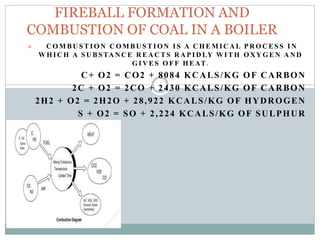
 C O M B U S T I O N C O M B U S T I O N I S A C H E M I C A L P R O C E S S I N
W H I C H A S U B S TA N C E R E AC T S R A P I D LY W I T H O XY G E N A N D
G I V E S O F F H E AT.
C+ O2 = CO2 + 8084 KCALS/KG OF CARBON
2C + O2 = 2CO + 2430 KCALS/KG OF CARBON
2H2 + O2 = 2H2O + 28,922 KCALS/KG OF HYDROGEN
S + O2 = SO + 2,224 KCALS/KG OF SULPHUR
FIREBALL FORMATION AND
COMBUSTION OF COAL IN A BOILER
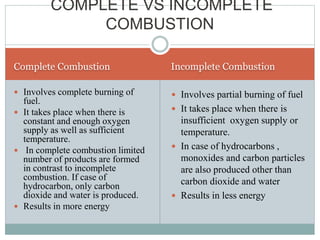
Complete Combustion Incomplete Combustion
 Involves complete burning of
fuel.
 It takes place when there is
constant and enough oxygen
supply as well as sufficient
temperature.
 In complete combustion limited
number of products are formed
in contrast to incomplete
combustion. If case of
hydrocarbon, only carbon
dioxide and water is produced.
 Results in more energy
 Involves partial burning of fuel
 It takes place when there is
insufficient oxygen supply or
temperature.
 In case of hydrocarbons ,
monoxides and carbon particles
are also produced other than
carbon dioxide and water
 Results in less energy
COMPLETE VS INCOMPLETE
COMBUSTION
REASONS FOR INCOMPLETE COMBUSTION
 Lack of Oxygen/Air
 Improper turbulence
 Improper fuel sizing
 Inadequate fuel flows
 Inadequate fuel velocities
 Improper temperatures
3T’S OF COMBUSTION
 Temperature high enough to ignite the fuel
 Turbulence vigorous enough for the fuel constituents to be
exposed to the oxygen of the air
 Time long enough to assure complete combustion.
The three requirements are best met by pulverized coal,
which is forced into the furnace by an air stream under
high pressure and is ignited as it enters through a nozzle.
fireball & Optimization
 Contactless temperature measurement technologies, which are
used in coal fired boilers to measure temperature distribution
 Acoustic technology
 Laser technology
 Regarding software optimization systems for advanced
combustion control there is number of different solutions
 Coal combustion modelling Using CFD & Empirical models
 CFD models are very complex and are used for deep
investigation of the process. Information provided from CFD
analysis could be used for manual tuning of a boiler.
Cont..
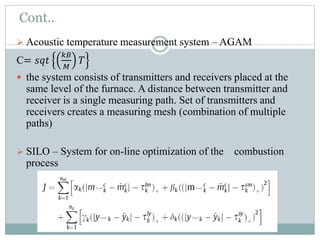
 Acoustic temperature measurement system – AGAM
C= 𝑠𝑞𝑡
𝑘𝐵
𝑀
𝑇
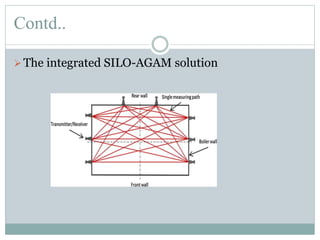
 the system consists of transmitters and receivers placed at the
same level of the furnace. A distance between transmitter and
receiver is a single measuring path. Set of transmitters and
receivers creates a measuring mesh (combination of multiple
paths)
 SILO – System for on-line optimization of the combustion
process
Contd..
The integrated SILO-AGAM solution
The fireball control algorithm
Fuel and air supply system in boiler, where A1, A2, A3 and A4 are the burners supplied from
pulverizer 1, B1, B2, B3 and B4 are the burners supplied
from pulverizer 2, C1, C2, C3 and C4 are the burners supplied from pulverizer 3, D1, D2, D3
and D4 are the burners supplied from pulverizer 4, E1, E2, E3 and E4 are the
burners supplied from pulverizer 5, F1, F2, F3 and F4 are the burners supplied from
pulverizer 6
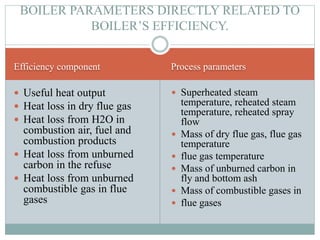
Efficiency component Process parameters
 Useful heat output
 Heat loss in dry flue gas
 Heat loss from H2O in
combustion air, fuel and
combustion products
 Heat loss from unburned
carbon in the refuse
 Heat loss from unburned
combustible gas in flue
gases
 Superheated steam
temperature, reheated steam
temperature, reheated spray
flow
 Mass of dry flue gas, flue gas
temperature
 flue gas temperature
 Mass of unburned carbon in
fly and bottom ash
 Mass of combustible gases in
 flue gases
BOILER PARAMETERS DIRECTLY RELATED TO
BOILER’S EFFICIENCY.
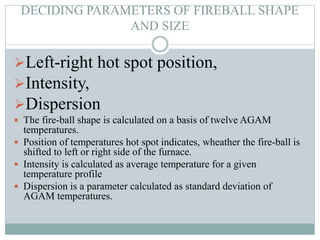
DECIDING PARAMETERS OF FIREBALL SHAPE
AND SIZE
Left-right hot spot position,
Intensity,
Dispersion
 The fire-ball shape is calculated on a basis of twelve AGAM
temperatures.
 Position of temperatures hot spot indicates, wheather the fire-ball is
shifted to left or right side of the furnace.
 Intensity is calculated as average temperature for a given
temperature profile
 Dispersion is a parameter calculated as standard deviation of
AGAM temperatures.
Contd..
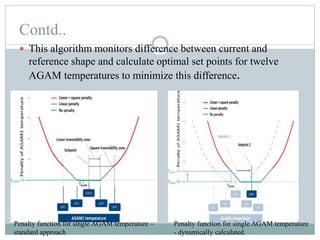
 This algorithm monitors difference between current and
reference shape and calculate optimal set points for twelve
AGAM temperatures to minimize this difference.
Penalty function for single AGAM temperature –
standard approach
Penalty function for single AGAM temperature
- dynamically calculated.
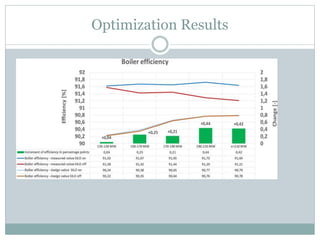
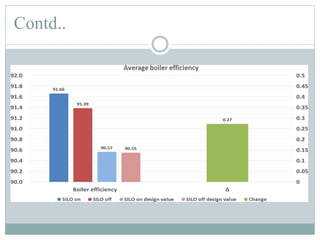
Optimization Results
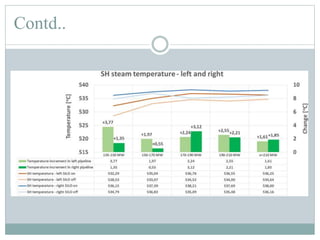
Contd..
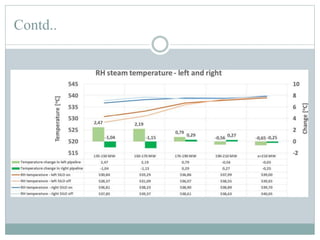
Contd..
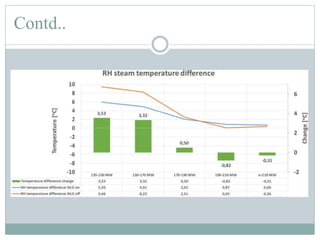
Contd..
Contd..

FIREBALL FORMATION AND COMBUSTION OPTIMIZATION IN A BOILER

  • 1.
    FIREBALL FORMATION ANDCOMBUSTION OPTIMIZATION IN A BOILER KUMARASWAMY HIREMATH Senior Research Fellow, MTD CPRI- Bangalore
  • 2.
     C OM B U S T I O N C O M B U S T I O N I S A C H E M I C A L P R O C E S S I N W H I C H A S U B S TA N C E R E AC T S R A P I D LY W I T H O XY G E N A N D G I V E S O F F H E AT. C+ O2 = CO2 + 8084 KCALS/KG OF CARBON 2C + O2 = 2CO + 2430 KCALS/KG OF CARBON 2H2 + O2 = 2H2O + 28,922 KCALS/KG OF HYDROGEN S + O2 = SO + 2,224 KCALS/KG OF SULPHUR FIREBALL FORMATION AND COMBUSTION OF COAL IN A BOILER
  • 3.
    Complete Combustion IncompleteCombustion  Involves complete burning of fuel.  It takes place when there is constant and enough oxygen supply as well as sufficient temperature.  In complete combustion limited number of products are formed in contrast to incomplete combustion. If case of hydrocarbon, only carbon dioxide and water is produced.  Results in more energy  Involves partial burning of fuel  It takes place when there is insufficient oxygen supply or temperature.  In case of hydrocarbons , monoxides and carbon particles are also produced other than carbon dioxide and water  Results in less energy COMPLETE VS INCOMPLETE COMBUSTION
  • 4.
    REASONS FOR INCOMPLETECOMBUSTION  Lack of Oxygen/Air  Improper turbulence  Improper fuel sizing  Inadequate fuel flows  Inadequate fuel velocities  Improper temperatures
  • 5.
    3T’S OF COMBUSTION Temperature high enough to ignite the fuel  Turbulence vigorous enough for the fuel constituents to be exposed to the oxygen of the air  Time long enough to assure complete combustion. The three requirements are best met by pulverized coal, which is forced into the furnace by an air stream under high pressure and is ignited as it enters through a nozzle.
  • 6.
    fireball & Optimization Contactless temperature measurement technologies, which are used in coal fired boilers to measure temperature distribution  Acoustic technology  Laser technology  Regarding software optimization systems for advanced combustion control there is number of different solutions  Coal combustion modelling Using CFD & Empirical models  CFD models are very complex and are used for deep investigation of the process. Information provided from CFD analysis could be used for manual tuning of a boiler.
  • 7.
    Cont..  Acoustic temperaturemeasurement system – AGAM C= 𝑠𝑞𝑡 𝑘𝐵 𝑀 𝑇  the system consists of transmitters and receivers placed at the same level of the furnace. A distance between transmitter and receiver is a single measuring path. Set of transmitters and receivers creates a measuring mesh (combination of multiple paths)  SILO – System for on-line optimization of the combustion process
  • 8.
  • 9.
    The fireball controlalgorithm Fuel and air supply system in boiler, where A1, A2, A3 and A4 are the burners supplied from pulverizer 1, B1, B2, B3 and B4 are the burners supplied from pulverizer 2, C1, C2, C3 and C4 are the burners supplied from pulverizer 3, D1, D2, D3 and D4 are the burners supplied from pulverizer 4, E1, E2, E3 and E4 are the burners supplied from pulverizer 5, F1, F2, F3 and F4 are the burners supplied from pulverizer 6
  • 10.
    Efficiency component Processparameters  Useful heat output  Heat loss in dry flue gas  Heat loss from H2O in combustion air, fuel and combustion products  Heat loss from unburned carbon in the refuse  Heat loss from unburned combustible gas in flue gases  Superheated steam temperature, reheated steam temperature, reheated spray flow  Mass of dry flue gas, flue gas temperature  flue gas temperature  Mass of unburned carbon in fly and bottom ash  Mass of combustible gases in  flue gases BOILER PARAMETERS DIRECTLY RELATED TO BOILER’S EFFICIENCY.
  • 11.
    DECIDING PARAMETERS OFFIREBALL SHAPE AND SIZE Left-right hot spot position, Intensity, Dispersion  The fire-ball shape is calculated on a basis of twelve AGAM temperatures.  Position of temperatures hot spot indicates, wheather the fire-ball is shifted to left or right side of the furnace.  Intensity is calculated as average temperature for a given temperature profile  Dispersion is a parameter calculated as standard deviation of AGAM temperatures.
  • 12.
    Contd..  This algorithmmonitors difference between current and reference shape and calculate optimal set points for twelve AGAM temperatures to minimize this difference. Penalty function for single AGAM temperature – standard approach Penalty function for single AGAM temperature - dynamically calculated.
  • 13.
  • 14.
  • 15.
  • 16.
  • 17.