


Fish
Fish is an excellent source of protein, and it is
interchangeable with meat in both quantity and
quality. Fish is rich in fat and provides energy for
work. It is interesting to note that fish fat is easy
to digest. Marine fishes are good source of
iodine and phosphorus but low in iron and
calcium.
Classification of Fish
• Fish (vertebrate) – covered with scales.

• Shellfish (invertebrate) – covered with some
  type of shell.
Determination of Fish Quality
The criteria of freshness are:
• the odor that is not objectionable;
• The eyes are clear and full, not sunken;
• The skin is shiny and tight;
• The gills are bright red; and
• The flesh is firm.
Composition and Nutritive Value
• Protein – has some percentage of protein content
  as with meat.
• Fish Protein Concentrate – also known as fish
  flour produced from dehydrated and defatted
  whole fish; used to supplement bread and cereal
  products consumed by man.
• Fat – lower fat content than beef exceptions are
  salmon, turbot, butterfish, and catfish which
  range from 11 to 20% fat and therefore resemble
  beef, and shellfish are notably low in fat.
• Water and Extractives – has higher water content
  than beef and lower in extractives.
• Carbohydrate – have some carbohydrate in
  the form of glycogen the sweet taste of
  various shellfish is due to the glucose formed
  by enzyme action from the glycogen.
• Mineral Content – edible os flesh of all meats
  is slightly higher in percentage of mineral
  matter than meat; shellfish has twice as much
  mineral as other kinds of fish.
• Vitamins – fat fish contain more Vitamin A
  than lean varieties.
Classification of Fish on the Basis of
            Their Fat Content
• Lean Fish – have less than 2% fat in their edible
  flesh; while flesh-fish fat is normally found in the
  liver.
• Medium Fat Fish – have from 2to 5% fat, white-
  fleshed fish, fat content is normally found in liver.
• Fat Fish – with more than 5% fat in the edible
  flesh, the flesh is usually highly pigmented (either
  yellow, pink or grayish) than that of the low-fat
  varieties, e.g. salmon, mackerel, etc.
Market Forms of Finfish
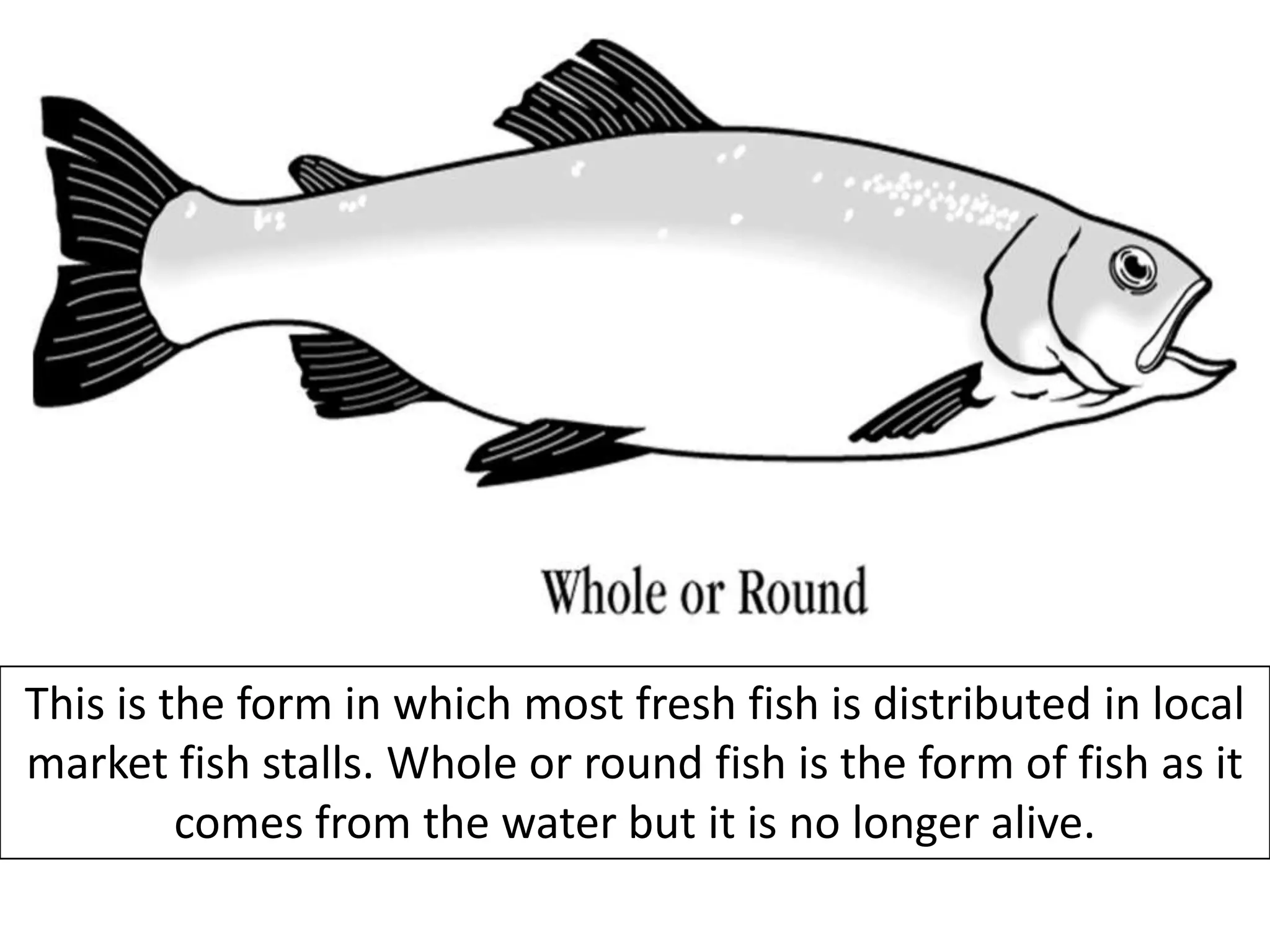
This is the form in which most fresh fish is distributed in local
market fish stalls. Whole or round fish is the form of fish as it
         comes from the water but it is no longer alive.
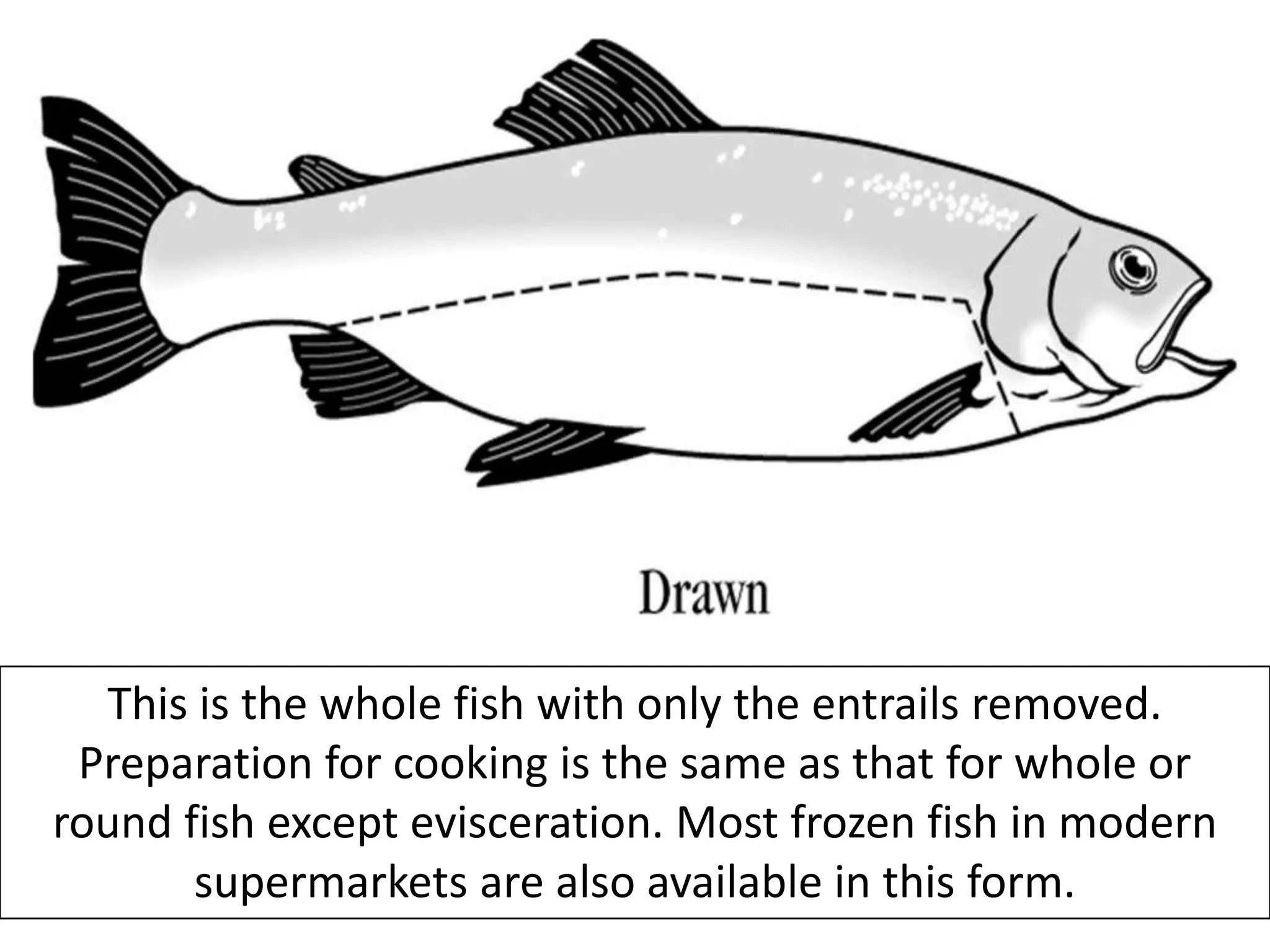
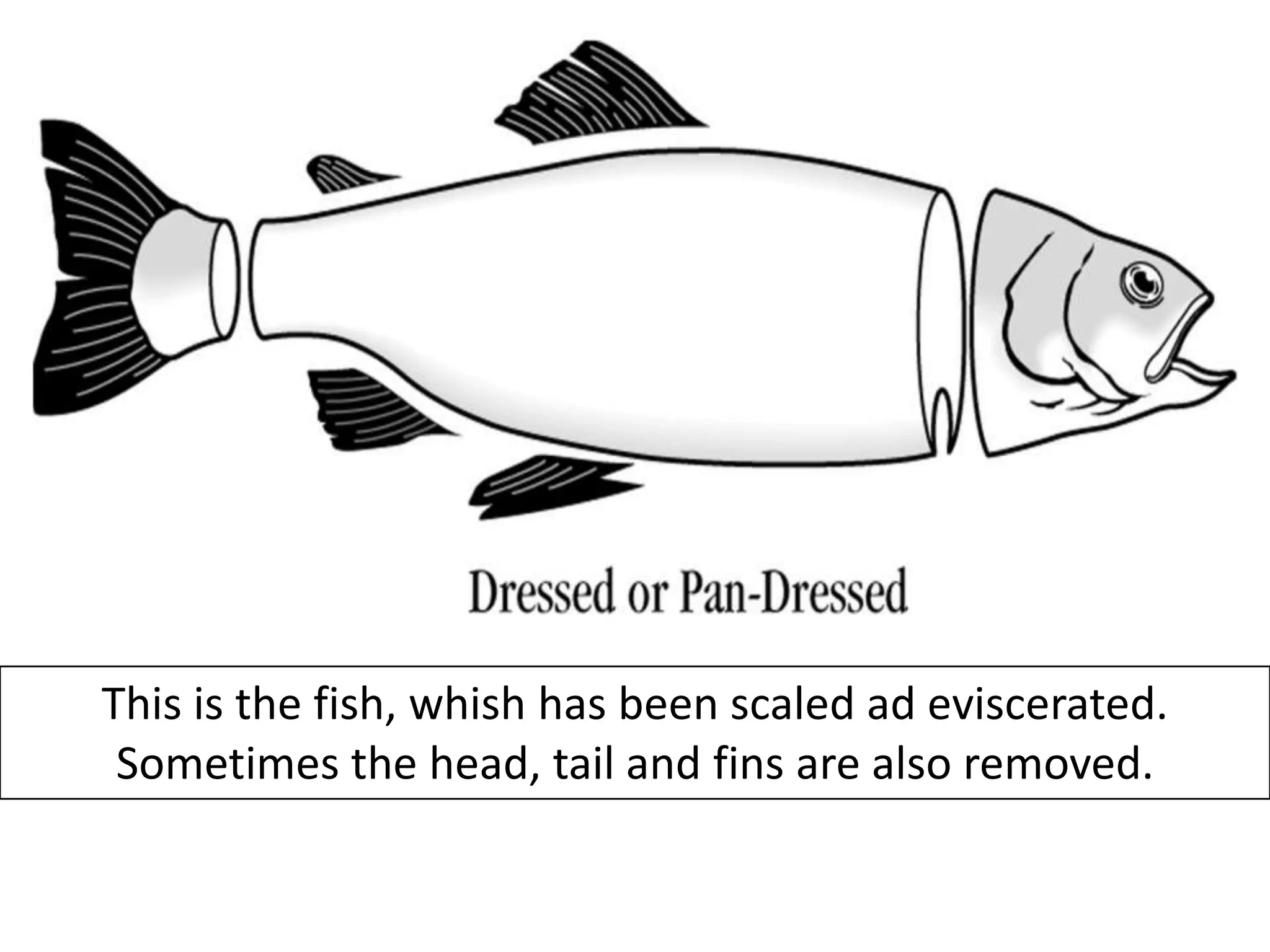
This is the whole fish with only the entrails removed.
 Preparation for cooking is the same as that for whole or
round fish except evisceration. Most frozen fish in modern
       supermarkets are also available in this form.
This is the fish, whish has been scaled ad eviscerated.
 Sometimes the head, tail and fins are also removed.
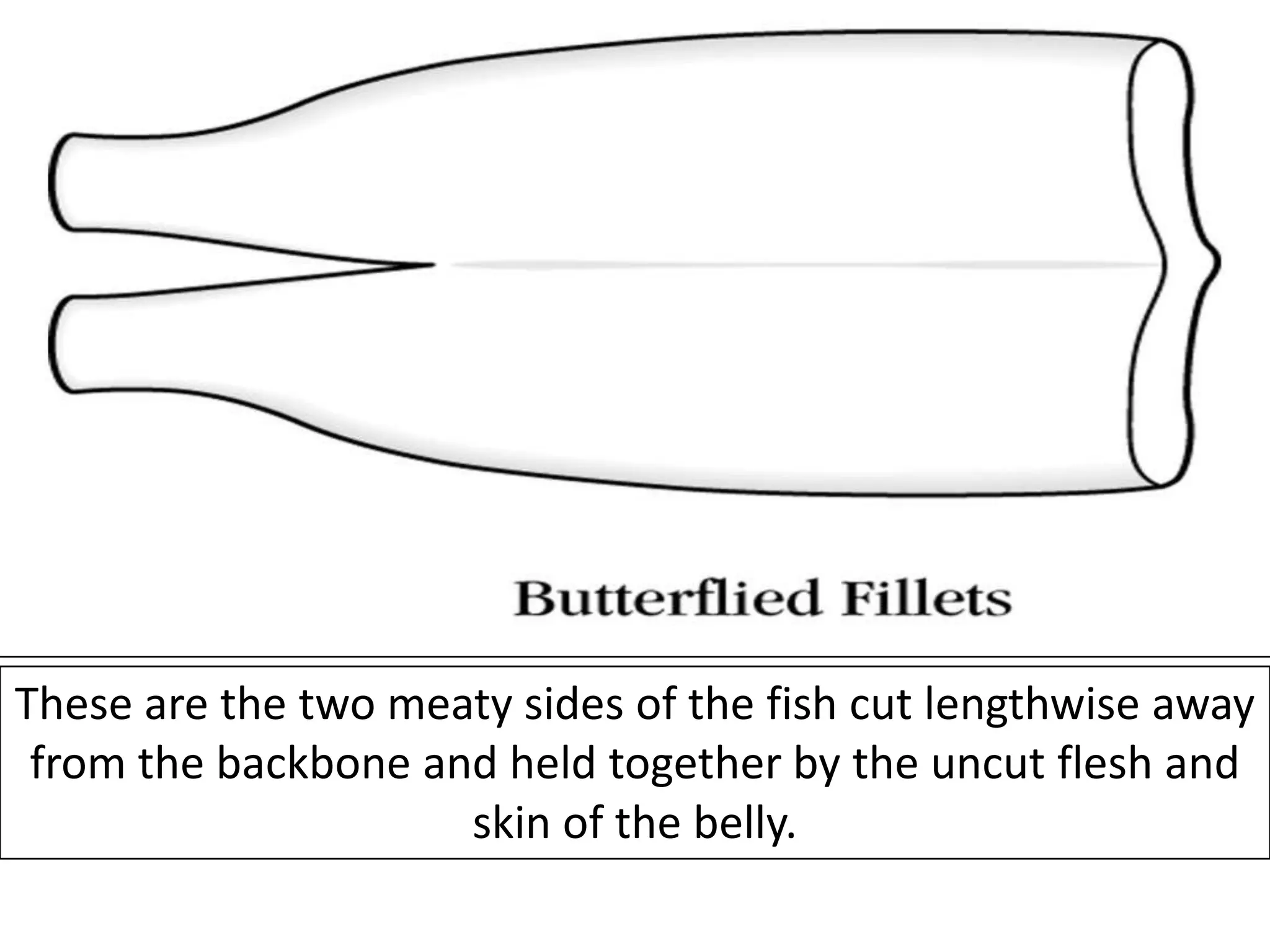
These are the two meaty sides of the fish cut lengthwise away
 from the backbone and held together by the uncut flesh and
                     skin of the belly.
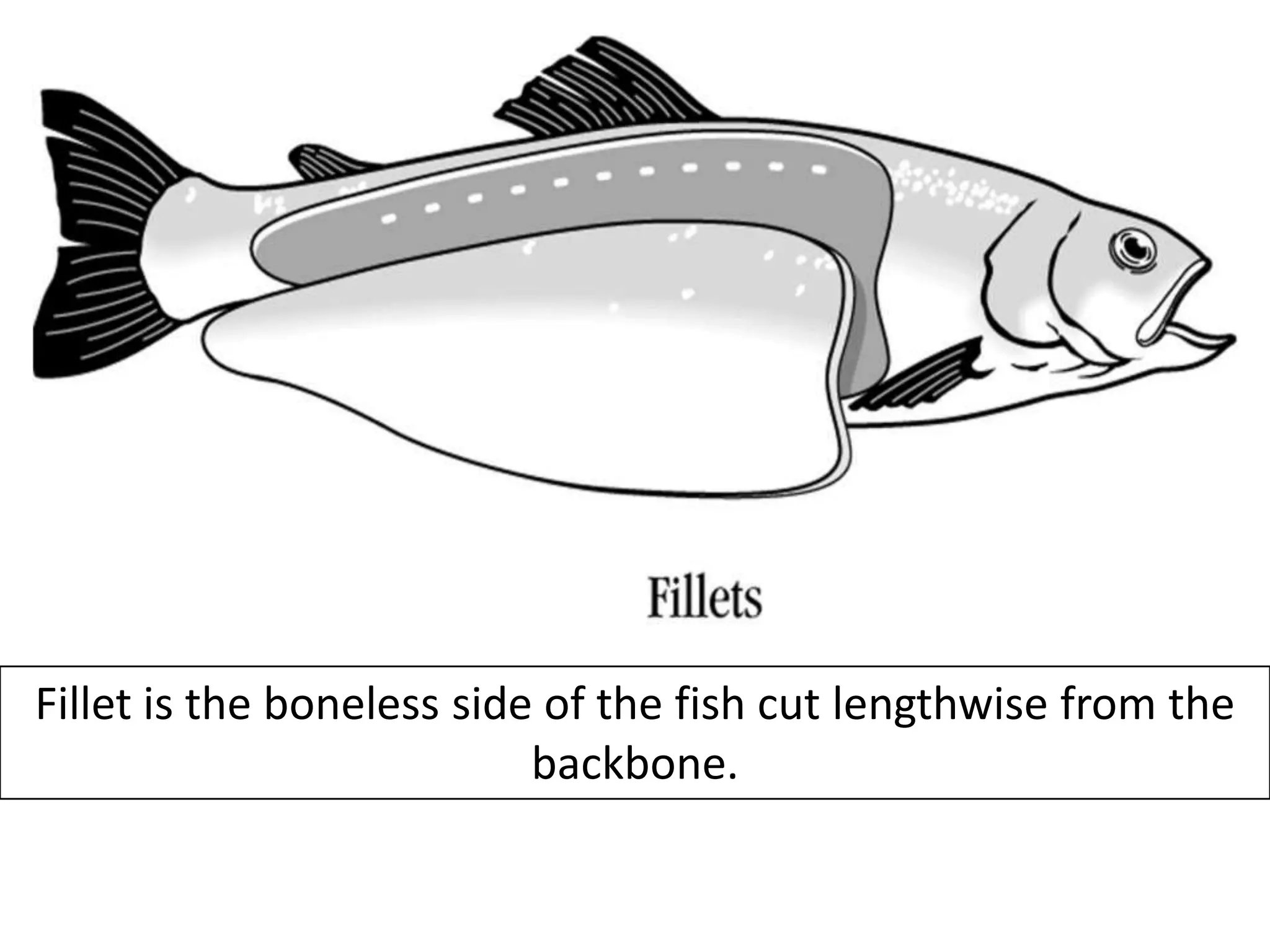
Fillet is the boneless side of the fish cut lengthwise from the
                           backbone.
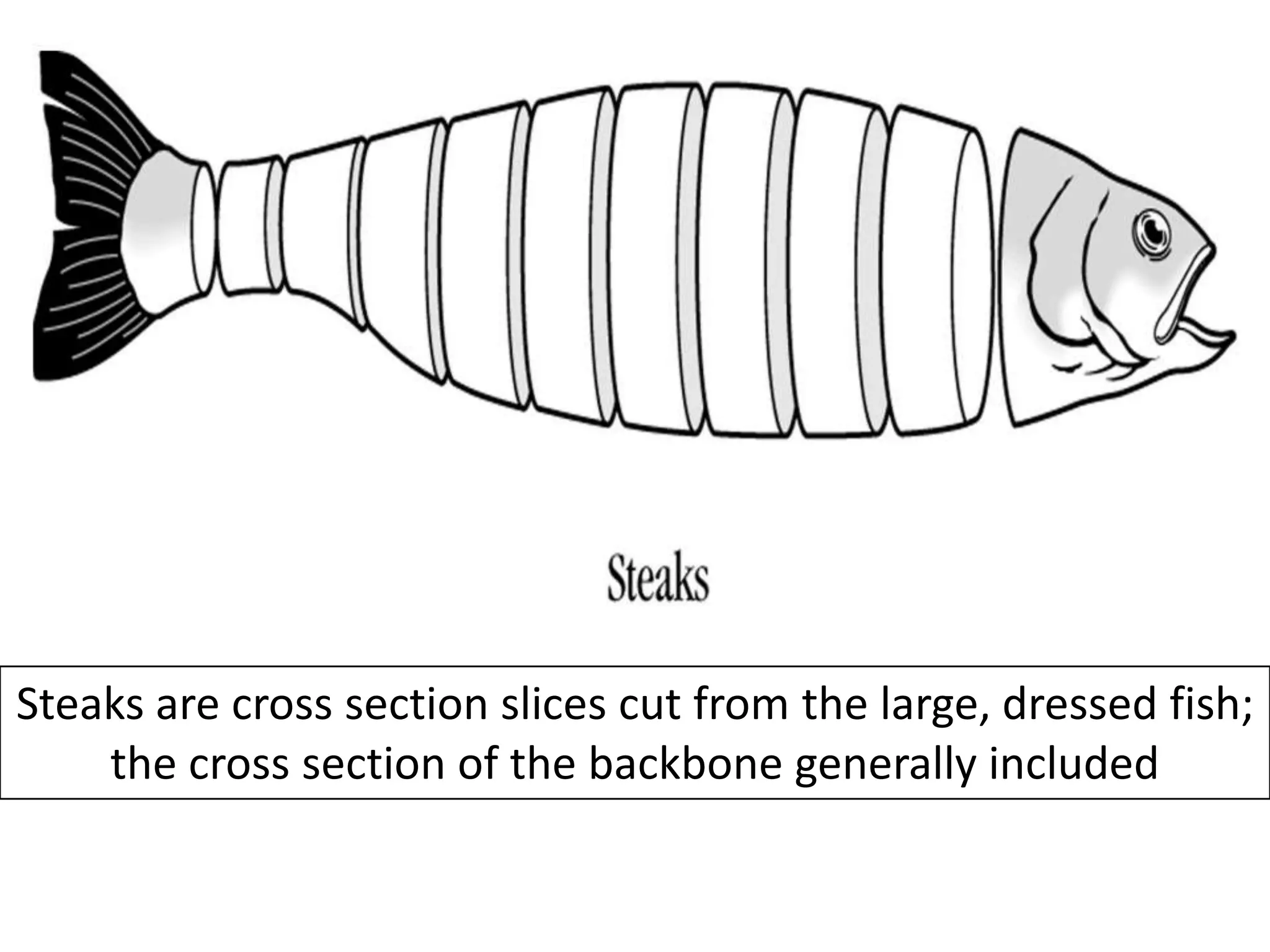
Steaks are cross section slices cut from the large, dressed fish;
    the cross section of the backbone generally included
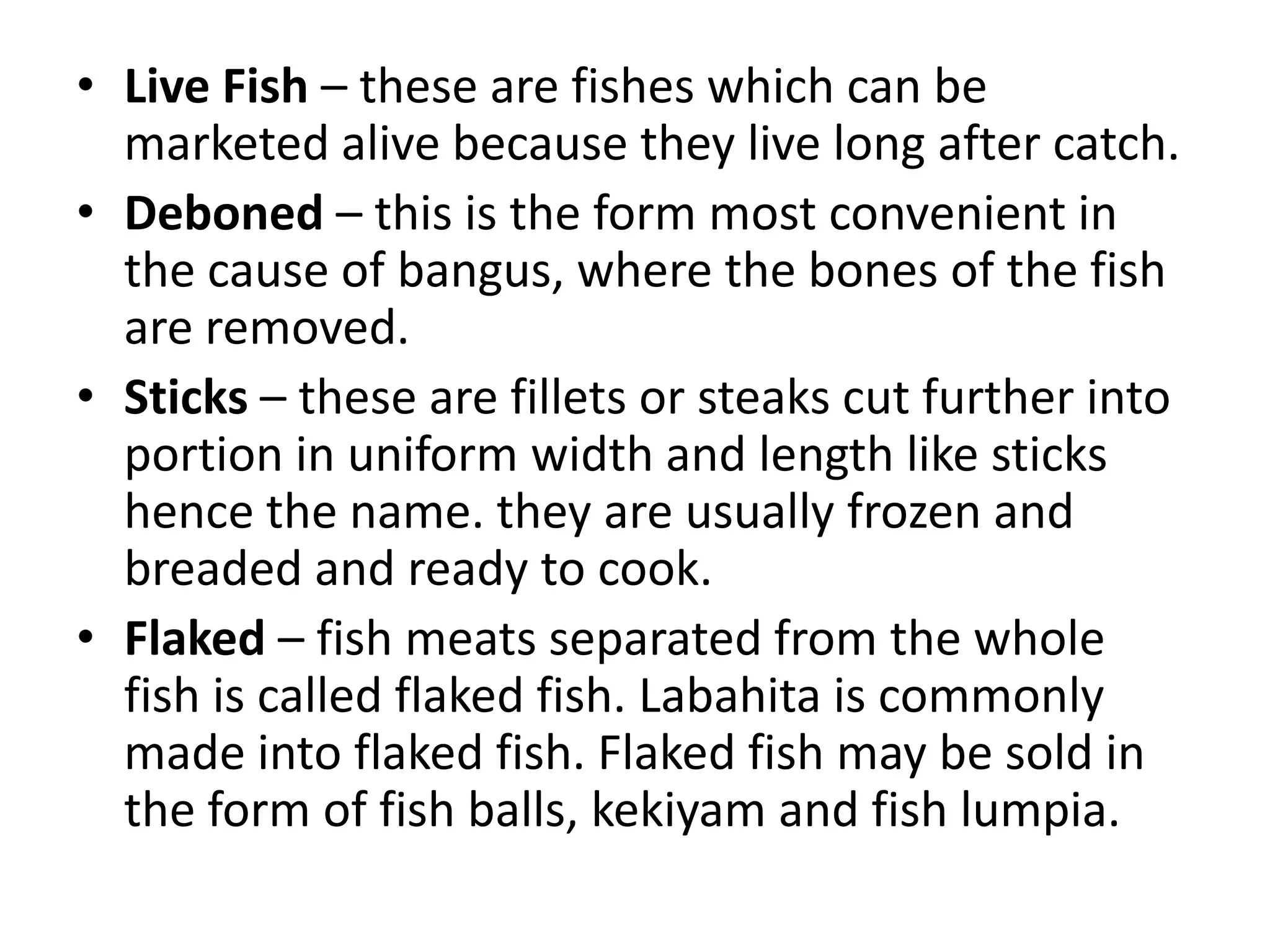
• Live Fish – these are fishes which can be
  marketed alive because they live long after catch.
• Deboned – this is the form most convenient in
  the cause of bangus, where the bones of the fish
  are removed.
• Sticks – these are fillets or steaks cut further into
  portion in uniform width and length like sticks
  hence the name. they are usually frozen and
  breaded and ready to cook.
• Flaked – fish meats separated from the whole
  fish is called flaked fish. Labahita is commonly
  made into flaked fish. Flaked fish may be sold in
  the form of fish balls, kekiyam and fish lumpia.
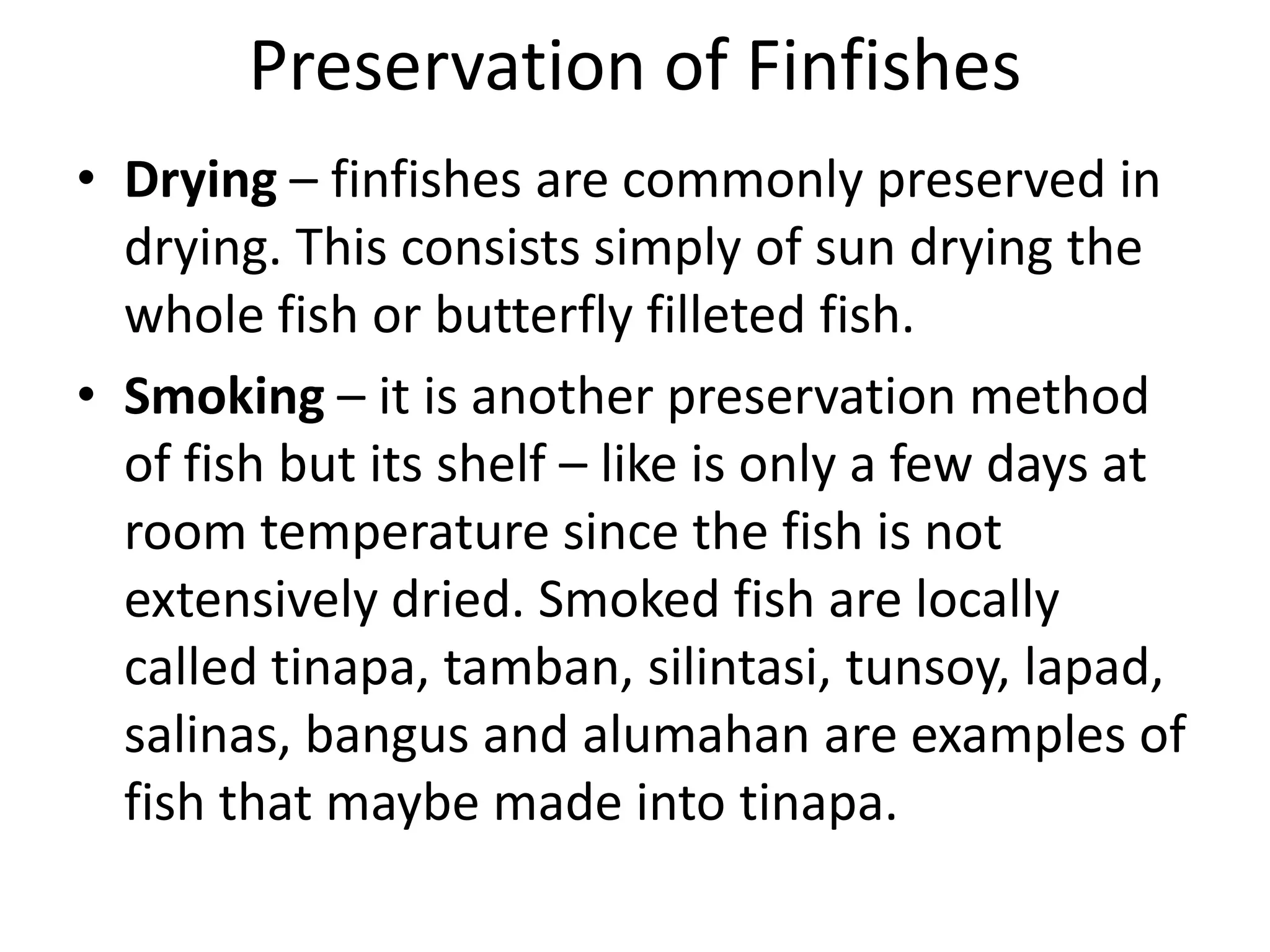
Preservation of Finfishes
• Drying – finfishes are commonly preserved in
  drying. This consists simply of sun drying the
  whole fish or butterfly filleted fish.
• Smoking – it is another preservation method
  of fish but its shelf – like is only a few days at
  room temperature since the fish is not
  extensively dried. Smoked fish are locally
  called tinapa, tamban, silintasi, tunsoy, lapad,
  salinas, bangus and alumahan are examples of
  fish that maybe made into tinapa.
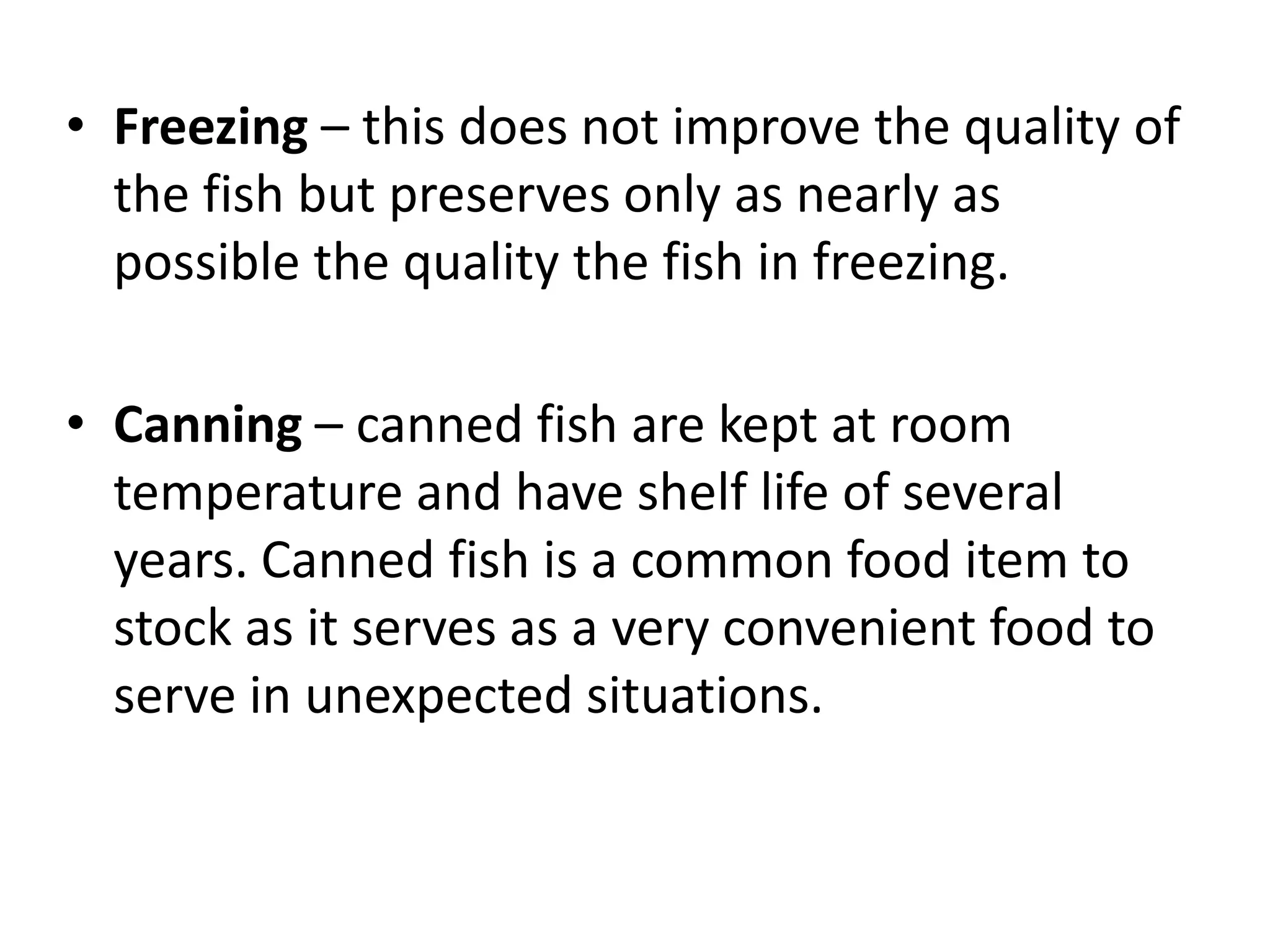
• Freezing – this does not improve the quality of
  the fish but preserves only as nearly as
  possible the quality the fish in freezing.

• Canning – canned fish are kept at room
  temperature and have shelf life of several
  years. Canned fish is a common food item to
  stock as it serves as a very convenient food to
  serve in unexpected situations.
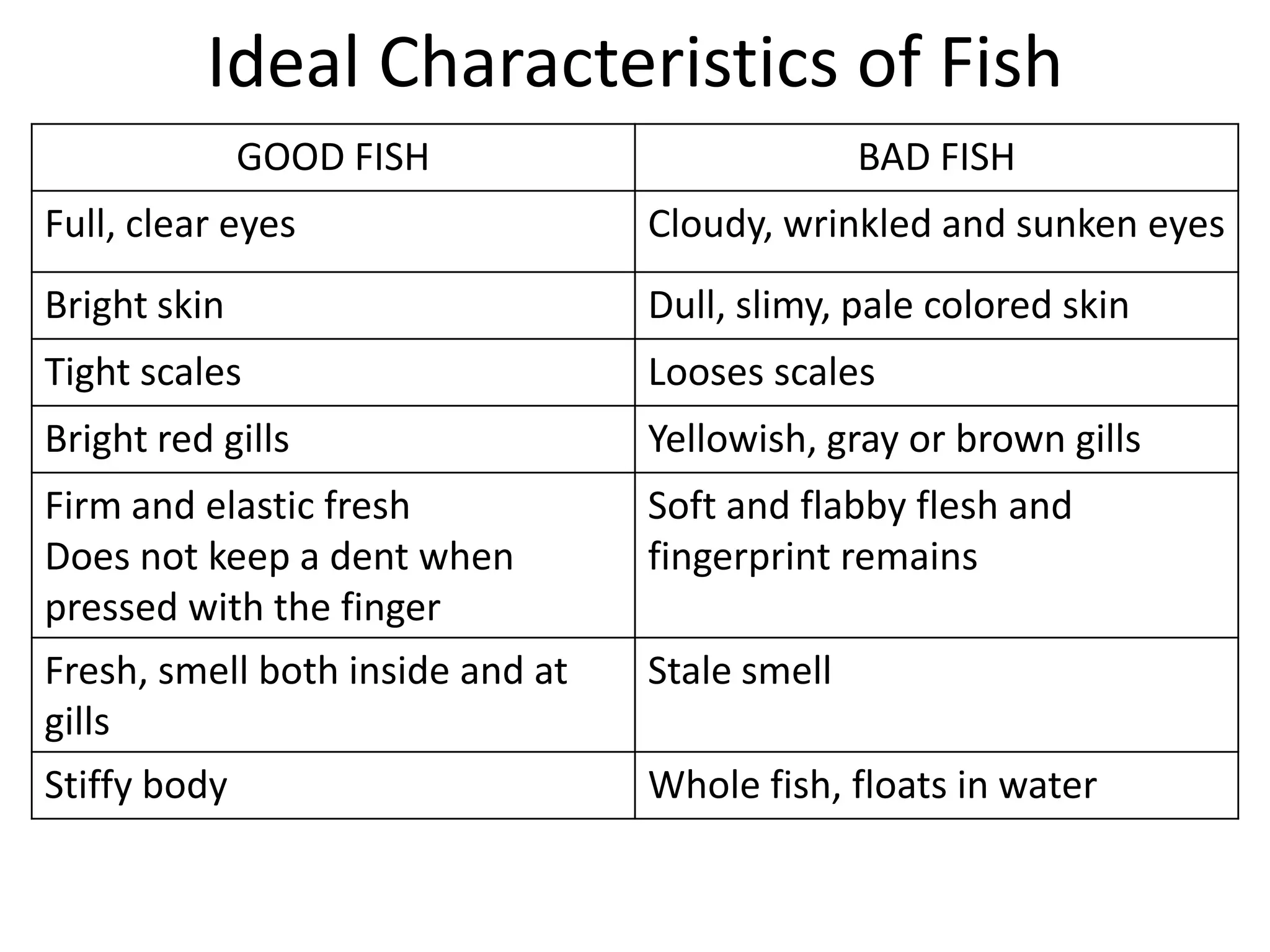
Ideal Characteristics of Fish
              GOOD FISH                         BAD FISH
Full, clear eyes                  Cloudy, wrinkled and sunken eyes
Bright skin                       Dull, slimy, pale colored skin
Tight scales                      Looses scales
Bright red gills                  Yellowish, gray or brown gills
Firm and elastic fresh            Soft and flabby flesh and
Does not keep a dent when         fingerprint remains
pressed with the finger
Fresh, smell both inside and at   Stale smell
gills
Stiffy body                       Whole fish, floats in water
Finfish
Finfish

Finfish

  • 1.
    Fish Fish is anexcellent source of protein, and it is interchangeable with meat in both quantity and quality. Fish is rich in fat and provides energy for work. It is interesting to note that fish fat is easy to digest. Marine fishes are good source of iodine and phosphorus but low in iron and calcium.
  • 2.
    Classification of Fish •Fish (vertebrate) – covered with scales. • Shellfish (invertebrate) – covered with some type of shell.
  • 3.
    Determination of FishQuality The criteria of freshness are: • the odor that is not objectionable; • The eyes are clear and full, not sunken; • The skin is shiny and tight; • The gills are bright red; and • The flesh is firm.
  • 4.
    Composition and NutritiveValue • Protein – has some percentage of protein content as with meat. • Fish Protein Concentrate – also known as fish flour produced from dehydrated and defatted whole fish; used to supplement bread and cereal products consumed by man. • Fat – lower fat content than beef exceptions are salmon, turbot, butterfish, and catfish which range from 11 to 20% fat and therefore resemble beef, and shellfish are notably low in fat. • Water and Extractives – has higher water content than beef and lower in extractives.
  • 5.
    • Carbohydrate –have some carbohydrate in the form of glycogen the sweet taste of various shellfish is due to the glucose formed by enzyme action from the glycogen. • Mineral Content – edible os flesh of all meats is slightly higher in percentage of mineral matter than meat; shellfish has twice as much mineral as other kinds of fish. • Vitamins – fat fish contain more Vitamin A than lean varieties.
  • 6.
    Classification of Fishon the Basis of Their Fat Content • Lean Fish – have less than 2% fat in their edible flesh; while flesh-fish fat is normally found in the liver. • Medium Fat Fish – have from 2to 5% fat, white- fleshed fish, fat content is normally found in liver. • Fat Fish – with more than 5% fat in the edible flesh, the flesh is usually highly pigmented (either yellow, pink or grayish) than that of the low-fat varieties, e.g. salmon, mackerel, etc.
  • 7.
  • 8.
    This is theform in which most fresh fish is distributed in local market fish stalls. Whole or round fish is the form of fish as it comes from the water but it is no longer alive.
  • 9.
    This is thewhole fish with only the entrails removed. Preparation for cooking is the same as that for whole or round fish except evisceration. Most frozen fish in modern supermarkets are also available in this form.
  • 10.
    This is thefish, whish has been scaled ad eviscerated. Sometimes the head, tail and fins are also removed.
  • 11.
    These are thetwo meaty sides of the fish cut lengthwise away from the backbone and held together by the uncut flesh and skin of the belly.
  • 12.
    Fillet is theboneless side of the fish cut lengthwise from the backbone.
  • 13.
    Steaks are crosssection slices cut from the large, dressed fish; the cross section of the backbone generally included
  • 14.
    • Live Fish– these are fishes which can be marketed alive because they live long after catch. • Deboned – this is the form most convenient in the cause of bangus, where the bones of the fish are removed. • Sticks – these are fillets or steaks cut further into portion in uniform width and length like sticks hence the name. they are usually frozen and breaded and ready to cook. • Flaked – fish meats separated from the whole fish is called flaked fish. Labahita is commonly made into flaked fish. Flaked fish may be sold in the form of fish balls, kekiyam and fish lumpia.
  • 15.
    Preservation of Finfishes •Drying – finfishes are commonly preserved in drying. This consists simply of sun drying the whole fish or butterfly filleted fish. • Smoking – it is another preservation method of fish but its shelf – like is only a few days at room temperature since the fish is not extensively dried. Smoked fish are locally called tinapa, tamban, silintasi, tunsoy, lapad, salinas, bangus and alumahan are examples of fish that maybe made into tinapa.
  • 16.
    • Freezing –this does not improve the quality of the fish but preserves only as nearly as possible the quality the fish in freezing. • Canning – canned fish are kept at room temperature and have shelf life of several years. Canned fish is a common food item to stock as it serves as a very convenient food to serve in unexpected situations.
  • 17.
    Ideal Characteristics ofFish GOOD FISH BAD FISH Full, clear eyes Cloudy, wrinkled and sunken eyes Bright skin Dull, slimy, pale colored skin Tight scales Looses scales Bright red gills Yellowish, gray or brown gills Firm and elastic fresh Soft and flabby flesh and Does not keep a dent when fingerprint remains pressed with the finger Fresh, smell both inside and at Stale smell gills Stiffy body Whole fish, floats in water