Knife Skills
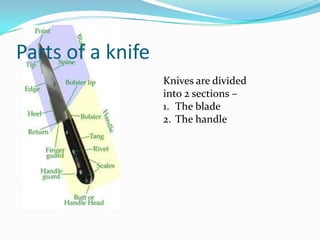
Parts of a knife
                   Knives are divided
                   into 2 sections –
                   1. The blade
                   2. The handle
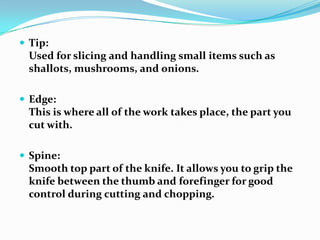
 Tip:
 Used for slicing and handling small items such as
 shallots, mushrooms, and onions.

 Edge:
 This is where all of the work takes place, the part you
 cut with.

 Spine:
 Smooth top part of the knife. It allows you to grip the
 knife between the thumb and forefinger for good
 control during cutting and chopping.
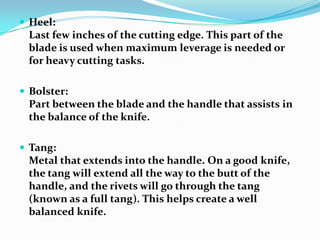
 Heel:
 Last few inches of the cutting edge. This part of the
 blade is used when maximum leverage is needed or
 for heavy cutting tasks.

 Bolster:
 Part between the blade and the handle that assists in
 the balance of the knife.

 Tang:
 Metal that extends into the handle. On a good knife,
 the tang will extend all the way to the butt of the
 handle, and the rivets will go through the tang
 (known as a full tang). This helps create a well
 balanced knife.
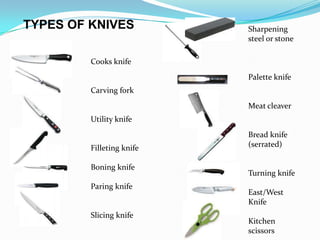
TYPES OF KNIVES            Sharpening
                           steel or stone

         Cooks knife
                           Palette knife
         Carving fork
                           Meat cleaver
         Utility knife
                           Bread knife
         Filleting knife   (serrated)

         Boning knife
                           Turning knife
         Paring knife
                           East/West
                           Knife
         Slicing knife
                           Kitchen
                           scissors
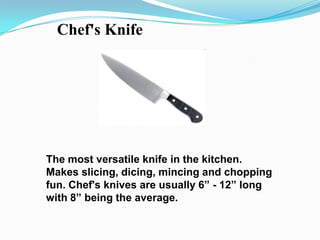
Chef's Knife


The most versatile knife in the kitchen.
Makes slicing, dicing, mincing and chopping
fun. Chef's knives are usually 6” - 12” long
with 8” being the average.
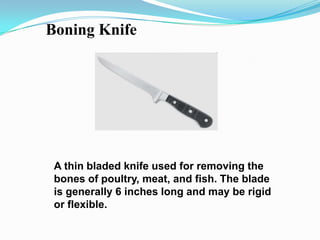
Boning Knife


 A thin bladed knife used for removing the
 bones of poultry, meat, and fish. The blade
 is generally 6 inches long and may be rigid
 or flexible.
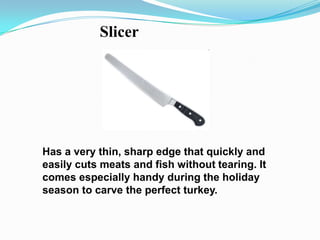
Slicer


Has a very thin, sharp edge that quickly and
easily cuts meats and fish without tearing. It
comes especially handy during the holiday
season to carve the perfect turkey.
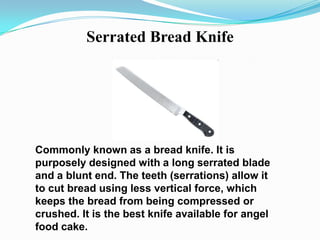
Serrated Bread Knife


Commonly known as a bread knife. It is
purposely designed with a long serrated blade
and a blunt end. The teeth (serrations) allow it
to cut bread using less vertical force, which
keeps the bread from being compressed or
crushed. It is the best knife available for angel
food cake.
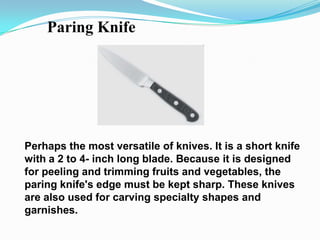
Paring Knife


Perhaps the most versatile of knives. It is a short knife
with a 2 to 4- inch long blade. Because it is designed
for peeling and trimming fruits and vegetables, the
paring knife's edge must be kept sharp. These knives
are also used for carving specialty shapes and
garnishes.
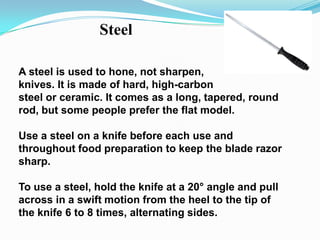
Steel

A steel is used to hone, not sharpen,
knives. It is made of hard, high-carbon
steel or ceramic. It comes as a long, tapered, round
rod, but some people prefer the flat model.

Use a steel on a knife before each use and
throughout food preparation to keep the blade razor
sharp.

To use a steel, hold the knife at a 20° angle and pull
across in a swift motion from the heel to the tip of
the knife 6 to 8 times, alternating sides.
Knife sharpening
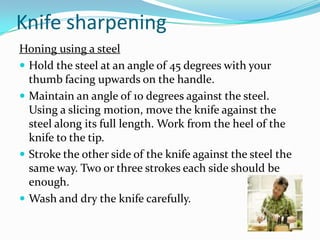
Honing using a steel
 Hold the steel at an angle of 45 degrees with your
  thumb facing upwards on the handle.
 Maintain an angle of 10 degrees against the steel.
  Using a slicing motion, move the knife against the
  steel along its full length. Work from the heel of the
  knife to the tip.
 Stroke the other side of the knife against the steel the
  same way. Two or three strokes each side should be
  enough.
 Wash and dry the knife carefully.
Knife sharpening continued...

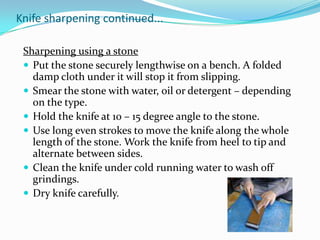
 Sharpening using a stone
  Put the stone securely lengthwise on a bench. A folded
   damp cloth under it will stop it from slipping.
  Smear the stone with water, oil or detergent – depending
   on the type.
  Hold the knife at 10 – 15 degree angle to the stone.
  Use long even strokes to move the knife along the whole
   length of the stone. Work the knife from heel to tip and
   alternate between sides.
  Clean the knife under cold running water to wash off
   grindings.
  Dry knife carefully.
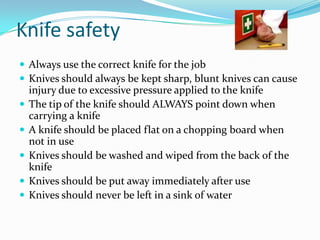
Knife safety
 Always use the correct knife for the job
 Knives should always be kept sharp, blunt knives can cause
    injury due to excessive pressure applied to the knife
   The tip of the knife should ALWAYS point down when
    carrying a knife
   A knife should be placed flat on a chopping board when
    not in use
   Knives should be washed and wiped from the back of the
    knife
   Knives should be put away immediately after use
   Knives should never be left in a sink of water
Precision cutting
    This is the cutting of food, usually vegetables, into specific
    sizes and shapes in order to garnish/enhance the
    presentation of food.
   Julienne – long thin matchstick strips (3mm x 3mm x
    40mm)
   Brunoise – very fine dice (3mm) [cut julienne first then
    dice]
   Jardinière – batons (4mm x 4mm x 20mm)
   Macedoine – large dice (8mm dice)
   Paysanne – thin slices (shapes vary)
   Chiffonnade – very fine shredding (lettuce, herbs etc)
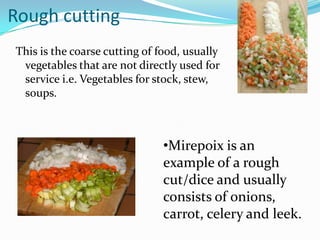
Rough cutting
This is the coarse cutting of food, usually
 vegetables that are not directly used for
 service i.e. Vegetables for stock, stew,
 soups.


                               •Mirepoix is an
                               example of a rough
                               cut/dice and usually
                               consists of onions,
                               carrot, celery and leek.

Knife skills

  • 1.
  • 2.
    Parts of aknife Knives are divided into 2 sections – 1. The blade 2. The handle
  • 3.
     Tip: Usedfor slicing and handling small items such as shallots, mushrooms, and onions.  Edge: This is where all of the work takes place, the part you cut with.  Spine: Smooth top part of the knife. It allows you to grip the knife between the thumb and forefinger for good control during cutting and chopping.
  • 4.
     Heel: Lastfew inches of the cutting edge. This part of the blade is used when maximum leverage is needed or for heavy cutting tasks.  Bolster: Part between the blade and the handle that assists in the balance of the knife.  Tang: Metal that extends into the handle. On a good knife, the tang will extend all the way to the butt of the handle, and the rivets will go through the tang (known as a full tang). This helps create a well balanced knife.
  • 5.
    TYPES OF KNIVES Sharpening steel or stone Cooks knife Palette knife Carving fork Meat cleaver Utility knife Bread knife Filleting knife (serrated) Boning knife Turning knife Paring knife East/West Knife Slicing knife Kitchen scissors
  • 6.
    Chef's Knife The mostversatile knife in the kitchen. Makes slicing, dicing, mincing and chopping fun. Chef's knives are usually 6” - 12” long with 8” being the average.
  • 7.
    Boning Knife Athin bladed knife used for removing the bones of poultry, meat, and fish. The blade is generally 6 inches long and may be rigid or flexible.
  • 8.
    Slicer Has a verythin, sharp edge that quickly and easily cuts meats and fish without tearing. It comes especially handy during the holiday season to carve the perfect turkey.
  • 9.
    Serrated Bread Knife Commonlyknown as a bread knife. It is purposely designed with a long serrated blade and a blunt end. The teeth (serrations) allow it to cut bread using less vertical force, which keeps the bread from being compressed or crushed. It is the best knife available for angel food cake.
  • 10.
    Paring Knife Perhaps themost versatile of knives. It is a short knife with a 2 to 4- inch long blade. Because it is designed for peeling and trimming fruits and vegetables, the paring knife's edge must be kept sharp. These knives are also used for carving specialty shapes and garnishes.
  • 11.
    Steel A steel isused to hone, not sharpen, knives. It is made of hard, high-carbon steel or ceramic. It comes as a long, tapered, round rod, but some people prefer the flat model. Use a steel on a knife before each use and throughout food preparation to keep the blade razor sharp. To use a steel, hold the knife at a 20° angle and pull across in a swift motion from the heel to the tip of the knife 6 to 8 times, alternating sides.
  • 12.
    Knife sharpening Honing usinga steel  Hold the steel at an angle of 45 degrees with your thumb facing upwards on the handle.  Maintain an angle of 10 degrees against the steel. Using a slicing motion, move the knife against the steel along its full length. Work from the heel of the knife to the tip.  Stroke the other side of the knife against the steel the same way. Two or three strokes each side should be enough.  Wash and dry the knife carefully.
  • 13.
    Knife sharpening continued... Sharpening using a stone  Put the stone securely lengthwise on a bench. A folded damp cloth under it will stop it from slipping.  Smear the stone with water, oil or detergent – depending on the type.  Hold the knife at 10 – 15 degree angle to the stone.  Use long even strokes to move the knife along the whole length of the stone. Work the knife from heel to tip and alternate between sides.  Clean the knife under cold running water to wash off grindings.  Dry knife carefully.
  • 14.
    Knife safety  Alwaysuse the correct knife for the job  Knives should always be kept sharp, blunt knives can cause injury due to excessive pressure applied to the knife  The tip of the knife should ALWAYS point down when carrying a knife  A knife should be placed flat on a chopping board when not in use  Knives should be washed and wiped from the back of the knife  Knives should be put away immediately after use  Knives should never be left in a sink of water
  • 15.
    Precision cutting This is the cutting of food, usually vegetables, into specific sizes and shapes in order to garnish/enhance the presentation of food.  Julienne – long thin matchstick strips (3mm x 3mm x 40mm)  Brunoise – very fine dice (3mm) [cut julienne first then dice]  Jardinière – batons (4mm x 4mm x 20mm)  Macedoine – large dice (8mm dice)  Paysanne – thin slices (shapes vary)  Chiffonnade – very fine shredding (lettuce, herbs etc)
  • 16.
    Rough cutting This isthe coarse cutting of food, usually vegetables that are not directly used for service i.e. Vegetables for stock, stew, soups. •Mirepoix is an example of a rough cut/dice and usually consists of onions, carrot, celery and leek.