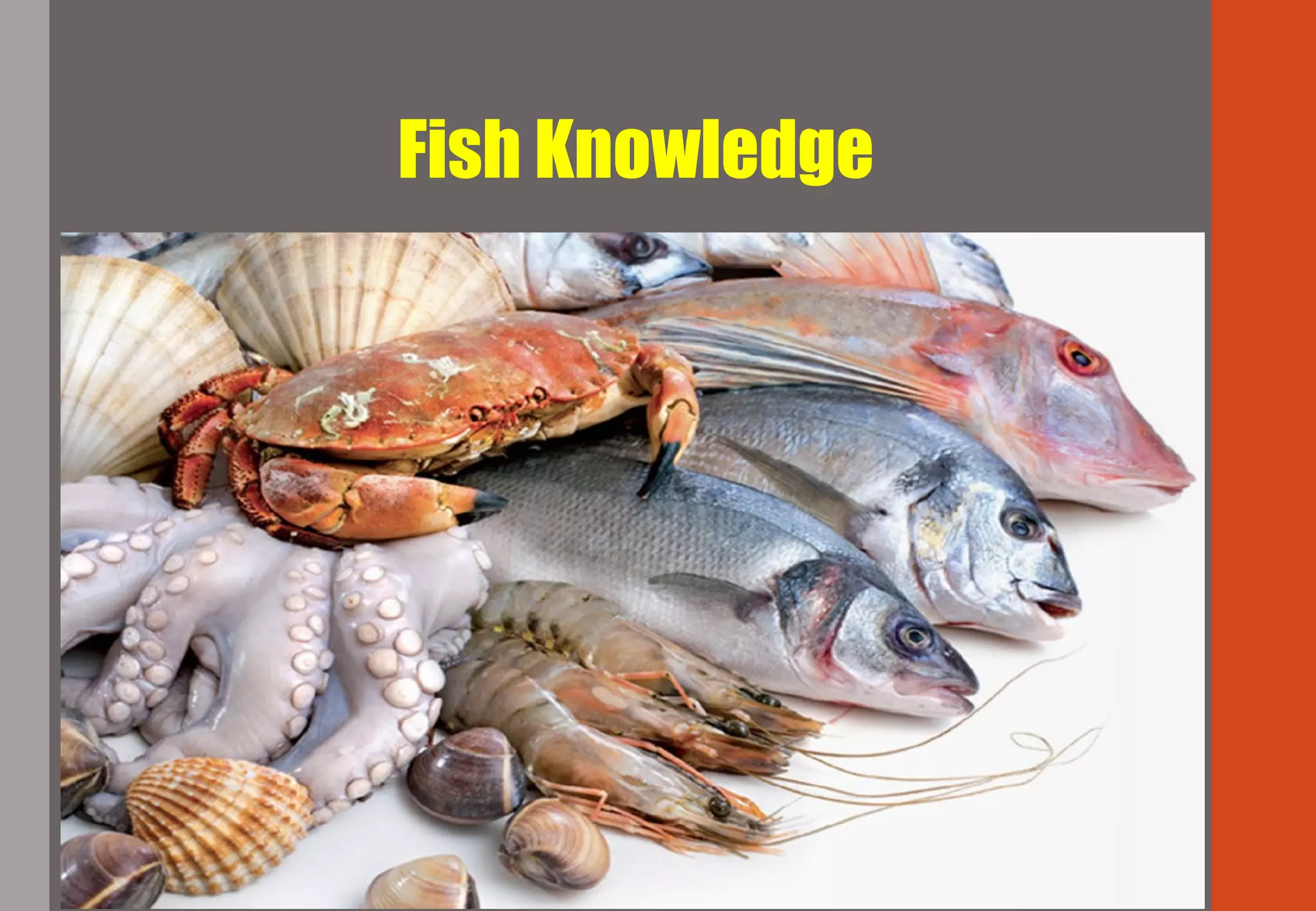

Fish Knowledge
 FISH BASICS
 FISH CATEGORIES
 INDICATION OF FRESHNESS
 CLASSICAL FISH CUTS
 FILLET FISH
Learning Objectives
Day 2 - FishDay 2 - Fish
Fish
• Fish are found in both fresh water and seawater
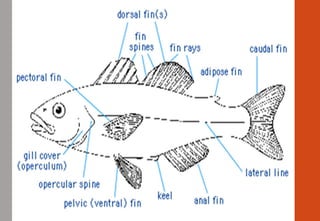
• Fish are aquatic vertebrates with fins for swimming and gill
for breathing
Fish Category
 Round, Flat, Non-Bony fish
 Oily and Non-Oily fish
 Fresh Water and Salt Water
Round Fish
Have a backbone along its upper body with a fillet located on both sides.
Round fish have an eye located on each side of its head.
To check the fish for doneness, use the tip of a sharp knife and cut
through the thickest part of the fillet. If the fish has been properly
cooked, the meat will appear opaque but will still be moist.
 Round, Flat, Non-Bony fish
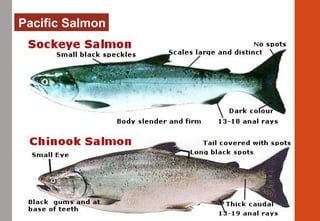
Pacific Salmon
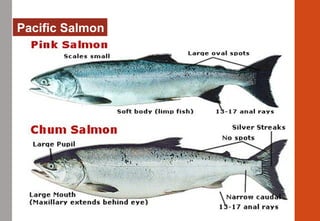
Pacific Salmon
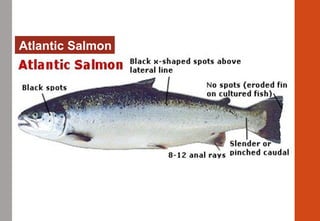
Atlantic Salmon
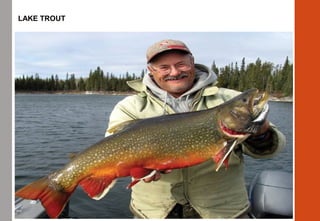
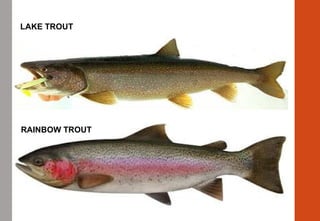
LAKE TROUT
LAKE TROUT
RAINBOW TROUT
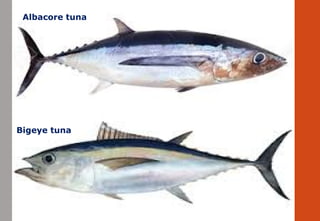
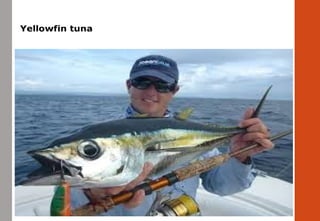
Bigeye tuna
Albacore tuna
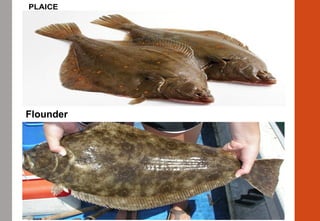
Flatfish
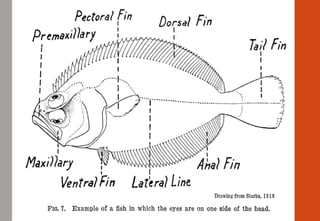
Have a backbone that runs through the centerof the fish, two
upper and two lower fillet, both eyes on the same side on the
head
To check the fish for doneness, use the tip of a sharp knife and
cut through the thickest part of the fillet. If the fish has been
properly cooked, the meat will appear opaque but will still be
moist.
19
LEMON SOLE
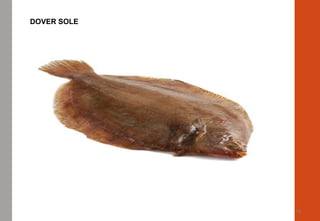
DOVER SOLE
Flounder
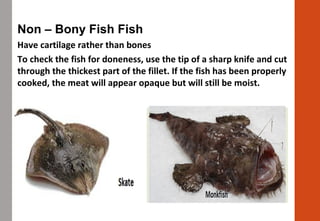
Non – Bony Fish Fish
Have cartilage rather than bones
To check the fish for doneness, use the tip of a sharp knife and cut
through the thickest part of the fillet. If the fish has been properly
cooked, the meat will appear opaque but will still be moist.
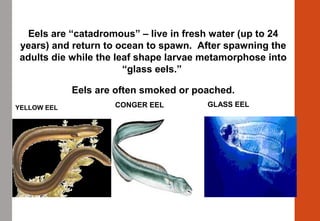
YELLOW EEL CONGER EEL
Eels are “catadromous” – live in fresh water (up to 24
years) and return to ocean to spawn. After spawning the
adults die while the leaf shape larvae metamorphose into
“glass eels.”
Eels are often smoked or poached.
GLASS EEL
Eels
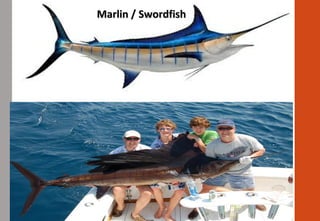
Marlin / SwordfishMarlin / Swordfish
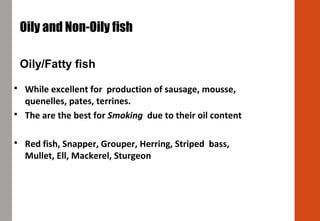
 While excellent for production of sausage, mousse,
quenelles, pates, terrines.
 The are the best for Smoking due to their oil content
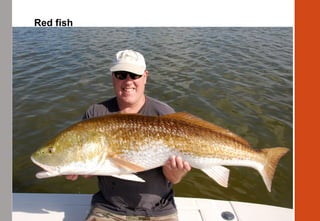
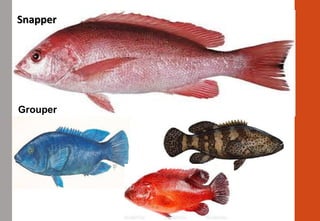
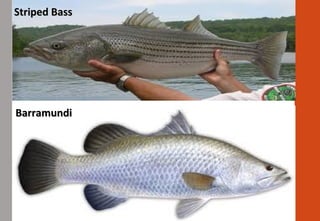
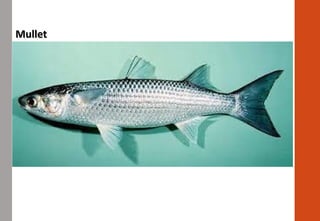
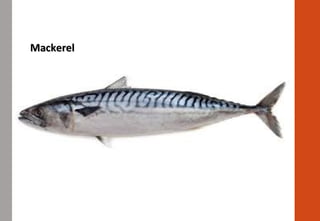
 Red fish, Snapper, Grouper, Herring, Striped bass,
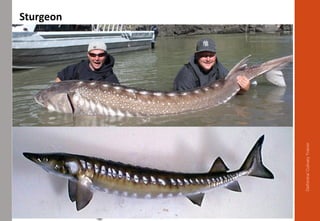
Mullet, Ell, Mackerel, Sturgeon
Oily and Non-Oily fish
Oily/Fatty fish
Red fish
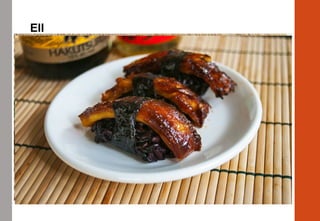
Ell
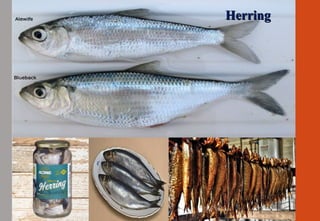
HerringHerring
HerringHerring
SnapperSnapper
Grouper
Striped BassStriped Bass
BarramundiBarramundi
MulletMullet
MackerelMackerel
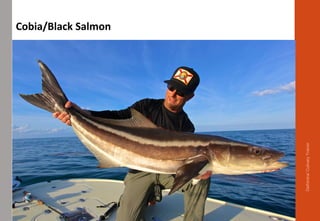
Cobia/Black Salmon
Delhindra/CulinaryTrainer
Non - Oily/Lean fish
 Most lean fish are not suitable for smoking, but do make
excellent for production of sausage, mousse, quenelles,
pates, terrines.
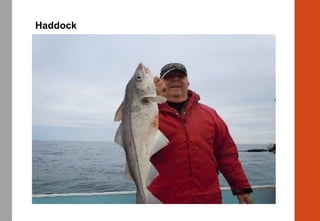
 Sole, Halibut, Cod, Haddock, Whiting, Turbot, Flounder,
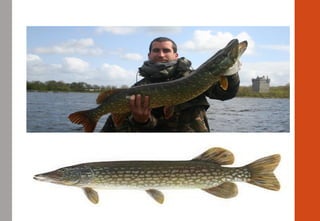
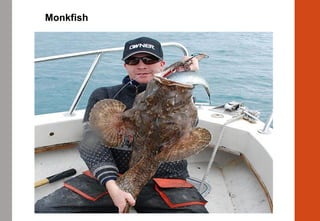
Monkfish, Skate, Bass, Pike, Carb
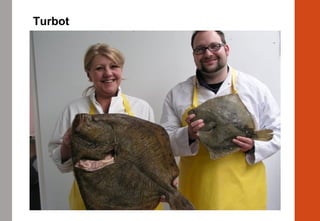
Turbot
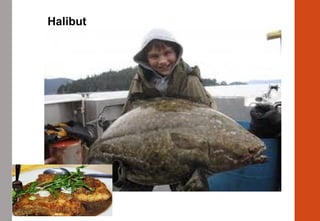
Halibut
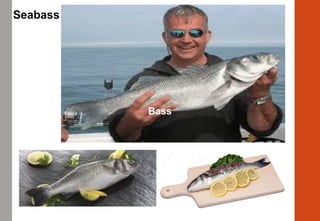
Bass
Seabass
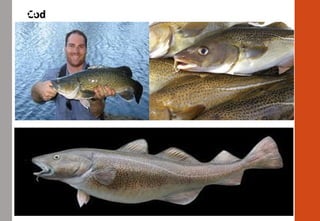
CodCodCod
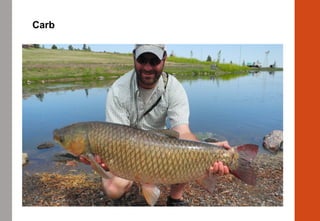
Carb
Pike
Monkfish
Haddock
•Smell – should be clear of off odors
•Eyes – clear and bulging, sunken eyes denote lack of
freshness
•Gills – bright red, as freshness decreases, the gills go brown
•Texture (Flesh) – should be firm, when pressed, the flesh
should return to original shape
•Fins and Scales – should be moist, not dried out, scales
should not rub off easily
INDICATORS OF FRESHNESS
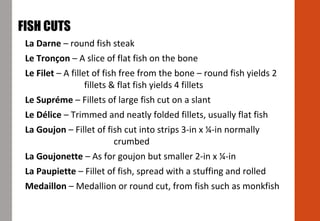
La Darne – round fish steak
Le Tronçon – A slice of flat fish on the bone
Le Filet – A fillet of fish free from the bone – round fish yields 2
fillets & flat fish yields 4 fillets
Le Supréme – Fillets of large fish cut on a slant
Le Délice – Trimmed and neatly folded fillets, usually flat fish
La Goujon – Fillet of fish cut into strips 3-in x ¼-in normally
crumbed
La Goujonette – As for goujon but smaller 2-in x ¼-in
La Paupiette – Fillet of fish, spread with a stuffing and rolled
Medaillon – Medallion or round cut, from fish such as monkfish
FISH CUTS
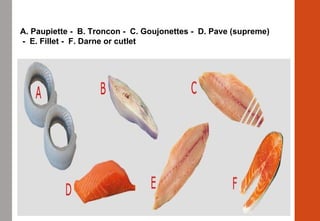
A. Paupiette - B. Troncon - C. Goujonettes - D. Pave (supreme)
- E. Fillet - F. Darne or cutlet
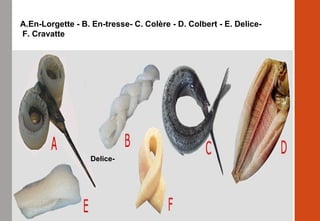
A.En-Lorgette - B. En-tresse- C. Colère - D. Colbert - E. Delice-
F. Cravatte
Delice-
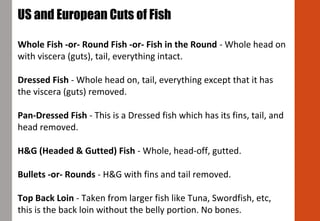
US and European Cuts of Fish
Whole Fish -or- Round Fish -or- Fish in the Round - Whole head on
with viscera (guts), tail, everything intact.
Dressed Fish - Whole head on, tail, everything except that it has
the viscera (guts) removed.
Pan-Dressed Fish - This is a Dressed fish which has its fins, tail, and
head removed.
H&G (Headed & Gutted) Fish - Whole, head-off, gutted.
Bullets -or- Rounds - H&G with fins and tail removed.
Top Back Loin - Taken from larger fish like Tuna, Swordfish, etc,
this is the back loin without the belly portion. No bones.
Loin - This is the prime part of a fillet from a large round fish. It is the part of the fillet 
which is above the spine, sometimes called the top back loin. Loins are typically cut 
from fish like Tuna, Swordfish, and Marlin.
Fillet - A fillet is an entire side of a fish with the backbone out. Round fish yield two 
fillets (one from each side). Flat fish yield 4 fillets (2 from each side). Fillets from 
larger fish can be further portioned into supremes or escalopes. They may be skin-on 
or skin-off.
Fletch - A Fletch is part of a large Fillet from a large flatfish. It can be half, quarter, 
or less of the full fillet.
Steak or Darne - Is a thick, cross-section cut from a round fish, perpendicular to the 
spine. Steaks often retain part of the backbone.
Fish - Whole head on, tail, everything except that it has the viscera (guts) removed.
Pan-Dressed Fish - This is a Dressed fish which has its fins, tail, and head 
removed.
H&G (Headed & Gutted) Fish - Whole, head-off, gutted.
Bullets -or- Rounds - H&G with fins and tail removed.
Top Back Loin - Taken from larger fish like Tuna, Swordfish, etc, this is the back 
loin without the belly portion. No bones.
Loin - This is the prime part of a fillet from a large round fish. It is the part of the 
fillet which is above the spine, sometimes called the top back loin. Loins are 
typically cut from fish like Tuna, Swordfish, and Marlin.
Fillet - A fillet is an entire side of a fish with the backbone out. Round fish yield 
two fillets (one from each side). Flat fish yield 4 fillets (2 from each side). Fillets 
from larger fish can be further portioned into supremes or escalopes. They may 
be skin-on or skin-off.
Fletch - A Fletch is part of a large Fillet from a large flatfish. It can be half, 
quarter, or less of the full fillet.
Steak or Darne - Is a thick, cross-section cut from a round fish, perpendicular to 
the spine. Steaks often retain part of the backbone.
Supreme - A supreme is a prime boneless cut from a fillet or loin which is cut 
either as a block-cut or bias-cut, and is considered the best and choicest cut of 
fish. Also called a pavé, a supreme cut removes all bones in the filet.
Tronçon - This is a steak-cut (bone-in) from a flatfish such as flounder, halibut, 
sole, or turbot. In the US these are called a Steak cut.
Paupiette - A paupiette is a fillet that is stuffed and rolled.
Cravatte - A cravatte is a fillet tied into a knot.
Delice - Delice is a fillet that is neatly stuffed and folded.
Goujons - Strips 2" x ¼" from the fillets of small fish such as sole or plaice.
En Tresse - A braided or platted fillet.
Butterfly Fillets - Used with small fish like trout, sardines, mackerel or herring, 
this cut is made by leaving the two fillets attached by the skin. Thus you get the 
whole fish minus the head and rib bones.
Canoe Fillets - Same as a butterfly fillet except that the head is left on.
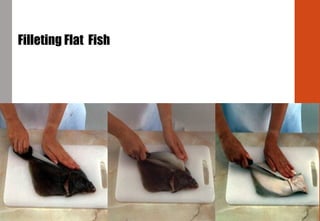
Filleting Flat Fish
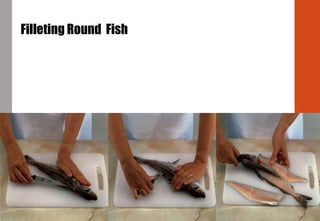
Filleting Round Fish
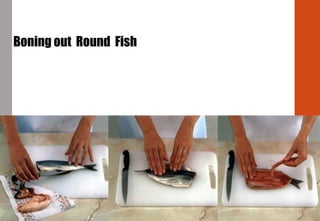
Boning out Round Fish
Fish  Knowledge: www.chefqtrainer.blogspot.com

Fish Knowledge: www.chefqtrainer.blogspot.com

Editor's Notes

  • #6 Round, Flat Fish, Non-Bony fish (cartilage) Round – Salmon Flat – Halibut, Sole Non-bony – Eels Oily & Non-Oily fish some fish store their oil in their liver (non-oily), while some store more of their oil in their flesh (oily) Oily fish – Salmon, Tuna, Mackerel, Sardines Non-oily – Cod, Whitefish, Halibut Fresh Water & Salt Water salt water fish are not more salty Fresh Water – Trout, Catfish Salt Water – Cod, Halibut NOTE: All oily fish are round, but not all round fish are oily!
  • #7 Round Fish have a middle backbone with one fillet one each side and one eye on either side of the head.
  • #18 Flat Fish have backbone that runs through the center of the fish, two upper and two lower fillets, and both eyes on the same side of the head.
  • #21 Flounder
  • #22 Non-Bony Fish have cartilage rather than bones.