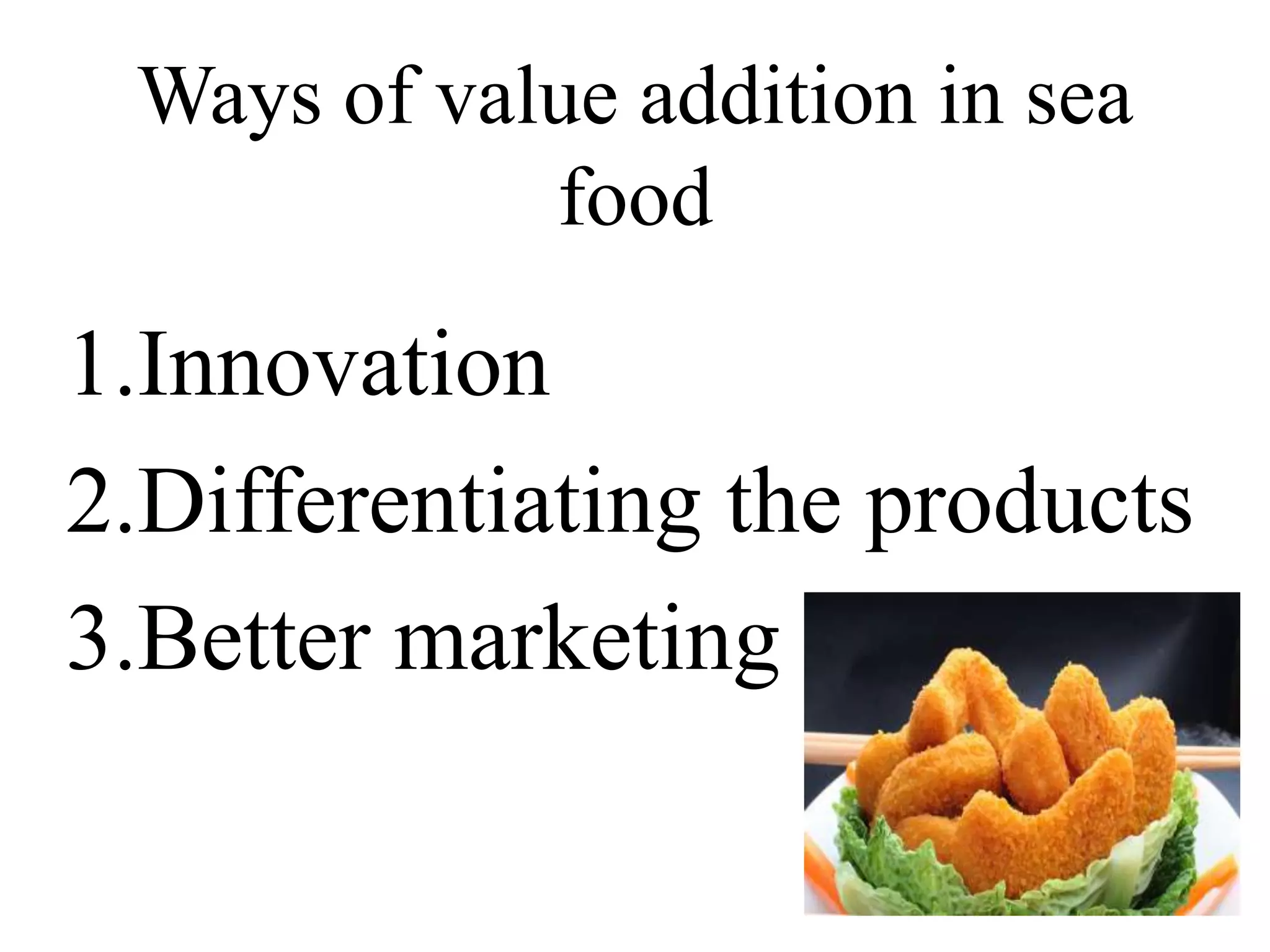
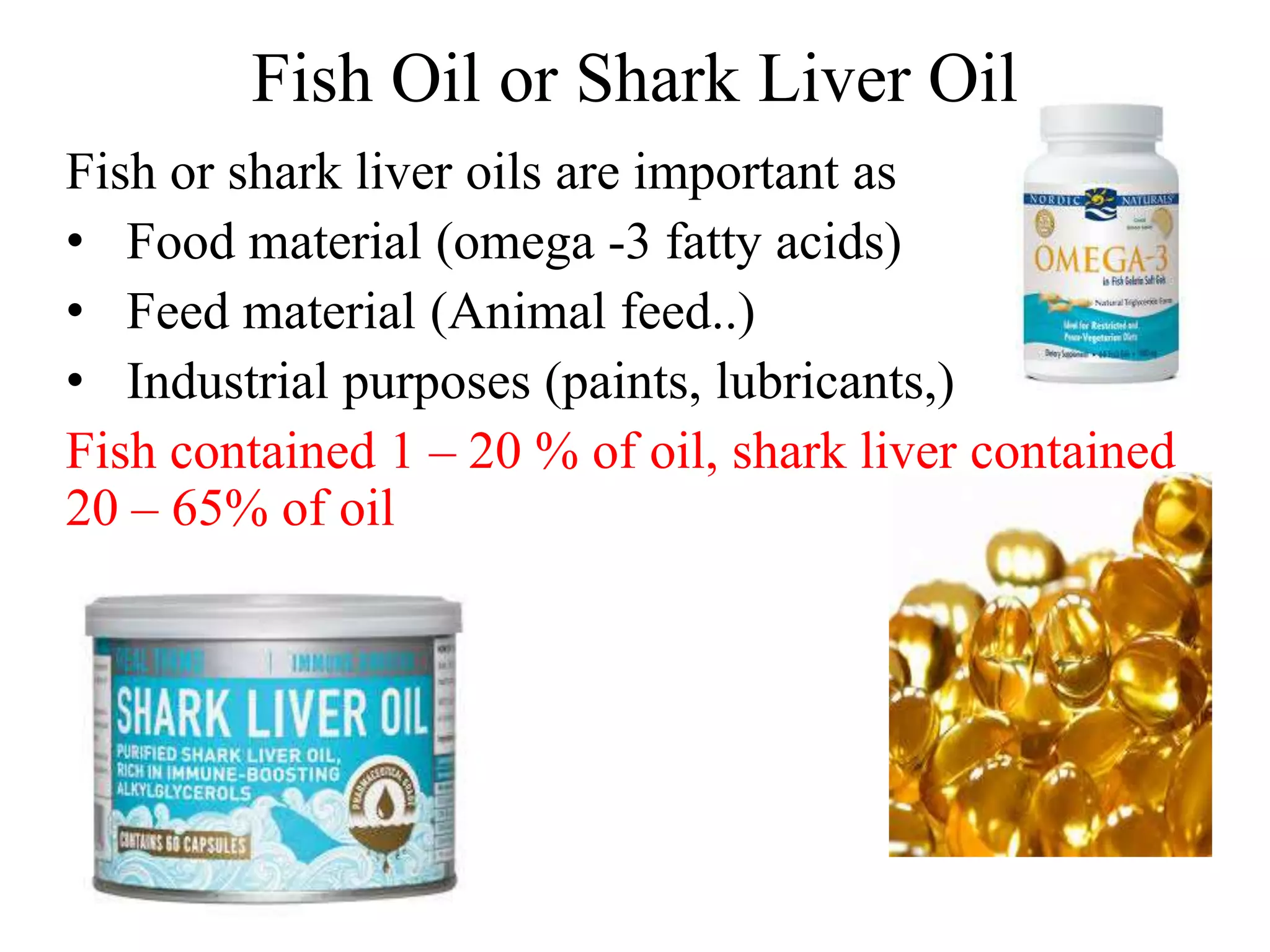
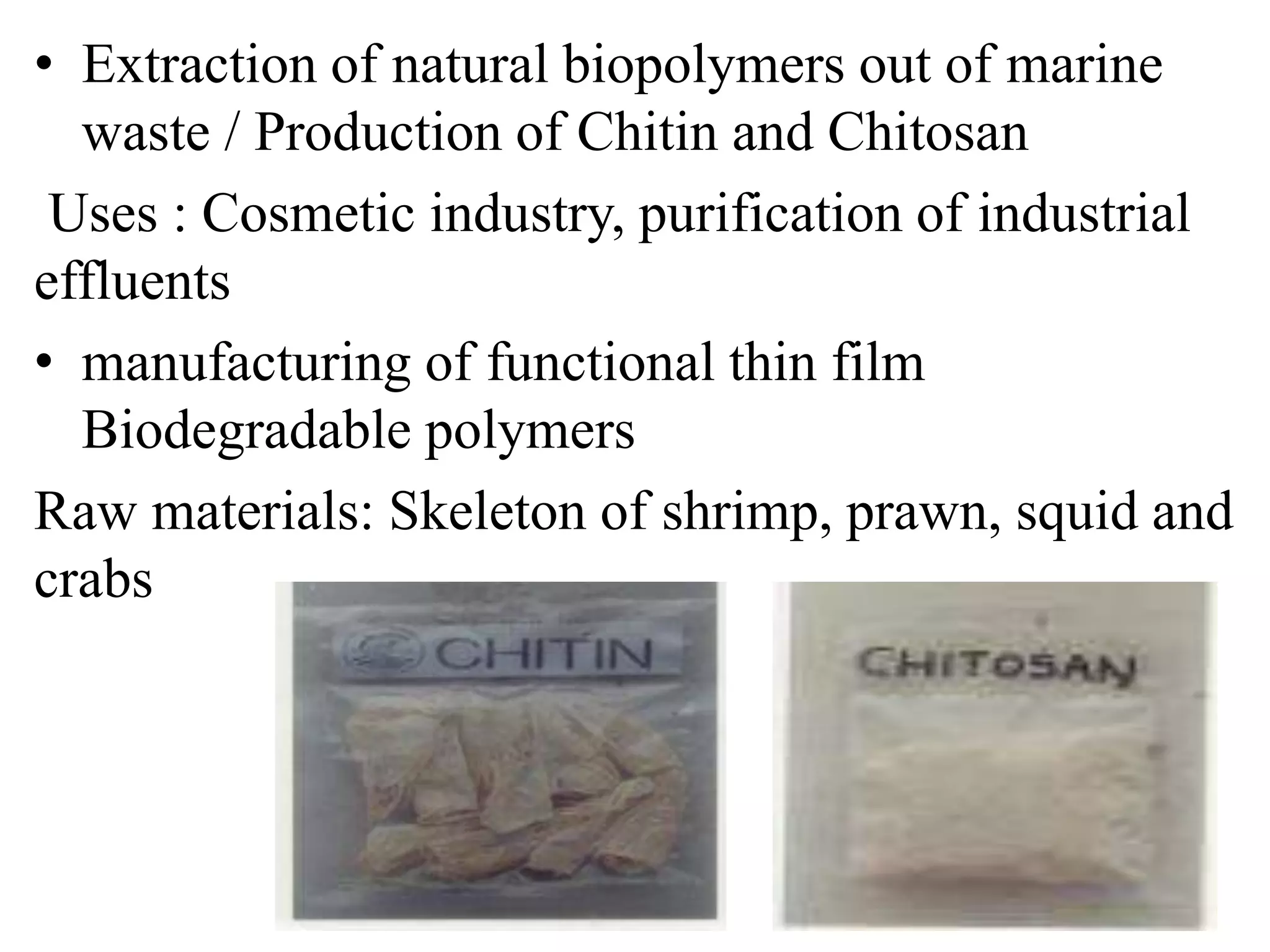
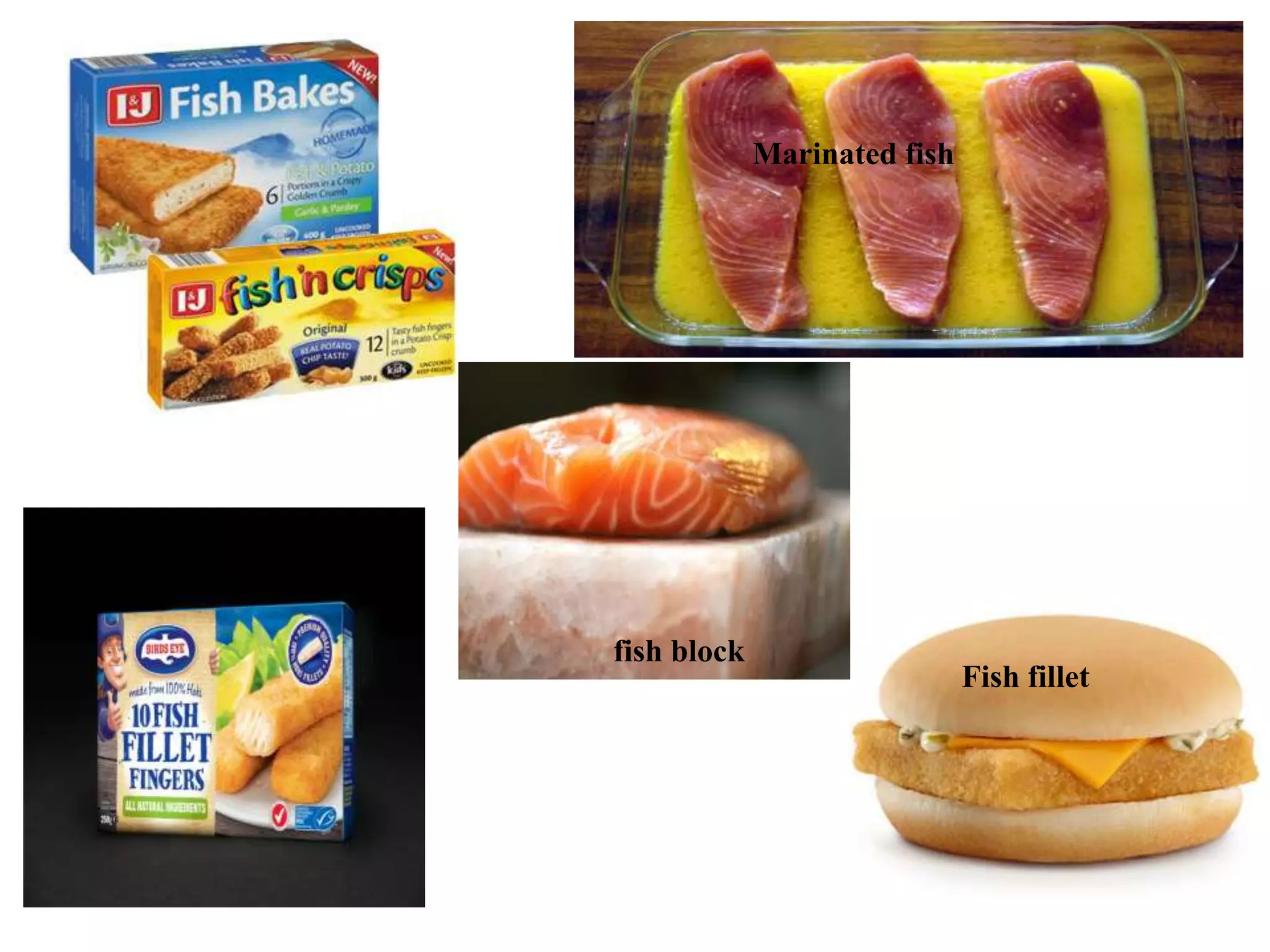
Value addition in seafood involves processing methods, specialized ingredients, and novel packaging to enhance the nutritional, sensory, and shelf life properties of seafood products. It provides benefits to consumers through convenience and time savings, and benefits industry through higher incomes and employment. Value can be added through innovation, product differentiation, and better marketing. Examples of value-added seafood products include fish oil, fish silage, delicatessen products, and non-food products like fish skin crafts. Advantages include meeting consumer demand, income generation, and variety, while disadvantages include potentially higher costs and need for quality control.