APPLICATIONS IN SPEECH
ENHANCEMENT
BY
BHARATH V 1BM11TE012
PRAVEEN D S 1BM11TE038
SANDEEP K M 1BM11TE046
SHRISHA UDUPA S 1BM11TE052
DEPT OF
TCE, BMSCE
1
UNDER THE GUIDANCE OF
PRASANNA KUMAR M K
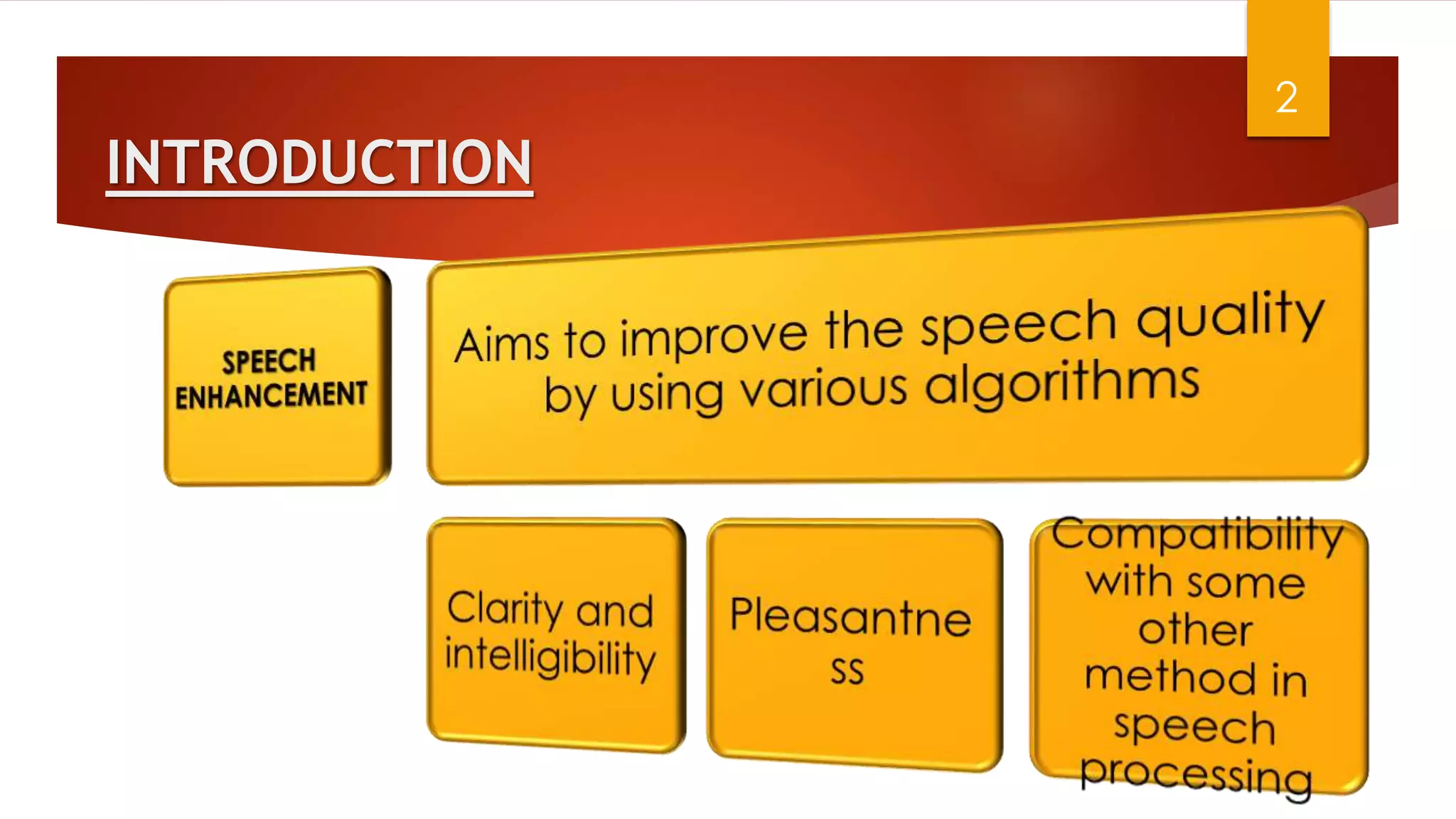
INTRODUCTION
2
3
4
PROJECT GOALS
 Examine the Spectral Subtraction speech
enhancement technique and then simulate it in
Matlab
 Examine the Wiener Filtering method and
simulate in Matlab
5
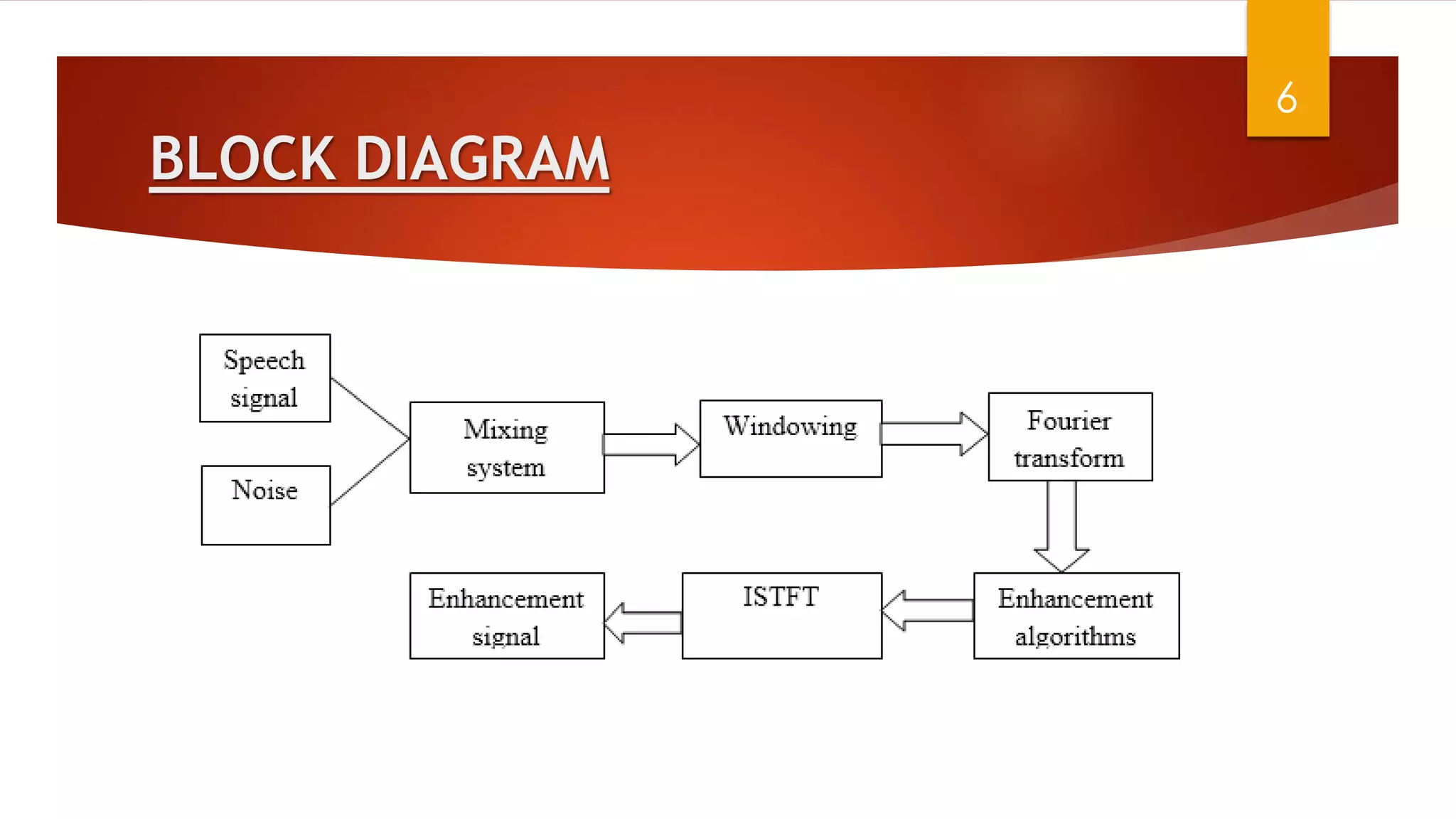
BLOCK DIAGRAM
6
7
8
9
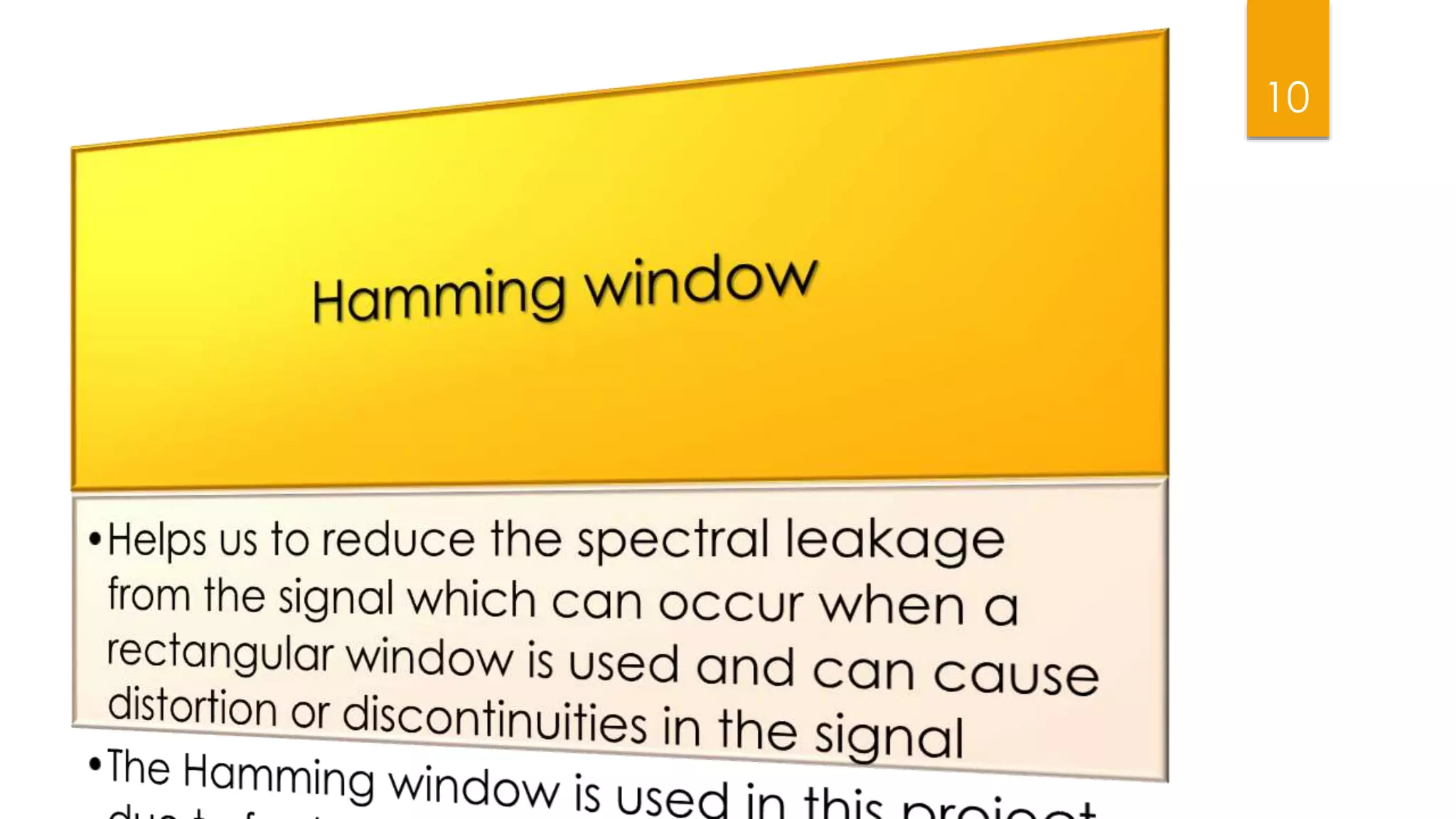
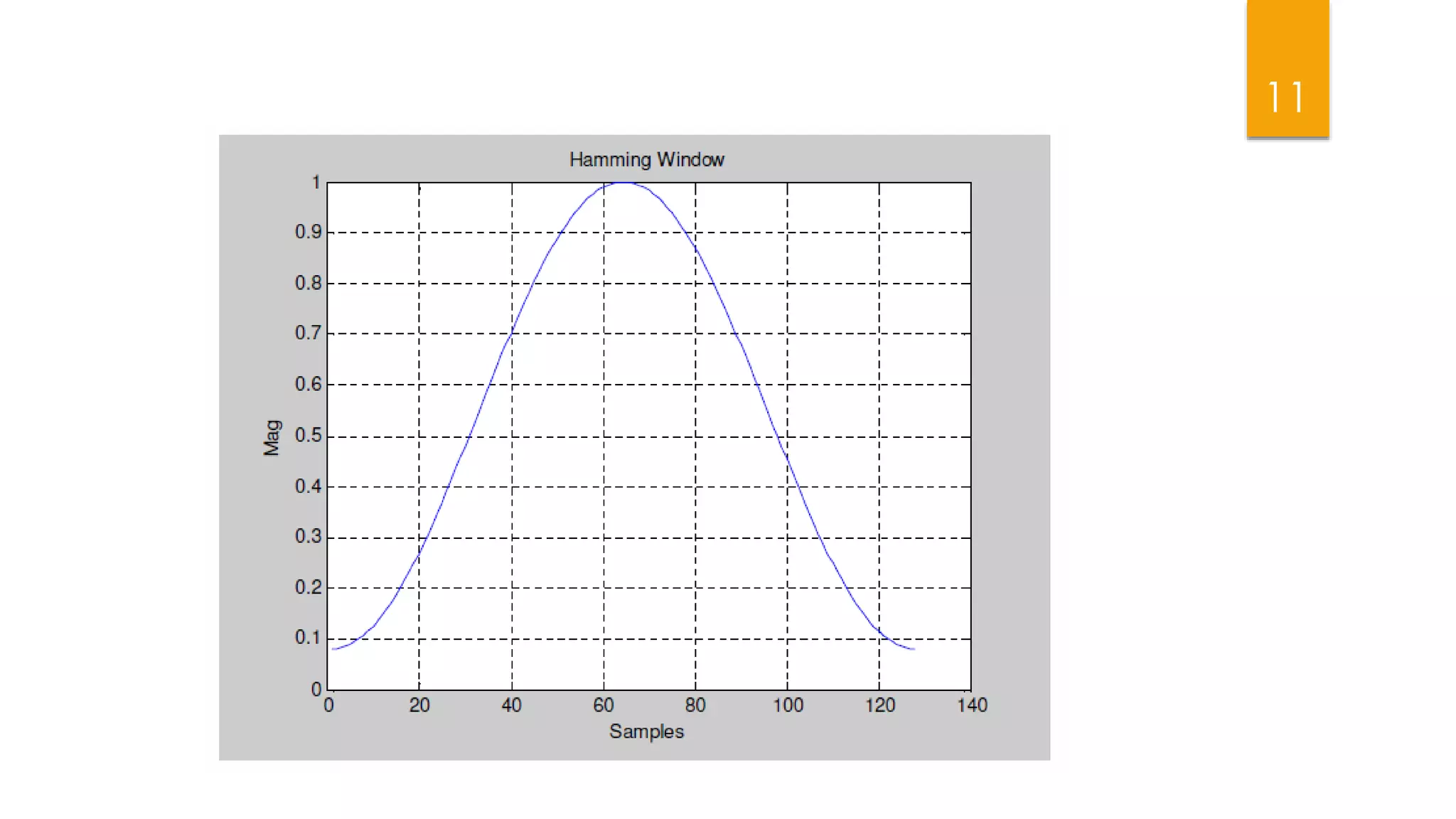
10
11
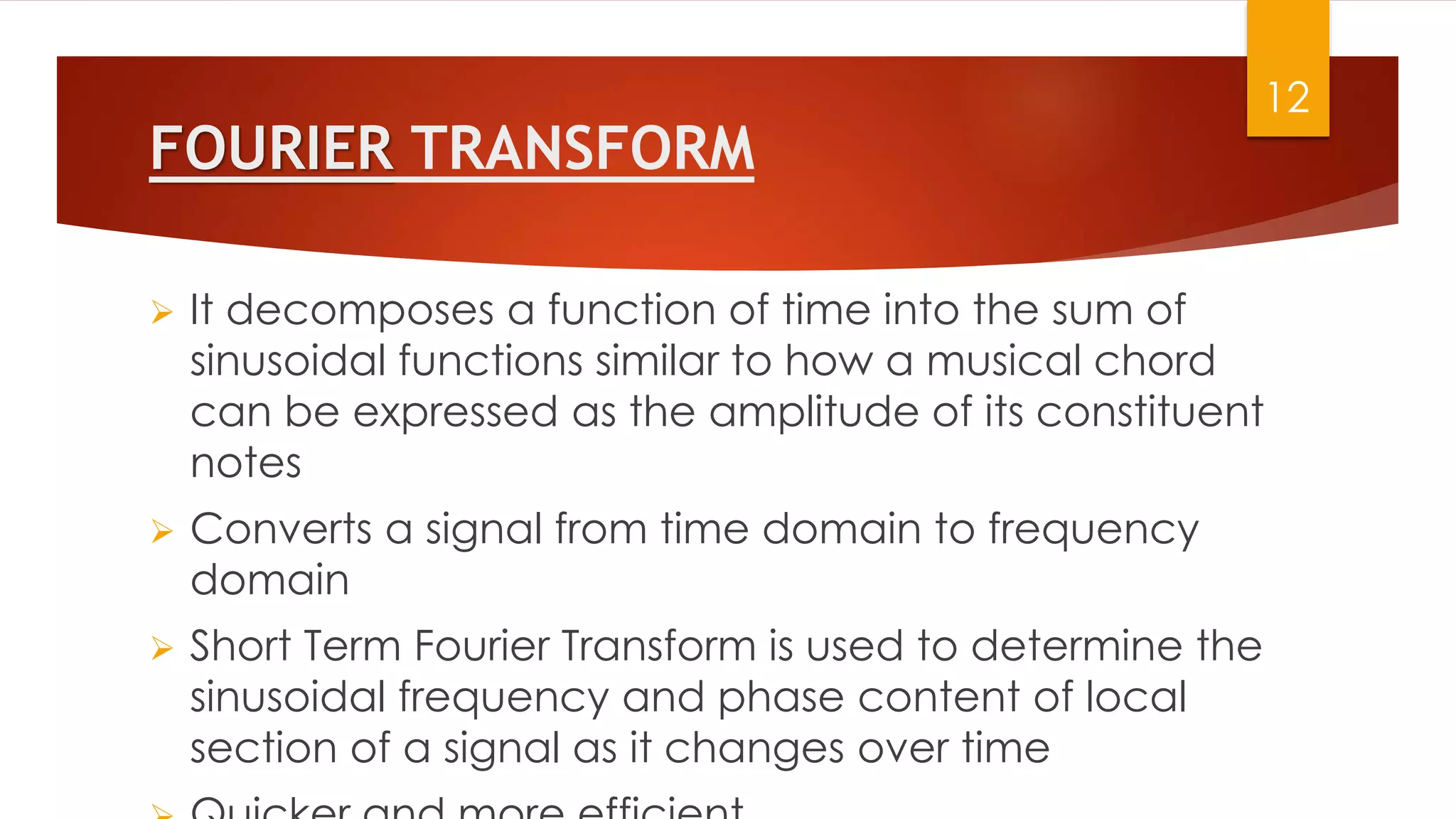
FOURIER TRANSFORM
 It decomposes a function of time into the sum of
sinusoidal functions similar to how a musical chord
can be expressed as the amplitude of its constituent
notes
 Converts a signal from time domain to frequency
domain
 Short Term Fourier Transform is used to determine the
sinusoidal frequency and phase content of local
section of a signal as it changes over time
12
SPECTRAL SUBTRACTION
 Spectral amplitude estimation method to restore
the signals degraded by additive noise
 Phase distortion can be ignored since human
ear is insensitive to the phase
 Restoring the signal by subtracting an estimate
of the noise spectrum from the noisy signal
spectrum
13
14
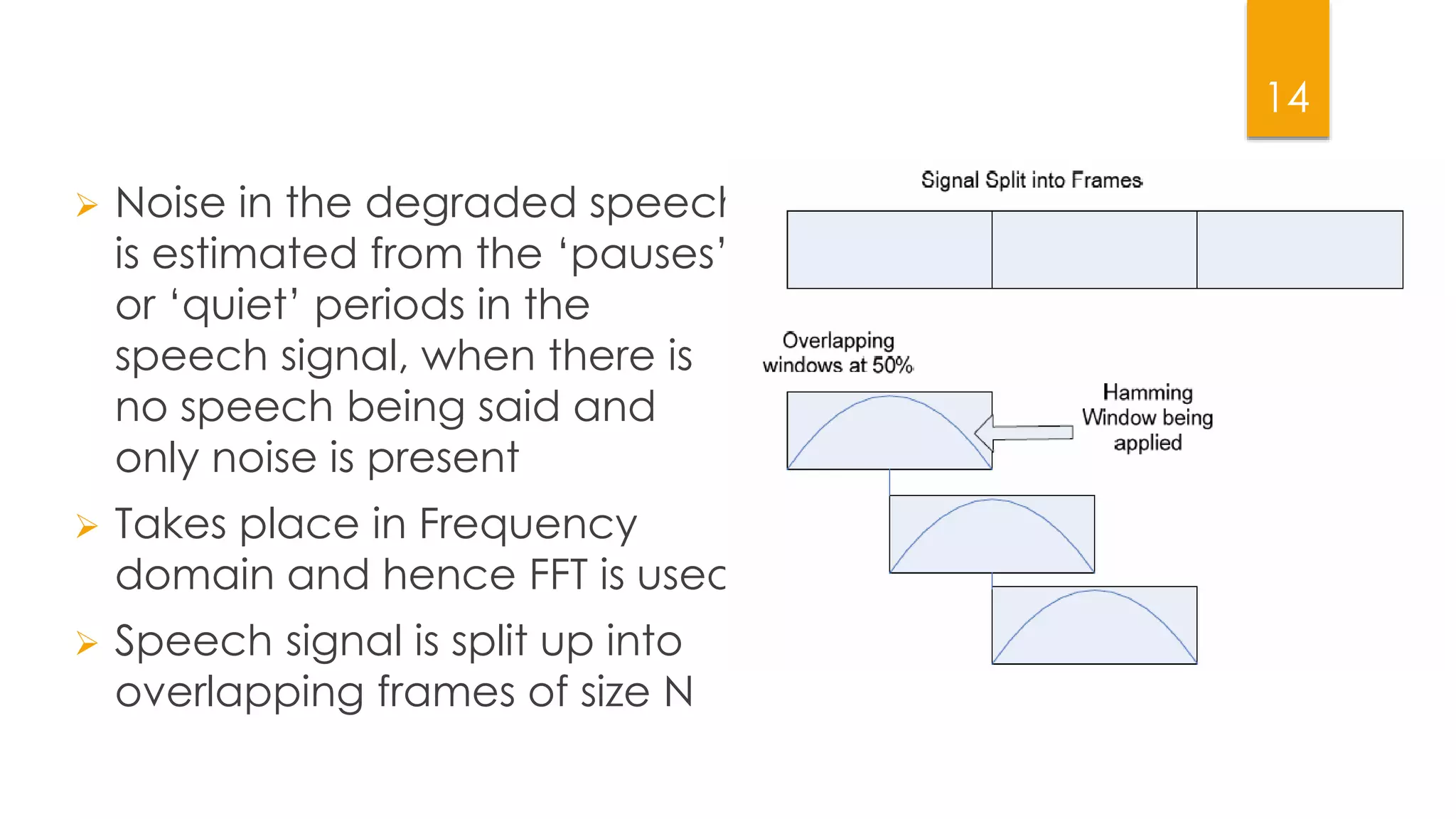
 Noise in the degraded speech
is estimated from the ‘pauses’
or ‘quiet’ periods in the
speech signal, when there is
no speech being said and
only noise is present
 Takes place in Frequency
domain and hence FFT is used
 Speech signal is split up into
overlapping frames of size N
15
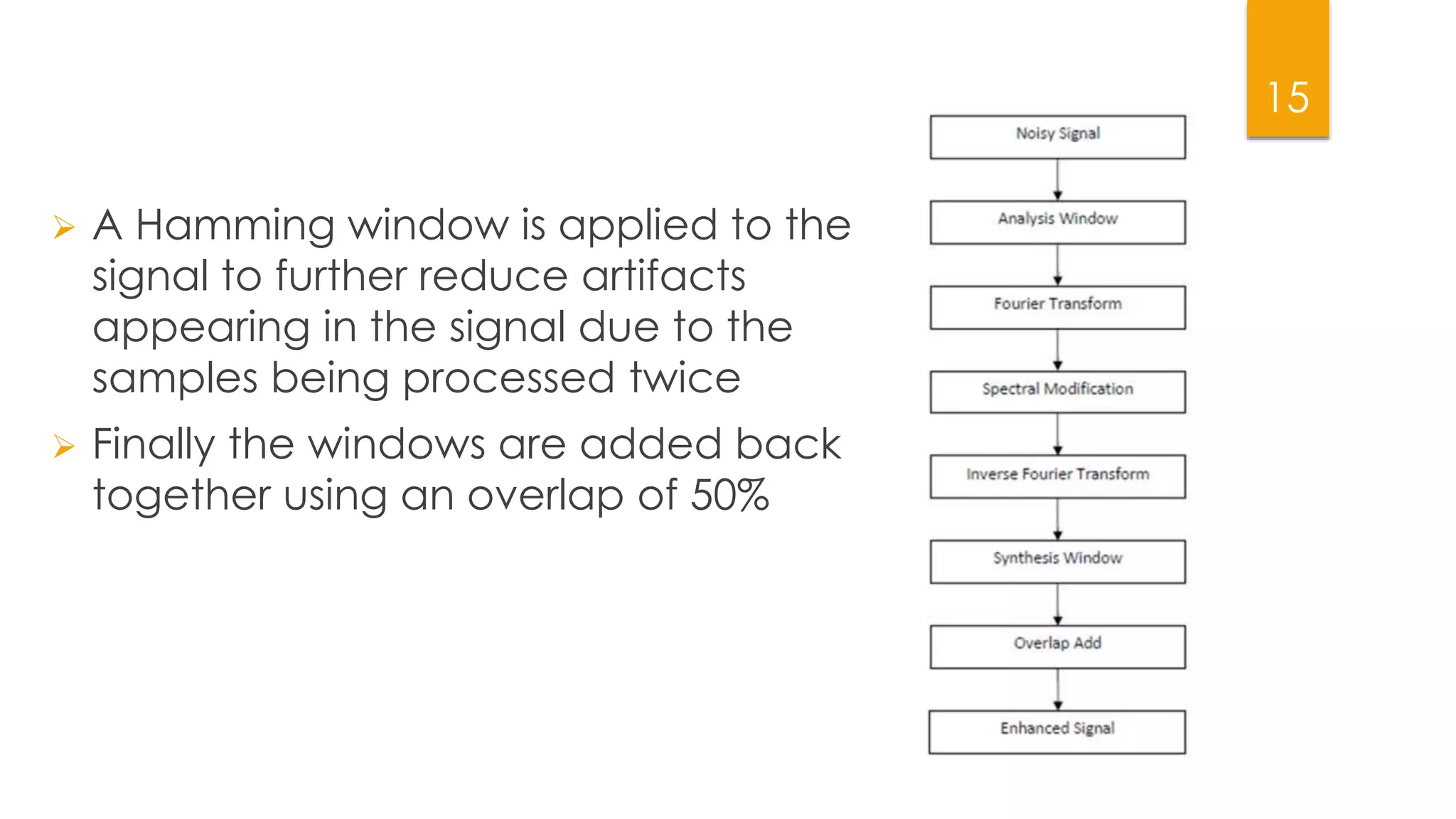
 A Hamming window is applied to the
signal to further reduce artifacts
appearing in the signal due to the
samples being processed twice
 Finally the windows are added back
together using an overlap of 50%
16
17
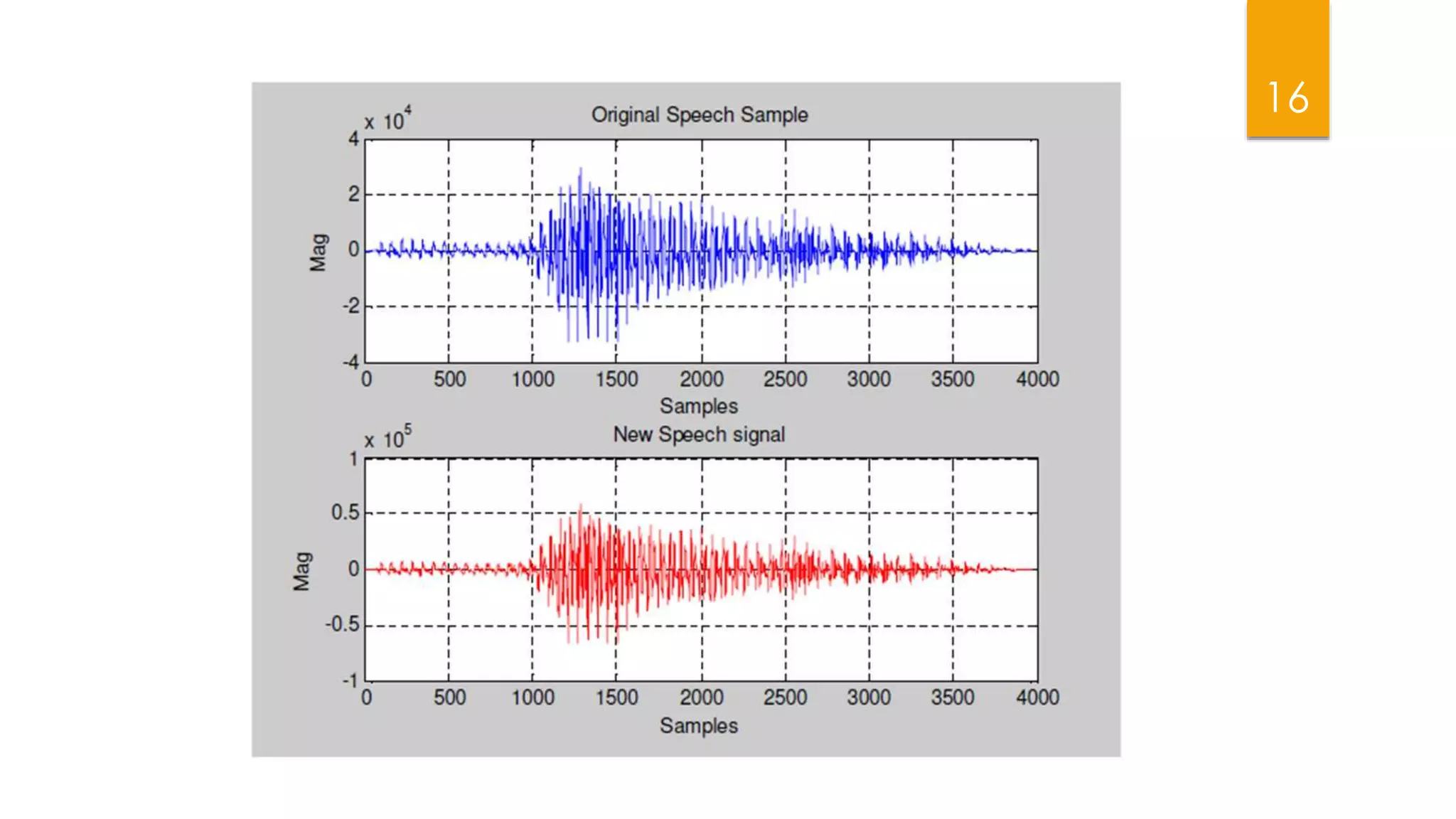
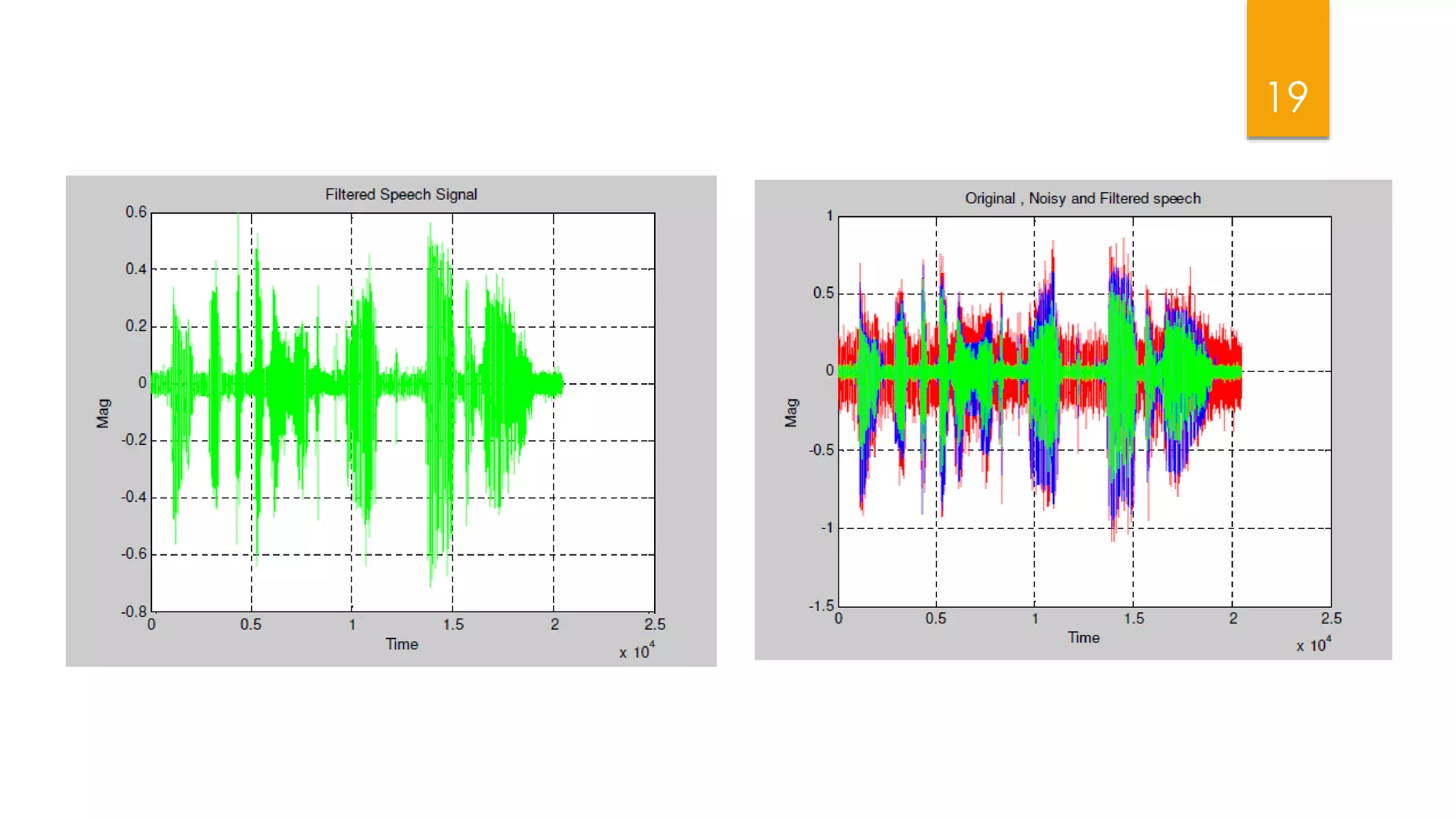
 Get the noise spectrum along with the signal
spectrum, then taking the noise from the degraded
signal to get the cleaned speech signal
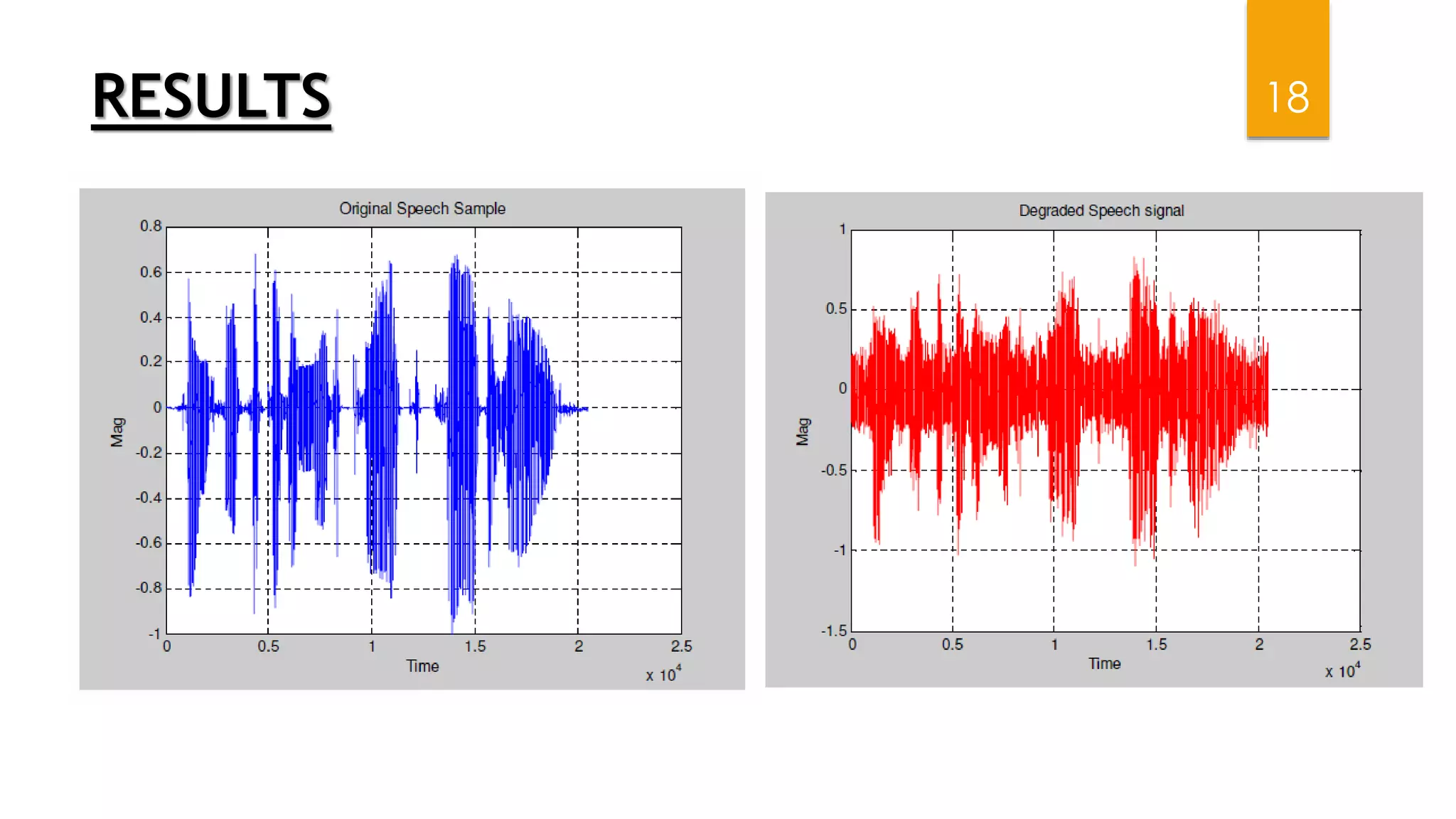
 Noise vector of the same length as the original signal
created using the ‘randn’ function in Matlab and
added to the original signal so that it is degraded by
additive noise
 FFT is used to calculate the spectrum and ‘abs’
function is used to calculate the magnitude of
degraded and noise signals
 MagY = MagX – MagN
18RESULTS
19
WEINER FILTERING
20
 Using the FFT and applying the Hamming
window along with the overlapping at 50%
are same
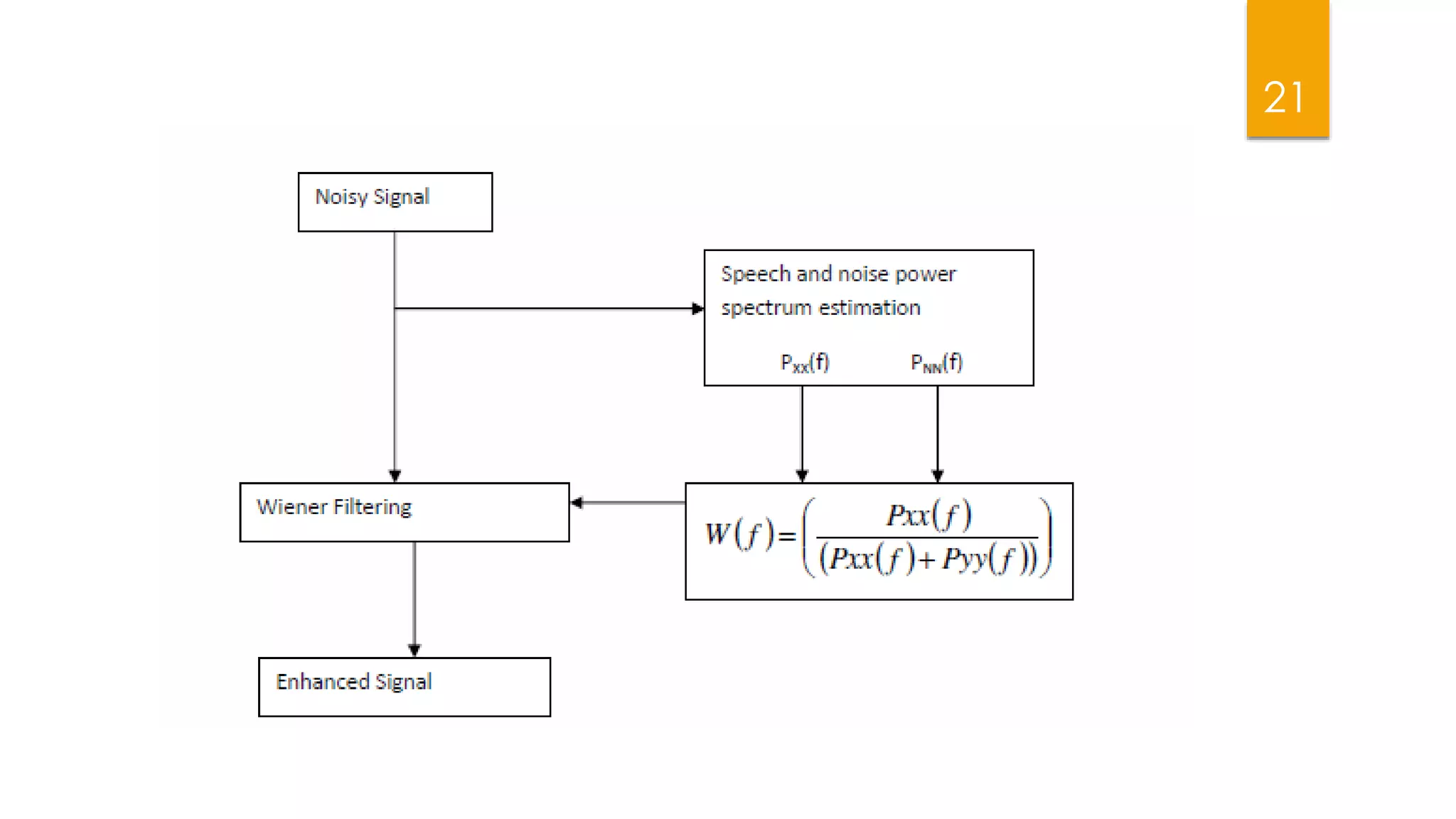
 Main difference is how they remove the
noise from the degraded speech signal
 Estimation of speech and noise power
spectrum
21
22
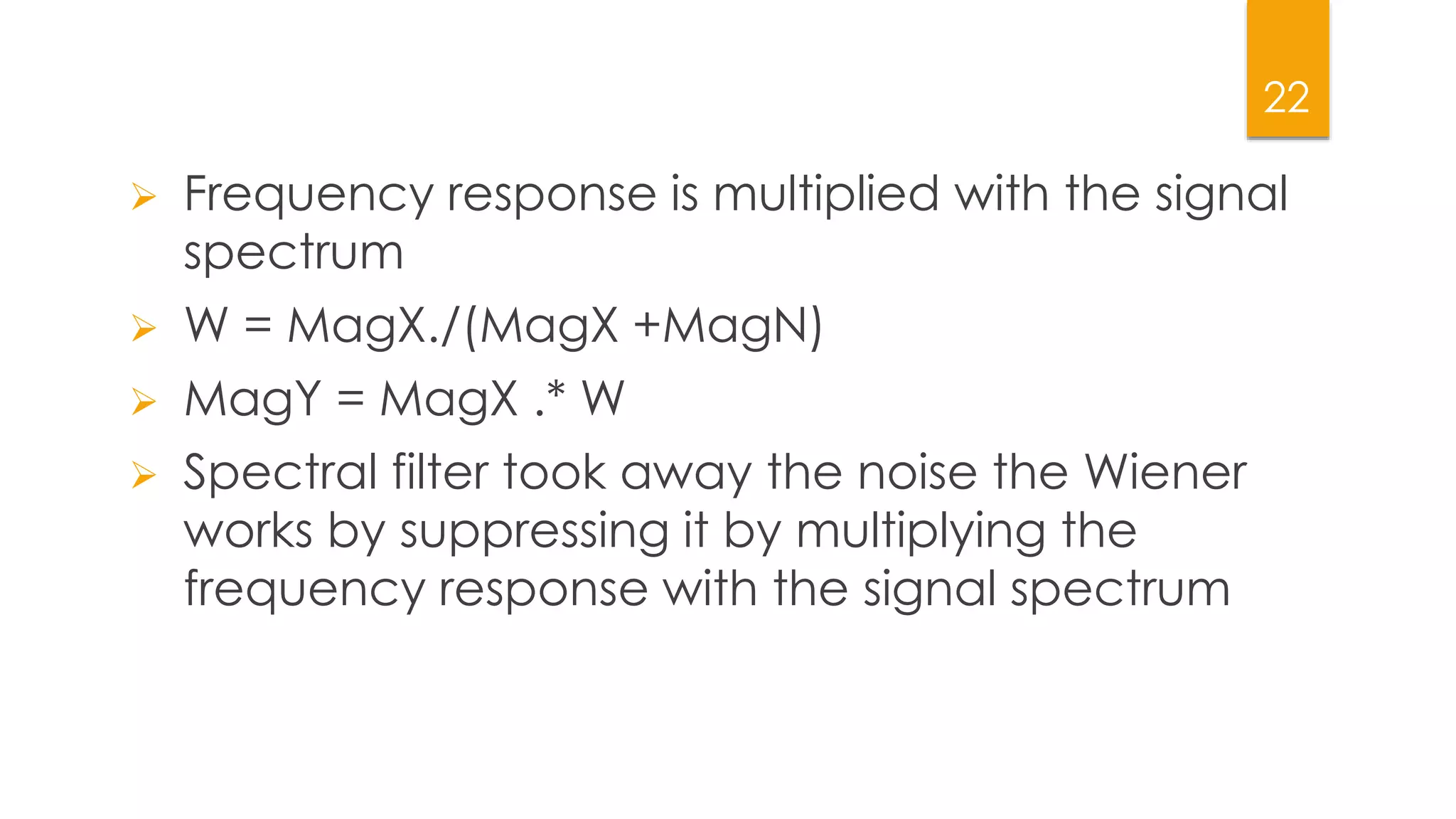
 Frequency response is multiplied with the signal
spectrum
 W = MagX./(MagX +MagN)
 MagY = MagX .* W
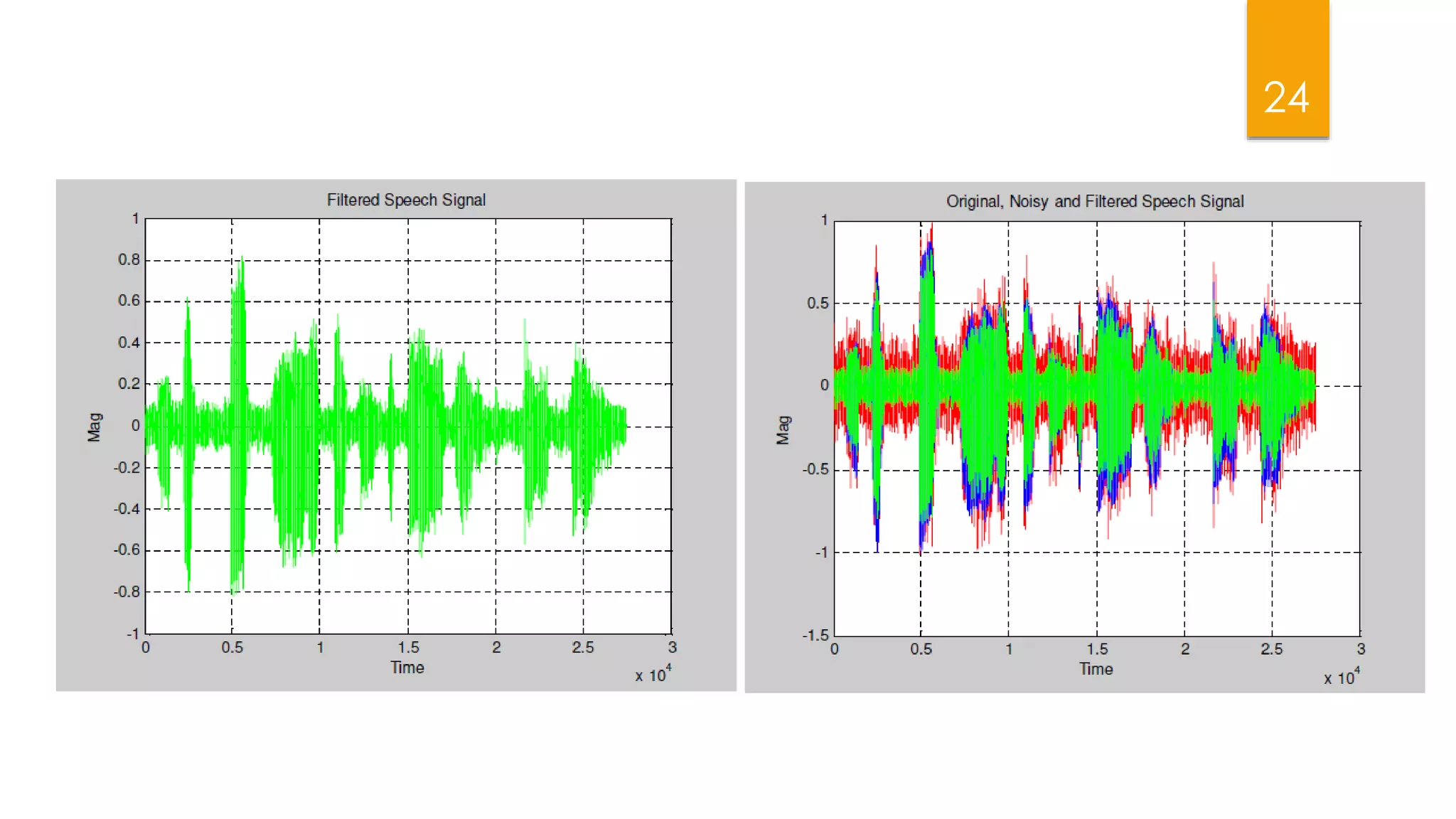
 Spectral filter took away the noise the Wiener
works by suppressing it by multiplying the
frequency response with the signal spectrum
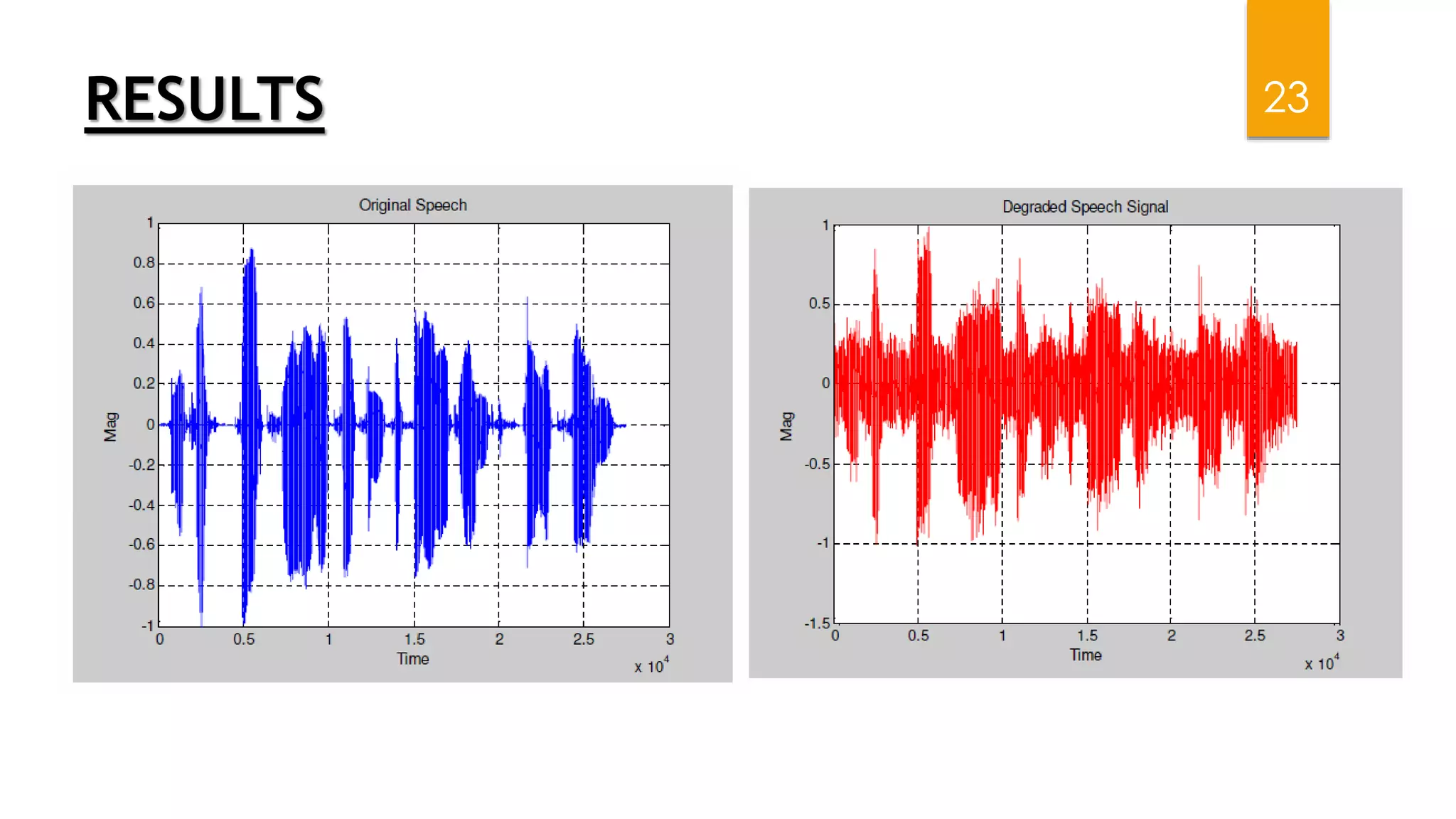
23RESULTS
24
25
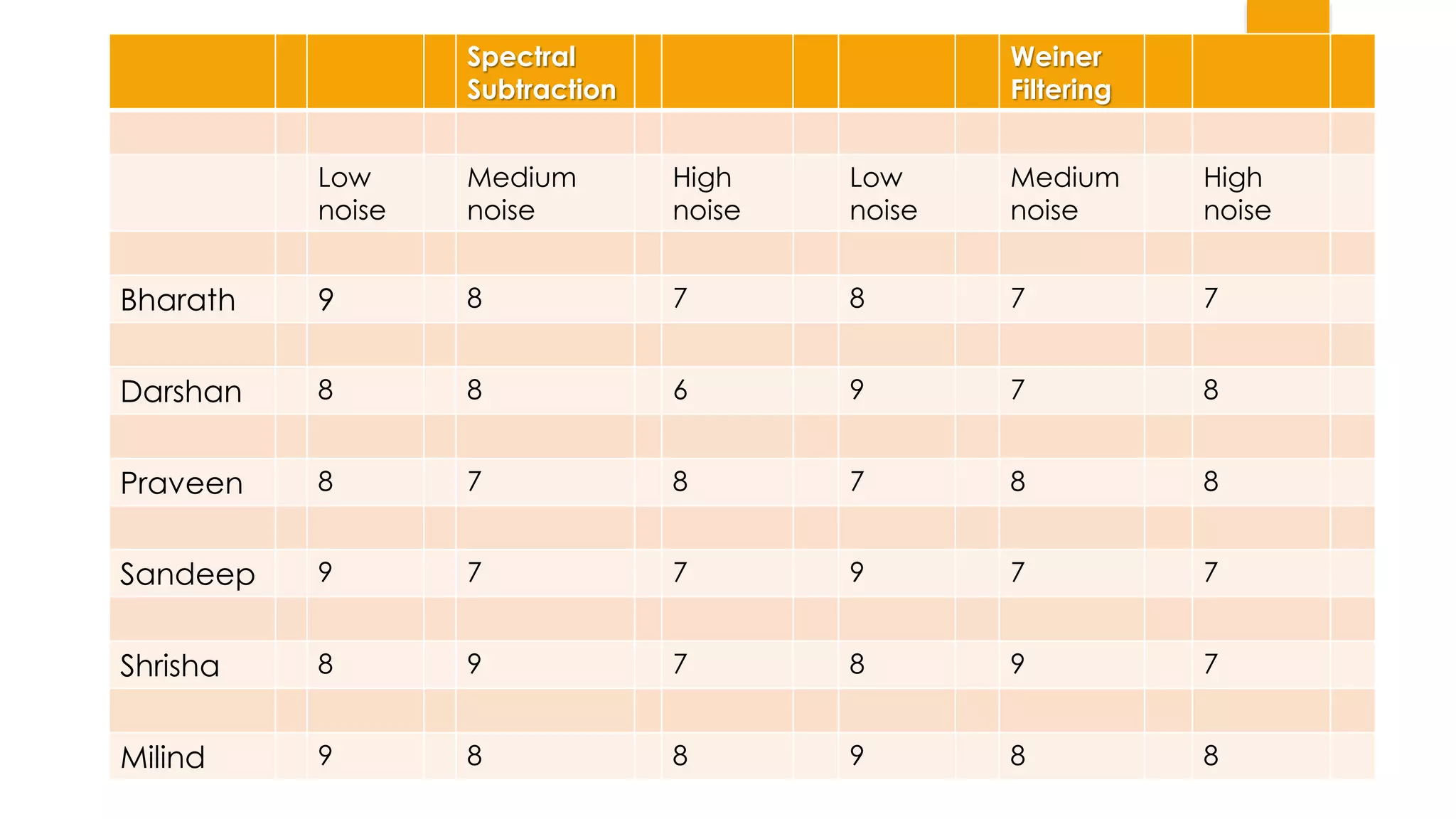
Spectral
Subtraction
Weiner
Filtering
Low
noise
Medium
noise
High
noise
Low
noise
Medium
noise
High
noise
Bharath 9 8 7 8 7 7
Darshan 8 8 6 9 7 8
Praveen 8 7 8 7 8 8
Sandeep 9 7 7 9 7 7
Shrisha 8 9 7 8 9 7
Milind 9 8 8 9 8 8
APPLICATIONS
 De noising
 Removing interference caused by other speakers
 Separating vocals from music
 Automatic Gain Control
26
CONCLUSION
 Implementation and simulation using Matlab
and comparison of the techniques employed
to see which offered the greater detection
and filtered speech
 Objective testing of the two enhancement
techniques using Signal to Noise Ratio
 Using different listeners to analyze the above
speech enhancement techniques
27
28
 The two filters both Spectral Subtraction and Wiener Filter
are close at lower SNR
 Very little difference between the two filters at this level of
SNR
 At higher SNR the Wiener filter seems to out perform the
Spectral Subtraction
 The Wiener Filter is the preferred form of filtering at the
higher level of SNR
FUTURE WORK
 It is necessary for the speech enhancement
techniques to be able to detect the noise in
a signal automatically
 The filters also need to update the noise
signal since noise is so random that it can
change during a speech signal
 Use the above methods in real time analysis
of speech signals
29
REFERENCES
 Saeed V. Vaseghi ‘Advanced Digital Signal Processing and Noise
Reduction’ Third Edition (2005)
 Joachim Thiemann: ‘Acoustic Noise Suppression for Speech Signals using
Auditory Masking Effects’ ‘http://www-
mmsp.ece.mcgill.ca/MMSP/Theses/2001/ThiemannT2001.pdf’ (2001)
 F.J. Owens: ‘Signal Processing of Speech’ (1993)
 Kamil K. W´ojcicki, Benjamin J. Shannon and Kuldip K. Paliwal ‘Spectral
Subtraction with Variance Reduced Noise Spectrum Estimates’
30
31

Final ppt

  • 1.
    APPLICATIONS IN SPEECH ENHANCEMENT BY BHARATHV 1BM11TE012 PRAVEEN D S 1BM11TE038 SANDEEP K M 1BM11TE046 SHRISHA UDUPA S 1BM11TE052 DEPT OF TCE, BMSCE 1 UNDER THE GUIDANCE OF PRASANNA KUMAR M K
  • 2.
  • 3.
  • 4.
  • 5.
    PROJECT GOALS  Examinethe Spectral Subtraction speech enhancement technique and then simulate it in Matlab  Examine the Wiener Filtering method and simulate in Matlab 5
  • 6.
  • 7.
  • 8.
  • 9.
  • 10.
  • 11.
  • 12.
    FOURIER TRANSFORM  Itdecomposes a function of time into the sum of sinusoidal functions similar to how a musical chord can be expressed as the amplitude of its constituent notes  Converts a signal from time domain to frequency domain  Short Term Fourier Transform is used to determine the sinusoidal frequency and phase content of local section of a signal as it changes over time 12
  • 13.
    SPECTRAL SUBTRACTION  Spectralamplitude estimation method to restore the signals degraded by additive noise  Phase distortion can be ignored since human ear is insensitive to the phase  Restoring the signal by subtracting an estimate of the noise spectrum from the noisy signal spectrum 13
  • 14.
    14  Noise inthe degraded speech is estimated from the ‘pauses’ or ‘quiet’ periods in the speech signal, when there is no speech being said and only noise is present  Takes place in Frequency domain and hence FFT is used  Speech signal is split up into overlapping frames of size N
  • 15.
    15  A Hammingwindow is applied to the signal to further reduce artifacts appearing in the signal due to the samples being processed twice  Finally the windows are added back together using an overlap of 50%
  • 16.
  • 17.
    17  Get thenoise spectrum along with the signal spectrum, then taking the noise from the degraded signal to get the cleaned speech signal  Noise vector of the same length as the original signal created using the ‘randn’ function in Matlab and added to the original signal so that it is degraded by additive noise  FFT is used to calculate the spectrum and ‘abs’ function is used to calculate the magnitude of degraded and noise signals  MagY = MagX – MagN
  • 18.
  • 19.
  • 20.
    WEINER FILTERING 20  Usingthe FFT and applying the Hamming window along with the overlapping at 50% are same  Main difference is how they remove the noise from the degraded speech signal  Estimation of speech and noise power spectrum
  • 21.
  • 22.
    22  Frequency responseis multiplied with the signal spectrum  W = MagX./(MagX +MagN)  MagY = MagX .* W  Spectral filter took away the noise the Wiener works by suppressing it by multiplying the frequency response with the signal spectrum
  • 23.
  • 24.
  • 25.
    25 Spectral Subtraction Weiner Filtering Low noise Medium noise High noise Low noise Medium noise High noise Bharath 9 87 8 7 7 Darshan 8 8 6 9 7 8 Praveen 8 7 8 7 8 8 Sandeep 9 7 7 9 7 7 Shrisha 8 9 7 8 9 7 Milind 9 8 8 9 8 8
  • 26.
    APPLICATIONS  De noising Removing interference caused by other speakers  Separating vocals from music  Automatic Gain Control 26
  • 27.
    CONCLUSION  Implementation andsimulation using Matlab and comparison of the techniques employed to see which offered the greater detection and filtered speech  Objective testing of the two enhancement techniques using Signal to Noise Ratio  Using different listeners to analyze the above speech enhancement techniques 27
  • 28.
    28  The twofilters both Spectral Subtraction and Wiener Filter are close at lower SNR  Very little difference between the two filters at this level of SNR  At higher SNR the Wiener filter seems to out perform the Spectral Subtraction  The Wiener Filter is the preferred form of filtering at the higher level of SNR
  • 29.
    FUTURE WORK  Itis necessary for the speech enhancement techniques to be able to detect the noise in a signal automatically  The filters also need to update the noise signal since noise is so random that it can change during a speech signal  Use the above methods in real time analysis of speech signals 29
  • 30.
    REFERENCES  Saeed V.Vaseghi ‘Advanced Digital Signal Processing and Noise Reduction’ Third Edition (2005)  Joachim Thiemann: ‘Acoustic Noise Suppression for Speech Signals using Auditory Masking Effects’ ‘http://www- mmsp.ece.mcgill.ca/MMSP/Theses/2001/ThiemannT2001.pdf’ (2001)  F.J. Owens: ‘Signal Processing of Speech’ (1993)  Kamil K. W´ojcicki, Benjamin J. Shannon and Kuldip K. Paliwal ‘Spectral Subtraction with Variance Reduced Noise Spectrum Estimates’ 30
  • 31.