Downloaded 36 times
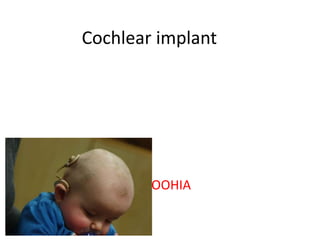

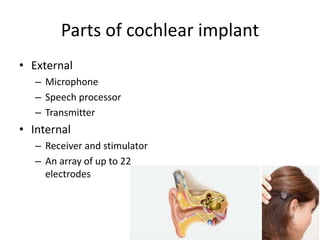

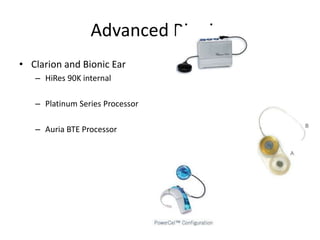




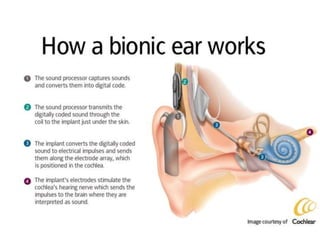




Cochlear implants are surgically implanted devices that provide a sense of sound to those who are profoundly deaf or severely hard of hearing. They consist of an external portion that picks up sound and a internal portion that stimulates the auditory nerve. The surgery involves making an incision to access the cochlea and gently inserting electrodes to deliver electrical signals without damaging delicate structures. Patients then undergo programming and rehabilitation to learn to interpret the signals and develop auditory skills. While generally successful, risks include infection, device failure, and facial nerve injury. Ongoing monitoring and adjustments are needed for optimal benefit.


![cochlear implant [Autosaved].pptx](https://cdn.slidesharecdn.com/ss_thumbnails/cochlearimplantautosaved-230807191245-e9fc2957-thumbnail.jpg?width=640&height=640&fit=bounds)


