NAME OF THE STUDENT TEACHER:-
B. SHARANEGOUDA POLICE PATIL
E2111611
B.ED 2ND SEM
SCIENCE 7TH
OBJECTIVES
 ANIMAL FIBRES
1. WOOL
* Animals that yield wool.
* From fibres to wool.
* Processing fibre into wool.
2. SILK
* Life history of silk moth.
* From cocoon to silk.
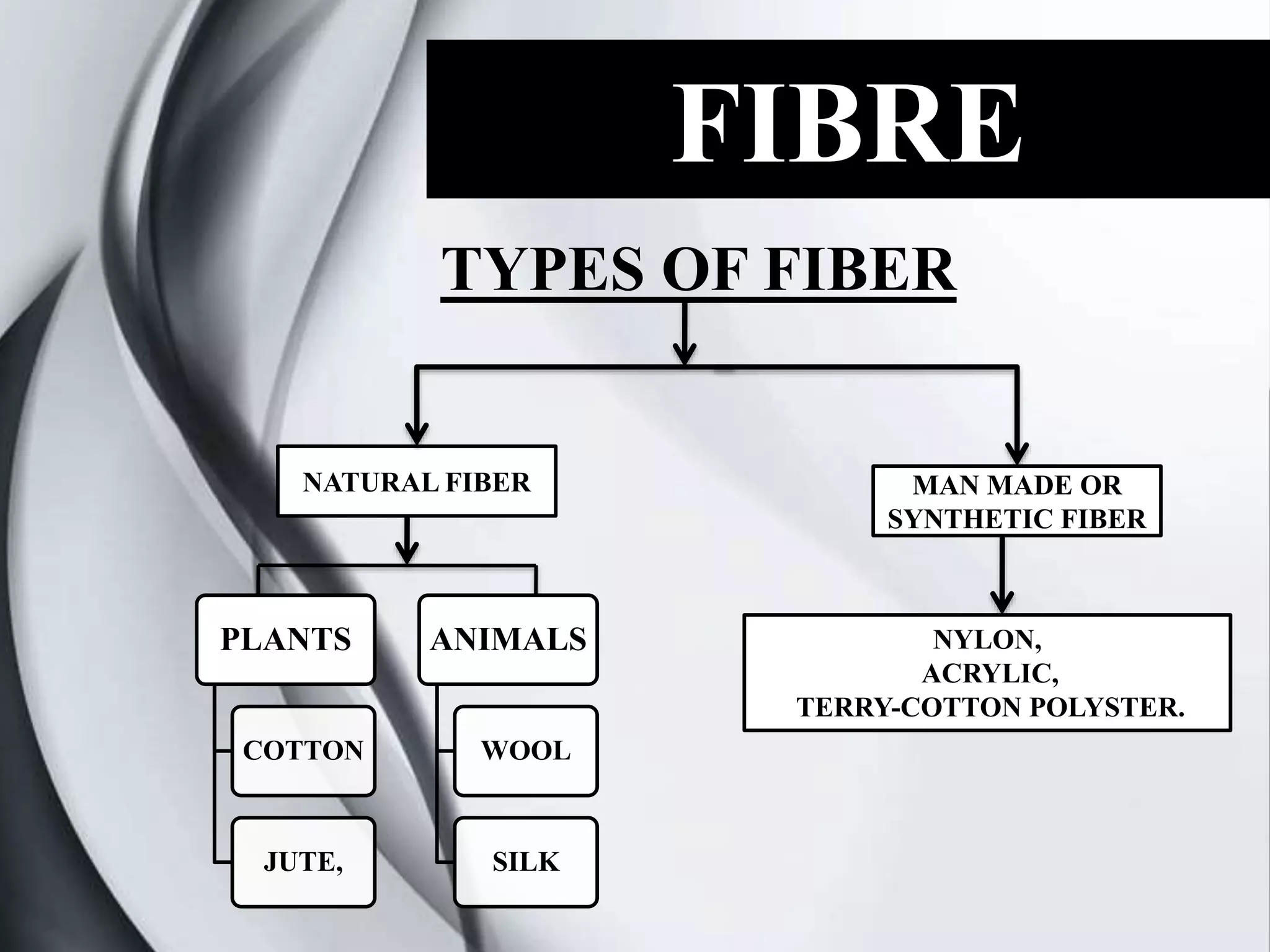
FIBRE
TYPES OF FIBER
NATURAL FIBER MAN MADE OR
SYNTHETIC FIBER
PLANTS
COTTON
JUTE,
ANIMALS
WOOL
SILK
NYLON,
ACRYLIC,
TERRY-COTTON POLYSTER.
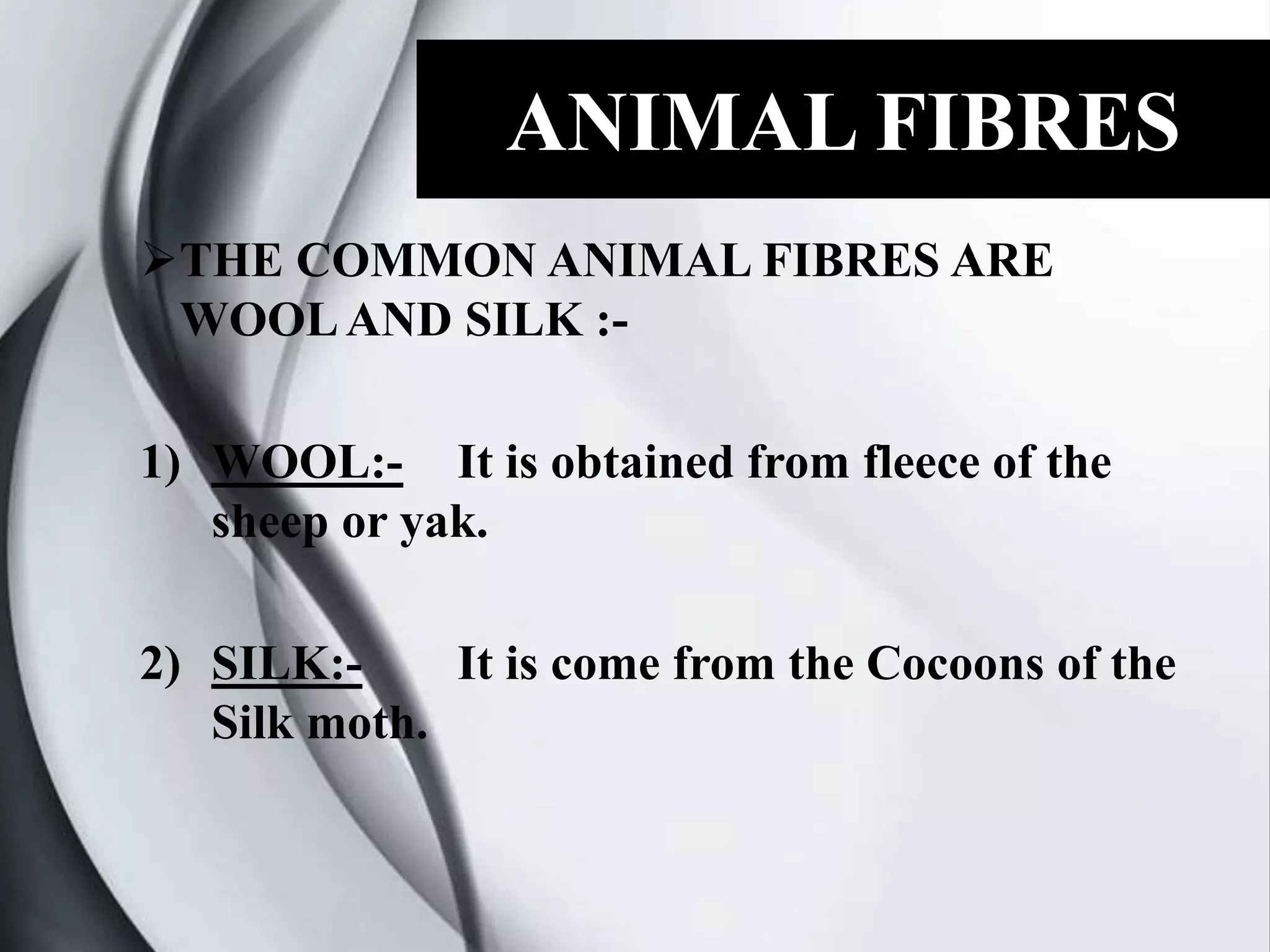
ANIMAL FIBRES
THE COMMON ANIMAL FIBRES ARE
WOOLAND SILK :-
1) WOOL:- It is obtained from fleece of the
sheep or yak.
2) SILK:- It is come from the Cocoons of the
Silk moth.
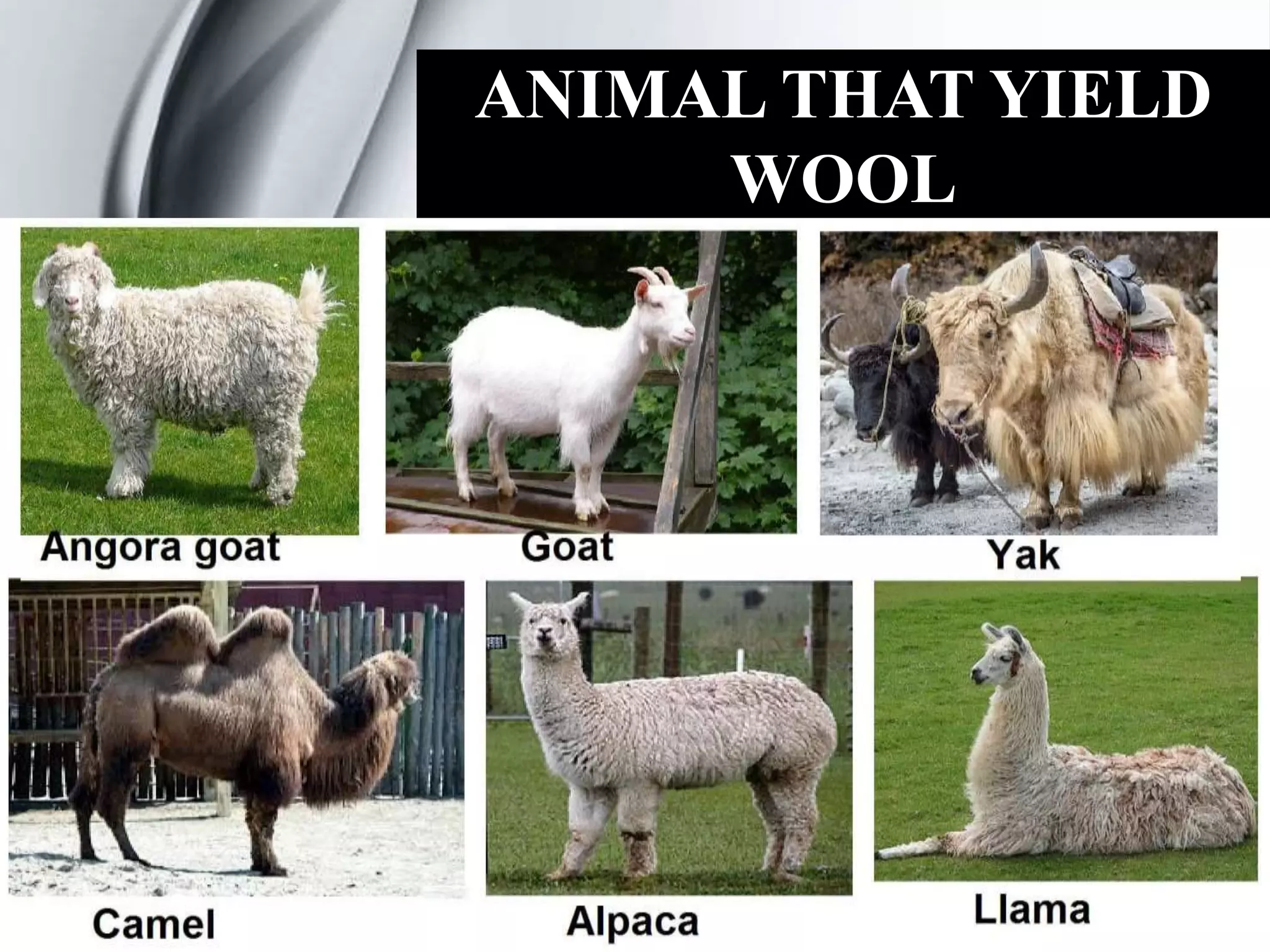
ANIMAL THAT YIELD
WOOL
WOOL
• Wool is obtained from the fleece (hair) of sheep, goat,
camel, yak, rabbit, llama, alpaca and other animals.
•
• These animals have a thick coat of hair on their bodies
because the hair traps air and air is a poor conductor of
heat.
•
• So thick layer of hair keeps their body warm and
protects them from harsh cold. For obtaining wool,
animal are reared and then their hair is cut and
processed into wool.
• Fleece and Wool bearing animals
•
• Fleece and Wool bearing animals like sheep, goat, camel, yak, etc.
bear two types of hair – coarse hair and fine-soft under hair.
•
• Fine soft hair is found close to the skin in such animals.
•
• The fine soft under hair of animal like sheep goat etc. is called
FLEECE.
•
• Animals having fine soft hair (fleece) on their
•
• body are called Wool Bearing Animals.
• ANIMAL WOOL
•
• Many breeds of sheep are found in India.
•
• → Sheep gives milk and meat; in addition to wool, but are
•
• reared mainly to obtain wool in different parts of the world. Sheep wool is most common wool.
•
• > Angora wool is obtained from Angora Goats of Jammu Kashmir is soft wool used for making
shawls. Angora Goats are found in hilly regions, such
•
• Jammu and Kashmir. Pashmina wool is obtained from Pashmina Goats.
•
• Yak wool is obtained commonly in Tibet and Laddakh. Alpaca and Llama found in South America
also give
•
• wool. Camel hair is also used as wool.
• REARING AND BREEDING OF SHEEP
•
• Sheep are reared in many parts our country like Jammu and Kashmir,
Himachal Pradesh, Uttaranchal, Sikkim, Arunachal Pradesh, Haryana,
Punjab, Rajasthan, Gujarat etc. → Sheep feed on grass and leaves. They are
also fed with a mixture of pulses, corn, jowar,
•
• oilcakes and minerals.
•
• → In winter sheep are kept indoors and fed
•
• on leaves, grain and dry fodder. Some breeds of sheep have thick hair on
their body which yield good quality wool in large quantities. They are
selectively bred to get sheep of good breed.
• PROCESSING OF WOOL
•
• The processing of changing fleece into wool involves following six
•
• steps:
•
• 1) Shearing
•
• 2) Scouring
•
• 3) Sorting 4) Burrs separation
•
• 5) Dyeing
•
• 6) Spinning
• SILK
•
• Silk fiber is obtained from the cocoons of the silkworms (silk moth).
The silk moth lives on the leaves of mulberry plants.
•
• TYPES OF SILK
•
• Different types of silk worm produce different types of silk in terms
of luster and texture. For example- tassar silk, mooga silk, kosa silk,
etc. are produced by different types of silk moth. Mulberry silk is
the most common silk moth.
•
• SERICULTURE The rearing of silkworms for obtaining silk is
called sericulture.
• History of Silk:
•
• > Silk was discovered in China; around 3500 BC. Silk became a prized possession
because of its fine quality and luster.
•
• + Originally, it was used by emperors only. It was through trade that silk spread to
other parts of the world
•
• * over a period of time. Silk was a staple item of trade during ancient times. Due to
this, the ancient trade routes which linked China to other parts of the world are
called ‘Silk Route’.
•
• > As per historians, silk was produced in India also. Proof of use of silk during the
Indus Valley Civilization has
•
• also been found.
• LIFE CYCLE OF SILKWORM
•
• There are four stages in the life cycle of silk moth:
•
• eggs, larva, pupa and adult. Female silk moth → Lays
eggs → After about 14 days eggs are hatched into larva
(called caterpillars) → Grown into Pupa → Secretes
fibers made of protein and weaves the fibres around
itself completely → This covering is called cocoon. →
Live in the cocoon for some time → After coming out
of cocoon grows into silk moth.
• PROCESSING OF SILK
•
• The process of obtaining silk from
•
• silk moth involves 1) rearing of silkworms
•
• 2) reeling
• REARING OF SILKWORMS
•
• The female silk moth lays eggs. Eggs are stored over a clean cloth or paper strips.
The eggs are warmed to a suitable temperature. The eggs hatch into larvae called
caterpillars or
•
• silk worms. The silkworms are kept in bamboo trays and feeds
•
• on mulberry leaves and grows in size.
•
• After 30 to 40 days the silk worms stop eating and begins to spin cocoons. Cocoons
get hardened because of exposure to air.
•
• Inside the cocoon the silk worm develops into silk
•
• moth.
• REELING OF SILK
•
• → The cocoons are collected and kept in sunlight
or boiled or exposed to steam. The silk fibres
separate out.
•
• → The process of taking out the silk thread from
the cocoons is called reeling.
•
• → Reeling is done by machines.
THANK
YOU

fibre to fabric

  • 1.
    NAME OF THESTUDENT TEACHER:- B. SHARANEGOUDA POLICE PATIL E2111611 B.ED 2ND SEM SCIENCE 7TH
  • 2.
    OBJECTIVES  ANIMAL FIBRES 1.WOOL * Animals that yield wool. * From fibres to wool. * Processing fibre into wool. 2. SILK * Life history of silk moth. * From cocoon to silk.
  • 3.
    FIBRE TYPES OF FIBER NATURALFIBER MAN MADE OR SYNTHETIC FIBER PLANTS COTTON JUTE, ANIMALS WOOL SILK NYLON, ACRYLIC, TERRY-COTTON POLYSTER.
  • 4.
    ANIMAL FIBRES THE COMMONANIMAL FIBRES ARE WOOLAND SILK :- 1) WOOL:- It is obtained from fleece of the sheep or yak. 2) SILK:- It is come from the Cocoons of the Silk moth.
  • 5.
  • 6.
    WOOL • Wool isobtained from the fleece (hair) of sheep, goat, camel, yak, rabbit, llama, alpaca and other animals. • • These animals have a thick coat of hair on their bodies because the hair traps air and air is a poor conductor of heat. • • So thick layer of hair keeps their body warm and protects them from harsh cold. For obtaining wool, animal are reared and then their hair is cut and processed into wool.
  • 7.
    • Fleece andWool bearing animals • • Fleece and Wool bearing animals like sheep, goat, camel, yak, etc. bear two types of hair – coarse hair and fine-soft under hair. • • Fine soft hair is found close to the skin in such animals. • • The fine soft under hair of animal like sheep goat etc. is called FLEECE. • • Animals having fine soft hair (fleece) on their • • body are called Wool Bearing Animals.
  • 8.
    • ANIMAL WOOL • •Many breeds of sheep are found in India. • • → Sheep gives milk and meat; in addition to wool, but are • • reared mainly to obtain wool in different parts of the world. Sheep wool is most common wool. • • > Angora wool is obtained from Angora Goats of Jammu Kashmir is soft wool used for making shawls. Angora Goats are found in hilly regions, such • • Jammu and Kashmir. Pashmina wool is obtained from Pashmina Goats. • • Yak wool is obtained commonly in Tibet and Laddakh. Alpaca and Llama found in South America also give • • wool. Camel hair is also used as wool.
  • 9.
    • REARING ANDBREEDING OF SHEEP • • Sheep are reared in many parts our country like Jammu and Kashmir, Himachal Pradesh, Uttaranchal, Sikkim, Arunachal Pradesh, Haryana, Punjab, Rajasthan, Gujarat etc. → Sheep feed on grass and leaves. They are also fed with a mixture of pulses, corn, jowar, • • oilcakes and minerals. • • → In winter sheep are kept indoors and fed • • on leaves, grain and dry fodder. Some breeds of sheep have thick hair on their body which yield good quality wool in large quantities. They are selectively bred to get sheep of good breed.
  • 10.
    • PROCESSING OFWOOL • • The processing of changing fleece into wool involves following six • • steps: • • 1) Shearing • • 2) Scouring • • 3) Sorting 4) Burrs separation • • 5) Dyeing • • 6) Spinning
  • 11.
    • SILK • • Silkfiber is obtained from the cocoons of the silkworms (silk moth). The silk moth lives on the leaves of mulberry plants. • • TYPES OF SILK • • Different types of silk worm produce different types of silk in terms of luster and texture. For example- tassar silk, mooga silk, kosa silk, etc. are produced by different types of silk moth. Mulberry silk is the most common silk moth. • • SERICULTURE The rearing of silkworms for obtaining silk is called sericulture.
  • 12.
    • History ofSilk: • • > Silk was discovered in China; around 3500 BC. Silk became a prized possession because of its fine quality and luster. • • + Originally, it was used by emperors only. It was through trade that silk spread to other parts of the world • • * over a period of time. Silk was a staple item of trade during ancient times. Due to this, the ancient trade routes which linked China to other parts of the world are called ‘Silk Route’. • • > As per historians, silk was produced in India also. Proof of use of silk during the Indus Valley Civilization has • • also been found.
  • 13.
    • LIFE CYCLEOF SILKWORM • • There are four stages in the life cycle of silk moth: • • eggs, larva, pupa and adult. Female silk moth → Lays eggs → After about 14 days eggs are hatched into larva (called caterpillars) → Grown into Pupa → Secretes fibers made of protein and weaves the fibres around itself completely → This covering is called cocoon. → Live in the cocoon for some time → After coming out of cocoon grows into silk moth.
  • 14.
    • PROCESSING OFSILK • • The process of obtaining silk from • • silk moth involves 1) rearing of silkworms • • 2) reeling
  • 15.
    • REARING OFSILKWORMS • • The female silk moth lays eggs. Eggs are stored over a clean cloth or paper strips. The eggs are warmed to a suitable temperature. The eggs hatch into larvae called caterpillars or • • silk worms. The silkworms are kept in bamboo trays and feeds • • on mulberry leaves and grows in size. • • After 30 to 40 days the silk worms stop eating and begins to spin cocoons. Cocoons get hardened because of exposure to air. • • Inside the cocoon the silk worm develops into silk • • moth.
  • 16.
    • REELING OFSILK • • → The cocoons are collected and kept in sunlight or boiled or exposed to steam. The silk fibres separate out. • • → The process of taking out the silk thread from the cocoons is called reeling. • • → Reeling is done by machines.
  • 17.