Download as PDF, PPTX

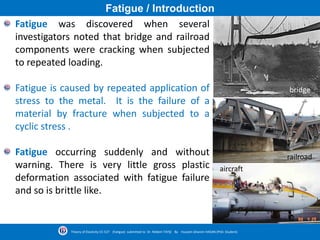
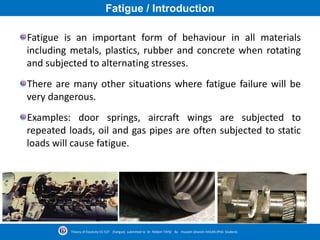
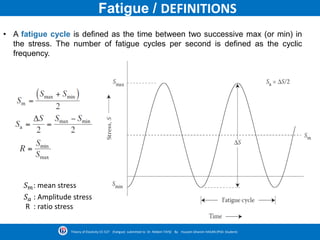
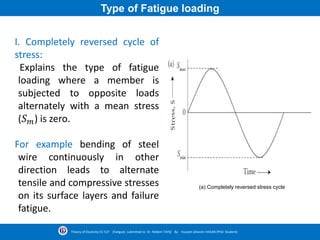
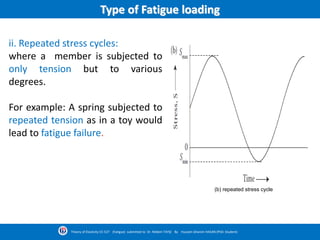
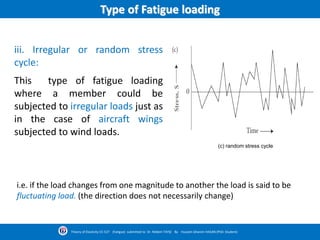
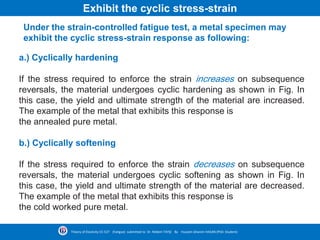
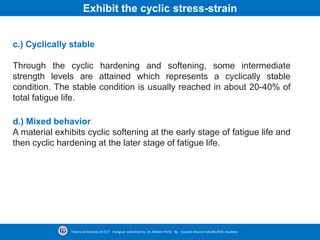
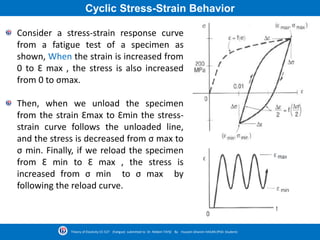
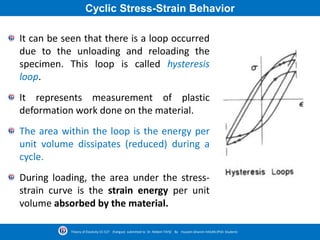
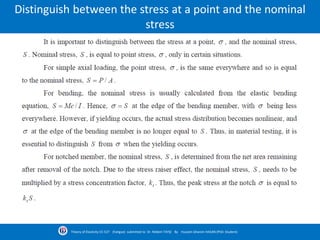
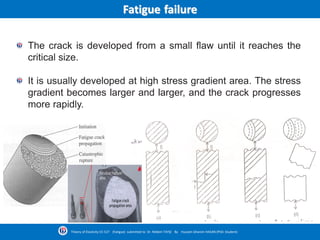
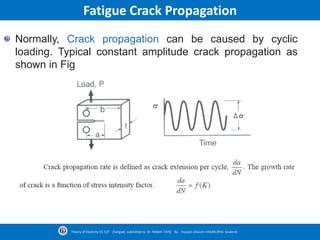
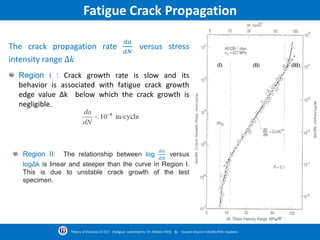
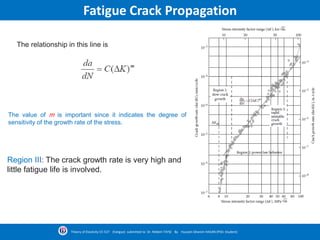
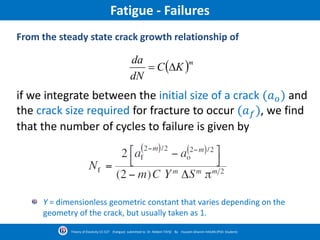
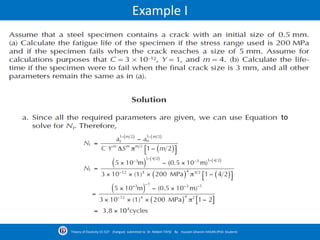
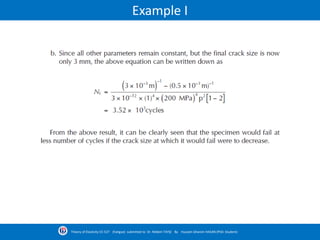
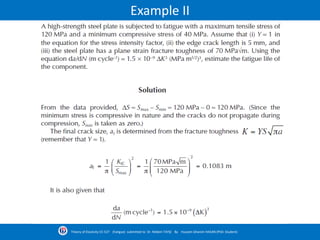
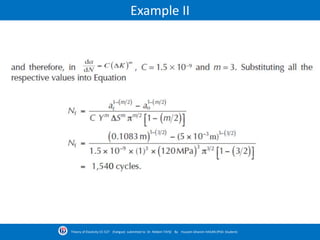
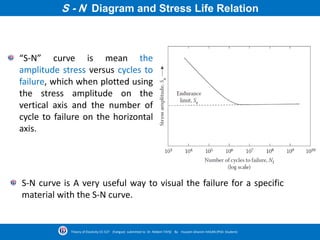
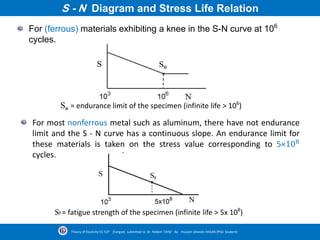
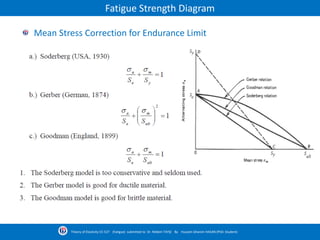
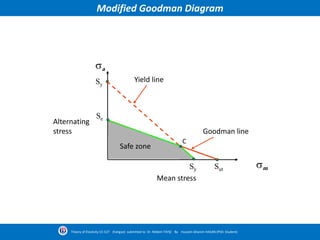
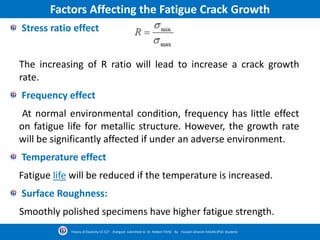
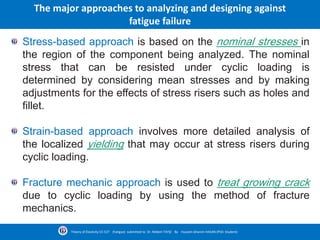
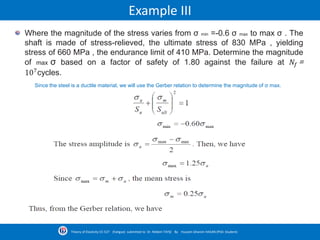
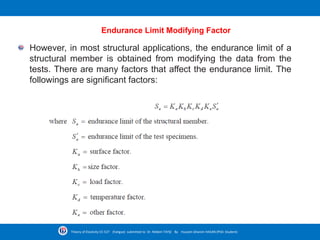
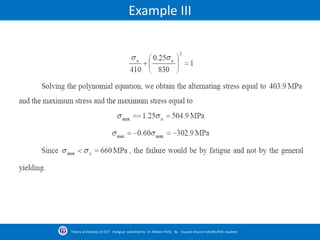
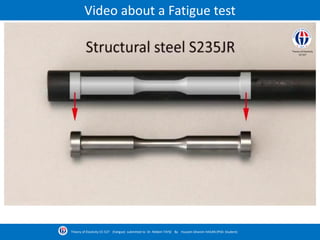
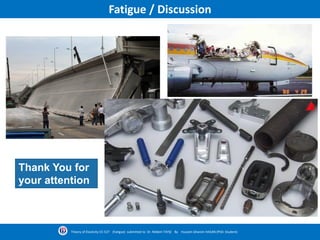

Fatigue occurs when a material is subjected to repeated loading and unloading. It causes failure from crack initiation and propagation even when stresses are below the yield strength of the material. Fatigue was first observed in railroad and bridge components that cracked under repeated loading. Fatigue failure can occur suddenly and without warning in metals, plastics, rubbers, and concrete used in applications with rotating or fluctuating stresses like aircraft wings, springs, and pipes conveying fluid. The number of cycles to failure depends on the stress range and mean stress based on stress-life (S-N) curves, which can be corrected using the Goodman diagram for different stress ratios. Crack propagation rates under cyclic loading can be modeled in three regions based on stress


