FACTORS MODIFYING
DRUG ACTONS
DR. VANI. J
Assistant Professor
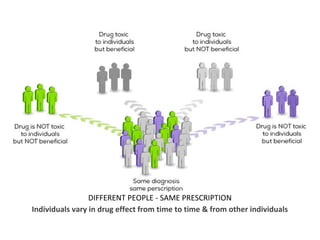
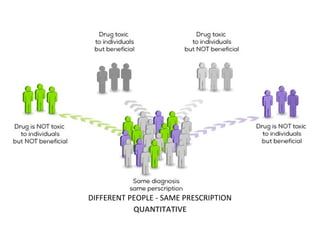
DIFFERENT PEOPLE - SAME PRESCRIPTION
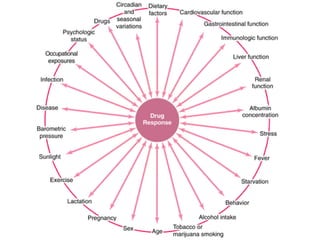
Individuals vary in drug effect from time to time & from other individuals
REASON:
• Individual Variation in Pharmacokinetic handling
• Variation in number / state of receptors
• Variations in neurogenic / hormonal tone
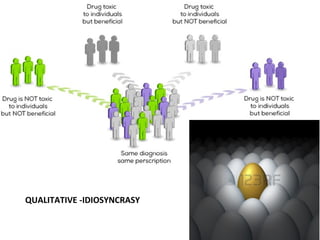
DIFFERENT PEOPLE - SAME PRESCRIPTION
QUANTITATIVE
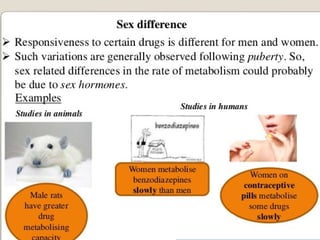
QUALITATIVE -IDIOSYNCRASY
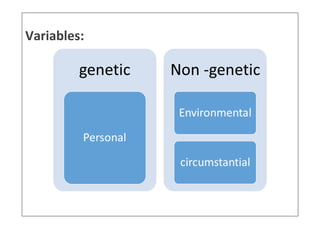
Variables:
I. Physiological factors
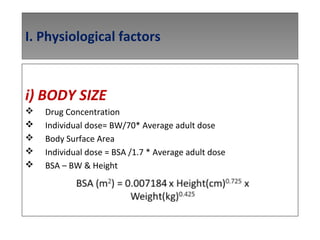
i) BODY SIZE
 Drug Concentration
 Individual dose= BW/70* Average adult dose
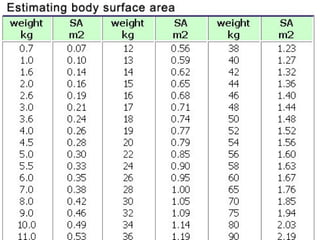
 Body Surface Area
 Individual dose = BSA /1.7 * Average adult dose
 BSA – BW & Height
I. Physiological factors
i) BODY SIZE
 Drug Concentration
 Individual dose= BW/70* Average adult dose
 Body Surface Area
 Individual dose = BSA /1.7 * Average adult dose
 BSA – BW & Height
I. Physiological factors
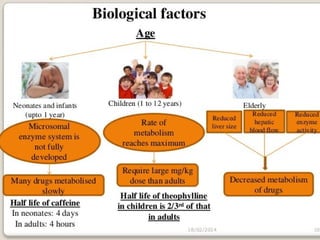
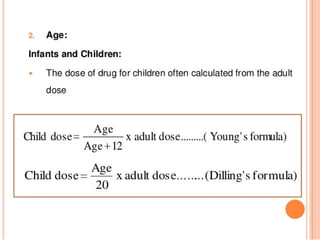
i) Age
 Extreme of age show extreme drug sensitivity
 Newborn babies & elderly
CHILDREN
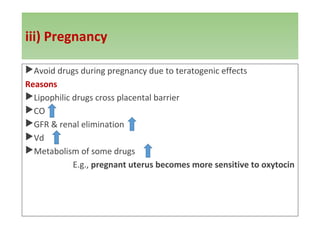
iii) Pregnancy
Avoid drugs during pregnancy due to teratogenic effects
Reasons
Lipophilic drugs cross placental barrier
CO
GFR & renal elimination
Vd
Metabolism of some drugs
E.g., pregnant uterus becomes more sensitive to oxytocin
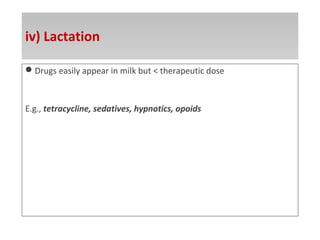
iv) Lactation
Drugs easily appear in milk but < therapeutic dose
E.g., tetracycline, sedatives, hypnotics, opoids
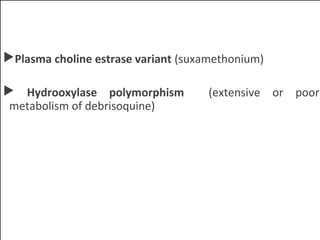
Plasma choline estrase variant (suxamethonium)
 Hydrooxylase polymorphism (extensive or poor
metabolism of debrisoquine)
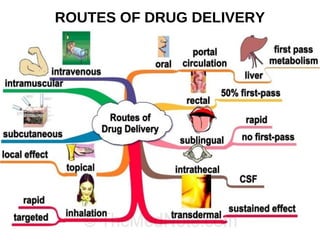
ROUTES OF DRUG DELIVERY
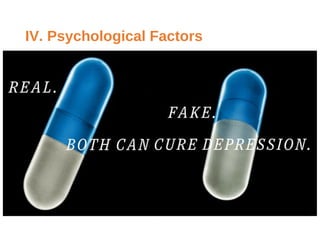
IV. Psychological Factors
IV. Environmental factors
Microsomal enzyme inducers
e.g., Hydrocarbons in tobacco smoke, charcoal
broiled meat induce CYP1A
Smokers metabolize drugs more rapidly than non
smokers
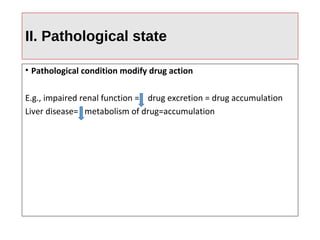
II. Pathological state
• Pathological condition modify drug action
E.g., impaired renal function = drug excretion = drug accumulation
Liver disease= metabolism of drug=accumulation
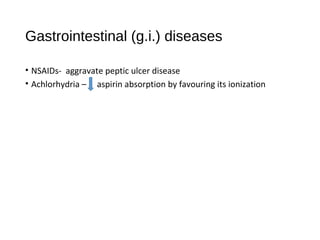
Gastrointestinal (g.i.) diseases
• NSAIDs- aggravate peptic ulcer disease
• Achlorhydria – aspirin absorption by favouring its ionization
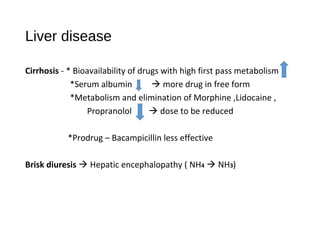
Liver disease
Cirrhosis - * Bioavailability of drugs with high first pass metabolism
*Serum albumin  more drug in free form
*Metabolism and elimination of Morphine ,Lidocaine ,
Propranolol  dose to be reduced
*Prodrug – Bacampicillin less effective
Brisk diuresis  Hepatic encephalopathy ( NH4  NH3)
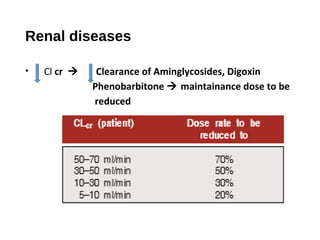
Renal diseases
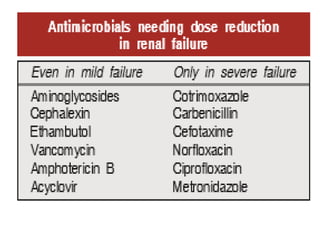
• Cl cr  Clearance of Aminglycosides, Digoxin
Phenobarbitone  maintainance dose to be
reduced
Renal disease
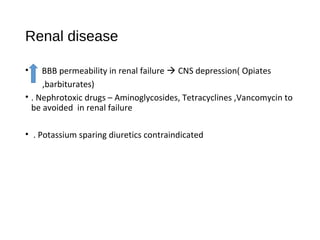
• BBB permeability in renal failure  CNS depression( Opiates
,barbiturates)
• . Nephrotoxic drugs – Aminoglycosides, Tetracyclines ,Vancomycin to
be avoided in renal failure
• . Potassium sparing diuretics contraindicated
V) Psychological state
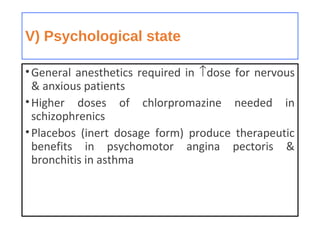
•General anesthetics required in ↑dose for nervous
& anxious patients
•Higher doses of chlorpromazine needed in
schizophrenics
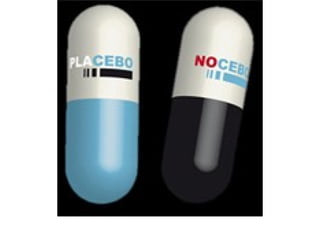
•Placebos (inert dosage form) produce therapeutic
benefits in psychomotor angina pectoris &
bronchitis in asthma
VI) Interaction with other drugs
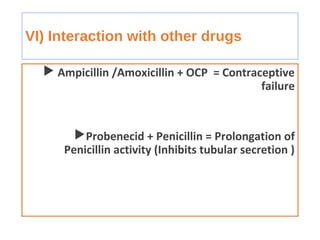
 Ampicillin /Amoxicillin + OCP = Contraceptive
failure
Probenecid + Penicillin = Prolongation of
Penicillin activity (Inhibits tubular secretion )
Factors modifying drug action

Factors modifying drug action

  • 1.
    FACTORS MODIFYING DRUG ACTONS DR.VANI. J Assistant Professor
  • 2.
    DIFFERENT PEOPLE -SAME PRESCRIPTION Individuals vary in drug effect from time to time & from other individuals
  • 3.
    REASON: • Individual Variationin Pharmacokinetic handling • Variation in number / state of receptors • Variations in neurogenic / hormonal tone
  • 4.
    DIFFERENT PEOPLE -SAME PRESCRIPTION QUANTITATIVE
  • 5.
  • 7.
  • 8.
    I. Physiological factors i)BODY SIZE  Drug Concentration  Individual dose= BW/70* Average adult dose  Body Surface Area  Individual dose = BSA /1.7 * Average adult dose  BSA – BW & Height
  • 9.
    I. Physiological factors i)BODY SIZE  Drug Concentration  Individual dose= BW/70* Average adult dose  Body Surface Area  Individual dose = BSA /1.7 * Average adult dose  BSA – BW & Height
  • 10.
    I. Physiological factors i)Age  Extreme of age show extreme drug sensitivity  Newborn babies & elderly
  • 12.
  • 14.
    iii) Pregnancy Avoid drugsduring pregnancy due to teratogenic effects Reasons Lipophilic drugs cross placental barrier CO GFR & renal elimination Vd Metabolism of some drugs E.g., pregnant uterus becomes more sensitive to oxytocin
  • 15.
    iv) Lactation Drugs easilyappear in milk but < therapeutic dose E.g., tetracycline, sedatives, hypnotics, opoids
  • 19.
    Plasma choline estrasevariant (suxamethonium)  Hydrooxylase polymorphism (extensive or poor metabolism of debrisoquine)
  • 20.
  • 21.
  • 23.
    IV. Environmental factors Microsomalenzyme inducers e.g., Hydrocarbons in tobacco smoke, charcoal broiled meat induce CYP1A Smokers metabolize drugs more rapidly than non smokers
  • 24.
    II. Pathological state •Pathological condition modify drug action E.g., impaired renal function = drug excretion = drug accumulation Liver disease= metabolism of drug=accumulation
  • 25.
    Gastrointestinal (g.i.) diseases •NSAIDs- aggravate peptic ulcer disease • Achlorhydria – aspirin absorption by favouring its ionization
  • 26.
    Liver disease Cirrhosis -* Bioavailability of drugs with high first pass metabolism *Serum albumin  more drug in free form *Metabolism and elimination of Morphine ,Lidocaine , Propranolol  dose to be reduced *Prodrug – Bacampicillin less effective Brisk diuresis  Hepatic encephalopathy ( NH4  NH3)
  • 27.
    Renal diseases • Clcr  Clearance of Aminglycosides, Digoxin Phenobarbitone  maintainance dose to be reduced
  • 28.
    Renal disease • BBBpermeability in renal failure  CNS depression( Opiates ,barbiturates) • . Nephrotoxic drugs – Aminoglycosides, Tetracyclines ,Vancomycin to be avoided in renal failure • . Potassium sparing diuretics contraindicated
  • 30.
    V) Psychological state •Generalanesthetics required in ↑dose for nervous & anxious patients •Higher doses of chlorpromazine needed in schizophrenics •Placebos (inert dosage form) produce therapeutic benefits in psychomotor angina pectoris & bronchitis in asthma
  • 31.
    VI) Interaction withother drugs  Ampicillin /Amoxicillin + OCP = Contraceptive failure Probenecid + Penicillin = Prolongation of Penicillin activity (Inhibits tubular secretion )