ANTI-ULCER DRUGS BY CH.DEEPTHI(10T21S0116) UNDER THE GUIDANCE OF MR.J.ANUP M.Pharm (Asst.Professor)
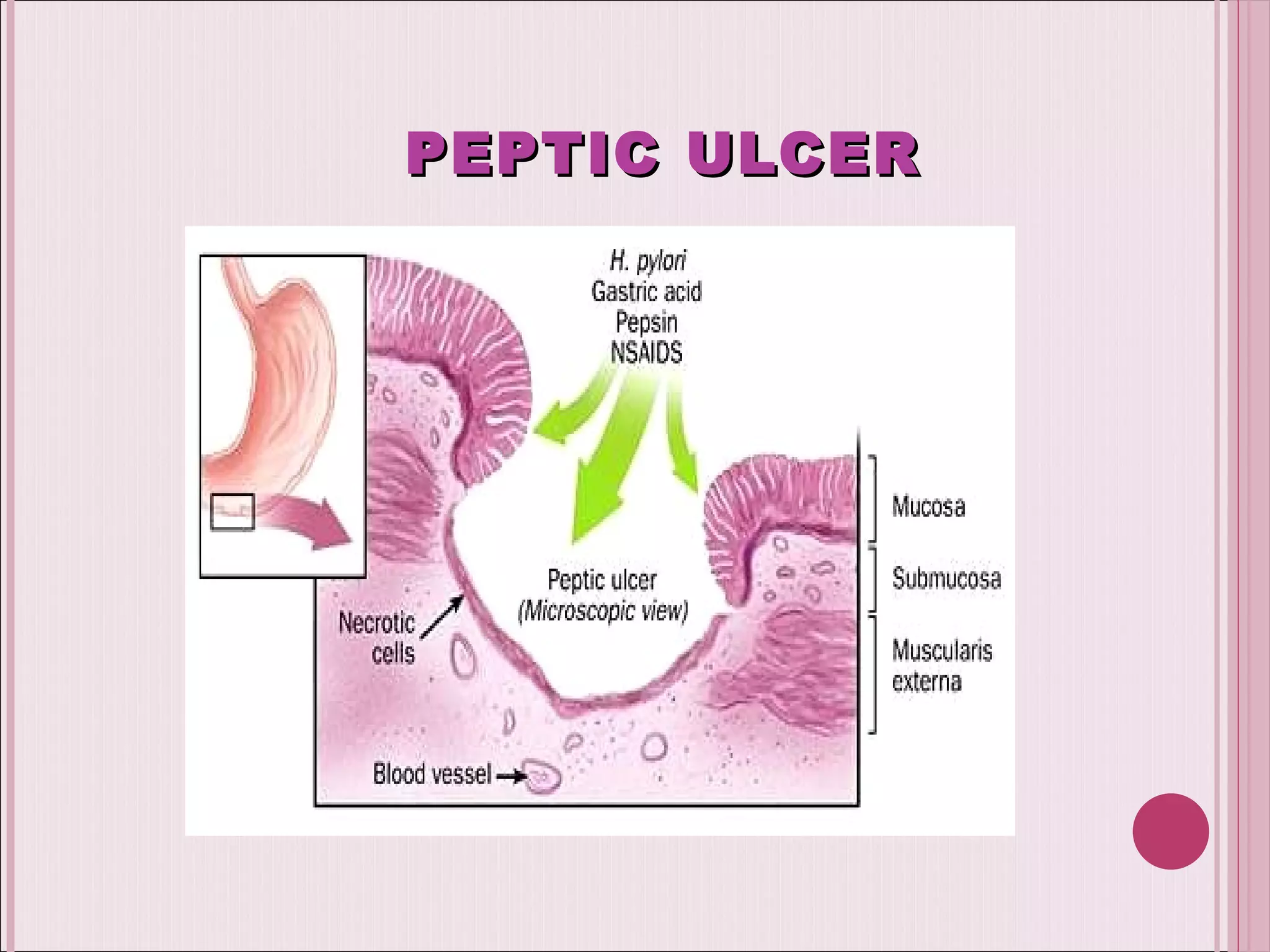
PEPTIC ULCER An Ulcer is … Erosion in the lining  of the stomach or the first part of the small intestine, an area called the duodenum. Ulcers damage the  mucosa  of the alimentary tract, which extends through the  muscularis mucosa  into the  sub mucosa  or deeper.
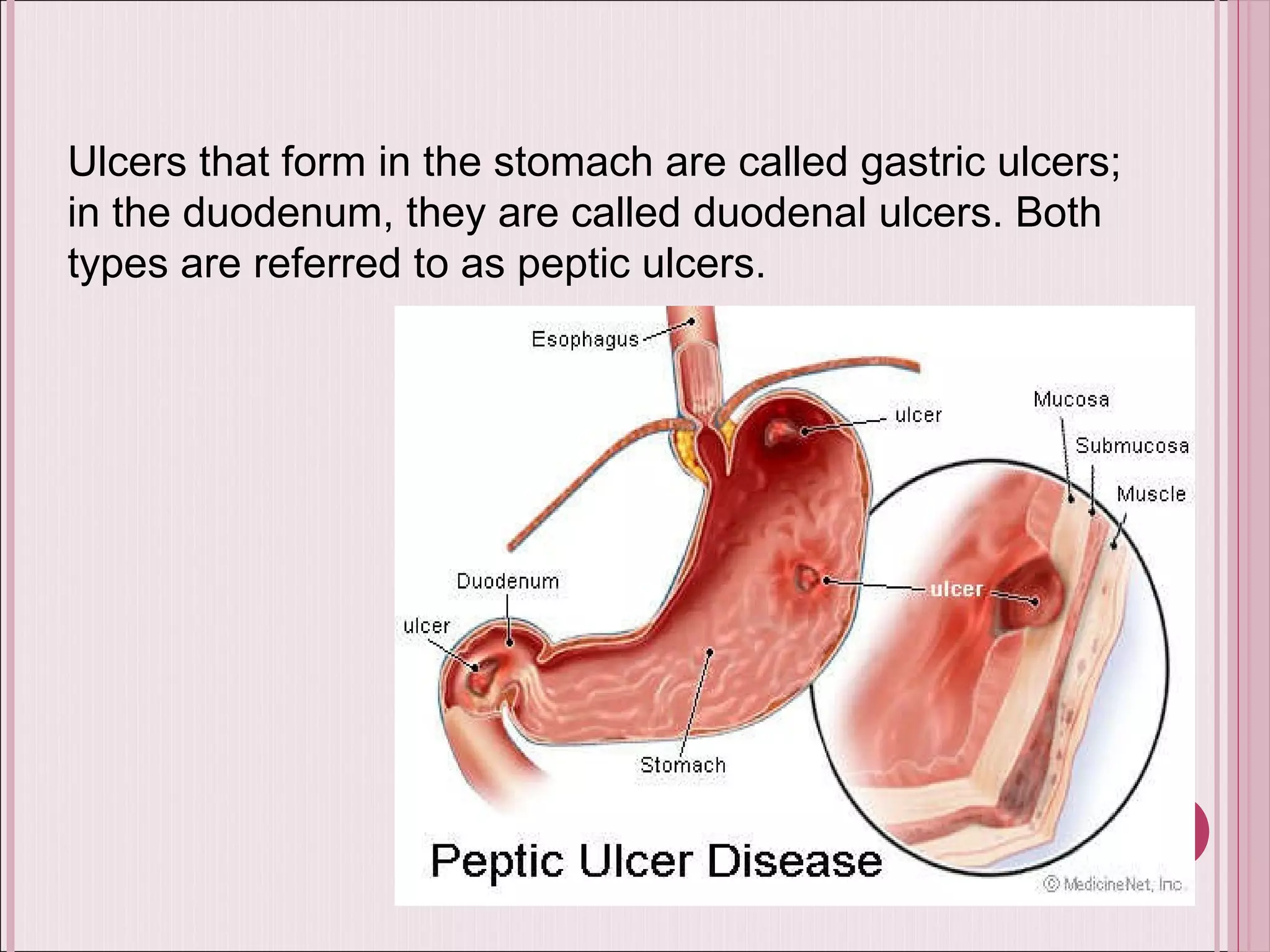
Ulcers that form in the stomach are called gastric ulcers; in the duodenum, they are called duodenal ulcers. Both types are referred to as peptic ulcers.
PEPTIC ULCER
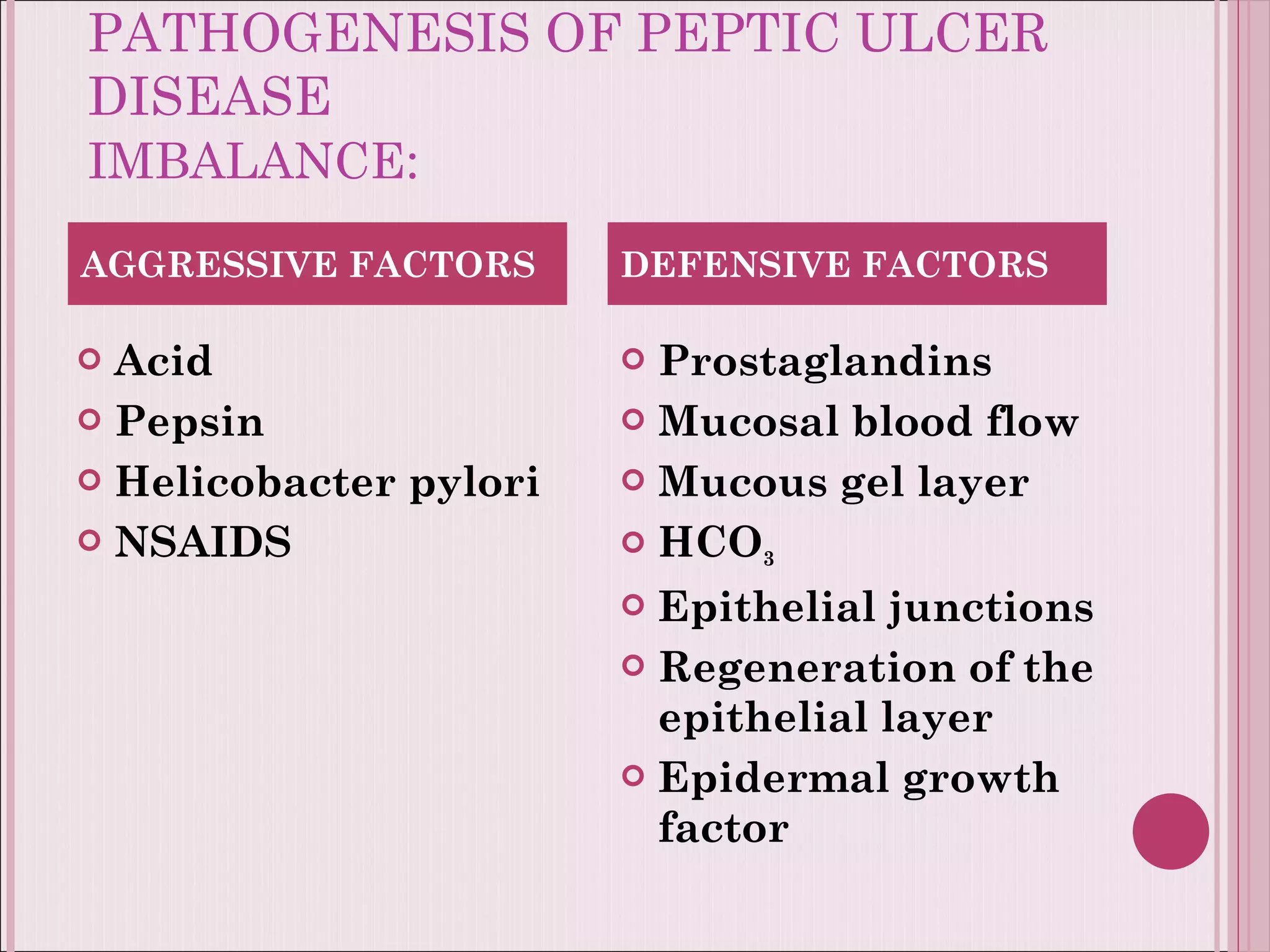
PATHOGENESIS OF PEPTIC ULCER DISEASE IMBALANCE : Acid Pepsin Helicobacter pylori NSAIDS Prostaglandins  Mucosal blood flow  Mucous gel layer HCO 3  Epithelial junctions  Regeneration of the epithelial layer Epidermal growth factor AGGRESSIVE FACTORS DEFENSIVE FACTORS
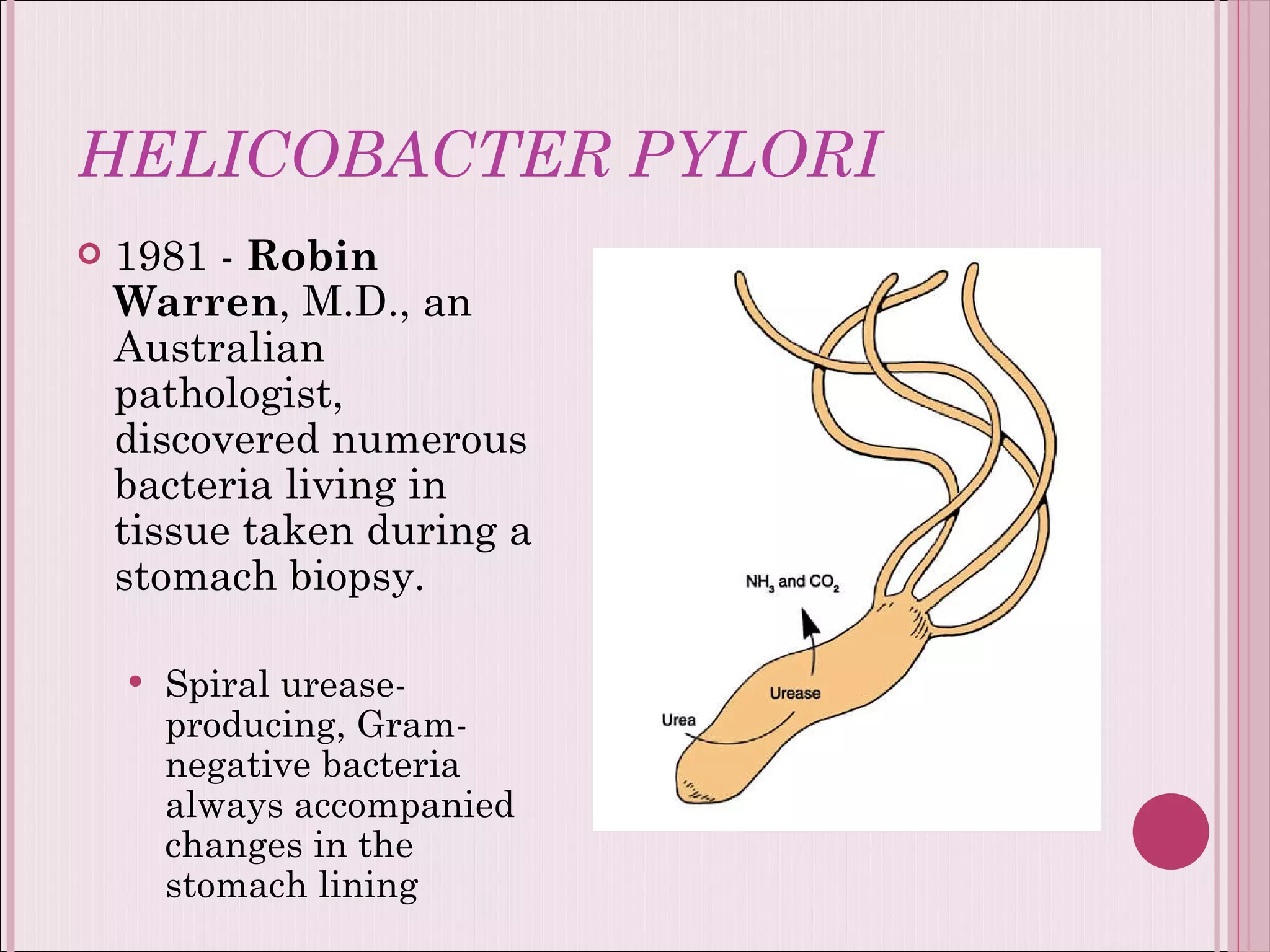
HELICOBACTER PYLORI 1981 -  Robin Warren , M.D., an Australian pathologist, discovered numerous bacteria living in tissue taken during a stomach biopsy.  Spiral urease-producing, Gram-negative bacteria always accompanied changes in the stomach lining
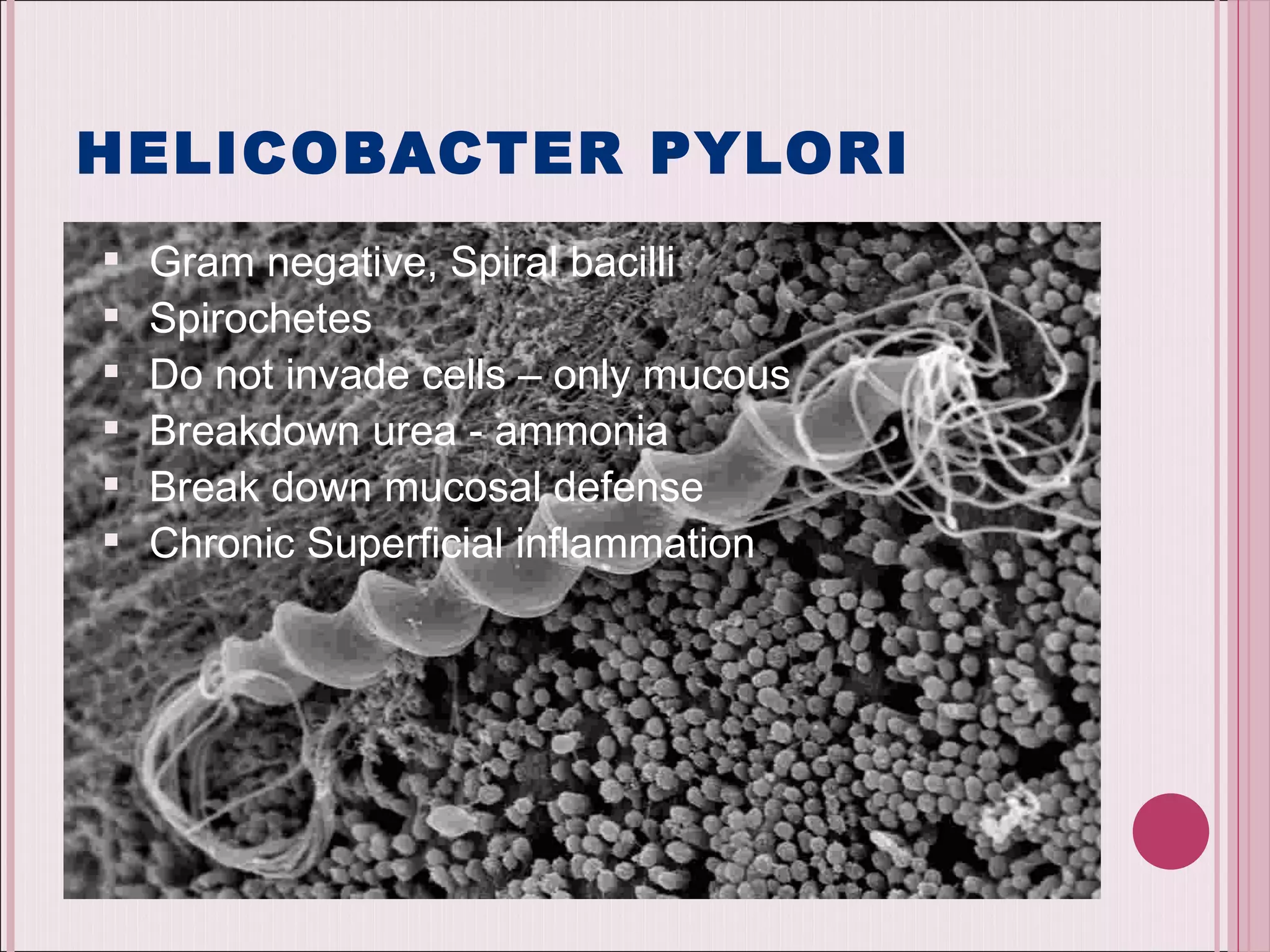
HELICOBACTER PYLORI Gram negative, Spiral bacilli  Spirochetes Do not invade cells – only mucous Breakdown urea - ammonia Break down mucosal defense Chronic Superficial inflammation
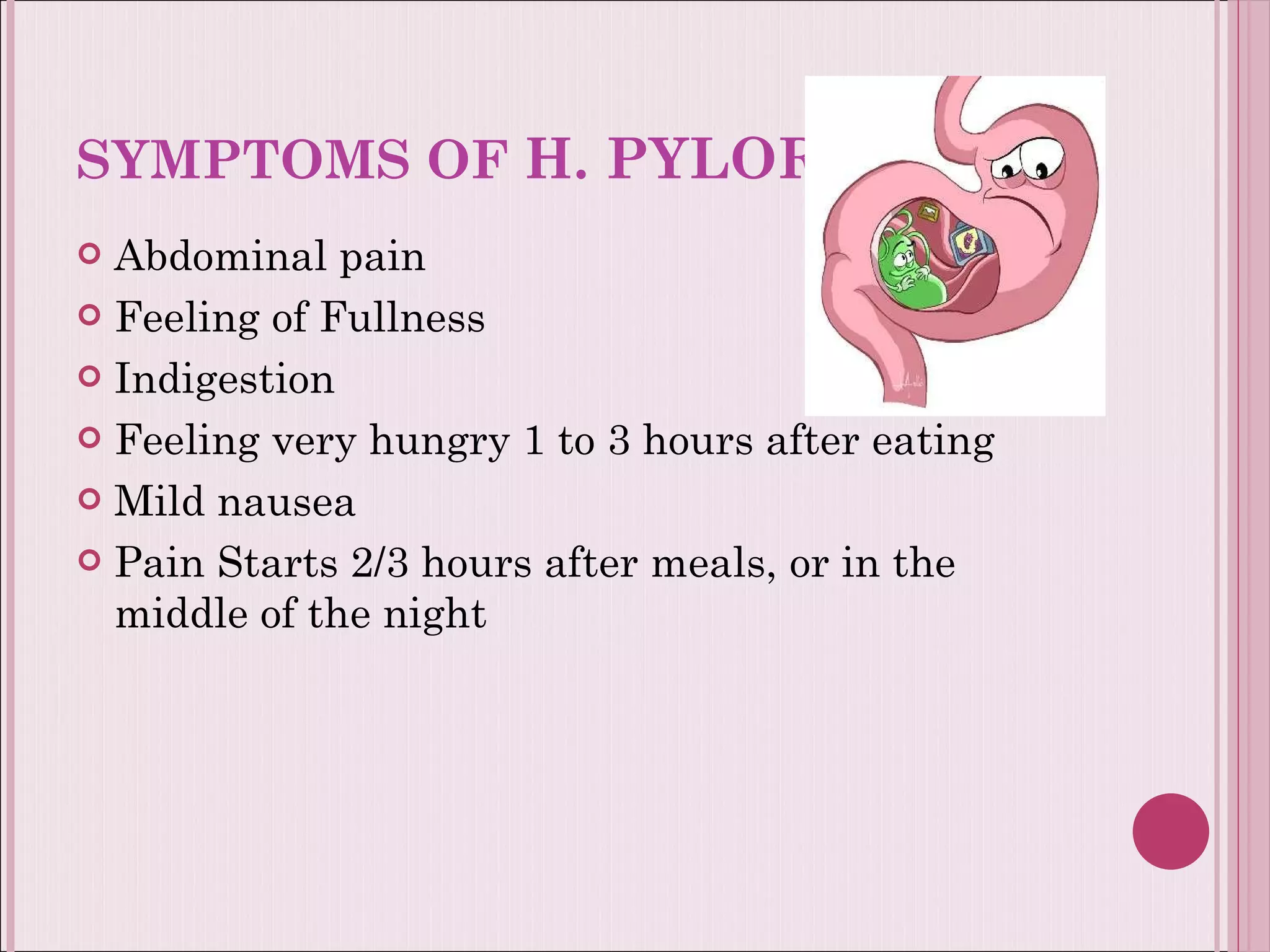
SYMPTOMS OF  H. PYLORI Abdominal pain  Feeling of Fullness  Indigestion Feeling very hungry 1 to 3 hours after eating  Mild nausea Pain Starts 2/3 hours after meals, or in the middle of the night
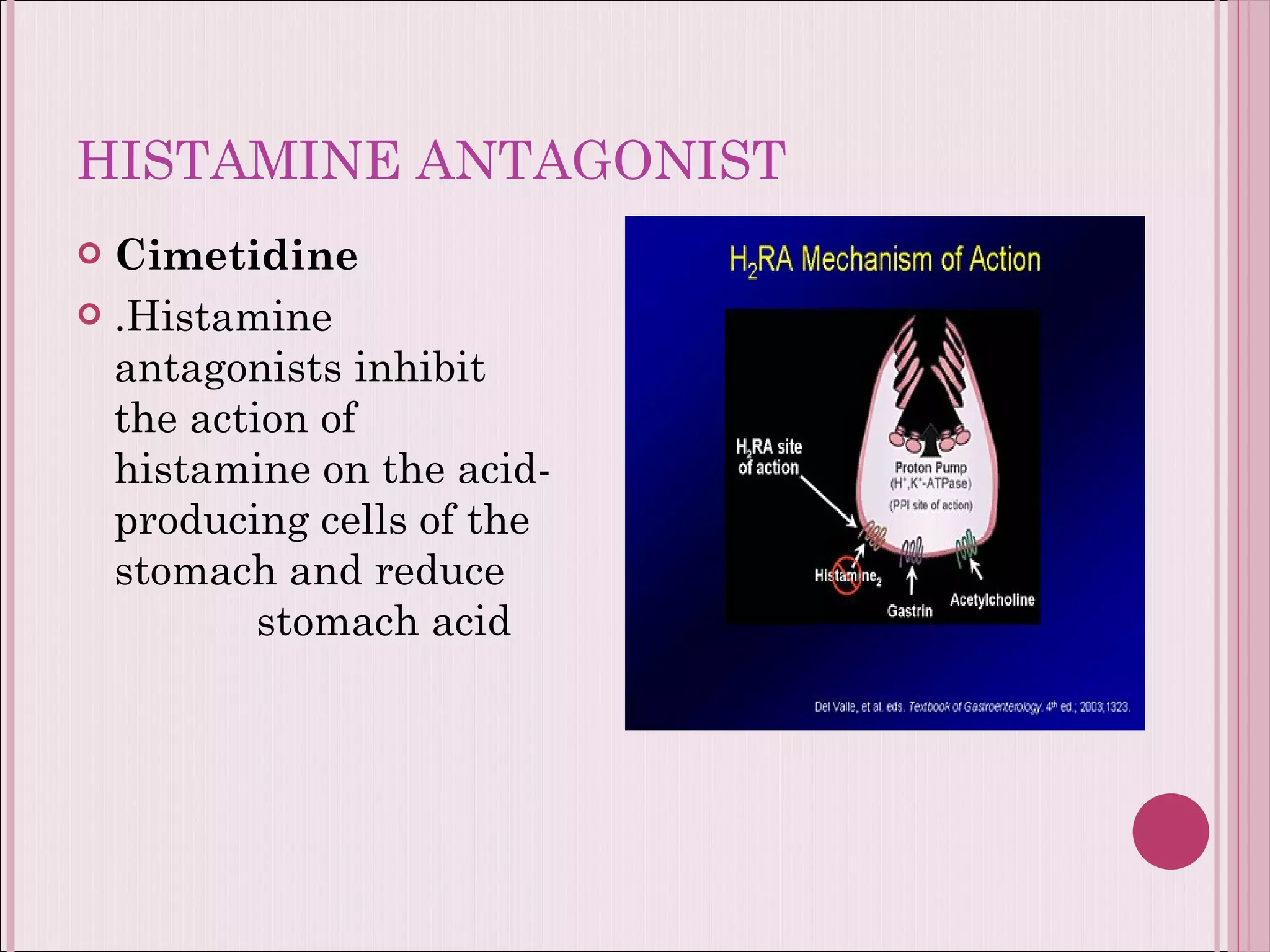
PHYSIOLOGY OF GASTRIC ACID SECRETION Gastric acid secretion is a complex, continuous process in which  multiple central and peripheral factors contribute to a common endpoint secretion of H ⁺  by parietal cells. Neuronal(acetylcholine,Ach),paracrine(histamine), and  endocrine (gastrin) factors all regulate acid secretion. Their specific receptors (M 3 ,H 2 ,and CCK 2  receptors, respectively)are on the  basolateral membrane of parietal cells in the body and fundus  of the stomach.
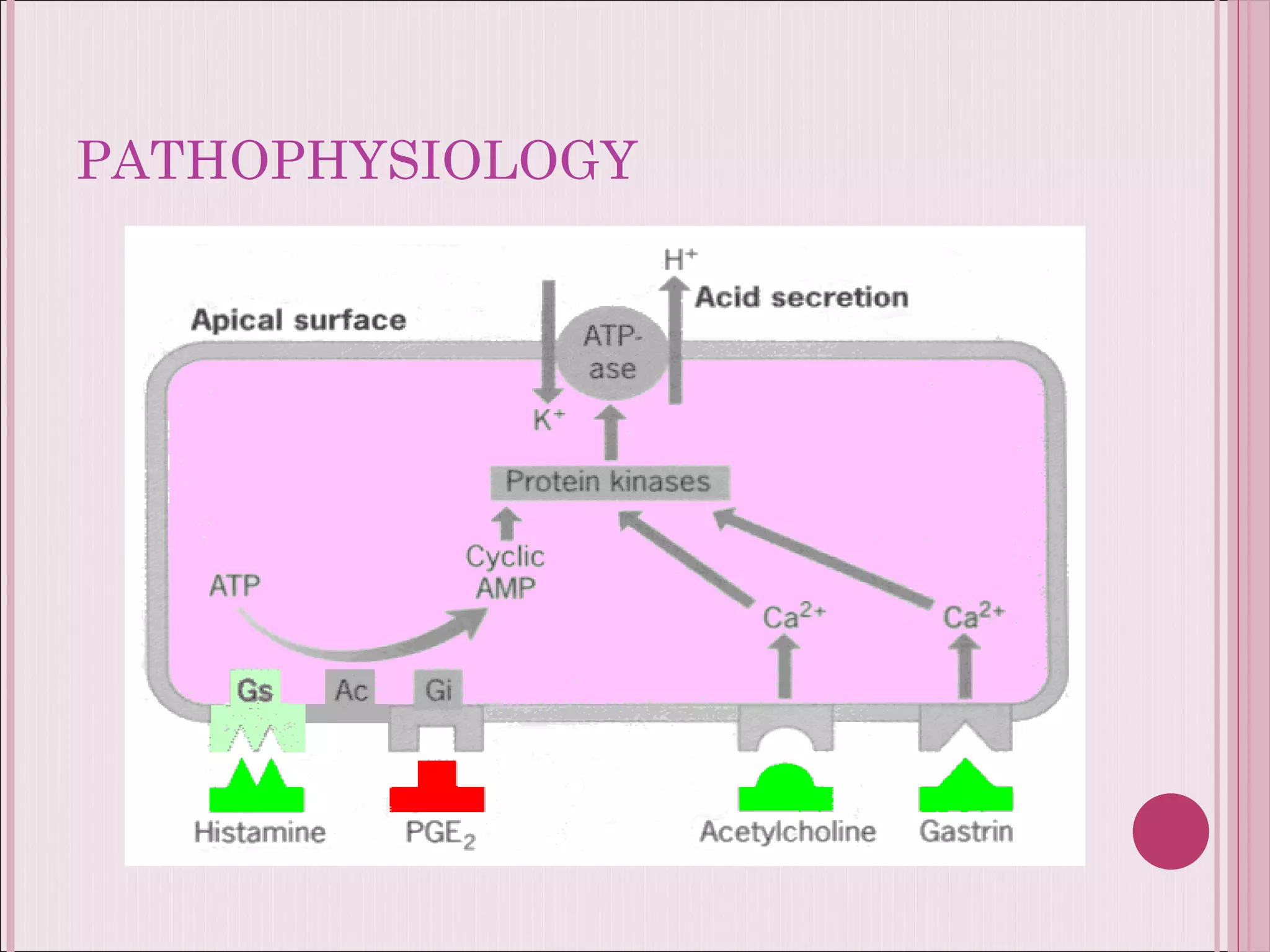
The  H 2  receptor is a GPCR that activates the Gs- adenyl cyclase –cyclic AMP-PKA pathway. Ach and  gastrin signal through GPCRs that couple to the G q -PLC-IP 3 -Ca 2+  pathway in parietal cells . In parietal cells , the cyclic AMP and  the Ca 2+  dependant  pathways  activate H + ,K + -ATPase (the proton pump), which exchanges hydrogen and potassium ions across the parietal cell membrane
PATHOPHYSIOLOGY
SYMPTOMS Burning abdominal pain Haematemesis  Melena  Nausea or vomiting Unexplained weight loss Anorexia  Abdominal fullness
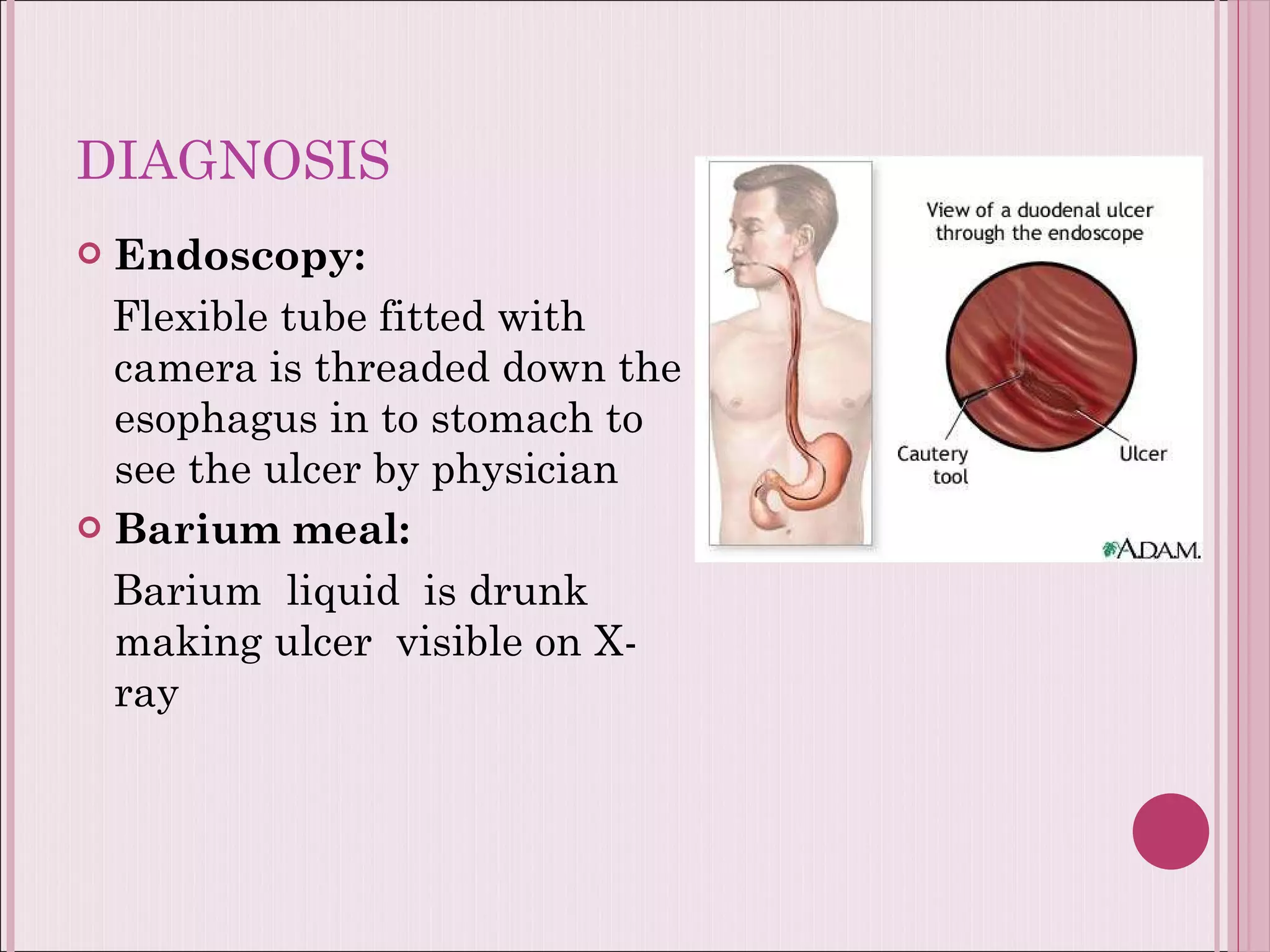
DIAGNOSIS Endoscopy: Flexible tube fitted with camera is threaded down the esophagus in to stomach to see the ulcer by physician Barium meal: Barium   liquid   is drunk making ulcer  visible on X-ray
Test for diagnosing H.pylori Breath test  :by measuring the amount of co 2  in exhaled breath. Blood test : by identifying H.pylori antibodies by ELISA test. Stool test  :stool sample tested with H.pylori antigen.
LIFE-STYLE MODIFICATION IN PUD Doubtful efficacy REST RELAXATION GOOD SLEEP DIET   INDICATION Balanced diet Frequent small meal fiber vitamin E and dietary fatty acids fat diet CONTRAINDICATION caffeine-containing beverages spices Alcohol
ANTI ULCER DRUGS REDUCTION OF GASTRIC ACID SECRETION Histamine antagonist : Cimetidine, ranitidine Proton pump inhibitors : omeprazole, pantaprazole Acetyl choline antagonist : pirenzepine, propantheline Prostaglandin analogue : misoprostol
ANTIULCER DRUGS Neutralization of gastric acid(antacids)  Systemic   : Sodium bicarbonate, Sodium citrate Nonsystemic  : Magnesium hydroxide , Aluminium  hydroxides Ulcer protectives  : Sucralfate  Anti helicobacter pylori:  amoxicillin,  clarithromycin etc
HISTAMINE ANTAGONIST Cimetidine .Histamine antagonists inhibit the action of histamine on the acid-producing cells of the stomach and reduce  stomach acid
CIMETIDINE SIDE EFFECTS ;  it include  constipation ,  diarrhea,  fatigue , headache, insomnia, muscle pain,  and vomiting. Major side effects include confusion and hallucinations, gynacomastia (enlargement of the breasts); impotence. USES: it is used in treatment of duodenal ulcer,  Gastric ulcer, stress ulcer, GERD, zollinger ellison  syndrome
PROTON PUMP INHIBITORS   Proton pump inhibitors  act by irreversibly blocking the  hydrogen/potassium adenosine triphosphatase enzyme  system of the gastric parietal cells. The proton pump is the terminal stage in gastric acid secretion
PROTON PUMP INHIBITORS OMEPRAZOLE Omeprazole is inactive at neutral pH, but at pH<5 rearranges to two charged cationic forms(a sulphenic acid and a sulphenamide configurations)that react covalently with SH groups of the H +  K +  ATPase enzyme and inactivate it irreversibly, especially when two molecules of omeprazole react with one molecule of the enzyme SIDE EFFECTS  Stomach pain, Diarrhea,Constipation,Dizziness,Pain,Hives, Itching,seizures
ACETYL CHOLINE ANTAGONIST PIRENZEPINE MECHANISM: It selectively block M1 muscaranic recptors and inhibits gastric secretion.  Because of their relatively poor efficacy, side effects, and risk of blood disorders, they are rarely  used today
AGENTS THAT ENHANCE MUCOSAL DEFENSE  Prostaglandin Analogs:  prostaglandins are produced in the gastric  mucosa and appear to serve a protective role by  inhibiting acid secretion and promoting mucus  and bicarbonate secretion. In addition, PGs inhibits  gastrin production, increase mucosal blood flow  and probably have an ill defined cytoprotective  action.  DRUGS :   Misoprostol
MISOPROSTOL MECHANISM: Misoprostol  acts upon  gastric parietal cells , inhibiting the secretion of  gastric acid  via  G-protein coupled receptor-mediated  inhibition of  adenylate cyclase , which leads to decreased intracellular  cyclic AMP  levels and decreased pump  activity at the  apical  surface of the parietal cell Side effects Diarrhea. Other common side effects include: abdominal  pain, nausea, flatulence, headache, dyspepsia, vomiting, and constipation.
ULCER PROTECTIVES SUCRALFATE MECHANISM: Sucralfate is a locally acting  substance  that in an acidic environment (pH < 4), reacts with  hydrochloric acid  in the  stomach  to form a cross-linking,  viscous ,  paste-like material  capable of acting as an  acid buffer  for as long as 6 to 8 hours after a single  dose . It also attaches to  proteins  on the surface of ulcers, such as  albumin  and  fibrinogen , to form stable  insoluble  complexes. These complexes serve as protective barriers at the ulcer surface, preventing further damage from  acid ,  pepsin , and  bile .
Side effects The most common  side effects  seen are  constipation . Less commonly reported include  flatulence, cephalalgia (headache),  xerostomia (dry mouth). USES:  It is used in treatment of  Gastritis,  Stress ulcers.
SODIUM BICARBONATE (ANTACID) It is water soluble, acts instantaneously,  but duration of action is short. It is a  potent neutralizer , pH may raises above 7. Adverse reactions It causes systemic alkalosis, gastric distention, rebound acidity and milk-alkali syndrome Uses It is restricted to casual treatment of heartburn and to treat acidosis
ANTI H.PYLORI DRUGS Anti microbials that have been found clinically effective against H.pylori are: amoxicillin, clarithromycin, tetracycline and metronidazole. A combination regimen is preferred, using gastric acid inhibitors and antibiotics.  Example: A proton pump inhibitor or H2 blocker + amoxicillin + clarithromycin or metronidazole
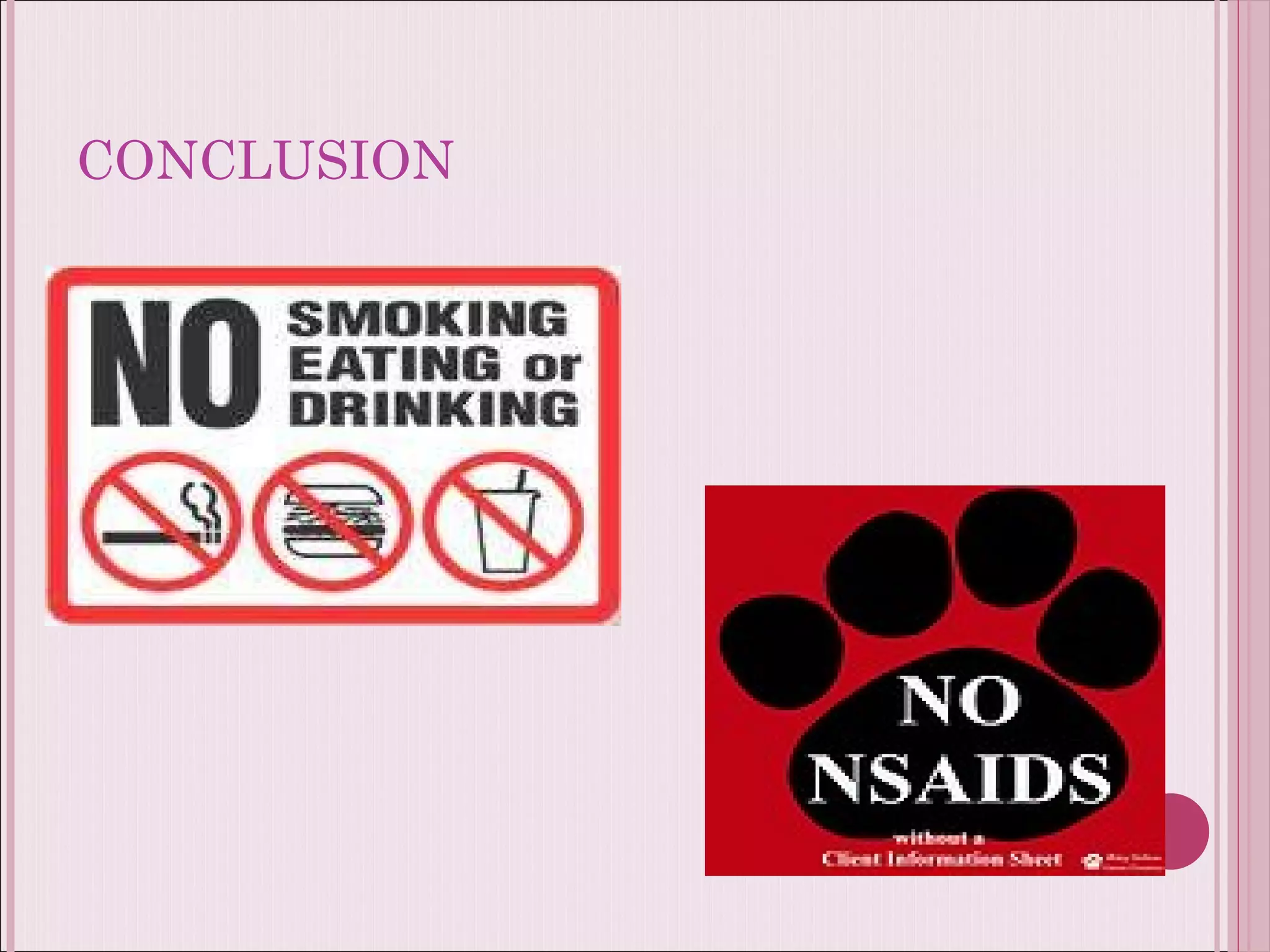
CONCLUSION
Avoid stress Avoid contamination


peptic ulcer

  • 1.
    ANTI-ULCER DRUGS BYCH.DEEPTHI(10T21S0116) UNDER THE GUIDANCE OF MR.J.ANUP M.Pharm (Asst.Professor)
  • 2.
    PEPTIC ULCER AnUlcer is … Erosion in the lining of the stomach or the first part of the small intestine, an area called the duodenum. Ulcers damage the mucosa of the alimentary tract, which extends through the muscularis mucosa into the sub mucosa or deeper.
  • 3.
    Ulcers that formin the stomach are called gastric ulcers; in the duodenum, they are called duodenal ulcers. Both types are referred to as peptic ulcers.
  • 4.
  • 5.
    PATHOGENESIS OF PEPTICULCER DISEASE IMBALANCE : Acid Pepsin Helicobacter pylori NSAIDS Prostaglandins Mucosal blood flow Mucous gel layer HCO 3 Epithelial junctions Regeneration of the epithelial layer Epidermal growth factor AGGRESSIVE FACTORS DEFENSIVE FACTORS
  • 6.
    HELICOBACTER PYLORI 1981- Robin Warren , M.D., an Australian pathologist, discovered numerous bacteria living in tissue taken during a stomach biopsy. Spiral urease-producing, Gram-negative bacteria always accompanied changes in the stomach lining
  • 7.
    HELICOBACTER PYLORI Gramnegative, Spiral bacilli Spirochetes Do not invade cells – only mucous Breakdown urea - ammonia Break down mucosal defense Chronic Superficial inflammation
  • 8.
    SYMPTOMS OF H. PYLORI Abdominal pain Feeling of Fullness Indigestion Feeling very hungry 1 to 3 hours after eating Mild nausea Pain Starts 2/3 hours after meals, or in the middle of the night
  • 9.
    PHYSIOLOGY OF GASTRICACID SECRETION Gastric acid secretion is a complex, continuous process in which multiple central and peripheral factors contribute to a common endpoint secretion of H ⁺ by parietal cells. Neuronal(acetylcholine,Ach),paracrine(histamine), and endocrine (gastrin) factors all regulate acid secretion. Their specific receptors (M 3 ,H 2 ,and CCK 2 receptors, respectively)are on the basolateral membrane of parietal cells in the body and fundus of the stomach.
  • 10.
    The H2 receptor is a GPCR that activates the Gs- adenyl cyclase –cyclic AMP-PKA pathway. Ach and gastrin signal through GPCRs that couple to the G q -PLC-IP 3 -Ca 2+ pathway in parietal cells . In parietal cells , the cyclic AMP and the Ca 2+ dependant pathways activate H + ,K + -ATPase (the proton pump), which exchanges hydrogen and potassium ions across the parietal cell membrane
  • 11.
  • 12.
    SYMPTOMS Burning abdominalpain Haematemesis Melena Nausea or vomiting Unexplained weight loss Anorexia Abdominal fullness
  • 13.
    DIAGNOSIS Endoscopy: Flexibletube fitted with camera is threaded down the esophagus in to stomach to see the ulcer by physician Barium meal: Barium liquid is drunk making ulcer visible on X-ray
  • 14.
    Test for diagnosingH.pylori Breath test :by measuring the amount of co 2 in exhaled breath. Blood test : by identifying H.pylori antibodies by ELISA test. Stool test :stool sample tested with H.pylori antigen.
  • 15.
    LIFE-STYLE MODIFICATION INPUD Doubtful efficacy REST RELAXATION GOOD SLEEP DIET INDICATION Balanced diet Frequent small meal fiber vitamin E and dietary fatty acids fat diet CONTRAINDICATION caffeine-containing beverages spices Alcohol
  • 16.
    ANTI ULCER DRUGSREDUCTION OF GASTRIC ACID SECRETION Histamine antagonist : Cimetidine, ranitidine Proton pump inhibitors : omeprazole, pantaprazole Acetyl choline antagonist : pirenzepine, propantheline Prostaglandin analogue : misoprostol
  • 17.
    ANTIULCER DRUGS Neutralizationof gastric acid(antacids) Systemic : Sodium bicarbonate, Sodium citrate Nonsystemic : Magnesium hydroxide , Aluminium hydroxides Ulcer protectives : Sucralfate Anti helicobacter pylori: amoxicillin, clarithromycin etc
  • 18.
    HISTAMINE ANTAGONIST Cimetidine.Histamine antagonists inhibit the action of histamine on the acid-producing cells of the stomach and reduce stomach acid
  • 19.
    CIMETIDINE SIDE EFFECTS; it include constipation , diarrhea, fatigue , headache, insomnia, muscle pain, and vomiting. Major side effects include confusion and hallucinations, gynacomastia (enlargement of the breasts); impotence. USES: it is used in treatment of duodenal ulcer, Gastric ulcer, stress ulcer, GERD, zollinger ellison syndrome
  • 20.
    PROTON PUMP INHIBITORS  Proton pump inhibitors act by irreversibly blocking the  hydrogen/potassium adenosine triphosphatase enzyme  system of the gastric parietal cells. The proton pump is the terminal stage in gastric acid secretion
  • 21.
    PROTON PUMP INHIBITORSOMEPRAZOLE Omeprazole is inactive at neutral pH, but at pH<5 rearranges to two charged cationic forms(a sulphenic acid and a sulphenamide configurations)that react covalently with SH groups of the H + K + ATPase enzyme and inactivate it irreversibly, especially when two molecules of omeprazole react with one molecule of the enzyme SIDE EFFECTS Stomach pain, Diarrhea,Constipation,Dizziness,Pain,Hives, Itching,seizures
  • 22.
    ACETYL CHOLINE ANTAGONISTPIRENZEPINE MECHANISM: It selectively block M1 muscaranic recptors and inhibits gastric secretion. Because of their relatively poor efficacy, side effects, and risk of blood disorders, they are rarely used today
  • 23.
    AGENTS THAT ENHANCEMUCOSAL DEFENSE Prostaglandin Analogs: prostaglandins are produced in the gastric mucosa and appear to serve a protective role by inhibiting acid secretion and promoting mucus and bicarbonate secretion. In addition, PGs inhibits gastrin production, increase mucosal blood flow and probably have an ill defined cytoprotective action. DRUGS : Misoprostol
  • 24.
    MISOPROSTOL MECHANISM: Misoprostol acts upon gastric parietal cells , inhibiting the secretion of gastric acid via G-protein coupled receptor-mediated inhibition of adenylate cyclase , which leads to decreased intracellular cyclic AMP levels and decreased pump activity at the apical surface of the parietal cell Side effects Diarrhea. Other common side effects include: abdominal pain, nausea, flatulence, headache, dyspepsia, vomiting, and constipation.
  • 25.
    ULCER PROTECTIVES SUCRALFATEMECHANISM: Sucralfate is a locally acting substance that in an acidic environment (pH < 4), reacts with hydrochloric acid in the stomach to form a cross-linking, viscous , paste-like material capable of acting as an acid buffer for as long as 6 to 8 hours after a single dose . It also attaches to proteins on the surface of ulcers, such as albumin and fibrinogen , to form stable insoluble complexes. These complexes serve as protective barriers at the ulcer surface, preventing further damage from acid , pepsin , and bile .
  • 26.
    Side effects Themost common side effects seen are constipation . Less commonly reported include flatulence, cephalalgia (headache), xerostomia (dry mouth). USES: It is used in treatment of Gastritis, Stress ulcers.
  • 27.
    SODIUM BICARBONATE (ANTACID)It is water soluble, acts instantaneously, but duration of action is short. It is a potent neutralizer , pH may raises above 7. Adverse reactions It causes systemic alkalosis, gastric distention, rebound acidity and milk-alkali syndrome Uses It is restricted to casual treatment of heartburn and to treat acidosis
  • 28.
    ANTI H.PYLORI DRUGSAnti microbials that have been found clinically effective against H.pylori are: amoxicillin, clarithromycin, tetracycline and metronidazole. A combination regimen is preferred, using gastric acid inhibitors and antibiotics. Example: A proton pump inhibitor or H2 blocker + amoxicillin + clarithromycin or metronidazole
  • 29.
  • 30.
    Avoid stress Avoidcontamination
  • 31.
  • 32.