Dr. Anisha Pamarthi
JR 1
Dept. of Pharmacology
GMC, Nagpur
• Introduction
• Factors modifying drug action
• Summary
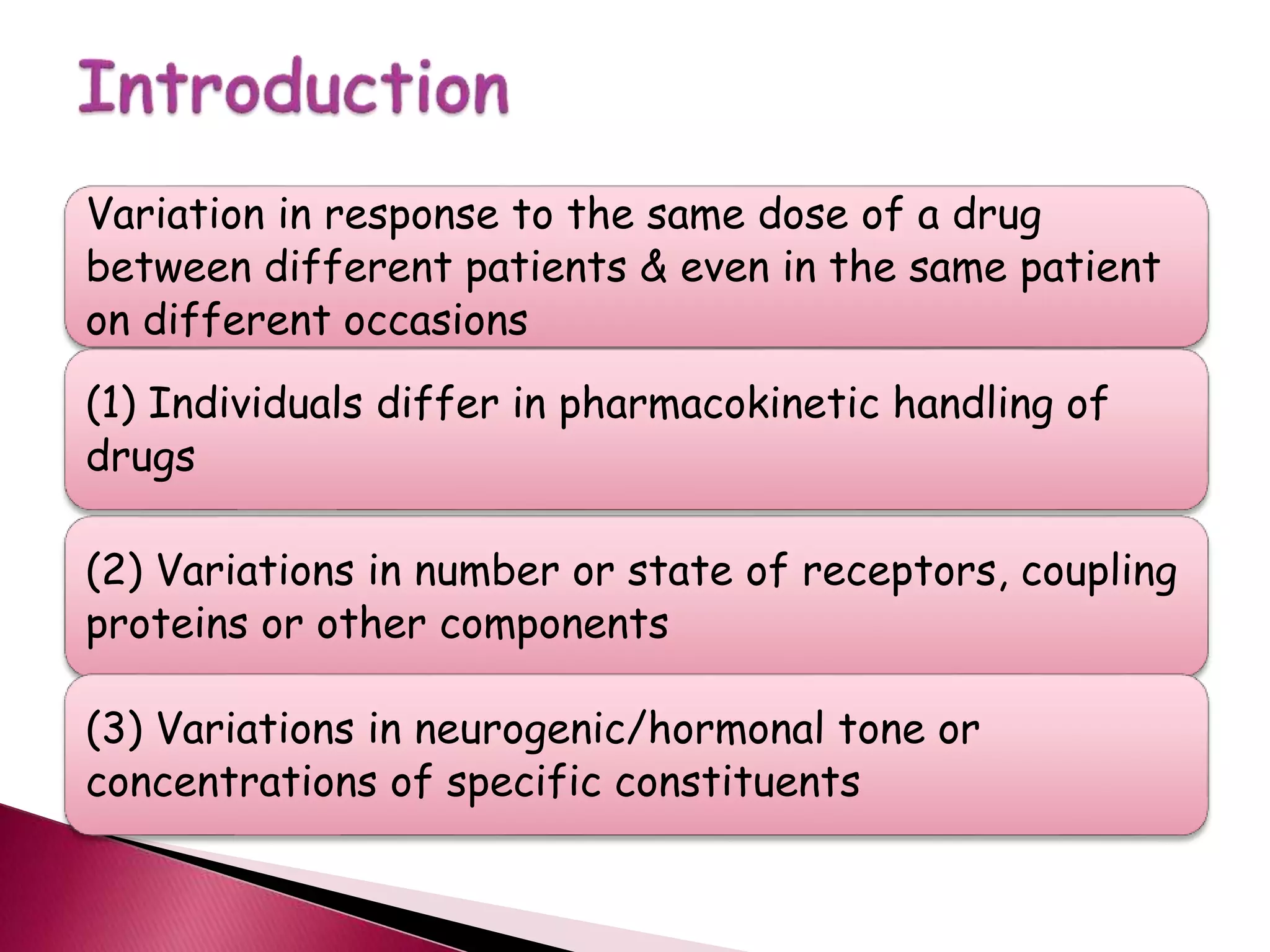
Variation in response to the same dose of a drug
between different patients & even in the same patient
on different occasions
(1) Individuals differ in pharmacokinetic handling of
drugs
(2) Variations in number or state of receptors, coupling
proteins or other components
(3) Variations in neurogenic/hormonal tone or
concentrations of specific constituents
Genetic NongeneticTwo categories
environmental,
circumstantial,
personal
variable
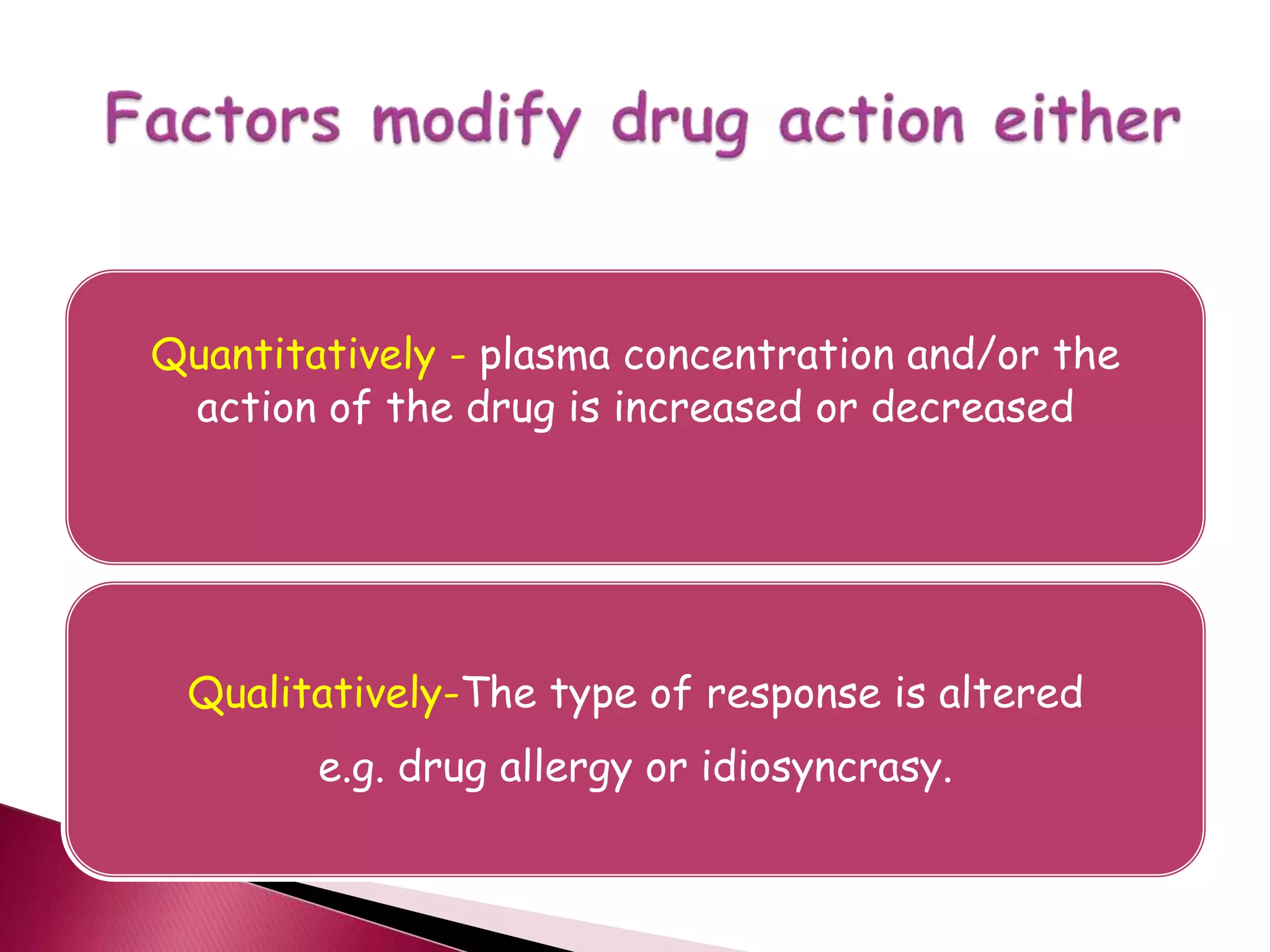
Quantitatively - plasma concentration and/or the
action of the drug is increased or decreased
Qualitatively-The type of response is altered
e.g. drug allergy or idiosyncrasy.
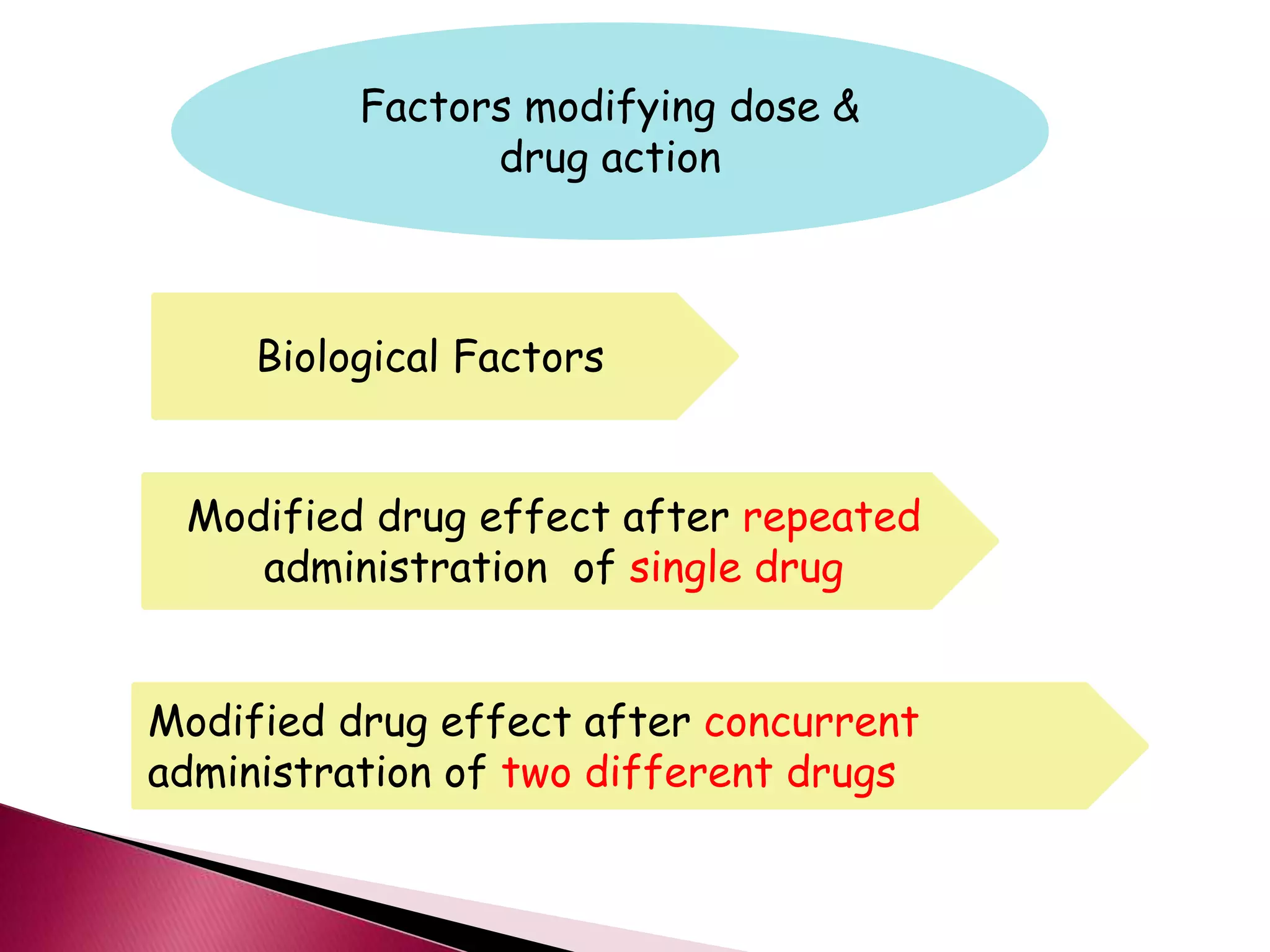
Factors modifying dose &
drug action
Biological Factors
Modified drug effect after repeated
administration of single drug
Modified drug effect after concurrent
administration of two different drugs
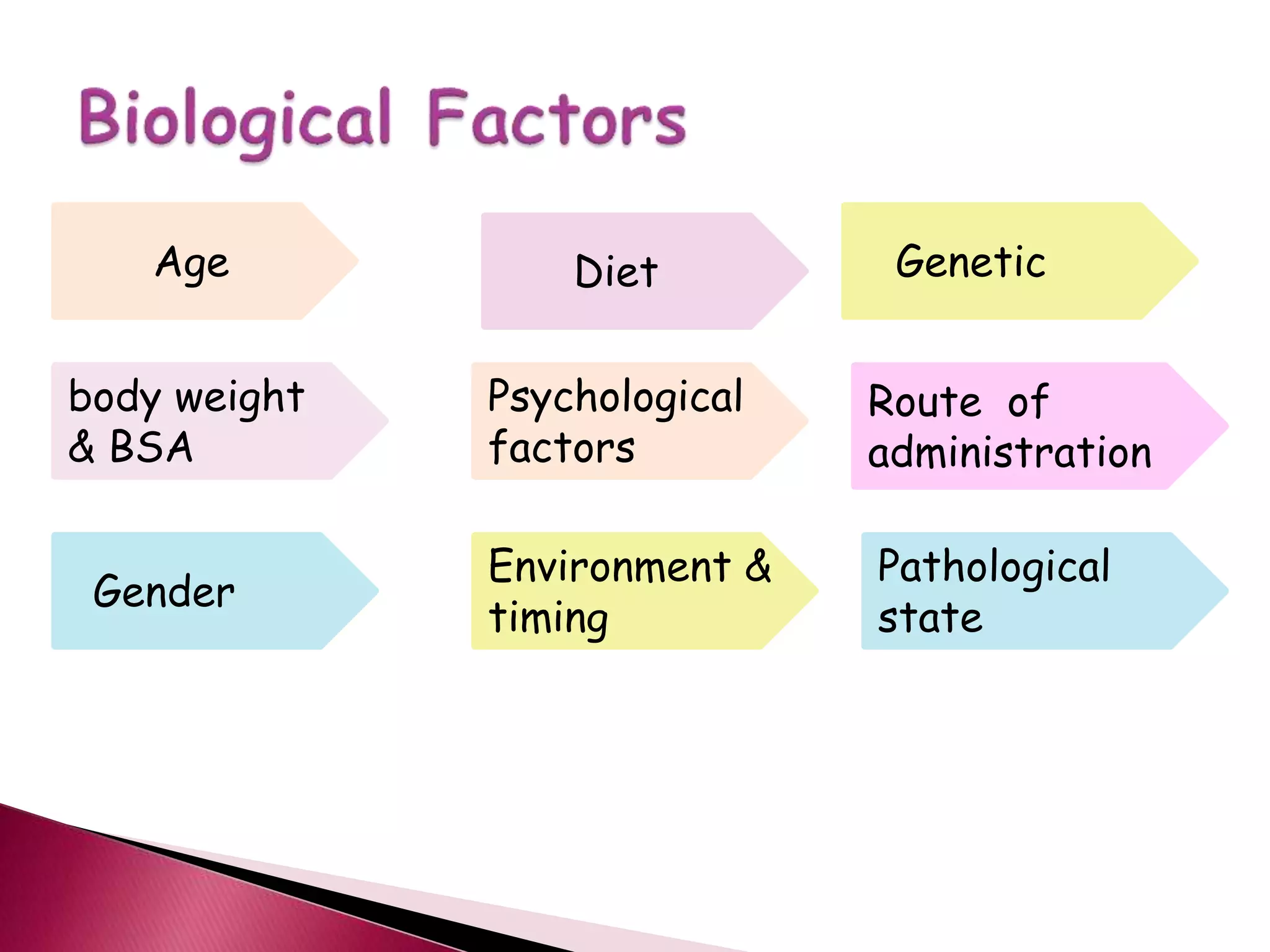
Age
body weight
& BSA
Gender
Genetic
Psychological
factors
Diet
Environment &
timing
Pathological
state
Route of
administration
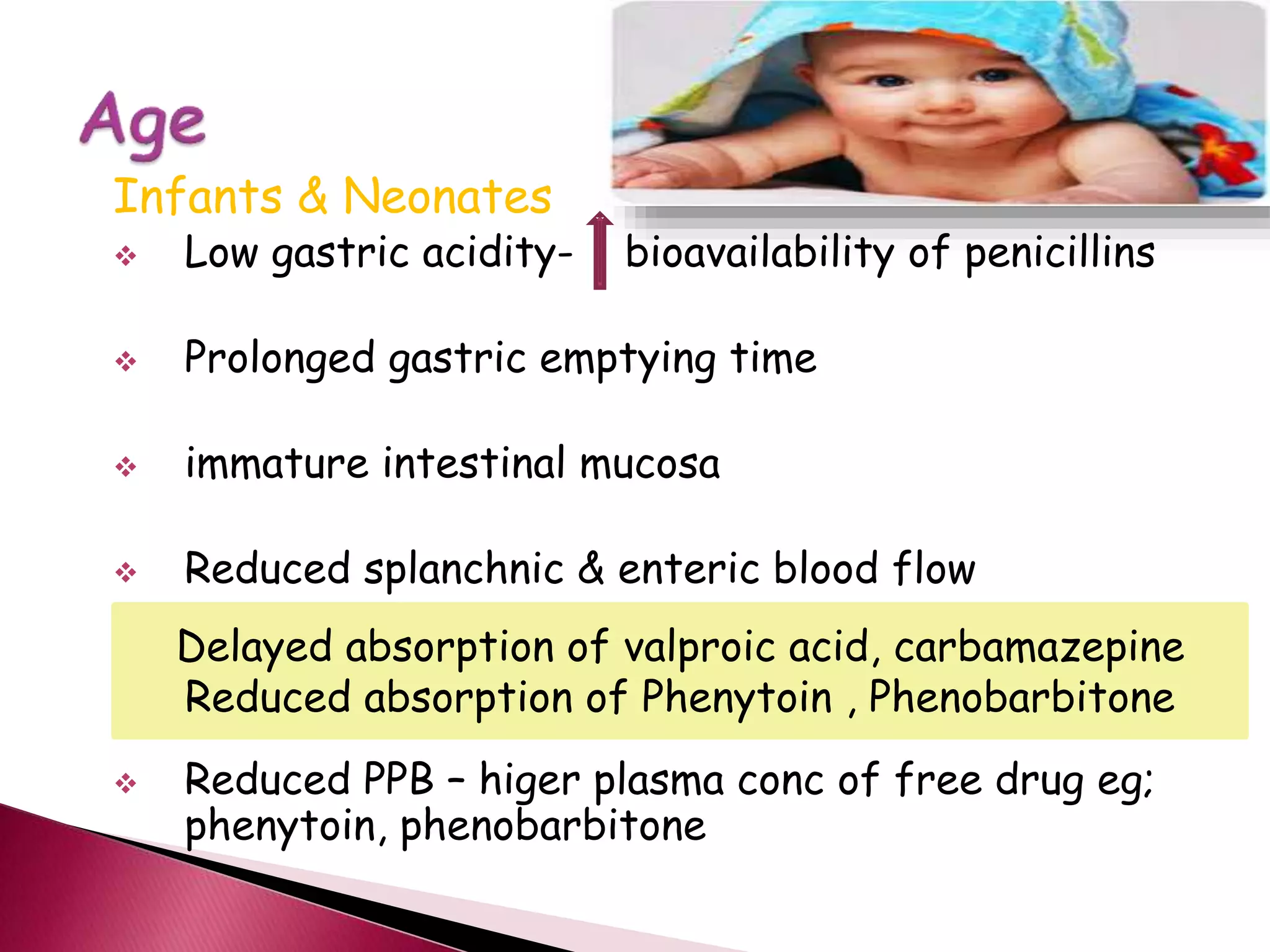
Infants & Neonates
 Low gastric acidity- bioavailability of penicillins
 Prolonged gastric emptying time
 immature intestinal mucosa
 Reduced splanchnic & enteric blood flow
 Reduced PPB – higer plasma conc of free drug eg;
phenytoin, phenobarbitone
Delayed absorption of valproic acid, carbamazepine
Reduced absorption of Phenytoin , Phenobarbitone
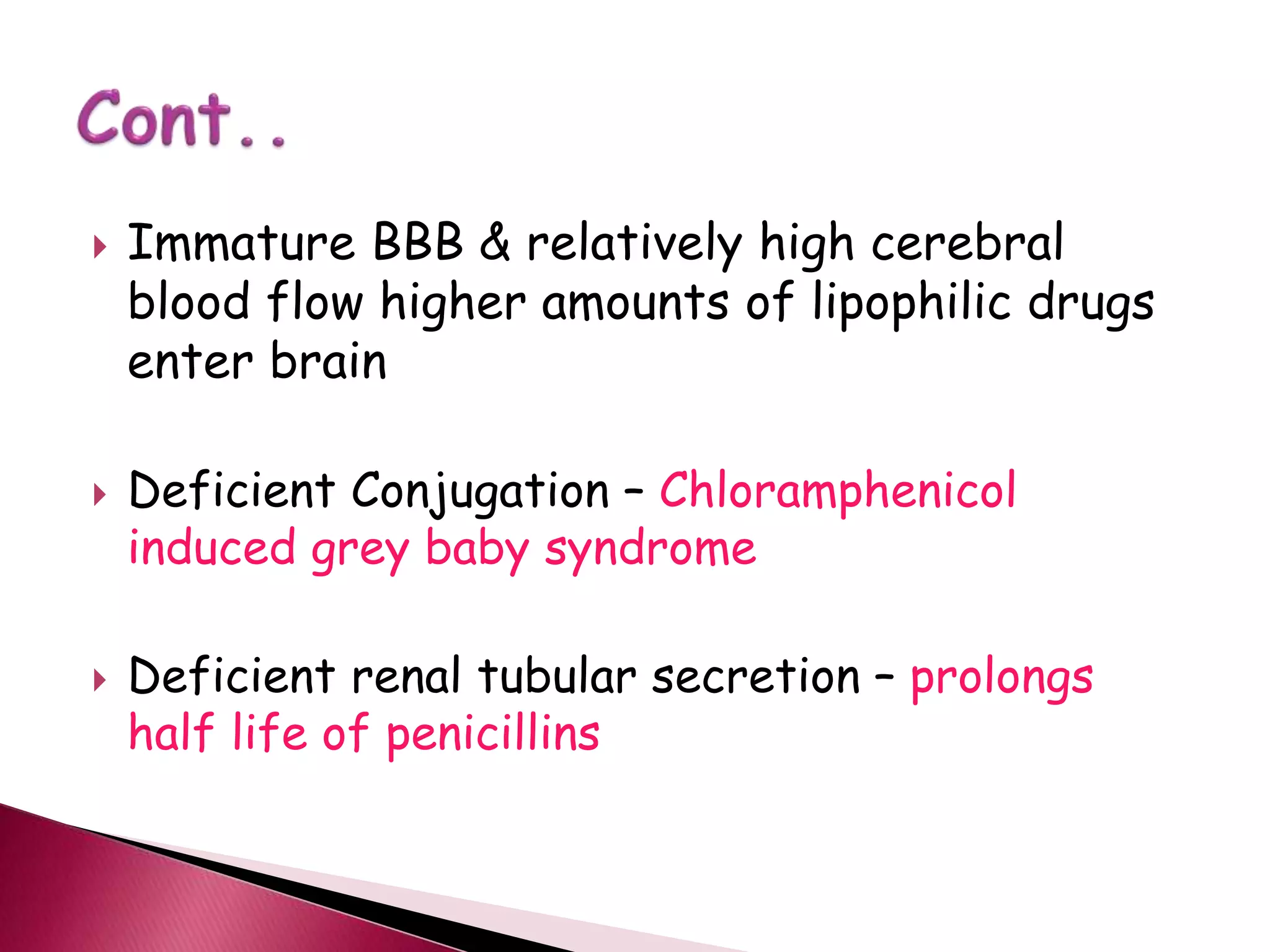
 Immature BBB & relatively high cerebral
blood flow higher amounts of lipophilic drugs
enter brain
 Deficient Conjugation – Chloramphenicol
induced grey baby syndrome
 Deficient renal tubular secretion – prolongs
half life of penicillins
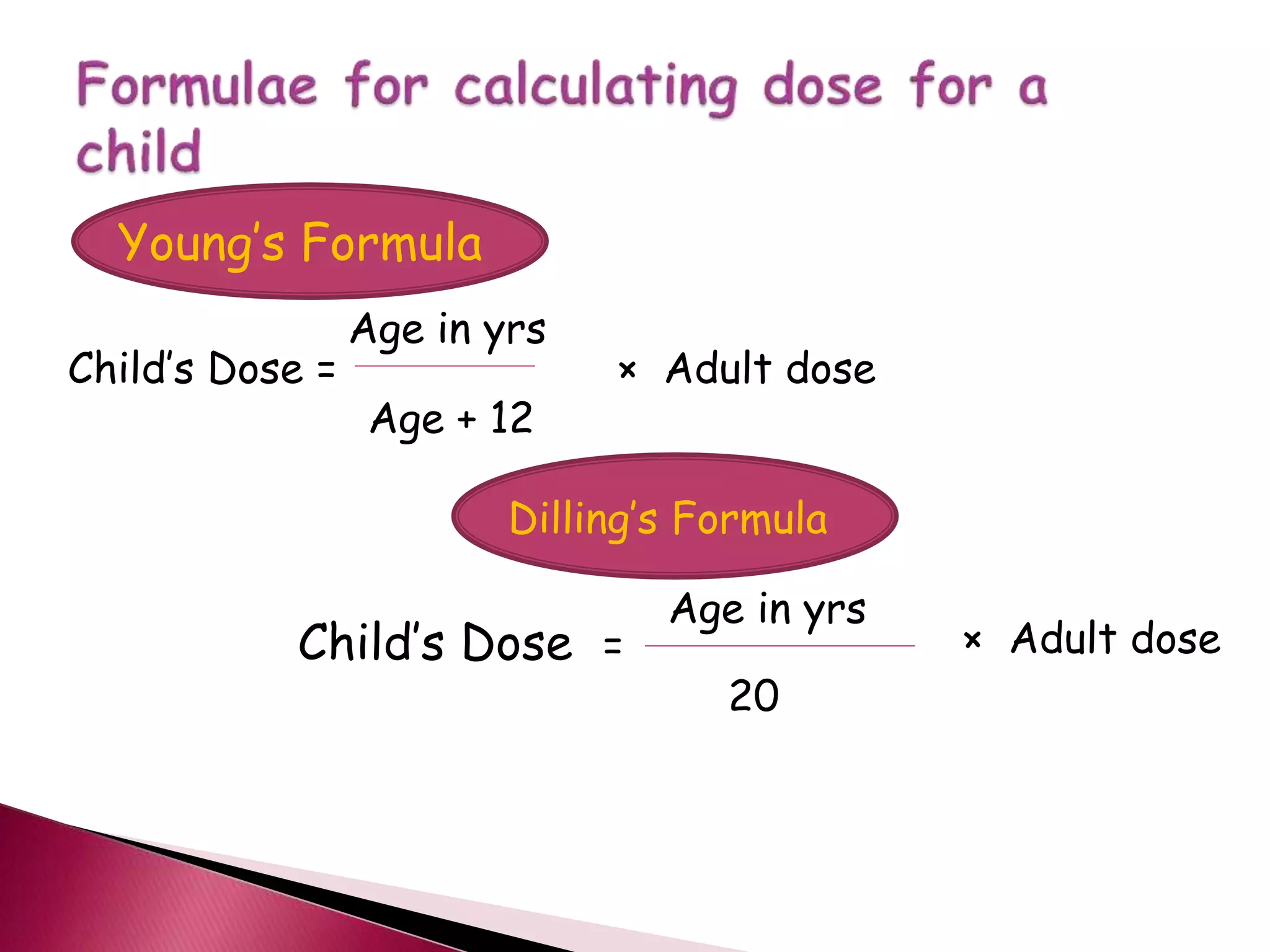
Young’s Formula
Child’s Dose =
Age in yrs
Age + 12
× Adult dose
Dilling’s Formula
Child’s Dose =
Age in yrs
20
× Adult dose
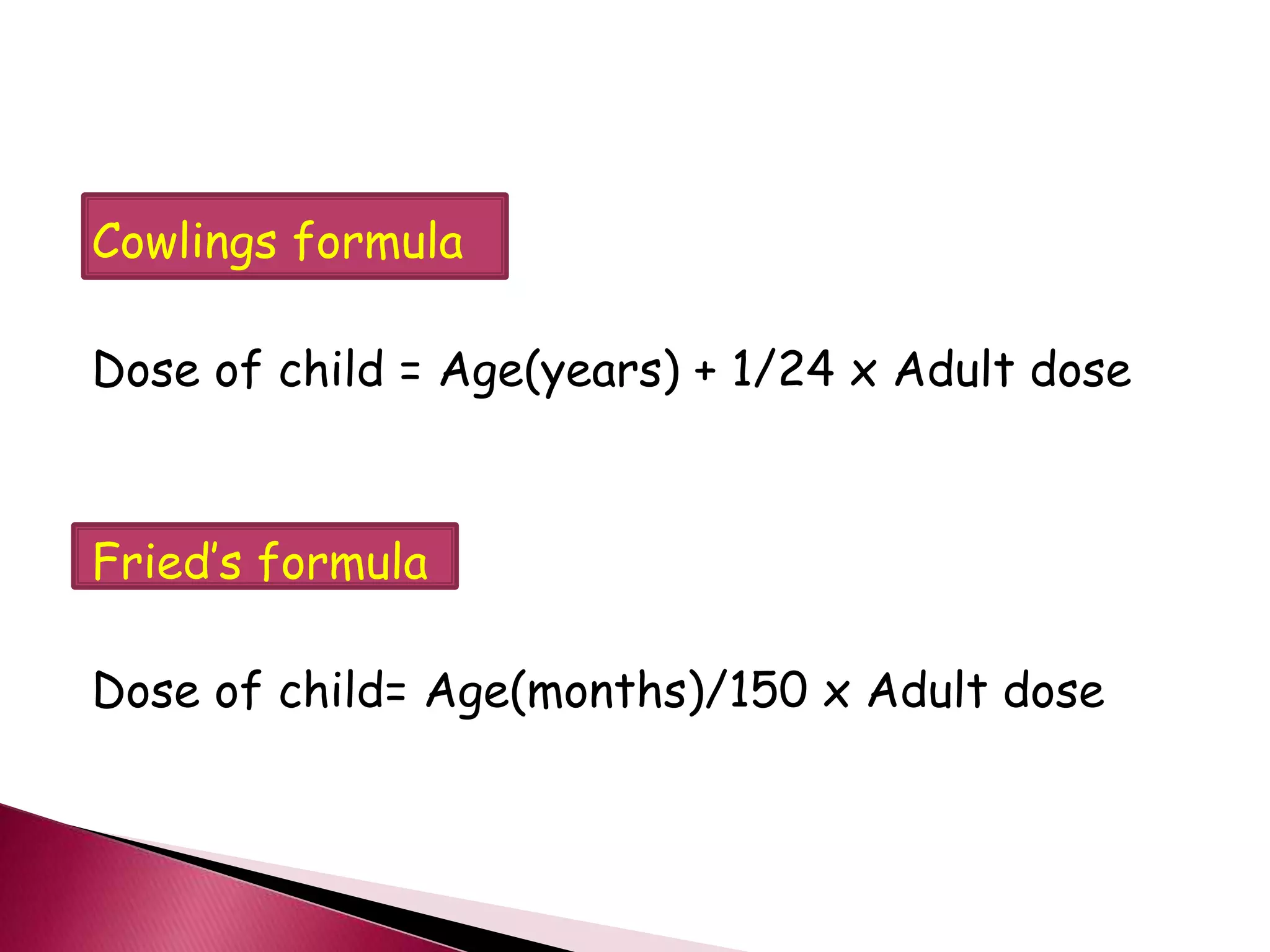
Cowlings formula
Dose of child = Age(years) + 1/24 x Adult dose
Fried’s formula
Dose of child= Age(months)/150 x Adult dose
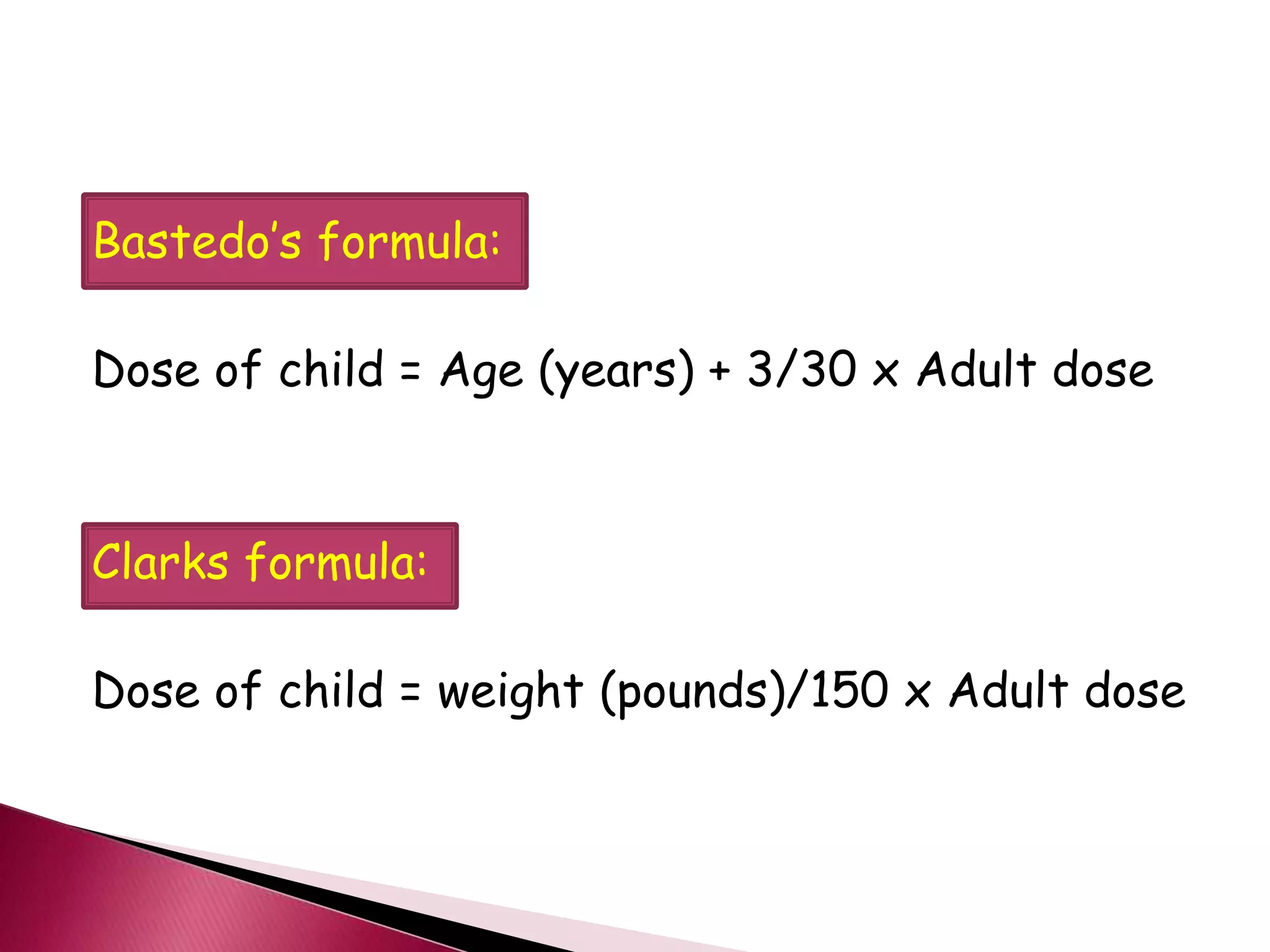
Bastedo’s formula:
Dose of child = Age (years) + 3/30 x Adult dose
Clarks formula:
Dose of child = weight (pounds)/150 x Adult dose
 Cardio Vascular response to sympathomimetic
agents is reduced
 Age related decrease in renal function
renal elimination of Digoxin
 K
3/4th of the adult dose
to pt above 60 yrs
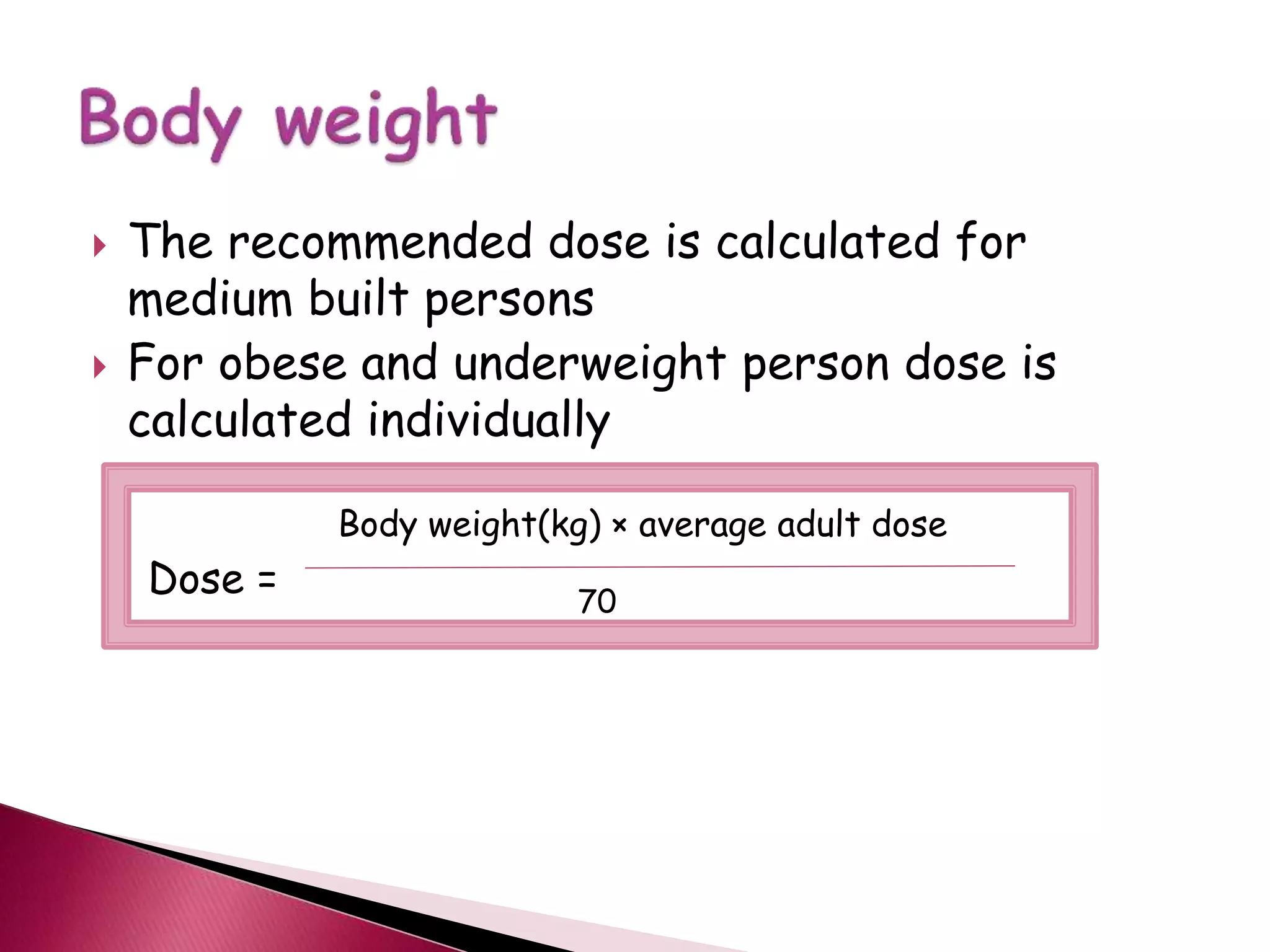
 The recommended dose is calculated for
medium built persons
 For obese and underweight person dose is
calculated individually
Dose =
Body weight(kg) × average adult dose
70
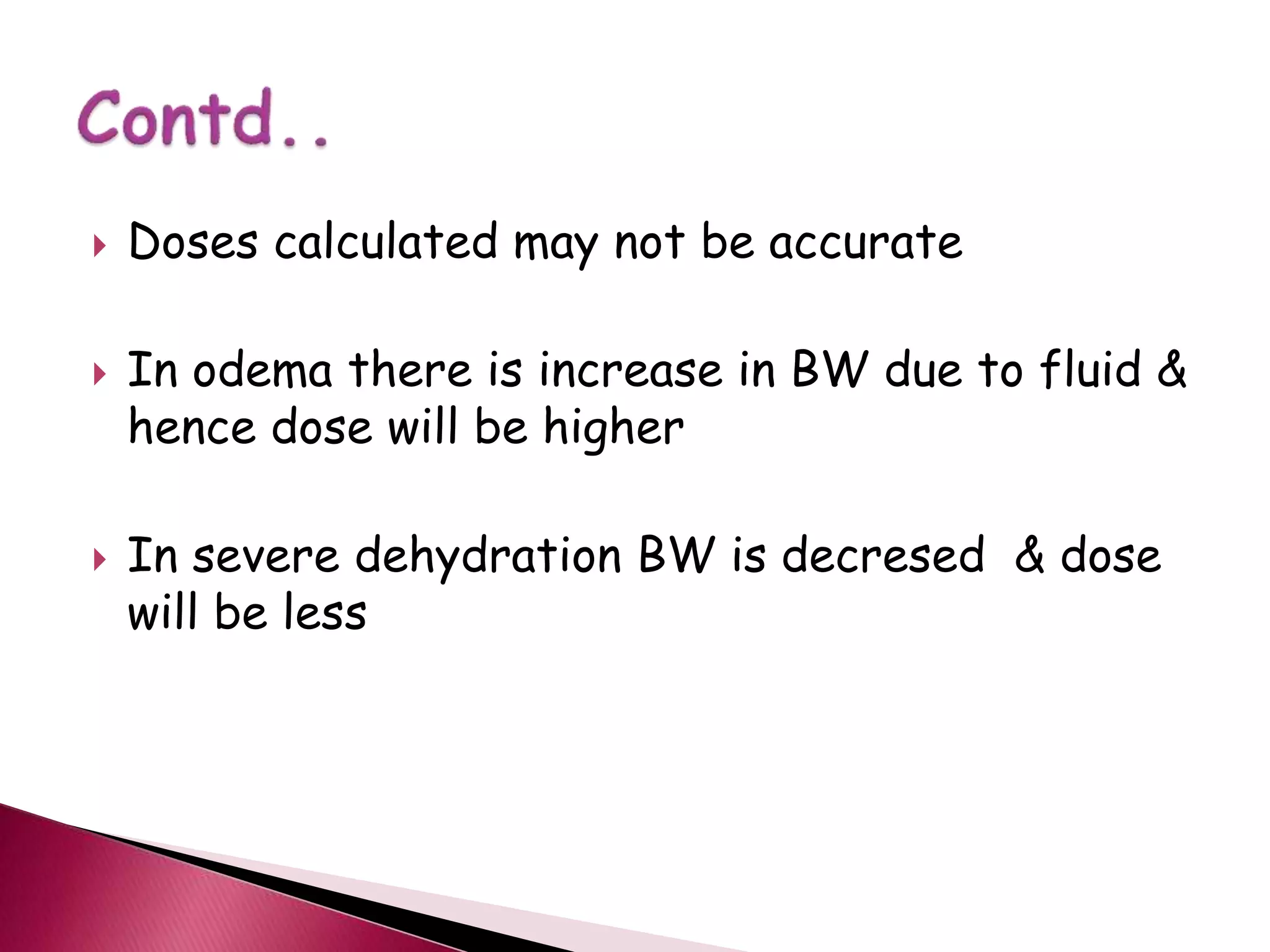
 Doses calculated may not be accurate
 In odema there is increase in BW due to fluid &
hence dose will be higher
 In severe dehydration BW is decresed & dose
will be less
 More precise index than body weight
Dose =
BSA (M2)
1.8
× Adult dose
For anticancer drugs eg methotrexate dose is
calculated depending on Body surface area
 Drug responses in men & women are not always
same
 Eg: 1. Ephedrine may produce more excitation
and tremors in women than men
2. α-methyldopa, β blockers, diuretics,
ketoconazole cause loss of libido in men
 In females
During menstruation : purgatives -increase
pelvic congestion -increase menstrual blood loss
 During pregnancy : Physiological changes that
alter drug disposition—
1. GI motility reduced—delayed absorption of
orally administered drug.
2. Plasma and ECF volume expands—volume of drug
distribution may increase
3. Plasma albumin fall, alpha glycoprotein increases—
unbound fraction of acidic drugs increases but
basic drug decreases.
4. Hepatic microsomal enzymes undergo induction
drugs are metabolized faster.
5. Renal blood flow increased
 Uterine stimulants -risk of abortion eg ; castor oil,
ergot alkaloids
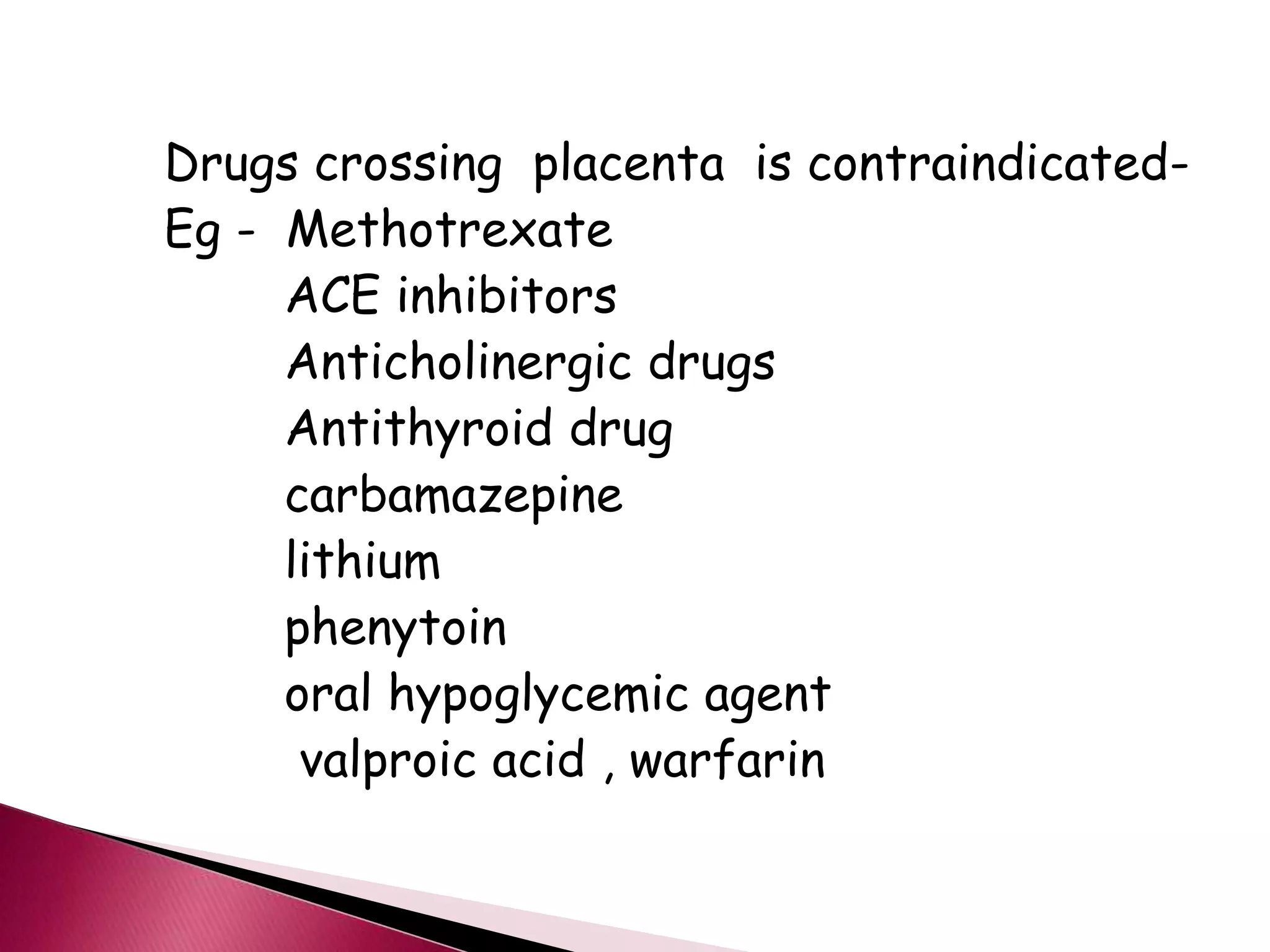
Drugs crossing placenta is contraindicated-
Eg - Methotrexate
ACE inhibitors
Anticholinergic drugs
Antithyroid drug
carbamazepine
lithium
phenytoin
oral hypoglycemic agent
valproic acid , warfarin
 There is difference in response to drugs
among different species
e.g 1) Rabbits are resistant to atropine
2) Rats & mice are resistant to digitalis
3) Rat is more sensitive to curare than
cat
These differences are important while
extrapolating results from experimental
animals to man
 Blacks require higher & mongols
require lower concentration of
atropine & ephedrine to dilate to
dilate their pupil
 ẞ blockers are less effective as
antihypertensive in blacks
 Indians tolerate thiacetazone
better than whites
Race
 At high altitudes, due to reduced rate of
biotransformation even usual doses may
produce toxicity
 Glucocorticoid taken as OD dose in morning
minimise the risk of pituitary adrenal
supression
 Diurnal variation should be considered while
determining the dose of antihypertensive drug
 Food interferes with absorption of
many drugs
 Eg; tetracyclines form complexes
with calcium in food & are poorly
absorbed
 Polycyclic hydrocarbons in cigarette
smoke may cause microsomal enzyme
induction
Absorption increased by
food-
Spironolactone
Lithium
Riboflavin
Absorption Reduced by
food-
Ampicillin
Rifampicin
INH
 Drug’s Efficacy can be affected by patient ’s
expectations and attitudes
 Some patients respond to Placebo
PLACEBO = “I SHALL PLEASE”
Placebo is inert dosage form with no specefic
biological activity but only resembles the actual
prepaation in appearance(dummy medication)
Uses
1. Clinical trials
2. Benefit a pt
psychoogically
 Eg : lactose, vitamins, minerals, distilled water
injection
 Injections have more pronounced effect
 Placebo can release endorphins in brain -
analgesia
Genetic Factor
Effects
of genetic
polymorphism
Pharmacokinetic
Pharmacodynamic
Changes in
Absorption
Distribution
Metabolism
Excretion
Variation in
Receptors,
Enzymes,
Susceptibility
to disease
 Production of drug metabolizing enzyme is
genetically controlled & variations are
common
 Eg:
Oxidation of Drugs : genetic polymorphism in
cyt P450 leads to variation in metabolism
eg: SSRI, Phenytoin, Warfarin
 Acetylation of drugs:
slow acetylators – lupus erythematous
(hydralazine)
Fast acetylators- hepatotoxicity
 Atypical Pseudocholinesterase: prolonged
apnea due to persistent action of
succinylcholine
 Variations in receptor, enzymes, susceptibility
to ADRs & disease
 G6PD deficiency : hemolysis (primaquine,
sulphones)
 Malignant hyperthermia: inherited abnormality
in Ca 2+release from sarcoplamic reticulum
(halothane, sevoflurane, succinylcholine)
1) Gastrointestinal diseases
• Can alter absorption of orally administered drugs
• Drug absorption can be increased or decreased
e.g
In coeliac disease absorption of amoxicillin is
decreased but that of cephalexin & cotrimoxazole is
increased
2) Liver disease
 Bioavailability of drugs having high first pass
metabolism is increased
 Protein binding of acidic drugs
(phenylbutazone,etc) is reduced & more drug is
present in free form
 Metabolism & elimination of some drugs
(morphine, lidocaine, propranolol, etc) is
decreased & dose should be reduced
 Prodrugs needing hepatic metabolism for
activation (e.g prednisone, bacampicillin) are
less effective & should be avoided
3) Kidney disease
 Albumin level is altered – binding of
acidic drugs is reduced
 Permeability of blood brain barrier
is increased – opiates, barbiturates
produce more CNS depression
 Target organ sensitivity may also be
increased – antihypertensive drugs
produce more postural hypotension
 NSAIDs cause more fluid retention
 Thiazide diuretics which tend to reduce GFR
are ineffective in renal failure – can worsen
uremia
 Potassium sparing diuretics C/I, can cause
hyperkalemia – cardiac depression
4) Congestive heart failure
 Mucosal edema & splanchnic vasoconstriction
→ decrease in drug absorption from GIT
e.g Procainamide & hydrochlorothiazide
 Expansion of extracellular fluid volume → Vd
of some drugs can increase
Loading doses of drugs like
lidocaine & procainamide should be
lowered
 Decreased perfusion & congestion of liver,
reduced GFR & increased tubular reabsorption
↓
decreases drug elimination
Dosing rate of drugs like lignocaine,
theophylline should be reduced
5) Thyroid disease
 Hypothyroid patient → more sensitive to
digoxin, morphine & other CNS depressants
 Hyperthyroid patient → more prone to
arrhythmic action of digoxin
governs speed & intensity of drug responses
A drug may have entirely different uses through
different routes
e.g Magnesium sulphate
• Orally → purgation
• Applied on inflamed areas → decreases swelling
• Intravenously → produces CNS depression
& hypotension
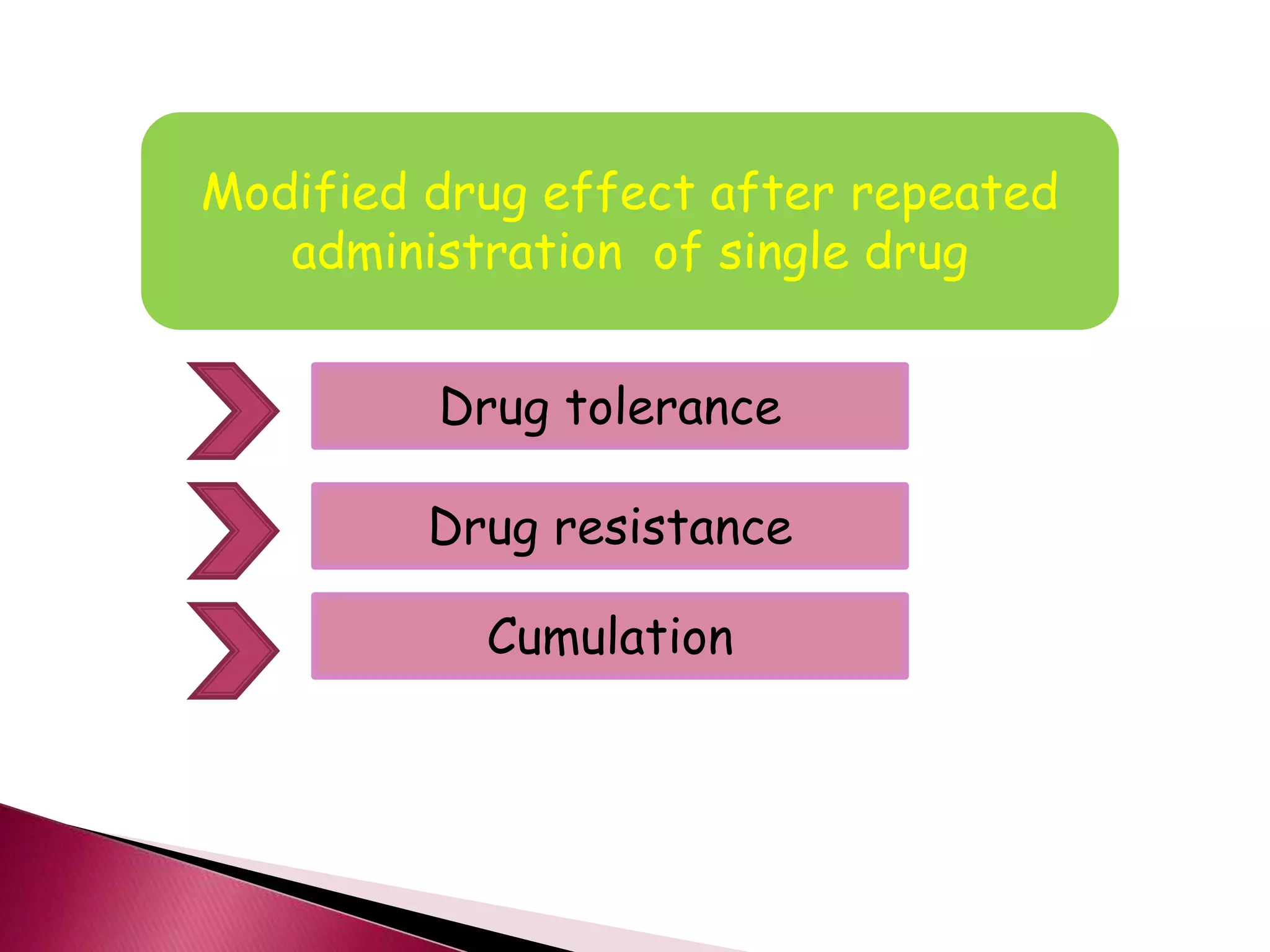
Modified drug effect after repeated
administration of single drug
Drug tolerance
Drug resistance
Cumulation
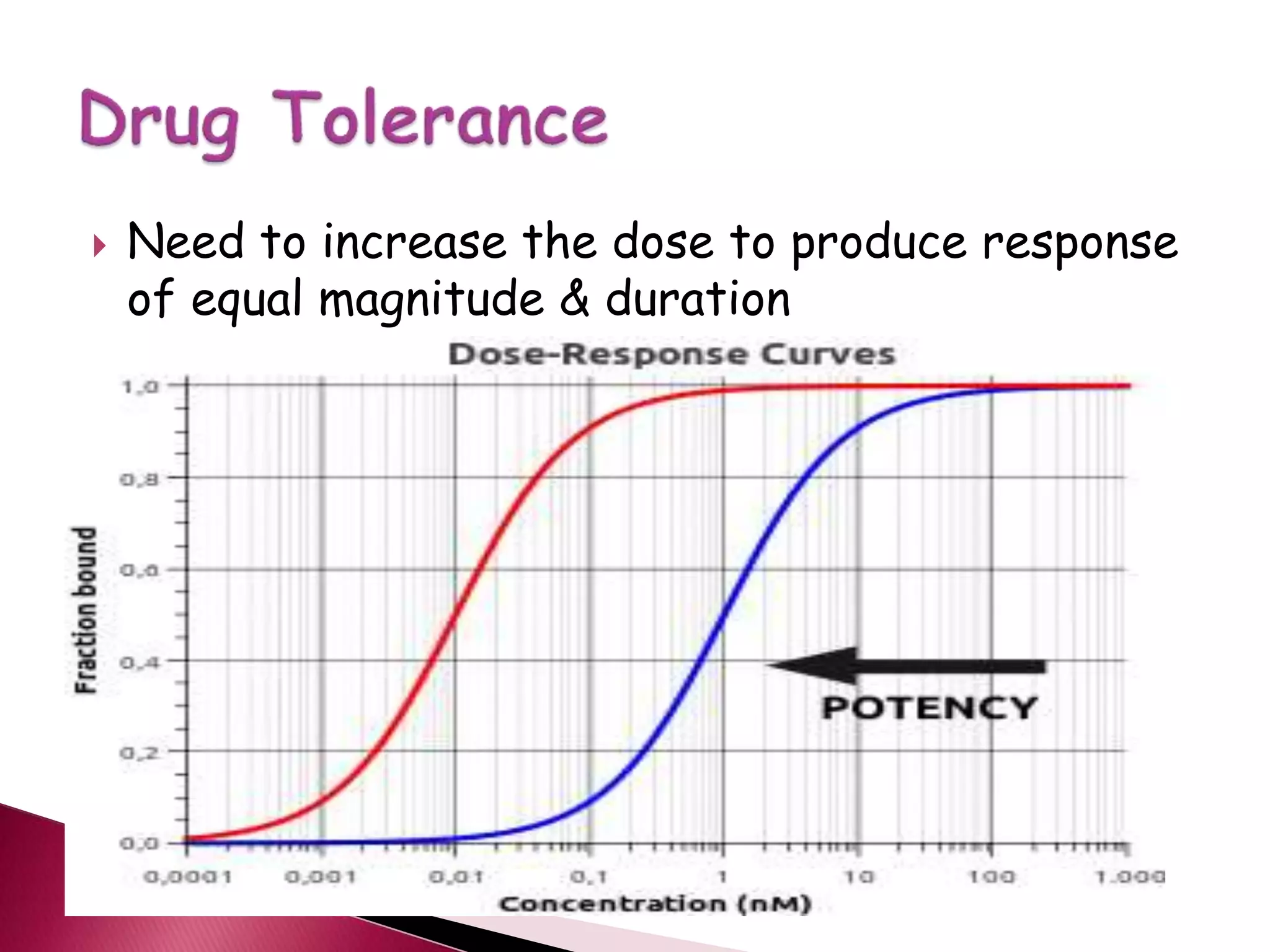
 Need to increase the dose to produce response
of equal magnitude & duration
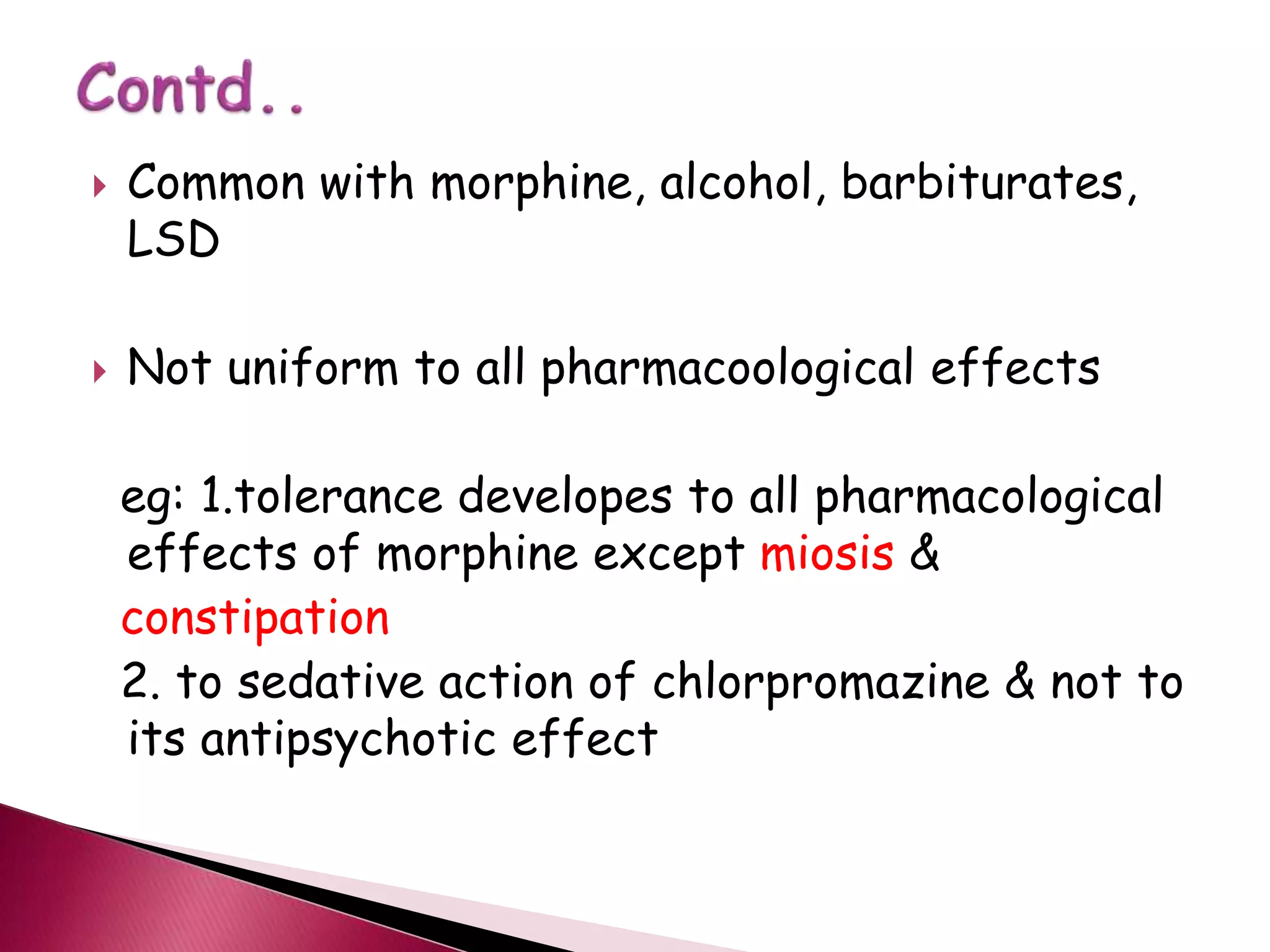
 Common with morphine, alcohol, barbiturates,
LSD
 Not uniform to all pharmacoological effects
eg: 1.tolerance developes to all pharmacological
effects of morphine except miosis &
constipation
2. to sedative action of chlorpromazine & not to
its antipsychotic effect
1. Natural
2. Acquired
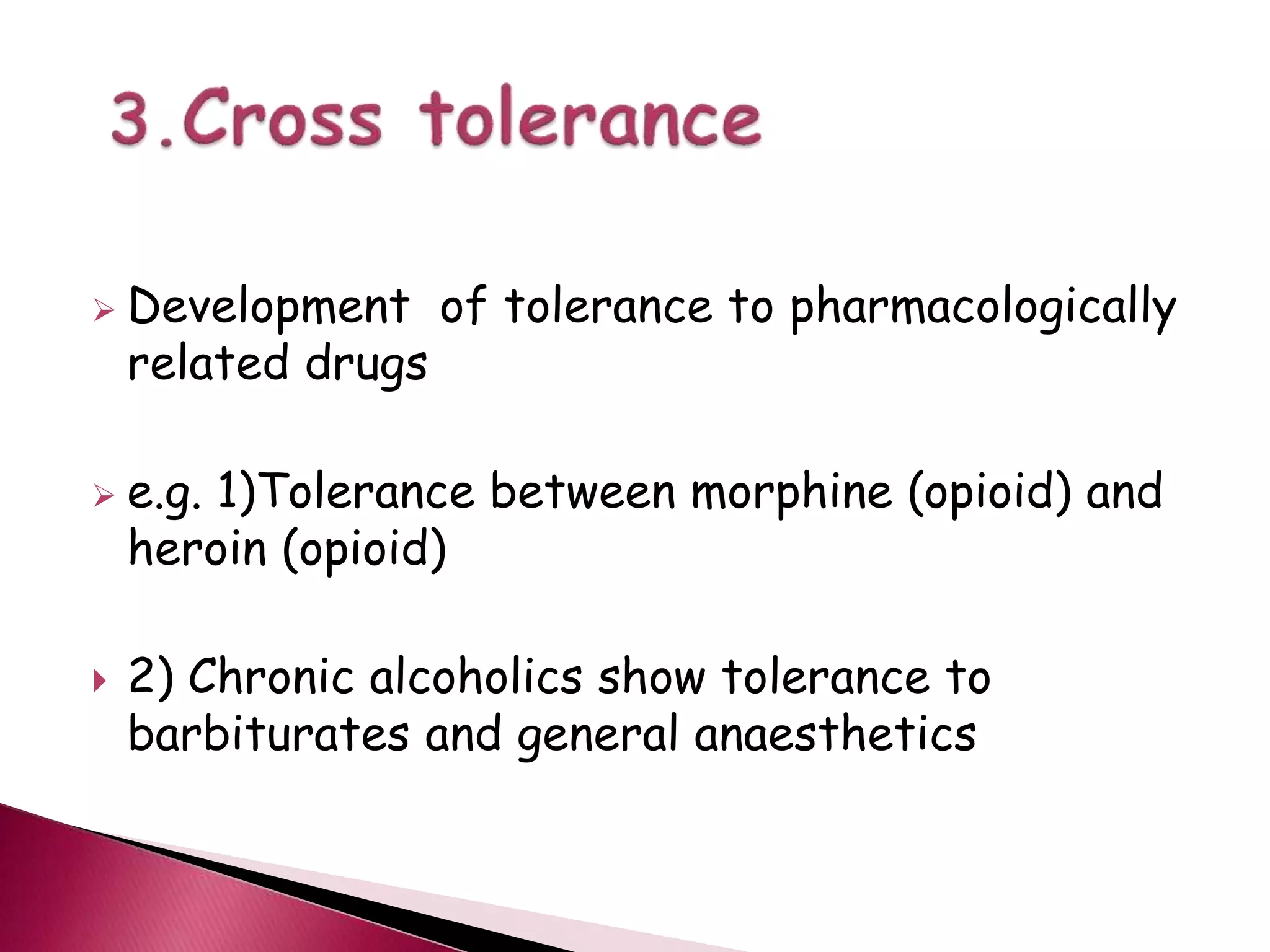
3. Cross tolerance
4. Tachyphylaxis
 Refers to genetically determined lack of
sensitivity to a drug
 e.g. Rabbits - Tolerant to atropine
Black races - Tolerant to mydriatics
 Occurs due to repeated use of drug
 Two types
i) Pharmacokinetic (dispositional ) tolerance
e.g. alcohol , barbiturates, amphetamine
ii) Pharmacodynamic (cellular adaptive ) tolerance
e.g. Morphine , barbiturates(barbital)
 Development of tolerance to pharmacologically
related drugs
 e.g. 1)Tolerance between morphine (opioid) and
heroin (opioid)
 2) Chronic alcoholics show tolerance to
barbiturates and general anaesthetics
 Acute development of tolerance after rapid and
repeated administration of drug over a short
interval
 Original effect can not be achieved even after
increasing dose
 e.g. Amphetamine, tyramine, ephedrine
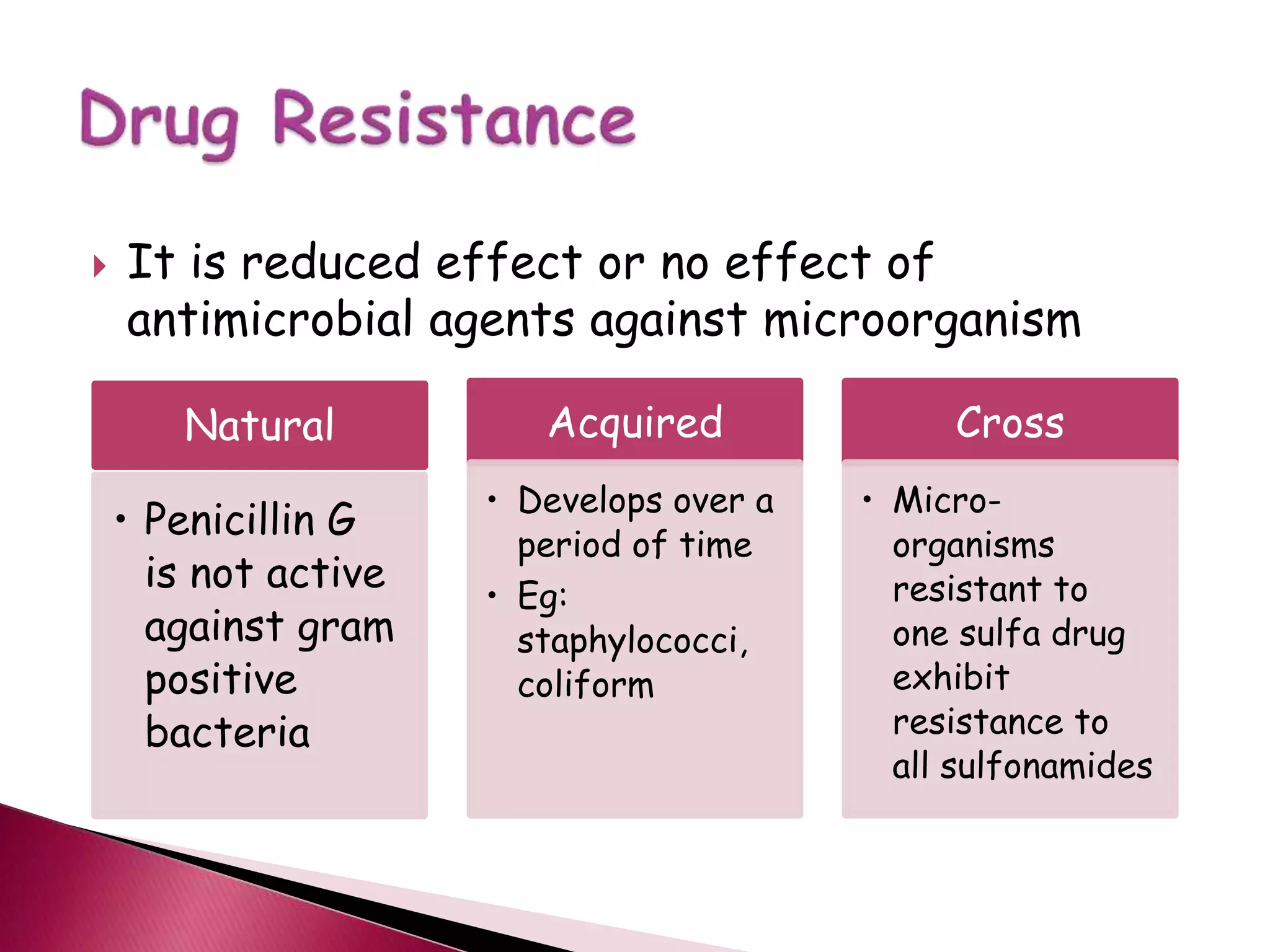
 It is reduced effect or no effect of
antimicrobial agents against microorganism
Natural
• Penicillin G
is not active
against gram
positive
bacteria
Acquired
• Develops over a
period of time
• Eg:
staphylococci,
coliform
Cross
• Micro-
organisms
resistant to
one sulfa drug
exhibit
resistance to
all sulfonamides
 Any drug will cumulate in the body if rate of
administration is more than the rate of
elimination
 Slowly eliminated drugs can cause cumulative
toxicity
 e.g. chloroquine, digoxin
 To avoid cumulation-
A. One must know drug elimination- slowly or
rapidly.
B. Stop drug administration at appearance of
first warning symptom.
C. Select carefully form in which drug is to be
administered.
D. Check liver and kidney function before drug
administration.
Modified drug effects after concurrent
administration of two different drugs
1.Summation
2.Synergism
3.Drug
antagonism
 When two drugs elicit the same response, but
with different mechanisms, their combined
effect is equal to the sum of their individual
effects (1+1=2)
 Combined effect of two drugs is greater than
algebric sum of their individual effect
 When two drugs act at different site
 Synergism where one drug alters the
pharmacokinetics of other
• Chemical antagonism
• Physiological antagonism
• At receptor level
One drug opposing or inhibiting the action of
another drug is antagonism
 Two substances interact chemically to result in
inactivation of effect
eg: chelating agents form inactive soluble complexes
with heavy metals like lead
2. Physiological antagonism
 Two drugs act at different site to produce opposing
effects
eg: histamine acts on H1 receptors to produce
bronchospasm & hypotension while adrenaline
reverses the action by acting on adrenergic receptors
Competitive
Non-Competitive
 When antagonist
combines with the
same receptor on
which agonist combines
& opposes the effect
of agonist, such
antagonism is called
competitive antagonism
 Effect of agonist can again be obtained on
increasing the dose / concentration
Eg:1. atropine is competitive antagonist of ach at
muscarinic receptors
2. Naloxone competitive antagonist of morphine
at opioid receptor
 Antagonist binds tightly with same receptor
(on which agonist combines) and does not
dissociates or dissociates very slowly from
the receptor, so that the agonist cannot bind
with receptor
 Higher doses of agonist cannot overcome
effect of antagonist i.e. It is insurmountable
or irreversible
 The log-dose response
curve show reduced
efficacy in the presence
of irreversible
antagonist
 e.g. Irreversible
blockade of acetyl
choline esterase enzyme
by organophosphate
compounds
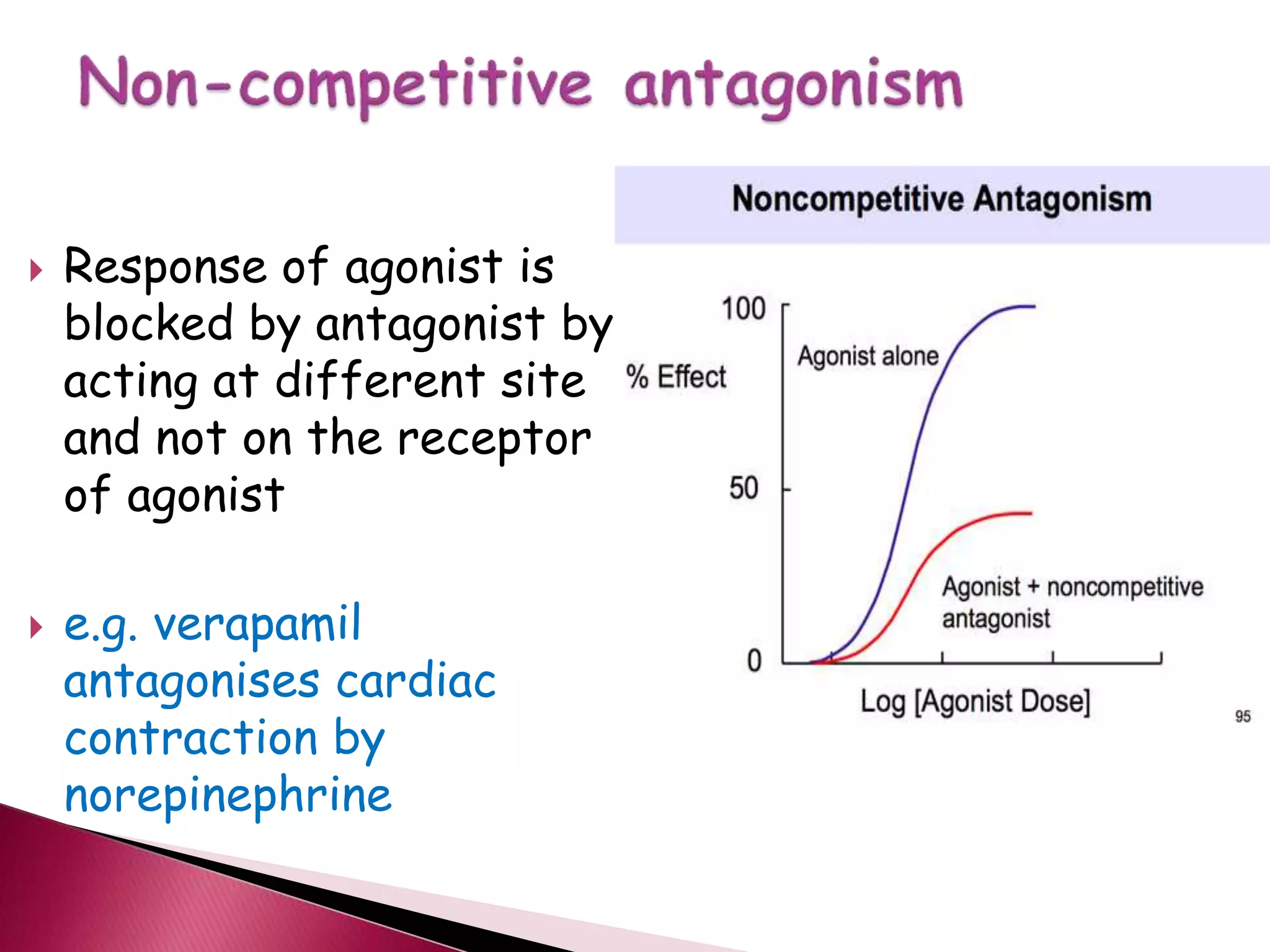
 Response of agonist is
blocked by antagonist by
acting at different site
and not on the receptor
of agonist
 e.g. verapamil
antagonises cardiac
contraction by
norepinephrine
 Treatment of certain conditions and poisoning
e.g. Antacids for peptic ulcer (chemical
antagonism)
Naloxone for opioid poisoning
 To overcome or reduce the adverse effect of a
drug
e.g. Use of benzhexol with trifluoperazine
reduces extrapyramidal side effects of
trifluoperazine
 Drug response may vary in different individuals
even when same dose is used due to altered
pharmacokinetics & pharmacodynamics
 It is very important to consider these factors
before prescribing drugs for any patient so
that desired response is achieved &
unnecessary adverse effects are avoided
 Basic and clinical pharmacology, Katzung :13th
edition
 H . L. Sharma, K. K. Sharma ;chapter 7
Pharmacodynamics; Principles of Pharmacology ;
2nd edition
 Padmaja Udaykumar; chapter 3
Pharmacodynamics; Medical Pharmacology; 5th
edition
Next PG activity by
Dr. Vinay Bajaj
Journal Reporting
27/09/17

Factors modifying dose and action of drugs

  • 1.
    Dr. Anisha Pamarthi JR1 Dept. of Pharmacology GMC, Nagpur
  • 2.
    • Introduction • Factorsmodifying drug action • Summary
  • 3.
    Variation in responseto the same dose of a drug between different patients & even in the same patient on different occasions (1) Individuals differ in pharmacokinetic handling of drugs (2) Variations in number or state of receptors, coupling proteins or other components (3) Variations in neurogenic/hormonal tone or concentrations of specific constituents
  • 4.
  • 5.
    Quantitatively - plasmaconcentration and/or the action of the drug is increased or decreased Qualitatively-The type of response is altered e.g. drug allergy or idiosyncrasy.
  • 6.
    Factors modifying dose& drug action Biological Factors Modified drug effect after repeated administration of single drug Modified drug effect after concurrent administration of two different drugs
  • 7.
    Age body weight & BSA Gender Genetic Psychological factors Diet Environment& timing Pathological state Route of administration
  • 8.
    Infants & Neonates Low gastric acidity- bioavailability of penicillins  Prolonged gastric emptying time  immature intestinal mucosa  Reduced splanchnic & enteric blood flow  Reduced PPB – higer plasma conc of free drug eg; phenytoin, phenobarbitone Delayed absorption of valproic acid, carbamazepine Reduced absorption of Phenytoin , Phenobarbitone
  • 9.
     Immature BBB& relatively high cerebral blood flow higher amounts of lipophilic drugs enter brain  Deficient Conjugation – Chloramphenicol induced grey baby syndrome  Deficient renal tubular secretion – prolongs half life of penicillins
  • 11.
    Young’s Formula Child’s Dose= Age in yrs Age + 12 × Adult dose Dilling’s Formula Child’s Dose = Age in yrs 20 × Adult dose
  • 12.
    Cowlings formula Dose ofchild = Age(years) + 1/24 x Adult dose Fried’s formula Dose of child= Age(months)/150 x Adult dose
  • 13.
    Bastedo’s formula: Dose ofchild = Age (years) + 3/30 x Adult dose Clarks formula: Dose of child = weight (pounds)/150 x Adult dose
  • 15.
     Cardio Vascularresponse to sympathomimetic agents is reduced  Age related decrease in renal function renal elimination of Digoxin  K 3/4th of the adult dose to pt above 60 yrs
  • 16.
     The recommendeddose is calculated for medium built persons  For obese and underweight person dose is calculated individually Dose = Body weight(kg) × average adult dose 70
  • 17.
     Doses calculatedmay not be accurate  In odema there is increase in BW due to fluid & hence dose will be higher  In severe dehydration BW is decresed & dose will be less
  • 18.
     More preciseindex than body weight Dose = BSA (M2) 1.8 × Adult dose For anticancer drugs eg methotrexate dose is calculated depending on Body surface area
  • 19.
     Drug responsesin men & women are not always same  Eg: 1. Ephedrine may produce more excitation and tremors in women than men 2. α-methyldopa, β blockers, diuretics, ketoconazole cause loss of libido in men
  • 20.
     In females Duringmenstruation : purgatives -increase pelvic congestion -increase menstrual blood loss  During pregnancy : Physiological changes that alter drug disposition— 1. GI motility reduced—delayed absorption of orally administered drug.
  • 21.
    2. Plasma andECF volume expands—volume of drug distribution may increase 3. Plasma albumin fall, alpha glycoprotein increases— unbound fraction of acidic drugs increases but basic drug decreases. 4. Hepatic microsomal enzymes undergo induction drugs are metabolized faster. 5. Renal blood flow increased  Uterine stimulants -risk of abortion eg ; castor oil, ergot alkaloids
  • 22.
    Drugs crossing placentais contraindicated- Eg - Methotrexate ACE inhibitors Anticholinergic drugs Antithyroid drug carbamazepine lithium phenytoin oral hypoglycemic agent valproic acid , warfarin
  • 23.
     There isdifference in response to drugs among different species e.g 1) Rabbits are resistant to atropine 2) Rats & mice are resistant to digitalis 3) Rat is more sensitive to curare than cat These differences are important while extrapolating results from experimental animals to man
  • 24.
     Blacks requirehigher & mongols require lower concentration of atropine & ephedrine to dilate to dilate their pupil  ẞ blockers are less effective as antihypertensive in blacks  Indians tolerate thiacetazone better than whites Race
  • 25.
     At highaltitudes, due to reduced rate of biotransformation even usual doses may produce toxicity  Glucocorticoid taken as OD dose in morning minimise the risk of pituitary adrenal supression  Diurnal variation should be considered while determining the dose of antihypertensive drug
  • 26.
     Food interfereswith absorption of many drugs  Eg; tetracyclines form complexes with calcium in food & are poorly absorbed  Polycyclic hydrocarbons in cigarette smoke may cause microsomal enzyme induction Absorption increased by food- Spironolactone Lithium Riboflavin Absorption Reduced by food- Ampicillin Rifampicin INH
  • 27.
     Drug’s Efficacycan be affected by patient ’s expectations and attitudes  Some patients respond to Placebo PLACEBO = “I SHALL PLEASE” Placebo is inert dosage form with no specefic biological activity but only resembles the actual prepaation in appearance(dummy medication) Uses 1. Clinical trials 2. Benefit a pt psychoogically
  • 28.
     Eg :lactose, vitamins, minerals, distilled water injection  Injections have more pronounced effect  Placebo can release endorphins in brain - analgesia
  • 29.
    Genetic Factor Effects of genetic polymorphism Pharmacokinetic Pharmacodynamic Changesin Absorption Distribution Metabolism Excretion Variation in Receptors, Enzymes, Susceptibility to disease
  • 30.
     Production ofdrug metabolizing enzyme is genetically controlled & variations are common  Eg: Oxidation of Drugs : genetic polymorphism in cyt P450 leads to variation in metabolism eg: SSRI, Phenytoin, Warfarin
  • 31.
     Acetylation ofdrugs: slow acetylators – lupus erythematous (hydralazine) Fast acetylators- hepatotoxicity  Atypical Pseudocholinesterase: prolonged apnea due to persistent action of succinylcholine
  • 32.
     Variations inreceptor, enzymes, susceptibility to ADRs & disease  G6PD deficiency : hemolysis (primaquine, sulphones)  Malignant hyperthermia: inherited abnormality in Ca 2+release from sarcoplamic reticulum (halothane, sevoflurane, succinylcholine)
  • 33.
    1) Gastrointestinal diseases •Can alter absorption of orally administered drugs • Drug absorption can be increased or decreased e.g In coeliac disease absorption of amoxicillin is decreased but that of cephalexin & cotrimoxazole is increased
  • 34.
    2) Liver disease Bioavailability of drugs having high first pass metabolism is increased  Protein binding of acidic drugs (phenylbutazone,etc) is reduced & more drug is present in free form
  • 35.
     Metabolism &elimination of some drugs (morphine, lidocaine, propranolol, etc) is decreased & dose should be reduced  Prodrugs needing hepatic metabolism for activation (e.g prednisone, bacampicillin) are less effective & should be avoided
  • 36.
    3) Kidney disease Albumin level is altered – binding of acidic drugs is reduced  Permeability of blood brain barrier is increased – opiates, barbiturates produce more CNS depression  Target organ sensitivity may also be increased – antihypertensive drugs produce more postural hypotension
  • 37.
     NSAIDs causemore fluid retention  Thiazide diuretics which tend to reduce GFR are ineffective in renal failure – can worsen uremia  Potassium sparing diuretics C/I, can cause hyperkalemia – cardiac depression
  • 38.
    4) Congestive heartfailure  Mucosal edema & splanchnic vasoconstriction → decrease in drug absorption from GIT e.g Procainamide & hydrochlorothiazide  Expansion of extracellular fluid volume → Vd of some drugs can increase Loading doses of drugs like lidocaine & procainamide should be lowered
  • 39.
     Decreased perfusion& congestion of liver, reduced GFR & increased tubular reabsorption ↓ decreases drug elimination Dosing rate of drugs like lignocaine, theophylline should be reduced
  • 40.
    5) Thyroid disease Hypothyroid patient → more sensitive to digoxin, morphine & other CNS depressants  Hyperthyroid patient → more prone to arrhythmic action of digoxin
  • 41.
    governs speed &intensity of drug responses A drug may have entirely different uses through different routes e.g Magnesium sulphate • Orally → purgation • Applied on inflamed areas → decreases swelling • Intravenously → produces CNS depression & hypotension
  • 42.
    Modified drug effectafter repeated administration of single drug Drug tolerance Drug resistance Cumulation
  • 43.
     Need toincrease the dose to produce response of equal magnitude & duration
  • 44.
     Common withmorphine, alcohol, barbiturates, LSD  Not uniform to all pharmacoological effects eg: 1.tolerance developes to all pharmacological effects of morphine except miosis & constipation 2. to sedative action of chlorpromazine & not to its antipsychotic effect
  • 45.
    1. Natural 2. Acquired 3.Cross tolerance 4. Tachyphylaxis
  • 46.
     Refers togenetically determined lack of sensitivity to a drug  e.g. Rabbits - Tolerant to atropine Black races - Tolerant to mydriatics
  • 47.
     Occurs dueto repeated use of drug  Two types i) Pharmacokinetic (dispositional ) tolerance e.g. alcohol , barbiturates, amphetamine ii) Pharmacodynamic (cellular adaptive ) tolerance e.g. Morphine , barbiturates(barbital)
  • 48.
     Development oftolerance to pharmacologically related drugs  e.g. 1)Tolerance between morphine (opioid) and heroin (opioid)  2) Chronic alcoholics show tolerance to barbiturates and general anaesthetics
  • 49.
     Acute developmentof tolerance after rapid and repeated administration of drug over a short interval  Original effect can not be achieved even after increasing dose  e.g. Amphetamine, tyramine, ephedrine
  • 50.
     It isreduced effect or no effect of antimicrobial agents against microorganism Natural • Penicillin G is not active against gram positive bacteria Acquired • Develops over a period of time • Eg: staphylococci, coliform Cross • Micro- organisms resistant to one sulfa drug exhibit resistance to all sulfonamides
  • 51.
     Any drugwill cumulate in the body if rate of administration is more than the rate of elimination  Slowly eliminated drugs can cause cumulative toxicity  e.g. chloroquine, digoxin
  • 52.
     To avoidcumulation- A. One must know drug elimination- slowly or rapidly. B. Stop drug administration at appearance of first warning symptom. C. Select carefully form in which drug is to be administered. D. Check liver and kidney function before drug administration.
  • 53.
    Modified drug effectsafter concurrent administration of two different drugs 1.Summation 2.Synergism 3.Drug antagonism
  • 54.
     When twodrugs elicit the same response, but with different mechanisms, their combined effect is equal to the sum of their individual effects (1+1=2)
  • 55.
     Combined effectof two drugs is greater than algebric sum of their individual effect  When two drugs act at different site
  • 56.
     Synergism whereone drug alters the pharmacokinetics of other
  • 57.
    • Chemical antagonism •Physiological antagonism • At receptor level One drug opposing or inhibiting the action of another drug is antagonism
  • 58.
     Two substancesinteract chemically to result in inactivation of effect eg: chelating agents form inactive soluble complexes with heavy metals like lead 2. Physiological antagonism  Two drugs act at different site to produce opposing effects eg: histamine acts on H1 receptors to produce bronchospasm & hypotension while adrenaline reverses the action by acting on adrenergic receptors
  • 59.
  • 60.
     When antagonist combineswith the same receptor on which agonist combines & opposes the effect of agonist, such antagonism is called competitive antagonism
  • 61.
     Effect ofagonist can again be obtained on increasing the dose / concentration Eg:1. atropine is competitive antagonist of ach at muscarinic receptors 2. Naloxone competitive antagonist of morphine at opioid receptor
  • 62.
     Antagonist bindstightly with same receptor (on which agonist combines) and does not dissociates or dissociates very slowly from the receptor, so that the agonist cannot bind with receptor  Higher doses of agonist cannot overcome effect of antagonist i.e. It is insurmountable or irreversible
  • 63.
     The log-doseresponse curve show reduced efficacy in the presence of irreversible antagonist  e.g. Irreversible blockade of acetyl choline esterase enzyme by organophosphate compounds
  • 64.
     Response ofagonist is blocked by antagonist by acting at different site and not on the receptor of agonist  e.g. verapamil antagonises cardiac contraction by norepinephrine
  • 65.
     Treatment ofcertain conditions and poisoning e.g. Antacids for peptic ulcer (chemical antagonism) Naloxone for opioid poisoning  To overcome or reduce the adverse effect of a drug e.g. Use of benzhexol with trifluoperazine reduces extrapyramidal side effects of trifluoperazine
  • 66.
     Drug responsemay vary in different individuals even when same dose is used due to altered pharmacokinetics & pharmacodynamics  It is very important to consider these factors before prescribing drugs for any patient so that desired response is achieved & unnecessary adverse effects are avoided
  • 67.
     Basic andclinical pharmacology, Katzung :13th edition  H . L. Sharma, K. K. Sharma ;chapter 7 Pharmacodynamics; Principles of Pharmacology ; 2nd edition  Padmaja Udaykumar; chapter 3 Pharmacodynamics; Medical Pharmacology; 5th edition
  • 68.
    Next PG activityby Dr. Vinay Bajaj Journal Reporting 27/09/17