Prevented
by
Dr . Manoj Kumar
Assistant professor
Dept. Pharmacology
AMCH Mohri
1
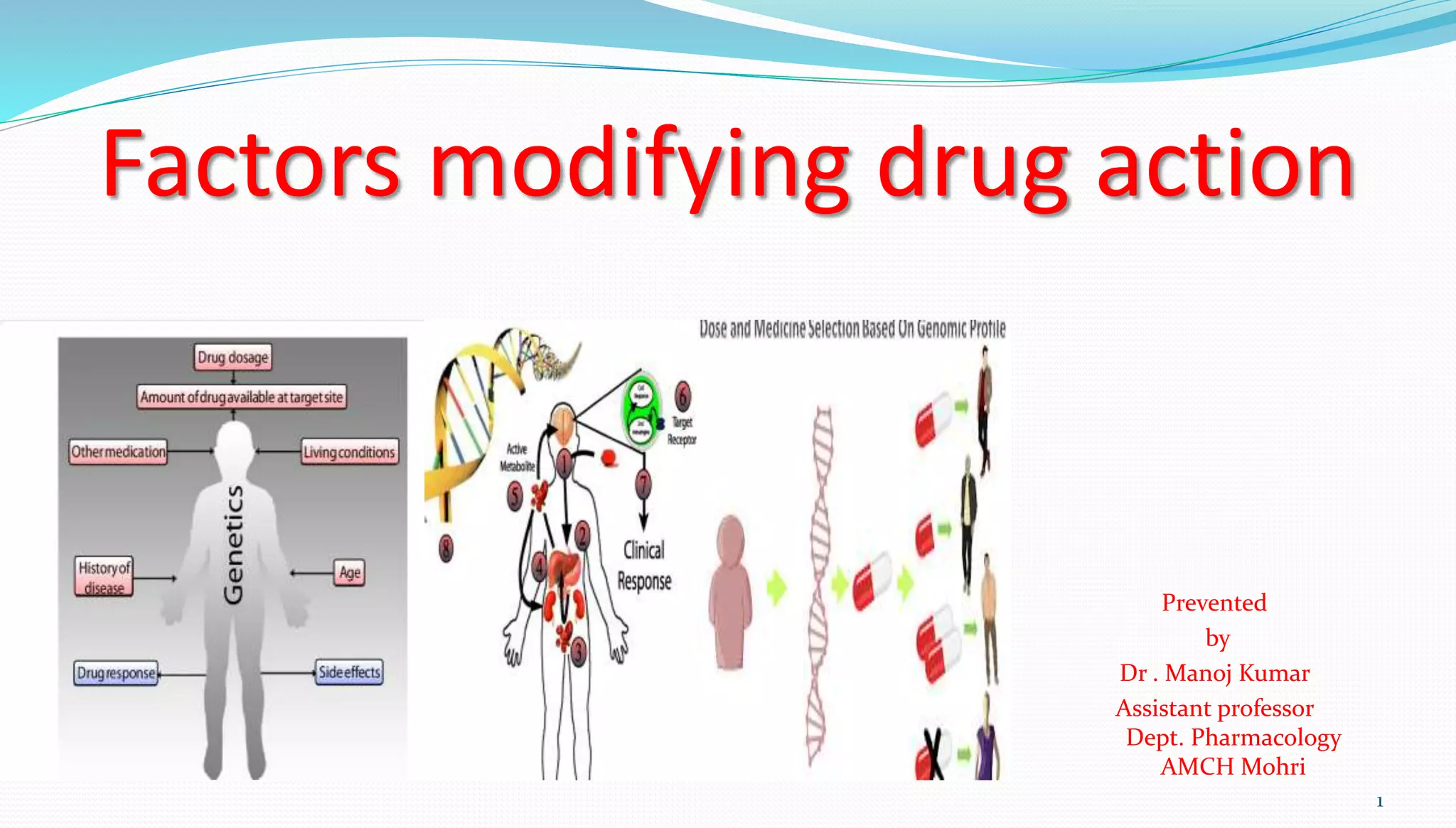
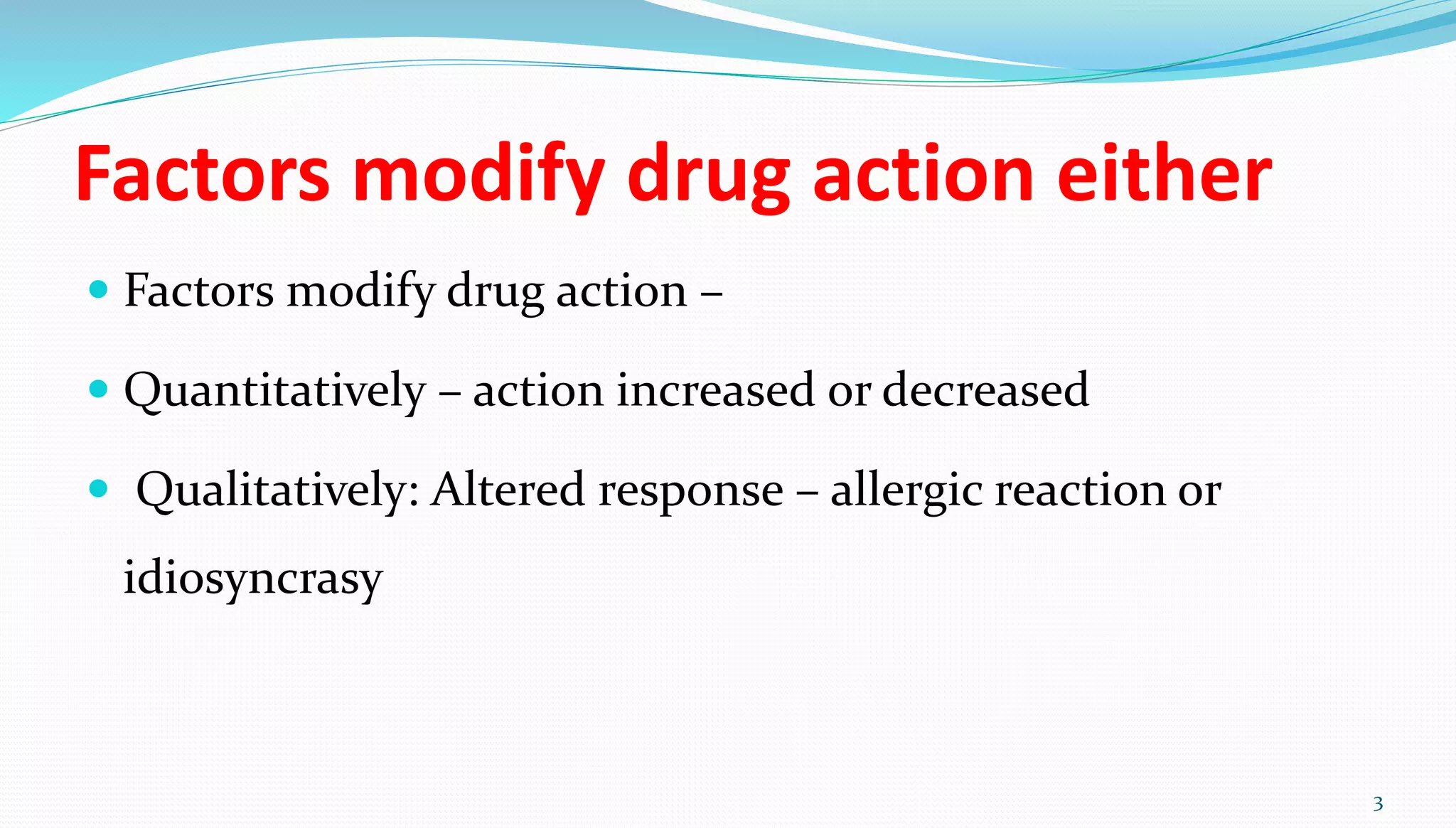
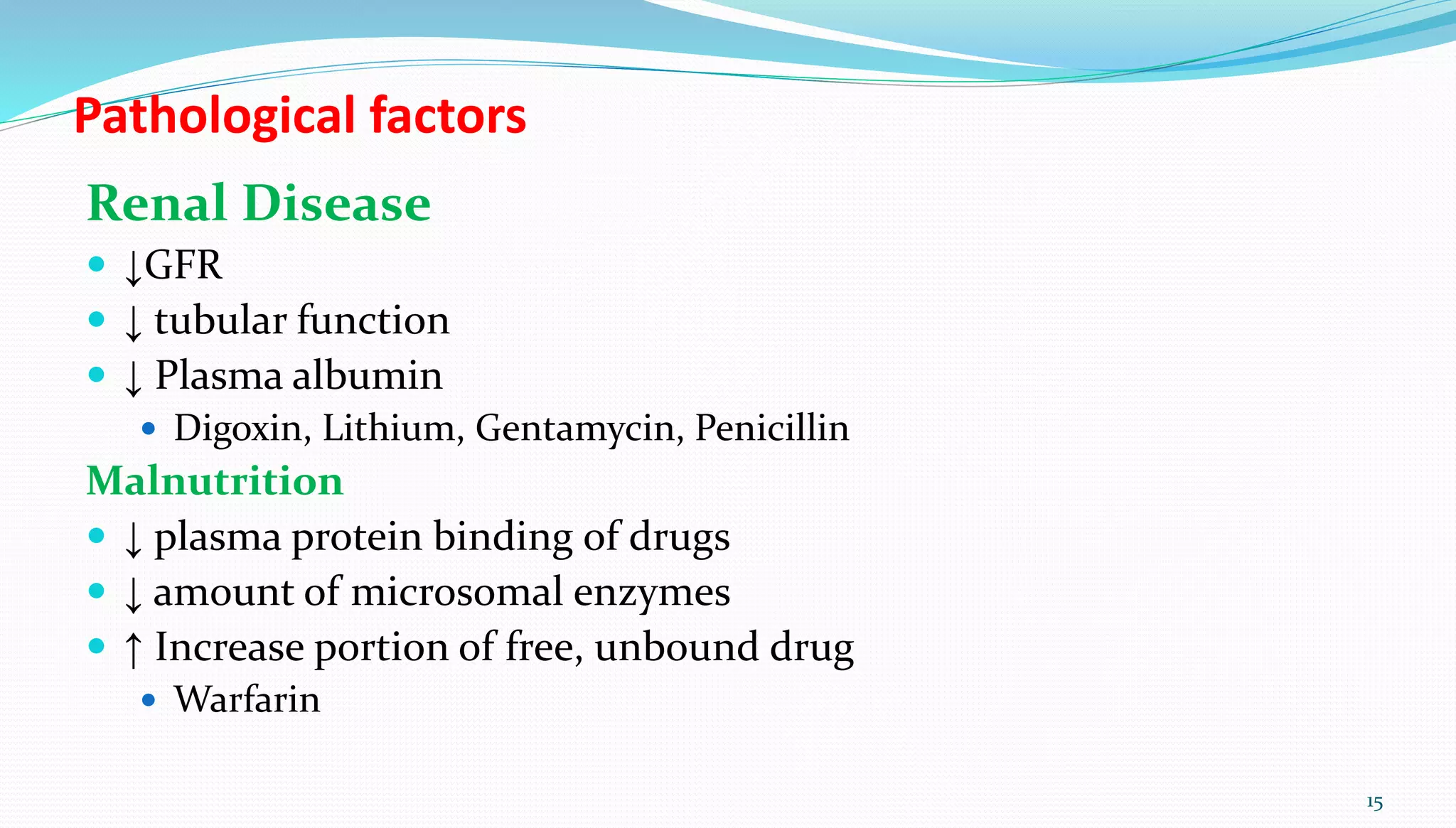
Factors modifying drug action
Introduction
 Same dose of a drugs can produce different degrees of responses – (1)
person to person; and (2) also same person under different situations.
 Individuals differ in pharmacokinetic handling of drugs – varying
plasma/target site conc. – Metabolized drug Vs excreted.
 Variation in number of receptors, coupling proteins or other
components
 Variations in hormonal/neurogenic tone or concentrations
2
Factors modify drug action either
 Factors modify drug action –
 Quantitatively – action increased or decreased
 Qualitatively: Altered response – allergic reaction or
idiosyncrasy
3
Factors modifying drug action
 Physiological Factors
 Pathological Factors
 Genetic Factors
 Environmental Factors
 Psychological factors
 Drug interactions
 Tolerance
4
Factors modifying drug action
Patients factors/Physiological Factors
 Age & weight
 Gender
 Pregnancy/Lactation
 Food
5
1. Age
Newborn:
 ↓ gastric acid secretion
 GIT absorption of Ampicillin & Amoxicillin greater
 ↓liver enzymes
 Inadequate glucouronidation of Chloramphenicol - Gray
baby syndrome
 ↓ Plasma protein binding
 ↓ GFR & tubular secretion
 Immature BBB
 Sulfonamides ----- Hyperbilirubinemia & Kernicterus
6
CHILDREN
 Tetracyclines
 Permanent teeth staining
 Corticosteroids
 Growth & development retardation
 Antihistaminics
 Hyperactivity
Young’s formula: Age (yrs) x Adult dose
Age (yrs) +12
Dilling’s formula: Age (yrs) x Adult dose
20
Example : (8 years / 8 years + 12) x 500 mg = (8 x 500) / (8 + 12) = 200 mg
7
CHILDREN
Clark’s formula:
Child’s weight (kg) x Adult dose
70
E.g. 10 kg / 70 x 500 mg = 500 /7 = 71.5 mg
Body surface area (BSA)
8
Dubois formula:
BSA (m2) = BW (kg)0.425 x Height (cm)0.725 x 0.007184
Child’s dose = BSA(m2) x Adult dose
1.73
Elderly
 ↓ Liver function
 Diazepam, theophylline
 ↓ Kidney function
 Digoxin, lithium
 ↓ Plasma protein binding
 ↑sensitivity to CNS depressants
 Diazepam, morphine
9
2. Gender
Males
 Testosterone increases the rate of biotransformation of drugs.
 Beta blockers, methyldopa, diuretics – sexual function
interference
 Gynaecomastia – Metoclopramide, chlorpromazine,
ketoconazole etc.
 Alcohol dehydrogenase in stomach is les in women then men.
10
Gender CONT…
Female
 Females have smaller body size – required doses are lower
 Decreased metabolism of some drugs (Diazepam)
 Females are more susceptible to autonomic drugs (estrogen
inhibits choline esterase)
 Digoxin in maintenance therapy of heart failure – mortality
higher in female.
3. Pregnancy
 Causes several physiological change that influence drug disposition.
 ↑ aVd (total body water may increase by up to 8 liters) providing large
space for water soluble drugs.
 Maternal plasma albumin concentration is reduced, more free drugs will
be available
 ↑ Cardiac output
 ↑ GFR & renal elimination of drugs
 ↑ Metabolism of some drugs
 Lipophilic drugs cross placental barrier
 Pregnancy – particularly 3rd trimester
12
4. Pathological Factors
 Diseases cause individual variation in drug response
Liver Disease
 Prolong duration of action: ↑ t1/2
 ↓ Plasma protein binding for warfarin, tolbutamide → adverse
effects
 ↓ Hepatic blood flow → ↓ clearance of morphine, propanolol
 Impaired liver enzymes → ↓ dose of Diazepam, rifampicin,
theophylline
13
Hepatotoxic drugs
 Paracetamol
 Phenytoin
 Chlorpromazine
 Rifampicin
 Erythromycin
 Androgens
 Alcohol
 Methotrexate
 Isoniazid
 Halothane
 Enflurane
Hepatic cell injury
Cholestatic jaundice
Cirrhosis
Hepatitis
Pathological factors
Renal Disease
 ↓GFR
 ↓ tubular function
 ↓ Plasma albumin
 Digoxin, Lithium, Gentamycin, Penicillin
Malnutrition
 ↓ plasma protein binding of drugs
 ↓ amount of microsomal enzymes
 ↑ Increase portion of free, unbound drug
 Warfarin
15
Certain drugs only produce response in
present of disease
 Antipyretics du not reduce temperature in normal parson.
 Thiazides do note do note produce significant effects in normal
person.
 Antipsychotic produce effects in psychotics only
 Antidepresent produce effects in depressed patient only
16
Sensitivity of drug is altered in certain
disease
 More ADRs due to co-trimoxazole, if using patients with AIDS.
 Morphine in head injure patients.
 Adrenalien and digitalis in MI more chance is dysrhythmias.
 High dose of antipsychotic is required in schizophrenics.
17
Nephrotoxic drugs
 NSAIDs (interstitial nephropathy)
 ACE inhibitors
 Penicillamine
 Sulfonamides (glomerulonephritis)
 Aminoglycoside (tubular necrosis)
 Kanamycin
 Capreomycin
Nephrotic syndrome
8. Genetic Factors
 Acetylation
 Acetyl transferase: Isoniazid, sulphonamides
 Succinylcholine apnea
 Pseudocholinesterase deficiency
 Due to paralysis of respiratory muscles
 G6PD-deficiency
 Hemolytic anemia upon exposure to some oxidizing drugs. E.g.
Primaquine
19
9. Species/ race
 Response to drugs may vary with species and race e.g.
 Rabbits are resistant to atropine
 Mice are resistant to digitalis.
 Blacks need higher doses and mongols required low doses
of atropine to produce mydriasis
20
10. Route of administration
 Route determines the speed and intensity of drug response
– Parenteral for speedy action
 A drug may have different actions via different routes –
Magnesium sulfate
 MgSO4: Oral: as purgative; Topically reduce local swelling
 IV: as anti-convulsant (eclampsia of pregnancy)
 N-acetylcysteine: Oral/ IV: as antidote in PCM poisoning;
 Inhaled: act as a mucolytic
11. Time
 Chronopharmacology
 Study of correlation of drug effects to circadian rhythm
 it has been observed that endogenous body clock
(circadian cycle) may affect the response of the drug.
e.g.
 Statins given at bed time & magnesium sulfate morning
22
12. Environmental factors
 Drug metabolism may get induced –
exposure to insecticides, carcinogens,
tobacco smoke and charcoal broiled
meat etc.
 Microsomal Enzyme Inducers
 Smokers metabolize drugs more
rapidly than non smoker
13. Food
 Food depress the rate & extent of drug absorption.
 Fatty food increase absorbtion of griseofulvin.
 Medicines are usually taken after a meal to reduce the risk
of gastric irritation, nausea & vomiting.
 Drug may be given on empty stomach -to prevent mixing
with food stuffs-e.g. anthelmintics -to get an immediate
action
 Prevent drug inactivation in the stomach. e.g. penicillin v
 Tetracyclines form insoluble chelates with Ca, Al etc.
 Reduce their absorption.
14. Psychological factors
 Affected by patients’ beliefs, attitudes, expectations
 Placebo (I shall please)
 Inert substance which is given in the garb of medicine
 Psychological adv, no pharmacological role
 Depends on doc-patient relationship
25
Psychological factors
Placebo
 Inert dosage form with no specific biological activity but
only resembles the actual preparation in appearance
 Used as a control in clinical trials (dummy) & to treat a
patient who doesn’t require an active drug
 Induce physiological responses (endorphins in CNS→
analgesia)
 Does not produce drug–drug interactions
 Never works in unconscious patient
 Distilled water, lactose, dextrose, vitamins, minerals .
26
Tolerance
 Reduction in the response due to continued use or repeated
administration of drug
 Higher doses of drug are needed to produce a given response
 Drugs producing tolerance: Benzodiazepines, Alcohol,
Caffeine, Barbiturates, Opioids, Nitroglycerine
 Types
 Natural: Rabbits are resistant to atropine
 blacks intolerant to mydriatics
 Acquired: chlorpromazine to sedation
27
Mechanism of tolerance
 Changes in pharmacokinetics
 Down regulation of receptors
 E.g. morphine
Cross tolerance: Development of tolerance to
pharmacologically related drugs e.g. chronic alcoholics show
tolerance to barbiturates & general anesthetics
28
TACHYPHYLAXIS
 Acute tolerance: tachy: fast; phylaxis: protection
 Rapid reduction in responsiveness due to repeated
administration of drug at frequent intervals
 Mechanism
 Depletion of neurotransmitters
 Slow dissociation of drugs from receptors
 Cannot be overcome by increasing the dose
 Nitroglycerin (Monday disease), Amphetamine, Ephedrine,
tyramine, nicotine
29
Teratogenecity
 Congenital malformations occurring in the fetus due to exposure to
drugs during pregnancy
 Categories A, B, C, D, X
Teratogenic drugs and birth defects
 ACE (angiotensin converting enzyme) inhibitors.
 isotretinoin (an acne drug)
 alcohol.
 cocaine.
 high doses of vitamin A.
 lithium.
 male hormones.
30
OTHER DRUGS
 Drugs can modify the response to each other by
pharmacokinetic or pharmaco-dynamic interaction
between them.
 Many ways in which drugs can interact are:
 Synergism
 Antagonism
Synergism:
 When the action of one drug is facilitated or increased by
the other, they are said to be synergistic.
 In a synergistic pair, both the drugs can have action in the
same direction or given alone one may be inactive but still
enhance the action of other when given together.
 Effect of Drug A+B > Effects of drug A + Effects of drug B
Antagonism:
 When one drug decreases or abolishes the action of another,
they are said to be
Antagonistic:
o Effect of drugs A + B < Effect of Drug A + Effect of drug B
o Usually in an antagonistic pair one drug is inactive as such but
decreases the effect of the other.
DRUG – DRUG INTERACTION
32
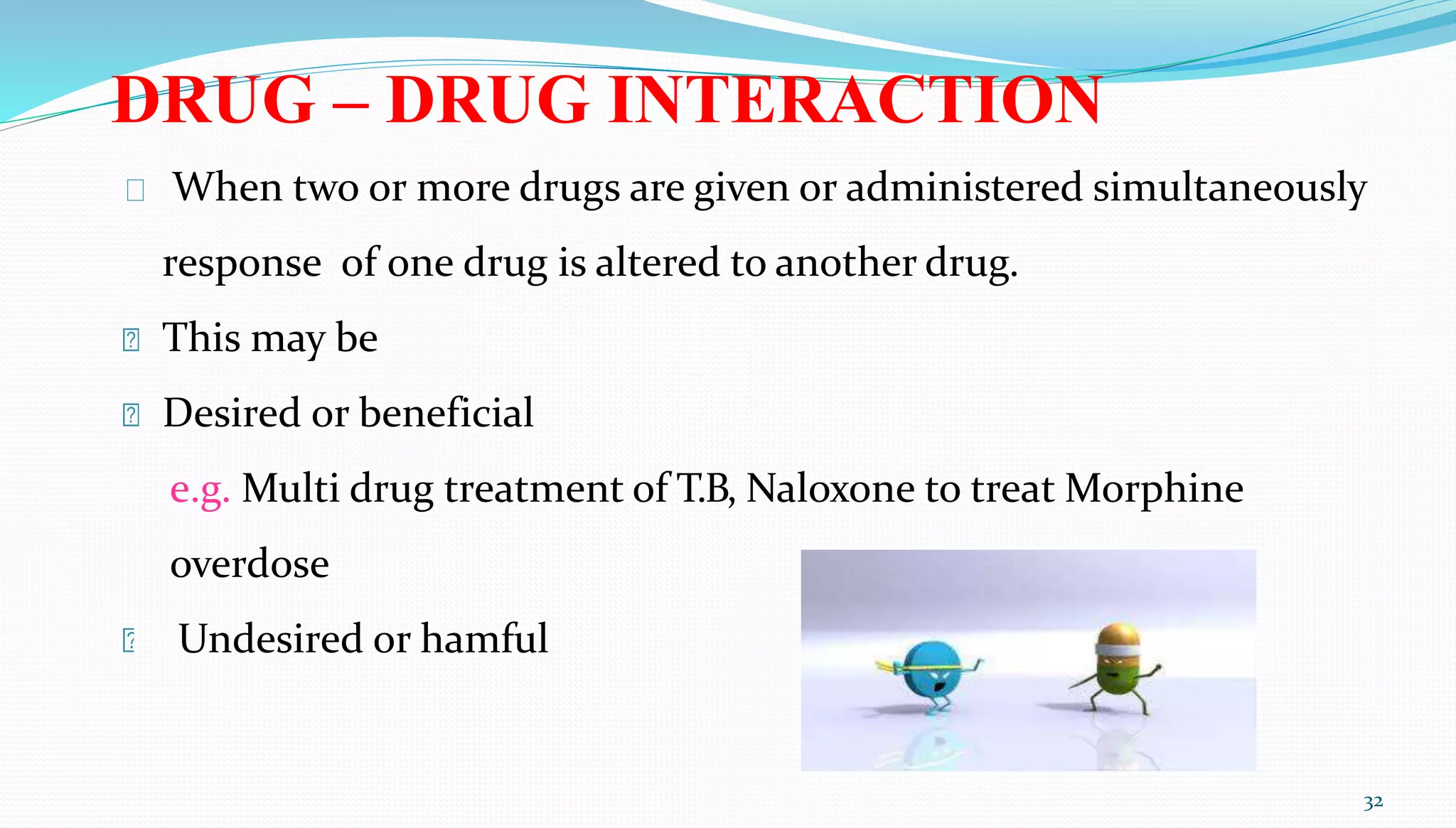
When two or more drugs are given or administered simultaneously
response of one drug is altered to another drug.
This may be
Desired or beneficial
e.g. Multi drug treatment of T.B, Naloxone to treat Morphine
overdose
Undesired or hamful
35
.
36

Factors modifying drug action new 2023

  • 1.
    Prevented by Dr . ManojKumar Assistant professor Dept. Pharmacology AMCH Mohri 1 Factors modifying drug action
  • 2.
    Introduction  Same doseof a drugs can produce different degrees of responses – (1) person to person; and (2) also same person under different situations.  Individuals differ in pharmacokinetic handling of drugs – varying plasma/target site conc. – Metabolized drug Vs excreted.  Variation in number of receptors, coupling proteins or other components  Variations in hormonal/neurogenic tone or concentrations 2
  • 3.
    Factors modify drugaction either  Factors modify drug action –  Quantitatively – action increased or decreased  Qualitatively: Altered response – allergic reaction or idiosyncrasy 3
  • 4.
    Factors modifying drugaction  Physiological Factors  Pathological Factors  Genetic Factors  Environmental Factors  Psychological factors  Drug interactions  Tolerance 4
  • 5.
    Factors modifying drugaction Patients factors/Physiological Factors  Age & weight  Gender  Pregnancy/Lactation  Food 5
  • 6.
    1. Age Newborn:  ↓gastric acid secretion  GIT absorption of Ampicillin & Amoxicillin greater  ↓liver enzymes  Inadequate glucouronidation of Chloramphenicol - Gray baby syndrome  ↓ Plasma protein binding  ↓ GFR & tubular secretion  Immature BBB  Sulfonamides ----- Hyperbilirubinemia & Kernicterus 6
  • 7.
    CHILDREN  Tetracyclines  Permanentteeth staining  Corticosteroids  Growth & development retardation  Antihistaminics  Hyperactivity Young’s formula: Age (yrs) x Adult dose Age (yrs) +12 Dilling’s formula: Age (yrs) x Adult dose 20 Example : (8 years / 8 years + 12) x 500 mg = (8 x 500) / (8 + 12) = 200 mg 7
  • 8.
    CHILDREN Clark’s formula: Child’s weight(kg) x Adult dose 70 E.g. 10 kg / 70 x 500 mg = 500 /7 = 71.5 mg Body surface area (BSA) 8 Dubois formula: BSA (m2) = BW (kg)0.425 x Height (cm)0.725 x 0.007184 Child’s dose = BSA(m2) x Adult dose 1.73
  • 9.
    Elderly  ↓ Liverfunction  Diazepam, theophylline  ↓ Kidney function  Digoxin, lithium  ↓ Plasma protein binding  ↑sensitivity to CNS depressants  Diazepam, morphine 9
  • 10.
    2. Gender Males  Testosteroneincreases the rate of biotransformation of drugs.  Beta blockers, methyldopa, diuretics – sexual function interference  Gynaecomastia – Metoclopramide, chlorpromazine, ketoconazole etc.  Alcohol dehydrogenase in stomach is les in women then men. 10
  • 11.
    Gender CONT… Female  Femaleshave smaller body size – required doses are lower  Decreased metabolism of some drugs (Diazepam)  Females are more susceptible to autonomic drugs (estrogen inhibits choline esterase)  Digoxin in maintenance therapy of heart failure – mortality higher in female.
  • 12.
    3. Pregnancy  Causesseveral physiological change that influence drug disposition.  ↑ aVd (total body water may increase by up to 8 liters) providing large space for water soluble drugs.  Maternal plasma albumin concentration is reduced, more free drugs will be available  ↑ Cardiac output  ↑ GFR & renal elimination of drugs  ↑ Metabolism of some drugs  Lipophilic drugs cross placental barrier  Pregnancy – particularly 3rd trimester 12
  • 13.
    4. Pathological Factors Diseases cause individual variation in drug response Liver Disease  Prolong duration of action: ↑ t1/2  ↓ Plasma protein binding for warfarin, tolbutamide → adverse effects  ↓ Hepatic blood flow → ↓ clearance of morphine, propanolol  Impaired liver enzymes → ↓ dose of Diazepam, rifampicin, theophylline 13
  • 14.
    Hepatotoxic drugs  Paracetamol Phenytoin  Chlorpromazine  Rifampicin  Erythromycin  Androgens  Alcohol  Methotrexate  Isoniazid  Halothane  Enflurane Hepatic cell injury Cholestatic jaundice Cirrhosis Hepatitis
  • 15.
    Pathological factors Renal Disease ↓GFR  ↓ tubular function  ↓ Plasma albumin  Digoxin, Lithium, Gentamycin, Penicillin Malnutrition  ↓ plasma protein binding of drugs  ↓ amount of microsomal enzymes  ↑ Increase portion of free, unbound drug  Warfarin 15
  • 16.
    Certain drugs onlyproduce response in present of disease  Antipyretics du not reduce temperature in normal parson.  Thiazides do note do note produce significant effects in normal person.  Antipsychotic produce effects in psychotics only  Antidepresent produce effects in depressed patient only 16
  • 17.
    Sensitivity of drugis altered in certain disease  More ADRs due to co-trimoxazole, if using patients with AIDS.  Morphine in head injure patients.  Adrenalien and digitalis in MI more chance is dysrhythmias.  High dose of antipsychotic is required in schizophrenics. 17
  • 18.
    Nephrotoxic drugs  NSAIDs(interstitial nephropathy)  ACE inhibitors  Penicillamine  Sulfonamides (glomerulonephritis)  Aminoglycoside (tubular necrosis)  Kanamycin  Capreomycin Nephrotic syndrome
  • 19.
    8. Genetic Factors Acetylation  Acetyl transferase: Isoniazid, sulphonamides  Succinylcholine apnea  Pseudocholinesterase deficiency  Due to paralysis of respiratory muscles  G6PD-deficiency  Hemolytic anemia upon exposure to some oxidizing drugs. E.g. Primaquine 19
  • 20.
    9. Species/ race Response to drugs may vary with species and race e.g.  Rabbits are resistant to atropine  Mice are resistant to digitalis.  Blacks need higher doses and mongols required low doses of atropine to produce mydriasis 20
  • 21.
    10. Route ofadministration  Route determines the speed and intensity of drug response – Parenteral for speedy action  A drug may have different actions via different routes – Magnesium sulfate  MgSO4: Oral: as purgative; Topically reduce local swelling  IV: as anti-convulsant (eclampsia of pregnancy)  N-acetylcysteine: Oral/ IV: as antidote in PCM poisoning;  Inhaled: act as a mucolytic
  • 22.
    11. Time  Chronopharmacology Study of correlation of drug effects to circadian rhythm  it has been observed that endogenous body clock (circadian cycle) may affect the response of the drug. e.g.  Statins given at bed time & magnesium sulfate morning 22
  • 23.
    12. Environmental factors Drug metabolism may get induced – exposure to insecticides, carcinogens, tobacco smoke and charcoal broiled meat etc.  Microsomal Enzyme Inducers  Smokers metabolize drugs more rapidly than non smoker
  • 24.
    13. Food  Fooddepress the rate & extent of drug absorption.  Fatty food increase absorbtion of griseofulvin.  Medicines are usually taken after a meal to reduce the risk of gastric irritation, nausea & vomiting.  Drug may be given on empty stomach -to prevent mixing with food stuffs-e.g. anthelmintics -to get an immediate action  Prevent drug inactivation in the stomach. e.g. penicillin v  Tetracyclines form insoluble chelates with Ca, Al etc.  Reduce their absorption.
  • 25.
    14. Psychological factors Affected by patients’ beliefs, attitudes, expectations  Placebo (I shall please)  Inert substance which is given in the garb of medicine  Psychological adv, no pharmacological role  Depends on doc-patient relationship 25
  • 26.
    Psychological factors Placebo  Inertdosage form with no specific biological activity but only resembles the actual preparation in appearance  Used as a control in clinical trials (dummy) & to treat a patient who doesn’t require an active drug  Induce physiological responses (endorphins in CNS→ analgesia)  Does not produce drug–drug interactions  Never works in unconscious patient  Distilled water, lactose, dextrose, vitamins, minerals . 26
  • 27.
    Tolerance  Reduction inthe response due to continued use or repeated administration of drug  Higher doses of drug are needed to produce a given response  Drugs producing tolerance: Benzodiazepines, Alcohol, Caffeine, Barbiturates, Opioids, Nitroglycerine  Types  Natural: Rabbits are resistant to atropine  blacks intolerant to mydriatics  Acquired: chlorpromazine to sedation 27
  • 28.
    Mechanism of tolerance Changes in pharmacokinetics  Down regulation of receptors  E.g. morphine Cross tolerance: Development of tolerance to pharmacologically related drugs e.g. chronic alcoholics show tolerance to barbiturates & general anesthetics 28
  • 29.
    TACHYPHYLAXIS  Acute tolerance:tachy: fast; phylaxis: protection  Rapid reduction in responsiveness due to repeated administration of drug at frequent intervals  Mechanism  Depletion of neurotransmitters  Slow dissociation of drugs from receptors  Cannot be overcome by increasing the dose  Nitroglycerin (Monday disease), Amphetamine, Ephedrine, tyramine, nicotine 29
  • 30.
    Teratogenecity  Congenital malformationsoccurring in the fetus due to exposure to drugs during pregnancy  Categories A, B, C, D, X Teratogenic drugs and birth defects  ACE (angiotensin converting enzyme) inhibitors.  isotretinoin (an acne drug)  alcohol.  cocaine.  high doses of vitamin A.  lithium.  male hormones. 30
  • 31.
    OTHER DRUGS  Drugscan modify the response to each other by pharmacokinetic or pharmaco-dynamic interaction between them.  Many ways in which drugs can interact are:  Synergism  Antagonism
  • 32.
    Synergism:  When theaction of one drug is facilitated or increased by the other, they are said to be synergistic.  In a synergistic pair, both the drugs can have action in the same direction or given alone one may be inactive but still enhance the action of other when given together.  Effect of Drug A+B > Effects of drug A + Effects of drug B
  • 33.
    Antagonism:  When onedrug decreases or abolishes the action of another, they are said to be Antagonistic: o Effect of drugs A + B < Effect of Drug A + Effect of drug B o Usually in an antagonistic pair one drug is inactive as such but decreases the effect of the other.
  • 34.
    DRUG – DRUGINTERACTION 32 When two or more drugs are given or administered simultaneously response of one drug is altered to another drug. This may be Desired or beneficial e.g. Multi drug treatment of T.B, Naloxone to treat Morphine overdose Undesired or hamful
  • 35.
  • 36.

Editor's Notes

  • #8 Dose for 18-65 years; 70 kg weight (150 pounds), BSA: 1.7m2 Most accurate, precise index: BSA
  • #9 Dose for 18-65 years; 70 kg weight (150 pounds), BSA: 1.7m2 Most accurate, precise index: BSA Dubois formula calculates BSA
  • #21 Cholesterol synthesis max at night, corticosteroids synthesis max in early morning
  • #27 I shall please (Latin)