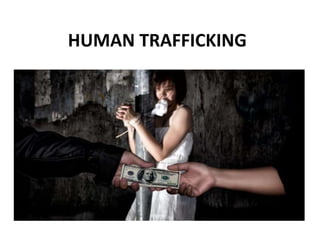
HUMAN TRAFFICKING
WHAT IS HUMAN TRAFFICKING?
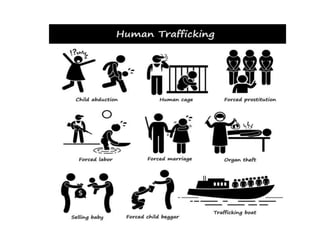
• It is the action or practice of illegally
transporting people from one country or area
to another, typically for the purposes of forced
labour or sexual exploitation.
• is the trade of humans for the purpose of
forced labour, sexual slavery, or commercial
sexual exploitation for the trafficker or others.
• This may involve:
– providing a spouse in the context of forced
marriage;
– the extraction of organs or tissues;
• Human trafficking can occur within a country
or across countries.
• Human trafficking is a crime against the
person because of the violation of the victim's
rights of movement through coercion and
because of their commercial exploitation.
• Human trafficking is the trade in people,
especially women and children.
• Trafficked people are held against their will
through acts of coercion, and forced to work
for, or provide services to the trafficker or
others.
• The work or services may include anything
from forced labour to commercial sexual
exploitation.
• The arrangement may be structured as a work
contract, but with no or low payment, or on
terms which are highly exploitative.
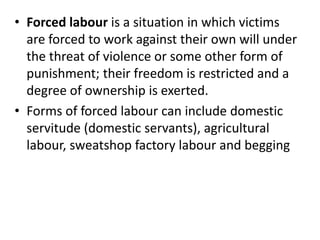
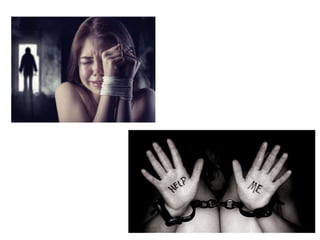
• Forced labour is a situation in which victims
are forced to work against their own will under
the threat of violence or some other form of
punishment; their freedom is restricted and a
degree of ownership is exerted.
• Forms of forced labour can include domestic
servitude (domestic servants), agricultural
labour, sweatshop factory labour and begging
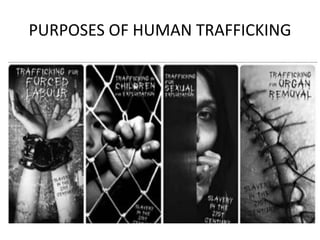
PURPOSES OF HUMAN TRAFFICKING
HOW TO RECOGNIZE HUMAN
TRAFFICKING
• Human trafficking is when a person is being controlled and
forced to do things against their will. It often involves coercion,
sexual exploitation and forced labour.
• If you think someone may be experiencing human trafficking,
there are some warning signs you can look for and things you
can do to offer them support. Some signs that a person may be
the victim of human trafficking include:
– being withdrawn (e.g. won’t make eye contact, won’t talk,
etc.)
– being controlled/treated badly (e.g. can’t leave the area, are
being yelled at, etc.)
– working long hours for little or no pay
– appearing unhealthy/malnourished
– being frightened of the authorities (e.g. police, immigration,
etc.) or the individual they’re with
– being with a much older individual
– not being allowed to carry/someone is controlling their
money, ID or other personal possessions
– showing signs of physical abuse (e.g. bruises, cuts, burns,
etc.)
– reacting in a way that seems rehearsed
– being dressed to look much older than they are/wearing
expensive things.
HOW TO REDUCE/STOP HUMAN
TRAFFICKING
• Educate yourself: it’s a good idea to learn more about human
trafficking, labour laws, dating violence and sexual exploitation and
abuse. Knowing the facts can equip you with the tools you need to
help someone more effectively by sharing information with them.
• Reach out: you can approach the person who you suspect is being
exploited and let them know you’re worried and there to help
them. Remind them that if they’re being mistreated, it’s not OK
and not their fault. Try to keep in mind that the person may not be
ready or able to leave the situation. Just by reaching out, you’re
showing them they’re not alone.
• Listen to their story: if the person is willing to share with you, try
to listen to their story without judgment. Try not to pressure them
for more details than they’re ready to share. You can say, “I know
you’re going through a lot, and I’m here to help if you need me.”
• Suggest a safety plan: let them know about safety plans and how
to make one. This could include a list of next steps they can take,
a safe place they can go and someone they can talk to in an
emergency. Remember that it may not be safe for them to carry a
physical safety plan, but talking about it could help them
remember next steps in an emergency situation.
• Go to a safe adult: if you think someone is being victimized by
human trafficking and is in danger, it’s important to involve a safe
adult. You — and the person if they’re comfortable — can contact
a parent/caregiver, teacher, social worker or other safe adult.
They can help you both stay safe and decide on next steps.
• Contact emergency services: if you or the person are in
immediate danger or injured, it’s important to contact the police
or the emergency services in your area. Remember, the person
experiencing the abuse may be fearful of the authorities. Let
them know why you’re contacting them and that you are
concerned for their safety.
END

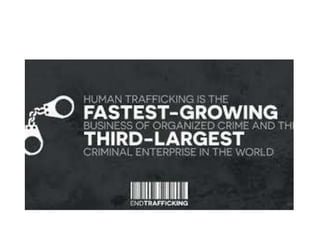
Human trafficking

  • 1.
  • 2.
    WHAT IS HUMANTRAFFICKING? • It is the action or practice of illegally transporting people from one country or area to another, typically for the purposes of forced labour or sexual exploitation. • is the trade of humans for the purpose of forced labour, sexual slavery, or commercial sexual exploitation for the trafficker or others.
  • 3.
    • This mayinvolve: – providing a spouse in the context of forced marriage; – the extraction of organs or tissues; • Human trafficking can occur within a country or across countries. • Human trafficking is a crime against the person because of the violation of the victim's rights of movement through coercion and because of their commercial exploitation. • Human trafficking is the trade in people, especially women and children.
  • 4.
    • Trafficked peopleare held against their will through acts of coercion, and forced to work for, or provide services to the trafficker or others. • The work or services may include anything from forced labour to commercial sexual exploitation. • The arrangement may be structured as a work contract, but with no or low payment, or on terms which are highly exploitative.
  • 5.
    • Forced labouris a situation in which victims are forced to work against their own will under the threat of violence or some other form of punishment; their freedom is restricted and a degree of ownership is exerted. • Forms of forced labour can include domestic servitude (domestic servants), agricultural labour, sweatshop factory labour and begging
  • 7.
    PURPOSES OF HUMANTRAFFICKING
  • 9.
    HOW TO RECOGNIZEHUMAN TRAFFICKING • Human trafficking is when a person is being controlled and forced to do things against their will. It often involves coercion, sexual exploitation and forced labour. • If you think someone may be experiencing human trafficking, there are some warning signs you can look for and things you can do to offer them support. Some signs that a person may be the victim of human trafficking include: – being withdrawn (e.g. won’t make eye contact, won’t talk, etc.) – being controlled/treated badly (e.g. can’t leave the area, are being yelled at, etc.) – working long hours for little or no pay
  • 10.
    – appearing unhealthy/malnourished –being frightened of the authorities (e.g. police, immigration, etc.) or the individual they’re with – being with a much older individual – not being allowed to carry/someone is controlling their money, ID or other personal possessions – showing signs of physical abuse (e.g. bruises, cuts, burns, etc.) – reacting in a way that seems rehearsed – being dressed to look much older than they are/wearing expensive things.
  • 12.
    HOW TO REDUCE/STOPHUMAN TRAFFICKING • Educate yourself: it’s a good idea to learn more about human trafficking, labour laws, dating violence and sexual exploitation and abuse. Knowing the facts can equip you with the tools you need to help someone more effectively by sharing information with them. • Reach out: you can approach the person who you suspect is being exploited and let them know you’re worried and there to help them. Remind them that if they’re being mistreated, it’s not OK and not their fault. Try to keep in mind that the person may not be ready or able to leave the situation. Just by reaching out, you’re showing them they’re not alone. • Listen to their story: if the person is willing to share with you, try to listen to their story without judgment. Try not to pressure them for more details than they’re ready to share. You can say, “I know you’re going through a lot, and I’m here to help if you need me.”
  • 13.
    • Suggest asafety plan: let them know about safety plans and how to make one. This could include a list of next steps they can take, a safe place they can go and someone they can talk to in an emergency. Remember that it may not be safe for them to carry a physical safety plan, but talking about it could help them remember next steps in an emergency situation. • Go to a safe adult: if you think someone is being victimized by human trafficking and is in danger, it’s important to involve a safe adult. You — and the person if they’re comfortable — can contact a parent/caregiver, teacher, social worker or other safe adult. They can help you both stay safe and decide on next steps. • Contact emergency services: if you or the person are in immediate danger or injured, it’s important to contact the police or the emergency services in your area. Remember, the person experiencing the abuse may be fearful of the authorities. Let them know why you’re contacting them and that you are concerned for their safety.
  • 14.