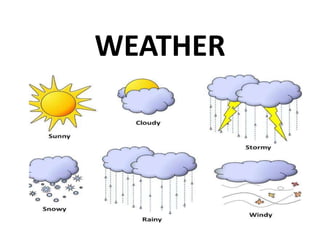
WEATHER
LESSON OBJECTIVES
1. Define the term weather;
2. Name the main elements of weather;
3. Describe the characteristics of each element of weather.
4. Briefly explain how each element contributes to a
description of the current weather;
5. Identify the instrument used to measure and record the
various elements of weather;
6. Identify the various units of measurement for each
instrument;
7. Read each weather instrument to gather information about
the elements of weather;
8. Draw simple outlines of each weather instrument;
9. Correctly label the main features of each weather
instrument.
• WHAT IS WEATHER?
– Weather is what is happening in the atmosphere at a
particular time.
– It is the condition of the atmosphere in a place at a
particular time.
• ELEMENTS OF WEATHER
– Temperature
– Precipitation (rainfall, snow, hail)
– Wind
– Cloudiness
– humidity
– Atmospheric pressure
– Sunshine
TEMPERATURE
• Temperature is how hot or cold the air is at a
place at a certain time.
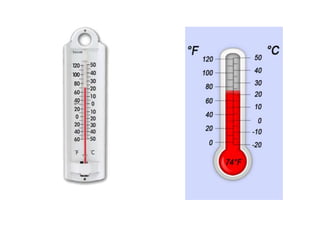
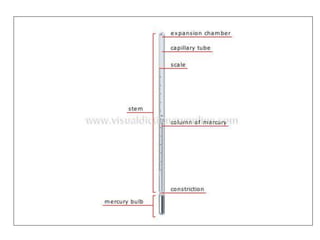
• Thermometers are used to measure
temperature.
• Temperature is measured in degrees Celsius or
Fahrenheit.
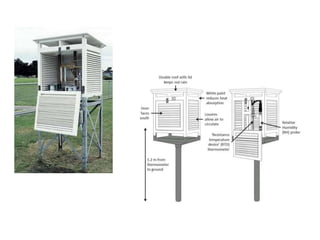
• At weather stations thermometers are usually
kept in a Stevenson Screen, a wooden box with
louvered sides.
HOW IS THE THERMOMETER USED?
• The Stevenson Screen, in which the
thermometer is placed, is painted white, and
stands about 1.5 meter above the ground. The
louvers/slits on the box allow the air to pass
freely in and out, but keep out the direct rays of
the sun. It is placed in an open space, away from
trees and buildings.
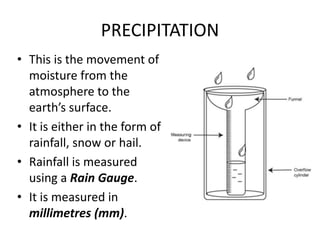
PRECIPITATION
• This is the movement of
moisture from the
atmosphere to the
earth’s surface.
• It is either in the form of
rainfall, snow or hail.
• Rainfall is measured
using a Rain Gauge.
• It is measured in
millimetres (mm).
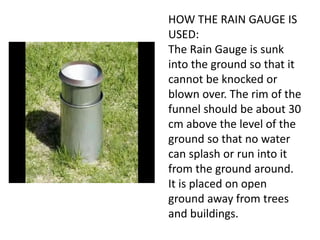
HOW THE RAIN GAUGE IS
USED:
The Rain Gauge is sunk
into the ground so that it
cannot be knocked or
blown over. The rim of the
funnel should be about 30
cm above the level of the
ground so that no water
can splash or run into it
from the ground around.
It is placed on open
ground away from trees
and buildings.
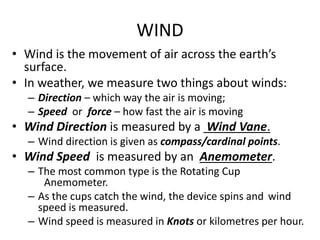
WIND
• Wind is the movement of air across the earth’s
surface.
• In weather, we measure two things about winds:
– Direction – which way the air is moving;
– Speed or force – how fast the air is moving
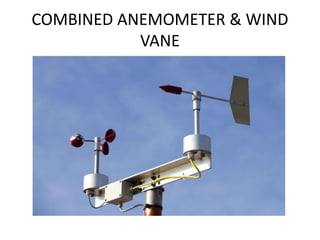
• Wind Direction is measured by a Wind Vane.
– Wind direction is given as compass/cardinal points.
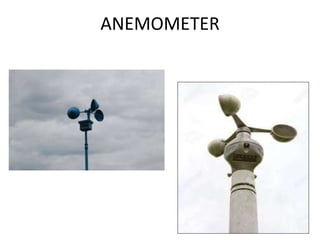
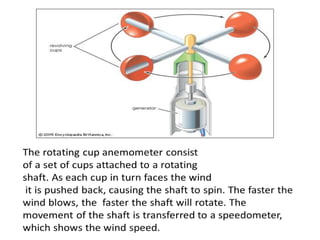
• Wind Speed is measured by an Anemometer.
– The most common type is the Rotating Cup
Anemometer.
– As the cups catch the wind, the device spins and wind
speed is measured.
– Wind speed is measured in Knots or kilometres per hour.
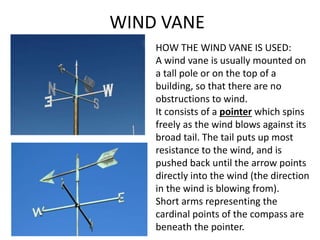
WIND VANE
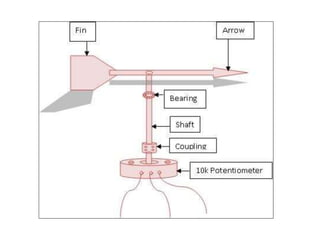
HOW THE WIND VANE IS USED:
A wind vane is usually mounted on
a tall pole or on the top of a
building, so that there are no
obstructions to wind.
It consists of a pointer which spins
freely as the wind blows against its
broad tail. The tail puts up most
resistance to the wind, and is
pushed back until the arrow points
directly into the wind (the direction
in the wind is blowing from).
Short arms representing the
cardinal points of the compass are
beneath the pointer.
ANEMOMETER
COMBINED ANEMOMETER & WIND
VANE
HUMIDITY
• This is the water content of the atmosphere.
Therefore humidity is a measure of the amount of
water vapour in the air.
• The relative humidity is the extent to which the air
is saturated.
– If the relative humidity is 95, this means that the air is
holding 95% of the water vapour which it is capable of
absorbing before becoming saturated.
• Relative Humidity, is measured by the hygrometer.
– One type of hygrometer is the wet and dry bulb
thermometer (or wet and dry bulb psychrometers).
Hygrometers
The Wet and Dry Bulb Thermometer.
• The wet and dry bulb
thermometer consists of two
simple thermometers.
• The wet-bulb thermometer is
surrounded with an absorbent
cloth which dips into water so
that the bulb is kept
permanently wet.
• When the humidity is low,
water evaporates from the
cloth around the bulb, so the
temperature falls.
• To find the relative humidity it
is necessary to find the
difference in temperature
reading between the two
thermometers.
ATMOSPHERIC PRESSURE
• Atmospheric pressure is the weight of the air
pressing down on the earth’s surface.
• Pressure is measured in millibars (mb), using
instruments called barometers.
• The average pressure at sea level is about 1,013
mb.
– When pressure is much above this, there is said to be
high pressure; when it is much below this, there is low
pressure.
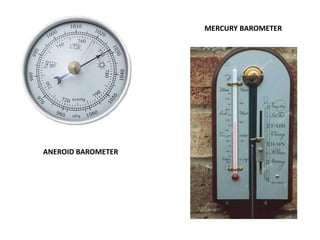
• There are 2 types of barometer:
– Mercury barometer
– Aneroid barometer
MERCURY BAROMETER
ANEROID BAROMETER
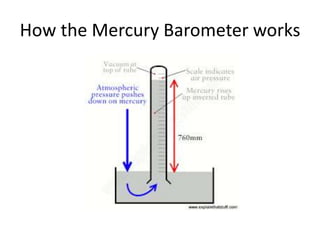
How the Mercury Barometer works
SUNSHINE
• Sunshine is measured in hours and minutes
per day for which the sun is visible.
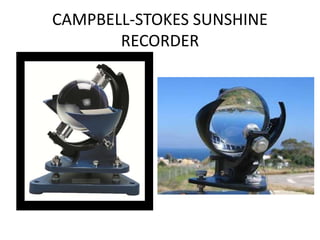
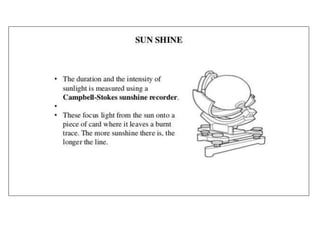
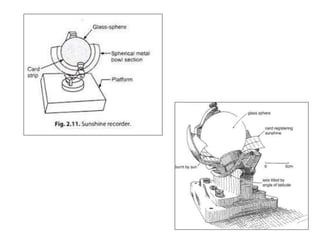
• It is measured by a Campbell-Stokes sunshine
recorder.
– This consists of a small glass ball mounted on a
frame, which concentrates the rays of the sun
upon a special card that is placed on the frame
below the ball.
CAMPBELL-STOKES SUNSHINE
RECORDER
CLOUDINESS
• With this meteorologists need to know two things
about clouds:
(i) The amount of cloud
(ii) The type of cloud
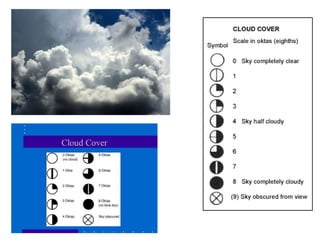
• The amount of cloud is measured in oktas [Greek
word meaning one-eighth (1/8)].
– The meteorologist has to estimate how many eights of
the sky are covered by cloud at a given time.
– Total cloud cover is 8 oktas; 0 oktas means clear sky.
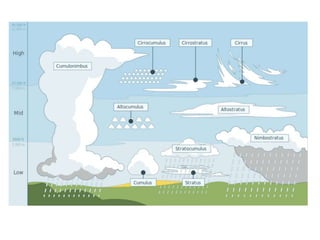
• Also clouds are divided into 10 main types on the
basis of their height above ground level and their
shape.
REVIEW ACTIVITY
• Describe how each of the following weather
instruments used to measure their respective
element:
– Wind vane
– Anemometer
– Rain gauge
– Campbell-Stokes Sunshine Recorder.

Weather

  • 1.
  • 2.
    LESSON OBJECTIVES 1. Definethe term weather; 2. Name the main elements of weather; 3. Describe the characteristics of each element of weather. 4. Briefly explain how each element contributes to a description of the current weather; 5. Identify the instrument used to measure and record the various elements of weather; 6. Identify the various units of measurement for each instrument; 7. Read each weather instrument to gather information about the elements of weather; 8. Draw simple outlines of each weather instrument; 9. Correctly label the main features of each weather instrument.
  • 3.
    • WHAT ISWEATHER? – Weather is what is happening in the atmosphere at a particular time. – It is the condition of the atmosphere in a place at a particular time. • ELEMENTS OF WEATHER – Temperature – Precipitation (rainfall, snow, hail) – Wind – Cloudiness – humidity – Atmospheric pressure – Sunshine
  • 4.
    TEMPERATURE • Temperature ishow hot or cold the air is at a place at a certain time. • Thermometers are used to measure temperature. • Temperature is measured in degrees Celsius or Fahrenheit. • At weather stations thermometers are usually kept in a Stevenson Screen, a wooden box with louvered sides.
  • 6.
    HOW IS THETHERMOMETER USED? • The Stevenson Screen, in which the thermometer is placed, is painted white, and stands about 1.5 meter above the ground. The louvers/slits on the box allow the air to pass freely in and out, but keep out the direct rays of the sun. It is placed in an open space, away from trees and buildings.
  • 9.
    PRECIPITATION • This isthe movement of moisture from the atmosphere to the earth’s surface. • It is either in the form of rainfall, snow or hail. • Rainfall is measured using a Rain Gauge. • It is measured in millimetres (mm).
  • 10.
    HOW THE RAINGAUGE IS USED: The Rain Gauge is sunk into the ground so that it cannot be knocked or blown over. The rim of the funnel should be about 30 cm above the level of the ground so that no water can splash or run into it from the ground around. It is placed on open ground away from trees and buildings.
  • 11.
    WIND • Wind isthe movement of air across the earth’s surface. • In weather, we measure two things about winds: – Direction – which way the air is moving; – Speed or force – how fast the air is moving • Wind Direction is measured by a Wind Vane. – Wind direction is given as compass/cardinal points. • Wind Speed is measured by an Anemometer. – The most common type is the Rotating Cup Anemometer. – As the cups catch the wind, the device spins and wind speed is measured. – Wind speed is measured in Knots or kilometres per hour.
  • 12.
    WIND VANE HOW THEWIND VANE IS USED: A wind vane is usually mounted on a tall pole or on the top of a building, so that there are no obstructions to wind. It consists of a pointer which spins freely as the wind blows against its broad tail. The tail puts up most resistance to the wind, and is pushed back until the arrow points directly into the wind (the direction in the wind is blowing from). Short arms representing the cardinal points of the compass are beneath the pointer.
  • 14.
  • 16.
  • 17.
    HUMIDITY • This isthe water content of the atmosphere. Therefore humidity is a measure of the amount of water vapour in the air. • The relative humidity is the extent to which the air is saturated. – If the relative humidity is 95, this means that the air is holding 95% of the water vapour which it is capable of absorbing before becoming saturated. • Relative Humidity, is measured by the hygrometer. – One type of hygrometer is the wet and dry bulb thermometer (or wet and dry bulb psychrometers).
  • 18.
    Hygrometers The Wet andDry Bulb Thermometer.
  • 19.
    • The wetand dry bulb thermometer consists of two simple thermometers. • The wet-bulb thermometer is surrounded with an absorbent cloth which dips into water so that the bulb is kept permanently wet. • When the humidity is low, water evaporates from the cloth around the bulb, so the temperature falls. • To find the relative humidity it is necessary to find the difference in temperature reading between the two thermometers.
  • 20.
    ATMOSPHERIC PRESSURE • Atmosphericpressure is the weight of the air pressing down on the earth’s surface. • Pressure is measured in millibars (mb), using instruments called barometers. • The average pressure at sea level is about 1,013 mb. – When pressure is much above this, there is said to be high pressure; when it is much below this, there is low pressure. • There are 2 types of barometer: – Mercury barometer – Aneroid barometer
  • 21.
  • 22.
    How the MercuryBarometer works
  • 23.
    SUNSHINE • Sunshine ismeasured in hours and minutes per day for which the sun is visible. • It is measured by a Campbell-Stokes sunshine recorder. – This consists of a small glass ball mounted on a frame, which concentrates the rays of the sun upon a special card that is placed on the frame below the ball.
  • 24.
  • 27.
    CLOUDINESS • With thismeteorologists need to know two things about clouds: (i) The amount of cloud (ii) The type of cloud • The amount of cloud is measured in oktas [Greek word meaning one-eighth (1/8)]. – The meteorologist has to estimate how many eights of the sky are covered by cloud at a given time. – Total cloud cover is 8 oktas; 0 oktas means clear sky. • Also clouds are divided into 10 main types on the basis of their height above ground level and their shape.
  • 30.
    REVIEW ACTIVITY • Describehow each of the following weather instruments used to measure their respective element: – Wind vane – Anemometer – Rain gauge – Campbell-Stokes Sunshine Recorder.