Enhancing Excellence in Assessment:
Institutional Effectiveness and
Learning Analytics

SUNY Council on Assessment
Learning Analytics Task Group
October 15, 2013
FACT2 and task groups
FACT2:
• “ a well-established venue to foster
collaboration and consensus within a highly
diverse university community.
• “FACT2governance includes representatives
from faculty, librarians, and IT across
individual campuses from all Carnegie
sectors.”
http://fact.suny.edu
FACT2 and task groups
Task groups
• Initiatives developed collaboratively with the
SUNY Provost and the FACT Advisory Council
• 2010-2012 projects:
–
–
–

Learning analytics
E-publishing
Innovative learning space inventory

• 2013 projects:
–
–
–

Learning analytics
Online Accessibility
Experiential Education
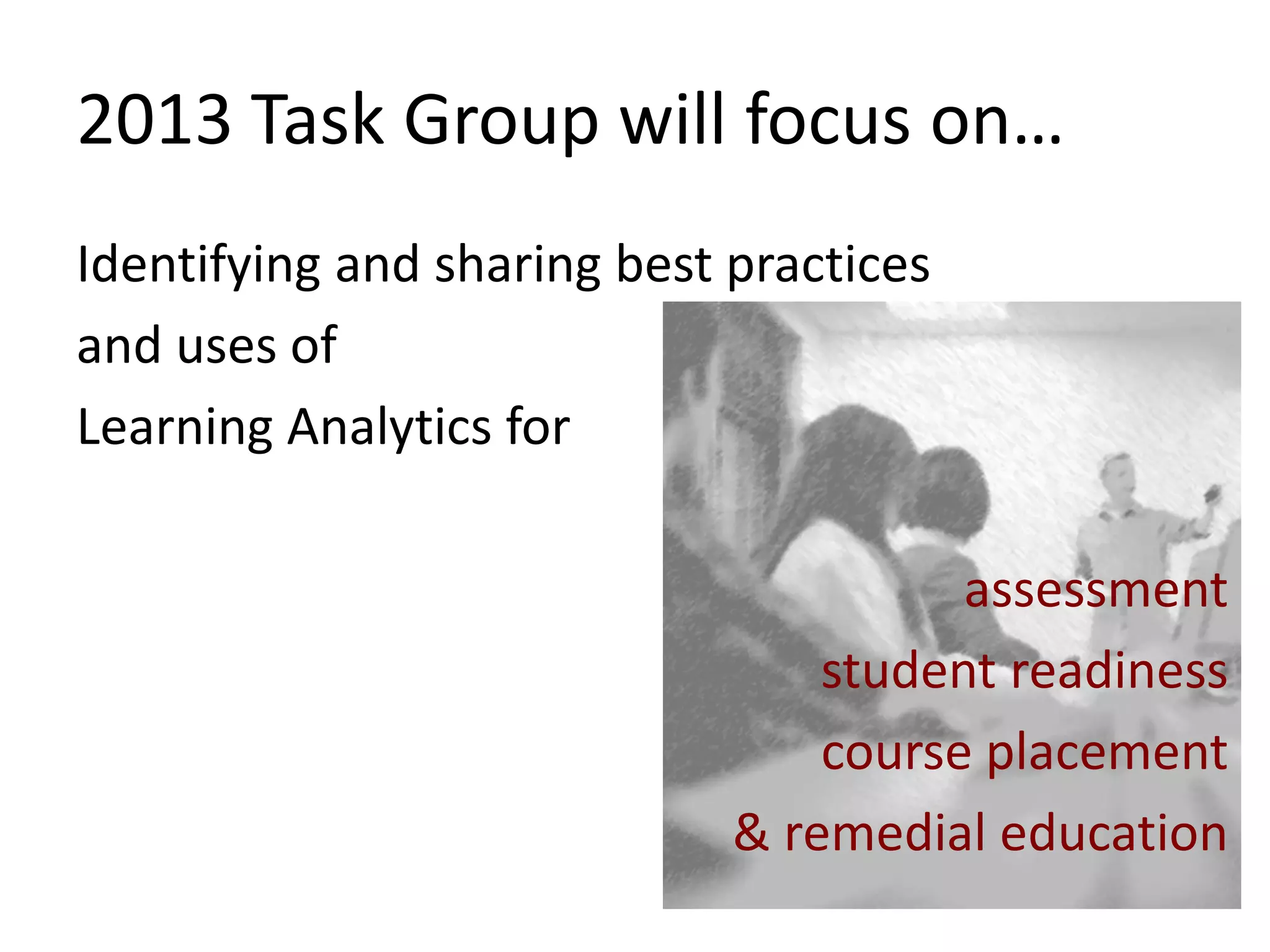
2013 Task Group will focus on…
Identifying and sharing best practices
and uses of
Learning Analytics for
assessment
student readiness
course placement
& remedial education
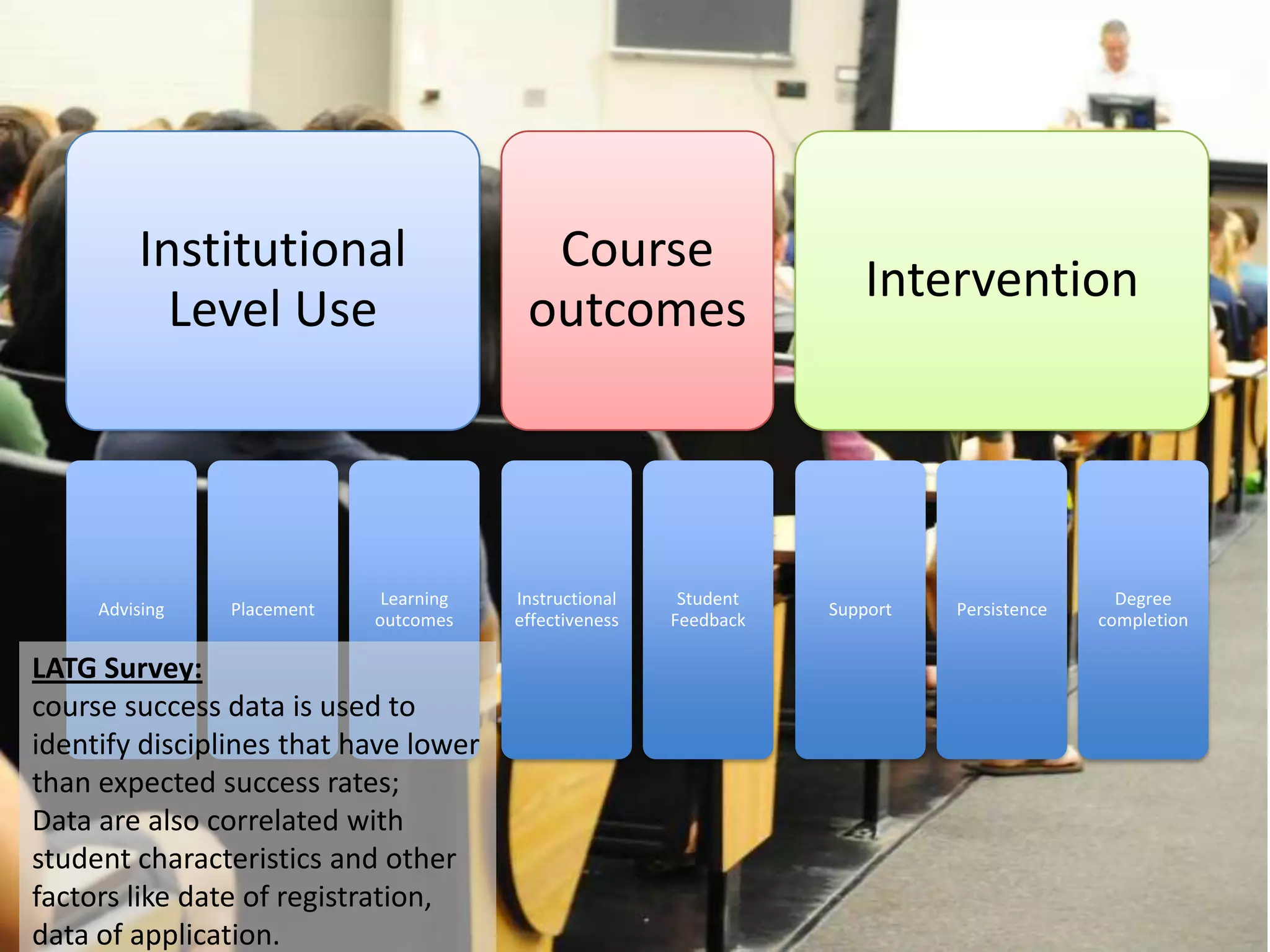
Institutional
Level Use

Advising

Placement

Learning
outcomes

LATG Survey:
course success data is used to
identify disciplines that have lower
than expected success rates;
Data are also correlated with
student characteristics and other
factors like date of registration,
data of application.

Course
outcomes

Instructional
effectiveness

Student
Feedback

Intervention

Support

Persistence

Degree
completion
Institutional Level
a) identify students at risk of leaving the college
without a degree from the college [54%]
b) identify students who are in need of
developmental courses [46%]
c) place students in appropriate credit courses [54%]
d) evaluate student progress on course objectives
[38%]
e) predict student performance in courses [15%]
f) advise students on course selection [54%]
FACT2 Learning Analytics Task Group, CIT May 2013
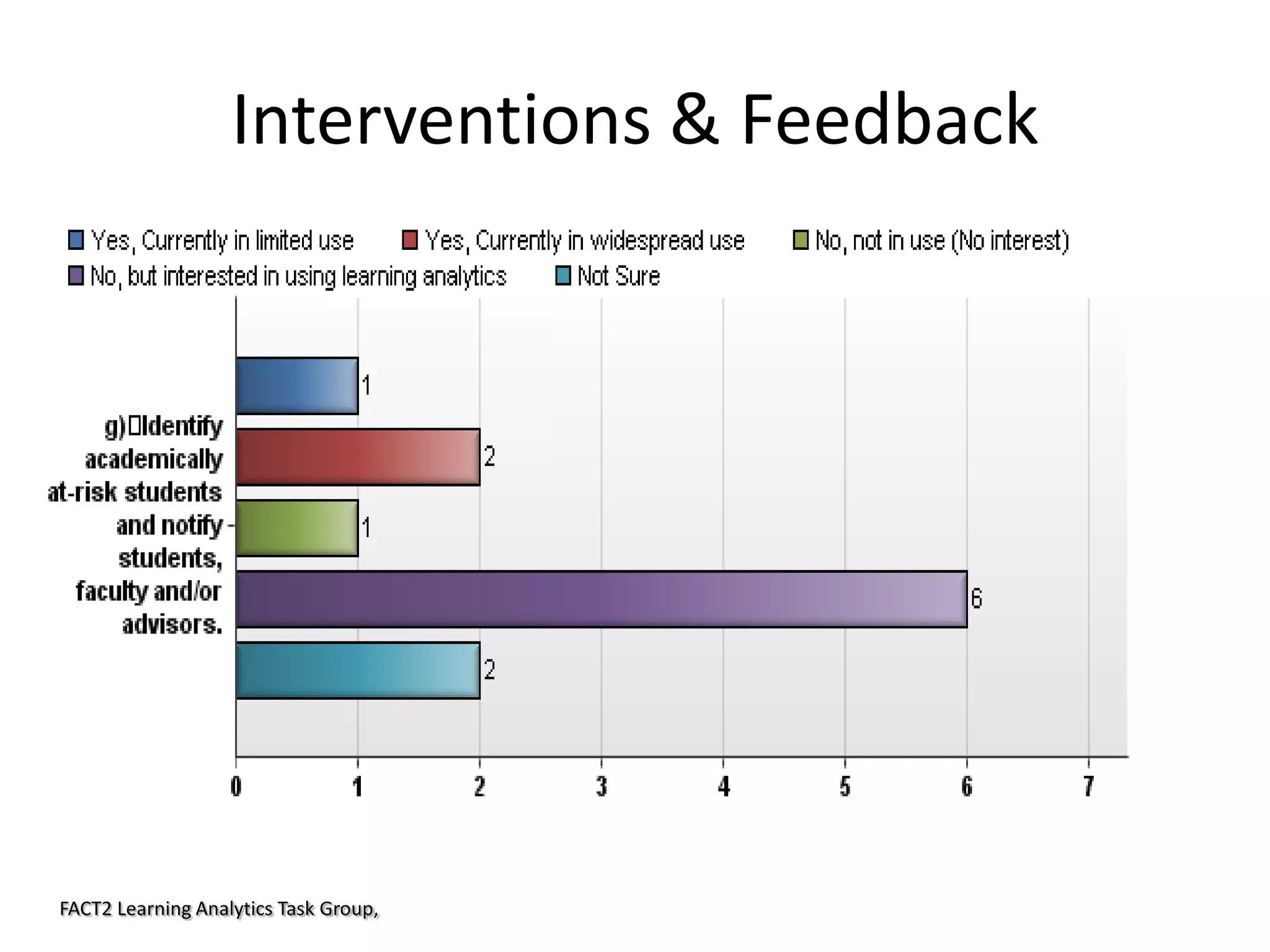
Interventions & Feedback

FACT2 Learning Analytics Task Group,
Learning Analytics - Working Definition
Learning analytics can be used to…
– diagnose student needs,
– provide feedback to the student, faculty,
instructional developer, and advisor,
– combine with data from other learning
systems to generate new insights about
learning and instruction.
Learning Analytics - Working Definition
• Learning analytics uses software that collects and
analyzes multiple data sets related to the process
of learning to PREDICT and IMPACT student
success.
• This includes data collected in
–
–
–
–

blended and online learning environments,
online portals,
enrollment data,
and other emergent resources connected to the
teaching and learning experience.
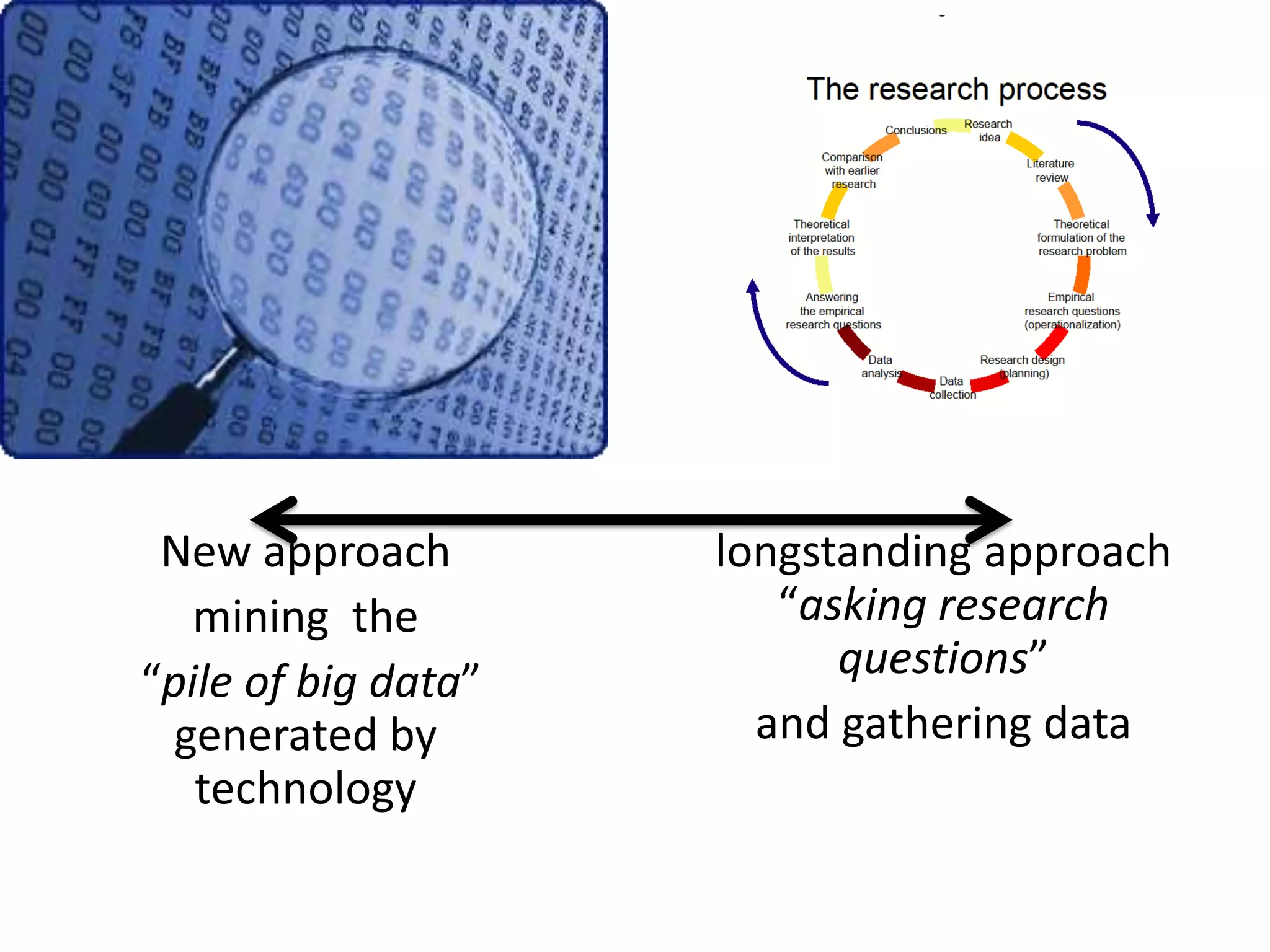
New approach
mining the
“pile of big data”
generated by
technology

longstanding approach
“asking research
questions”
and gathering data
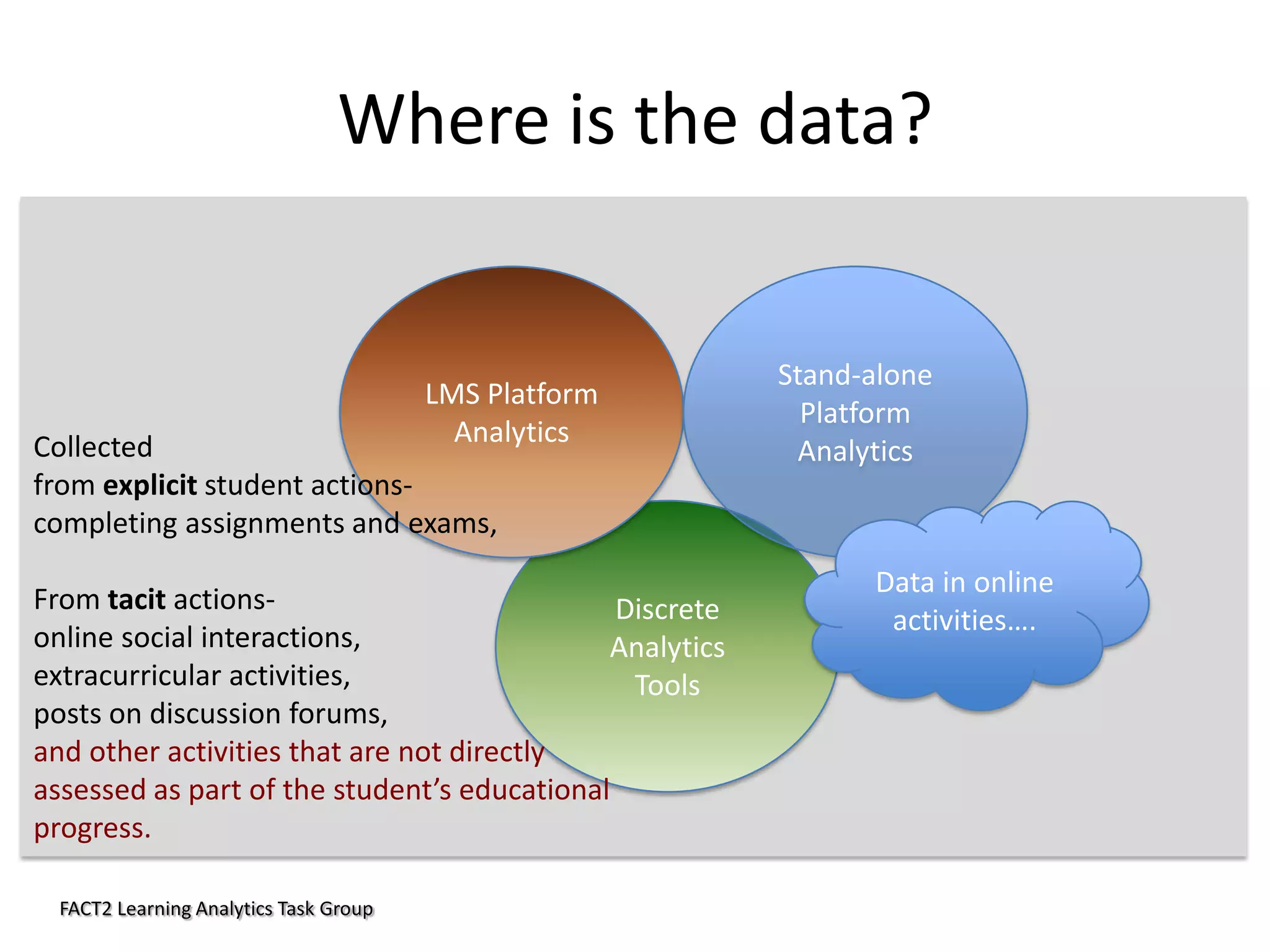
Where is the data?

LMS Platform
Analytics

Collected
from explicit student actionscompleting assignments and exams,

From tacit actionsDiscrete
online social interactions,
Analytics
extracurricular activities,
Tools
posts on discussion forums,
and other activities that are not directly
assessed as part of the student’s educational
progress.
FACT2 Learning Analytics Task Group

Stand-alone
Platform
Analytics

Data in online
activities….
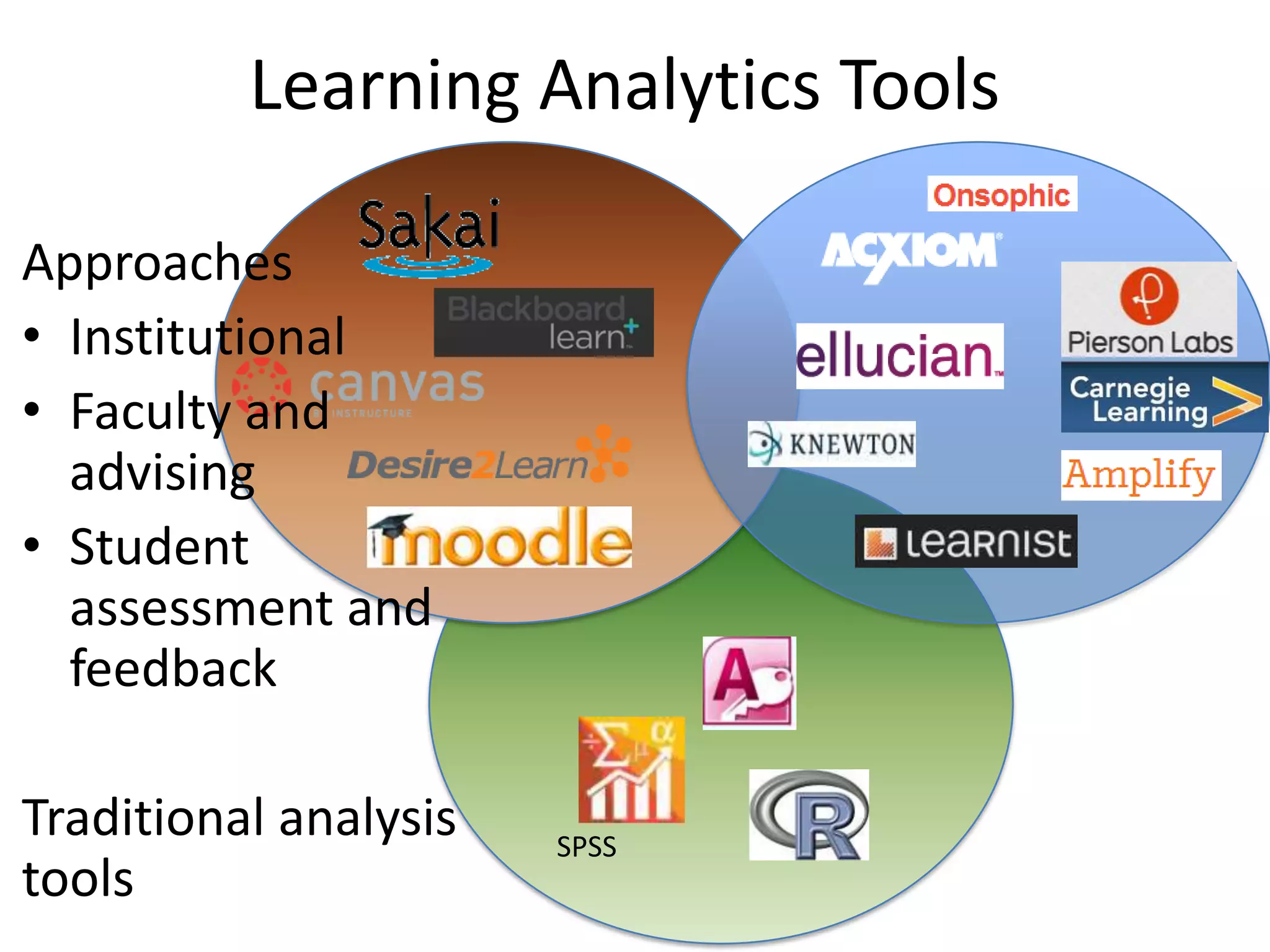
Learning Analytics Tools
Approaches
• Institutional
• Faculty and
advising
• Student
assessment and
feedback
Traditional analysis
tools

SPSS
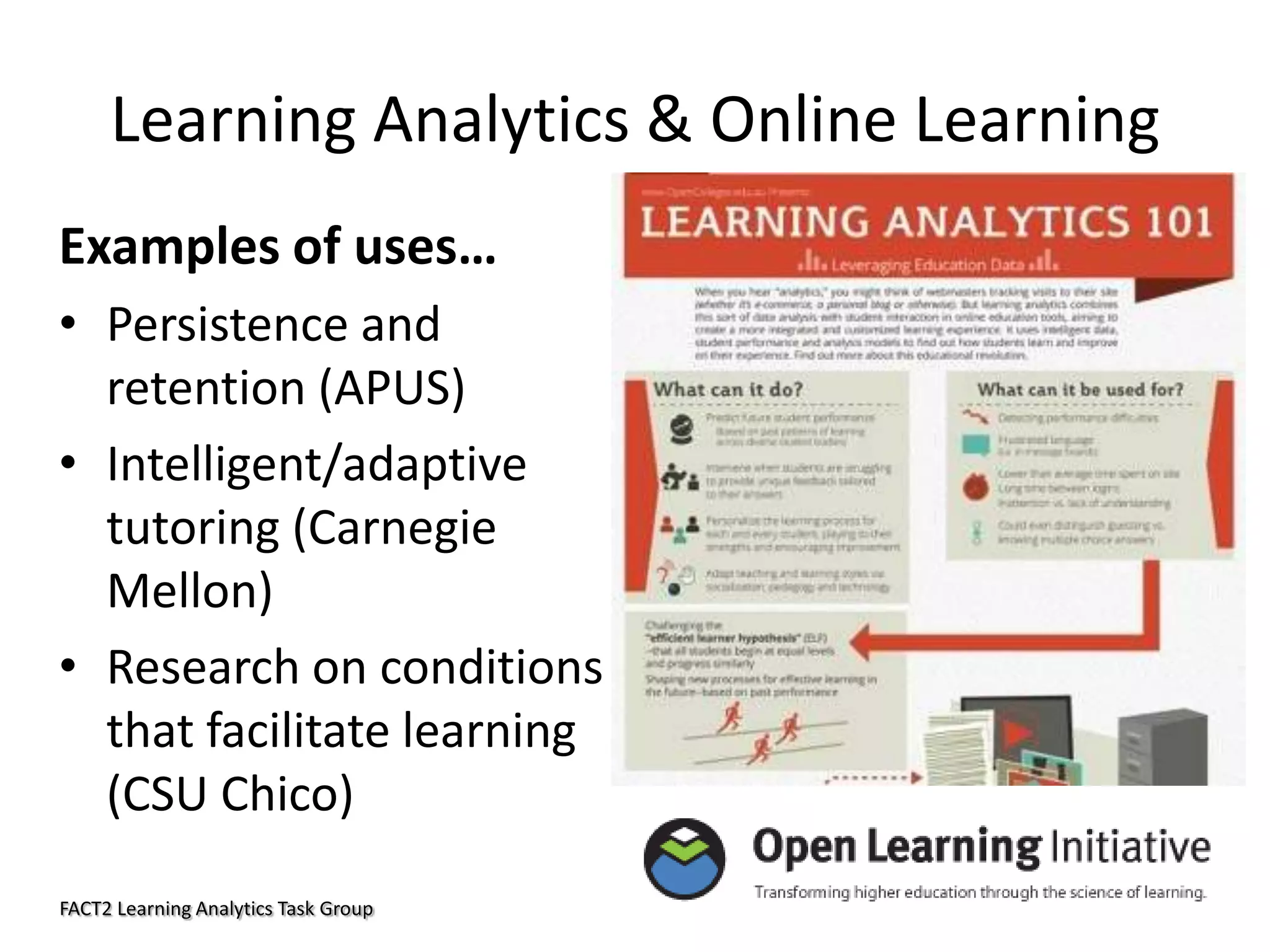
Learning Analytics & Online Learning
Examples of uses…
• Persistence and
retention (APUS)
• Intelligent/adaptive
tutoring (Carnegie
Mellon)
• Research on conditions
that facilitate learning
(CSU Chico)
FACT2 Learning Analytics Task Group
Use Learning analytics to ….
Provide automated feedback to students
Customize course delivery to student learning
styles.
Quizzes or Learning Sequences
in Blackboard or Angel
Use Learning analytics to ….
Provide individualized learning paths to
students based on pre-entry conditions.
Provide adaptive learning paths to students
based on performance in course.
Learning analytics enables tailoring of
responses, such as through adapting
instructional content, intervening with at-risk
students, and providing feedback.
Use Learning analytics to ….
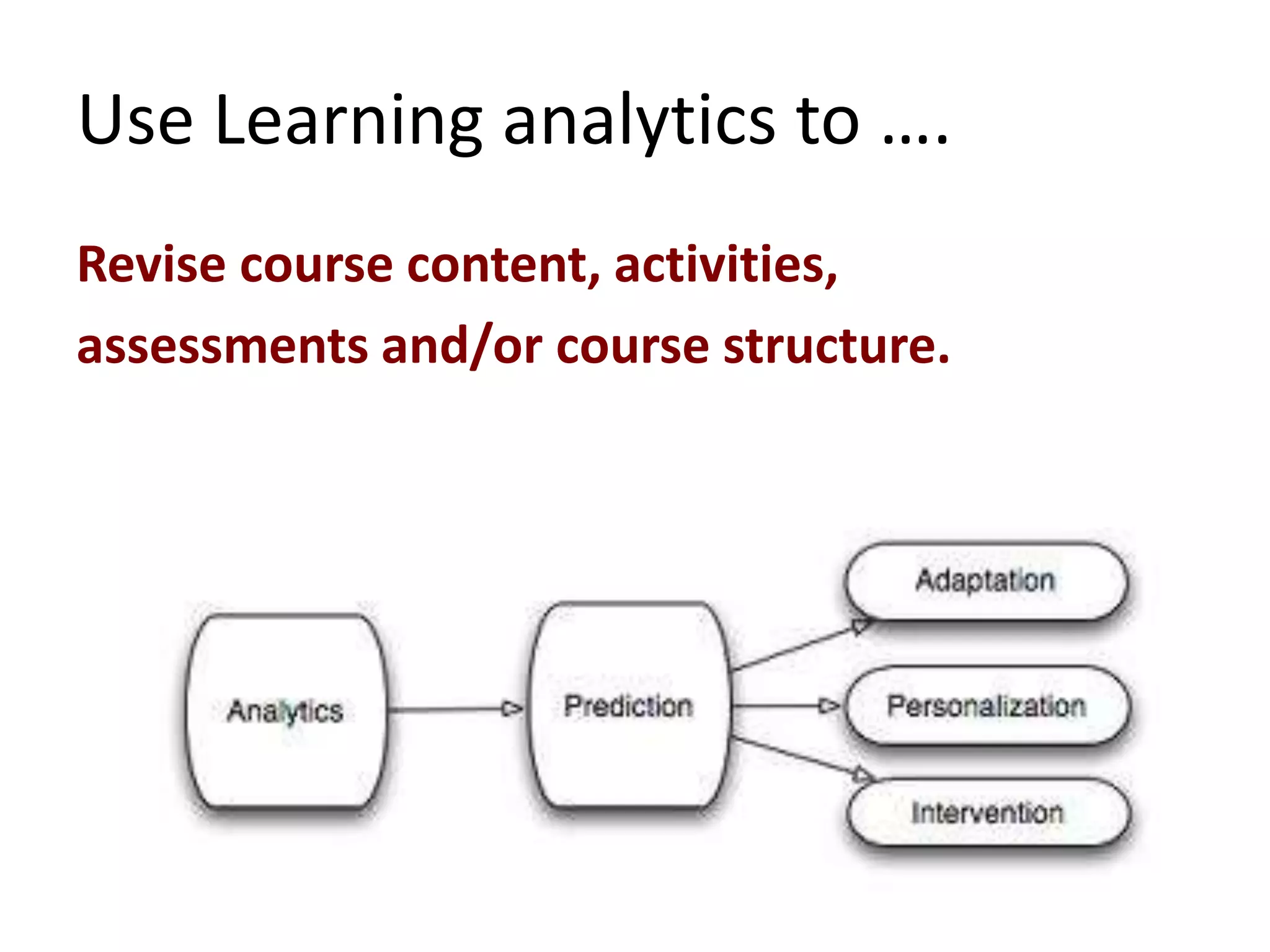
Revise course content, activities,
assessments and/or course structure.
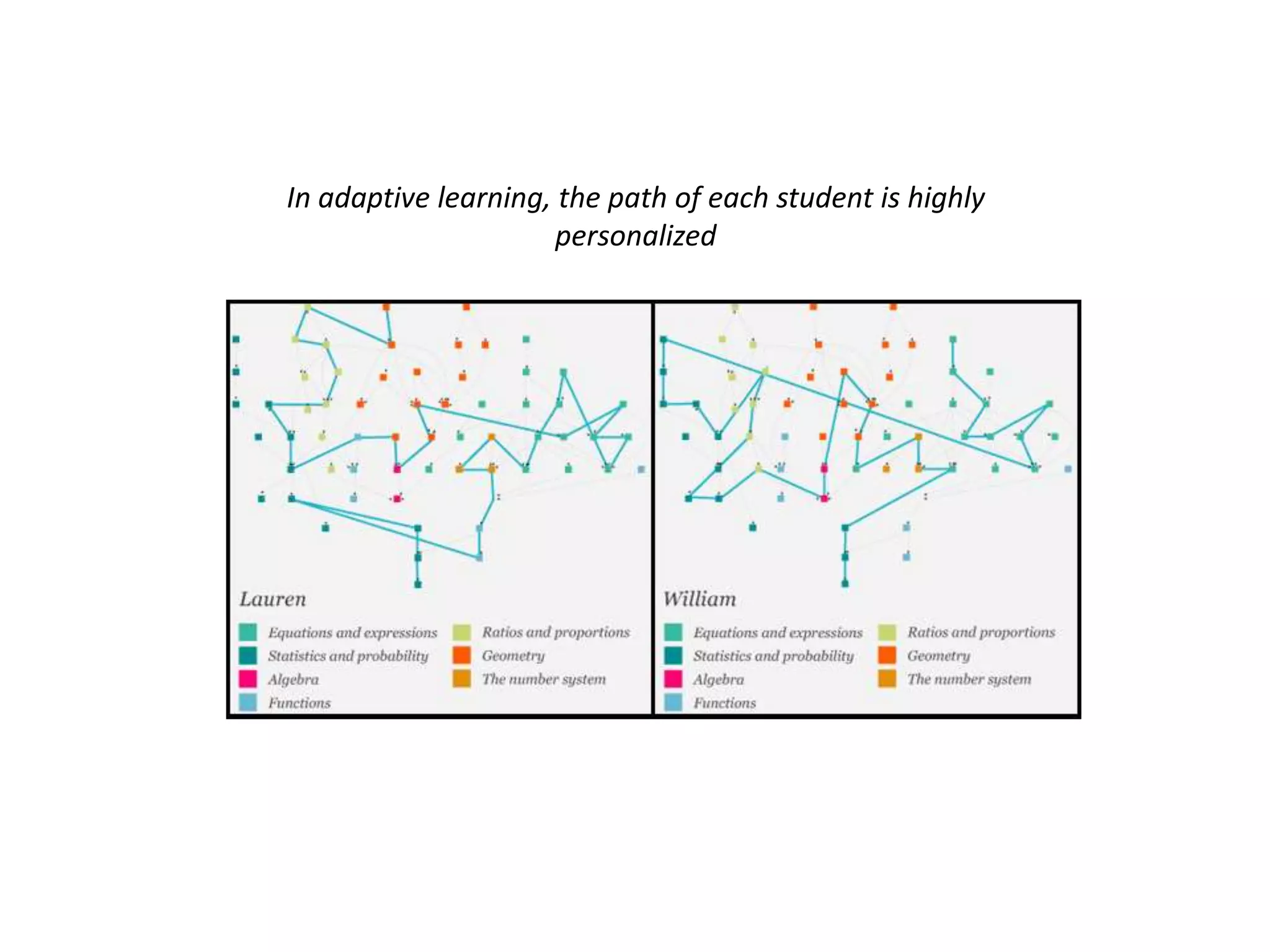
In adaptive learning, the path of each student is highly
personalized
ASSESSMENT AND LEARNING
ANALYTICS
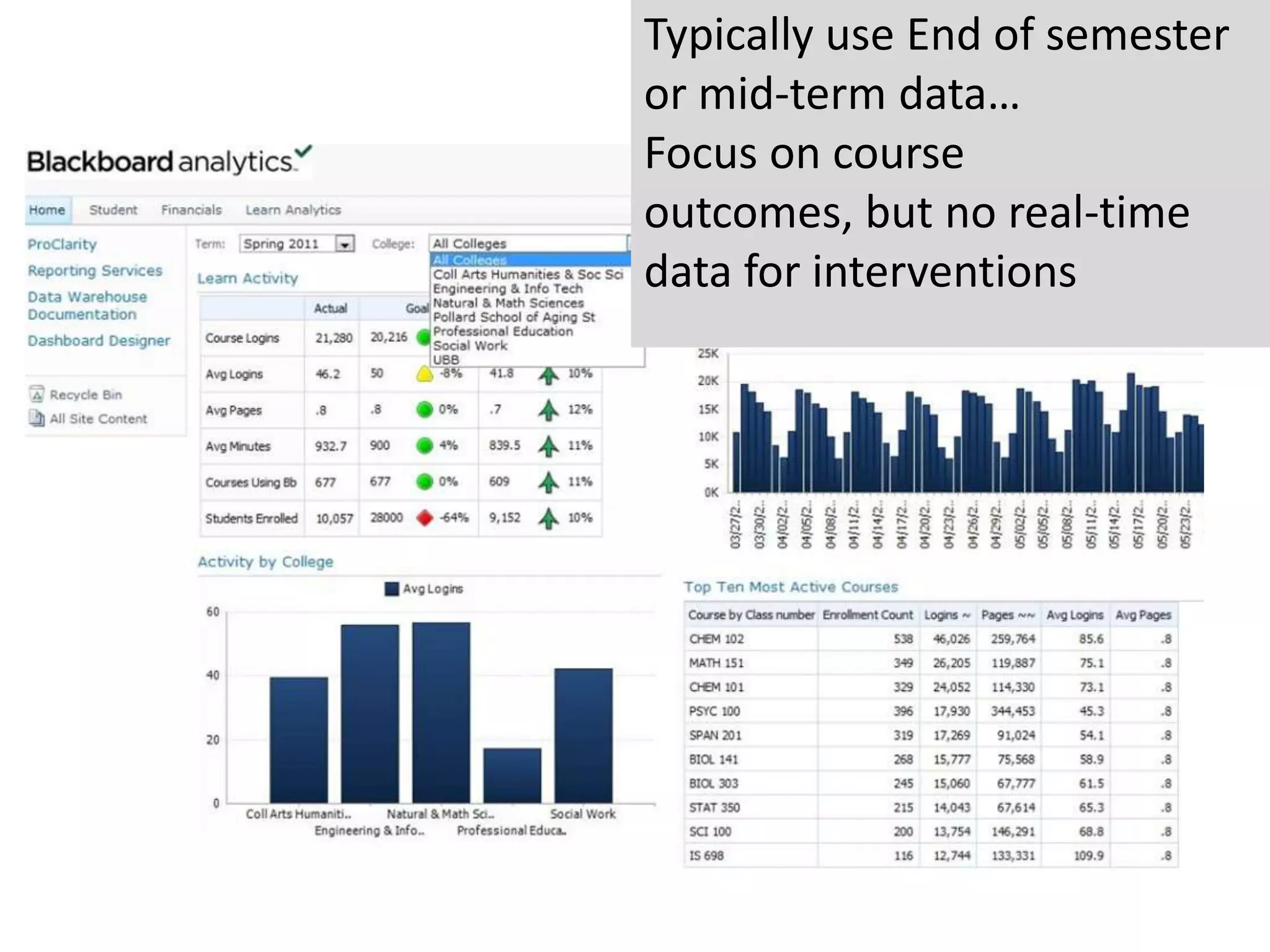
Typically use End of semester
or mid-term data…
Focus on course
outcomes, but no real-time
data for interventions
Learning analytics in

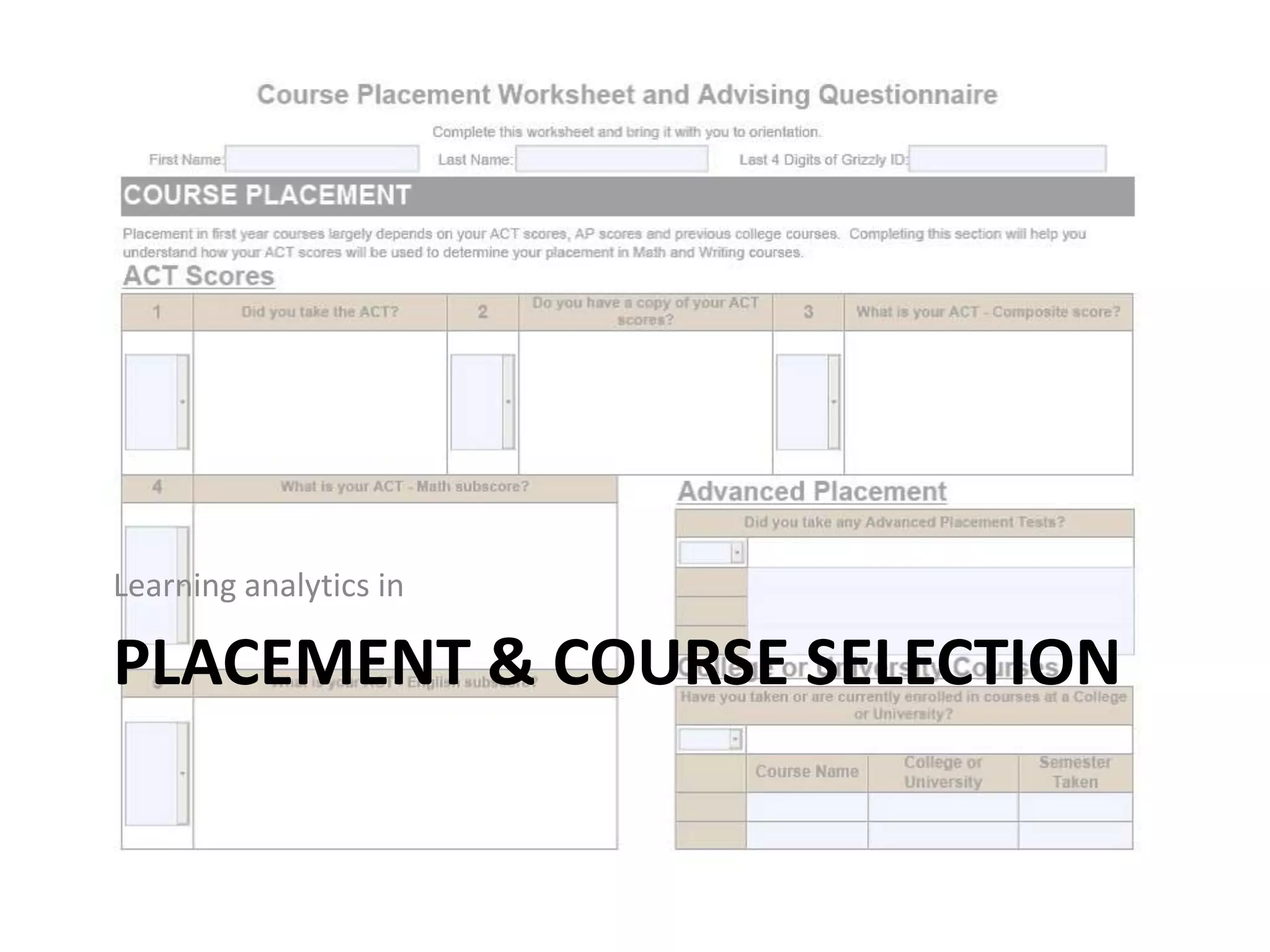
PLACEMENT & COURSE SELECTION
Predictive Analytics: Building Models
Placement for success and
completion..
– which students should be steered
toward which courses? Which
programs?

Can advising process leverage data
on student performance?
– If so, what are the best predictors
of performance?
Predictive Analytics: Building Models
• Can we identify
characteristics of a
successful outcome?
• an unsuccessful
outcome?

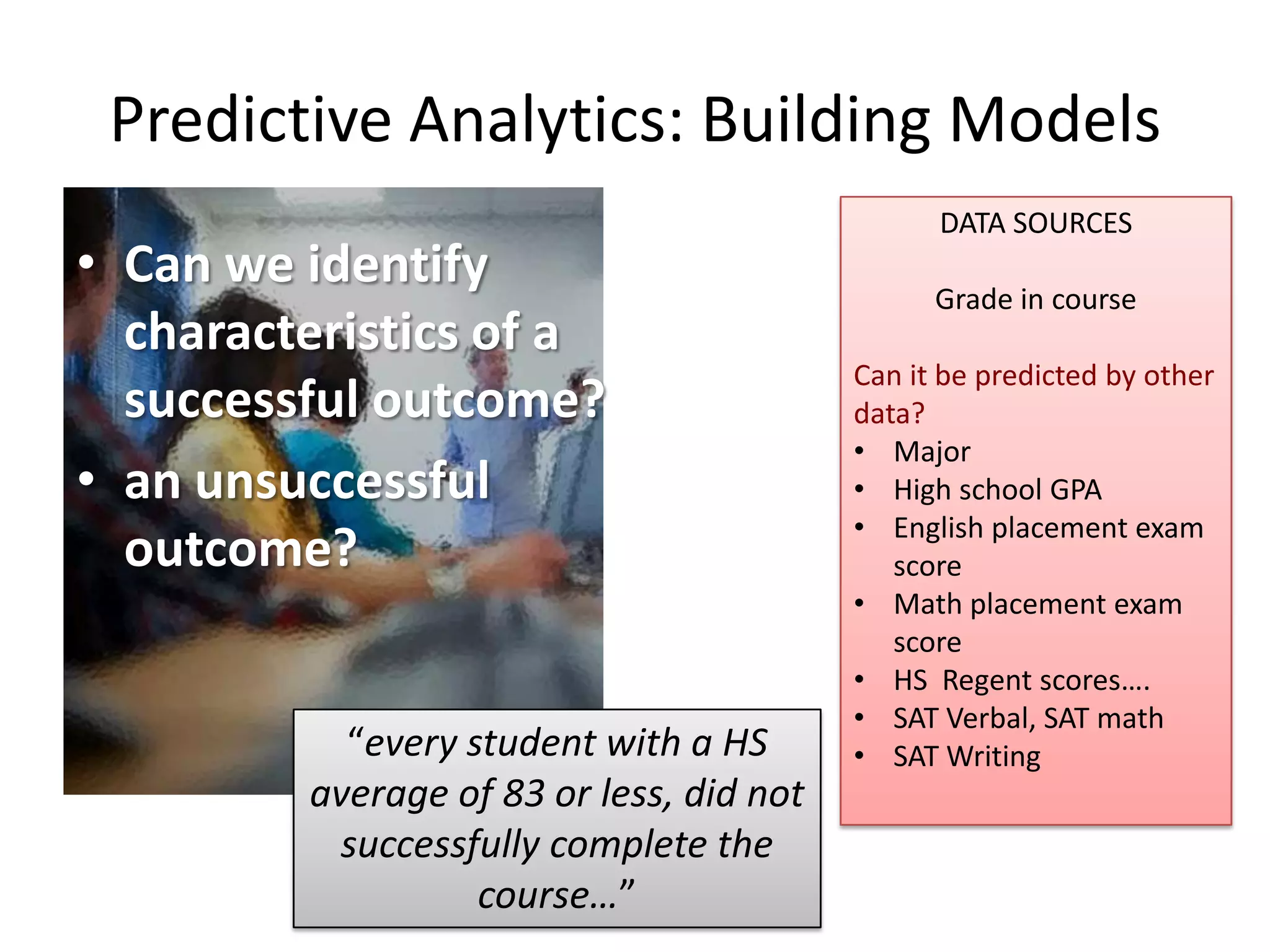
“every student with a HS
average of 83 or less, did not
successfully complete the
course…”

DATA SOURCES
Grade in course
Can it be predicted by other
data?
• Major
• High school GPA
• English placement exam
score
• Math placement exam
score
• HS Regent scores….
• SAT Verbal, SAT math
• SAT Writing
PILOTING APPROACHES
FACT2 Learning Analytics Task Group,
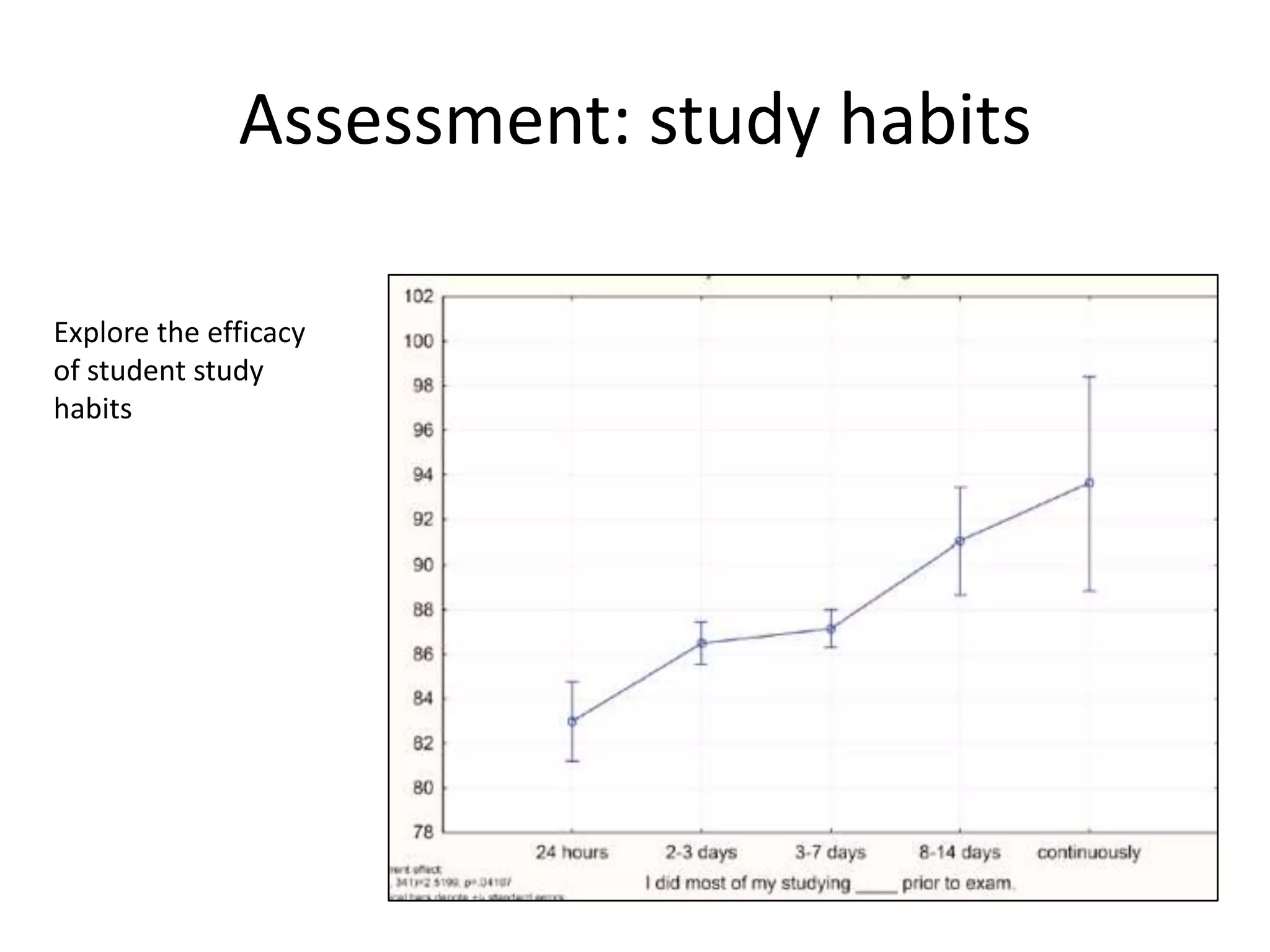
Assessment: study habits
Explore the efficacy
of student study
habits
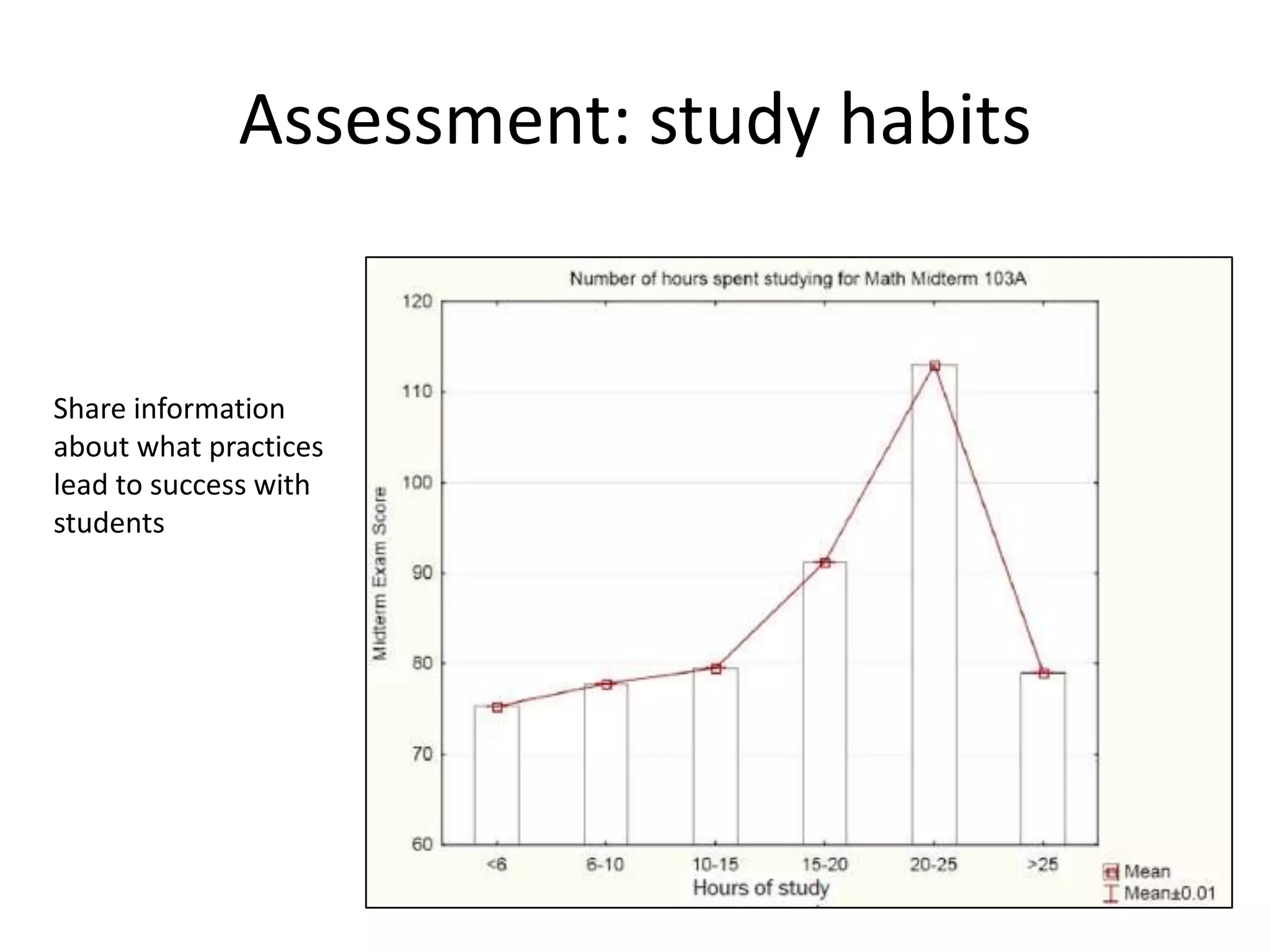
Assessment: study habits

Share information
about what practices
lead to success with
students
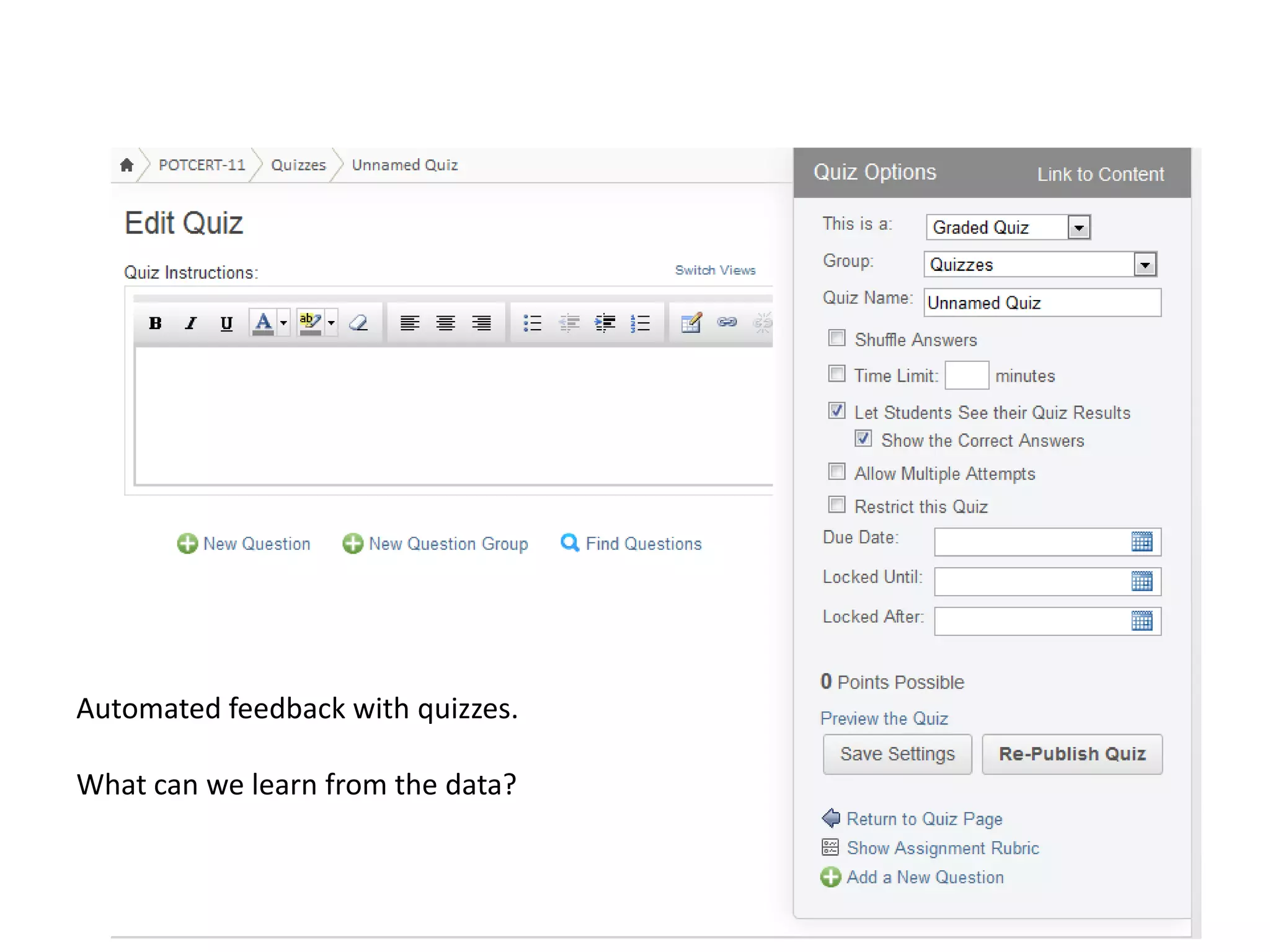
Automated feedback with quizzes.
What can we learn from the data?
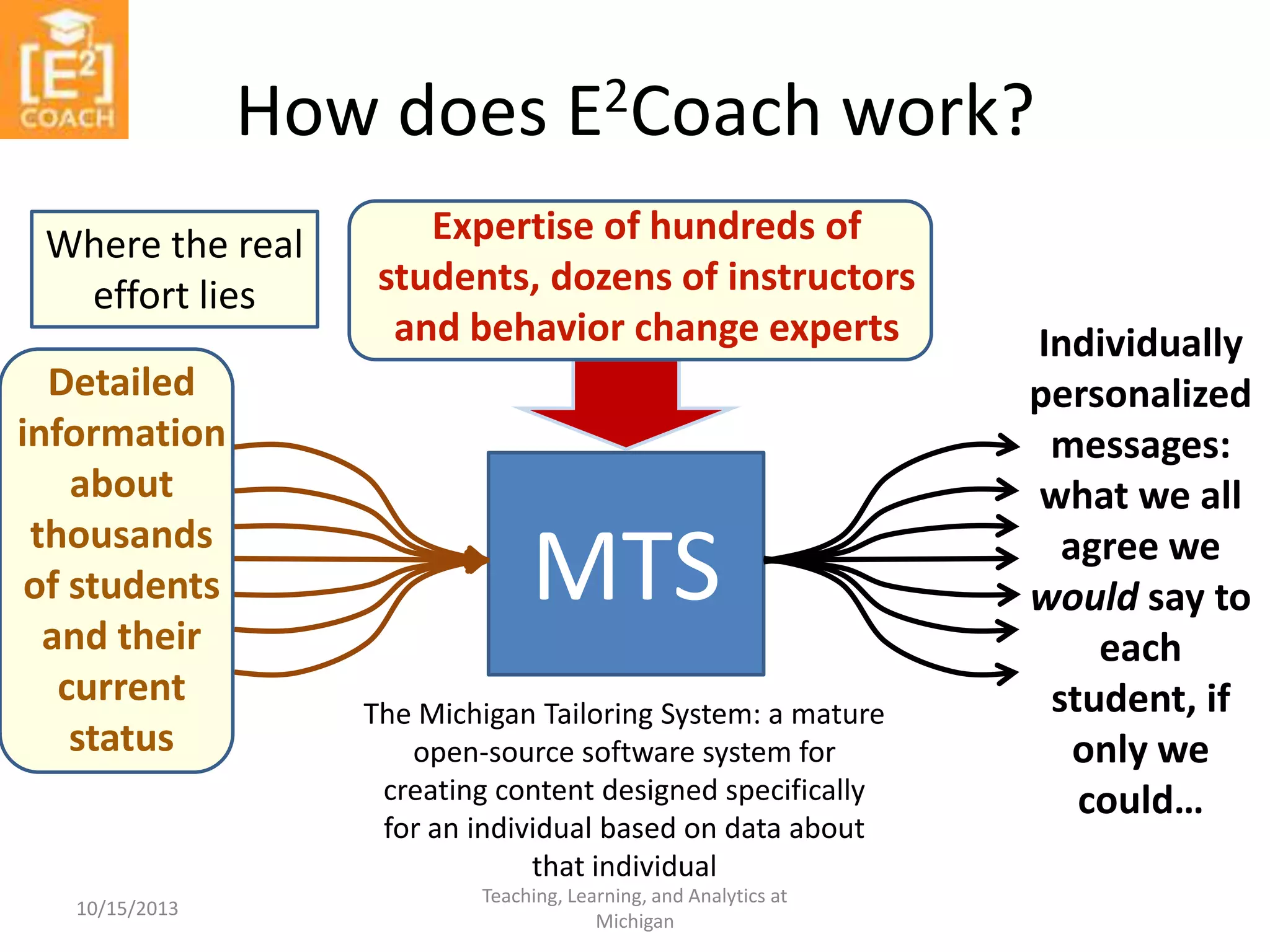
How does
Where the real
effort lies
Detailed
information
about
thousands
of students
and their
current
status

10/15/2013

2Coach
E

work?

Expertise of hundreds of
students, dozens of instructors
and behavior change experts

MTS
The Michigan Tailoring System: a mature
open-source software system for
creating content designed specifically
for an individual based on data about
that individual
Teaching, Learning, and Analytics at
Michigan

Individually
personalized
messages:
what we all
agree we
would say to
each
student, if
only we
could…
Learning Analytics Opportunities
Leverage…
• institutional practices and tools in place
• interest in using tools for interventions and
student feedback
– More systemic and consistent approach to
placing students in appropriate courses and
developmental courses.
– Especially for online learning

Explore further…
FACT2 Learning Analytics Task Group,
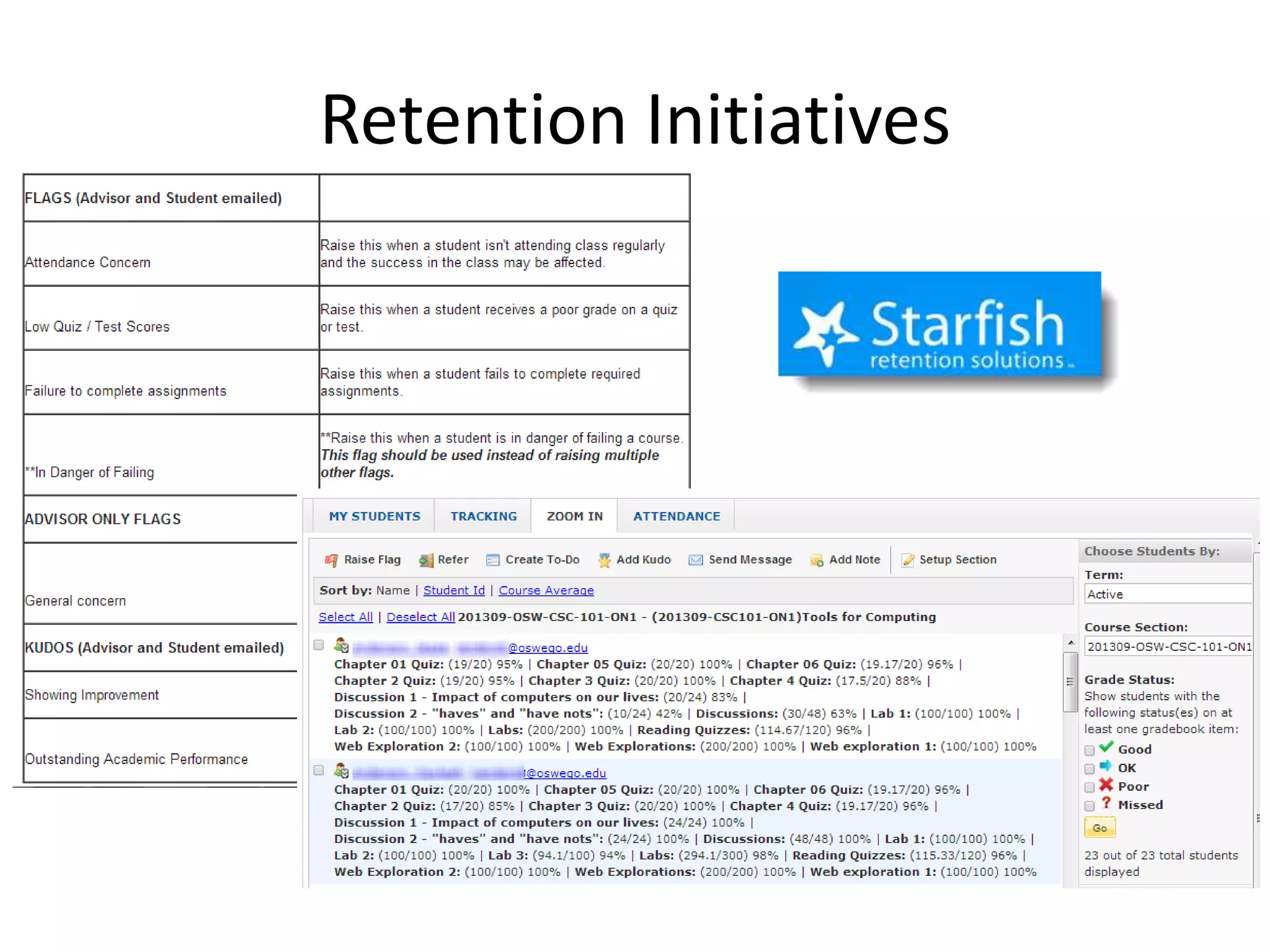
Retention Initiatives
LATG 2013-14 GOALS
1.

Identify and share known best practices and exemplary uses of Learning
Analytics for assessment, and early intervention strategies.
•

2.

Develop and conduct professional development activities for use of learning
analytics for:
•
•
•

3.

Assessment, student feedback, and early intervention activities in a course.
Leveraging existing campus data sources to inform strategies for student readiness, course
placement, and remedial education; and to identify what data is readily available and policy guidance
in the use of data.
Identify ways where learning analytics may help to eliminate some administrative burdens while
improving academic achievement.

Provide opportunities for SUNY faculty to explore Learning Analytics in pilot
projects.
•
•

4.

Identify the common questions for these areas, and share best practices through web resources and
other communication channels.

Develop “Proof of concept” projects through IITG using learning analytics approaches/tools.
Develop a Pilot program that would recruit a small group of faculty and courses to implement
assessment strategies based on analytics, and evaluate. (though Open SUNY initiative?)

Use the finding from best practices research and pilot projects to identify a
course of action for further expansion of Learning Analytics across SUNY.
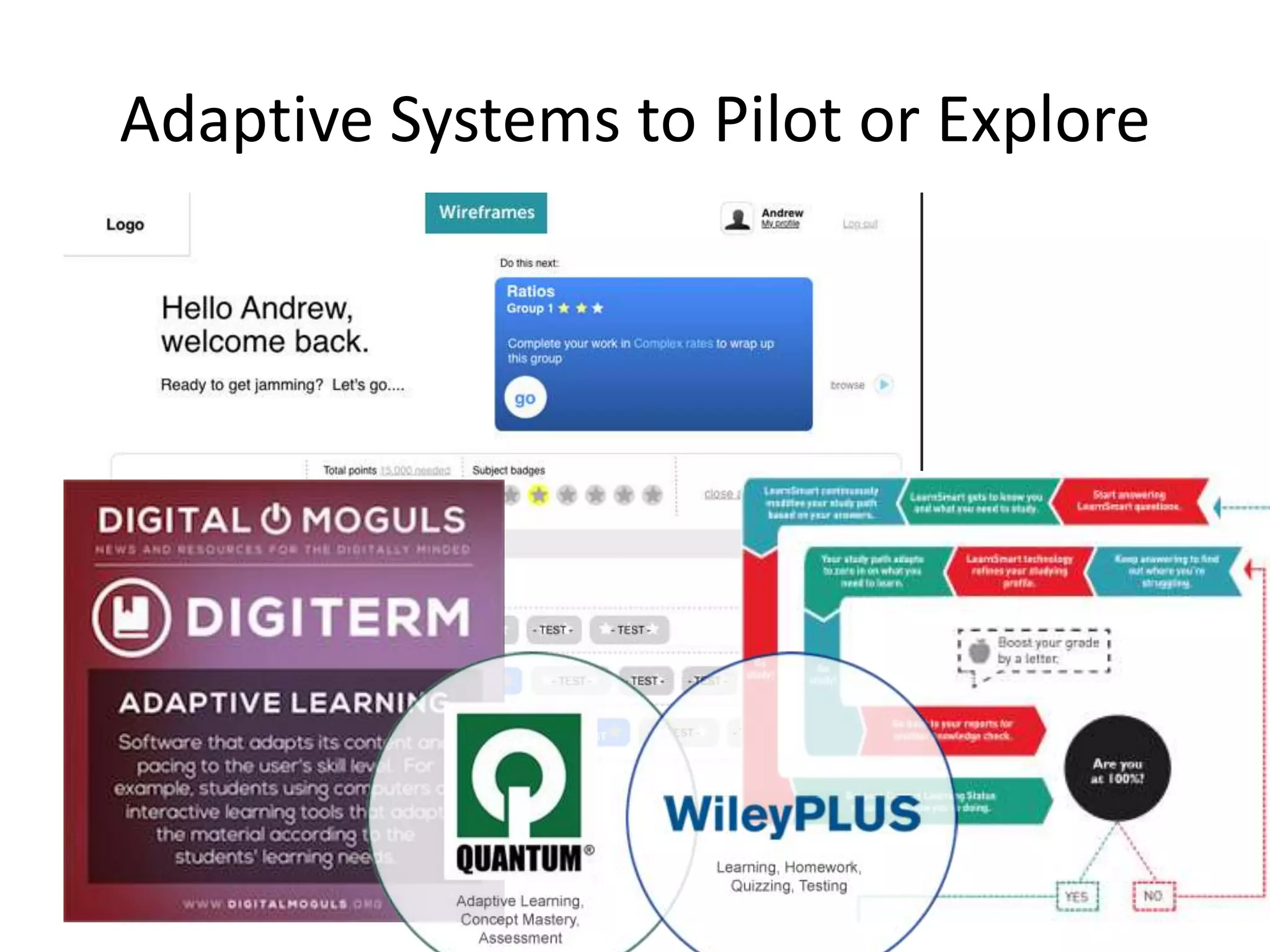
Adaptive Systems to Pilot or Explore
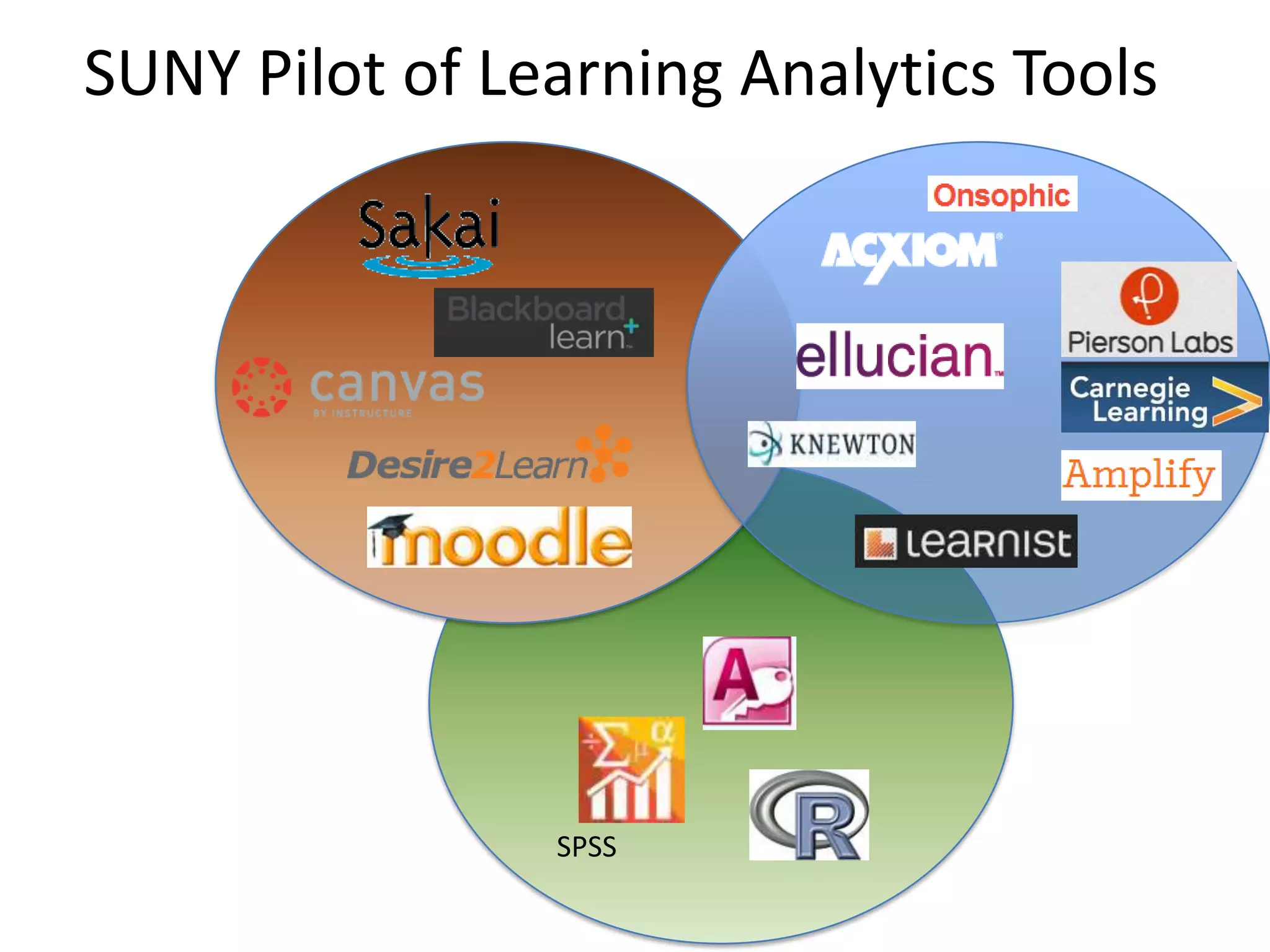
SUNY Pilot of Learning Analytics Tools

SPSS
QUESTIONS?
Visit SUNY Learning Commons
Learning Analytics Task Group
greg.ketcham@oswego.edu
FACT2 Learning Analytics Task Group (LATG) SCOA briefing

FACT2 Learning Analytics Task Group (LATG) SCOA briefing

  • 1.
    Enhancing Excellence inAssessment: Institutional Effectiveness and Learning Analytics SUNY Council on Assessment Learning Analytics Task Group October 15, 2013
  • 2.
    FACT2 and taskgroups FACT2: • “ a well-established venue to foster collaboration and consensus within a highly diverse university community. • “FACT2governance includes representatives from faculty, librarians, and IT across individual campuses from all Carnegie sectors.” http://fact.suny.edu
  • 3.
    FACT2 and taskgroups Task groups • Initiatives developed collaboratively with the SUNY Provost and the FACT Advisory Council • 2010-2012 projects: – – – Learning analytics E-publishing Innovative learning space inventory • 2013 projects: – – – Learning analytics Online Accessibility Experiential Education
  • 4.
    2013 Task Groupwill focus on… Identifying and sharing best practices and uses of Learning Analytics for assessment student readiness course placement & remedial education
  • 5.
    Institutional Level Use Advising Placement Learning outcomes LATG Survey: coursesuccess data is used to identify disciplines that have lower than expected success rates; Data are also correlated with student characteristics and other factors like date of registration, data of application. Course outcomes Instructional effectiveness Student Feedback Intervention Support Persistence Degree completion
  • 6.
    Institutional Level a) identifystudents at risk of leaving the college without a degree from the college [54%] b) identify students who are in need of developmental courses [46%] c) place students in appropriate credit courses [54%] d) evaluate student progress on course objectives [38%] e) predict student performance in courses [15%] f) advise students on course selection [54%] FACT2 Learning Analytics Task Group, CIT May 2013
  • 7.
    Interventions & Feedback FACT2Learning Analytics Task Group,
  • 8.
    Learning Analytics -Working Definition Learning analytics can be used to… – diagnose student needs, – provide feedback to the student, faculty, instructional developer, and advisor, – combine with data from other learning systems to generate new insights about learning and instruction.
  • 9.
    Learning Analytics -Working Definition • Learning analytics uses software that collects and analyzes multiple data sets related to the process of learning to PREDICT and IMPACT student success. • This includes data collected in – – – – blended and online learning environments, online portals, enrollment data, and other emergent resources connected to the teaching and learning experience.
  • 10.
    New approach mining the “pileof big data” generated by technology longstanding approach “asking research questions” and gathering data
  • 11.
    Where is thedata? LMS Platform Analytics Collected from explicit student actionscompleting assignments and exams, From tacit actionsDiscrete online social interactions, Analytics extracurricular activities, Tools posts on discussion forums, and other activities that are not directly assessed as part of the student’s educational progress. FACT2 Learning Analytics Task Group Stand-alone Platform Analytics Data in online activities….
  • 12.
    Learning Analytics Tools Approaches •Institutional • Faculty and advising • Student assessment and feedback Traditional analysis tools SPSS
  • 13.
    Learning Analytics &Online Learning Examples of uses… • Persistence and retention (APUS) • Intelligent/adaptive tutoring (Carnegie Mellon) • Research on conditions that facilitate learning (CSU Chico) FACT2 Learning Analytics Task Group
  • 14.
    Use Learning analyticsto …. Provide automated feedback to students Customize course delivery to student learning styles. Quizzes or Learning Sequences in Blackboard or Angel
  • 15.
    Use Learning analyticsto …. Provide individualized learning paths to students based on pre-entry conditions. Provide adaptive learning paths to students based on performance in course. Learning analytics enables tailoring of responses, such as through adapting instructional content, intervening with at-risk students, and providing feedback.
  • 16.
    Use Learning analyticsto …. Revise course content, activities, assessments and/or course structure.
  • 17.
    In adaptive learning,the path of each student is highly personalized
  • 18.
  • 19.
    Typically use Endof semester or mid-term data… Focus on course outcomes, but no real-time data for interventions
  • 23.
  • 24.
    Predictive Analytics: BuildingModels Placement for success and completion.. – which students should be steered toward which courses? Which programs? Can advising process leverage data on student performance? – If so, what are the best predictors of performance?
  • 25.
    Predictive Analytics: BuildingModels • Can we identify characteristics of a successful outcome? • an unsuccessful outcome? “every student with a HS average of 83 or less, did not successfully complete the course…” DATA SOURCES Grade in course Can it be predicted by other data? • Major • High school GPA • English placement exam score • Math placement exam score • HS Regent scores…. • SAT Verbal, SAT math • SAT Writing
  • 26.
  • 27.
    Assessment: study habits Explorethe efficacy of student study habits
  • 28.
    Assessment: study habits Shareinformation about what practices lead to success with students
  • 29.
    Automated feedback withquizzes. What can we learn from the data?
  • 30.
    How does Where thereal effort lies Detailed information about thousands of students and their current status 10/15/2013 2Coach E work? Expertise of hundreds of students, dozens of instructors and behavior change experts MTS The Michigan Tailoring System: a mature open-source software system for creating content designed specifically for an individual based on data about that individual Teaching, Learning, and Analytics at Michigan Individually personalized messages: what we all agree we would say to each student, if only we could…
  • 31.
    Learning Analytics Opportunities Leverage… •institutional practices and tools in place • interest in using tools for interventions and student feedback – More systemic and consistent approach to placing students in appropriate courses and developmental courses. – Especially for online learning Explore further… FACT2 Learning Analytics Task Group,
  • 32.
  • 33.
    LATG 2013-14 GOALS 1. Identifyand share known best practices and exemplary uses of Learning Analytics for assessment, and early intervention strategies. • 2. Develop and conduct professional development activities for use of learning analytics for: • • • 3. Assessment, student feedback, and early intervention activities in a course. Leveraging existing campus data sources to inform strategies for student readiness, course placement, and remedial education; and to identify what data is readily available and policy guidance in the use of data. Identify ways where learning analytics may help to eliminate some administrative burdens while improving academic achievement. Provide opportunities for SUNY faculty to explore Learning Analytics in pilot projects. • • 4. Identify the common questions for these areas, and share best practices through web resources and other communication channels. Develop “Proof of concept” projects through IITG using learning analytics approaches/tools. Develop a Pilot program that would recruit a small group of faculty and courses to implement assessment strategies based on analytics, and evaluate. (though Open SUNY initiative?) Use the finding from best practices research and pilot projects to identify a course of action for further expansion of Learning Analytics across SUNY.
  • 34.
    Adaptive Systems toPilot or Explore
  • 35.
    SUNY Pilot ofLearning Analytics Tools SPSS
  • 36.
    QUESTIONS? Visit SUNY LearningCommons Learning Analytics Task Group greg.ketcham@oswego.edu

Editor's Notes

  • #2 FACT2 Learning Analytics Task Group (LATG) UpdateLearning Analytics (and Big Data analysis) has been identified by EDUCAUSE and the Horizon Report as an emerging opportunity for higher education in the next 1 - 3 years. The Learning Analytics Task Group of FACT2 has been working on identifying a strategy and course of action for further exploration and implementation of Learning Analytics across SUNY.In the coming year, the Task Group will focus on identifying and sharing best practices and uses of Learning Analytics for assessment, student readiness, course placement, and remedial education. In addition, the Task Group will identify common questions that schools are interested in: for predictions of success--in face-to-face, online and blended learning; predictions of attrition; and developmental education. The presentation will provide an update on this Task Group's progress and recommendations.----------Assessment Conference-Participants will:increase their awareness of trends and issues facing SUNY campuses regarding Learning Analytics learn of best practices that will help campus teams prepare for and plan strategies for addressing and doing follow up on Middle States Standard 7, institutional effectivenesshave the opportunity to identify topics for future SUNY Council on Assessment (SCoA) activities Be prepared to share your recommendations and connect with SUNY colleagues involved in Assessment that you can reach out to later.
  • #6 We administered a survey via the CAOs and received about 30 responses. Most campuses indicated they were interested in analytics; few to none reported actually being engaged in using analytics.
  • #7 Self-reported desired use cases for analytics at the institutional level.
  • #9 Greg
  • #10 Greg
  • #14 Clare
  • #16 Learning analytics enables tailoring of responses, such as through adapting instructional content, intervening with at-risk students, and providing feedback
  • #34 ADD-online predictive analytics. Specify scope and deliverables.Predictive analytics for -Student preparation and support for transfers from 2 to 4 year schools.