Eye
Diseases
By: Sandy Santos
&
Bianca Macias
1
What is eye disease??
 Eye

disease is an impairment of health or
a condition of abnormal functioning of
the eye that affects your vision or can
cause blindness.

2
Examples of eye diseases
 Cataracts
 Glaucoma
 Trachoma
 Retinal

disorders
Cataracts




A cataract is a cloudiness of the lens in your eye that
prevents light from being focused clearly on the retina,
which can impair your vision. Cataracts sometimes
remain small and unnoticeable. But with more
developed cataracts, it’s like viewing the world through
a foggy window.
Cataracts typically form naturally as you age and, just
like your skin, undergo age-related changes.

4
Glaucoma
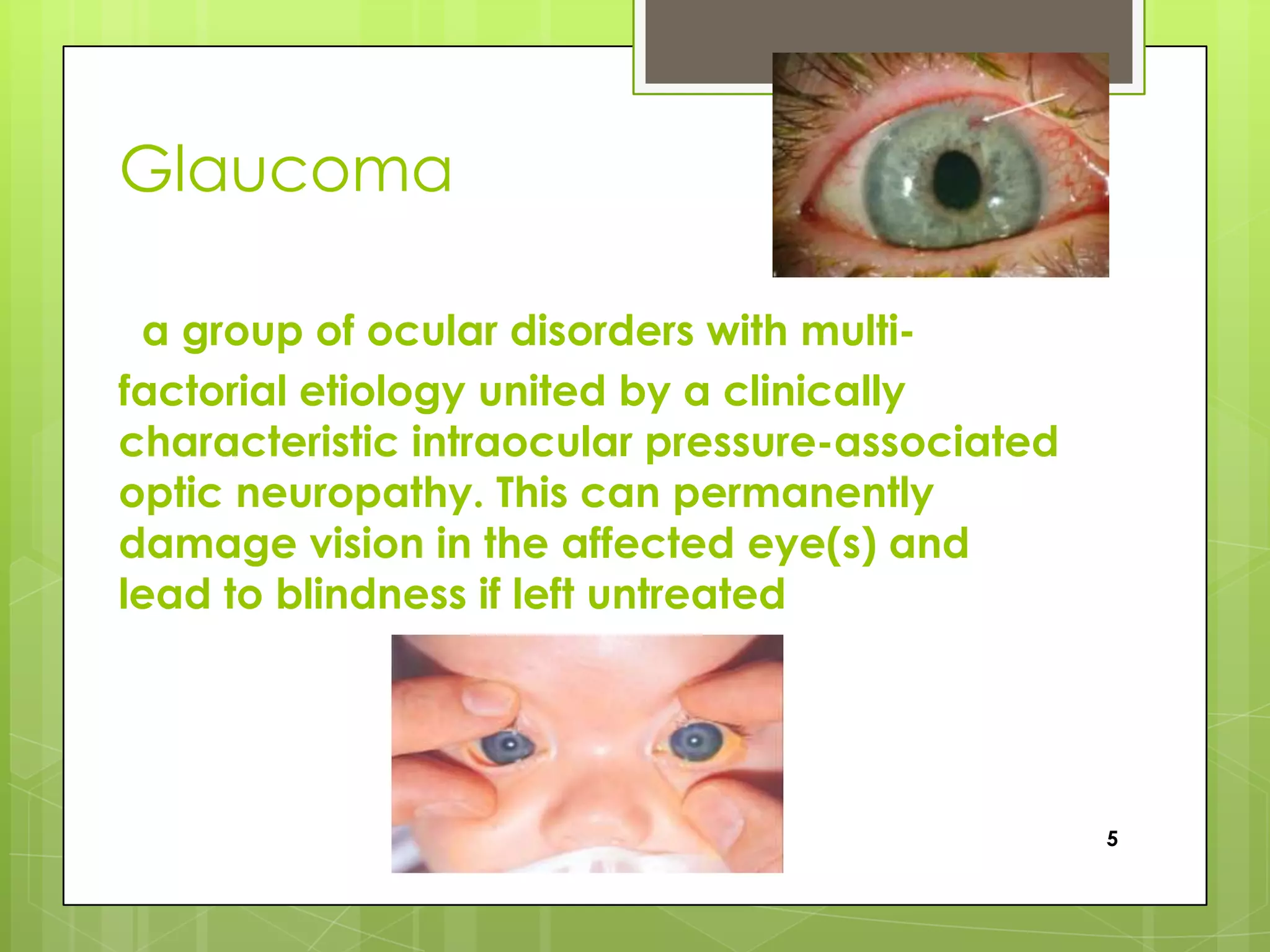
a group of ocular disorders with multifactorial etiology united by a clinically
characteristic intraocular pressure-associated
optic neuropathy. This can permanently
damage vision in the affected eye(s) and
lead to blindness if left untreated

5
Trachoma
 an

infectious disease caused by the
Chlamydia trachomatis bacterium which
produces a characteristic roughening of
the inner surface of the eyelids.

6
Retinal disorders


The retina is a layer of tissue in the back of your
eye that senses light and sends images to your
brain. In the center of this nerve tissue is the
macula. It provides the sharp, central vision
needed for reading, driving and seeing fine detail.

7
Treatments








Cataracts-Surgery is the only effective method of treating vision loss
caused by cataracts. Cataract surgery is a common procedure that
involves removing the clouded lens of the eye (the cataract). The lens
makes it possible for the eye to focus
Glaucoma- Glaucoma can be treated with eye drops, pills, laser
surgery, traditional surgery or a combination of these methods. The goal
of any treatment is to prevent loss of vision, as vision loss from glaucoma
is irreversible.
Trachoma- single oral dose of antibiotic is the preferred treatment, plus
making safe water available and teaching simple cleanliness. Because
of cultural differences and widespread poverty in endemic areas, this
regimen is difficult to implement on a universal scale
Retinal Disorders-Most often used to restore vision in patients with a
damaged cornea, cornea transplants are performed more than any
other transplant operation in the nation. As experts in advanced surgical
methods, the micro surgeons at Virginia Eye Institute perform this
outpatient procedure with tremendous precision and success.

8
Data

9
Eye Diseases
 http://www.youtube.com/watch?v=XsDdi

QSA9Uc

10
Eye Disease Podcast
 http://www.regenerativemedicinetoday.

com/2012/05/17/20120517.aspx

11
Bibliography
 http://www.thefreedictionary.com/list+of

+eye+diseases+and+disorders
 http://www.nlm.gov/medlineplus/eyedise
ases.html

11

Eye diseases

  • 1.
  • 2.
    What is eyedisease??  Eye disease is an impairment of health or a condition of abnormal functioning of the eye that affects your vision or can cause blindness. 2
  • 3.
    Examples of eyediseases  Cataracts  Glaucoma  Trachoma  Retinal disorders
  • 4.
    Cataracts   A cataract isa cloudiness of the lens in your eye that prevents light from being focused clearly on the retina, which can impair your vision. Cataracts sometimes remain small and unnoticeable. But with more developed cataracts, it’s like viewing the world through a foggy window. Cataracts typically form naturally as you age and, just like your skin, undergo age-related changes. 4
  • 5.
    Glaucoma a group ofocular disorders with multifactorial etiology united by a clinically characteristic intraocular pressure-associated optic neuropathy. This can permanently damage vision in the affected eye(s) and lead to blindness if left untreated 5
  • 6.
    Trachoma  an infectious diseasecaused by the Chlamydia trachomatis bacterium which produces a characteristic roughening of the inner surface of the eyelids. 6
  • 7.
    Retinal disorders  The retinais a layer of tissue in the back of your eye that senses light and sends images to your brain. In the center of this nerve tissue is the macula. It provides the sharp, central vision needed for reading, driving and seeing fine detail. 7
  • 8.
    Treatments     Cataracts-Surgery is theonly effective method of treating vision loss caused by cataracts. Cataract surgery is a common procedure that involves removing the clouded lens of the eye (the cataract). The lens makes it possible for the eye to focus Glaucoma- Glaucoma can be treated with eye drops, pills, laser surgery, traditional surgery or a combination of these methods. The goal of any treatment is to prevent loss of vision, as vision loss from glaucoma is irreversible. Trachoma- single oral dose of antibiotic is the preferred treatment, plus making safe water available and teaching simple cleanliness. Because of cultural differences and widespread poverty in endemic areas, this regimen is difficult to implement on a universal scale Retinal Disorders-Most often used to restore vision in patients with a damaged cornea, cornea transplants are performed more than any other transplant operation in the nation. As experts in advanced surgical methods, the micro surgeons at Virginia Eye Institute perform this outpatient procedure with tremendous precision and success. 8
  • 9.
  • 10.
  • 11.
    Eye Disease Podcast http://www.regenerativemedicinetoday. com/2012/05/17/20120517.aspx 11
  • 12.