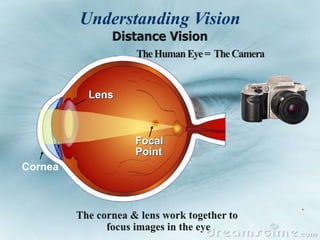
Understanding Vision
Cornea
Lens
Focal
Point
The cornea is a clear, dome-shaped surface that covers the front
of the eye. It is the first and most powerful lens in the eye's
optical system. To keep it transparent the cornea contains no
blood vessels. Tears that flow over it and aqueous humor in the
chamber behind it keep it nourished. When you hear of eye
banks and eye transplants, it is the cornea that is being
replaced. The cornea can be damaged from: accidents,
infections, and genetic defects.
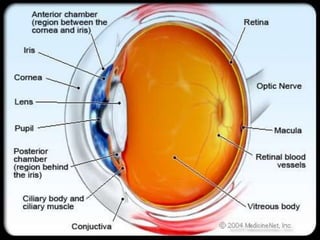
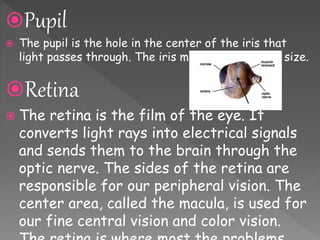
Pupil
 The pupil is the hole in the center of the iris that
light passes through. The iris muscles control its size.
Retina
 The retina is the film of the eye. It
converts light rays into electrical signals
and sends them to the brain through the
optic nerve. The sides of the retina are
responsible for our peripheral vision. The
center area, called the macula, is used for
our fine central vision and color vision.
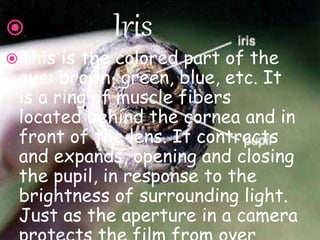
 Iris
This is the colored part of the
eye: brown, green, blue, etc. It
is a ring of muscle fibers
located behind the cornea and in
front of the lens. It contracts
and expands, opening and closing
the pupil, in response to the
brightness of surrounding light.
Just as the aperture in a camera
 Sclera
The sclera is the
white, tough wall of
the eye. It along
with internal fluid
pressure keeps the
ciliary body (muscles)
*circular muscle that surrounds the
edge of the lend
* connected to the lens by suspensory
ligaments
*changes the shape of the lens
 Theblindspotsineacheyearealignedsymmetricallysothatmostof
thetime,oneeye’sfieldof visionwillcompensateforthelossof vision
intheother.Thediagramaboveshowswheretheblindspotsare
located.
Some eye problems are minor and
fleeting. But some lead to a
permanent loss of vision. Common
eye problems include,Cataracts -
clouded lenses
Glaucoma - damage to the optic
nerve from too much pressure in
the eye.Retinal disorders -
problems with the nerve layer at
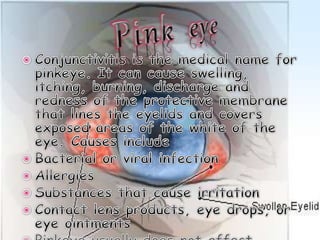
the back of the eye.Conjunctivitis -
an infection also known as pinkeye.
Your best defense is to have
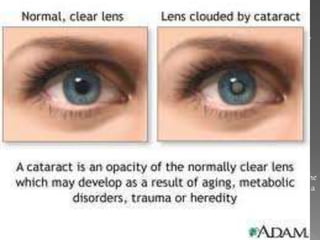
 Cataract
 A cataract is a clouding of the lens in your eye. It affects your vision. Cataracts are very
common in older people. By age 80, more than half of all people in the United States
either have a cataract or have had cataract surgery.
 Common symptoms are
 Blurry vision
 Colors that seem faded
 Glare
 Not being able to see well at night
 Double vision
 Frequent prescription changes in your eye wear
 Cataracts usually develop slowly. New glasses, brighter lighting, anti-glare sunglasses
or magnifying lenses can help at first. Surgery is also an option. It involves removing the
cloudy lens and replacing it with an artificial lens. Wearing sunglasses and a hat with a
brim to block ultraviolet sunlight may help to delay cataracts.
 Retinal
Disorders
The retina is a layer of tissue in the
back of your eye that senses light
and sends images to your brain. In
the center of this nerve tissue is the
macula. It provides the sharp, central
vision needed for reading, driving and
seeing fine detail.
Retinal disorders affect this vital
tissue. They can affect your vision,
and some can be serious enough to
cause blindness. Examples are
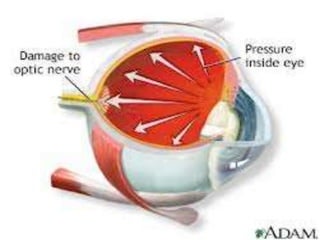
 Glaucoma
 Glaucoma damages the eye's optic
nerve. It usually happens when the fluid
pressure inside the eyes slowly rises,
damaging the optic nerve. Often there
are no symptoms at first, but a
comprehensive eye exam can detect it.
 People at risk should get eye exams at
least every two years.
 Early treatment can help protect your
eyes against vision loss. Treatments usually
include prescription eyedrops and/or
surgery.
Presentation of eye ths

Presentation of eye ths

  • 3.
  • 4.
    The cornea isa clear, dome-shaped surface that covers the front of the eye. It is the first and most powerful lens in the eye's optical system. To keep it transparent the cornea contains no blood vessels. Tears that flow over it and aqueous humor in the chamber behind it keep it nourished. When you hear of eye banks and eye transplants, it is the cornea that is being replaced. The cornea can be damaged from: accidents, infections, and genetic defects.
  • 5.
    Pupil  The pupilis the hole in the center of the iris that light passes through. The iris muscles control its size. Retina  The retina is the film of the eye. It converts light rays into electrical signals and sends them to the brain through the optic nerve. The sides of the retina are responsible for our peripheral vision. The center area, called the macula, is used for our fine central vision and color vision.
  • 6.
     Iris This isthe colored part of the eye: brown, green, blue, etc. It is a ring of muscle fibers located behind the cornea and in front of the lens. It contracts and expands, opening and closing the pupil, in response to the brightness of surrounding light. Just as the aperture in a camera
  • 7.
     Sclera The sclerais the white, tough wall of the eye. It along with internal fluid pressure keeps the
  • 8.
    ciliary body (muscles) *circularmuscle that surrounds the edge of the lend * connected to the lens by suspensory ligaments *changes the shape of the lens
  • 9.
  • 10.
    Some eye problemsare minor and fleeting. But some lead to a permanent loss of vision. Common eye problems include,Cataracts - clouded lenses Glaucoma - damage to the optic nerve from too much pressure in the eye.Retinal disorders - problems with the nerve layer at the back of the eye.Conjunctivitis - an infection also known as pinkeye. Your best defense is to have
  • 11.
     Cataract  Acataract is a clouding of the lens in your eye. It affects your vision. Cataracts are very common in older people. By age 80, more than half of all people in the United States either have a cataract or have had cataract surgery.  Common symptoms are  Blurry vision  Colors that seem faded  Glare  Not being able to see well at night  Double vision  Frequent prescription changes in your eye wear  Cataracts usually develop slowly. New glasses, brighter lighting, anti-glare sunglasses or magnifying lenses can help at first. Surgery is also an option. It involves removing the cloudy lens and replacing it with an artificial lens. Wearing sunglasses and a hat with a brim to block ultraviolet sunlight may help to delay cataracts.
  • 12.
     Retinal Disorders The retinais a layer of tissue in the back of your eye that senses light and sends images to your brain. In the center of this nerve tissue is the macula. It provides the sharp, central vision needed for reading, driving and seeing fine detail. Retinal disorders affect this vital tissue. They can affect your vision, and some can be serious enough to cause blindness. Examples are
  • 13.
     Glaucoma  Glaucomadamages the eye's optic nerve. It usually happens when the fluid pressure inside the eyes slowly rises, damaging the optic nerve. Often there are no symptoms at first, but a comprehensive eye exam can detect it.  People at risk should get eye exams at least every two years.  Early treatment can help protect your eyes against vision loss. Treatments usually include prescription eyedrops and/or surgery.