EXTERNAL EXAMINATION AUTOPSY
DEFINITIONS






AUTOPSY – seeing for one self i.e.
making a personal inspection
Pathological sense – dissection of
the dead body to determine,
through observation, the cause of
death and nature of disease.
EXTERNAL EXAMINATION – ritual
full of meaning and common sense.
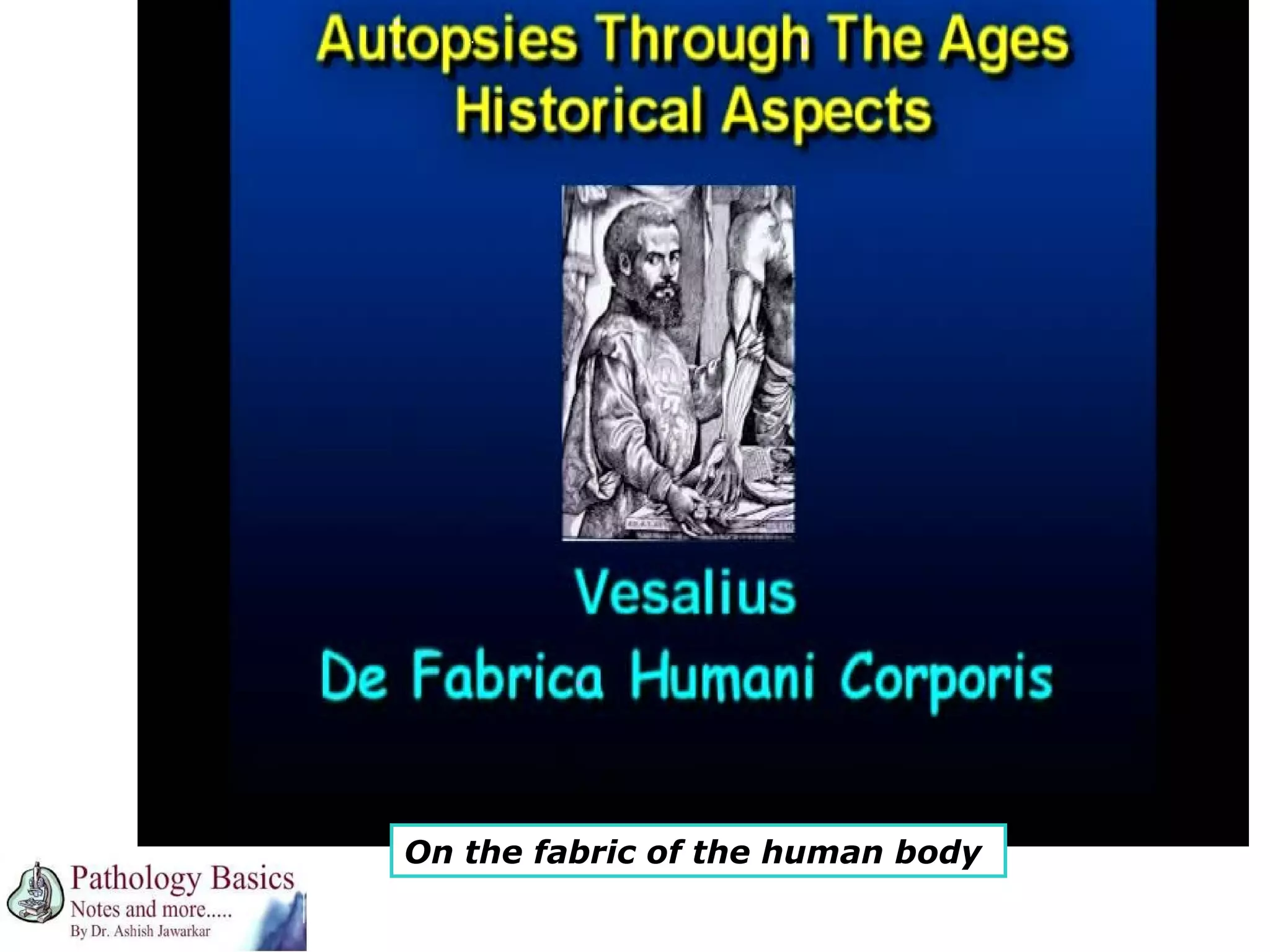
On the fabric of the human body
On the Seats and Causes of Diseases
PRELIMINARIES





Consent (hospital administrator
(RMO/coroner) and relatives)
Identification of body
Clinical details
Should have a statement pertaining to retention
of body parts/ organs

Get specific permission for an unusual
examination (removal of eyes/limbs) even if
signed as NO RESTRICTIONS
Make sure the case is not medicolegal, like
delayed accidents, homicides, deaths after
abortions, occupational diseases, suspicious
cases of poisoning, deaths on table.
Dictate as follows










Autopsy no, date and time
Pathologists Name and designation
Patient’s age (look for disparity) and sex
State of body (built and nourishment)
State any restrictions
Final clinical diagnosis
Clinical summary
Height (crown to heel)
Weight
Dictate as follows











Rigor mortis
Livor mortis
Algor mortis
Post mortem drying
Body built
Nourishment
Edema
Cyanosis
Skin
Nails
RIGOR MORTIS

Rigor is tested by trying to lift eyelids, trying to depress
the jaw and bending the neck and various joints of the
body
RIGOR MORTIS









Primary flaccidity (till ATP remains) – rigor
– secondary flaccidity
Secondary flaccidity due to onset of
putrefaction
Mechanism (4-8 hrs, 24-48hrs)
NYSTEN’S rule – doesnot appear in all
muscles simultaneously and both voluntary
and involuntary muscles affected
Contraction of erector pilae – cutis
anserina/goose flesh
RIGOR MORTIS









Commences in the heart (LV-RV-atria) , in
sytole
Diaphragm
Skeletal musculature – first jaw, neck, face,
arms, lower extremities, last ankle joint
Passes off in the same order
Contraction of tracheal muscles causes white
dots on mucosa
Postmortem intususception
Iris – dilatation (postmortem) and then
contraction (rigor)
Handling causes loss of rigor – patchy
distribution
Factors affecting rigor







Age – absent in fetus, early and milder in
children and old
Early onset, short duration – wasting
diseases, strychnine poisoning
Late onset – asphyxia, hemorrhage,
pneumonia, paralytic diseases
Increased duration – CO poisoning
Less duration – bacterial infection d/t
early putrefaction
Environment – cold – late onset, more
duration, heat – early onset, less
duration
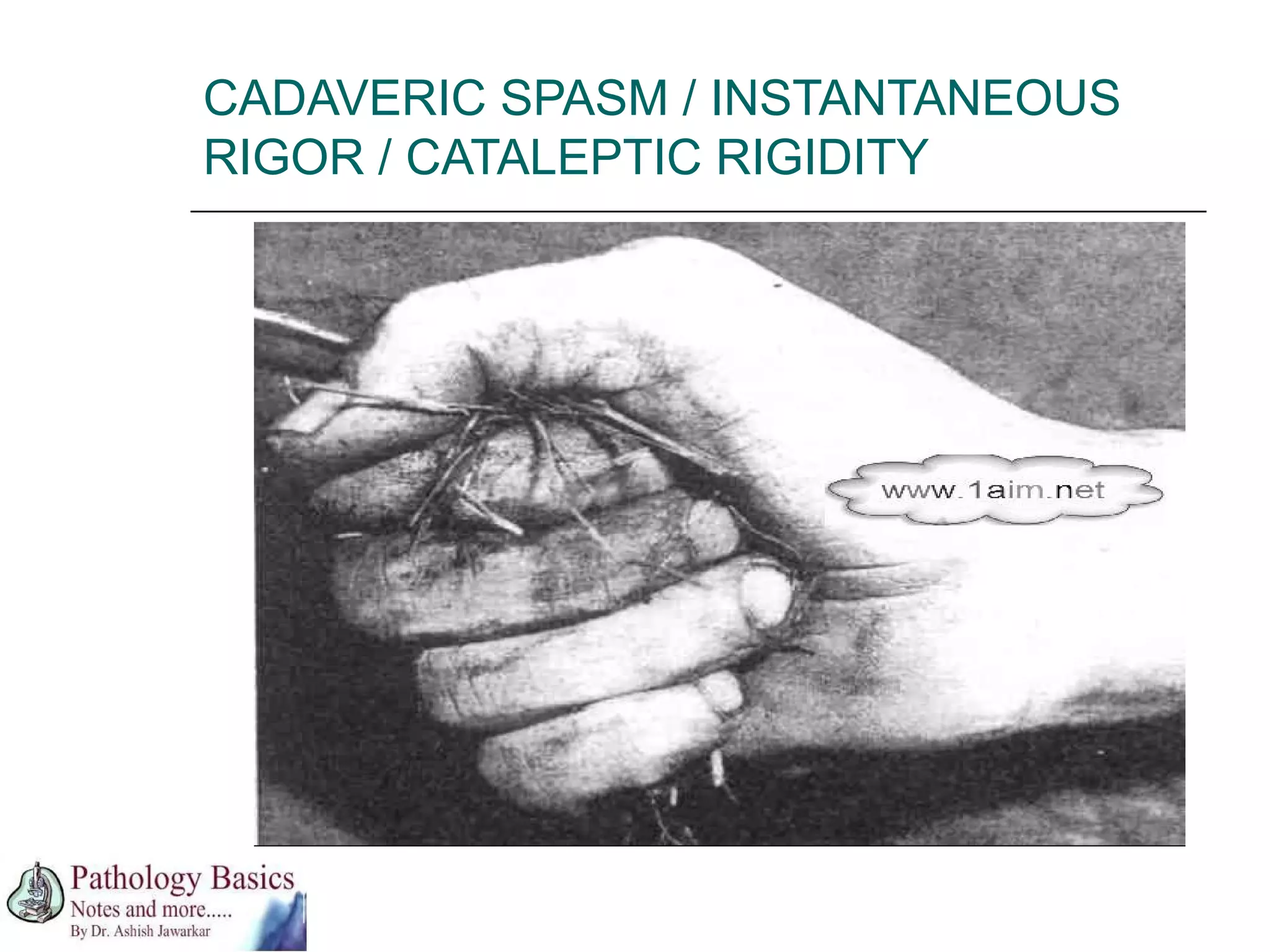
CADAVERIC SPASM / INSTANTANEOUS
RIGOR / CATALEPTIC RIGIDITY
CADAVERIC SPASM






Muscles that were contracted during
life become rigid immediately after
death without passing into a stage
of primary relaxation
Affects single group of voluntary
muscles, frequently hands
Sudden death, excitement, severe
pain, convulsions, strychnine
poisoning
LIVOR MORTIS
LIVOR MORTIS
Hypostasis









Mechanism
Initially intravascular (can blanch), then
extravascular
Begins 30 to 45 mins after death in
dependent parts, max in 6-12 hrs
Can enlarge the extent of subcutaneous
hemorrhages, can mimick suboccipital
hemorrhage
Initially cut on the area of livor shows
delicate hemorrhagic dots showing
transected congested vessels.
Not possible to distinguish from
antemortem cyanosis
BLANCHING TEST








Colour is a shade of blue
No livor – hemorrhage, anemia,
wasting diseases
Red in bodies kept in moist
refrigeration – higher affininty for
O2
Cherry red – cyanide, CO
Methemoglobinemia – smoky green,
brown
Hydrogen sulfide – black
Tardieu spots

develop in areas of lividity, such as this
individual's shoulder area, as decomposing capillaries
rupture.
ALGOR MORTIS
Rectal temp falls @ 1 deg/hr
 Also inferior surface of
liver/EAC/nasal passages
 Time of death =
n body tem – rect t / rate of cool
 Post mortem caloricity – stroke,
convulsions, strychnine poisoning,
septicemia

POST MORTEM DRYING
develops when the eyelids are not completely shut, the areas of the sclera
exposed to the air dry out, which results in a first yellowish, then brownishblackish band like discoloration zone
cholera, wasting dis

(Tache noire)
DRYING



Skin is wrinkled and leathery
Loosening of hair, apparent
lengthning of finger nails due to
shrinkage of finger tips
Body built and nourishment
BODY BUILT




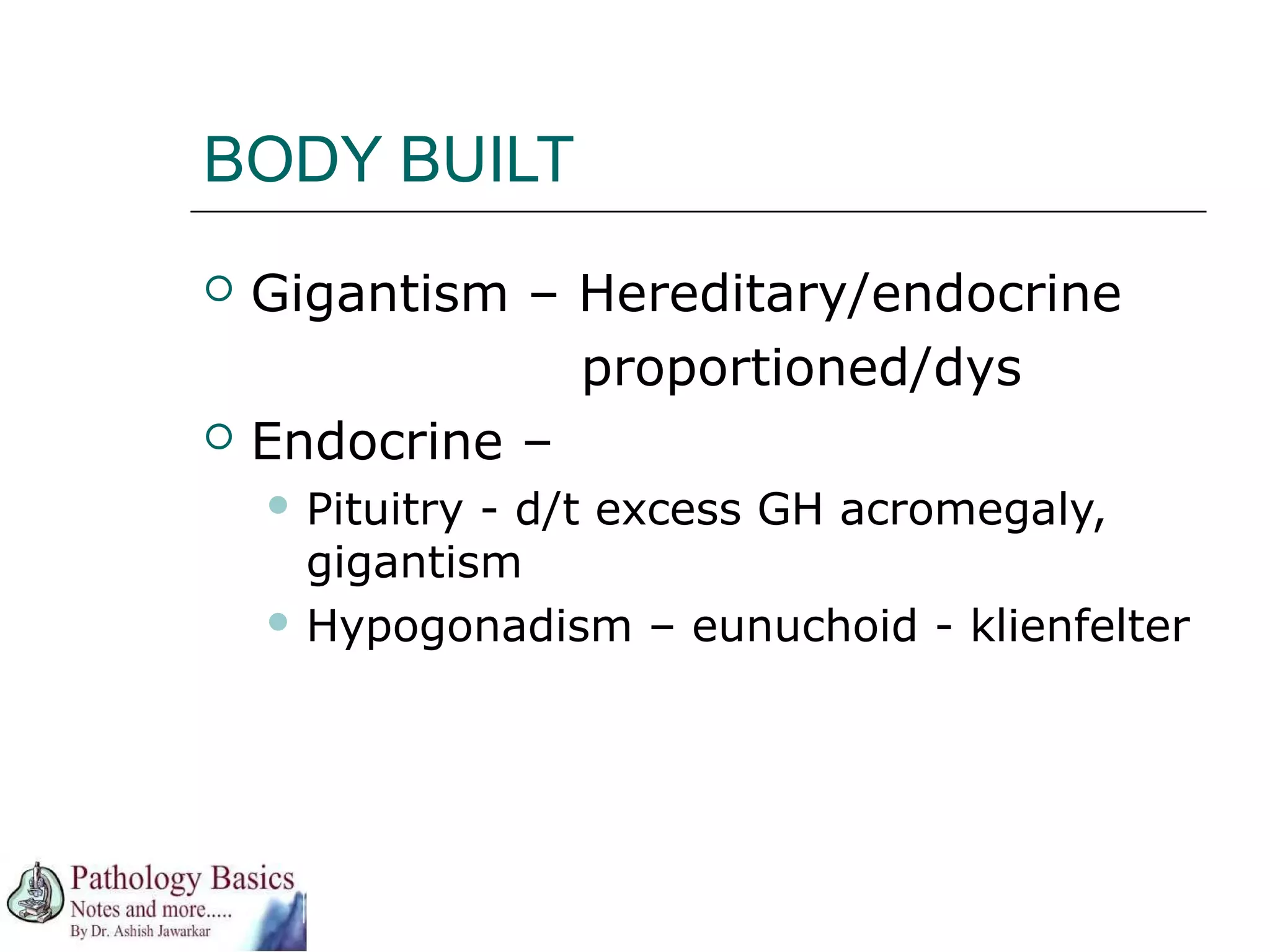
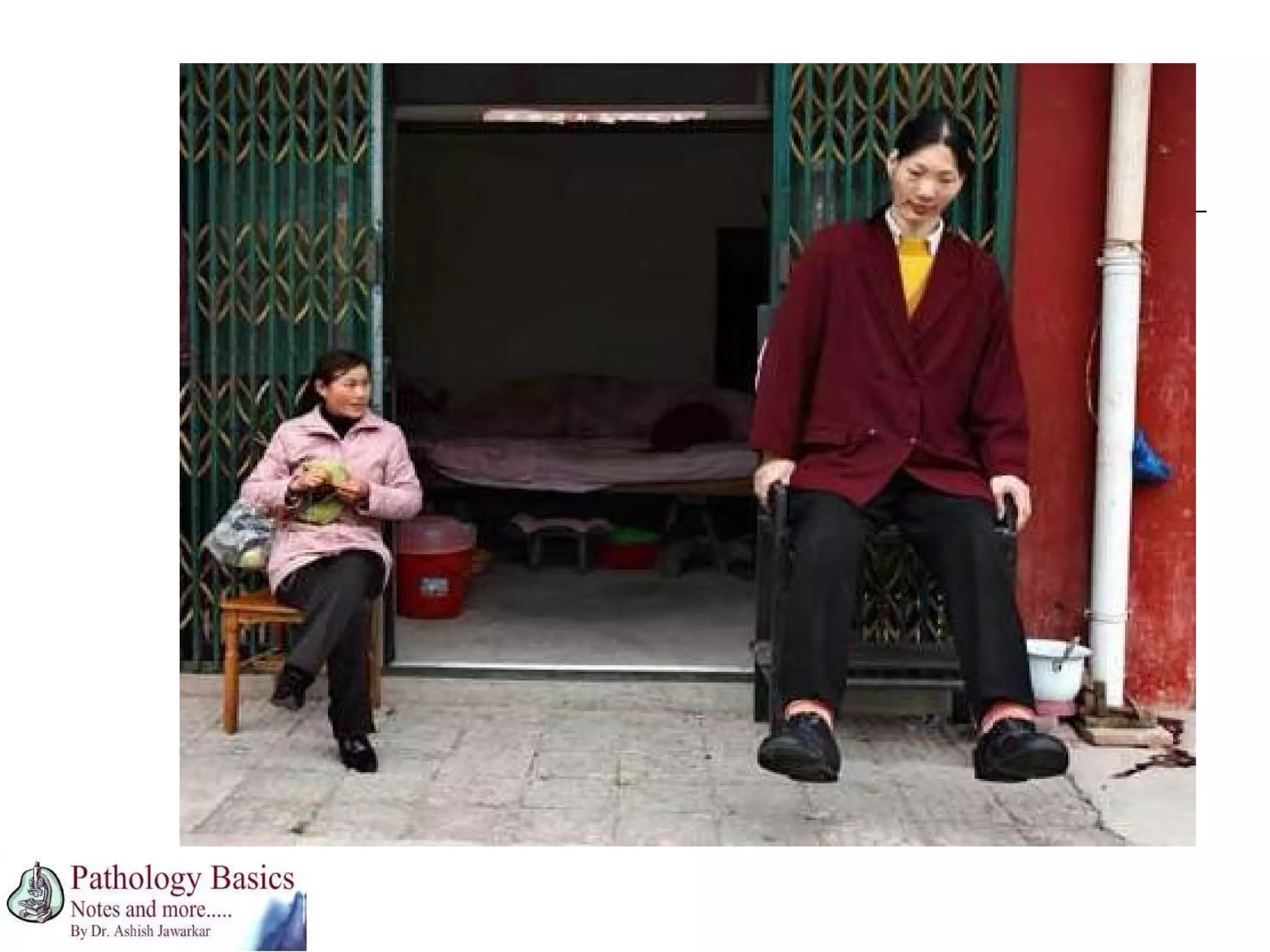
Gigantism – Hereditary/endocrine
proportioned/dys
Endocrine –
 Pituitry

- d/t excess GH acromegaly,
gigantism
 Hypogonadism – eunuchoid - klienfelter
BODY BUILT




DWARFISM – hereditary / endocrine
perfect/imperfect
Hereditary – pygmies (primordial)
sporadic (mutation)




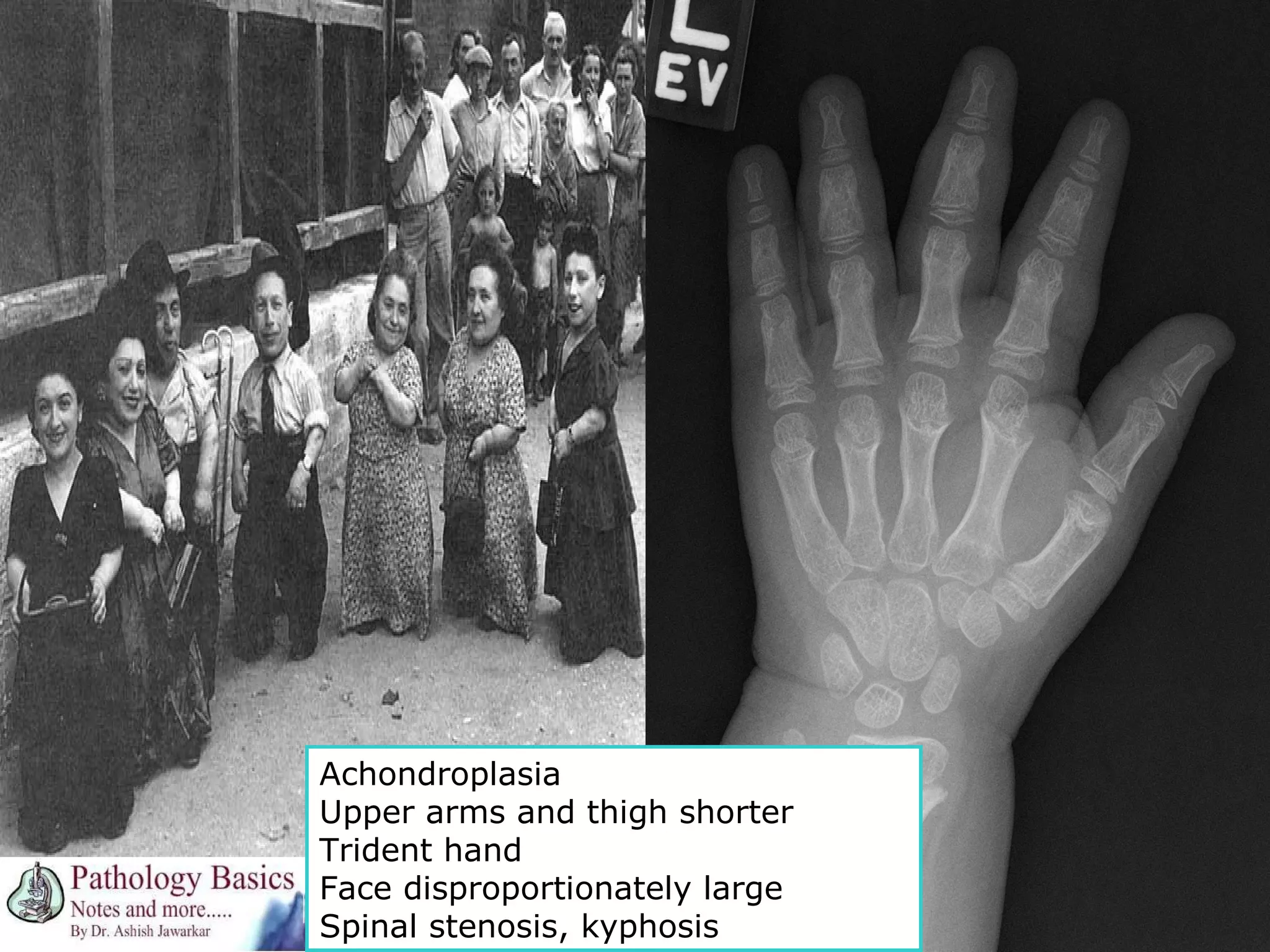
achondroplasia

Endocrine –
 Hypothyroidism

– cretinism
 Pituitary dwarfism – GH deficiency
 Gonadal dwarfism – Turner’s syndrome
Achondroplasia
Upper arms and thigh shorter
Trident hand
Face disproportionately large
Spinal stenosis, kyphosis
TURNER SYNDROME
Spinal deformities

Old age
Chronic
emphysema
Rickets
Osteomalacia
Acromegaly
Tuberculosis
Spinal deformities

Dislocation
of hips
Ascites
Pregnancy
Postural
weakness
Spinal deformities

Weakness/paralysis
of muscles on one
side – poliomyelitis,
shortening of one
lower limb
NOURISHMENT



OBESITY
Exogenous – food intake




Double chin and abdominal

Endogenous - glandular




Cushing’s – truncal – moon face, buffalo hump,
protuberant abdomen, thin extremities
Hypothyroidism – non pitting myxedema –
eyelids, hands and tibia – hyaluronic acid
infiltrn
Complications of obesity
NOURISHMENT


CACHEXIA
 Cancer
 TB
 Thyrotoxicosis
 Addison’s

disease
 Anorexia nervosa
 Starvation
EDEMA



Generalized and localized
Pitting and non pitting
(lymphedema/myxedema)
GENERALISED/ LOCALISED


GENERALISED







Congestive heart failure
Nephrotic syndrome
Hypoproteinemia
Cirrhosis

LOCALISED





Filariasis
Post operative
Insect bites
Vena caval syndromes
CYANOSIS
CYANOSIS


CENTRAL
 Conjunctive,

mouth, nose, lips
 Pneumonia, chronic bronchitis, fallot’s,
shunts as in cirrhosis
 Associated with clubbing


PERIPHERAL
 Extremities,

not associated with

clubbing
 Localised obstruction to blood flow like
raynaud’s, arterial obstruction, varicose
veins
Raynaud’s
NAILS
KOILONYCHIA
FINGERS – MARFAN’S

DUE TO MUTATION IN FIBRILLIN I GENE
SKIN
PIGMENT DISTURBANCES


Hyperpigmentation
 Generalised


Jaundice, Addison’s, Hemochromatosis,
chronic malaria

 Localised




Chloasma, Acanthosis nigricans

Hypopigmentation
 Albinism,

vitiligo
 Fungal disease (tinea vericolor,
pityriasis alba), leprosy
Signs of liver cell failure
Hemochromatosis
SKIN



Petechiae, ecchymoses
Striae
HAIR AND FACE
HAIR








Loss – debilitating illness, malignancy,
typhoid, male pattern baldness, alopecia,
ringworms, thallium poisoning
Female distribution in male – portal
cirrhosis, after castration
Hirsuitism – Male pattern hair in female –
Cushing’s, ovarian tumors
Thinning and drying of scalp hair –
myxedema
Cicatrical alopecia

male pattern baldness
FACE







Hippocratic facies - A pinched expression of
the face, with sunken eyes, hollow cheeks
and temples, and relaxed lips, observed in
one dying after an exhausting illness
Moon face – cushing’s
Potter facies - oligohydramnios
Mask like facies - parkinsonism
Leonine facies - lepromatous leprosy
•Potter's facies.
•Parrot-beaked nose. Recessed chin. Epicanthic folds. micrognathia
•Low set ears (helices often folded).
•Hypertelorism.
EYES
EYES – POST MORTEM
CHANGES









Loss of corneal reflex – not reliable
Opacity of cornea – cholera, wasting
diseases
Flaccidity of eyeball – sunken
Pupils – dilatation then constriction
Retina – Kevorkian sign – shunting/tracking
of blood due to fall in bp
Steady rise in K+ values of vitreous upto
100 hrs
EYES


Exophthalmos




Enophthalmos




Cachexia, Horner’s syndrome

Cornea –




Hyperthyroidism, myopia

Ulceration, opacity, Arcus senilis, KayserFleischer ring

Sclera –



Icterus
Blue sclera (osteogenesis imperfecta,
marfan’s)


Horner’s syndrome – due to compression of ipsilateral thoracic /cervical
sympathetic chain – miosis, enophthalmos, ptosis and loss of sweating
on same side with loss of ciliospinal reflex


Arcus senilis

wilson’s disease
ORIFICES
Tongue




Geographic tongue – Vitamin B12
deficiency
Protuberant tongue – cushing’s
THYROID
LYMPH NODES – NECK,
AXILLA AND INGUINAL
NECK



Look for neck veins
Prominence indicates RVF
BREAST
CHEST


Pectus carinatum aka alar chest




Pigeon Chest




Emphysema, chronic bronchitis

Pectus excavatum




Nasopharyngeal obstruction, respiratory
disease

Barrel Chest




Prominence of vertebral border of sternum

Occupational deformity, cobblers

Rachitic Chest


Pigeon breast, keel breast, Harrison’s sulci,
Verical grooves, Rickety rosary
RIBS
LIVER AND SPLEEN
UMBILICUS
Perinatal autopsy







Weights lung:heart=3:1
Brain : liver = 3:1
Liver:heart = 6:1
Adrenal:thymus:spleen = 1:1:1
OFC=CR
Lanugo hair, poorly formed ear
cartilage, absent breast buds,
undescended testis, rugose scrotum,
palmar and plantar creases
External examination at autopsy

External examination at autopsy