POSTMORTEM ARTIFACTS
GUIDED BY
DR. ADARSH S G
• Definition
• Artifacts due to postmortem changes
• Artifacts due to animal and insect activity
• Therapeutic artifacts
• Deliberate mutilation, Dismemberment
• Embalming artifacts
• Heat effects
• Postmortem corrosion
• Postmortem maceration
• Artifacts due to refrigeration
• Artifacts due to mishandling of the body
• Exhumation artifacts
• Artifacts due to delay in autopsy
CONTENTS
• Definition:-
postmortem artifacts (Latin arte: art,
factum: something made) are any changes caused
or features introduced in a body after death which
may lead to misinterpretation of findings
• Wrong cause/manner of death
• Undue suspicion of criminal offence
• A halt in the investigation of criminal death
• Unnecessary wastage of time and effort, as a result
of misleading findings
• Miscarriage of justice
IGNORANCE AND MISINTERPRETATION OF SUCH
POSTMORTEM ARTIFACTS LEADS TO:
• These artifacts are due to rigor mortis,
postmortemstaining, autolysis and putrefaction.
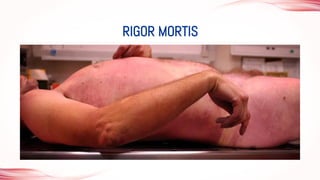
• Rigor mortis: Existing rigor mortis may be broken
down while removing the body from the scene of crime
to the mortuary, which may cause error in interpretation
of time since death. Rigor affecting the heart may
simulate hypertrophy of the heart.
ARTIFACTS DUE TO POSTMORTEM CHANGES
RIGOR MORTIS
• Postmortem staining: Isolated patches of post-
mortem lividity may be mistaken for bruises. Such
patches on the front and sides of the neck may be
mistaken for bruising due to throttling. Lividity of the
internal organs may be mistaken for congestion due
to disease.
POSTMORTEM STAINING
• ■ Postmortem staining in the posterior left ventricle of
the heart in an individual lying supine after death may
cause confusion of ischemic myocardial damage, in the
lungs-pneumonia, and in the GIT-irritation due to
poisoning.
• ■Certain poisons like CO, HCN or nitrites may change
the color of the hypostatic area.
• Autolysis: Autolysis leads to discoloration of skin and
viscera, such as gallbladder, pancreas, liver, kidney. GIT
mucosa and brain, where it may simulate injury or disease.
Pancreas is one of the first organs to undergo autolysis
because of proteolytic enzymes within it, which can be
mistaken for acute hemorrhagic pancreatitis Perforation of
the stomach due to autolysis should be distinguished from
that due to corrosive acid or peptic ulceration. Absence of
cellular response in discolored areas establishes the
postmortem origin of these changes
• Putrefaction
• External
• ■Swelling of lips, nose, eyelids and extremities, distension of
the chest and the abdomen may occur giving a false
impression of antemortem obesity.
• ■Large quantities of sanguineous fluid may escapefrom the
mouth and nose in case of pulmonary edema, giving the
impression of hemorrhage.
PUTREFACTION
• Internal
• ■Softening of 'synchondrosis' between the body and
greater cornu of the hyoid bone may produce abnormal
mobility which may be confused as a fracture.
• ■Gas bubbles in the blood and air in the right side of the
heart may be mistaken for air embolism. Oxygen in right
heart will indicate antemortem air embolism.
• Artifacts due to Animal and Insect Activity
The bites by dogs are clear-cut, with deep impression of teeth
in a small area. Individual punctures may resemble stab
wounds.
Insect bites (ants or roaches) are dry, brown with
irregular margins, and usually seen in moist parts of the
body, e.g., armpits, groin, scrotum and anus, these may
resemble antemortem abrasions
THIRD PARTY ARTIFACTS
POSTMORTEM ANT BITES
• External cardiac massage, especially in elderly patients is
associated with the fracture of ribs (3rd-5th) and sometime
fracture of the sternum along with laceration of the lungs,
liver, spleen and diaphragm which can create an impression
of a crushing force applied to the chest.
• * Use of defibrillator may leave an impression of circular
contusion over the pericardium. Multiple intracardiac
injections may result in bruising of heart and
hemopericardium.
THERAPEUTIC ARTIFACTS
• Sometimes, criminals may inflict injuries, mutilate or
dismember the body after death to mislead the investigation.
• → Some mutilations are produced in a ritualistic sense
displaying significant psychopathology of the assailant. It may
include removal of the breasts, genital mutilation. such as
removal of the penis, and scarification type injuries.
• Persons may be killed and thrown into water or set on fire.
Careful examination for violence will help in the correct
diagnosis of the cause of death. Chemical analy sis of the
viscera for poisons may be necessary.
DELIBERATE MUTILATION, DISMEMBERMENT
• Trocar wounds may be mistaken for stab wounds or bullet
wounds
• .Bruises may be markedly accentuated due to increased
transparency of the overlying skin resulting from the
embalming process.
• Embalming fluid used may pose problems in toxicological
analysis of the viscera, as high levels of methanol,
anticoagulants and various other dyes are often detected by
sophisticated screening methods.
EMBALMING ARTIFACTS
• Heat Effects
• Heat applied to the skin of a dead body may loosen
the epidermis from the dermis and produce a
postmortem blister.
• Heat hematoma may simulate extradural
hemorrhage.
• An unburnt groove around the neck due to a tight
collar may resemble a ligature mark.
ENVIRONMENTAL ARTIFACTS
ARTIFACTS DUE TO HEAT
• Dead bodies exposed or lying in kerosene, water
or gasoline show chemical injuries. The epithelium
detaches while handling the body, and then the
underlying dermis turns yellow to brown which
may be misinterpreted as antemortem chemical
injury or abrasion or burns.
POSTMORTEM CORROSION
• Physical contact of the body with water, soil or air
may cause marked changes, depending upon the
chemical constituents of earth, water and the
duration of contact. The body may be totally
skeletonized leaving decalcified and deformed
bones.
POSTMORTEM MACERATION
• Artifacts due to Refrigeration
• Pink postmortem staining is seen in bodies kept in
cold storage. If the bodies are kept in a cold storage
immediately after death, goose skin may develop.
MISCELLANEOUS ARTIFACTS
• During the process of transfer of the body from the
scene of crime to the mortuary, abrasions may appear
over the back or bony prominences, clothes may get
bloodstained or torn.
• Sometimes, fractures of the ribs or long bones or
cervical spine may occur by rough handling of the
bodies, especially in the elderly or debilitated, during
attempts to straighten limbs which are contracted due to
rigor mortis.
ARTIFACTS DUE TO MISHANDLING OF THE BODY
• Gravedigger's tools can produce postmortem
fracture, abrasions and lacerations
• .The discoloration of the skin beneath fungus growth
simulates contusion.
• Postmortem imbibition of toxicological elements
from the earth may result in inaccurate toxicological
analysis.
EXHUMATION ARTIFACTS
• Uncal grooving, seen in cerebral edema, tends to be
more prominent when there is a delay in removing the
brain.
ARTIFACTS DUE TO DELAY IN AUTOPSY
• Review of Forensic Medicine And Toxicology
Author : Gautam Biswas
• Principles of Forensic Medicine And toxicology
Author: Rajesh Bardale
REFERENCES
Zoho Show
To create beautiful presentations, download Zoho Show from Play Store https://zoho.to/cy7
Untitled Presentation.pdf
(This PDF has been generated using Zoho Show)

Postmortem artifacts 36.pdf

  • 1.
  • 2.
    • Definition • Artifactsdue to postmortem changes • Artifacts due to animal and insect activity • Therapeutic artifacts • Deliberate mutilation, Dismemberment • Embalming artifacts • Heat effects • Postmortem corrosion • Postmortem maceration • Artifacts due to refrigeration • Artifacts due to mishandling of the body • Exhumation artifacts • Artifacts due to delay in autopsy CONTENTS
  • 3.
    • Definition:- postmortem artifacts(Latin arte: art, factum: something made) are any changes caused or features introduced in a body after death which may lead to misinterpretation of findings
  • 4.
    • Wrong cause/mannerof death • Undue suspicion of criminal offence • A halt in the investigation of criminal death • Unnecessary wastage of time and effort, as a result of misleading findings • Miscarriage of justice IGNORANCE AND MISINTERPRETATION OF SUCH POSTMORTEM ARTIFACTS LEADS TO:
  • 5.
    • These artifactsare due to rigor mortis, postmortemstaining, autolysis and putrefaction. • Rigor mortis: Existing rigor mortis may be broken down while removing the body from the scene of crime to the mortuary, which may cause error in interpretation of time since death. Rigor affecting the heart may simulate hypertrophy of the heart. ARTIFACTS DUE TO POSTMORTEM CHANGES
  • 6.
  • 7.
    • Postmortem staining:Isolated patches of post- mortem lividity may be mistaken for bruises. Such patches on the front and sides of the neck may be mistaken for bruising due to throttling. Lividity of the internal organs may be mistaken for congestion due to disease.
  • 8.
  • 9.
    • ■ Postmortemstaining in the posterior left ventricle of the heart in an individual lying supine after death may cause confusion of ischemic myocardial damage, in the lungs-pneumonia, and in the GIT-irritation due to poisoning. • ■Certain poisons like CO, HCN or nitrites may change the color of the hypostatic area.
  • 10.
    • Autolysis: Autolysisleads to discoloration of skin and viscera, such as gallbladder, pancreas, liver, kidney. GIT mucosa and brain, where it may simulate injury or disease. Pancreas is one of the first organs to undergo autolysis because of proteolytic enzymes within it, which can be mistaken for acute hemorrhagic pancreatitis Perforation of the stomach due to autolysis should be distinguished from that due to corrosive acid or peptic ulceration. Absence of cellular response in discolored areas establishes the postmortem origin of these changes
  • 11.
    • Putrefaction • External •■Swelling of lips, nose, eyelids and extremities, distension of the chest and the abdomen may occur giving a false impression of antemortem obesity. • ■Large quantities of sanguineous fluid may escapefrom the mouth and nose in case of pulmonary edema, giving the impression of hemorrhage.
  • 12.
  • 13.
    • Internal • ■Softeningof 'synchondrosis' between the body and greater cornu of the hyoid bone may produce abnormal mobility which may be confused as a fracture. • ■Gas bubbles in the blood and air in the right side of the heart may be mistaken for air embolism. Oxygen in right heart will indicate antemortem air embolism.
  • 14.
    • Artifacts dueto Animal and Insect Activity The bites by dogs are clear-cut, with deep impression of teeth in a small area. Individual punctures may resemble stab wounds. Insect bites (ants or roaches) are dry, brown with irregular margins, and usually seen in moist parts of the body, e.g., armpits, groin, scrotum and anus, these may resemble antemortem abrasions THIRD PARTY ARTIFACTS
  • 15.
  • 16.
    • External cardiacmassage, especially in elderly patients is associated with the fracture of ribs (3rd-5th) and sometime fracture of the sternum along with laceration of the lungs, liver, spleen and diaphragm which can create an impression of a crushing force applied to the chest. • * Use of defibrillator may leave an impression of circular contusion over the pericardium. Multiple intracardiac injections may result in bruising of heart and hemopericardium. THERAPEUTIC ARTIFACTS
  • 17.
    • Sometimes, criminalsmay inflict injuries, mutilate or dismember the body after death to mislead the investigation. • → Some mutilations are produced in a ritualistic sense displaying significant psychopathology of the assailant. It may include removal of the breasts, genital mutilation. such as removal of the penis, and scarification type injuries. • Persons may be killed and thrown into water or set on fire. Careful examination for violence will help in the correct diagnosis of the cause of death. Chemical analy sis of the viscera for poisons may be necessary. DELIBERATE MUTILATION, DISMEMBERMENT
  • 18.
    • Trocar woundsmay be mistaken for stab wounds or bullet wounds • .Bruises may be markedly accentuated due to increased transparency of the overlying skin resulting from the embalming process. • Embalming fluid used may pose problems in toxicological analysis of the viscera, as high levels of methanol, anticoagulants and various other dyes are often detected by sophisticated screening methods. EMBALMING ARTIFACTS
  • 19.
    • Heat Effects •Heat applied to the skin of a dead body may loosen the epidermis from the dermis and produce a postmortem blister. • Heat hematoma may simulate extradural hemorrhage. • An unburnt groove around the neck due to a tight collar may resemble a ligature mark. ENVIRONMENTAL ARTIFACTS
  • 20.
  • 21.
    • Dead bodiesexposed or lying in kerosene, water or gasoline show chemical injuries. The epithelium detaches while handling the body, and then the underlying dermis turns yellow to brown which may be misinterpreted as antemortem chemical injury or abrasion or burns. POSTMORTEM CORROSION
  • 22.
    • Physical contactof the body with water, soil or air may cause marked changes, depending upon the chemical constituents of earth, water and the duration of contact. The body may be totally skeletonized leaving decalcified and deformed bones. POSTMORTEM MACERATION
  • 23.
    • Artifacts dueto Refrigeration • Pink postmortem staining is seen in bodies kept in cold storage. If the bodies are kept in a cold storage immediately after death, goose skin may develop. MISCELLANEOUS ARTIFACTS
  • 24.
    • During theprocess of transfer of the body from the scene of crime to the mortuary, abrasions may appear over the back or bony prominences, clothes may get bloodstained or torn. • Sometimes, fractures of the ribs or long bones or cervical spine may occur by rough handling of the bodies, especially in the elderly or debilitated, during attempts to straighten limbs which are contracted due to rigor mortis. ARTIFACTS DUE TO MISHANDLING OF THE BODY
  • 25.
    • Gravedigger's toolscan produce postmortem fracture, abrasions and lacerations • .The discoloration of the skin beneath fungus growth simulates contusion. • Postmortem imbibition of toxicological elements from the earth may result in inaccurate toxicological analysis. EXHUMATION ARTIFACTS
  • 26.
    • Uncal grooving,seen in cerebral edema, tends to be more prominent when there is a delay in removing the brain. ARTIFACTS DUE TO DELAY IN AUTOPSY
  • 27.
    • Review ofForensic Medicine And Toxicology Author : Gautam Biswas • Principles of Forensic Medicine And toxicology Author: Rajesh Bardale REFERENCES
  • 29.
    Zoho Show To createbeautiful presentations, download Zoho Show from Play Store https://zoho.to/cy7 Untitled Presentation.pdf (This PDF has been generated using Zoho Show)