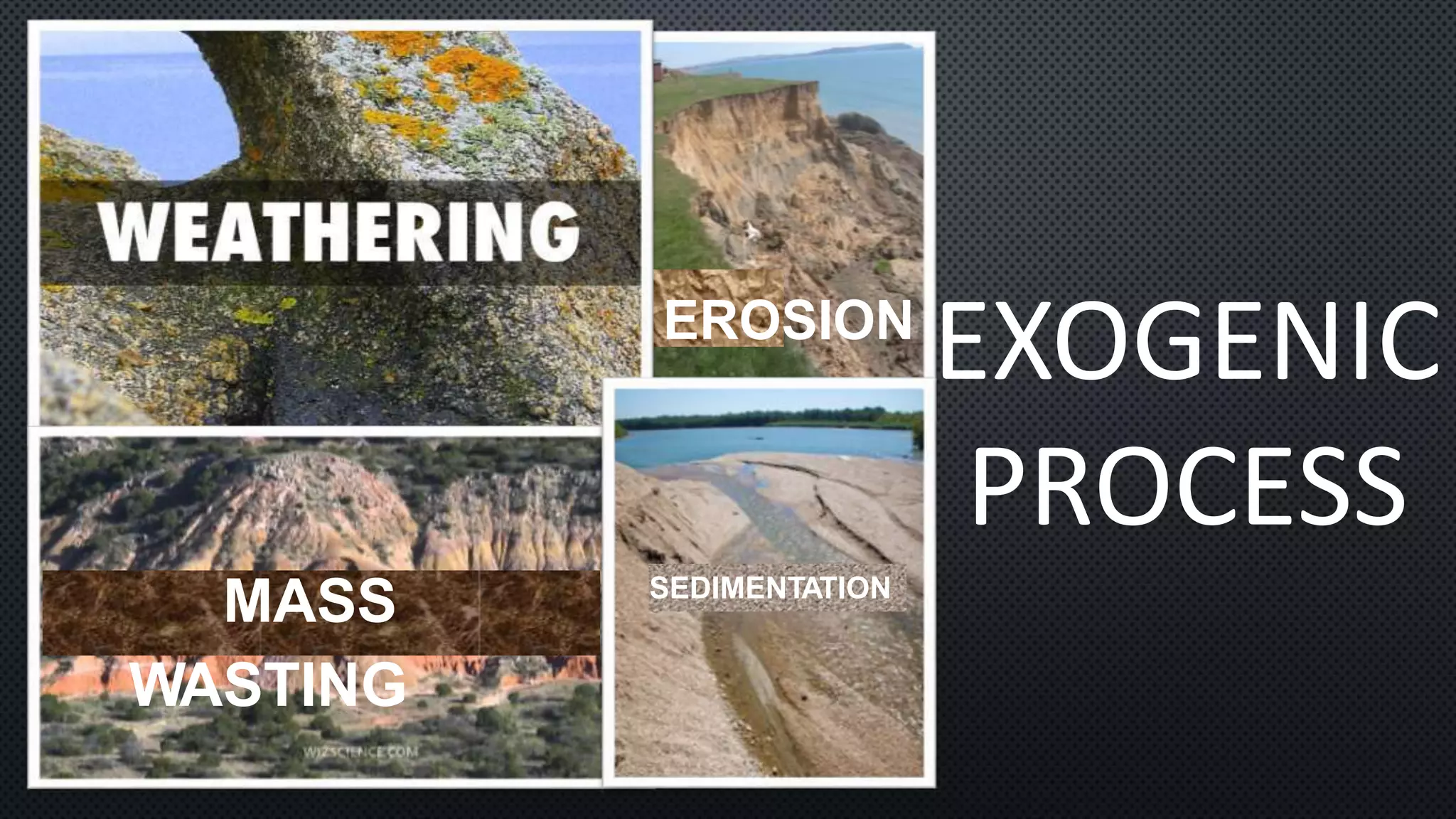
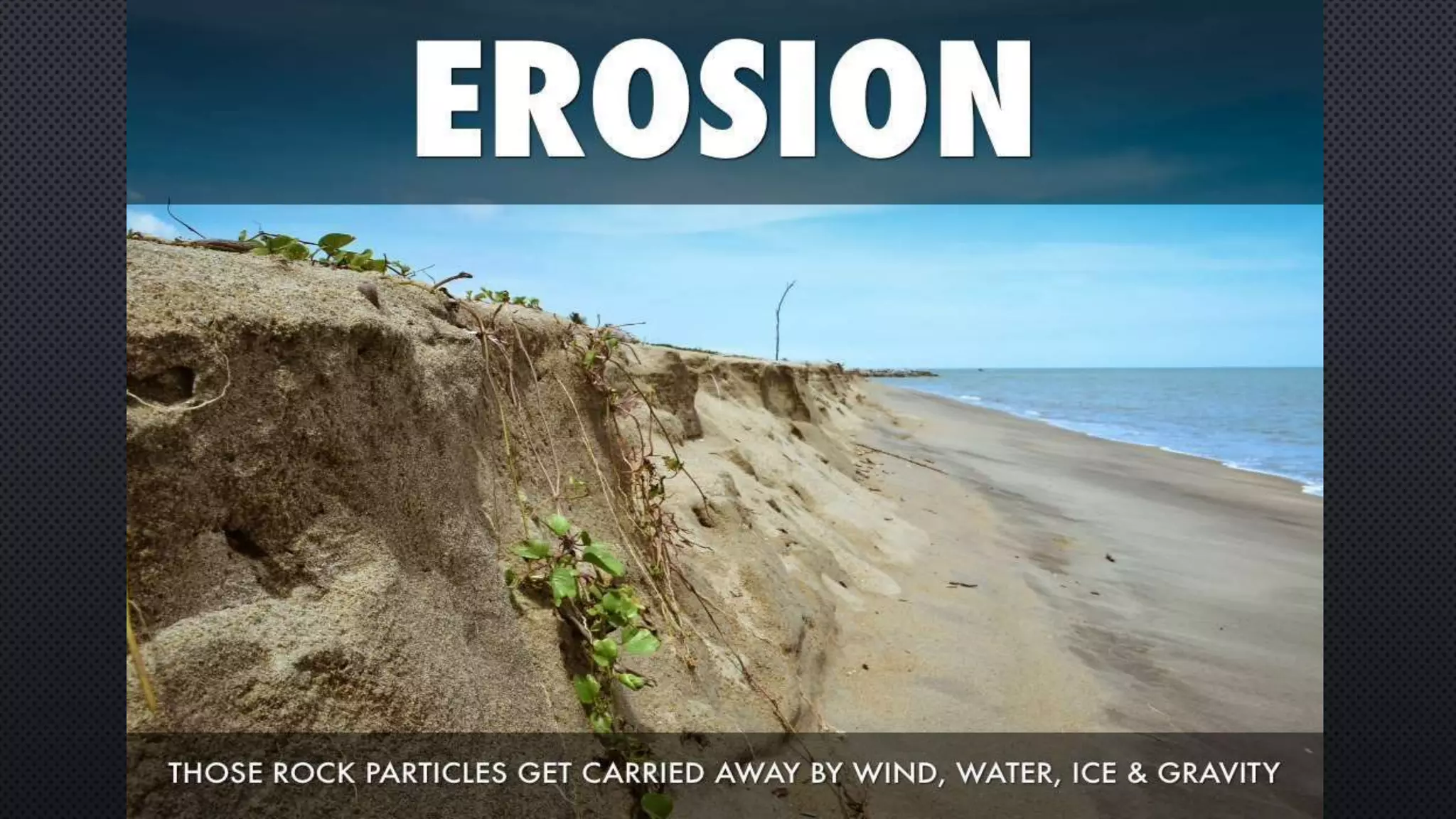
EROSION
MASS
WASTING
SEDIMENTATION
EXOGENIC
PROCESS
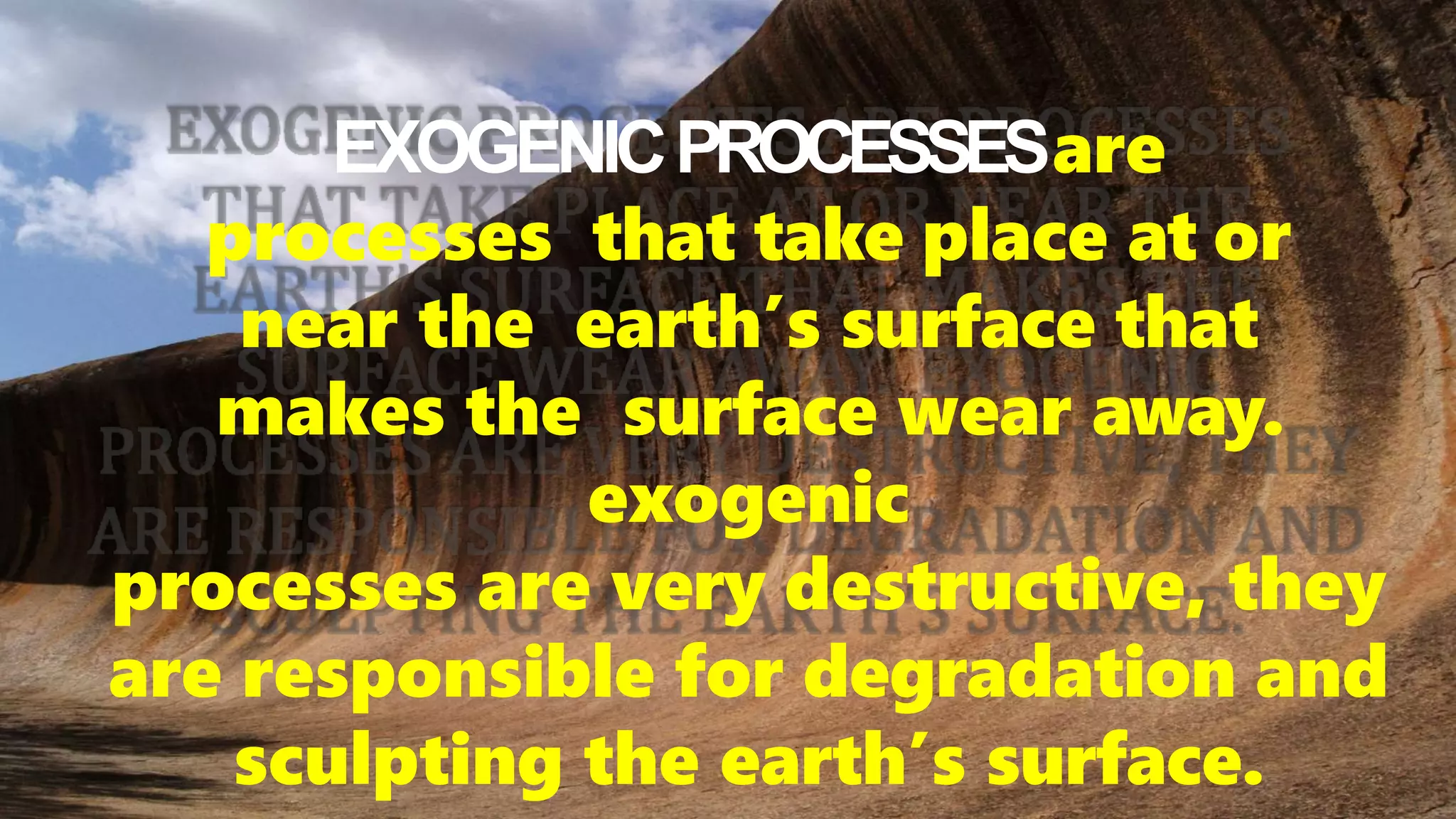
EXOGENICPROCESSESare
processes that take place at or
near the earth’s surface that
makes the surface wear away.
exogenic
processes are very destructive, they
are responsible for degradation and
sculpting the earth’s surface.
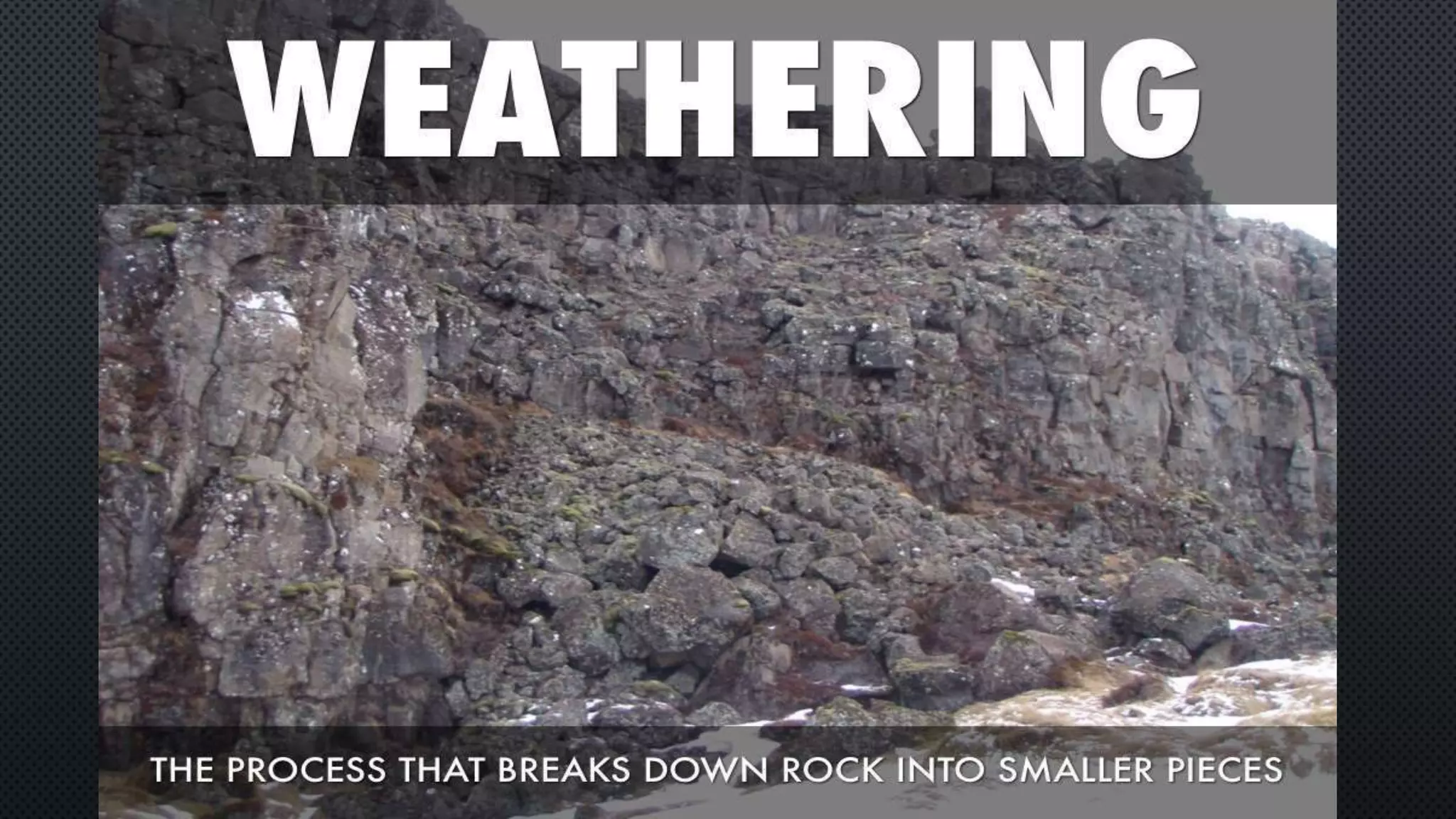
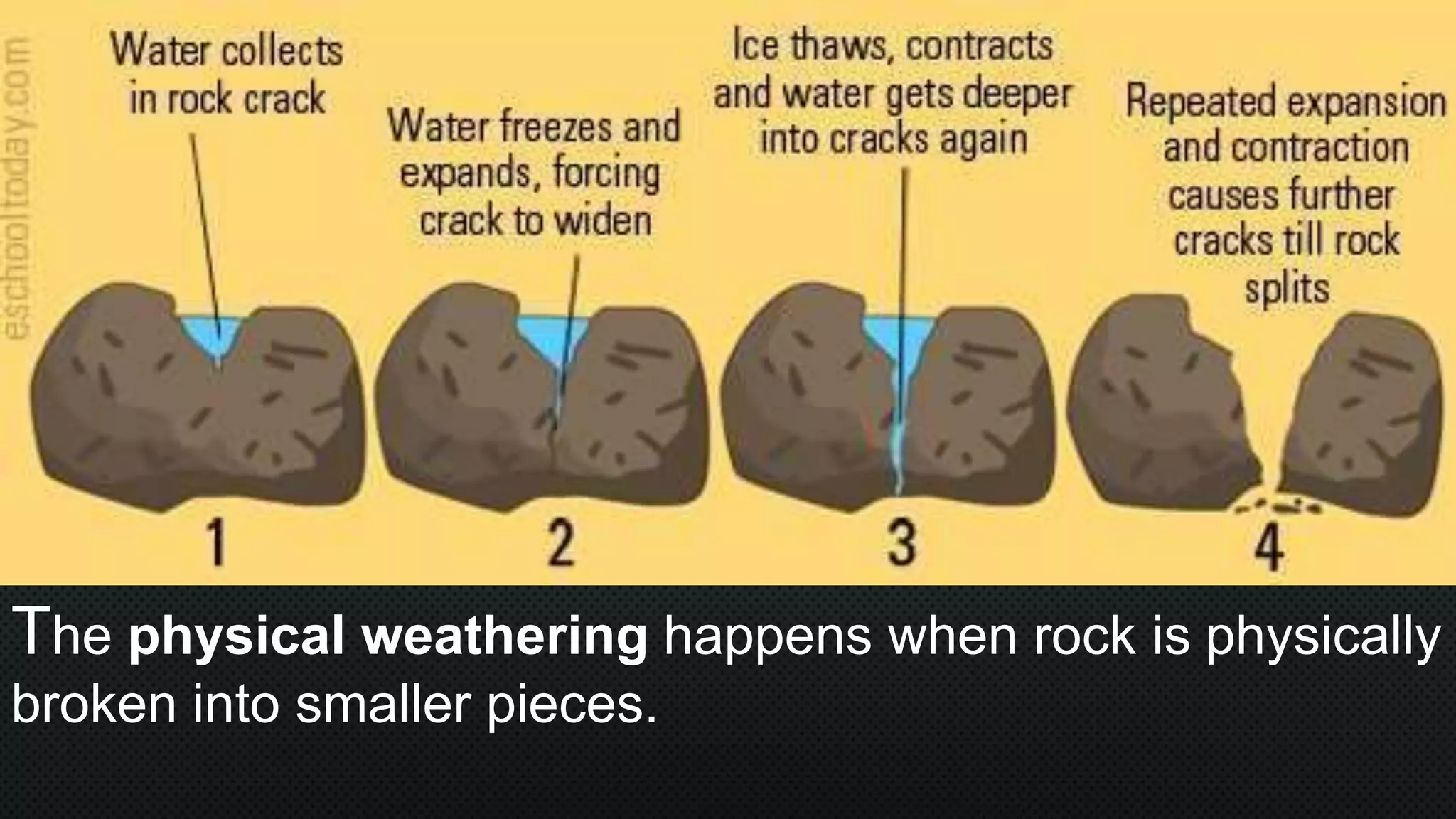
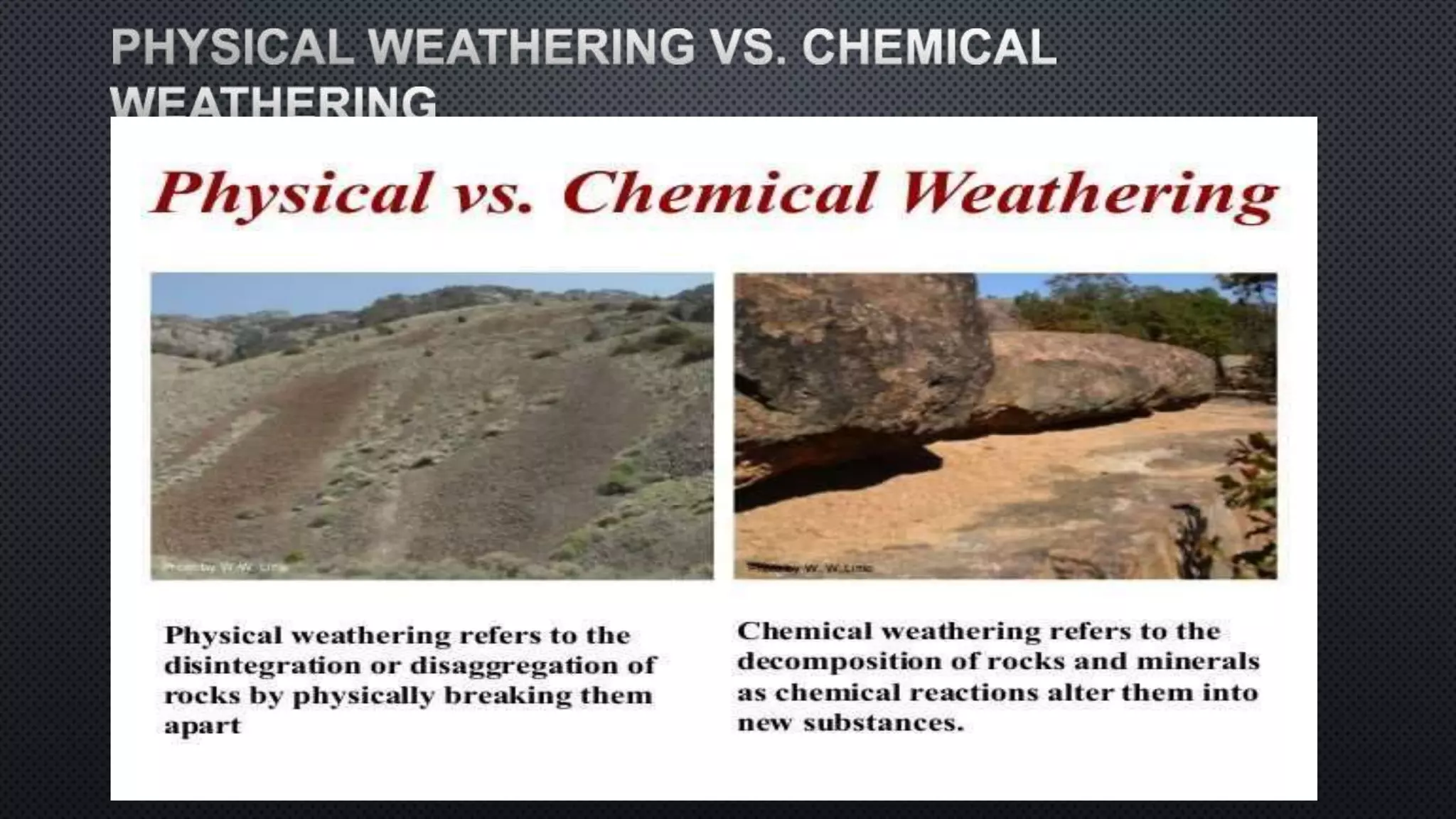
The physical weathering happens when rock is physically
broken into smaller pieces.
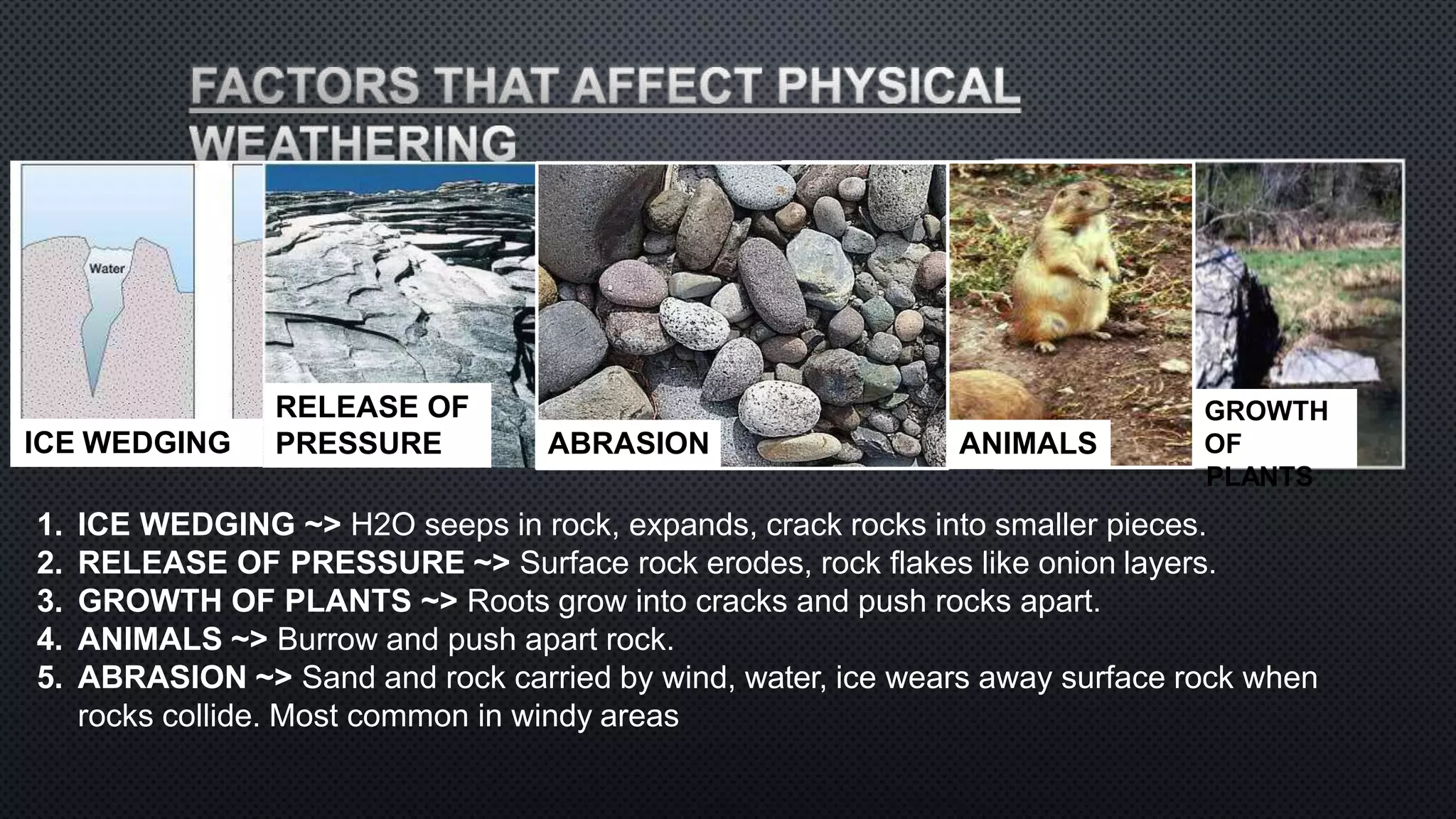
ICE WEDGING
ICE WEDGING
GROWTH
OF
RELEASE OF
PRESSURE ABRASION ANIMALS
PLANTS
1. ICE WEDGING ~> H2O seeps in rock, expands, crack rocks into smaller pieces.
2. RELEASE OF PRESSURE ~> Surface rock erodes, rock flakes like onion layers.
3. GROWTH OF PLANTS ~> Roots grow into cracks and push rocks apart.
4. ANIMALS ~> Burrow and push apart rock.
5. ABRASION ~> Sand and rock carried by wind, water, ice wears away surface rock when
rocks collide. Most common in windy areas
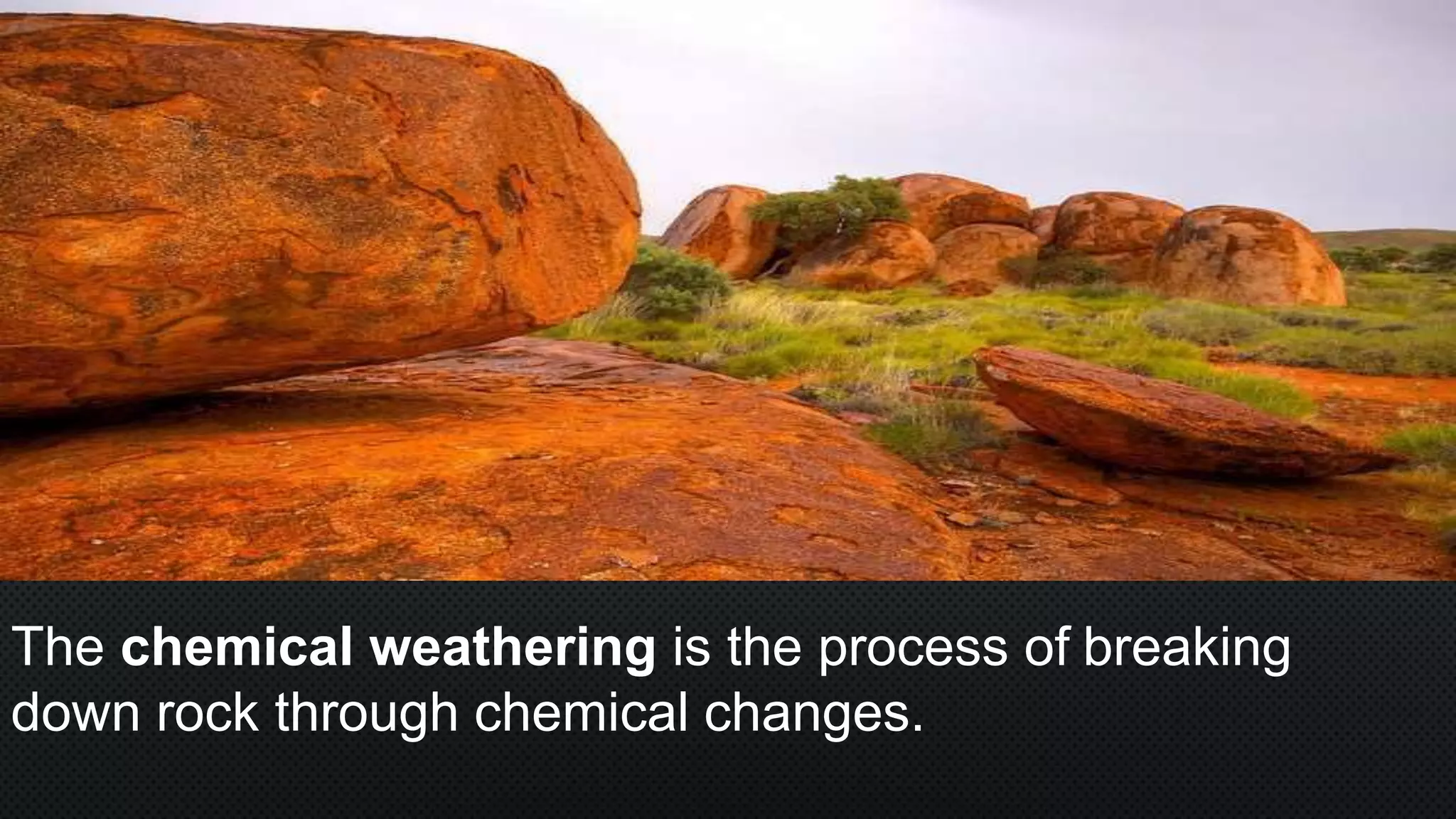
The chemical weathering is the process of breaking
down rock through chemical changes.
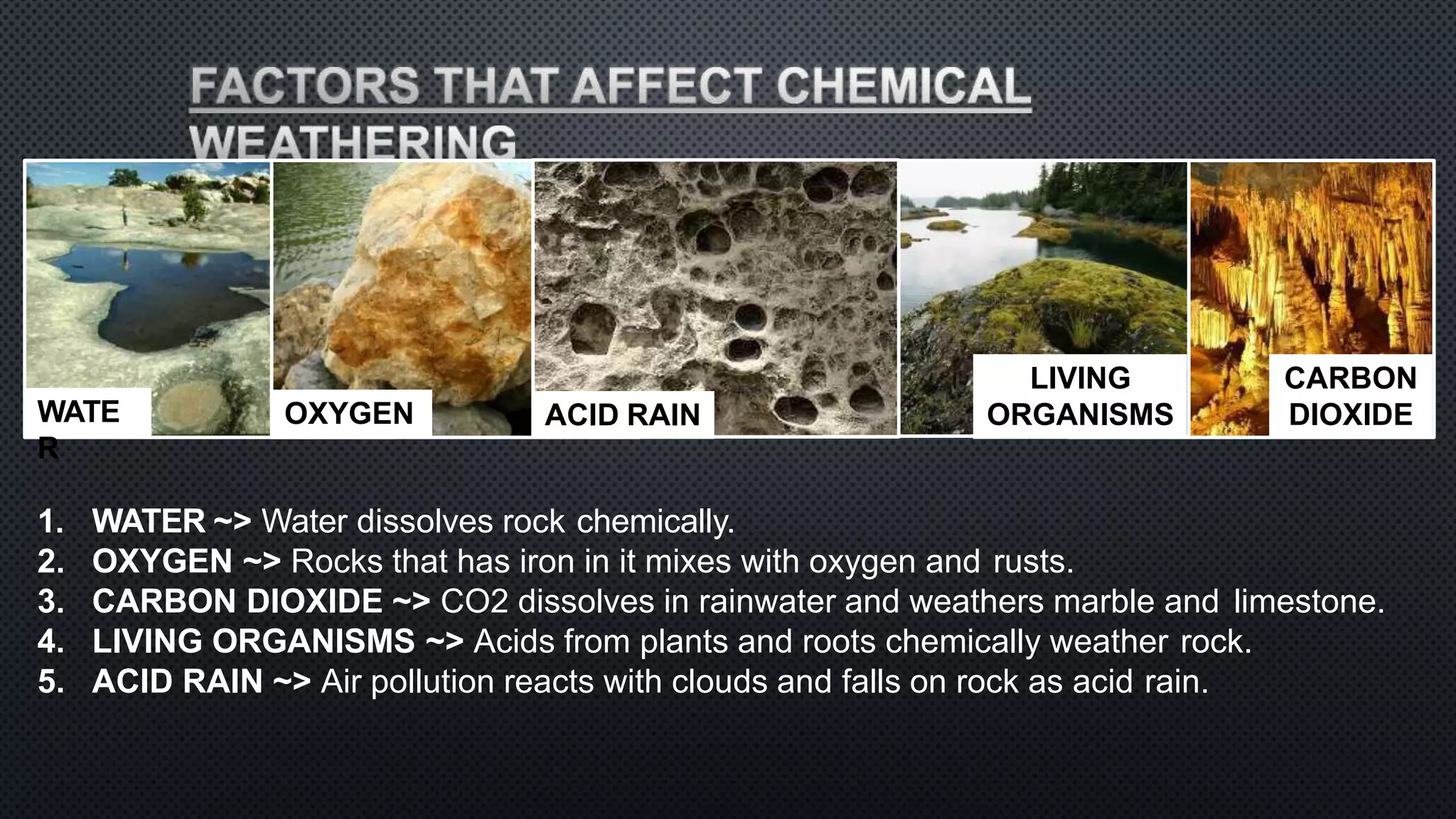
WATE
CARBON
DIOXIDE
LIVING
ORGANISMS
R
1. WATER ~> Water dissolves rock chemically.
2. OXYGEN ~> Rocks that has iron in it mixes with oxygen and rusts.
3. CARBON DIOXIDE ~> CO2 dissolves in rainwater and weathers marble and limestone.
4. LIVING ORGANISMS ~> Acids from plants and roots chemically weather rock.
5. ACID RAIN ~> Air pollution reacts with clouds and falls on rock as acid rain.
OXYGEN ACID RAIN
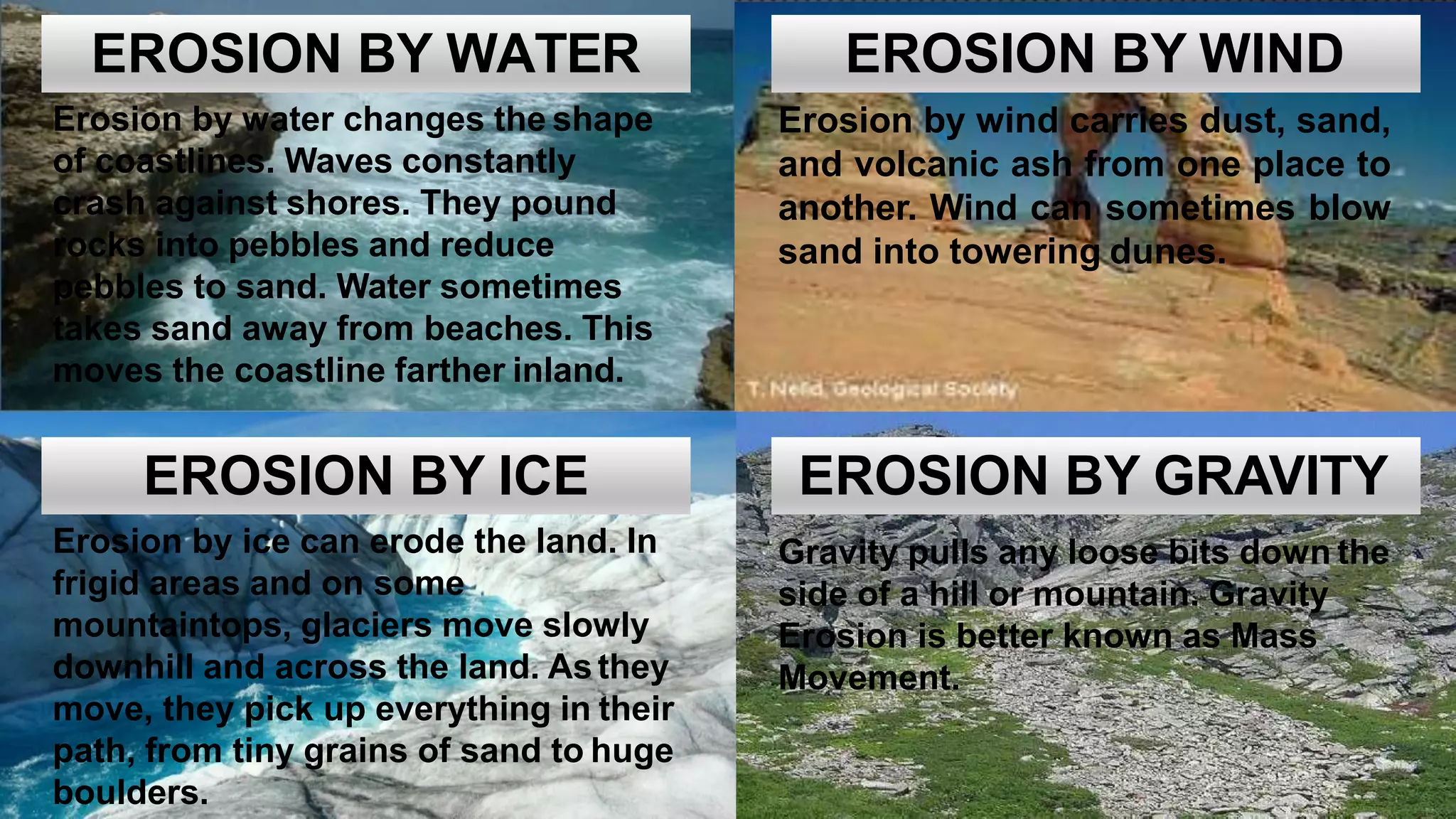
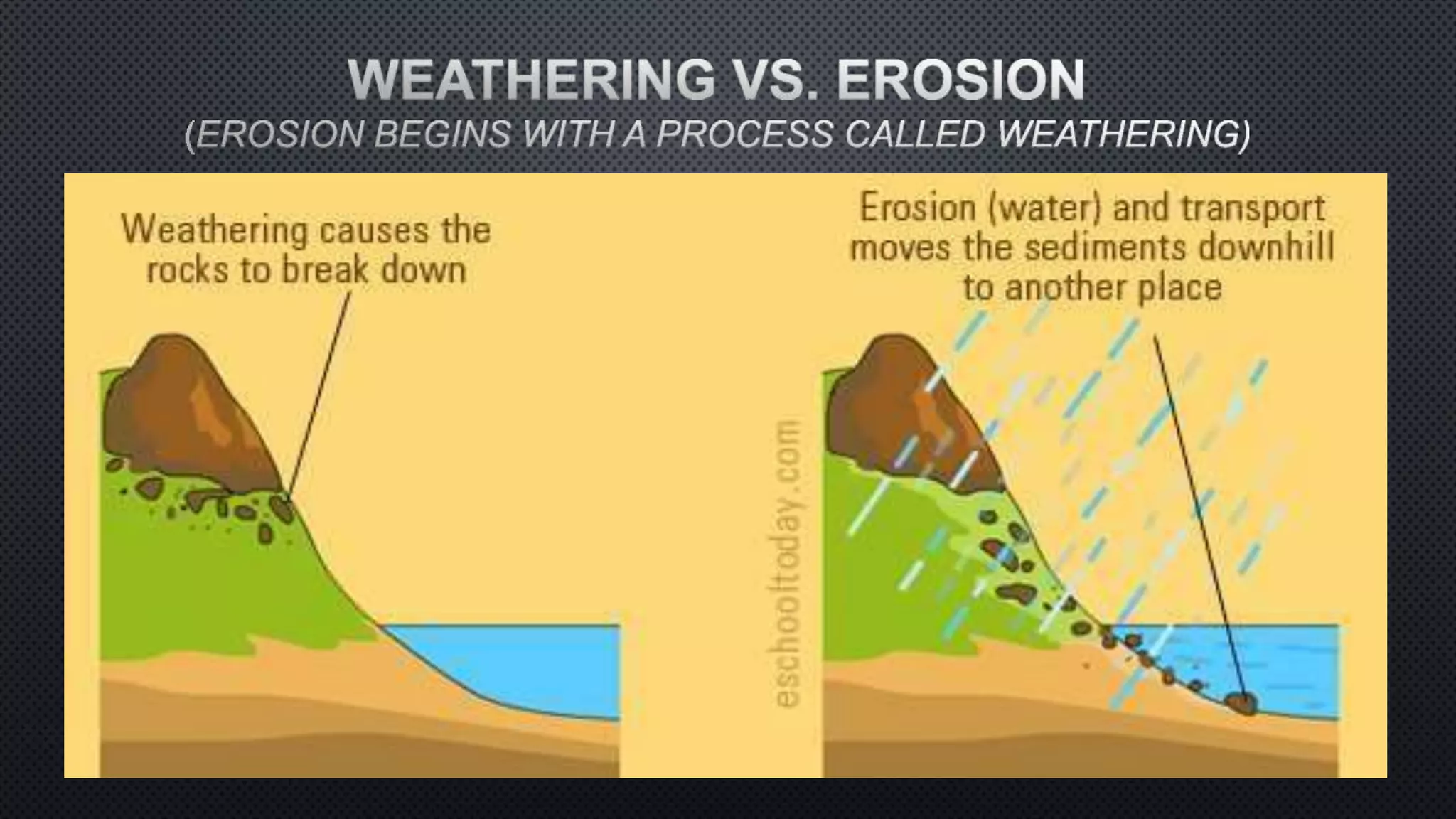
EROSION BY WATER
EROSION BY GRAVITY
EROSION BY WIND
EROSION BY ICE
Erosion by water changes the shape
of coastlines. Waves constantly
crash against shores. They pound
rocks into pebbles and reduce
pebbles to sand. Water sometimes
takes sand away from beaches. This
moves the coastline farther inland.
Gravity pulls any loose bits down the
side of a hill or mountain. Gravity
Erosion is better known as Mass
Movement.
Erosion by ice can erode the land. In
frigid areas and on some
mountaintops, glaciers move slowly
downhill and across the land. Asthey
move, they pick up everything in their
path, from tiny grains of sand to huge
boulders.
Erosion by wind carries dust, sand,
and volcanic ash from one place to
another. Wind can sometimes blow
sand into towering dunes.
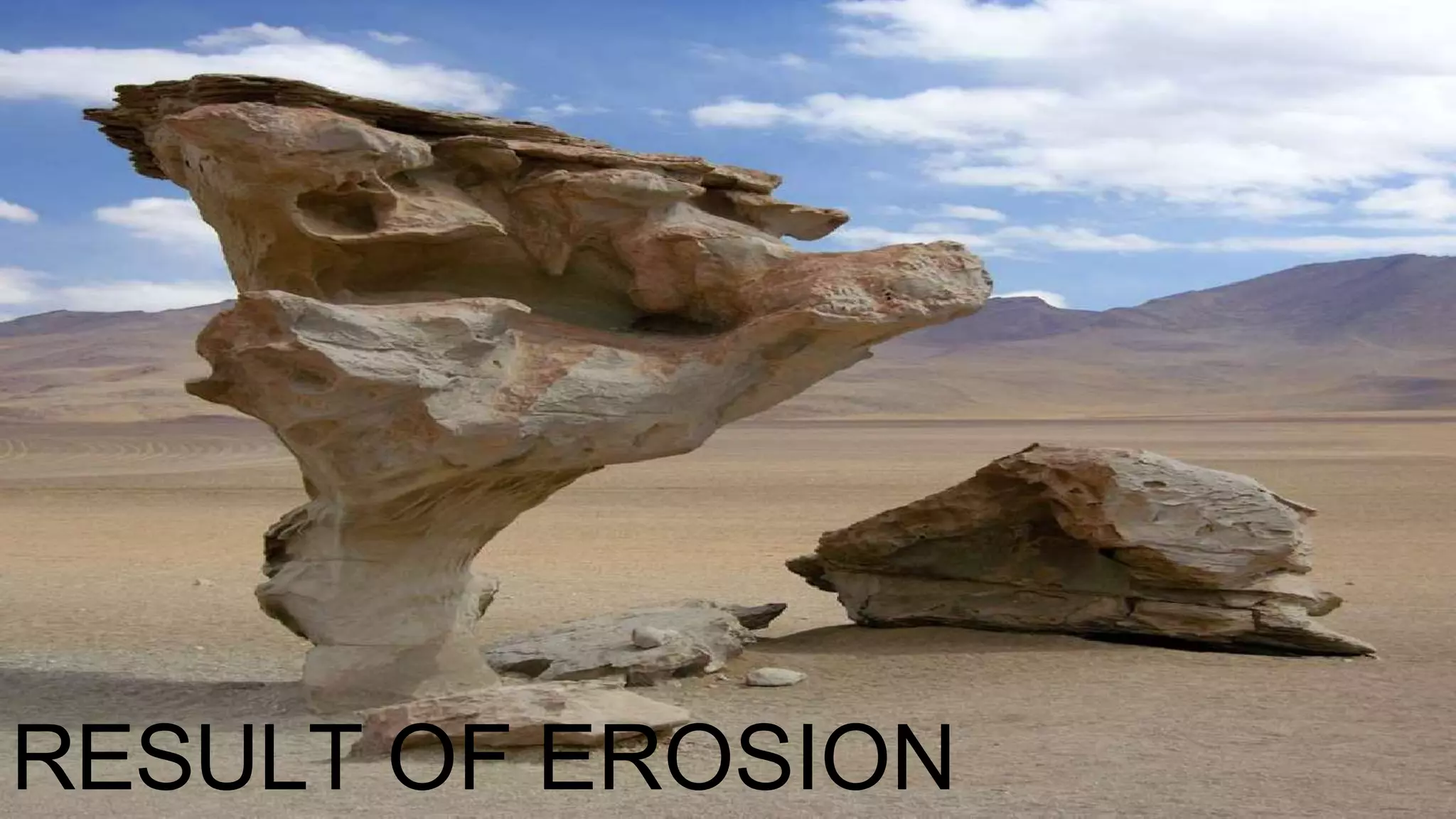
RESULT OF EROSION
REGOLITH ~> When weathered rock remains in place and
remains in its pure state.
SEDIMENT ~> When weathered material is removed from the
site of weathering.
MOVING WATER ~> It is the main agent of erosion.
PEOPLE ~> Nowadays, people became one of the causes of
erosion.
WEATHERING AND EROSION ~> Weathered rock material will
be removed from its original site and transported away by a
natural agent.
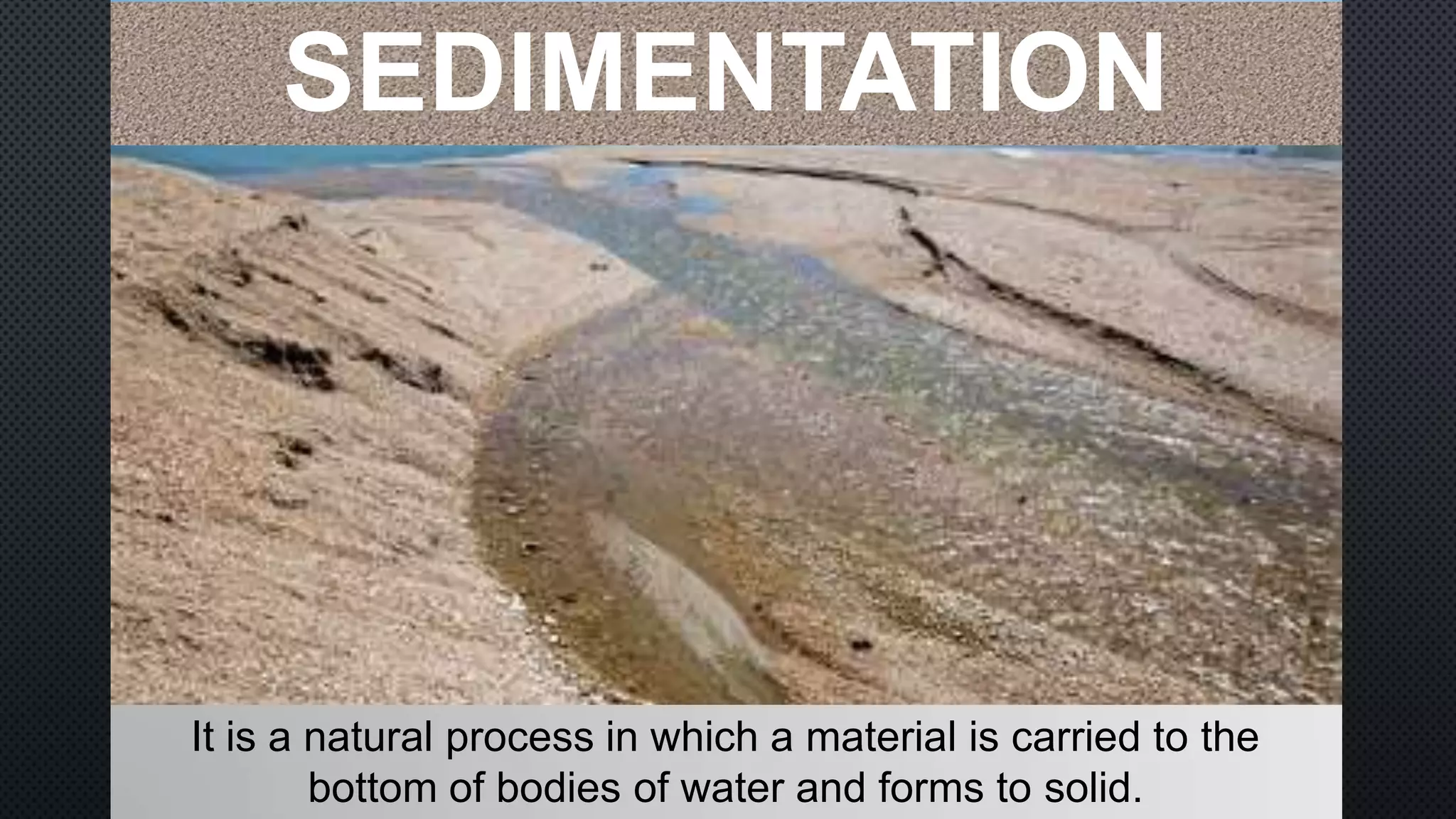
It is a natural process in which a material is carried to the
bottom of bodies of water and forms to solid.
SEDIMENTATION
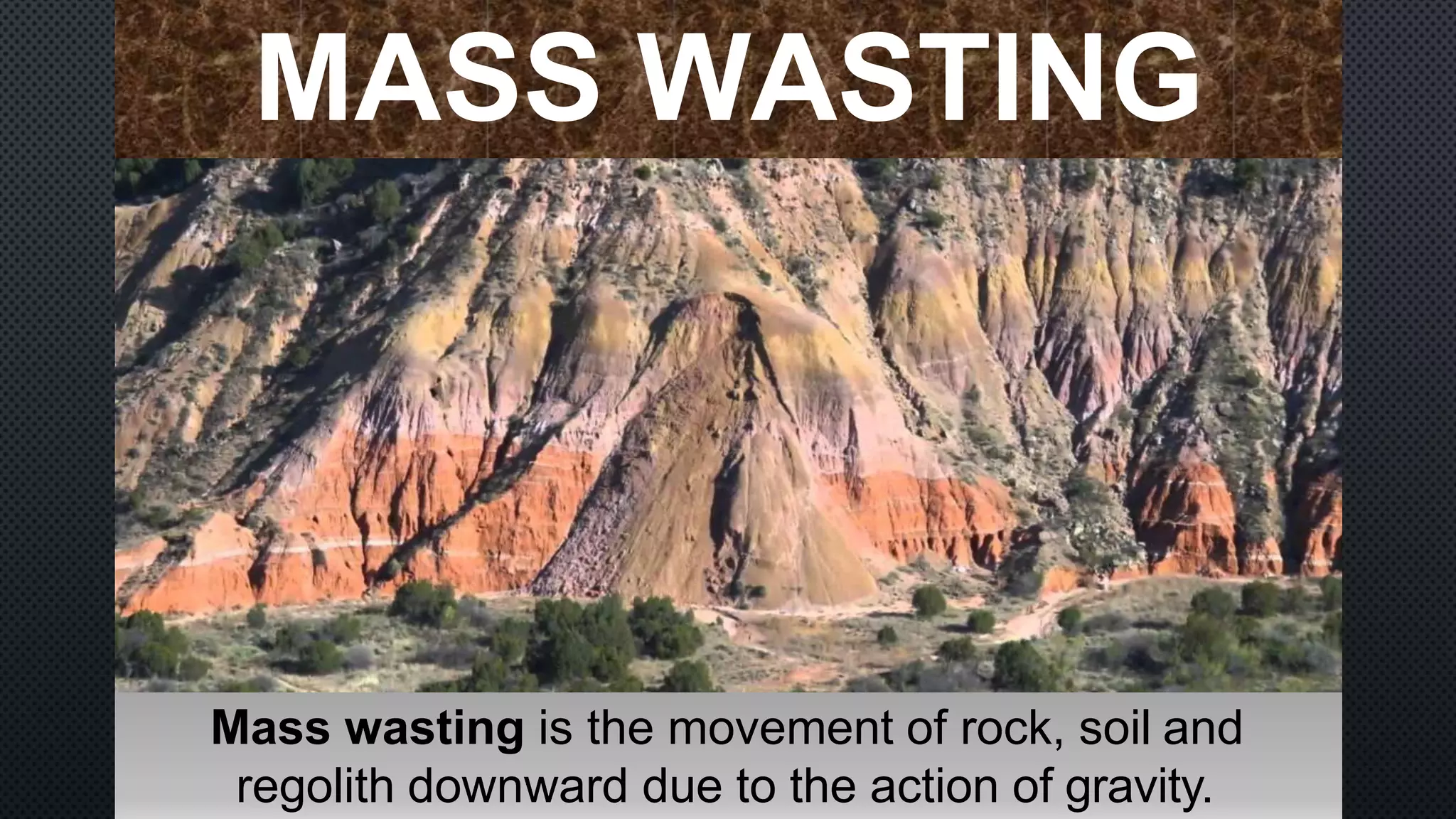
MASS WASTING
Mass wasting is the movement of rock, soil and
regolith downward due to the action of gravity.
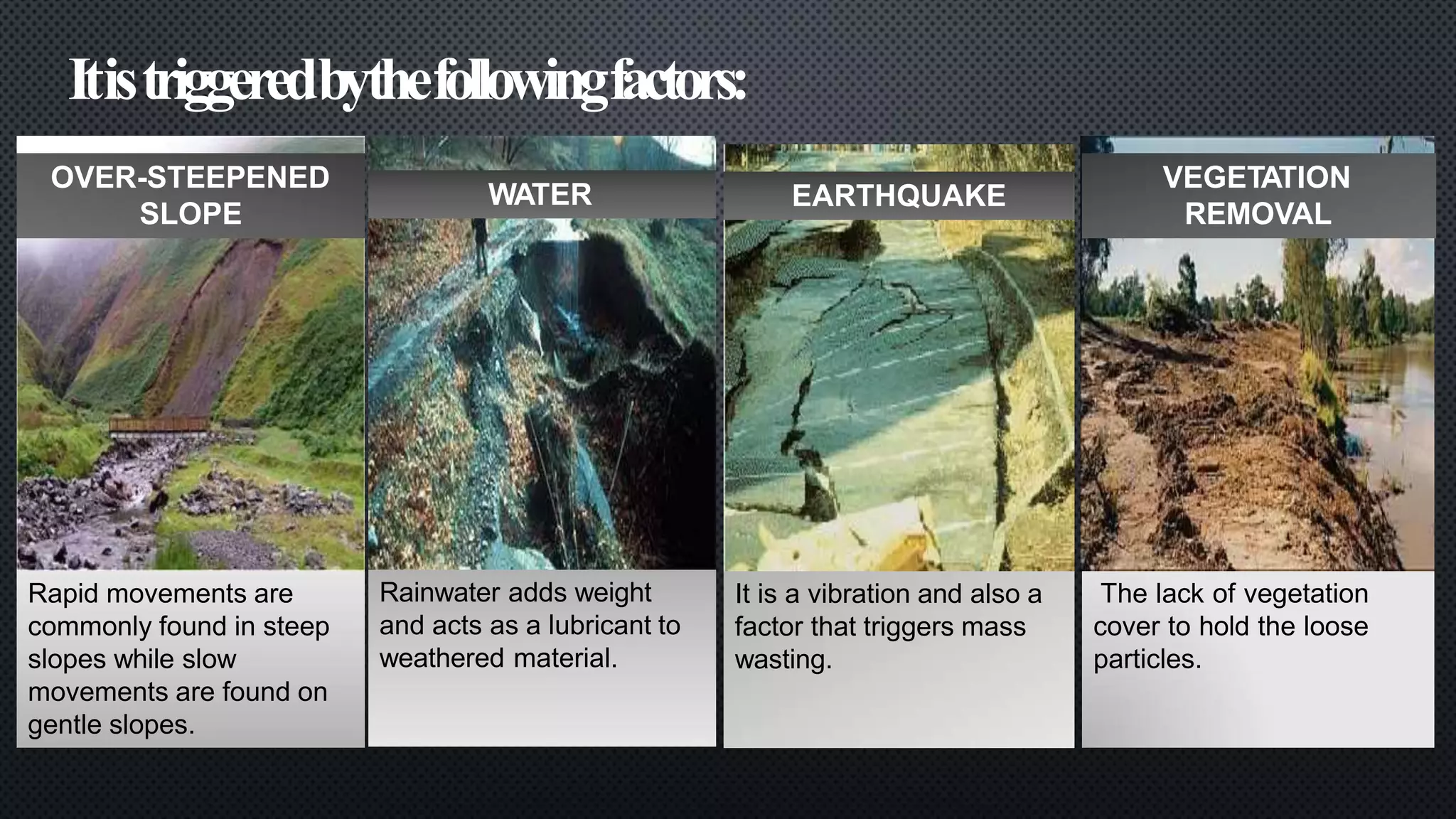
Itistriggeredbythefollowingfactors:
WATER EARTHQUAKE
Rainwater adds weight
and acts as a lubricant to
weathered material.
It is a vibration and also a
factor that triggers mass
wasting.
The lack of vegetation
cover to hold the loose
particles.
VEGETATION
REMOVAL
OVER-STEEPENED
SLOPE
Rapid movements are
commonly found in steep
slopes while slow
movements are found on
gentle slopes.
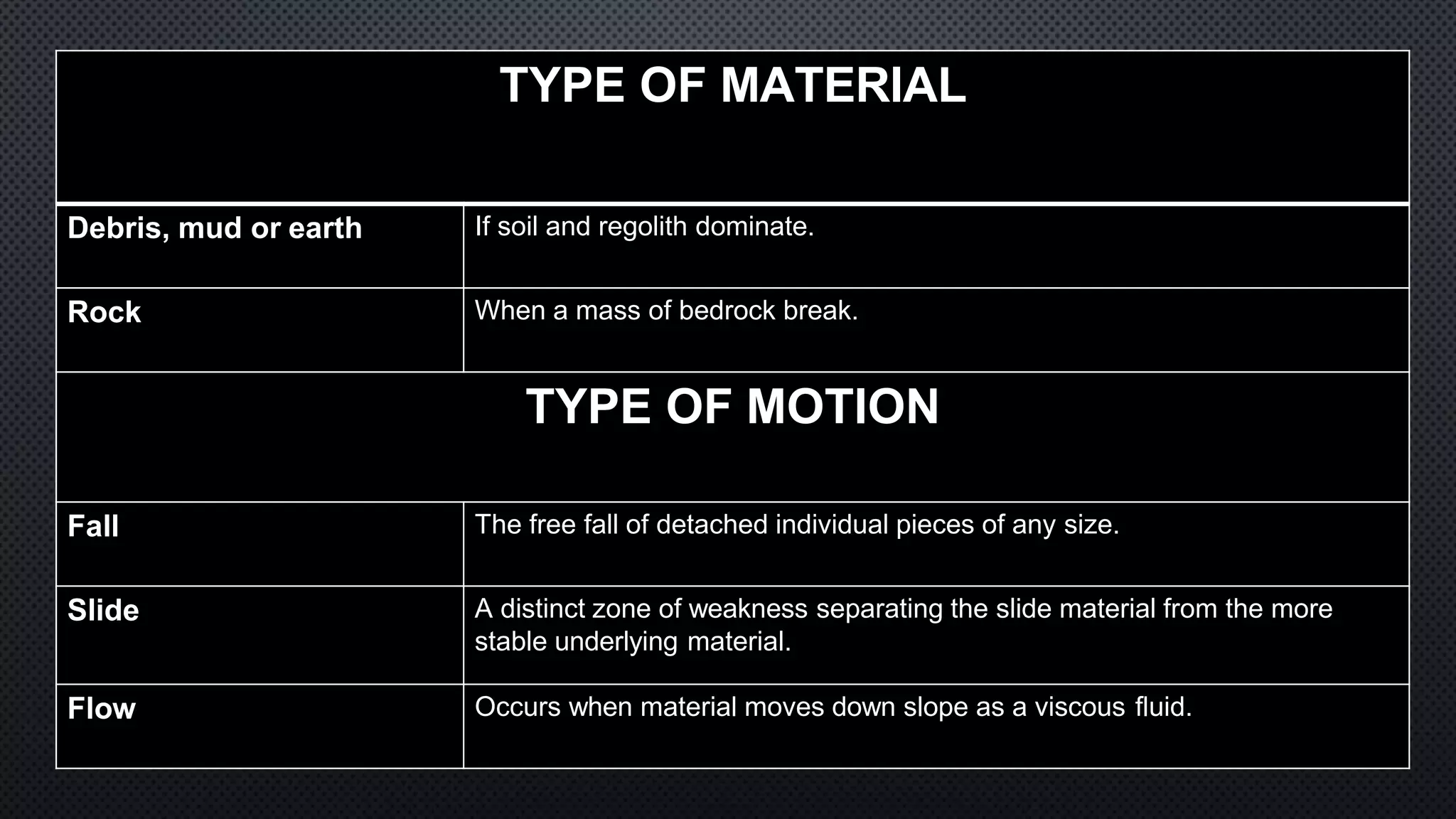
TYPE OF MATERIAL
Debris, mud or earth If soil and regolith dominate.
Rock When a mass of bedrock break.
TYPE OF MOTION
Fall The free fall of detached individual pieces of any size.
Slide A distinct zone of weakness separating the slide material from the more
stable underlying material.
Flow Occurs when material moves down slope as a viscous fluid.
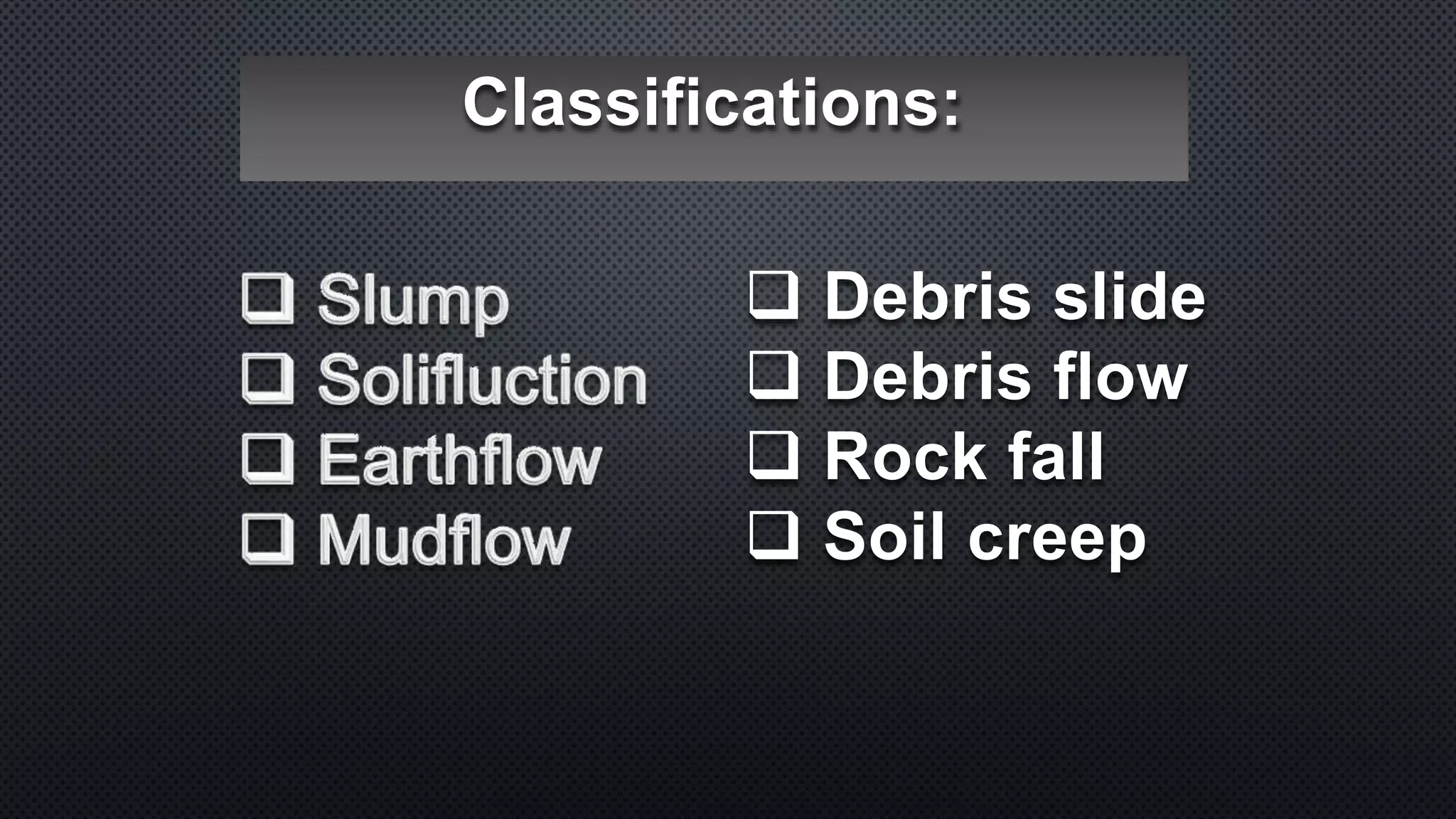
Classifications:
 Debris slide
 Debris flow
 Rock fall
 Soil creep
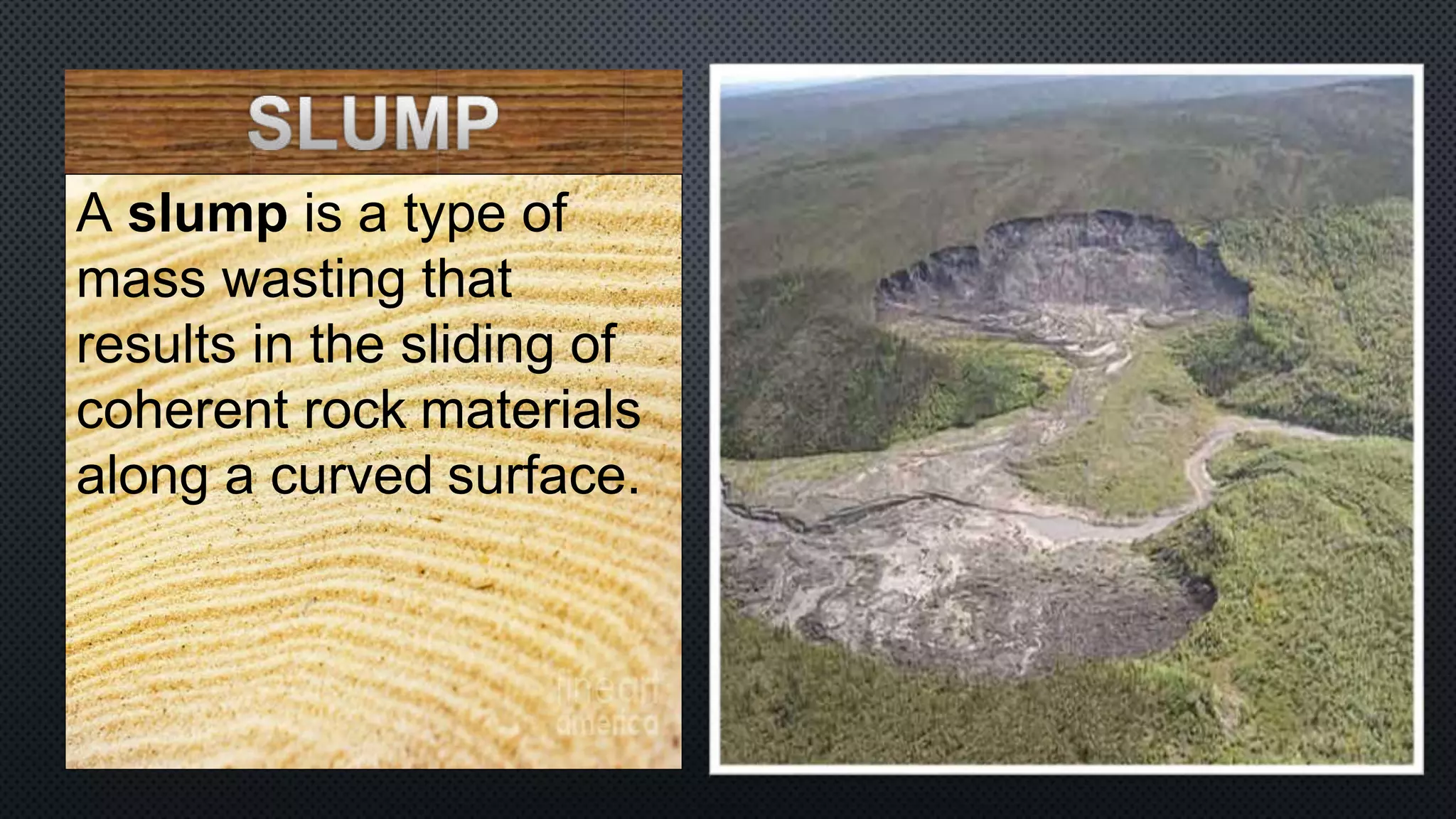
A slump is a type of
mass wasting that
results in the sliding of
coherent rock materials
along a curved surface.
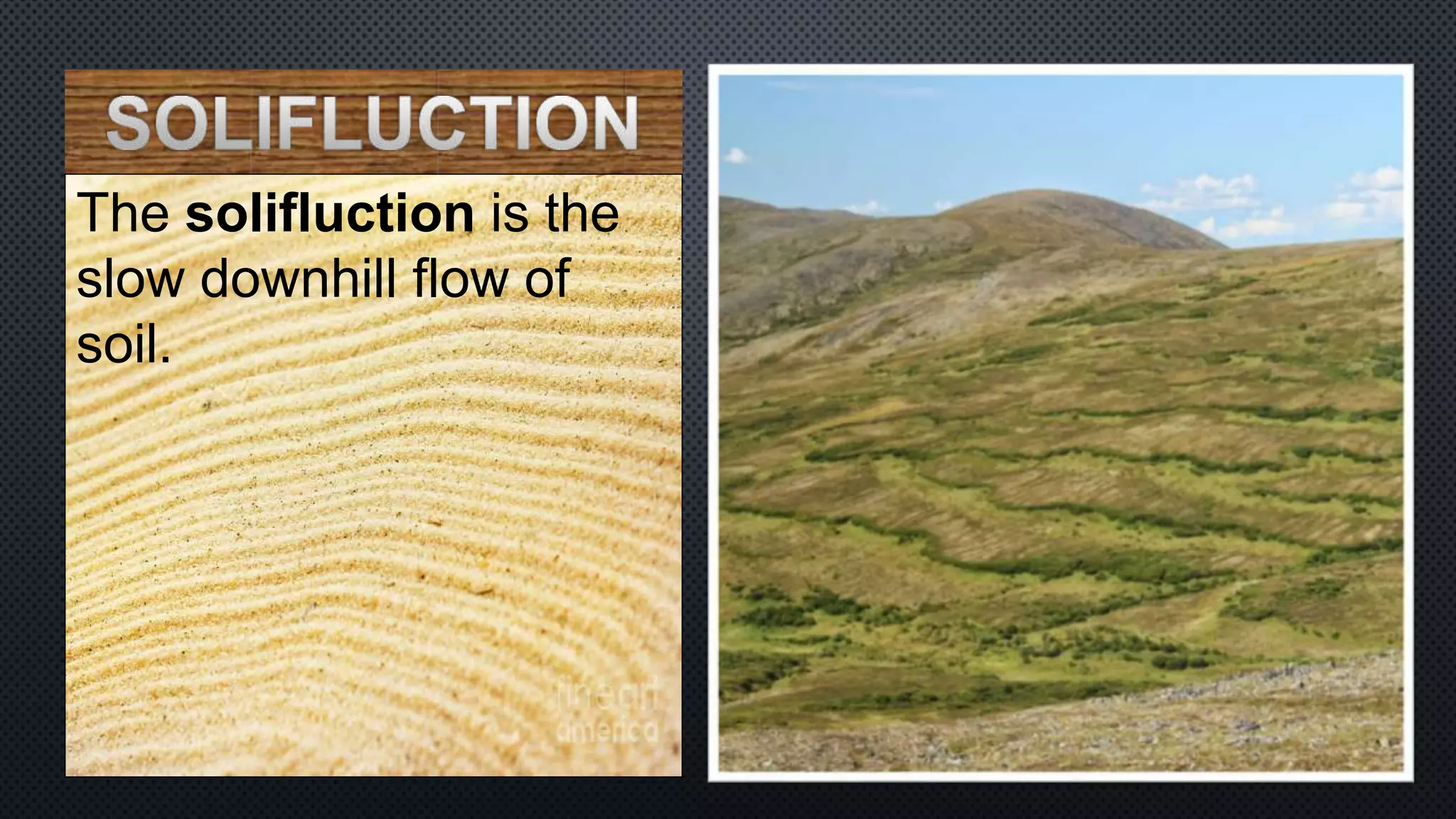
The solifluction is the
slow downhill flow of
soil.
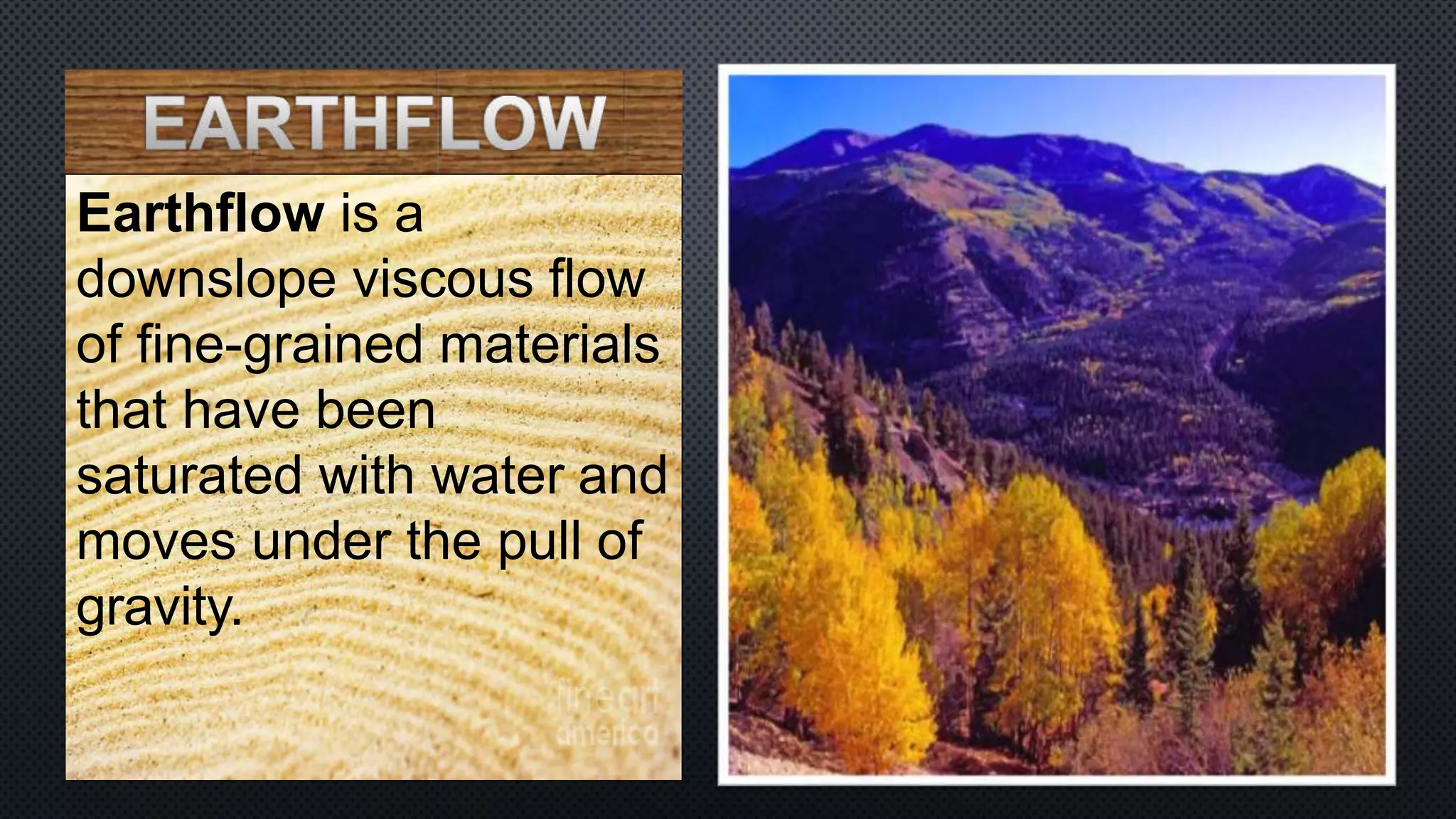
Earthflow is a
downslope viscous flow
of fine-grained materials
that have been
saturated with water and
moves under the pull of
gravity.
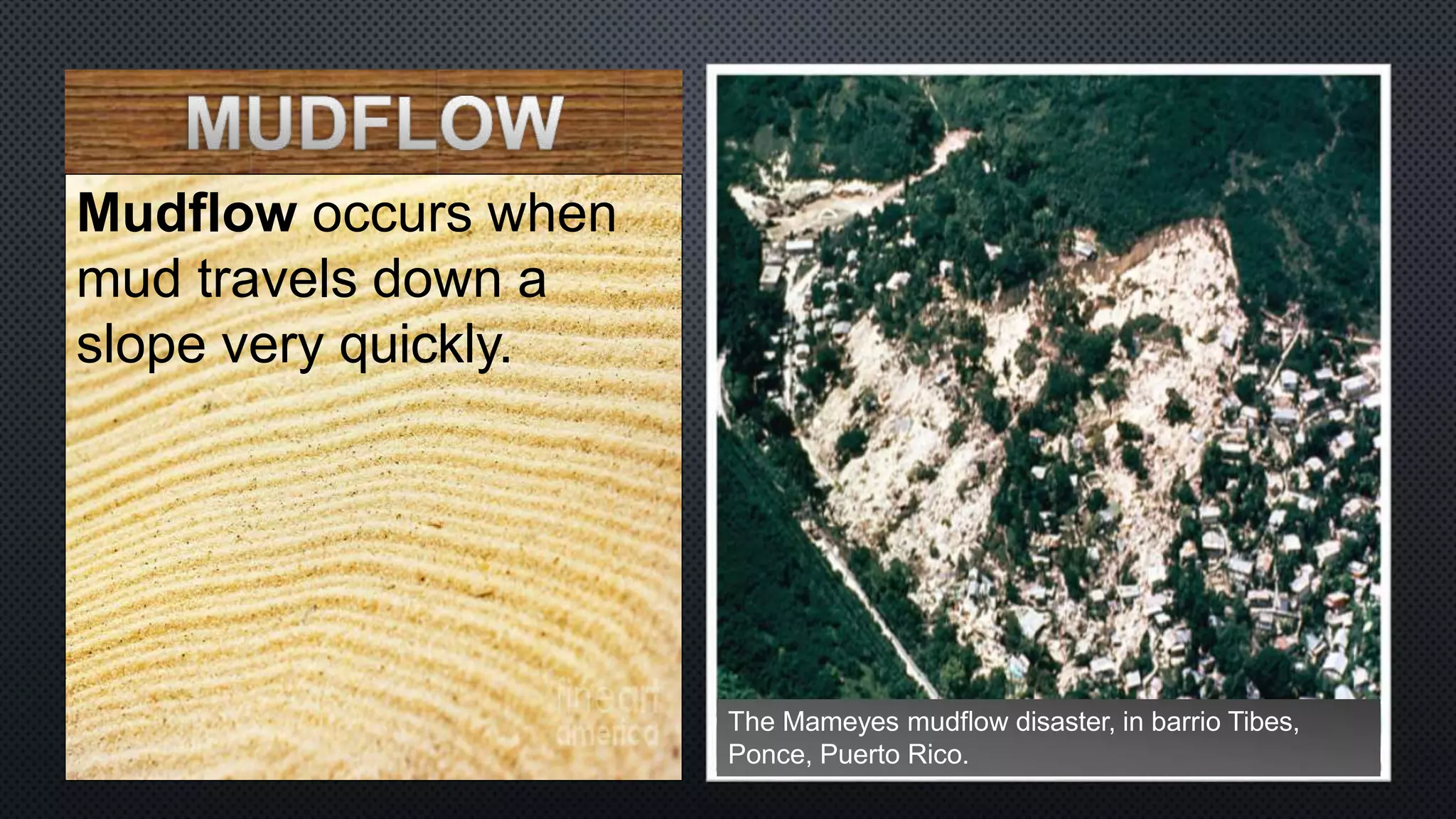
Mudflow occurs when
mud travels down a
slope very quickly.
The Mameyes mudflow disaster, in barrio Tibes,
Ponce, Puerto Rico.
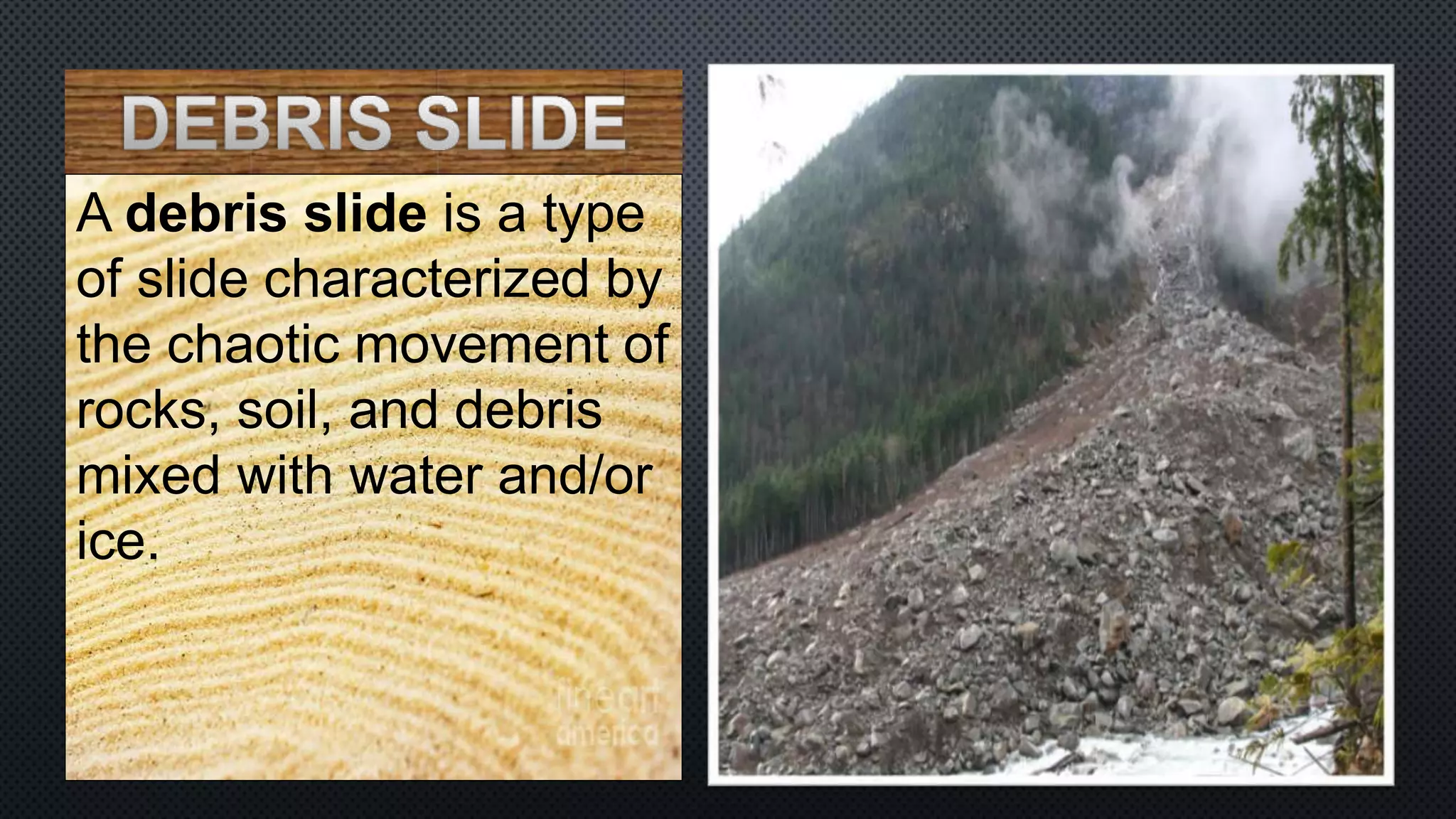
A debris slide is a type
of slide characterized by
the chaotic movement of
rocks, soil, and debris
mixed with water and/or
ice.
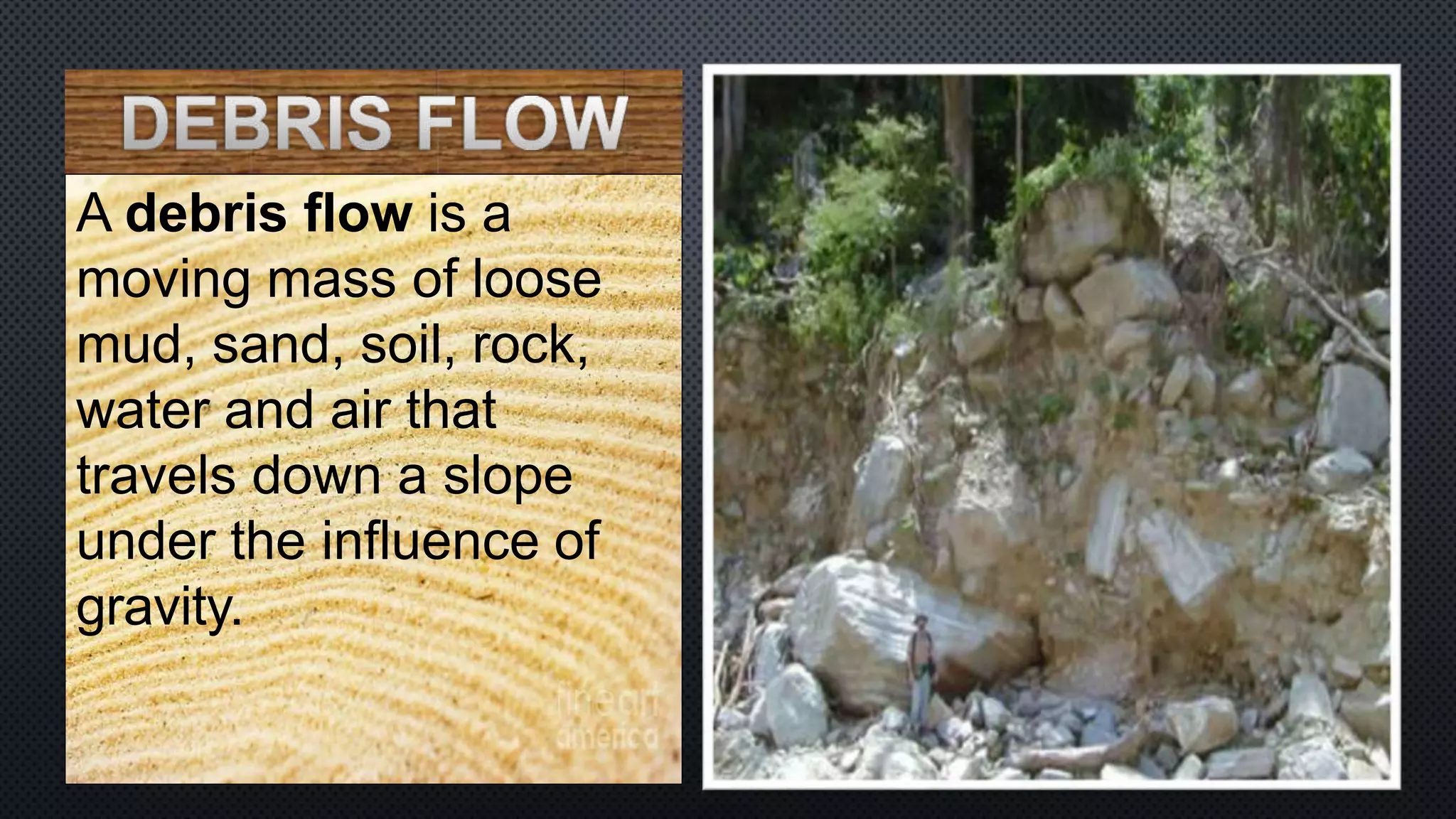
A debris flow is a
moving mass of loose
mud, sand, soil, rock,
water and air that
travels down a slope
under the influence of
gravity.
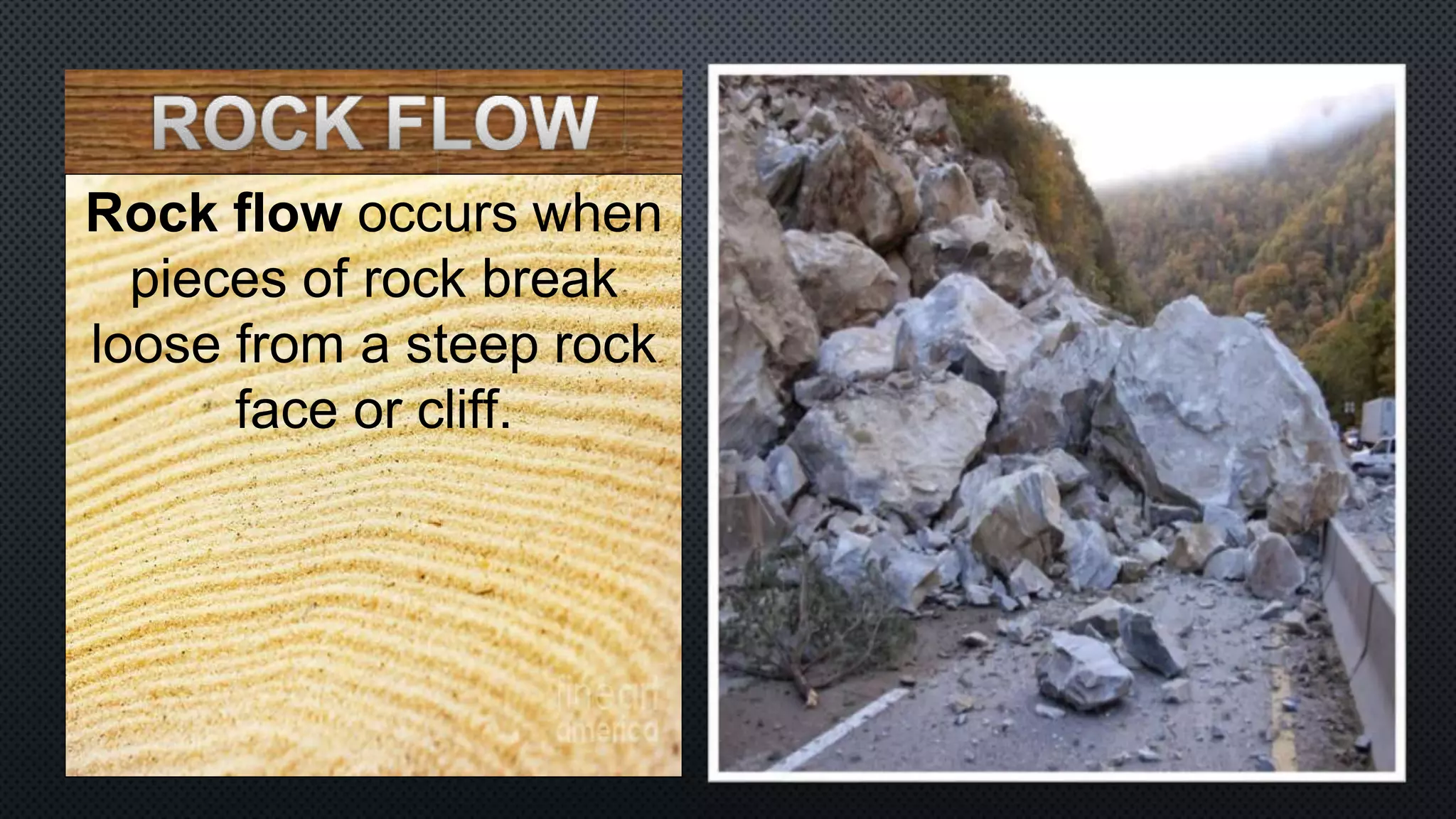
Rock flow occurs when
pieces of rock break
loose from a steep rock
face or cliff.
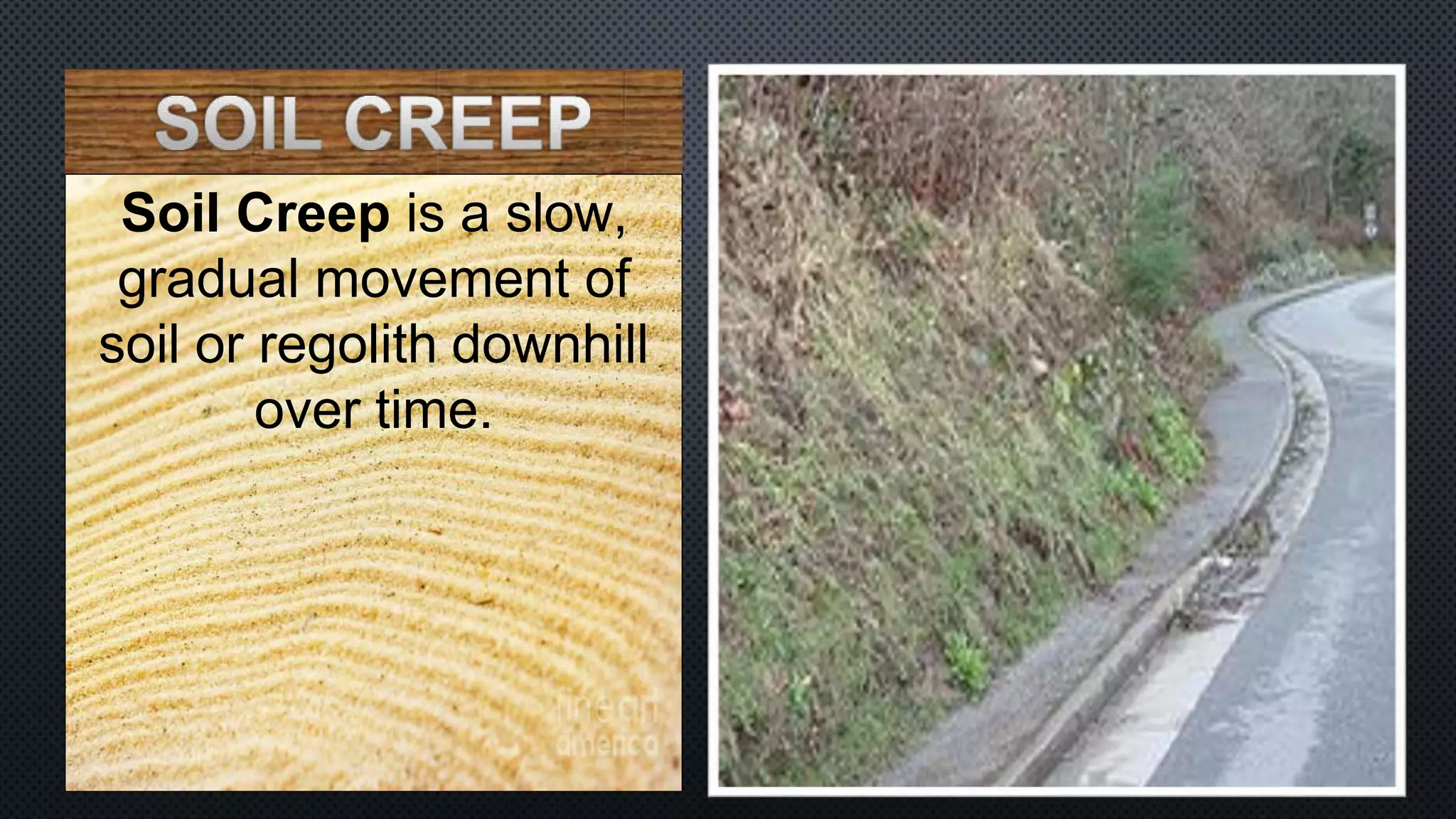
Soil Creep is a slow,
gradual movement of
soil or regolith downhill
over time.
•
•

Exogenic Process.pptx

  • 1.
  • 2.
    EXOGENICPROCESSESare processes that takeplace at or near the earth’s surface that makes the surface wear away. exogenic processes are very destructive, they are responsible for degradation and sculpting the earth’s surface.
  • 5.
    The physical weatheringhappens when rock is physically broken into smaller pieces.
  • 6.
    ICE WEDGING ICE WEDGING GROWTH OF RELEASEOF PRESSURE ABRASION ANIMALS PLANTS 1. ICE WEDGING ~> H2O seeps in rock, expands, crack rocks into smaller pieces. 2. RELEASE OF PRESSURE ~> Surface rock erodes, rock flakes like onion layers. 3. GROWTH OF PLANTS ~> Roots grow into cracks and push rocks apart. 4. ANIMALS ~> Burrow and push apart rock. 5. ABRASION ~> Sand and rock carried by wind, water, ice wears away surface rock when rocks collide. Most common in windy areas
  • 7.
    The chemical weatheringis the process of breaking down rock through chemical changes.
  • 8.
    WATE CARBON DIOXIDE LIVING ORGANISMS R 1. WATER ~>Water dissolves rock chemically. 2. OXYGEN ~> Rocks that has iron in it mixes with oxygen and rusts. 3. CARBON DIOXIDE ~> CO2 dissolves in rainwater and weathers marble and limestone. 4. LIVING ORGANISMS ~> Acids from plants and roots chemically weather rock. 5. ACID RAIN ~> Air pollution reacts with clouds and falls on rock as acid rain. OXYGEN ACID RAIN
  • 12.
    EROSION BY WATER EROSIONBY GRAVITY EROSION BY WIND EROSION BY ICE Erosion by water changes the shape of coastlines. Waves constantly crash against shores. They pound rocks into pebbles and reduce pebbles to sand. Water sometimes takes sand away from beaches. This moves the coastline farther inland. Gravity pulls any loose bits down the side of a hill or mountain. Gravity Erosion is better known as Mass Movement. Erosion by ice can erode the land. In frigid areas and on some mountaintops, glaciers move slowly downhill and across the land. Asthey move, they pick up everything in their path, from tiny grains of sand to huge boulders. Erosion by wind carries dust, sand, and volcanic ash from one place to another. Wind can sometimes blow sand into towering dunes.
  • 13.
  • 15.
    REGOLITH ~> Whenweathered rock remains in place and remains in its pure state. SEDIMENT ~> When weathered material is removed from the site of weathering. MOVING WATER ~> It is the main agent of erosion. PEOPLE ~> Nowadays, people became one of the causes of erosion. WEATHERING AND EROSION ~> Weathered rock material will be removed from its original site and transported away by a natural agent.
  • 16.
    It is anatural process in which a material is carried to the bottom of bodies of water and forms to solid. SEDIMENTATION
  • 18.
    MASS WASTING Mass wastingis the movement of rock, soil and regolith downward due to the action of gravity.
  • 19.
    Itistriggeredbythefollowingfactors: WATER EARTHQUAKE Rainwater addsweight and acts as a lubricant to weathered material. It is a vibration and also a factor that triggers mass wasting. The lack of vegetation cover to hold the loose particles. VEGETATION REMOVAL OVER-STEEPENED SLOPE Rapid movements are commonly found in steep slopes while slow movements are found on gentle slopes.
  • 20.
    TYPE OF MATERIAL Debris,mud or earth If soil and regolith dominate. Rock When a mass of bedrock break. TYPE OF MOTION Fall The free fall of detached individual pieces of any size. Slide A distinct zone of weakness separating the slide material from the more stable underlying material. Flow Occurs when material moves down slope as a viscous fluid.
  • 21.
    Classifications:  Debris slide Debris flow  Rock fall  Soil creep
  • 22.
    A slump isa type of mass wasting that results in the sliding of coherent rock materials along a curved surface.
  • 23.
    The solifluction isthe slow downhill flow of soil.
  • 24.
    Earthflow is a downslopeviscous flow of fine-grained materials that have been saturated with water and moves under the pull of gravity.
  • 25.
    Mudflow occurs when mudtravels down a slope very quickly. The Mameyes mudflow disaster, in barrio Tibes, Ponce, Puerto Rico.
  • 26.
    A debris slideis a type of slide characterized by the chaotic movement of rocks, soil, and debris mixed with water and/or ice.
  • 27.
    A debris flowis a moving mass of loose mud, sand, soil, rock, water and air that travels down a slope under the influence of gravity.
  • 28.
    Rock flow occurswhen pieces of rock break loose from a steep rock face or cliff.
  • 29.
    Soil Creep isa slow, gradual movement of soil or regolith downhill over time.
  • 31.