This document discusses polarity in molecules. It defines electronegativity as a measure of an atom's ability to attract electrons, and explains that polarity arises from differences in electronegativity between atoms in a molecule. The document outlines an experiment using mixtures to demonstrate polarity, defines polar and nonpolar covalent bonds, and introduces the VSEPR theory for predicting molecular geometry. Key concepts are illustrated with examples like HCl, CH4, and NH3.
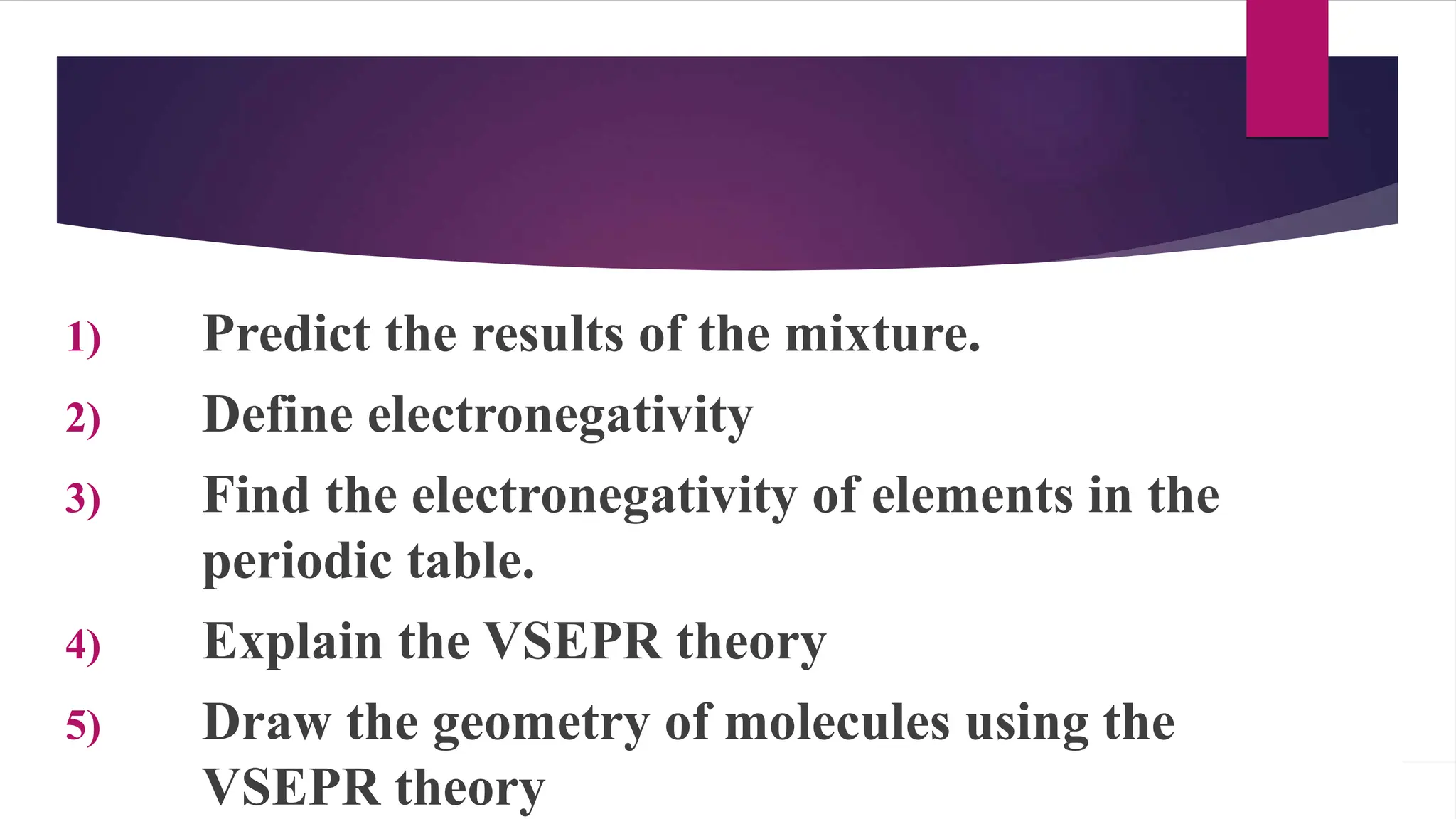
1) Predict theresults of the mixture.
2) Define electronegativity
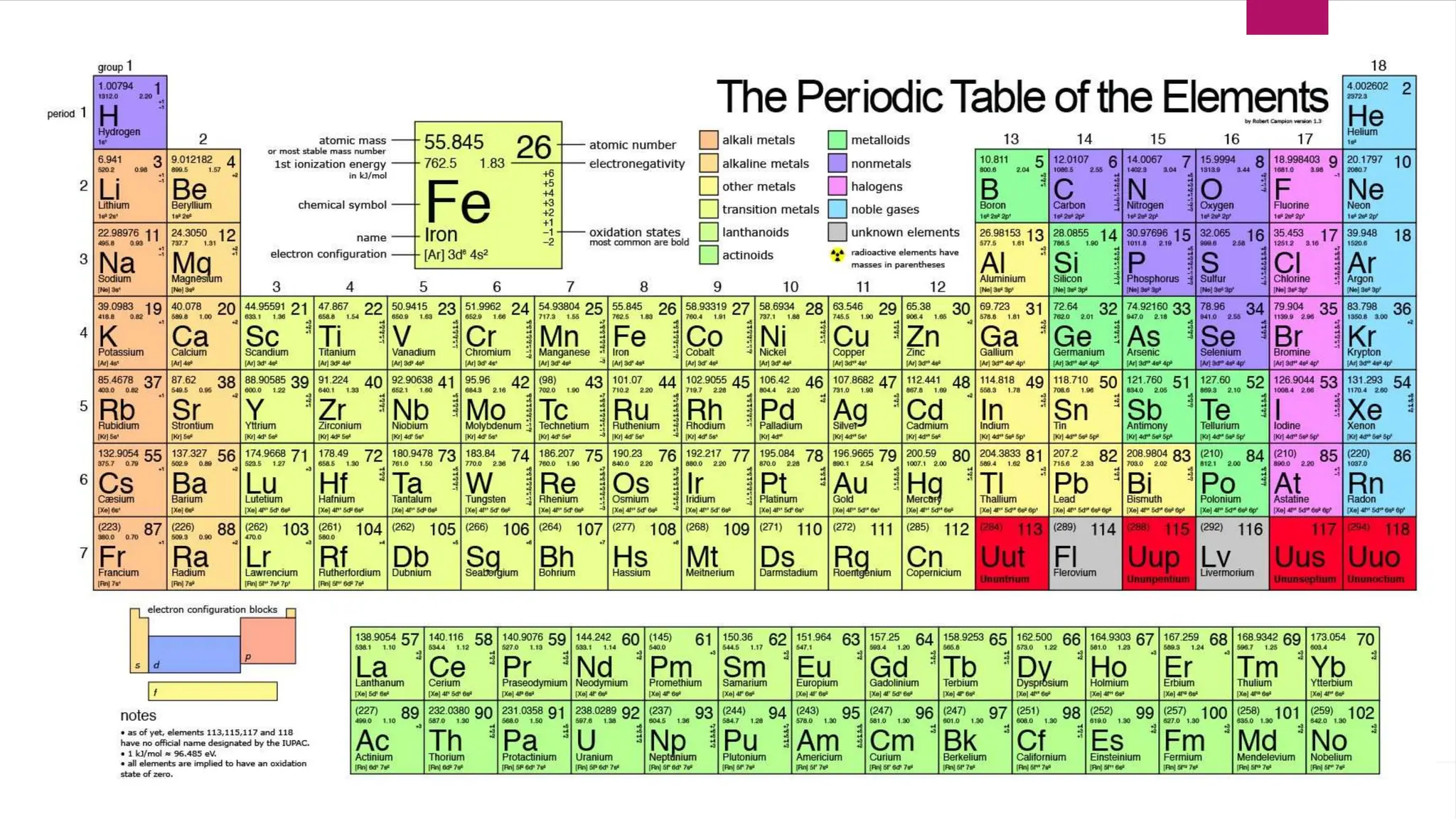
3) Find the electronegativity of elements in the
periodic table.
4) Explain the VSEPR theory
5) Draw the geometry of molecules using the
VSEPR theory
3.
Important terms thatlearners will encounter
a.Electronegativity
b.Covalent bond
c.Valence electron
d. Miscible
e. Dipole
f.Immiscible
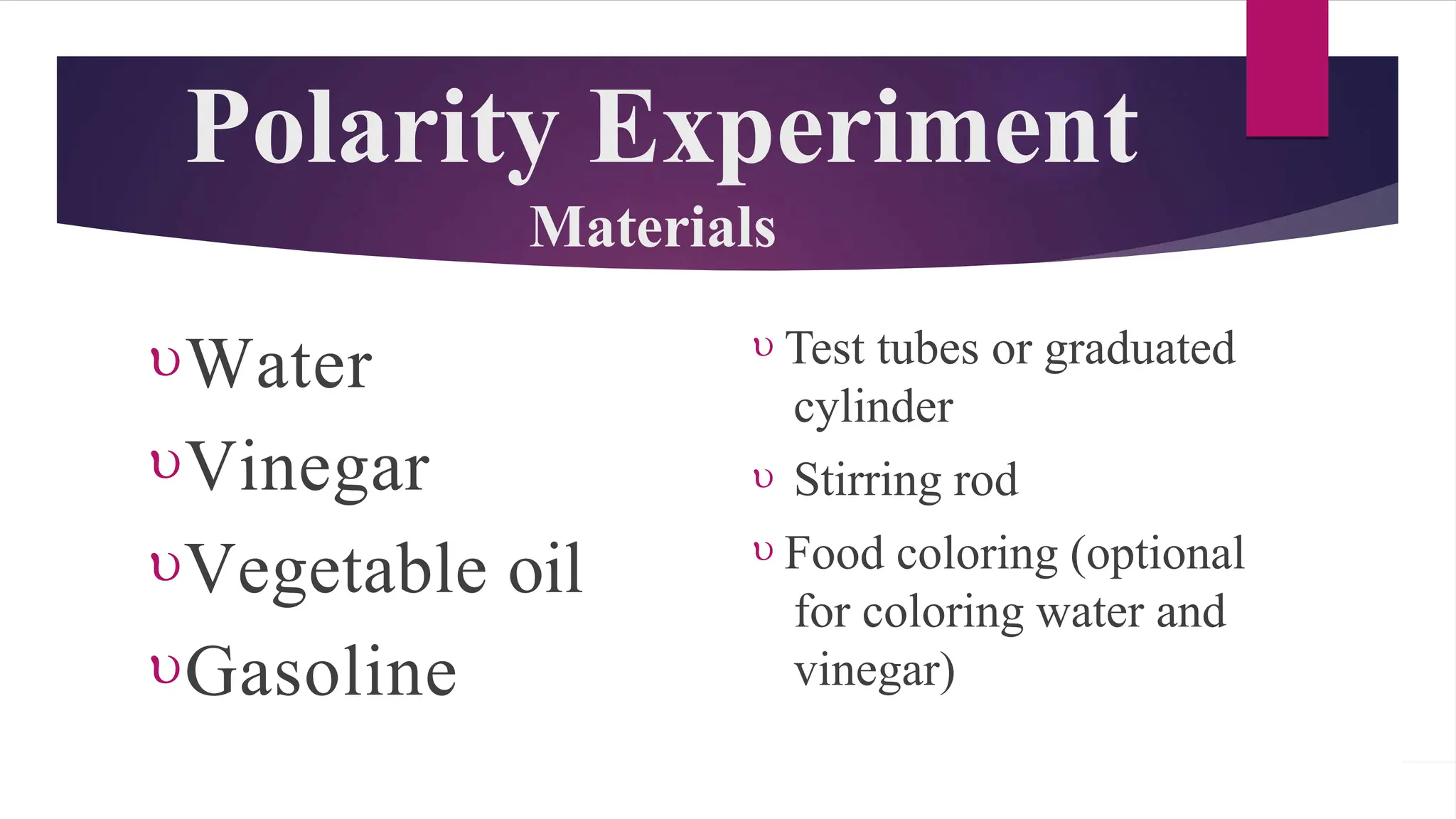
Polarity Experiment
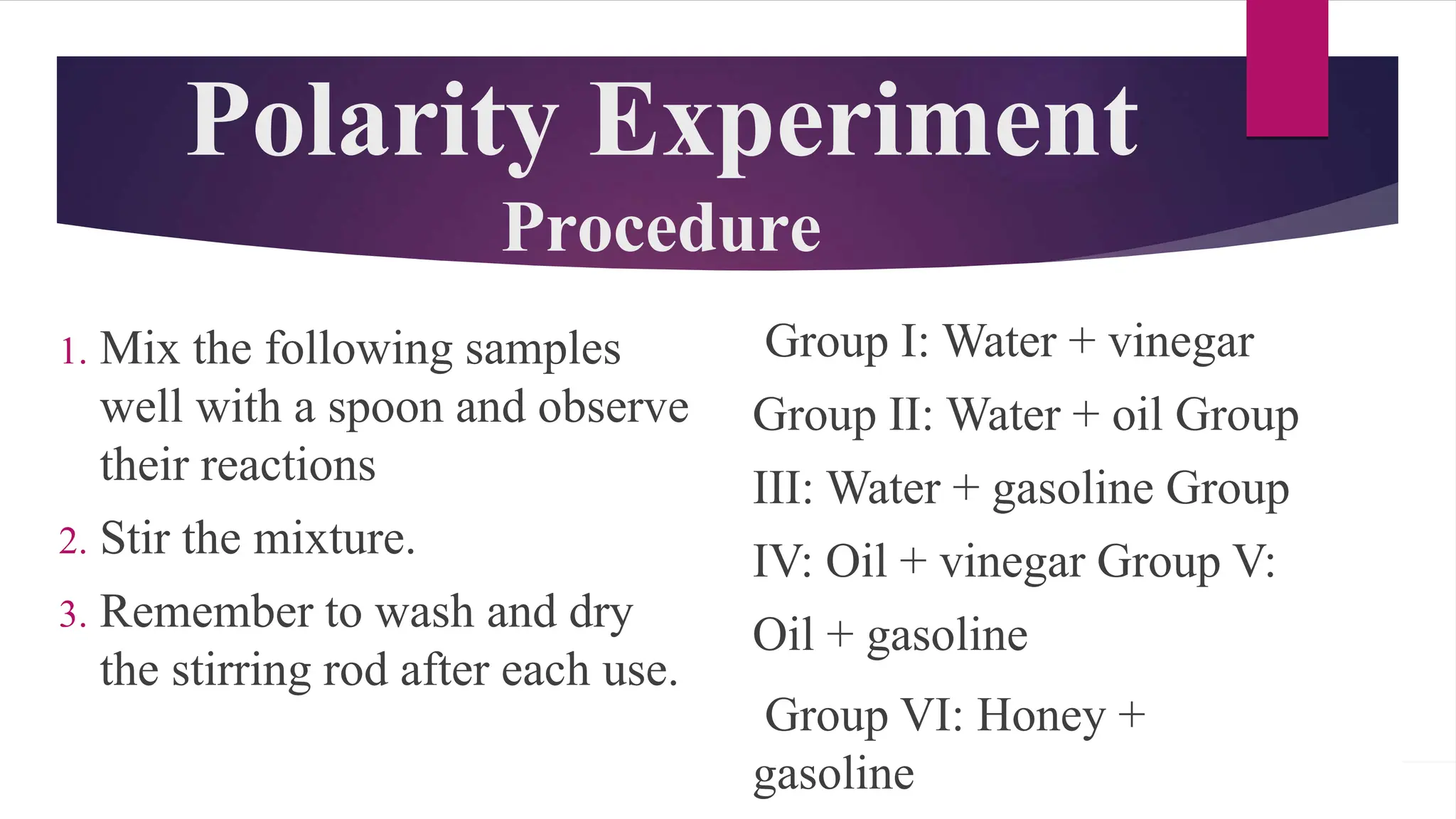
Procedure
1. Mixthe following samples
well with a spoon and observe
their reactions
2. Stir the mixture.
3. Remember to wash and dry
the stirring rod after each use.
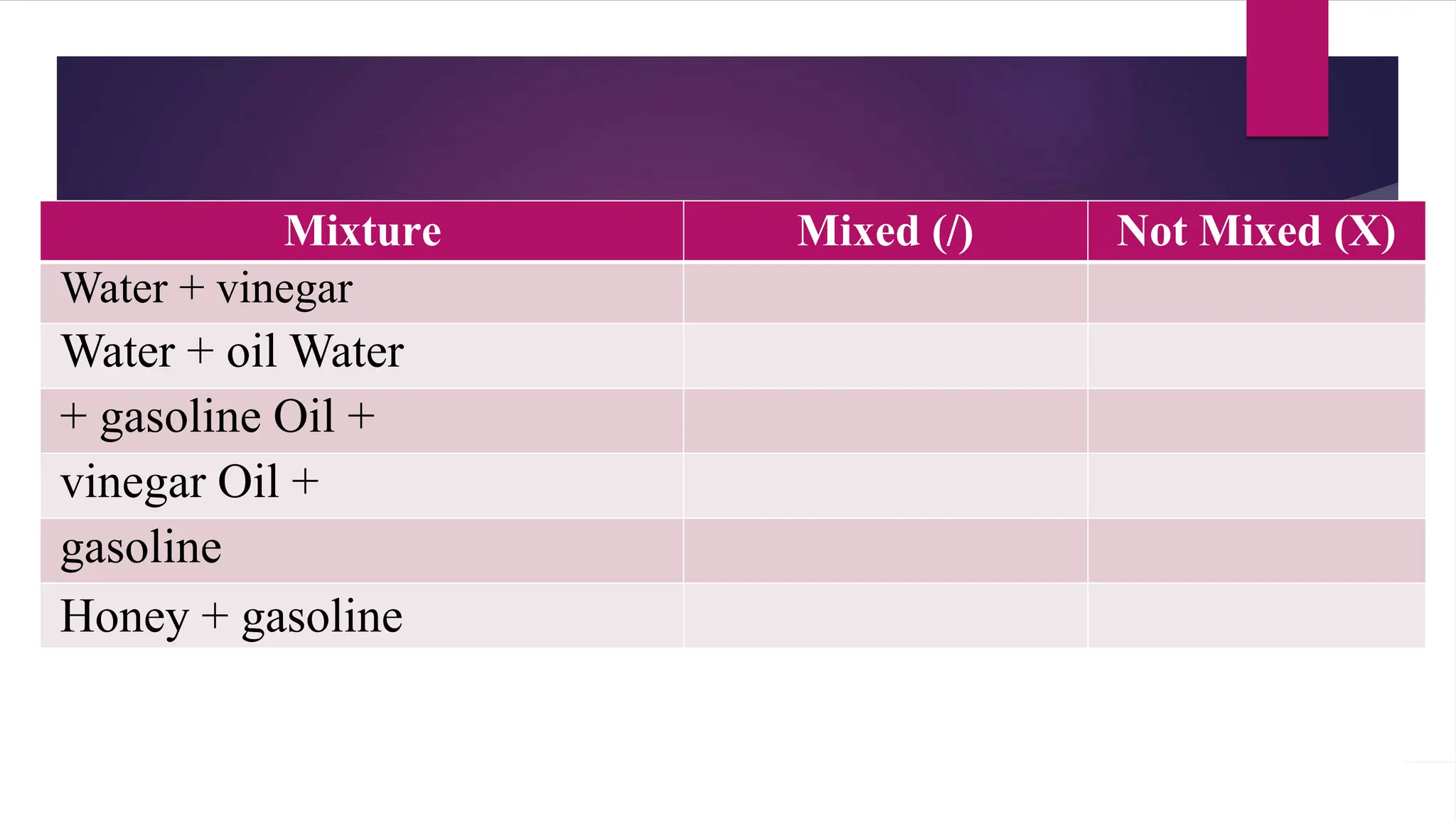
Group I: Water + vinegar
Group II: Water + oil Group
III: Water + gasoline Group
IV: Oil + vinegar Group V:
Oil + gasoline
Group VI: Honey +
gasoline
6.
Mixture Mixed (/)Not Mixed (X)
Water + vinegar
Water + oil Water
+ gasoline Oil +
vinegar Oil +
gasoline
Honey + gasoline
7.
Find it!
boilingpoints
melting points
oxidation number
Atomic number
Atomic weight/ atomic mass
Electronegativity
8.
Two factors thatdetermine the polarity of
molecules.
1.polarity of the bonds between atoms which
can be studied based on electronegativity
2.the geometrical shape of the molecule which
can be predicted via the valence shell electron
pair repulsion (VSEPR) theory
9.
Electronegativity (EN)
- measureof the relative tendency of an atom to
attract electrons to itself when chemically combined
with another atom.
-the higher the value of electronegativity, the more
it tends to attract electrons toward itself.
10.
Covalent bond
- isa chemical link between
two atoms or ions where the
electron pairs are shared
between them
11.
2 Types ofCovalent bond
1. Polar Covalent Bond
2. Non- polar Covalent Bond
12.
Polar covalent bonds
Polarcovalent bonds occur when
electron pairs are unequally
shared. The difference in
electronegativity between atoms is
significant
13.
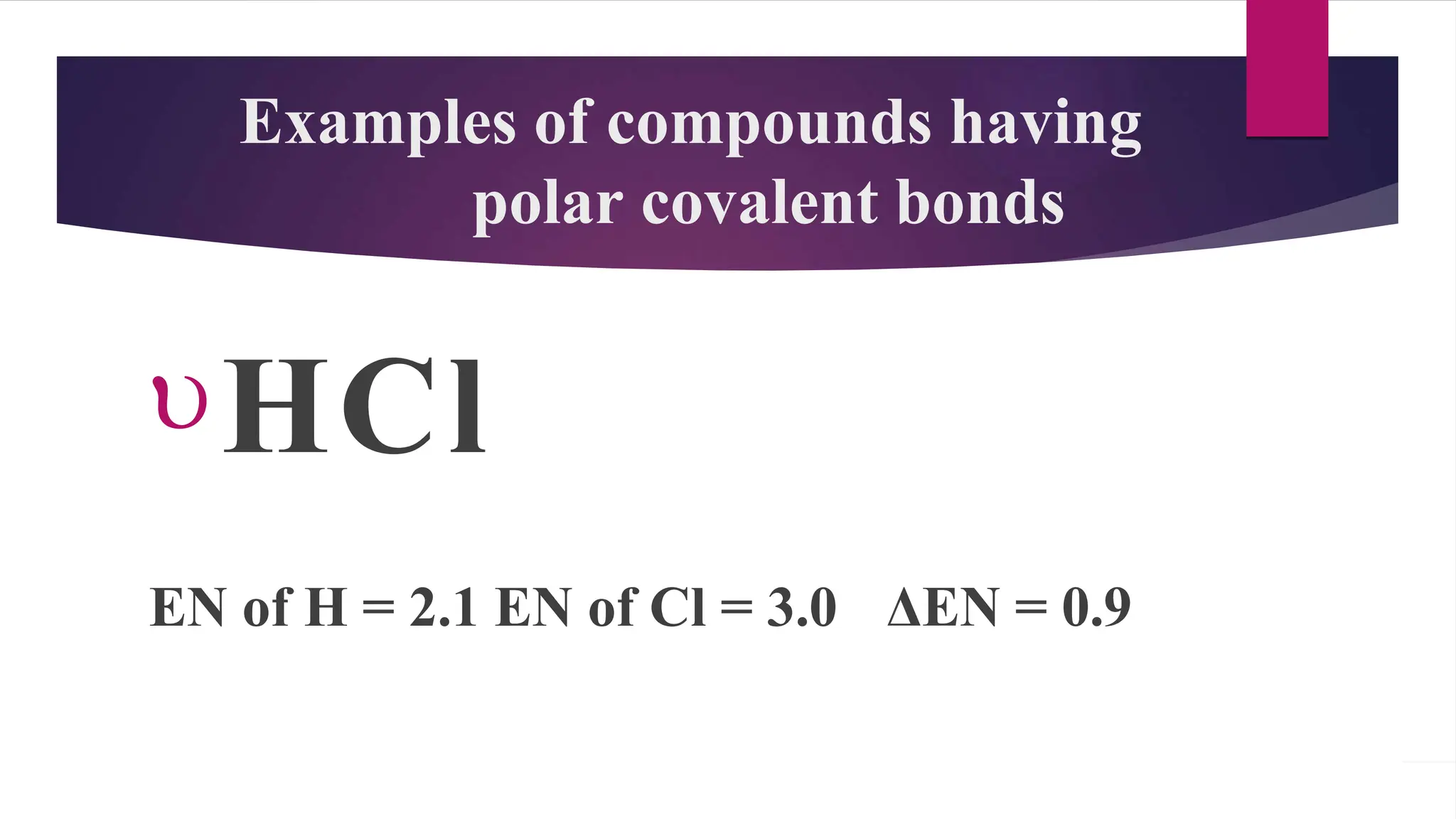
Examples of compoundshaving
polar covalent bonds
HCl
EN of H = 2.1 EN of Cl = 3.0 ΔEN = 0.9
14.
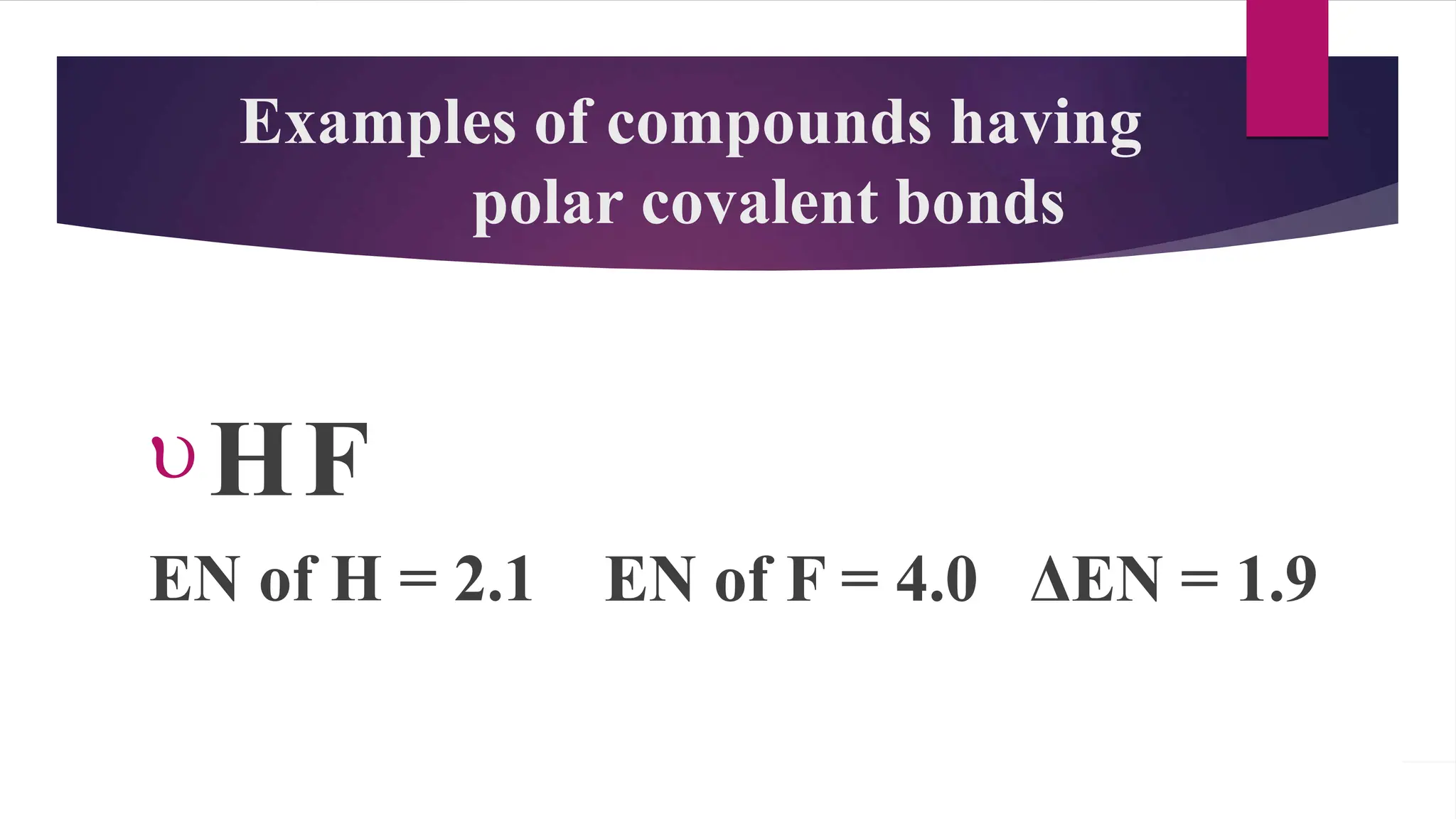
Examples of compoundshaving
polar covalent bonds
HF
EN of H = 2.1 EN of F = 4.0 ΔEN = 1.9
15.
The separation ofcharges makes the bond
polar. It creates an electric dipole. Dipole
refers to “two poles,” meaning there is a
positive and a negative pole within a
molecule.
16.
Elements with thehigher EN value
become the partial negative pole while
elements with the lower EN value become
the partial positive pole. This makes the
molecule a polar molecule.
17.
Non-polar covalent bonds
-occurwhen electron pairs are
shared equally or the difference in
electronegativity between atoms is
less than 0.5.
18.
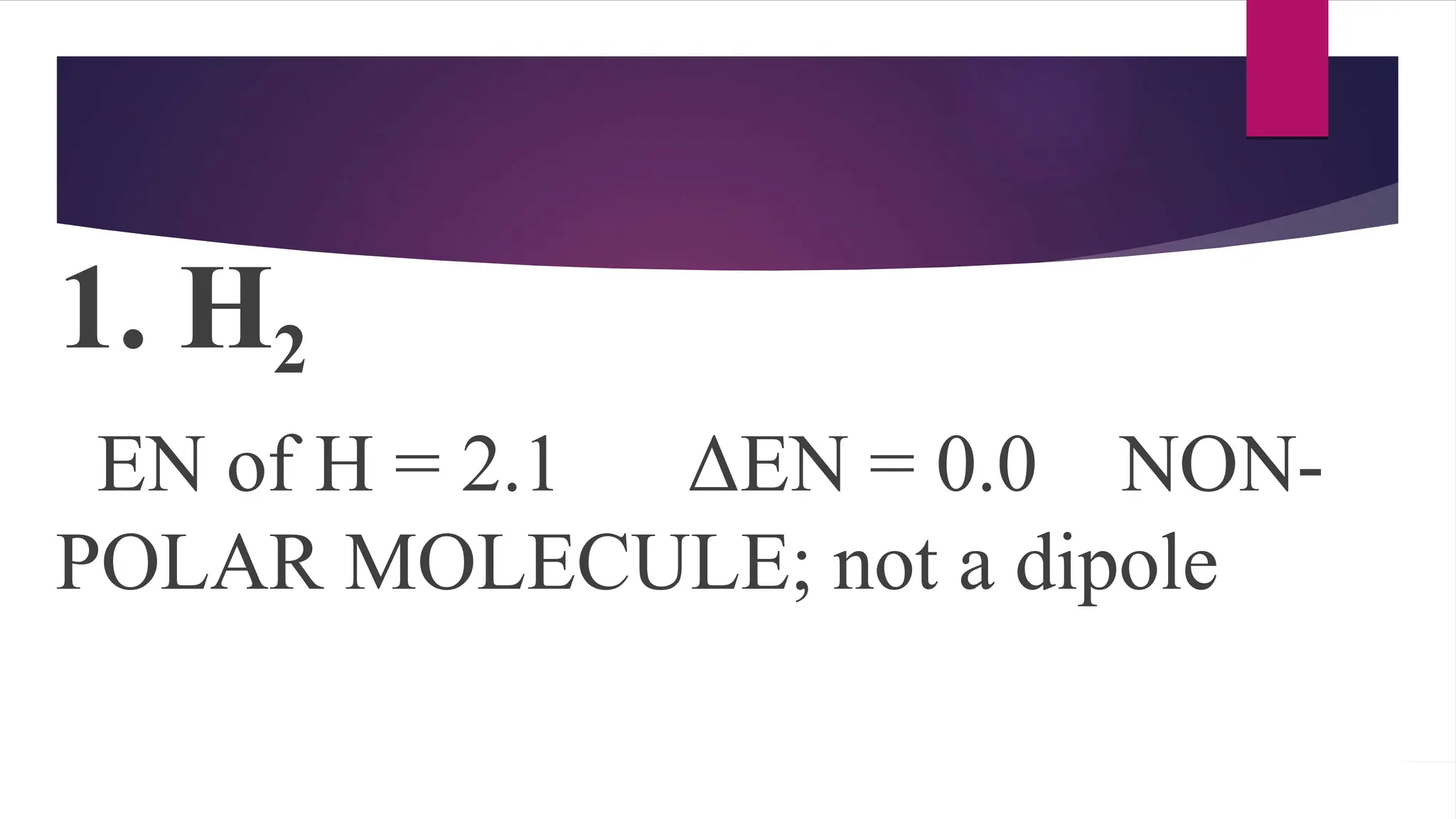
1. H2
EN ofH = 2.1 ΔEN = 0.0 NON-
POLAR MOLECULE; not a dipole
19.
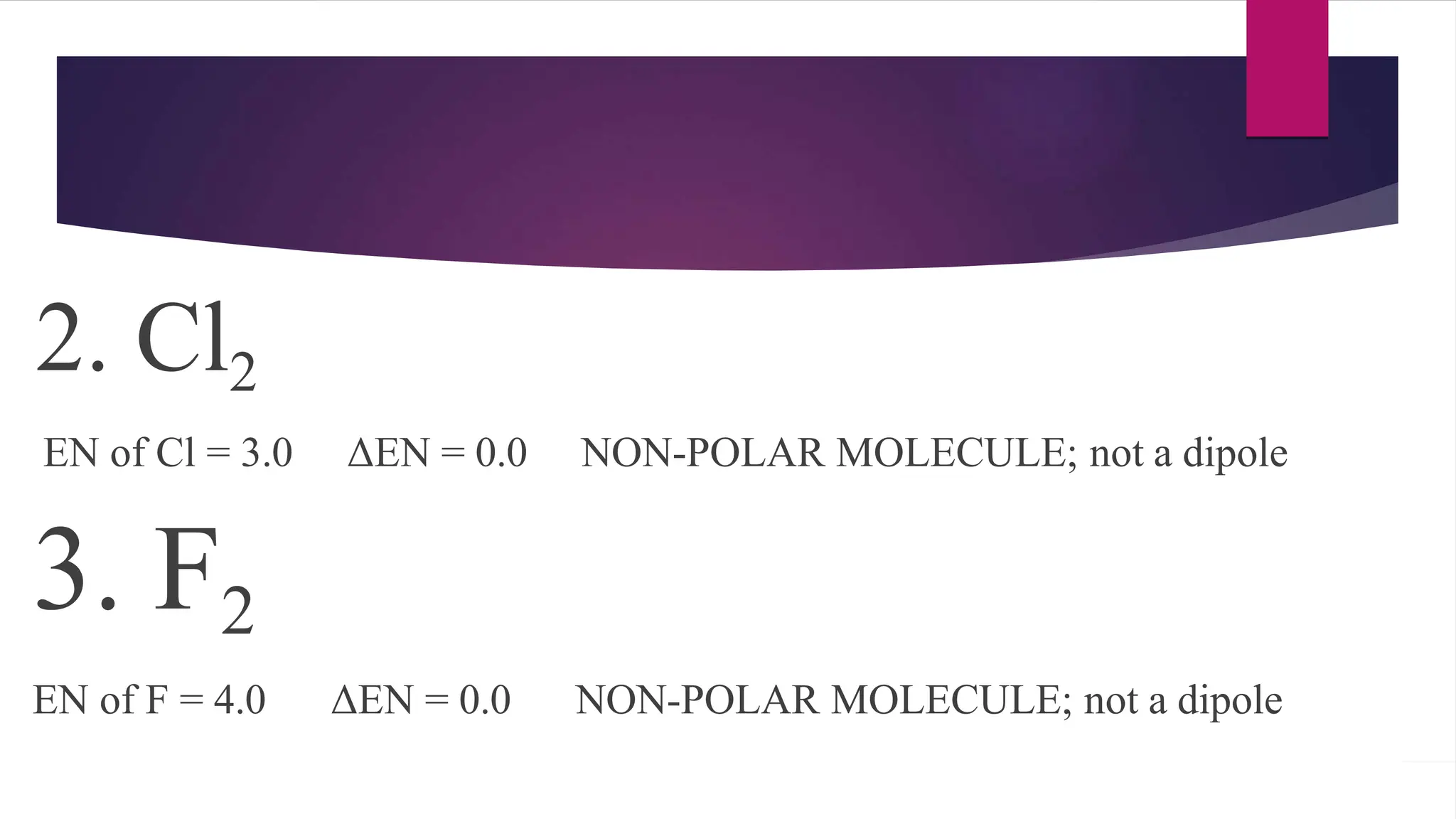
2. Cl2
EN ofCl = 3.0 ΔEN = 0.0 NON-POLAR MOLECULE; not a dipole
3. F2
EN of F = 4.0 ΔEN = 0.0 NON-POLAR MOLECULE; not a dipole
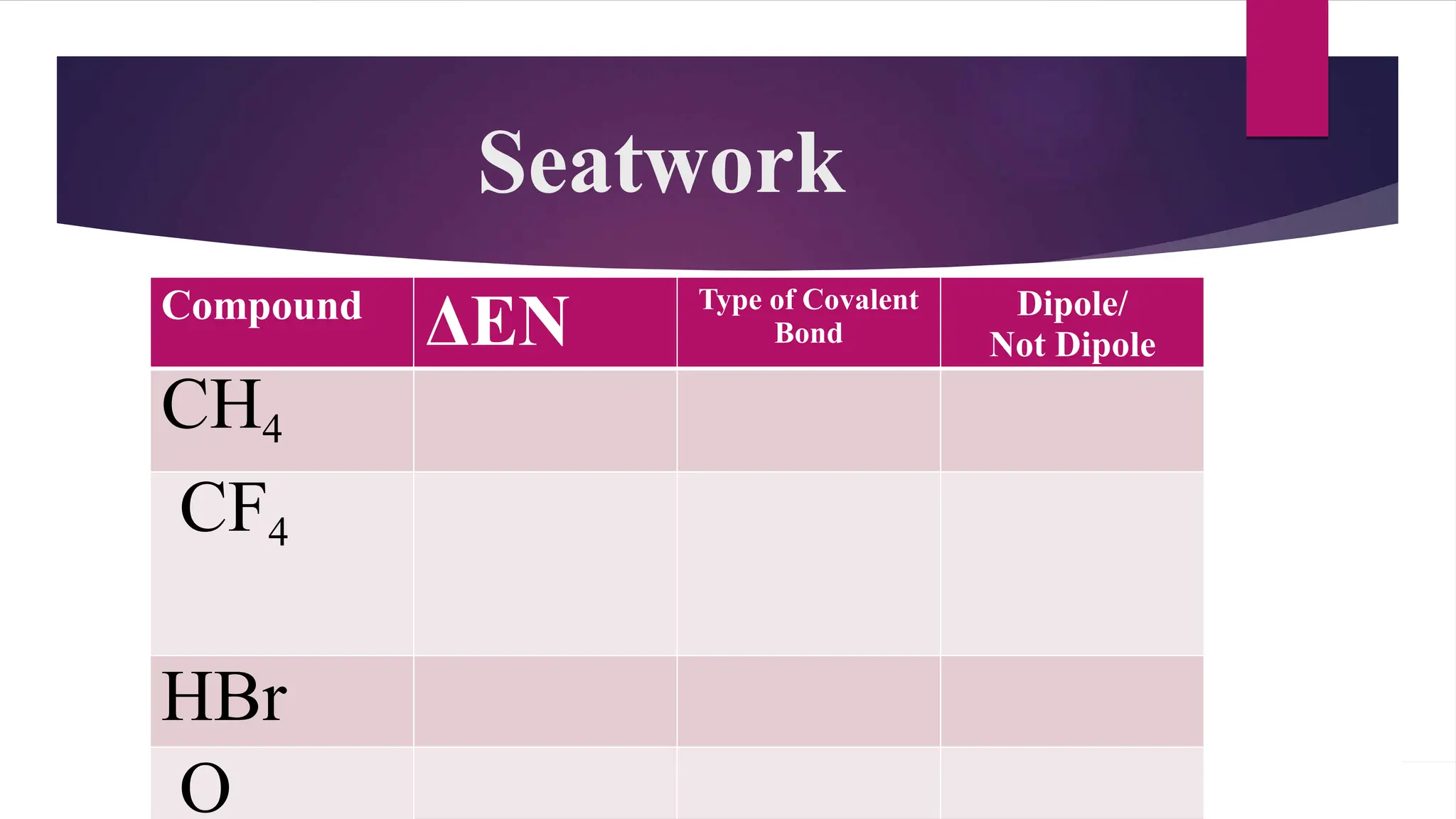
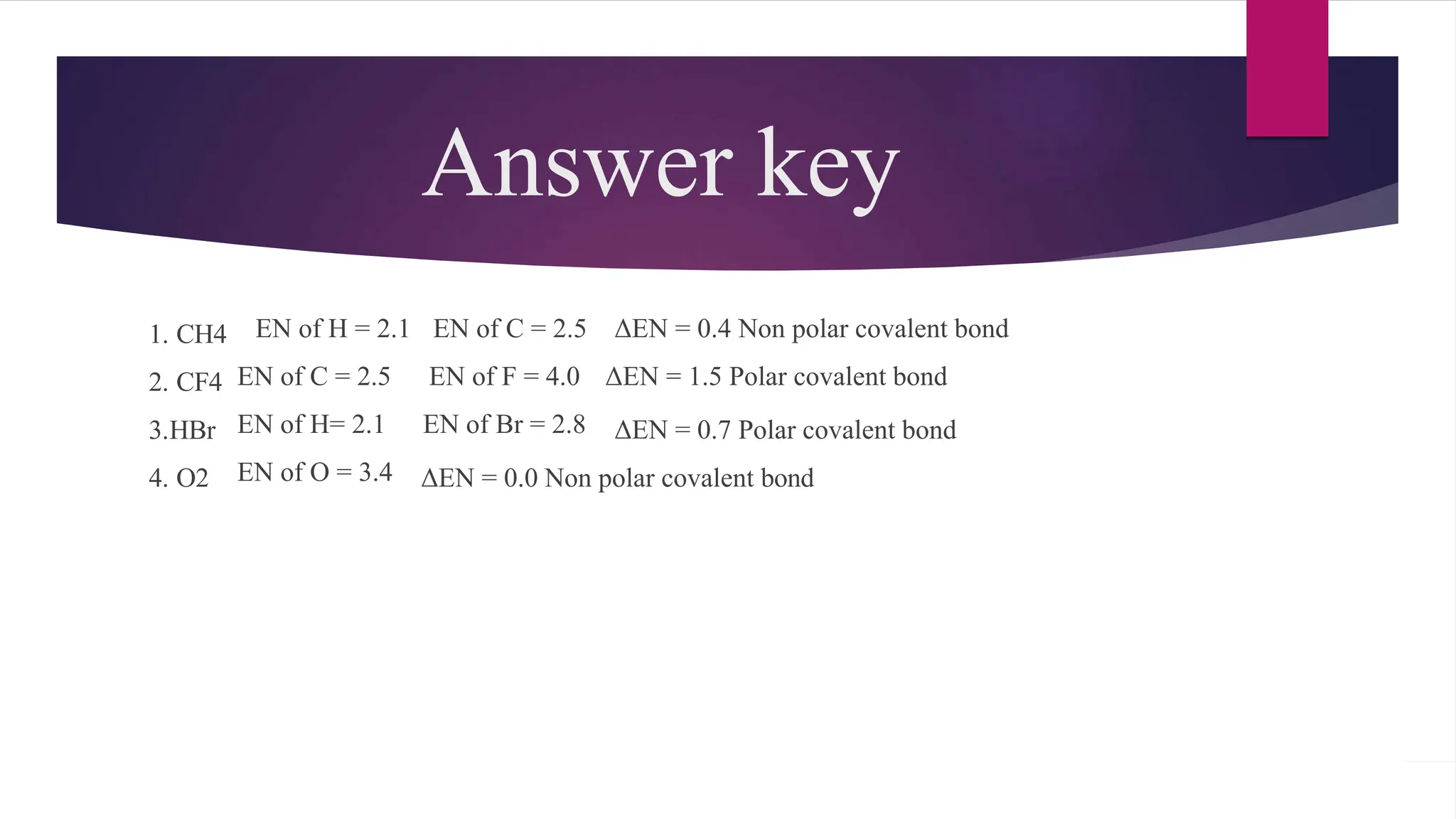
Answer key
EN ofC = 2.5
EN of F = 4.0
EN of Br = 2.8
ΔEN = 0.4 Non polar covalent bond
ΔEN = 1.5 Polar covalent bond
ΔEN = 0.7 Polar covalent bond
1. CH4
2. CF4
3.HBr
4. O2
EN of H = 2.1
EN of C = 2.5
EN of H= 2.1
EN of O = 3.4 ΔEN = 0.0 Non polar covalent bond
26.
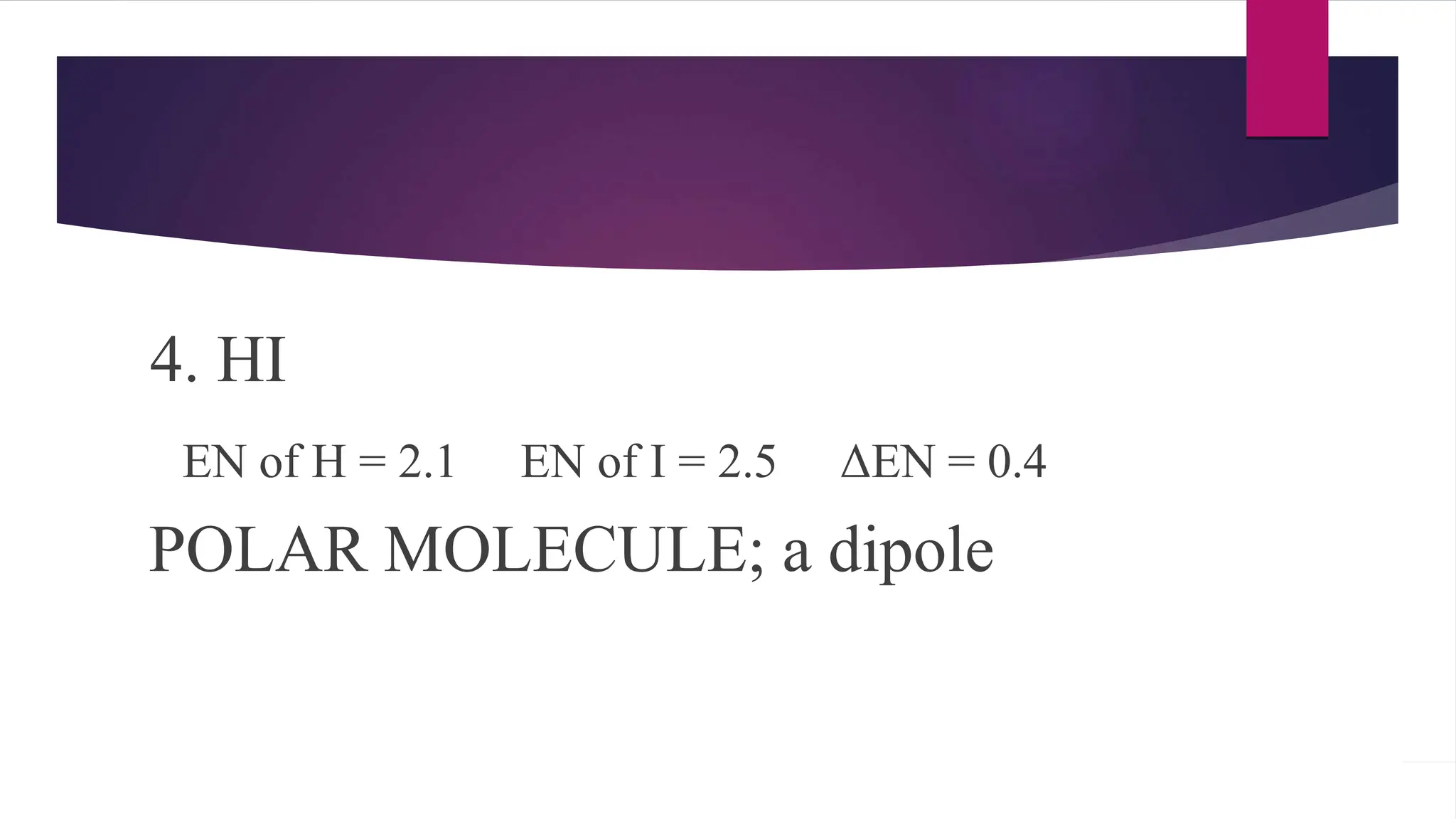
4. HI
EN ofH = 2.1 EN of I = 2.5 ΔEN = 0.4
POLAR MOLECULE; a dipole
27.
Valence Shell ElectronPair Repulsion
theory or VSEPR theory
- helps predict the spatial arrangement
of atoms in a polyatomic molecule. The
shapes are designed to minimize the
repulsion within a molecule.
28.
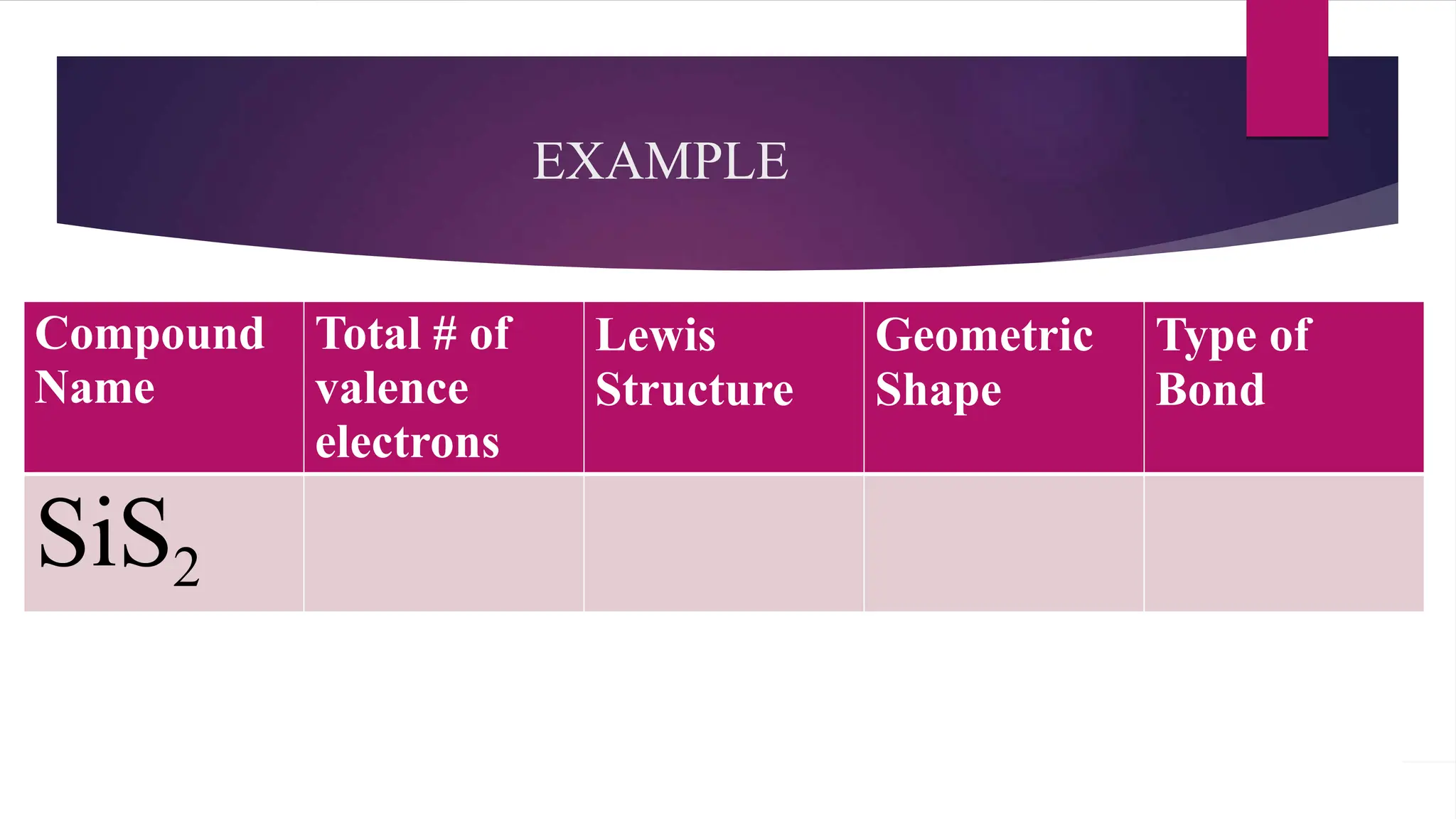
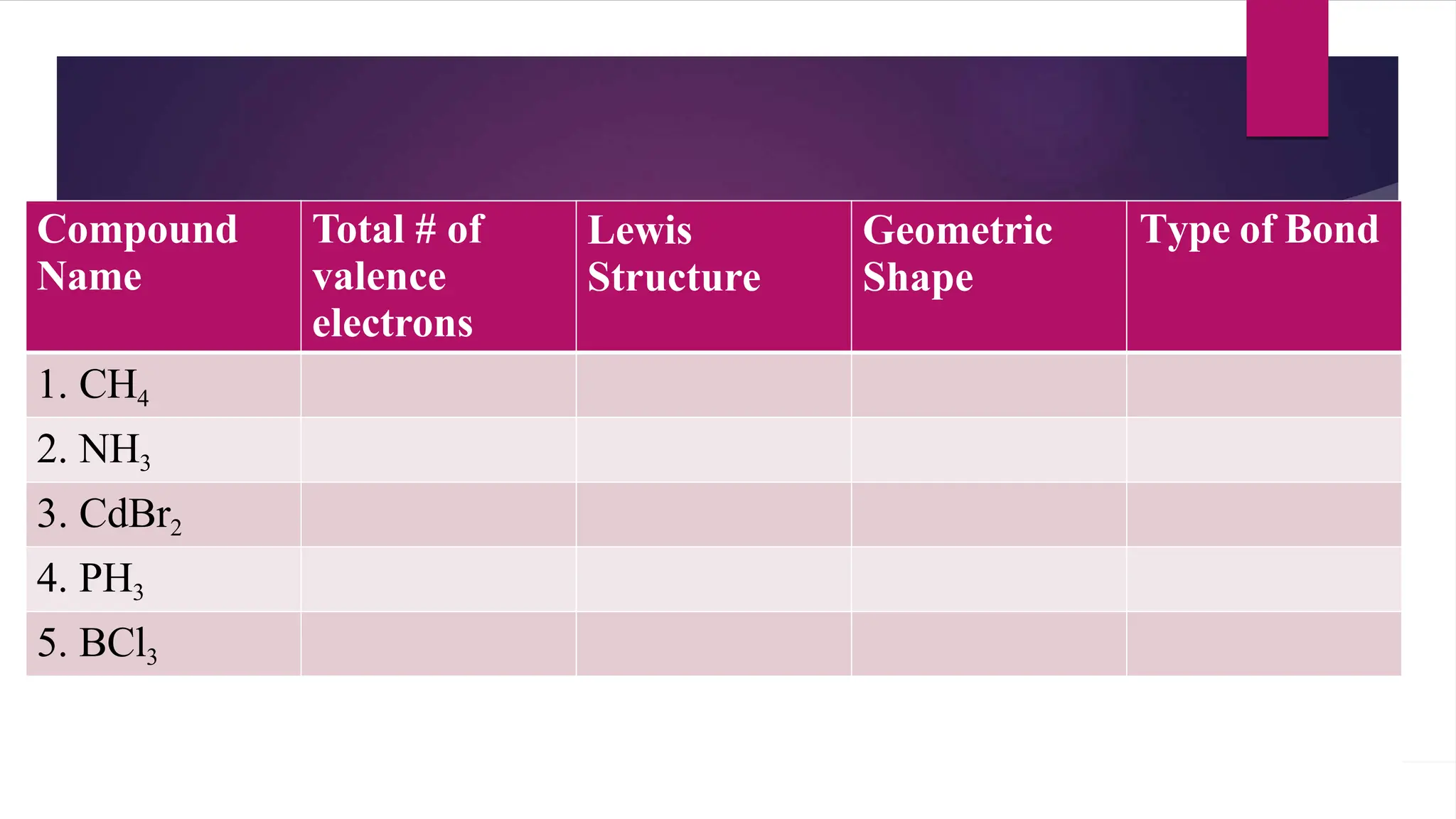
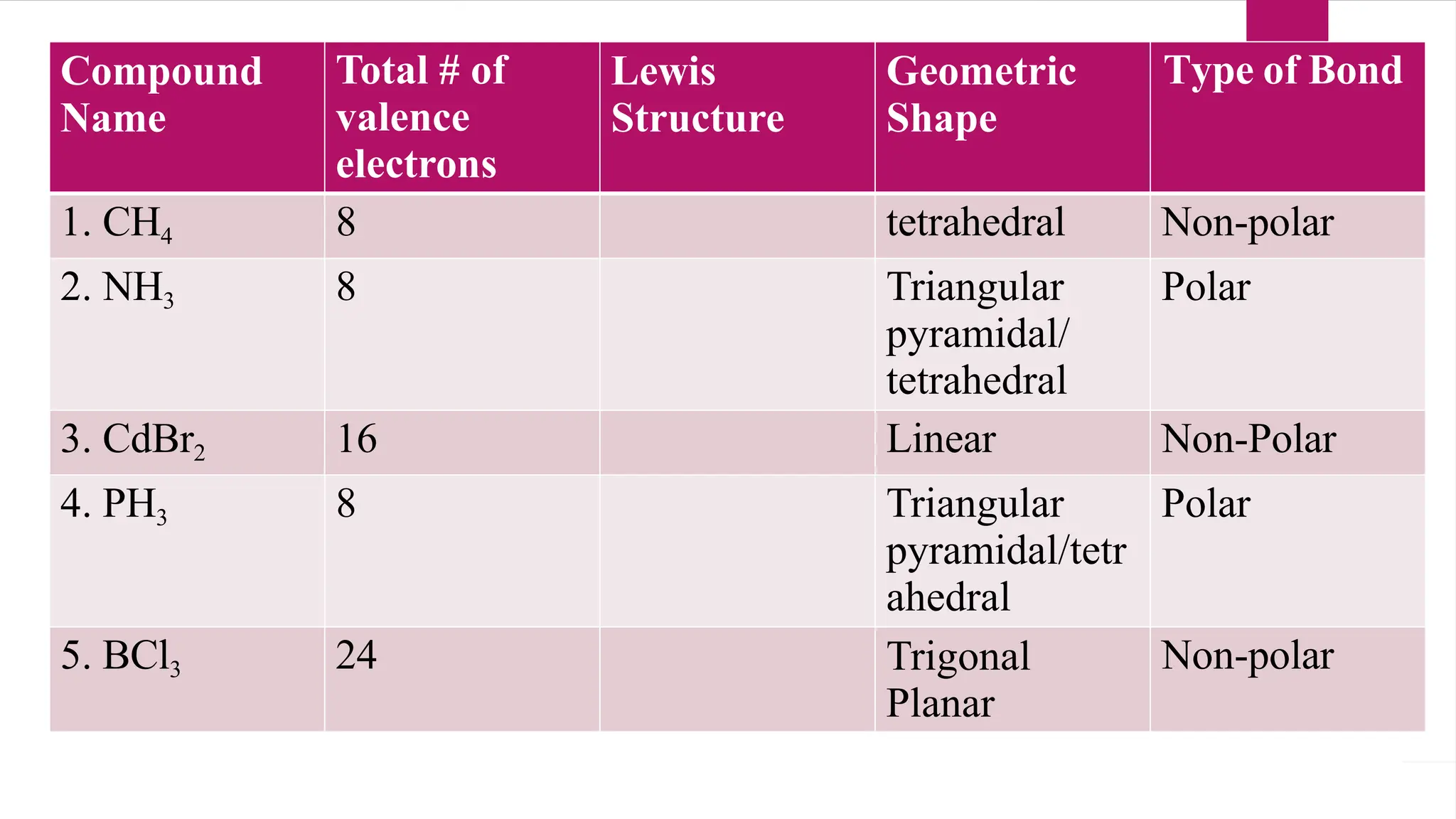
Guidelines to determinethe VSEPR
shape of a molecule
1.Determine the central atom of a
molecule. The central atom is the least
electronegative element.
2.Count how many valence electrons the
central atom has.
29.
3.Count how manyvalence electrons
the side atoms have.
4.Create the appropriate Lewis
structure of the molecule.
30.
5.Using the Lewisstructure as a guide,
determine the appropriate VSEPR shape
for the molecule.
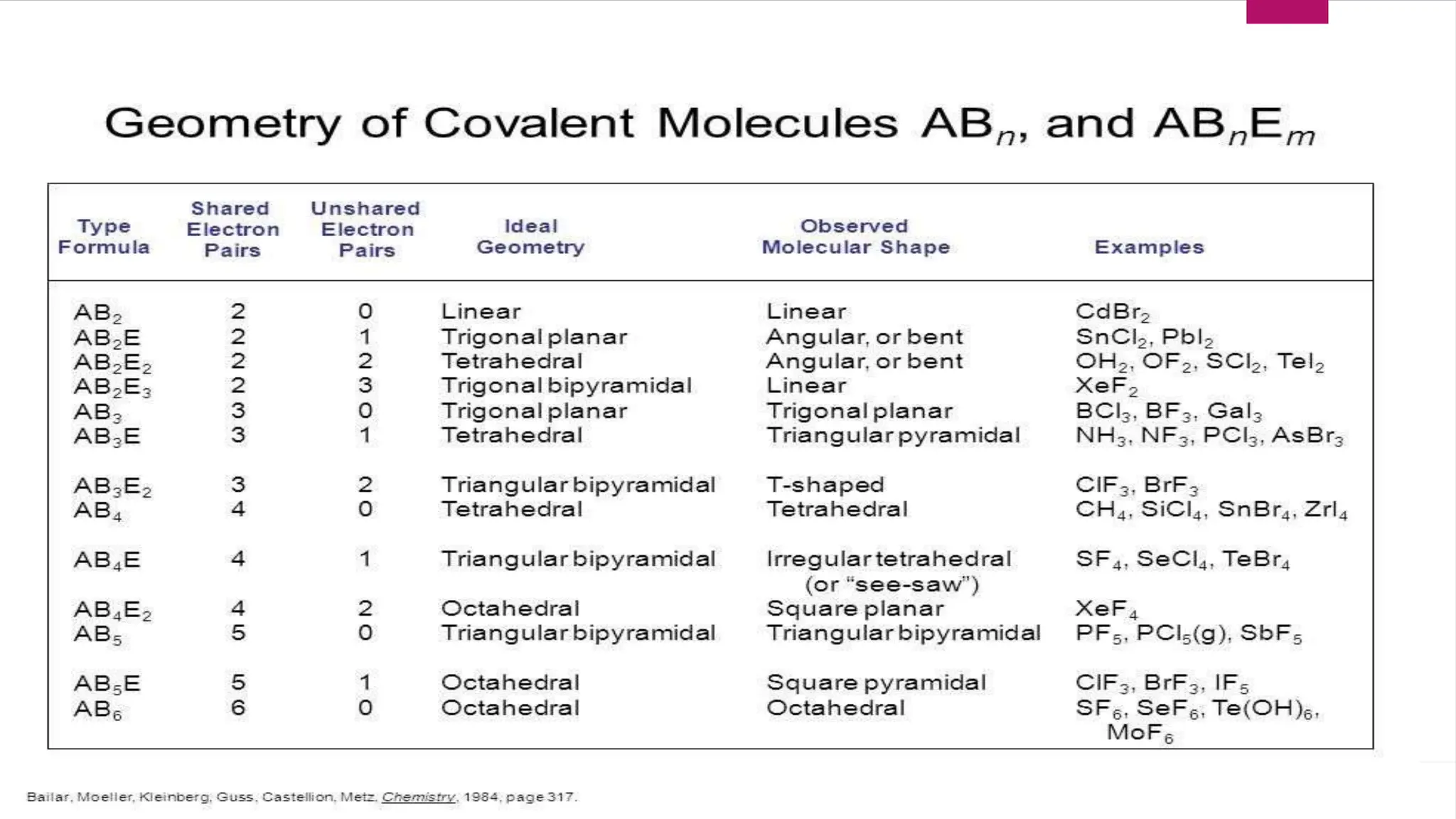
6.Note how many electrons are shared and
unshared. This will help determine the
appropriate VSEPR shape.





![cescpptfinal-220424133321 [Autosaved].pptx](https://cdn.slidesharecdn.com/ss_thumbnails/cescpptfinal-220424133321autosaved-240319003407-97b0bf7b-thumbnail.jpg?width=640&height=640&fit=bounds)


