EXOGENIC PROCESS
EXOGENIC PROCESS
 PROCESS THAT TAKE PLACE AT OR NEAR THE EARTH’ SURFACE
THAT MAKES THE SURFACE WEAR AWAY. EXOGENIC PROCESS
ARE VERY DESTRUCTIVE, THEY ARE RESPONSIBLE GOR
DEGRADATION AND SCULPTING THE EARTH’S SURFACE.
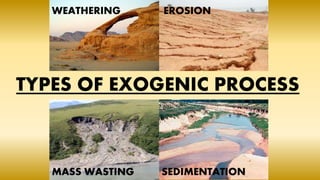
TYPES OF EXOGENIC PROCESS
WEATHERING EROSION
MASS WASTING SEDIMENTATION
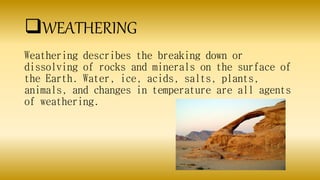
WEATHERING
Weathering describes the breaking down or
dissolving of rocks and minerals on the surface of
the Earth. Water, ice, acids, salts, plants,
animals, and changes in temperature are all agents
of weathering.
TYPES OF WEATHERING
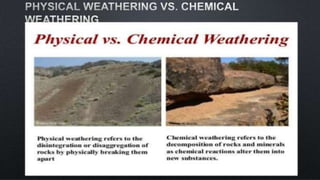
i. PHYSICAL WEATHERING – the physical disintegration and reduction in the size
of the rocks without changing their chemical composition.
ii. CHEMICAL WEATHERING – occurs when rocks are broken down by a chemical
change. Rainwater can become slightly acidic by absorbing carbon dioxide in
the atmosphere and this reacts with the mineral grains in the rock giving rise to
new minerals and salts.
iii. BIOLOGICAL WEATHERING - takes place when rocks are worn away by living
organisms. Trees and other plants can grow within the cracks in a rock
formation. As the roots grow bigger they push open cracks in the rocks making
them wider and deeper. Over time the growing tree eventually prizes the rock
apart.
EROSION
The process by which the surface of the Earth gets
worn down. Erosion can be caused by natural elements
such as wind and glacial ice. But anyone who has ever
seen a picture of the Grand Canyon knows that nothing
beats the slow steady movement of water when it comes
to changing the Earth.
The key to erosion is something called "fluid flow."
Water, air, and even ice are fluids because they tend
to flow from one place to another due to the force of
gravity. Of the three, liquid water is the most common
agent of erosion because there's so much of it on the
surface of the Earth.
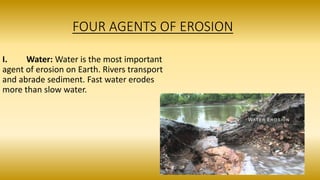
I. Water: Water is the most important
agent of erosion on Earth. Rivers transport
and abrade sediment. Fast water erodes
more than slow water.
FOUR AGENTS OF EROSION
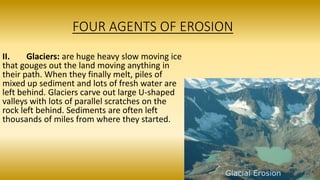
II. Glaciers: are huge heavy slow moving ice
that gouges out the land moving anything in
their path. When they finally melt, piles of
mixed up sediment and lots of fresh water are
left behind. Glaciers carve out large U-shaped
valleys with lots of parallel scratches on the
rock left behind. Sediments are often left
thousands of miles from where they started.
FOUR AGENTS OF EROSION
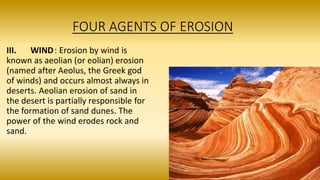
III. WIND: Erosion by wind is
known as aeolian (or eolian) erosion
(named after Aeolus, the Greek god
of winds) and occurs almost always in
deserts. Aeolian erosion of sand in
the desert is partially responsible for
the formation of sand dunes. The
power of the wind erodes rock and
sand.
FOUR AGENTS OF EROSION
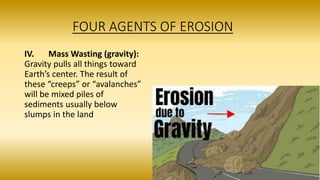
IV. Mass Wasting (gravity):
Gravity pulls all things toward
Earth’s center. The result of
these “creeps” or “avalanches”
will be mixed piles of
sediments usually below
slumps in the land
MASS WASTING
Mass wasting, also known as slope movement or mass
movement, is the geomorphic process by which soil,
sand, regolith, and rock move downslope typically as
a solid, continuous or discontinuous mass, largely
under the force of gravity, frequently with
characteristics of a flow as in debris flows and
mudflows.
CLASSIFICATIONS OF MASS WASTING:
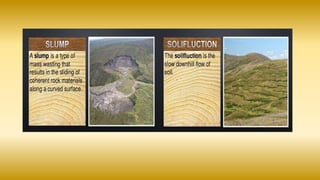
SLUMP
SOLIFLUCTION
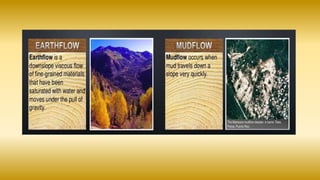
EARTHFLOW
MUDFLOW
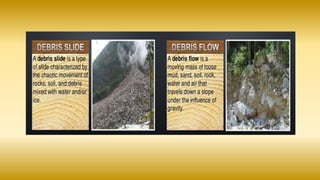
DEBRIS SLIDE
DEBRIS FLOW
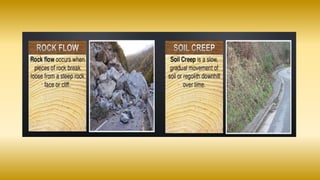
ROCK FALL
SOIL CREEP
 SEDIMENTATION
SEDIMENTATION IS THE PROCESS BY WHICH SEDIMENT IS
MECHANICALLY DEPOSITED FROM SUSPENSION WITHIN A
FLUID, GENERALLY WATER, OR ICE, THEREBY
ACCUMULATING AS LAYERS OF SEDIMENT THAT ARE
SEGREGATED OWING TO DIFFERENCES IN SIZE, SHAPE,
AND COMPOSITION OF THE SEDIMENT PARTICLES.

EXOGENIC PROCESS PPT

  • 1.
  • 2.
    EXOGENIC PROCESS  PROCESSTHAT TAKE PLACE AT OR NEAR THE EARTH’ SURFACE THAT MAKES THE SURFACE WEAR AWAY. EXOGENIC PROCESS ARE VERY DESTRUCTIVE, THEY ARE RESPONSIBLE GOR DEGRADATION AND SCULPTING THE EARTH’S SURFACE.
  • 3.
    TYPES OF EXOGENICPROCESS WEATHERING EROSION MASS WASTING SEDIMENTATION
  • 4.
    WEATHERING Weathering describes thebreaking down or dissolving of rocks and minerals on the surface of the Earth. Water, ice, acids, salts, plants, animals, and changes in temperature are all agents of weathering.
  • 5.
    TYPES OF WEATHERING i.PHYSICAL WEATHERING – the physical disintegration and reduction in the size of the rocks without changing their chemical composition. ii. CHEMICAL WEATHERING – occurs when rocks are broken down by a chemical change. Rainwater can become slightly acidic by absorbing carbon dioxide in the atmosphere and this reacts with the mineral grains in the rock giving rise to new minerals and salts. iii. BIOLOGICAL WEATHERING - takes place when rocks are worn away by living organisms. Trees and other plants can grow within the cracks in a rock formation. As the roots grow bigger they push open cracks in the rocks making them wider and deeper. Over time the growing tree eventually prizes the rock apart.
  • 7.
    EROSION The process bywhich the surface of the Earth gets worn down. Erosion can be caused by natural elements such as wind and glacial ice. But anyone who has ever seen a picture of the Grand Canyon knows that nothing beats the slow steady movement of water when it comes to changing the Earth. The key to erosion is something called "fluid flow." Water, air, and even ice are fluids because they tend to flow from one place to another due to the force of gravity. Of the three, liquid water is the most common agent of erosion because there's so much of it on the surface of the Earth.
  • 8.
    I. Water: Wateris the most important agent of erosion on Earth. Rivers transport and abrade sediment. Fast water erodes more than slow water. FOUR AGENTS OF EROSION
  • 9.
    FOUR AGENTS OFEROSION II. Glaciers: are huge heavy slow moving ice that gouges out the land moving anything in their path. When they finally melt, piles of mixed up sediment and lots of fresh water are left behind. Glaciers carve out large U-shaped valleys with lots of parallel scratches on the rock left behind. Sediments are often left thousands of miles from where they started.
  • 10.
    FOUR AGENTS OFEROSION III. WIND: Erosion by wind is known as aeolian (or eolian) erosion (named after Aeolus, the Greek god of winds) and occurs almost always in deserts. Aeolian erosion of sand in the desert is partially responsible for the formation of sand dunes. The power of the wind erodes rock and sand.
  • 11.
    FOUR AGENTS OFEROSION IV. Mass Wasting (gravity): Gravity pulls all things toward Earth’s center. The result of these “creeps” or “avalanches” will be mixed piles of sediments usually below slumps in the land
  • 12.
    MASS WASTING Mass wasting,also known as slope movement or mass movement, is the geomorphic process by which soil, sand, regolith, and rock move downslope typically as a solid, continuous or discontinuous mass, largely under the force of gravity, frequently with characteristics of a flow as in debris flows and mudflows.
  • 13.
    CLASSIFICATIONS OF MASSWASTING: SLUMP SOLIFLUCTION EARTHFLOW MUDFLOW DEBRIS SLIDE DEBRIS FLOW ROCK FALL SOIL CREEP
  • 18.
     SEDIMENTATION SEDIMENTATION ISTHE PROCESS BY WHICH SEDIMENT IS MECHANICALLY DEPOSITED FROM SUSPENSION WITHIN A FLUID, GENERALLY WATER, OR ICE, THEREBY ACCUMULATING AS LAYERS OF SEDIMENT THAT ARE SEGREGATED OWING TO DIFFERENCES IN SIZE, SHAPE, AND COMPOSITION OF THE SEDIMENT PARTICLES.