THE PROCESSES WITHIN
ENDOGENIC PROCESSES
Definition
en·do·gen·ic
ˌendōˈjenik/
Adjective GEOLOGY
Formed, located or occurring
beneath the surface of the earth.
What is Endogenic Process?
 Endogenic Processes are geological
processes that occur beneath the surface of
the Earth.
 It is associated with energy originating in
the interior of the solid earth.
 The ground we live on is moving all the time.
The Forces within the earth that cause the
ground to move are called ENDOGENIC
FORCES.
How does Endogenic Process works?
 When the ground moves, Rock layers at the
surface of the earth are broken, twisted and
shaken.
 Land is destroyed in many places and
created in other places.
 When the land is shaped by Endogenic
Forces we call this ENDOGENIC
PROCESSES.
The Main Endogenic Processes
 The Main Endogenic Processes are
FOLDING & FAULTING or Tectonic
Movements.
 They take place mainly along the plate
boundaries, which are the zones that are not
stable.
 Endogenic processes cause many major
landform features.
FOLDING
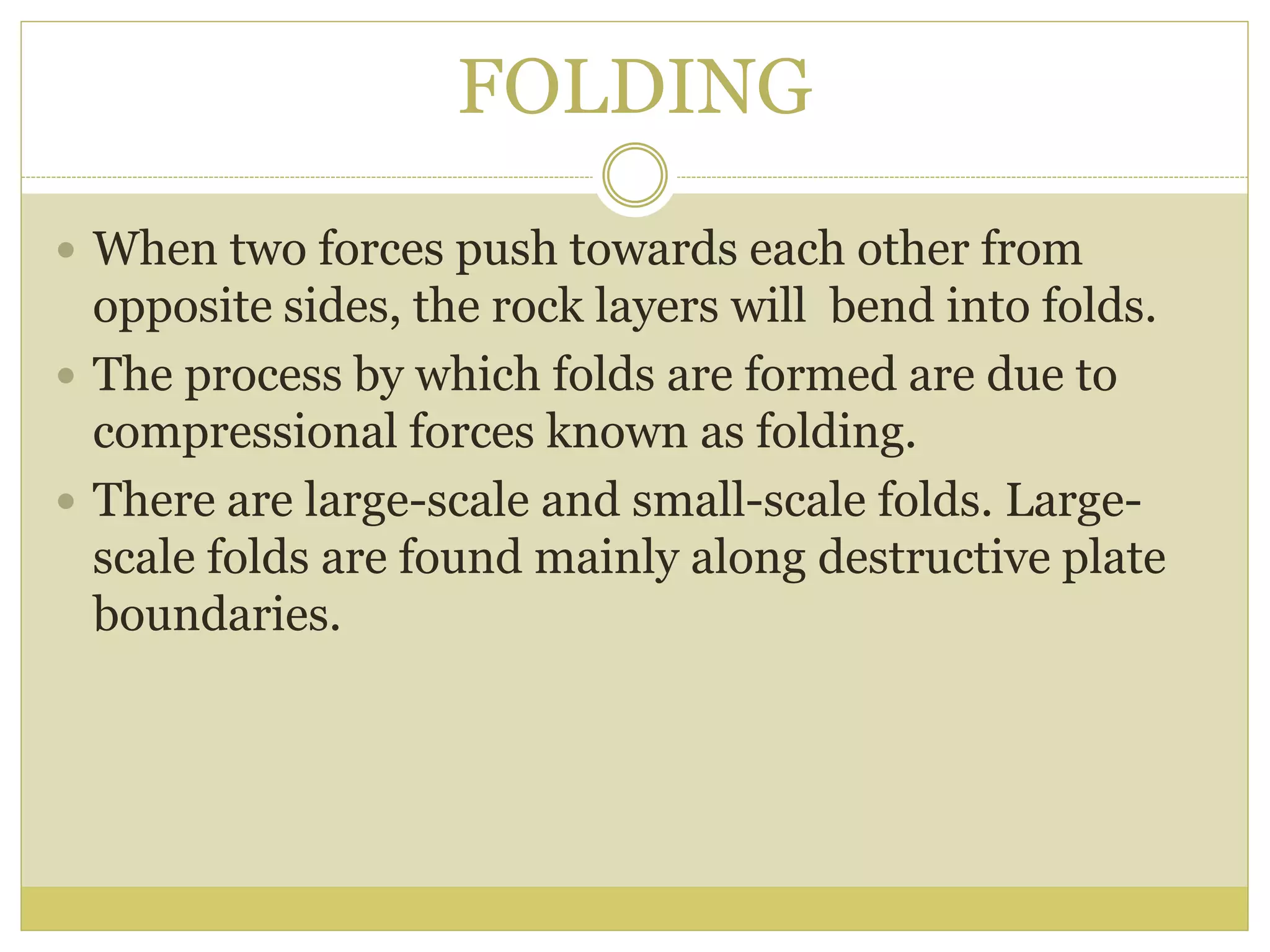
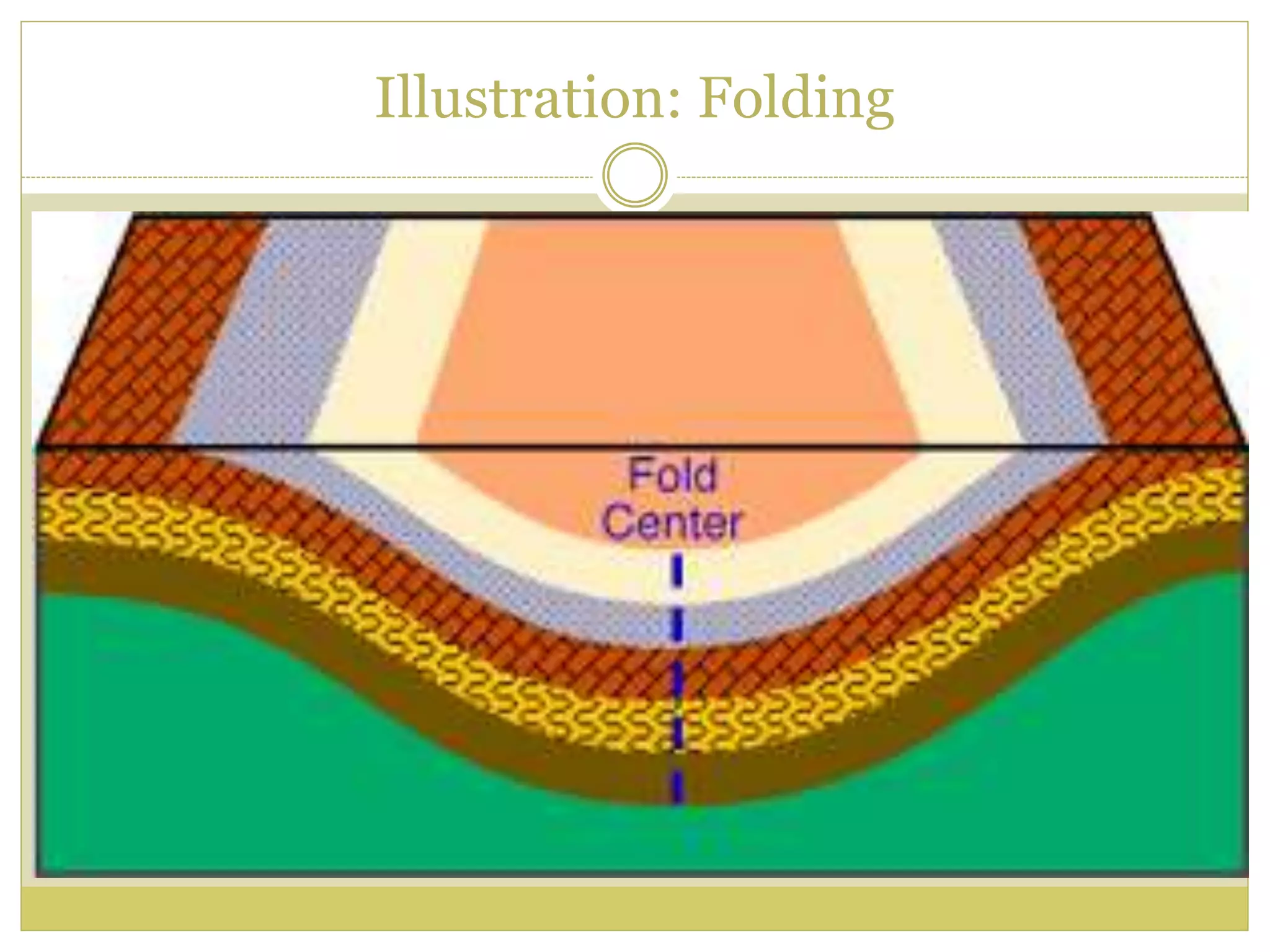
 When two forces push towards each other from
opposite sides, the rock layers will bend into folds.
 The process by which folds are formed are due to
compressional forces known as folding.
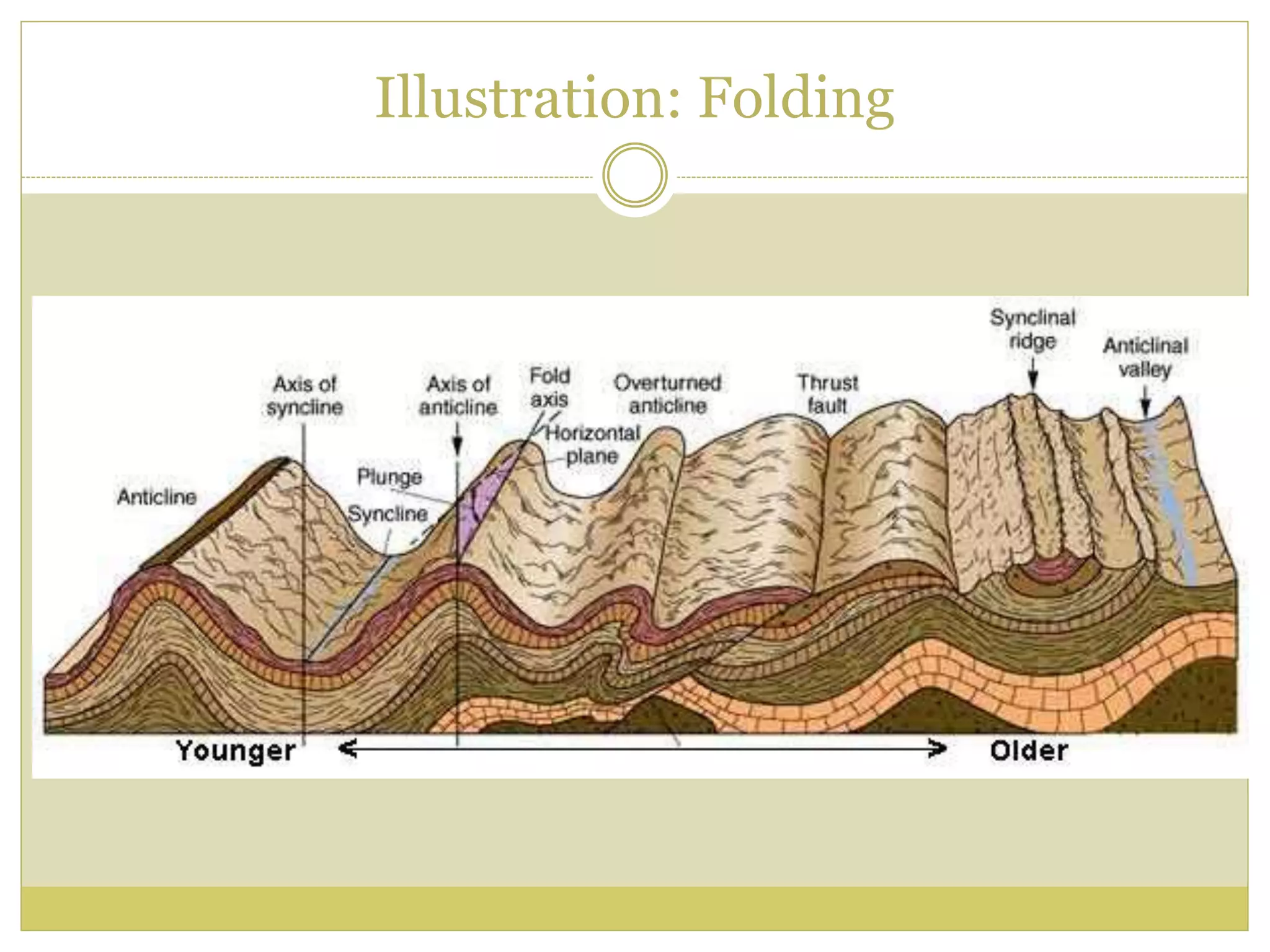
 There are large-scale and small-scale folds. Large-
scale folds are found mainly along destructive plate
boundaries.
Illustration: Folding
FAULTING
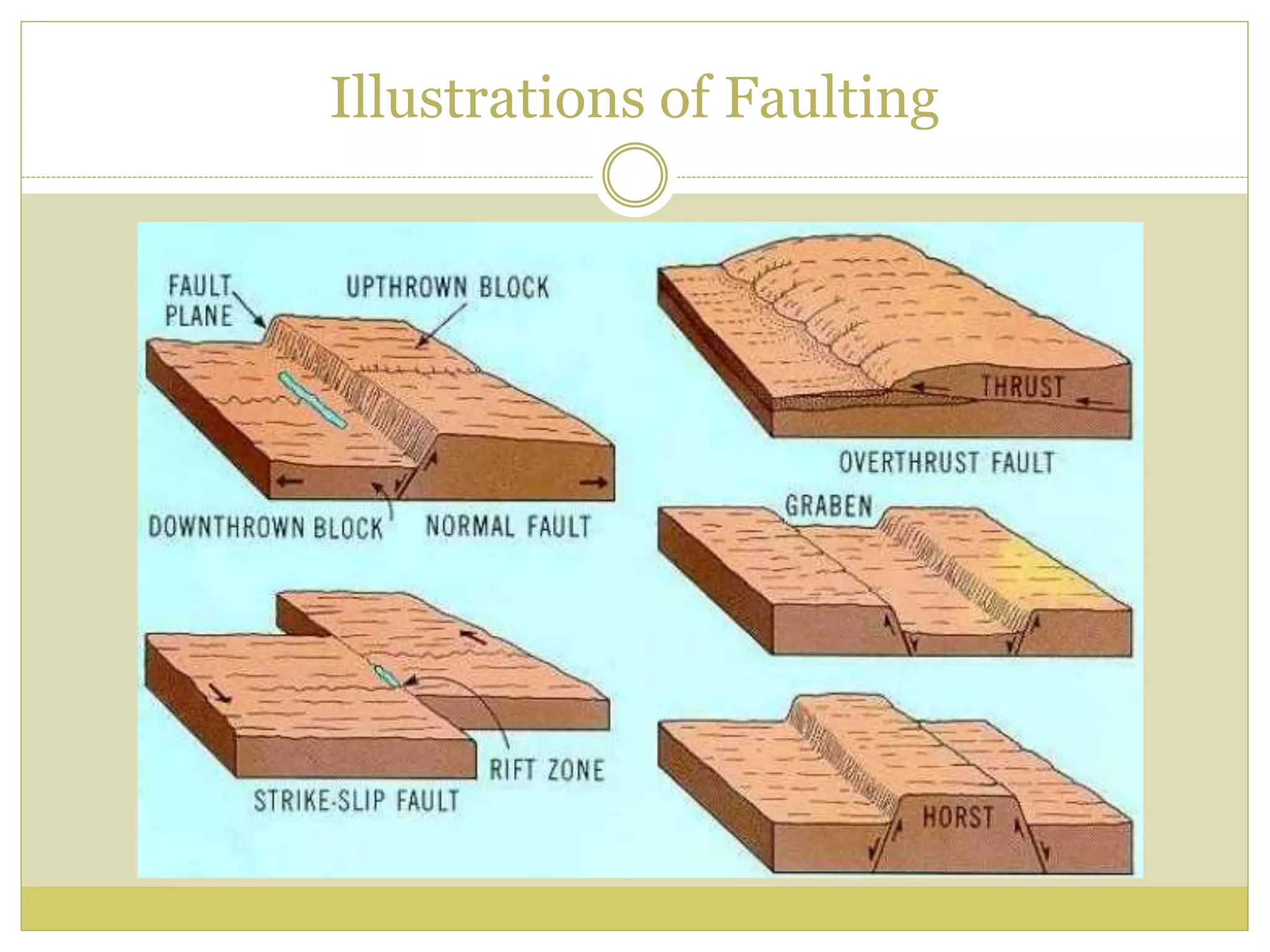
 Faulting is the fracturing and displacement of more
brittle rock strata along a fault plane either caused by
tension or compression.
 A break in rock along which a vertical or horizontal
rock movement has occurred is called a fault.
 The process of forming a fault is faulting.
 The line of fault which appears on land surface is
known as fault line.
 These lines are often lines of weakness which allow
molten rock to rise up onto the earth surface when
there is active volcanic activity nearby.
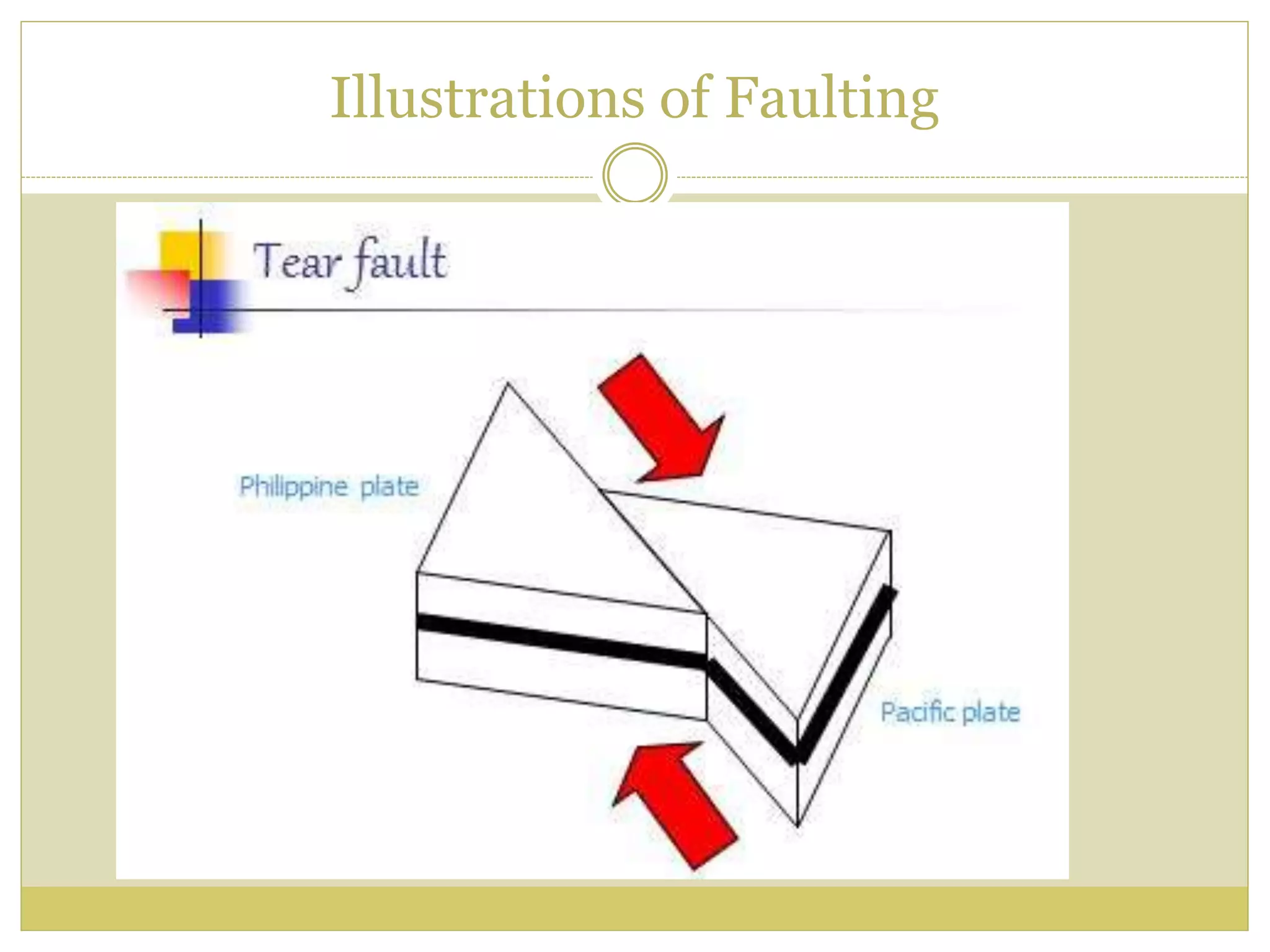
TYPES OF FAULTING
 There are three types of fault which are caused by
different endogenic forces:
- Normal fault (Convergence)
- Reverse fault (Divergence)
- Tear fault (Transform)
 Faulting forms two major landforms - block
mountains and rift valleys.
Illustrations of Faulting
Other Endogenic Processes (Subsequent)
 These are Endogenic Processes that are subsequent
to the main ones.
Volcanism (Volcanic Activity)
Metamorphism
Earthquake (Seismic Activity)
Volcanism
 VOLCANISM or magmatism (also known as
volcanic activity or igneous activity)
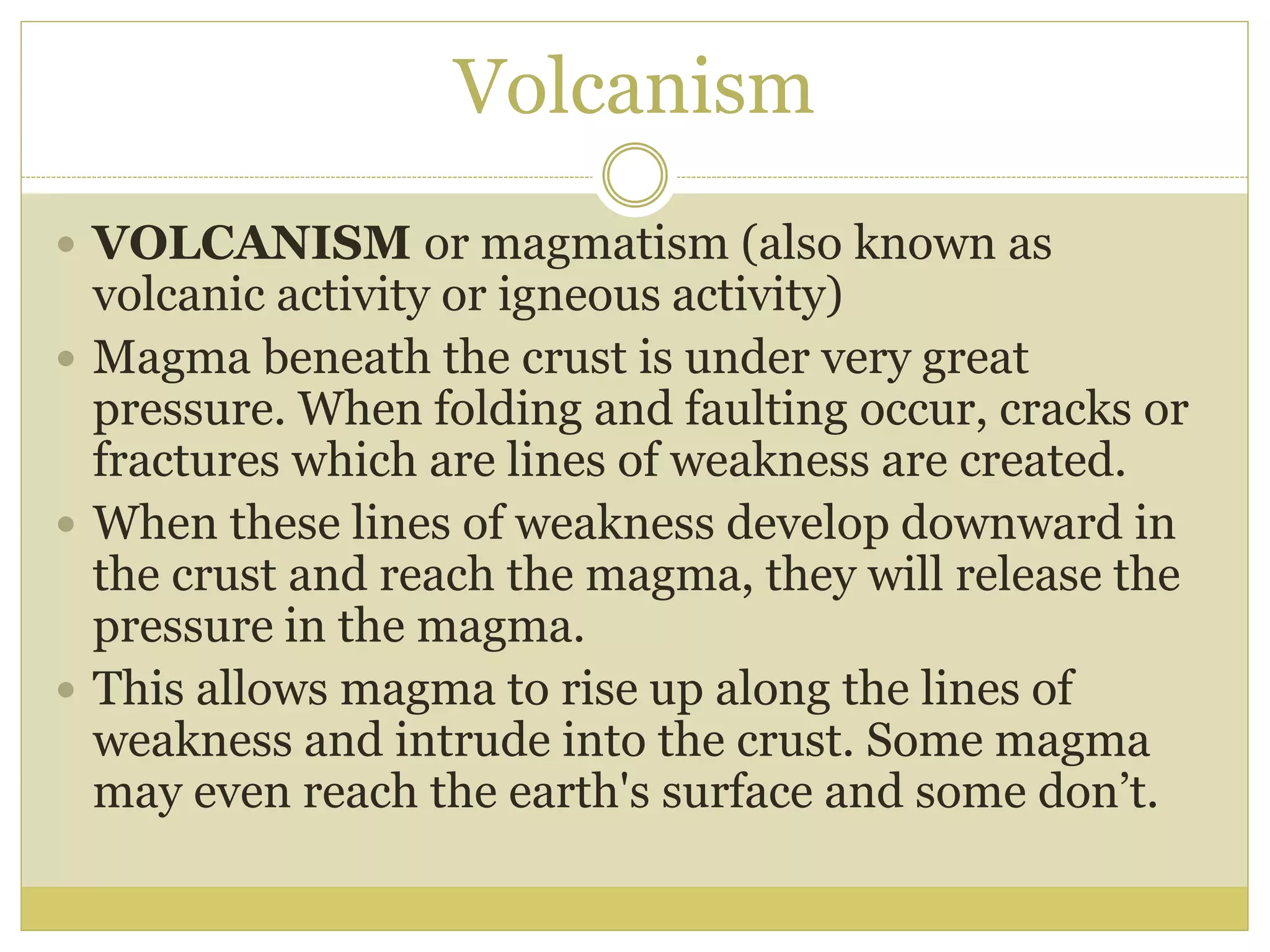
 Magma beneath the crust is under very great
pressure. When folding and faulting occur, cracks or
fractures which are lines of weakness are created.
 When these lines of weakness develop downward in
the crust and reach the magma, they will release the
pressure in the magma.
 This allows magma to rise up along the lines of
weakness and intrude into the crust. Some magma
may even reach the earth's surface and some don’t.
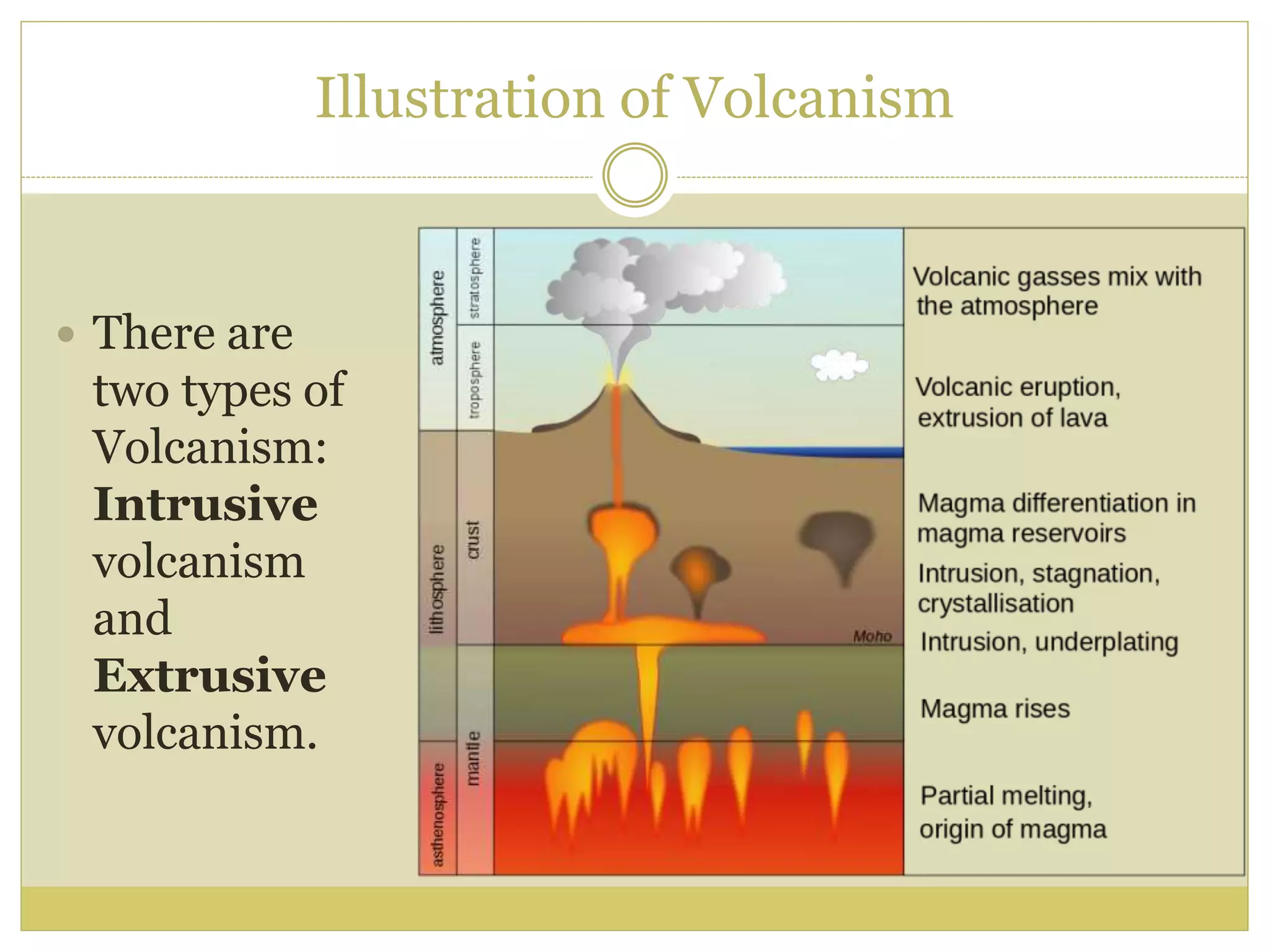
Illustration of Volcanism
 There are
two types of
Volcanism:
Intrusive
volcanism
and
Extrusive
volcanism.
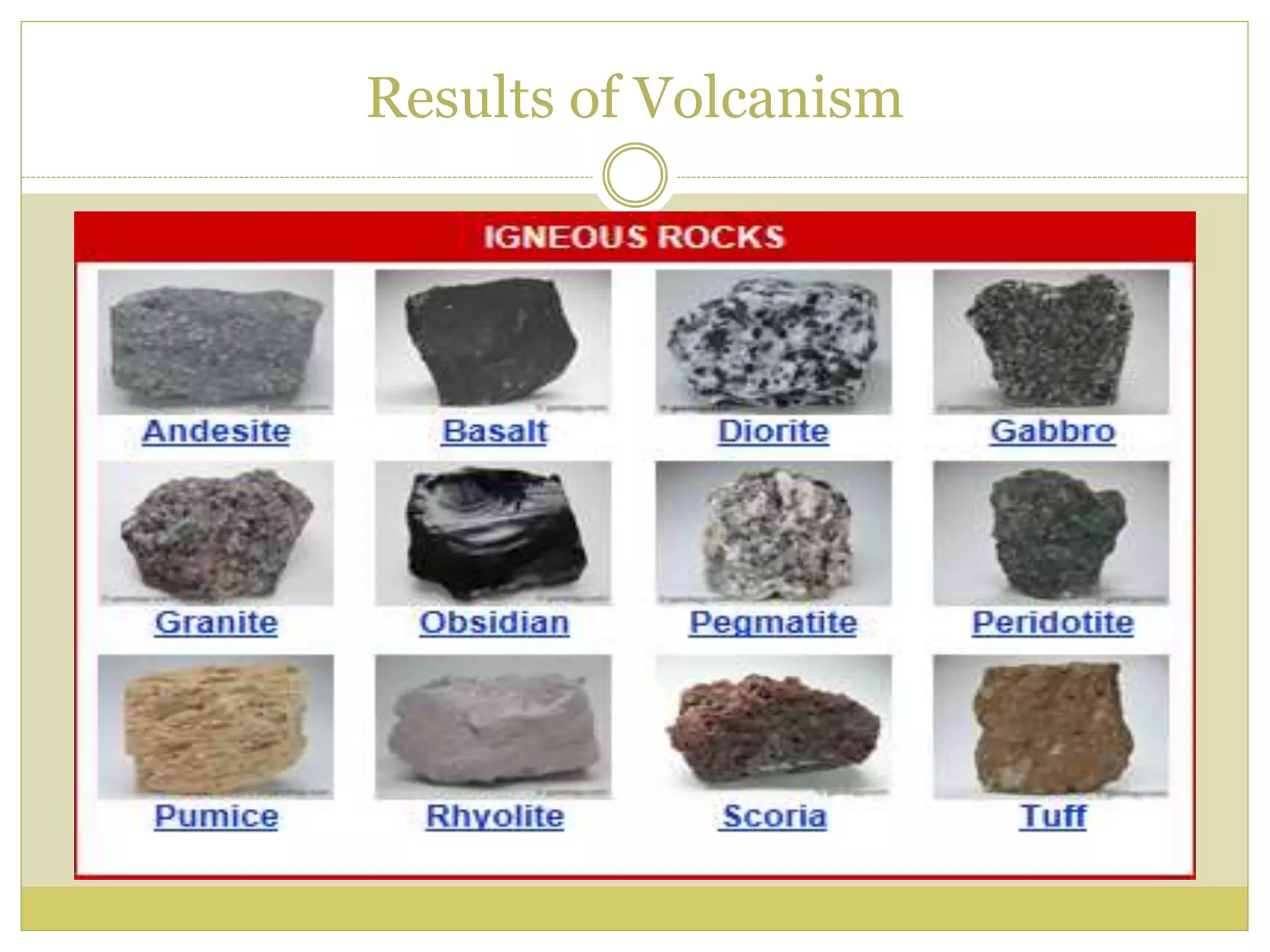
Results of Volcanism
Metamorphism
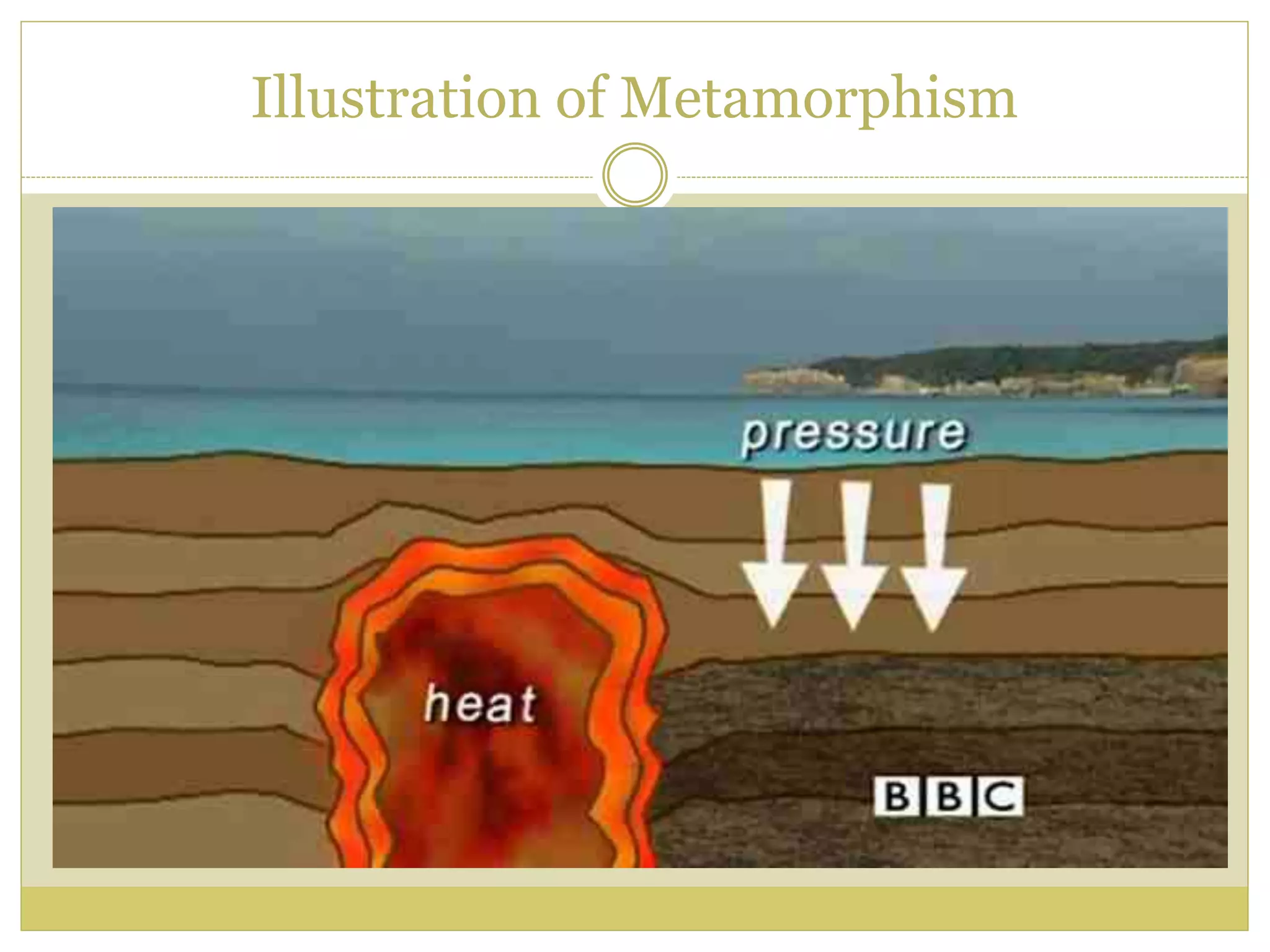
 Metamorphism is an endogenic process which
occurs when there is pressure and heat applied to
geologic structures which leads to the formation of
Metamorphic Rocks.
Illustration of Metamorphism
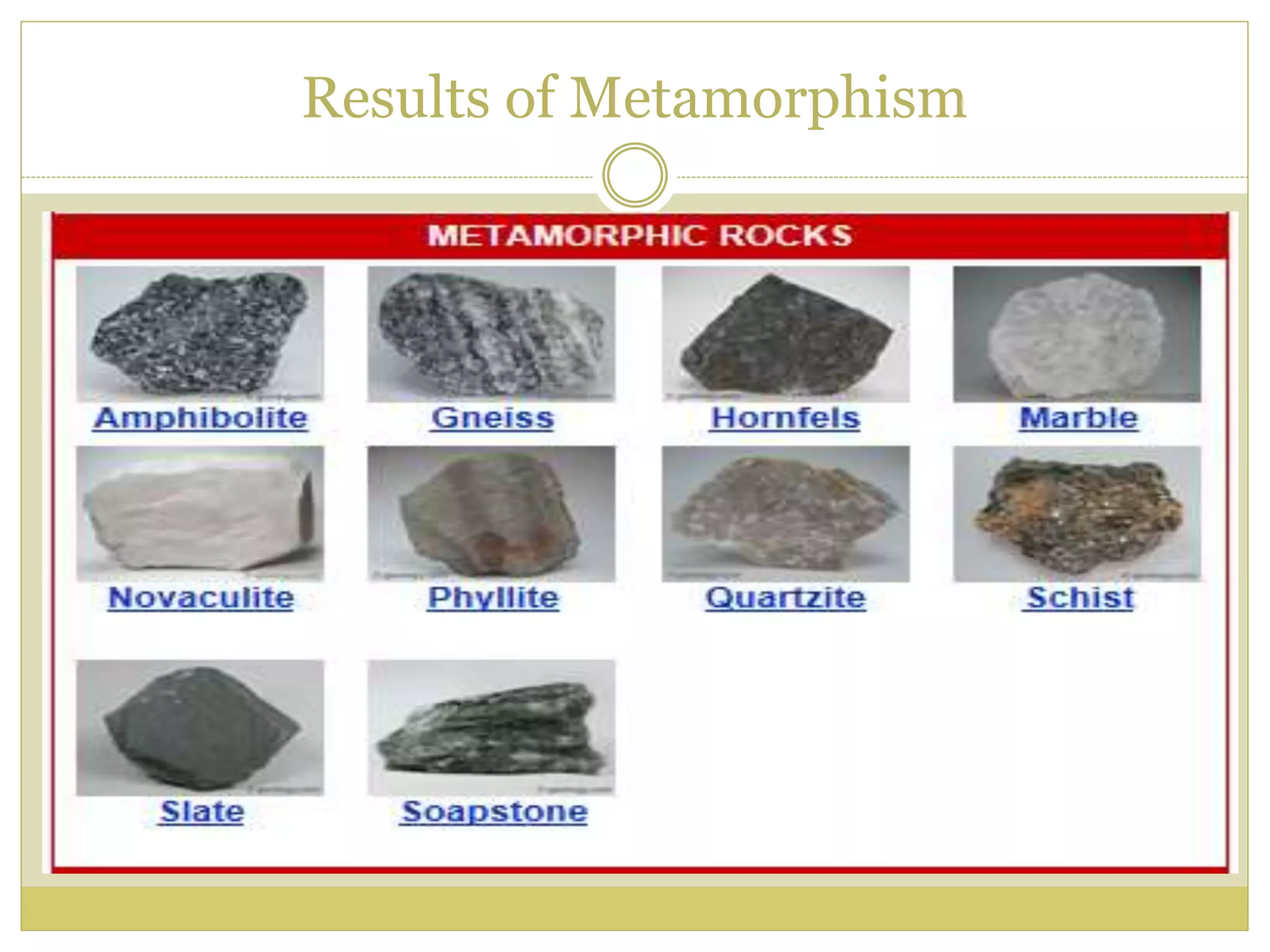
Results of Metamorphism
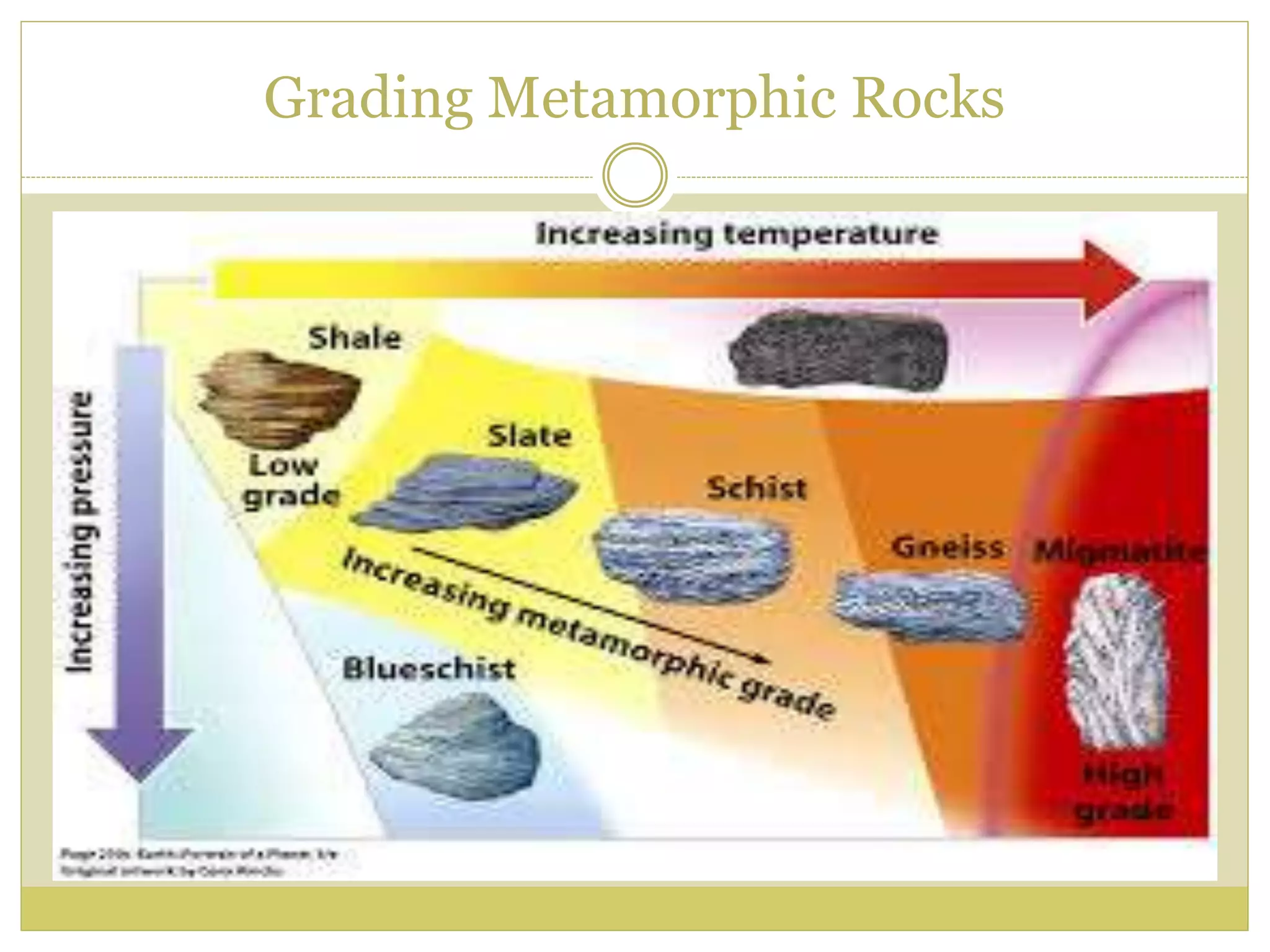
Grading Metamorphic Rocks
Earthquakes
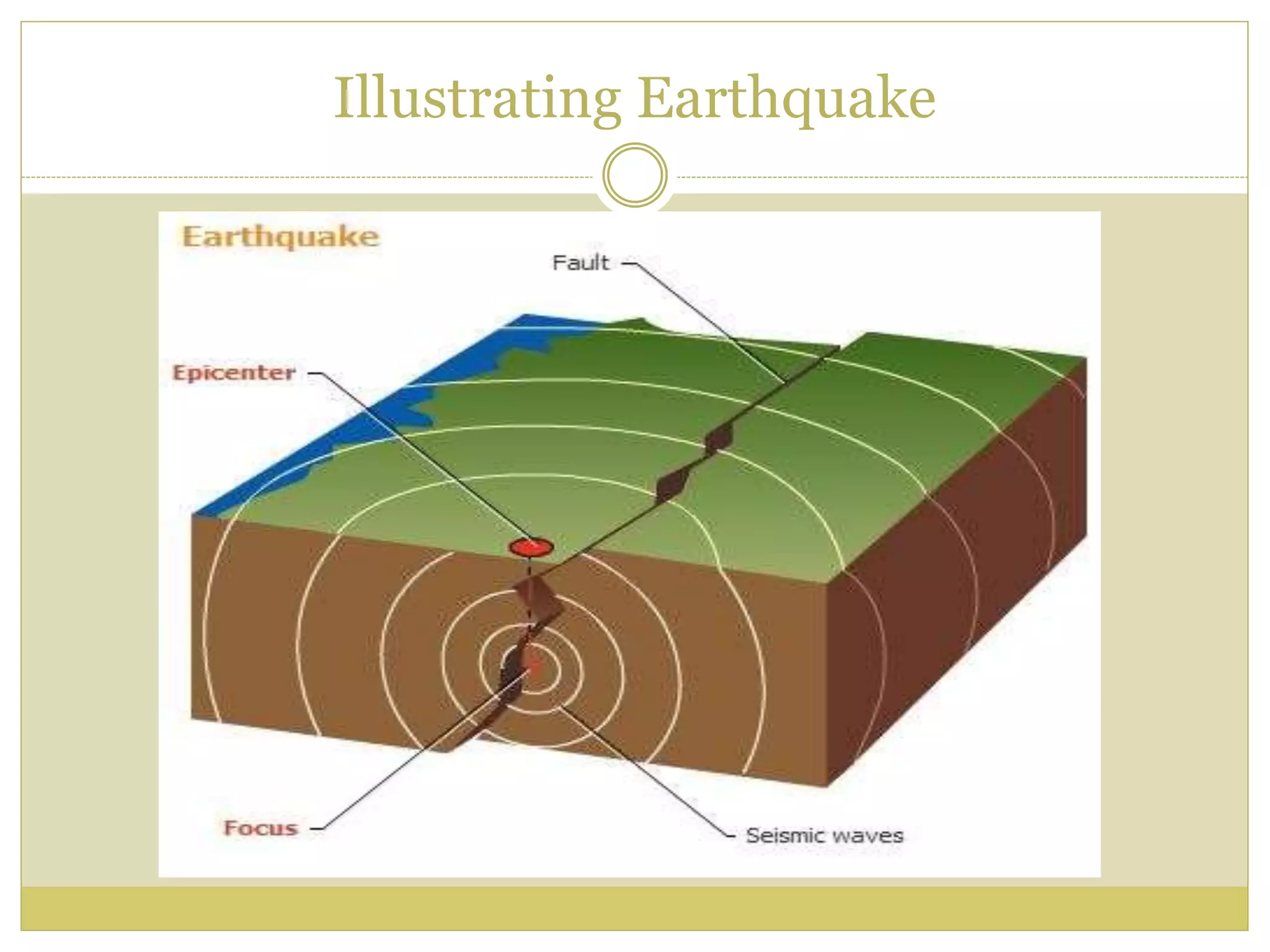
 An Earthquake or (Seismic Activity) is a sudden
shaking or vibration in the earth’s crust.
 When plates suddenly move past each other, the
built-up strain is released along the fault, and the
rock fractures.
 An earthquake also can be triggered by molten rock
moving up into the chamber of a volcano before
eruption.
Illustrating Earthquake
Summary
 Endogenic Processes are Processes that is formed or
occurring beneath the surface of the Earth.
 The Main Endogenic Processes are Folding and
Faulting (or tectonic movements).
 The Subsequent Endogenic Processes are Volcanism,
Metamorphism, and Earthquakes.
 Endogenic processes cause many major landform
features.
 Endogenic processes have been responsible for shaping
the earth’s geologic structures and the formation of many
of the most important mineral resources.
Resources:
 Encarta Encyclopedia 2009
 Google Images
 http://encyclopedia2.thefreedictionary.com/Endogenic+
Processes
BY:
RICHIE JAKE GENERALE
SHARMAINE ARCOSA
KAREN ALERTA
THE END
T H E D A T A A N D I M A G E S A R E O W N E D B Y T H E I R R E S P E C T I V E
W R I T E R S / P U B L I S H E R S . W E D O N ’ T ’ C L A I M T H I S A S O U R O W N
A N D J U S T P R E S E N T E D I T F O R C L A S S W O R K .

Endogenic processes - The Process Within

  • 1.
  • 2.
  • 3.
    What is EndogenicProcess?  Endogenic Processes are geological processes that occur beneath the surface of the Earth.  It is associated with energy originating in the interior of the solid earth.  The ground we live on is moving all the time. The Forces within the earth that cause the ground to move are called ENDOGENIC FORCES.
  • 4.
    How does EndogenicProcess works?  When the ground moves, Rock layers at the surface of the earth are broken, twisted and shaken.  Land is destroyed in many places and created in other places.  When the land is shaped by Endogenic Forces we call this ENDOGENIC PROCESSES.
  • 5.
    The Main EndogenicProcesses  The Main Endogenic Processes are FOLDING & FAULTING or Tectonic Movements.  They take place mainly along the plate boundaries, which are the zones that are not stable.  Endogenic processes cause many major landform features.
  • 6.
    FOLDING  When twoforces push towards each other from opposite sides, the rock layers will bend into folds.  The process by which folds are formed are due to compressional forces known as folding.  There are large-scale and small-scale folds. Large- scale folds are found mainly along destructive plate boundaries.
  • 7.
  • 8.
  • 9.
    FAULTING  Faulting isthe fracturing and displacement of more brittle rock strata along a fault plane either caused by tension or compression.  A break in rock along which a vertical or horizontal rock movement has occurred is called a fault.  The process of forming a fault is faulting.  The line of fault which appears on land surface is known as fault line.  These lines are often lines of weakness which allow molten rock to rise up onto the earth surface when there is active volcanic activity nearby.
  • 10.
    TYPES OF FAULTING There are three types of fault which are caused by different endogenic forces: - Normal fault (Convergence) - Reverse fault (Divergence) - Tear fault (Transform)  Faulting forms two major landforms - block mountains and rift valleys.
  • 11.
  • 12.
  • 13.
    Other Endogenic Processes(Subsequent)  These are Endogenic Processes that are subsequent to the main ones. Volcanism (Volcanic Activity) Metamorphism Earthquake (Seismic Activity)
  • 14.
    Volcanism  VOLCANISM ormagmatism (also known as volcanic activity or igneous activity)  Magma beneath the crust is under very great pressure. When folding and faulting occur, cracks or fractures which are lines of weakness are created.  When these lines of weakness develop downward in the crust and reach the magma, they will release the pressure in the magma.  This allows magma to rise up along the lines of weakness and intrude into the crust. Some magma may even reach the earth's surface and some don’t.
  • 15.
    Illustration of Volcanism There are two types of Volcanism: Intrusive volcanism and Extrusive volcanism.
  • 16.
  • 17.
    Metamorphism  Metamorphism isan endogenic process which occurs when there is pressure and heat applied to geologic structures which leads to the formation of Metamorphic Rocks.
  • 18.
  • 19.
  • 20.
  • 21.
    Earthquakes  An Earthquakeor (Seismic Activity) is a sudden shaking or vibration in the earth’s crust.  When plates suddenly move past each other, the built-up strain is released along the fault, and the rock fractures.  An earthquake also can be triggered by molten rock moving up into the chamber of a volcano before eruption.
  • 22.
  • 23.
    Summary  Endogenic Processesare Processes that is formed or occurring beneath the surface of the Earth.  The Main Endogenic Processes are Folding and Faulting (or tectonic movements).  The Subsequent Endogenic Processes are Volcanism, Metamorphism, and Earthquakes.  Endogenic processes cause many major landform features.  Endogenic processes have been responsible for shaping the earth’s geologic structures and the formation of many of the most important mineral resources.
  • 24.
    Resources:  Encarta Encyclopedia2009  Google Images  http://encyclopedia2.thefreedictionary.com/Endogenic+ Processes
  • 25.
    BY: RICHIE JAKE GENERALE SHARMAINEARCOSA KAREN ALERTA THE END T H E D A T A A N D I M A G E S A R E O W N E D B Y T H E I R R E S P E C T I V E W R I T E R S / P U B L I S H E R S . W E D O N ’ T ’ C L A I M T H I S A S O U R O W N A N D J U S T P R E S E N T E D I T F O R C L A S S W O R K .