Principles of physiology
 Nutrition, Digestion & Metabolism
 Blood
 Respiration
 Excretion
 Muscular system
 Nervous system
 Endocrine system
EXCRETION
LUNG
 Excrete carbon
dioxide and water
The wastes of cellular
respiration
 Removes
toxic substances
from the blood
 Converts
hemoglobin from
old RBC’s to bile
pigments
eliminated in the
feces
LIVER
 Disposal of nitrogenous wastes
 Breaks down excess
amino acids (deamination)
 Amino group ammonia urea
Urea transported to the kidneys by the blood
Skin
 sweat
glands
excreto
structur
of the s
URINARY SYSTEM
 kidneys,
 ureters,
 urinary
bladder
 urethra
URINARY SYSTEM
kidneys (2) are bean
shaped organs ,
10 cm long ,
located below the
diaphragm near
the back
3 main functions:
1. Excretion(remove wastes of cellular
metabolism from the blood)
2. Regulation, homeostasis
(concentrations of substances found in
body fluids,plasma,pH, blood pressure)
3. Secretion (rennin, and erythropoietin)
Kidney Structure
 Kidneys consist of
microscopic
structures called
 NEPHRONS.
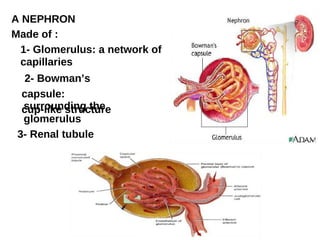
A NEPHRON
Made of :
1- Glomerulus: a network of
capillaries
2- Bowman’s
capsule:
cup-like structuresurrounding the
glomerulus
3- Renal tubule
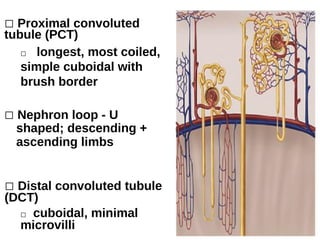
 Proximal convoluted
tubule (PCT)
 longest, most coiled,
simple cuboidal with
brush border
 Nephron loop - U
shaped; descending +
ascending limbs
 Distal convoluted tubule
(DCT)
 cuboidal, minimal
microvilli
Juxta-glomerular apparatus:
 A group of spindle shaped cells in the media
of afferent glomerular arterioles
 -Secrete rennin ( increase renal blood flow ).
 -Secrete erythropoietine, a hormonal agent
necessary for production of red blood cells
by bone marrow.
 -Secrete chemical factor ,regulate the output
of aldosterone.
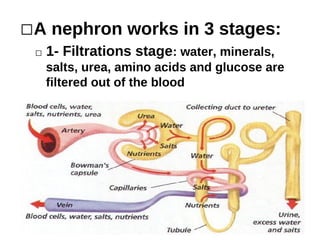
A nephron works in 3 stages:
 1- Filtrations stage: water, minerals,
salts, urea, amino acids and glucose are
filtered out of the blood
Filterate
170-180L/day
resemble blood plasma (except RBCs,plasma
protein
3 forces :
 High glomerular capillaries pressure
 High glomerular osmotic pressure
 Low filterate pressure
 2- Reabsorption
stage:
 water, minerals,
amino acids and
glucose are
reabsorbed by
active transport
from the renal
tubule into the
capillaries
 3- Secretion stage
Urine Formation Preview
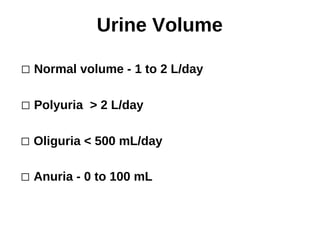
Urine Volume
 Normal volume - 1 to 2 L/day
 Polyuria > 2 L/day
 Oliguria < 500 mL/day
 Anuria - 0 to 100 mL
DiabetesChronic polyuria
 With hyperglycemia and glycosuria
 diabetes mellitus I and II, insulin
hyposecretion/insensitivity
 gestational diabetes, 1 to 3% of pregnancies
 pituitary diabetes, hypersecretion of GH
 adrenal diabetes, hypersecretion of cortisol
 With glycosuria but no hyperglycemia
 renal diabetes, hereditary deficiency of glucose
transporters
 With no hyperglycemia or glycosuria
 diabetes insipidus, ADH hyposecretion
URETERS
 Tubes
carry urine
from the
kidney to the
bladder
URINARY BLADDER
 Stores urine
URETHRA
 Tube that
carries urine
from the
bladder to the
outside of the
body
Function - Homeostasis
 Acid-Base Balance
 Kidneys regulate the pH, mineral ion concentration,
and water composition of the blood.
 By exchanging hydronium ions and hydroxyl ions,
the blood plasma is maintained by the kidney at pH
7.4.
 Urine, becomes either acidic at pH 5 or alkaline at
pH 8.
 Water Balance
 Aldosterone
 Plasma Volume
 ADH
Aldosterone
 A steroid hormone (m alocorticoid)
 It is formed in the outer-section (zona
glomerulosa) of the adrenal cortex
 It diminishes the excretion of Na+ ions and
therefore water, and stimulates the excretion
of K+ ions by the kidneys.
ADH (VASOPRESSIN)
 when the body is low on water.
kidneys conserve water
 osmotic activity increase
con. urine.
 → stimulate OSMOTIC RECEPTORS in the
hypothalamus
 → stimulation of posterior pituitary lobe


→ activation of VASOPRESSIN
→ increase collecting ducts permeability for water
 → reabsorption
 →HYPERTONIC URINE
Malfunctions
Kidney Diseases:
 Various conditions in which the
kidneys are unable to properly
excrete nitrogenous wastes
Kidney stones:
 Substances crystalize out of the urine
in the urinary tract or in the kidney
 Some pass out in the urine on their
own
 Some can be shattered with lasers or
sound waves
 Some are surgically removed
 Dialysis - can
some times be used
to treat various
kidney diseases
 Kidney
transplants

physiology : Excretion

  • 1.
    Principles of physiology Nutrition, Digestion & Metabolism  Blood  Respiration  Excretion  Muscular system  Nervous system  Endocrine system
  • 2.
  • 3.
    LUNG  Excrete carbon dioxideand water The wastes of cellular respiration
  • 4.
     Removes toxic substances fromthe blood  Converts hemoglobin from old RBC’s to bile pigments eliminated in the feces LIVER
  • 5.
     Disposal ofnitrogenous wastes  Breaks down excess amino acids (deamination)  Amino group ammonia urea Urea transported to the kidneys by the blood
  • 6.
  • 7.
    URINARY SYSTEM  kidneys, ureters,  urinary bladder  urethra
  • 8.
    URINARY SYSTEM kidneys (2)are bean shaped organs , 10 cm long , located below the diaphragm near the back
  • 9.
    3 main functions: 1.Excretion(remove wastes of cellular metabolism from the blood) 2. Regulation, homeostasis (concentrations of substances found in body fluids,plasma,pH, blood pressure) 3. Secretion (rennin, and erythropoietin)
  • 12.
    Kidney Structure  Kidneysconsist of microscopic structures called  NEPHRONS.
  • 13.
    A NEPHRON Made of: 1- Glomerulus: a network of capillaries 2- Bowman’s capsule: cup-like structuresurrounding the glomerulus 3- Renal tubule
  • 14.
     Proximal convoluted tubule(PCT)  longest, most coiled, simple cuboidal with brush border  Nephron loop - U shaped; descending + ascending limbs  Distal convoluted tubule (DCT)  cuboidal, minimal microvilli
  • 15.
    Juxta-glomerular apparatus:  Agroup of spindle shaped cells in the media of afferent glomerular arterioles  -Secrete rennin ( increase renal blood flow ).  -Secrete erythropoietine, a hormonal agent necessary for production of red blood cells by bone marrow.  -Secrete chemical factor ,regulate the output of aldosterone.
  • 16.
    A nephron worksin 3 stages:  1- Filtrations stage: water, minerals, salts, urea, amino acids and glucose are filtered out of the blood
  • 17.
    Filterate 170-180L/day resemble blood plasma(except RBCs,plasma protein 3 forces :  High glomerular capillaries pressure  High glomerular osmotic pressure  Low filterate pressure
  • 18.
     2- Reabsorption stage: water, minerals, amino acids and glucose are reabsorbed by active transport from the renal tubule into the capillaries  3- Secretion stage
  • 21.
  • 22.
    Urine Volume  Normalvolume - 1 to 2 L/day  Polyuria > 2 L/day  Oliguria < 500 mL/day  Anuria - 0 to 100 mL
  • 23.
    DiabetesChronic polyuria  Withhyperglycemia and glycosuria  diabetes mellitus I and II, insulin hyposecretion/insensitivity  gestational diabetes, 1 to 3% of pregnancies  pituitary diabetes, hypersecretion of GH  adrenal diabetes, hypersecretion of cortisol  With glycosuria but no hyperglycemia  renal diabetes, hereditary deficiency of glucose transporters  With no hyperglycemia or glycosuria  diabetes insipidus, ADH hyposecretion
  • 24.
    URETERS  Tubes carry urine fromthe kidney to the bladder
  • 25.
  • 26.
    URETHRA  Tube that carriesurine from the bladder to the outside of the body
  • 27.
    Function - Homeostasis Acid-Base Balance  Kidneys regulate the pH, mineral ion concentration, and water composition of the blood.  By exchanging hydronium ions and hydroxyl ions, the blood plasma is maintained by the kidney at pH 7.4.  Urine, becomes either acidic at pH 5 or alkaline at pH 8.  Water Balance  Aldosterone  Plasma Volume  ADH
  • 28.
    Aldosterone  A steroidhormone (m alocorticoid)  It is formed in the outer-section (zona glomerulosa) of the adrenal cortex  It diminishes the excretion of Na+ ions and therefore water, and stimulates the excretion of K+ ions by the kidneys.
  • 29.
    ADH (VASOPRESSIN)  whenthe body is low on water. kidneys conserve water  osmotic activity increase con. urine.  → stimulate OSMOTIC RECEPTORS in the hypothalamus  → stimulation of posterior pituitary lobe   → activation of VASOPRESSIN → increase collecting ducts permeability for water  → reabsorption  →HYPERTONIC URINE
  • 30.
    Malfunctions Kidney Diseases:  Variousconditions in which the kidneys are unable to properly excrete nitrogenous wastes
  • 31.
    Kidney stones:  Substancescrystalize out of the urine in the urinary tract or in the kidney  Some pass out in the urine on their own  Some can be shattered with lasers or sound waves  Some are surgically removed
  • 32.
     Dialysis -can some times be used to treat various kidney diseases  Kidney transplants