Microevolution &
Macroevolution
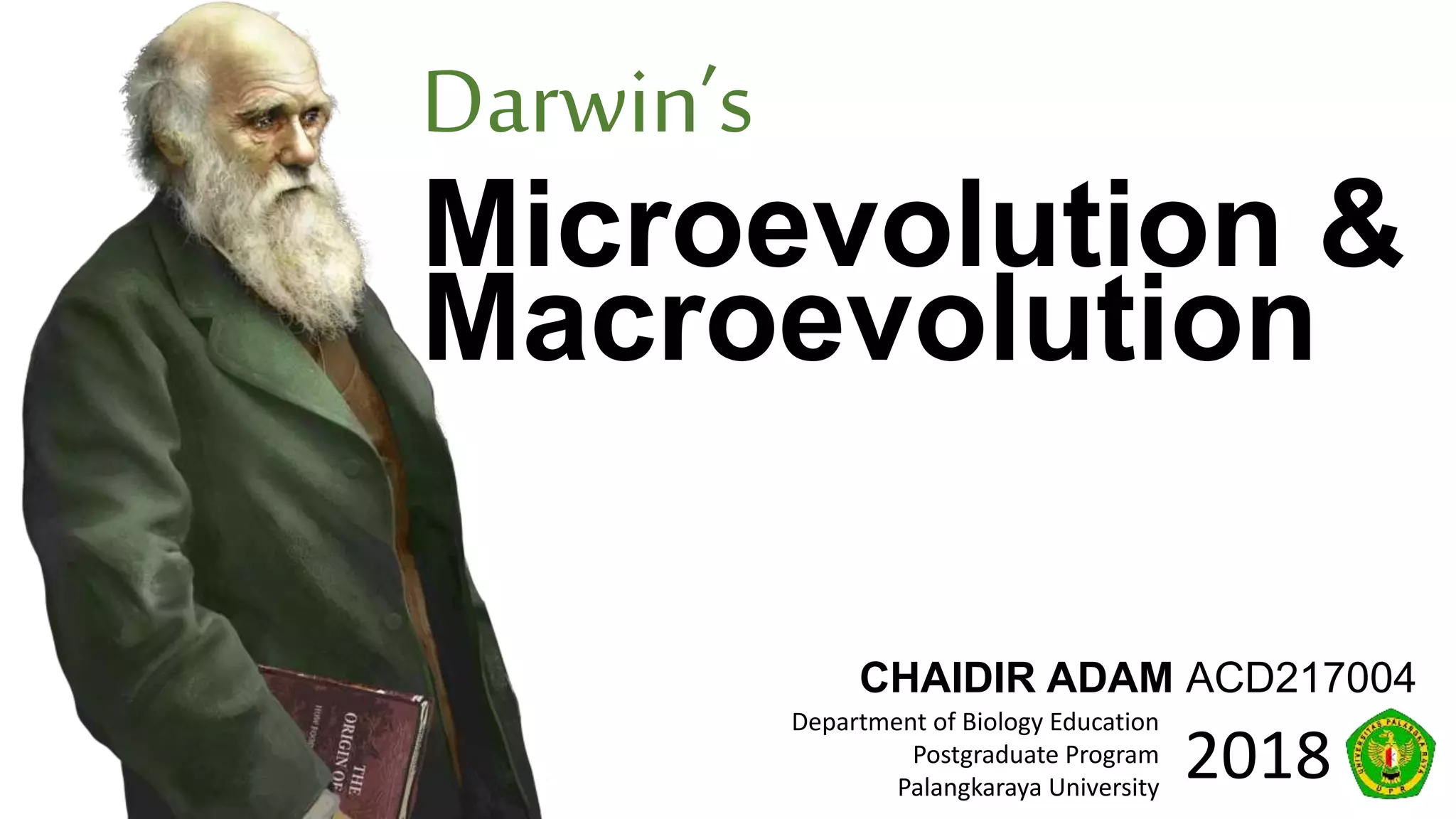
Darwin’s
CHAIDIR ADAM ACD217004
2018
Department of Biology Education
Postgraduate Program
Palangkaraya University
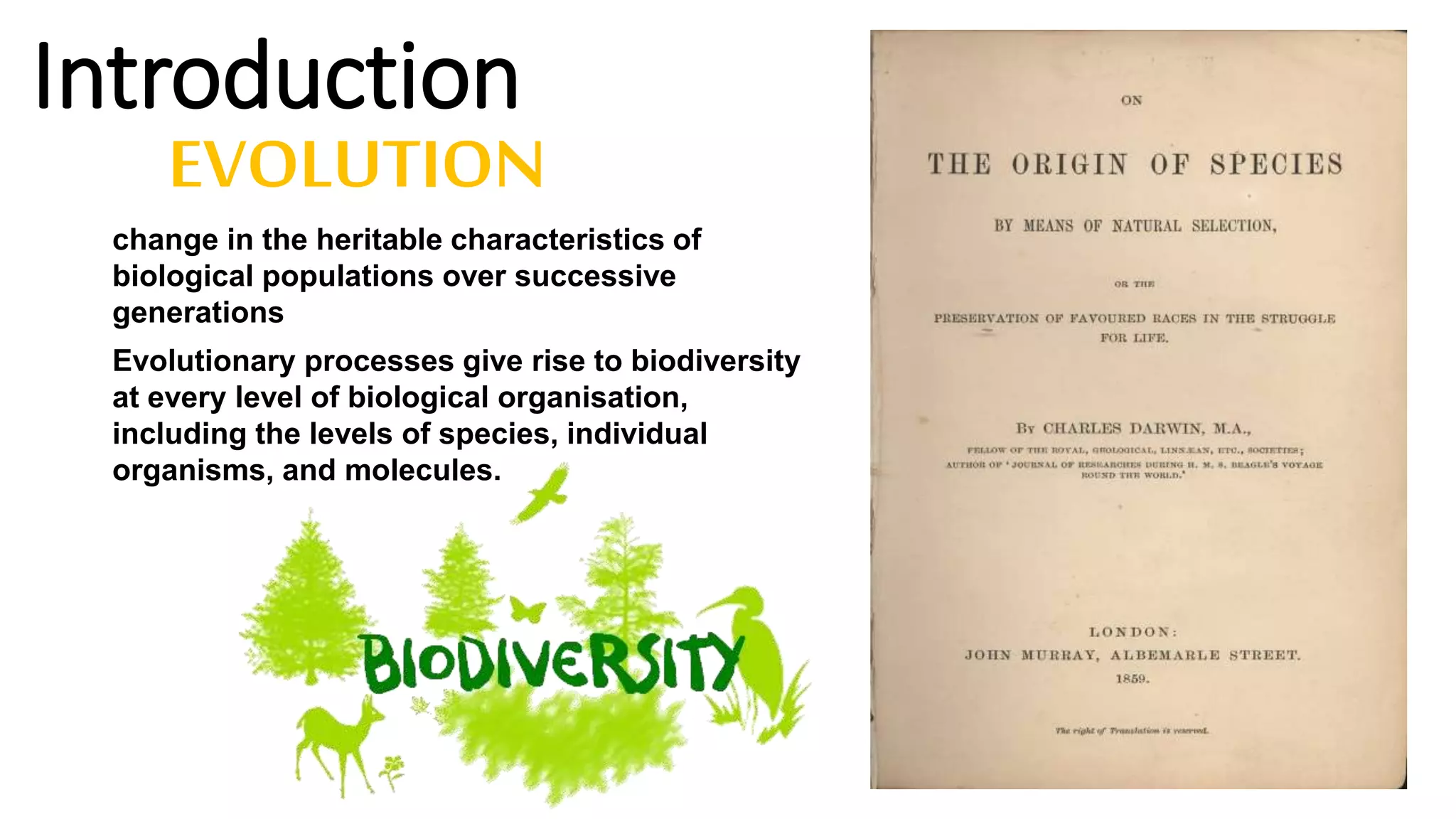
Introduction
EVOLUTION
change in the heritable characteristics of
biological populations over successive
generations
Evolutionary processes give rise to biodiversity
at every level of biological organisation,
including the levels of species, individual
organisms, and molecules.
ADAPTATION
which can be
observed both
in nature and
in the
laboratory
SPECIATION,
ORIGIN OF THE
DIVISION OF THE
TAXONOMIC
HIERARCHY
ABOVE THE
SPECIES LEVEL,
AND THE
DEVELOPMENT
OF COMPLEX
ORGANS
which cannot be
witnessed
because it occurs
over intervals that
far exceed the
human lifespan
Divergence and Extinction in 1859
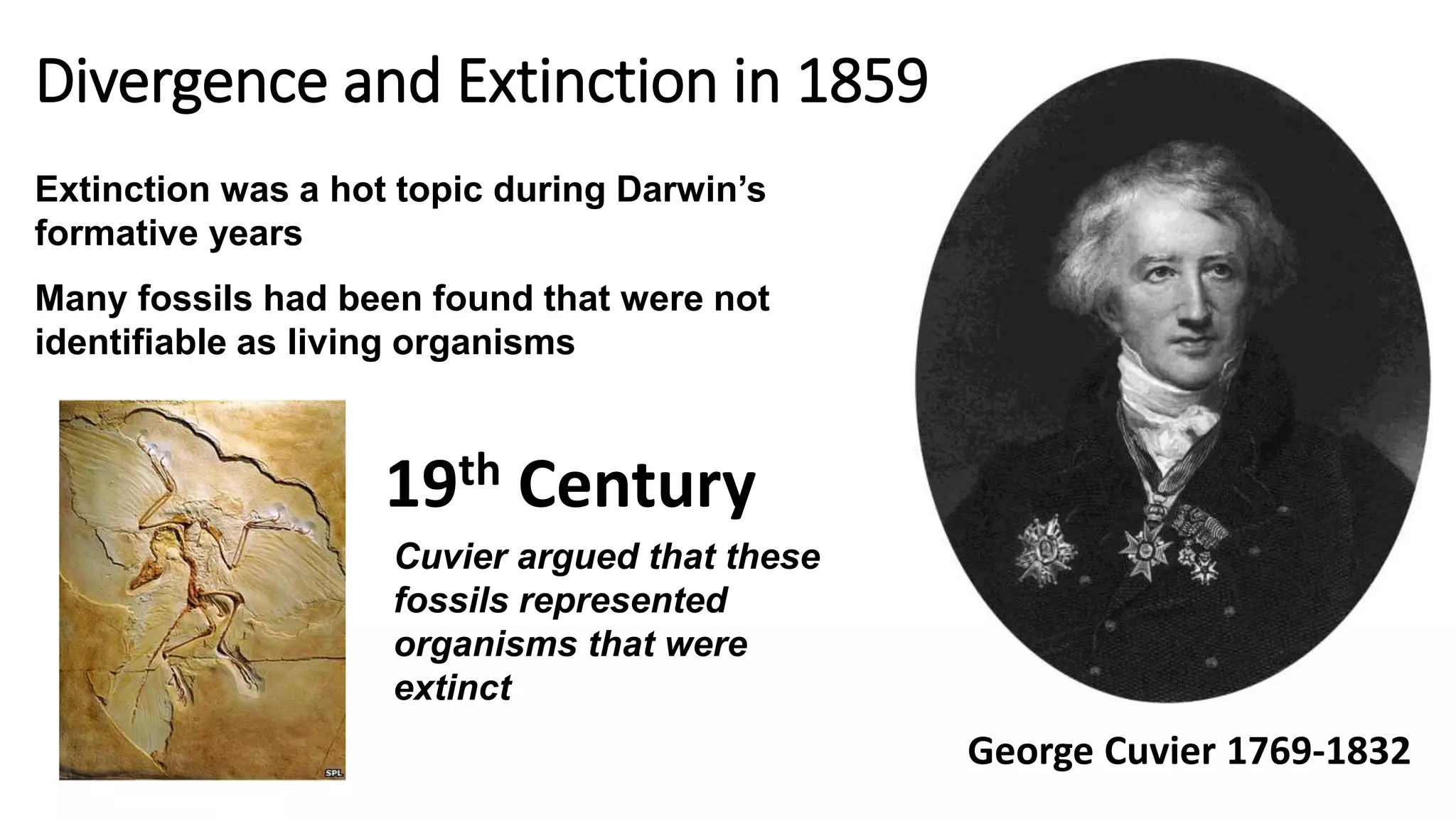
Extinction was a hot topic during Darwin’s
formative years
Many fossils had been found that were not
identifiable as living organisms
George Cuvier 1769-1832
Cuvier argued that these
fossils represented
organisms that were
extinct
19th Century
Early hypothesis
“these creatures lived
on in the vast (at a
time) unexplored
regions of the globe”
Mammoth Mastodon
When US President Thomas Jefferson dispatched
Meriwether Lewis and William Clark to explore the
interior of North America
He expexted them to find a living …..
Thomas Jefferson
The 3rd President of the US
Which he knew about
from the fossils
Jean-Baptiste Lamarck
1744 – 1829
Another alternative
“these fossils, rather than being
extinct, had evolved into
comtemporary forms”
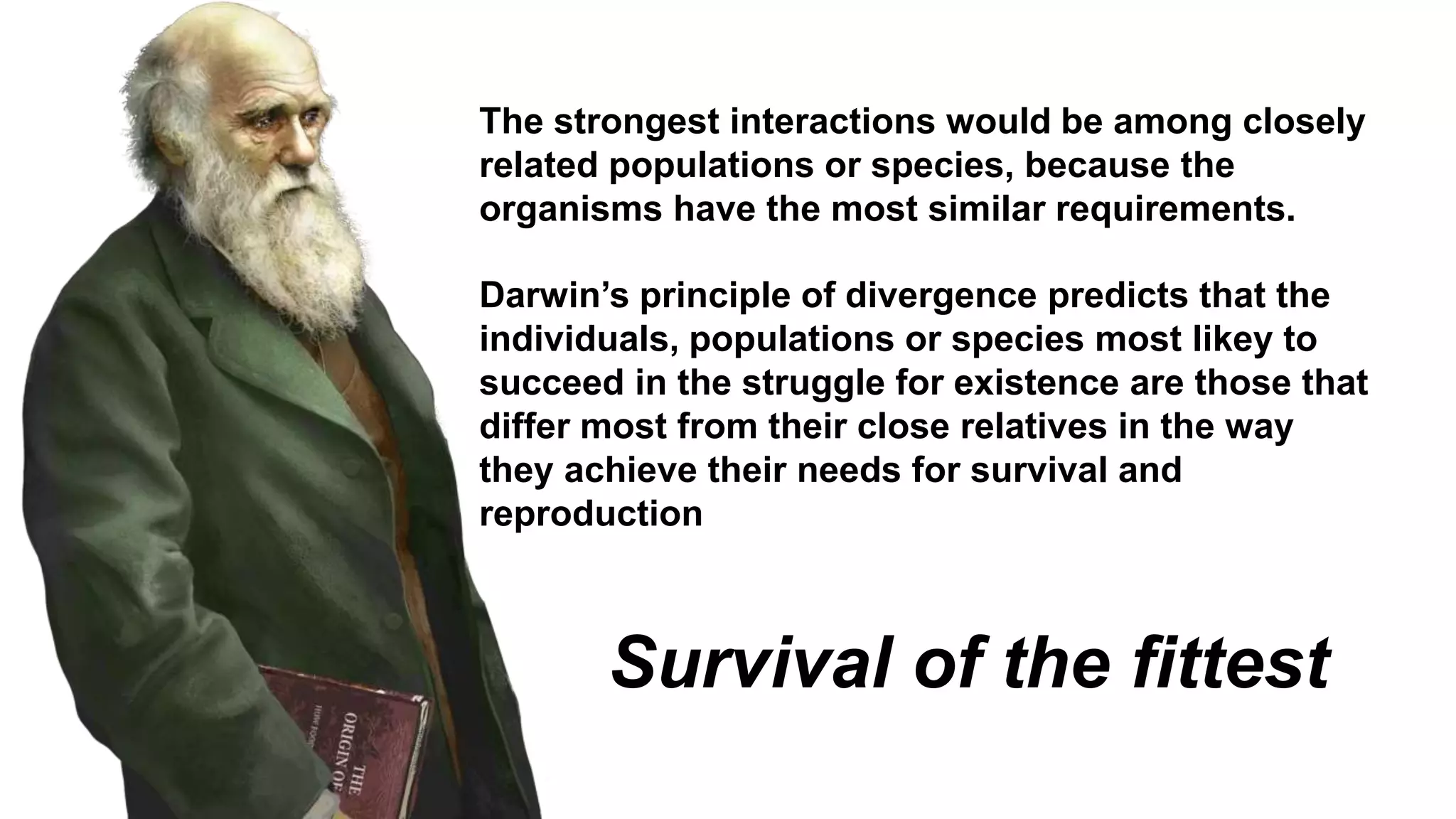
Charles Robert Darwin
1809 – 1882
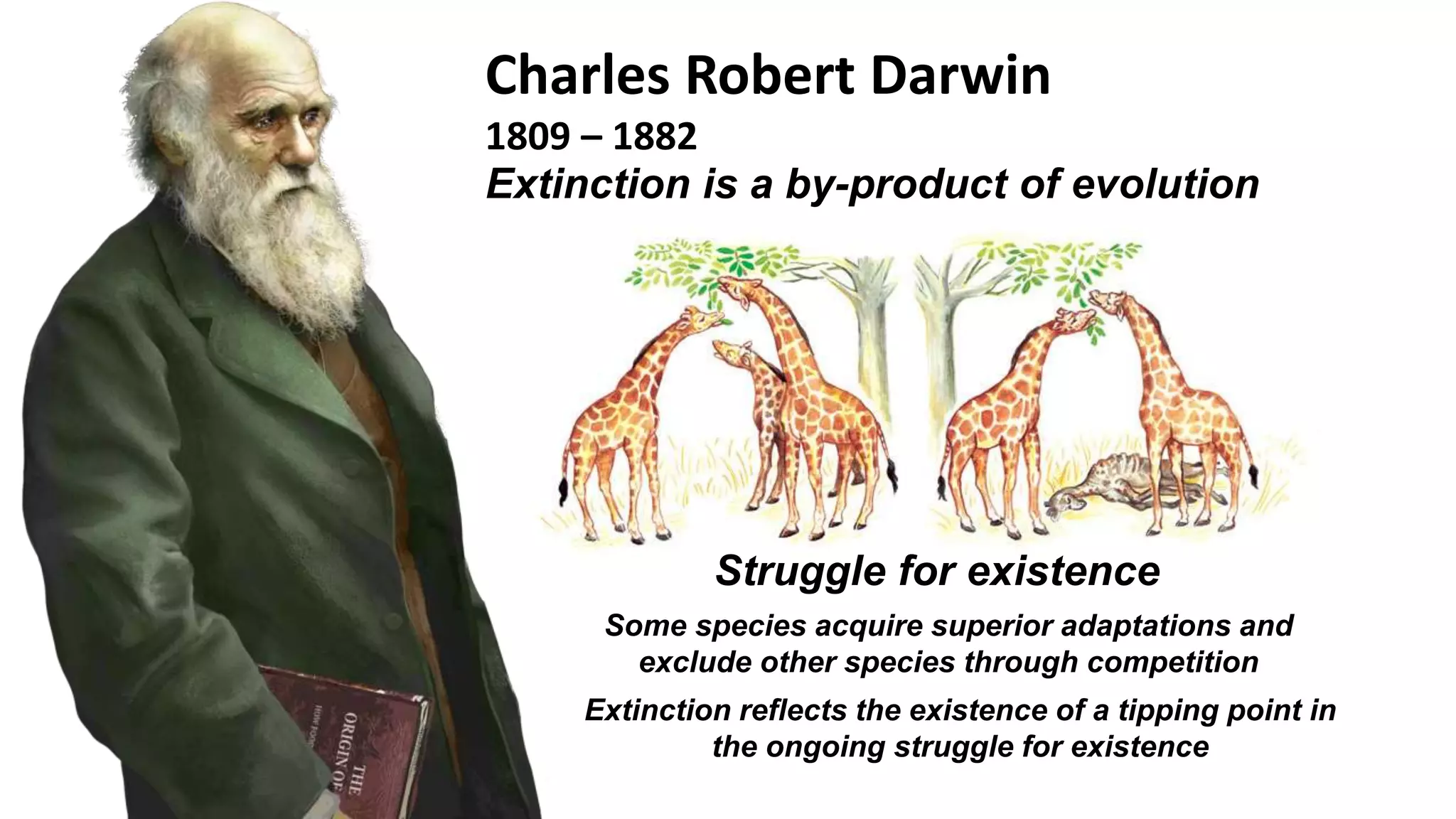
Extinction is a by-product of evolution
Struggle for existence
Some species acquire superior adaptations and
exclude other species through competition
Extinction reflects the existence of a tipping point in
the ongoing struggle for existence
Struggle for existence
Darwin argued that the struggle for existence was
caused by interactions among organisms and was
the dominant factor that shaped how organisms
evolve.
He considered the physical environment to be of
minor importance in evolution
The interactions that define the struggle for
existence and shape how organisms evolve were
diverse, including competition, predation,
parasitism, disease and pollination
The strongest interactions would be among closely
related populations or species, because the
organisms have the most similar requirements.
Darwin’s principle of divergence predicts that the
individuals, populations or species most likey to
succeed in the struggle for existence are those that
differ most from their close relatives in the way
they achieve their needs for survival and
reproduction
Survival of the fittest
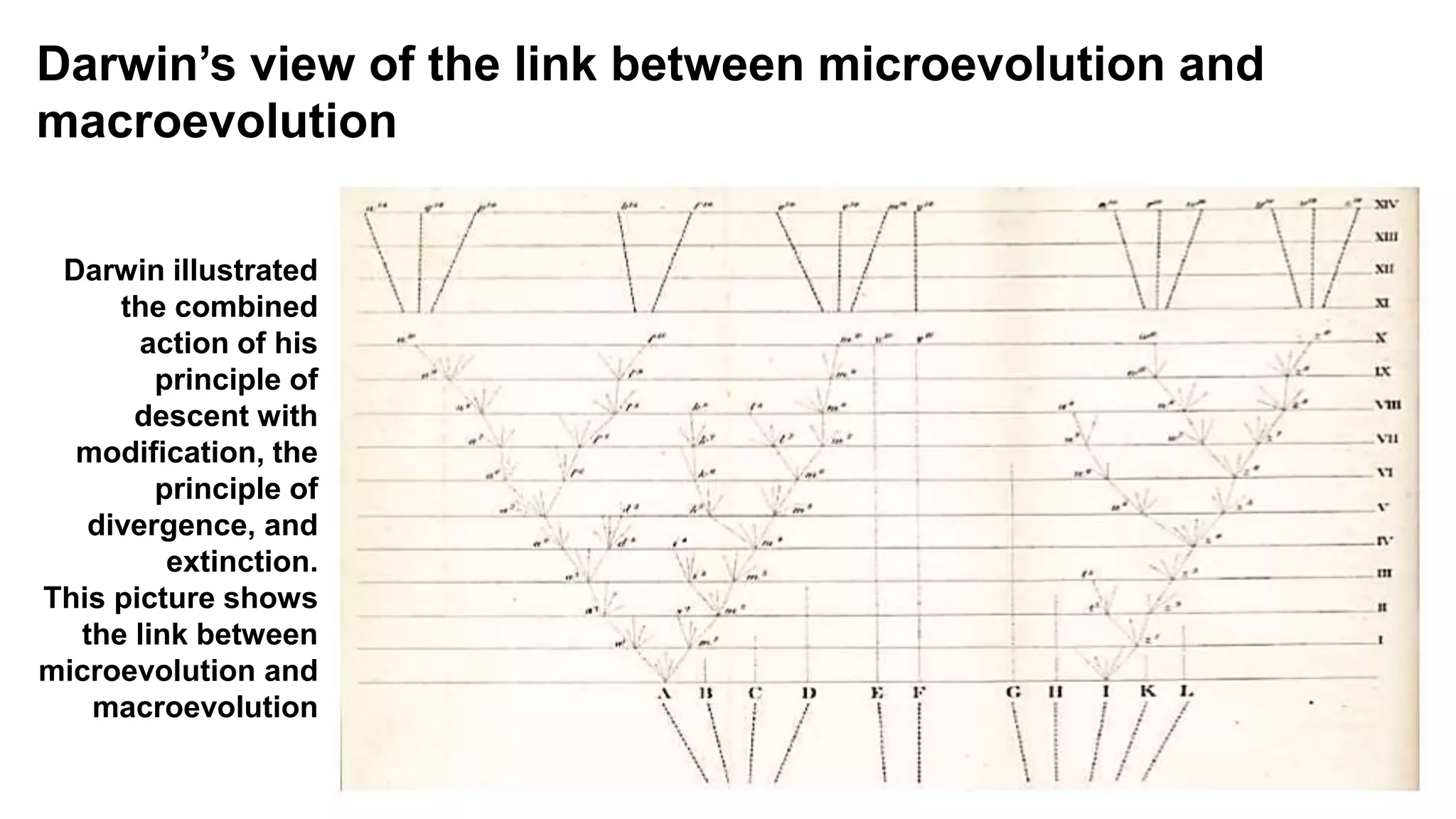
Darwin’s view of the link between microevolution and
macroevolution
Darwin illustrated
the combined
action of his
principle of
descent with
modification, the
principle of
divergence, and
extinction.
This picture shows
the link between
microevolution and
macroevolution
ELEPHANT PHYLOGENY
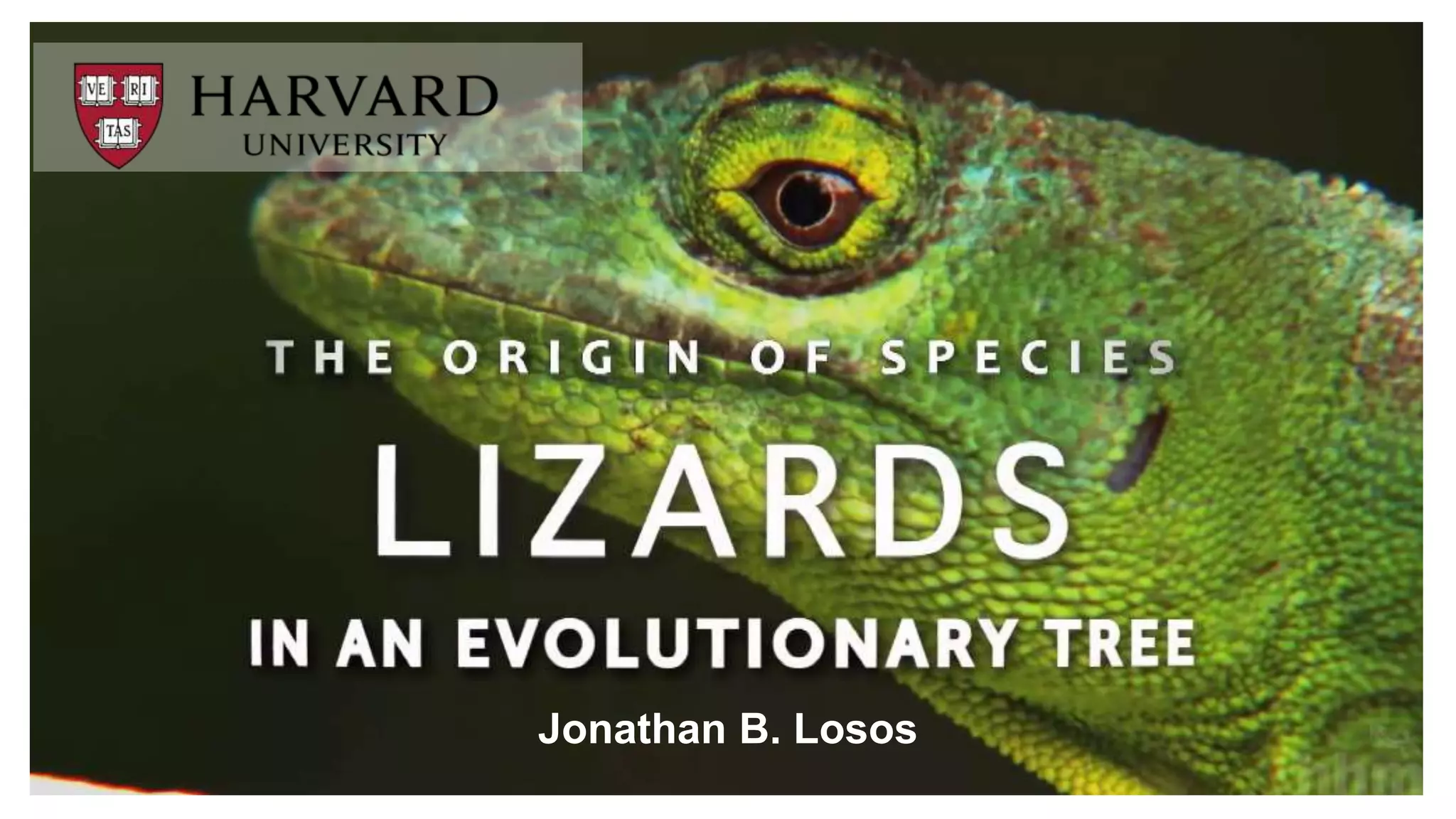
Jonathan B. Losos
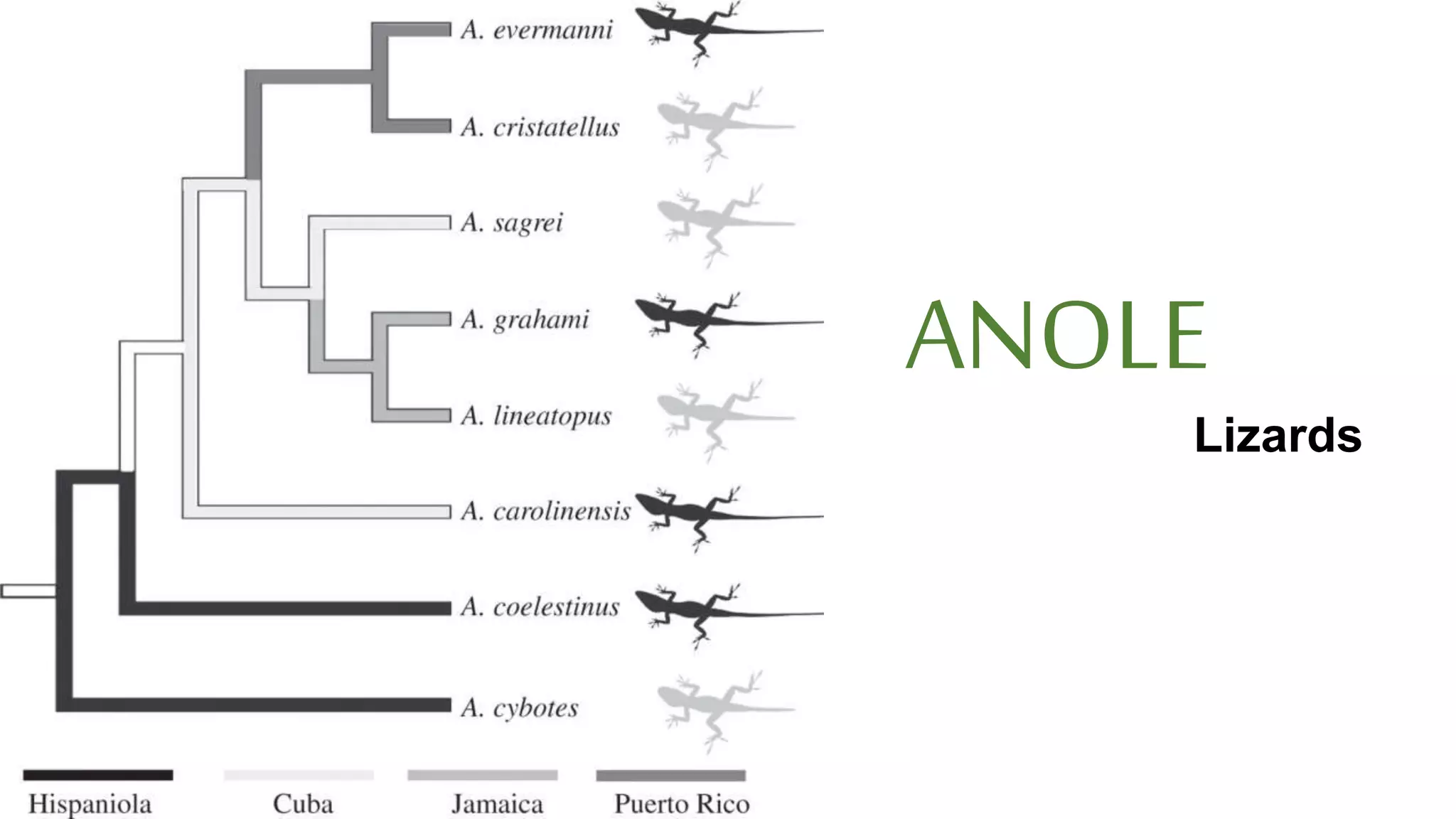
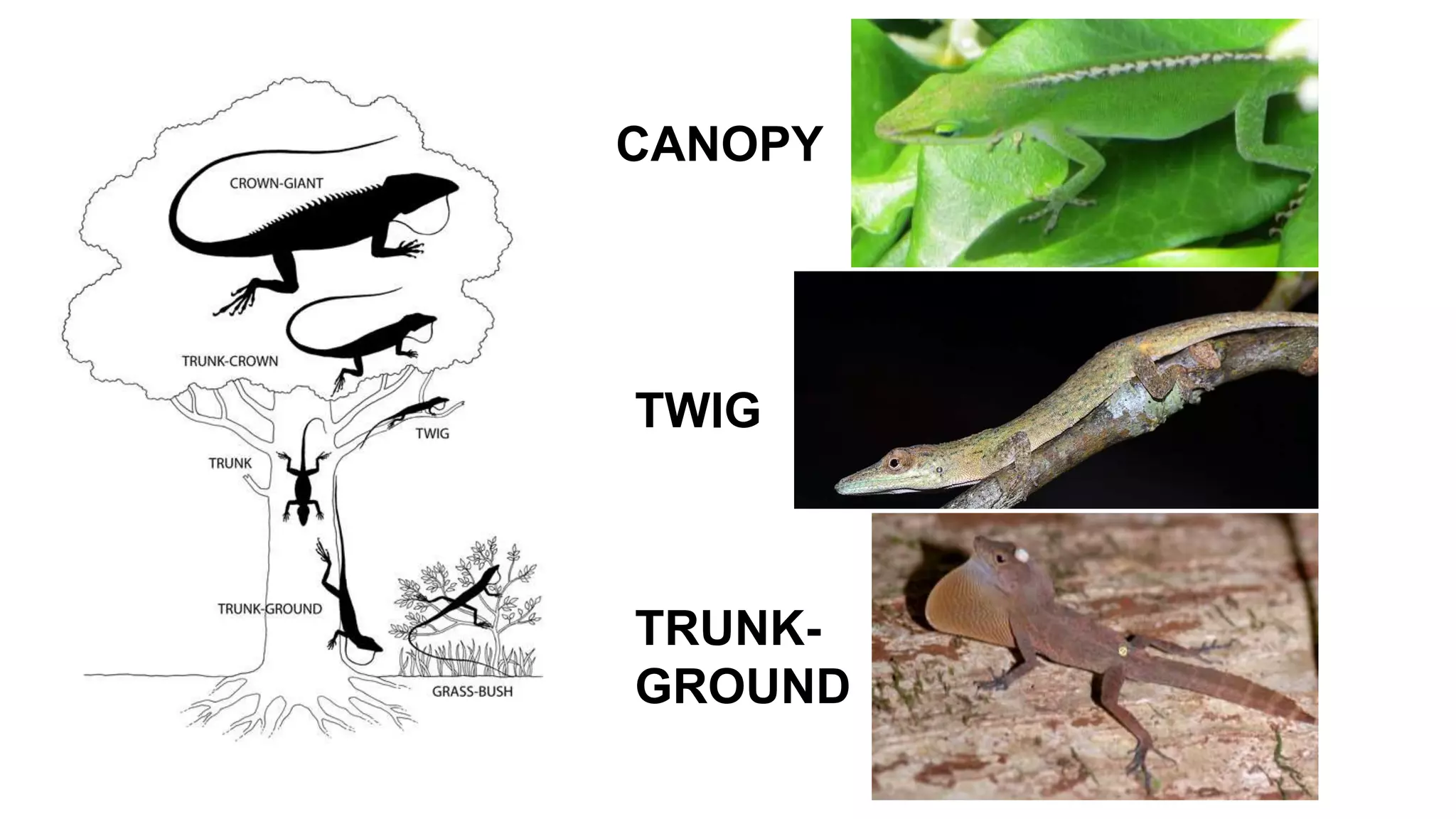
ANOLE
Lizards
CANOPY
TRUNK-
GROUND
TWIG
CANOPY
TWIG
TRUNK-
GROUND
Losos’ Experiment
female
male
Lizard-free Island
The next year …
SURVIVED
REPRODUCED
This guy looks
more comfortable
“Evolution can occur
very rapidly when
natural selection is
strong” – Jonathan B.
Losos
Losos’ experiment explains
how many different types
of adaptation formed, but
can’t explain speciation.
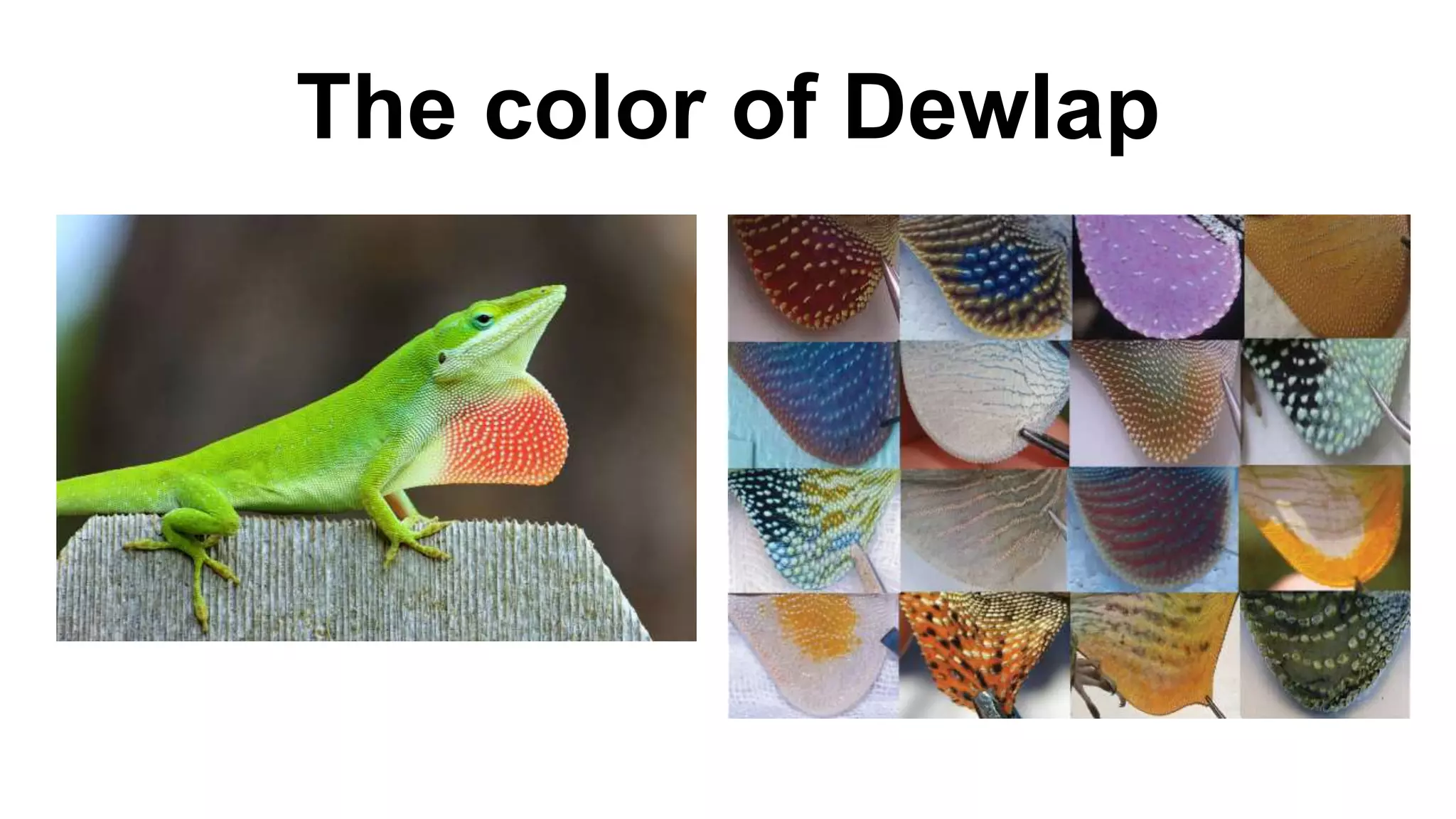
The color of Dewlap
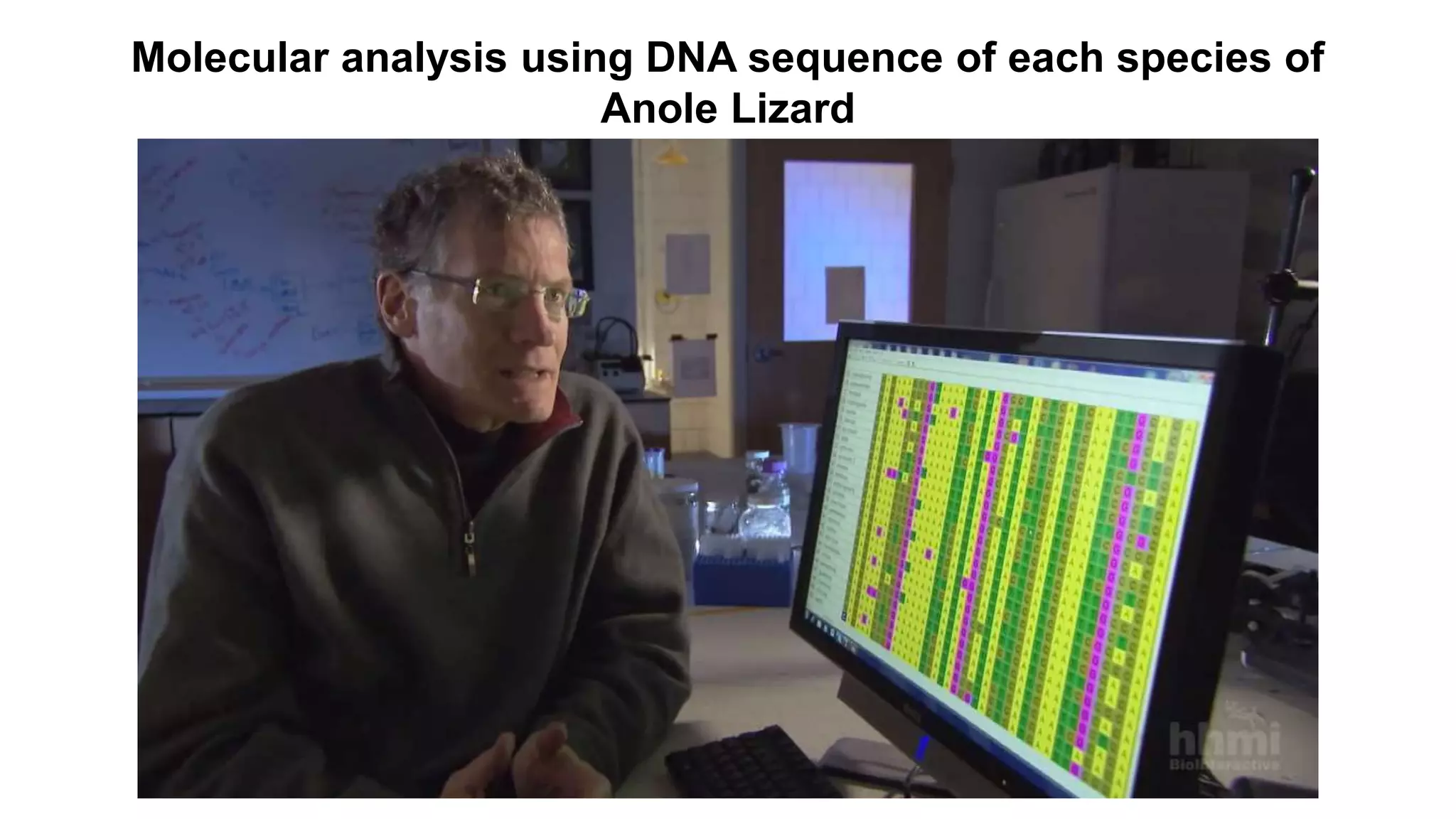
Molecular analysis using DNA sequence of each species of
Anole Lizard
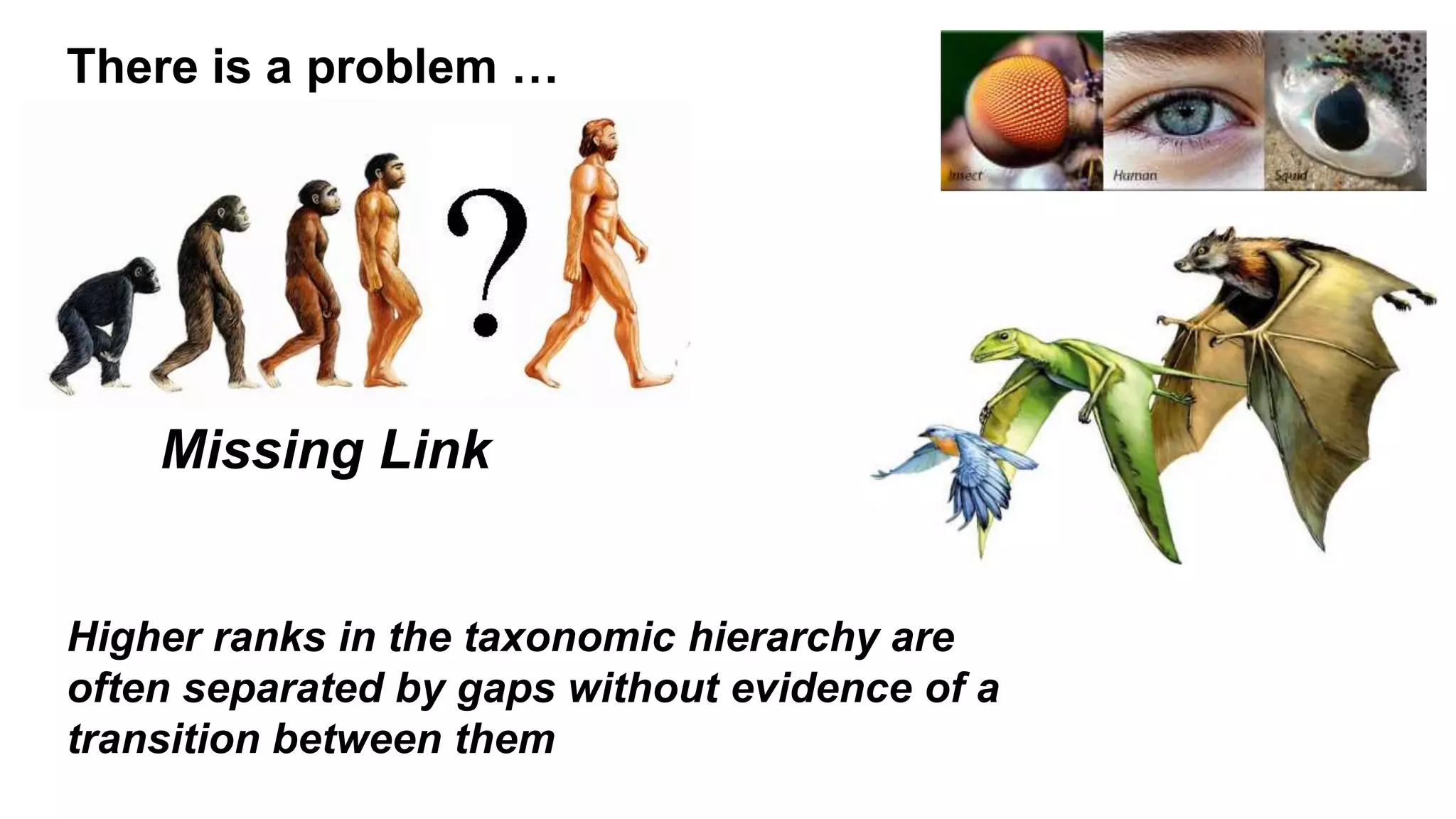
There is a problem …
Missing Link
Higher ranks in the taxonomic hierarchy are
often separated by gaps without evidence of a
transition between them
THANK YOU

Darwin's Microevolution & Macroevolution (no videos) - Chaidir Adam 2018

  • 1.
    Microevolution & Macroevolution Darwin’s CHAIDIR ADAMACD217004 2018 Department of Biology Education Postgraduate Program Palangkaraya University
  • 2.
    Introduction EVOLUTION change in theheritable characteristics of biological populations over successive generations Evolutionary processes give rise to biodiversity at every level of biological organisation, including the levels of species, individual organisms, and molecules.
  • 3.
    ADAPTATION which can be observedboth in nature and in the laboratory SPECIATION, ORIGIN OF THE DIVISION OF THE TAXONOMIC HIERARCHY ABOVE THE SPECIES LEVEL, AND THE DEVELOPMENT OF COMPLEX ORGANS which cannot be witnessed because it occurs over intervals that far exceed the human lifespan
  • 4.
    Divergence and Extinctionin 1859 Extinction was a hot topic during Darwin’s formative years Many fossils had been found that were not identifiable as living organisms George Cuvier 1769-1832 Cuvier argued that these fossils represented organisms that were extinct 19th Century
  • 5.
    Early hypothesis “these creatureslived on in the vast (at a time) unexplored regions of the globe”
  • 6.
    Mammoth Mastodon When USPresident Thomas Jefferson dispatched Meriwether Lewis and William Clark to explore the interior of North America He expexted them to find a living ….. Thomas Jefferson The 3rd President of the US Which he knew about from the fossils
  • 7.
    Jean-Baptiste Lamarck 1744 –1829 Another alternative “these fossils, rather than being extinct, had evolved into comtemporary forms”
  • 8.
    Charles Robert Darwin 1809– 1882 Extinction is a by-product of evolution Struggle for existence Some species acquire superior adaptations and exclude other species through competition Extinction reflects the existence of a tipping point in the ongoing struggle for existence
  • 9.
    Struggle for existence Darwinargued that the struggle for existence was caused by interactions among organisms and was the dominant factor that shaped how organisms evolve. He considered the physical environment to be of minor importance in evolution The interactions that define the struggle for existence and shape how organisms evolve were diverse, including competition, predation, parasitism, disease and pollination
  • 10.
    The strongest interactionswould be among closely related populations or species, because the organisms have the most similar requirements. Darwin’s principle of divergence predicts that the individuals, populations or species most likey to succeed in the struggle for existence are those that differ most from their close relatives in the way they achieve their needs for survival and reproduction Survival of the fittest
  • 11.
    Darwin’s view ofthe link between microevolution and macroevolution Darwin illustrated the combined action of his principle of descent with modification, the principle of divergence, and extinction. This picture shows the link between microevolution and macroevolution
  • 12.
  • 13.
  • 15.
  • 16.
  • 17.
  • 18.
  • 20.
    The next year… SURVIVED REPRODUCED
  • 21.
  • 23.
    “Evolution can occur veryrapidly when natural selection is strong” – Jonathan B. Losos
  • 24.
    Losos’ experiment explains howmany different types of adaptation formed, but can’t explain speciation.
  • 25.
  • 26.
    Molecular analysis usingDNA sequence of each species of Anole Lizard
  • 29.
    There is aproblem … Missing Link Higher ranks in the taxonomic hierarchy are often separated by gaps without evidence of a transition between them
  • 30.