Name:
Tanvir ul hassan
Topic:
speciation
presented to:
madam Razia
speciation
• THE FORMATION OF NEW SPECIES
• Occurs when sub_population are
prevented from interbreeding
Ways of speciation

Ways

Allopatric speciaton
Parapatric speciation
Sympatric speciation
Allopatric speciation
•
•
•
•
•
•

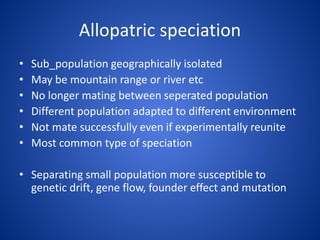
Sub_population geographically isolated
May be mountain range or river etc
No longer mating between seperated population
Different population adapted to different environment
Not mate successfully even if experimentally reunite
Most common type of speciation

• Separating small population more susceptible to
genetic drift, gene flow, founder effect and mutation
Explanation
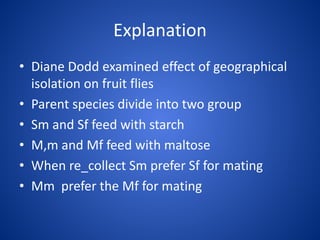
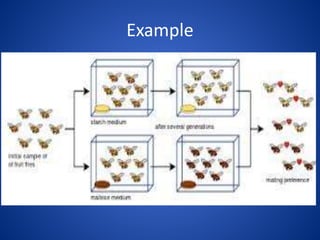
• Diane Dodd examined effect of geographical
isolation on fruit flies
• Parent species divide into two group
• Sm and Sf feed with starch
• M,m and Mf feed with maltose
• When re_collect Sm prefer Sf for mating
• Mm prefer the Mf for mating
Example
parapatric speciation
• The population does not mate randomly
• Individuals are more likely to mate with their
geographic neighbors than with individuals in
a different part of the population’s range
• Reduced gene flow within the population
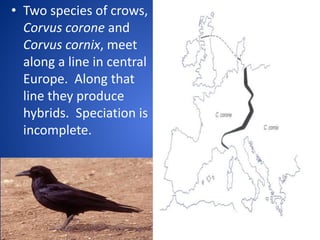
• Two species of crows,
Corvus corone and
Corvus cornix, meet
along a line in central
Europe. Along that
line they produce
hybrids. Speciation is
incomplete.
Sympatric Speciation
• Occurs due to reproductive isolation within a
population due to polymorphism
• It has two types of reproductive isolation
• Post mating isolation
• Pre mating isolation
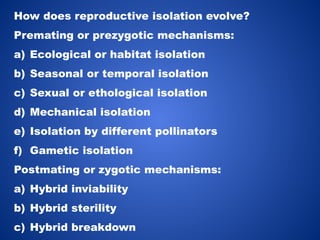
How does reproductive isolation evolve?
Premating or prezygotic mechanisms:
a) Ecological or habitat isolation

b) Seasonal or temporal isolation
c) Sexual or ethological isolation
d) Mechanical isolation
e) Isolation by different pollinators
f) Gametic isolation
Postmating or zygotic mechanisms:
a) Hybrid inviability
b) Hybrid sterility
c) Hybrid breakdown
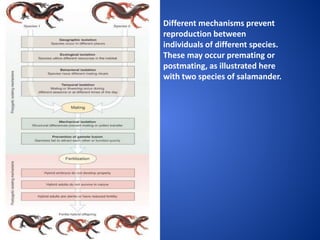
Different mechanisms prevent
reproduction between
individuals of different species.
These may occur premating or
postmating, as illustrated here
with two species of salamander.
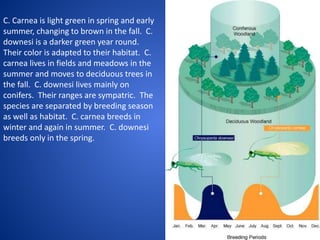
The green lacewings, Chrysoperla carnea and Chrysoperla downesi may
illustrate an example of sympatric speciation.
C. Carnea is light green in spring and early
summer, changing to brown in the fall. C.
downesi is a darker green year round.
Their color is adapted to their habitat. C.
carnea lives in fields and meadows in the
summer and moves to deciduous trees in
the fall. C. downesi lives mainly on
conifers. Their ranges are sympatric. The
species are separated by breeding season
as well as habitat. C. carnea breeds in
winter and again in summer. C. downesi
breeds only in the spring.
The evolution of different mating
location, mating time, or mating
rituals:
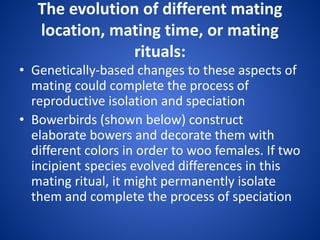
• Genetically-based changes to these aspects of
mating could complete the process of
reproductive isolation and speciation
• Bowerbirds (shown below) construct
elaborate bowers and decorate them with
different colors in order to woo females. If two
incipient species evolved differences in this
mating ritual, it might permanently isolate
them and complete the process of speciation
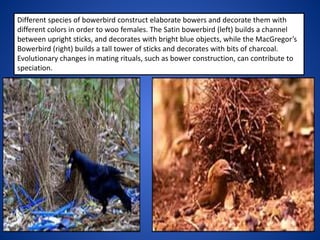
Different species of bowerbird construct elaborate bowers and decorate them with
different colors in order to woo females. The Satin bowerbird (left) builds a channel
between upright sticks, and decorates with bright blue objects, while the MacGregor’s
Bowerbird (right) builds a tall tower of sticks and decorates with bits of charcoal.
Evolutionary changes in mating rituals, such as bower construction, can contribute to
speciation.
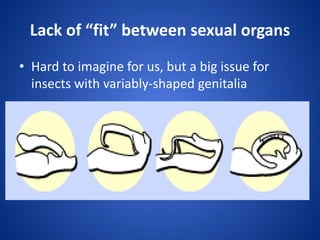
Lack of “fit” between sexual organs
• Hard to imagine for us, but a big issue for
insects with variably-shaped genitalia
Offspring inviability or sterility
• All that courting and mating is wasted if the
offspring of matings between the two groups
do not survive or cannot reproduce.
• Mule etc
Speciation

Speciation

  • 1.
  • 2.
    speciation • THE FORMATIONOF NEW SPECIES • Occurs when sub_population are prevented from interbreeding
  • 3.
    Ways of speciation Ways Allopatricspeciaton Parapatric speciation Sympatric speciation
  • 4.
    Allopatric speciation • • • • • • Sub_population geographicallyisolated May be mountain range or river etc No longer mating between seperated population Different population adapted to different environment Not mate successfully even if experimentally reunite Most common type of speciation • Separating small population more susceptible to genetic drift, gene flow, founder effect and mutation
  • 5.
    Explanation • Diane Doddexamined effect of geographical isolation on fruit flies • Parent species divide into two group • Sm and Sf feed with starch • M,m and Mf feed with maltose • When re_collect Sm prefer Sf for mating • Mm prefer the Mf for mating
  • 6.
  • 7.
    parapatric speciation • Thepopulation does not mate randomly • Individuals are more likely to mate with their geographic neighbors than with individuals in a different part of the population’s range • Reduced gene flow within the population
  • 8.
    • Two speciesof crows, Corvus corone and Corvus cornix, meet along a line in central Europe. Along that line they produce hybrids. Speciation is incomplete.
  • 9.
    Sympatric Speciation • Occursdue to reproductive isolation within a population due to polymorphism • It has two types of reproductive isolation • Post mating isolation • Pre mating isolation
  • 10.
    How does reproductiveisolation evolve? Premating or prezygotic mechanisms: a) Ecological or habitat isolation b) Seasonal or temporal isolation c) Sexual or ethological isolation d) Mechanical isolation e) Isolation by different pollinators f) Gametic isolation Postmating or zygotic mechanisms: a) Hybrid inviability b) Hybrid sterility c) Hybrid breakdown
  • 11.
    Different mechanisms prevent reproductionbetween individuals of different species. These may occur premating or postmating, as illustrated here with two species of salamander.
  • 12.
    The green lacewings,Chrysoperla carnea and Chrysoperla downesi may illustrate an example of sympatric speciation.
  • 13.
    C. Carnea islight green in spring and early summer, changing to brown in the fall. C. downesi is a darker green year round. Their color is adapted to their habitat. C. carnea lives in fields and meadows in the summer and moves to deciduous trees in the fall. C. downesi lives mainly on conifers. Their ranges are sympatric. The species are separated by breeding season as well as habitat. C. carnea breeds in winter and again in summer. C. downesi breeds only in the spring.
  • 14.
    The evolution ofdifferent mating location, mating time, or mating rituals: • Genetically-based changes to these aspects of mating could complete the process of reproductive isolation and speciation • Bowerbirds (shown below) construct elaborate bowers and decorate them with different colors in order to woo females. If two incipient species evolved differences in this mating ritual, it might permanently isolate them and complete the process of speciation
  • 15.
    Different species ofbowerbird construct elaborate bowers and decorate them with different colors in order to woo females. The Satin bowerbird (left) builds a channel between upright sticks, and decorates with bright blue objects, while the MacGregor’s Bowerbird (right) builds a tall tower of sticks and decorates with bits of charcoal. Evolutionary changes in mating rituals, such as bower construction, can contribute to speciation.
  • 16.
    Lack of “fit”between sexual organs • Hard to imagine for us, but a big issue for insects with variably-shaped genitalia
  • 17.
    Offspring inviability orsterility • All that courting and mating is wasted if the offspring of matings between the two groups do not survive or cannot reproduce. • Mule etc